British Columbia Forest Service Road Access
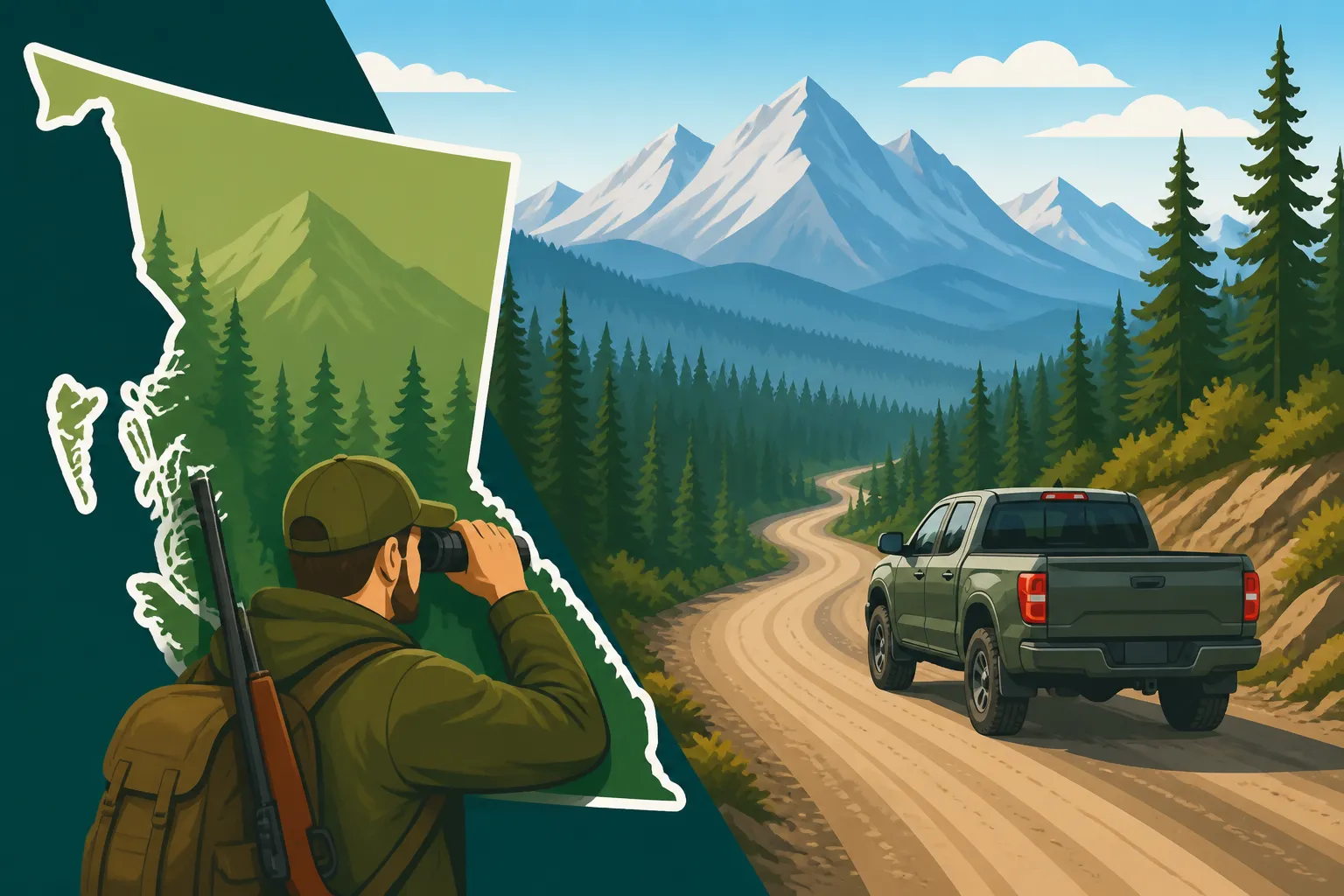
Ever stared at a topo map of British Columbia, seeing endless green and thinking, "How on earth do I get in there?" For many hunters, the vastness of our province is both its greatest allure and its biggest puzzle. British Columbia's Forest Service Roads (FSRs) are often the answer, cutting through remote wilderness and providing the arteries that lead to incredible hunting opportunities. But these aren't your typical highways; they come with their own unique set of challenges, rules, and unspoken codes that every hunter needs to understand to ensure a safe and successful trip. This guide will walk you through everything you need to know to confidently navigate and utilize British Columbia's extensive FSR network for your next hunting adventure.
The Lifelines of the Backcountry: Understanding British Columbia's Forest Service Roads
Forest Service Roads are truly the unsung heroes of backcountry access in British Columbia. Without them, vast swathes of our hunting grounds would be practically impenetrable for the average hunter. They're not just dirt roads; they're a complex system with their own ecosystem and rules that are vital to understand.
What Exactly is an FSR?
At its core, a Forest Service Road is a road primarily constructed and maintained for industrial activities, specifically forestry. Unlike provincial highways or municipal roads, FSRs are typically gravel or dirt, vary wildly in condition, and are not always maintained to a high standard once active logging or resource extraction ceases in a particular area. They snake their way through mountainous terrain, across plateaus, and deep into valleys, connecting resource sites to main transportation routes. These roads are the backbone of industries that operate in the backcountry, and while they were built for commerce, they also serve as an invaluable gateway for recreationists, including hunters. Understanding their industrial origin helps explain why they operate differently from other roads you might encounter. They are often narrow, have steep grades, sharp turns, and sometimes lack proper signage, especially as you get further from main arteries.
For hunters, an FSR represents potential. It's the path that takes you away from the highway crowds and into the wild. These roads open up access to diverse habitats – from dense timber stands and old growth edges to vast clearcuts and subalpine slopes. They are an integral part of Hunting British Columbia's Logging Road Network, providing direct access to areas where game often thrives due to changes in habitat.
The Hunter's Gateway to Untamed Wilderness
While initially built for timber and resource companies, FSRs have become indispensable for hunters. They transform previously inaccessible wilderness into huntable territory, allowing us to venture miles from paved roads and popular areas. Imagine looking at a topo map and seeing nothing but endless forest – then spotting a thin grey line snaking into it. That's your FSR, your potential ticket to moose country, a black bear hotspot, or a remote mule deer basin.
These roads provide crucial access points for everything from quick day hunts to extended backcountry trips. They allow you to drive closer to your intended hunting grounds, saving precious time and energy that would otherwise be spent hiking. Many hunters use FSRs to reach trailheads, river access points, or to simply get within walking distance of a promising ridge or valley. They are also often the only way to get equipment like ATVs (where permitted), wall tents, or larger volumes of supplies into a remote camp. The convenience they offer is immense, allowing hunters to explore a much wider range of terrain than would be possible on foot alone.
FSRs as Ecosystems: Impact on Game Movement and Habitat
It's not just about access; FSRs themselves influence the landscape and, consequently, animal behavior. The creation of a road involves clearing a corridor, which immediately introduces an edge effect. This edge, where forest meets open road, can be attractive to certain game species for foraging or travel. For instance, the vegetation that grows along FSR shoulders can provide browse for deer and elk, or berries for bears. Small clearings created by turnouts or cutbanks can also serve as natural glassing points, giving hunters an advantage when Glassing Logging Roads for Spring Bears or scouting for deer.
However, FSRs also fragment habitat and can act as barriers or corridors for animal movement. They can sometimes funnel animals, making certain crossings predictable, but they can also increase human pressure in areas that would otherwise remain undisturbed. Understanding how game uses these linear features is key to successful hunting. Some animals might avoid highly trafficked roads, retreating deeper into the timber, while others might utilize the disturbed areas for easy travel or food sources. When you're planning your hunt, consider the age of the logging block the FSR serves. A fresh cutblock might initially be devoid of game, but after a few years, it can become prime habitat as new growth emerges, a perfect scenario for Hunting a Recent Cutblock in Its Third Year.
Navigating the Maze: Finding and Interpreting FSRs
Knowing that FSRs exist is one thing; actually finding them, understanding their current status, and safely navigating them is another challenge entirely. British Columbia's FSR network is vast and ever-changing, making current information and careful observation paramount.
Maps and Digital Tools: Your Essential FSR Companions
Gone are the days when a paper map was your only resource. While paper maps still hold a place in my pack for backup, digital tools have revolutionized FSR navigation. Online mapping resources provided by the provincial government can show the general FSR network, but they aren't always up-to-the-minute regarding access restrictions or conditions. This is where modern hunting apps truly shine. Platforms like onX Hunt have incredibly detailed satellite imagery and property boundary layers that often include FSRs, and sometimes even smaller spur roads that might not be on older maps. They can show you Crown land, private land, and even active logging zones, which is crucial for understanding access. Using onX for British Columbia Crown Land can give you an excellent visual overlay of where you can expect to find public access via FSRs.
Another fantastic resource is GoHunt, which often provides valuable intel on specific hunting areas, including access challenges and road conditions reported by other users. These apps allow you to download maps for offline use, which is absolutely critical as cell service is non-existent in much of the backcountry. Always, and I mean always, download your maps before you head out. Relying on a live signal in the middle of nowhere is a recipe for getting lost and frustrated. When planning, zoom in on satellite imagery to spot gates, recent logging activity, or even washouts that might not be marked on base maps.
Understanding FSR Status: Active, Deactivated, or Overgrown?
The status of an FSR is probably the most critical piece of information for a hunter. Not all FSRs are created equal, and their condition can range from smoothly graded gravel roads to barely discernible two-tracks swallowed by alder.
- Active FSRs: These roads are currently being used by industry, typically logging trucks or other heavy equipment. They are generally well-maintained, but they come with significant safety considerations due to industrial traffic. Expect dust, large vehicles, and potentially radio call-in procedures (more on that later). While convenient, these roads often lead to areas of active logging, which can be noisy and disruptive to game.
- Deactivated FSRs: These are roads where industrial activity has ceased, and the road has been "put to bed." This can mean anything from a physical gate, a large ditch (cross-ditching), or even planted trees to prevent vehicle access. Driving a Deactivated Logging Road is often a misnomer; you'll be walking it. However, deactivated roads are often where the best hunting begins, as they lead to less pressured areas. They might be overgrown, have washouts, or require significant effort to traverse on foot, but they offer solitude.
- Overgrown or Disused FSRs: These are FSRs that haven't seen industrial use in many years. They might appear as faint lines on maps, but on the ground, they can be completely reclaimed by nature. Expect dense brush, fallen trees, and challenging navigation. Sometimes, these old lines are barely distinguishable from animal trails, becoming prime territory for Still-Hunting Second Growth for Blacktail or hunting a British Columbia burn. Don't underestimate the physical effort required to push through these areas, but also don't write them off – they can hold some truly unpressured game.
It's a good idea to check local forestry district websites or call ahead if you have specific FSRs in mind, as conditions can change rapidly due to weather, logging operations, or maintenance.
Reading the Landscape: Beyond the Map
Even with the best maps and digital tools, an experienced hunter knows that the landscape itself tells a story. Fresh tire tracks, recent culvert repairs, or newly placed signage indicate an active road. Conversely, fading paint on signs, overgrown ditches, and old stumps beside the road suggest a deactivated or rarely used route. Look for physical barriers like concrete blocks, large berms, or gates that weren't visible on your satellite imagery. These often signify recent closures or changes in access.
Learning to read the terrain for signs of FSR use, even when the road isn't obvious, can open up new possibilities. Sometimes, what looks like a faint game trail on the ground is actually an old spur road that has grown in. These nearly invisible pathways can lead to hidden benches or old clearings, offering fantastic opportunities for Hunting an Interior Douglas Fir Bench or discovering forgotten pockets of habitat. Always be aware of your surroundings, look for subtle clues, and don't be afraid to pull over and walk a short distance to verify a road's status before committing your vehicle to potentially impassable terrain.
The Rules of the Road: Regulations and Restrictions
Navigating FSRs isn't just about driving; it's about understanding and respecting the rules that govern them. These roads are not public highways in the traditional sense, and specific regulations are in place to ensure safety, protect industrial operations, and manage public access.
Public Access, Industrial Priority: Understanding the Balance
The most important rule to remember about British Columbia's FSRs is that while the public generally has access, industrial operations always take priority. This means that if you encounter logging trucks, graders, or other heavy equipment, you must yield to them. These vehicles are enormous, often moving at speed, and have long stopping distances. They are also often equipped with radio call-in systems to announce their position, which brings us to the importance of resource road radio channels.
In areas with active industrial operations, it's common practice, and sometimes mandatory, to have a resource road radio in your vehicle and be monitoring the designated channel for that FSR. These radios allow you to communicate your location and direction of travel to industrial users, preventing head-on collisions, especially on narrow sections or blind corners. Even if not strictly mandatory, it's a critical safety measure. Knowing the Radio Channels on Active Logging Roads can be a literal lifesaver. Always assume that around the next bend could be a fully loaded logging truck.
Gates, Closures, and Vehicle Restrictions
FSRs are dynamic. They can be open one week and gated the next, depending on industrial activity, fire danger, or seasonal conditions. Gates are a common feature, especially on private forest lands or at the entrance to deactivated sections. Some gates are permanently locked, while others might be open during certain hours or seasons. Always pay attention to signage. A "No Entry" sign, even if the gate is open, means no entry. Ignoring such signs can lead to fines, vehicle impoundment, or worse, putting yourself in danger.
Seasonal closures are also common, often due to snow, mud, or fire restrictions. During periods of high fire hazard, access to certain FSRs might be restricted or entirely closed to recreational users. It's crucial to check regional wildfire risk maps and local forestry advisories before heading out. Road Closures on British Columbia Forest Roads can happen suddenly and leave you stranded or cut off from your hunting area. Additionally, some FSRs or specific areas accessed by them might have restrictions on vehicle types, prohibiting ATVs, UTVs, or even full-sized trucks beyond a certain point. Always confirm these restrictions for your chosen hunting unit.
Industrial Traffic and Safety Protocols
When driving on an active FSR, safety is paramount. Dust can severely limit visibility, so maintain a safe following distance. Always assume oncoming traffic, especially around blind corners, and be prepared to pull over safely. Logging trucks often travel at speed because they are on a schedule, and they are much heavier than your vehicle. Give them ample space.
A basic FSR safety checklist includes:
- Headlights On: Always drive with your headlights on, day or night, to improve your visibility to others.
- Slow Down: FSRs are not highways. Conditions can change rapidly, and debris, potholes, or washouts are common.
- Pull Over Safely: If a large vehicle is approaching, find a wide spot or turnout and pull completely off the road. Do not try to wave them through a narrow section.
- Radios: If you're in an area with industrial traffic, a resource road radio is highly recommended. Learn the call procedures: call out your location and direction at specific markers or before blind corners.
- Be Patient: Industry professionals are doing their jobs. Your hunt can wait a few minutes for safe passage.
| FSR Status | Typical Condition | Hunter Implications | Key Safety Considerations |
|---|---|---|---|
| Active | Well-maintained gravel, visible use | Easy vehicle access, but higher human pressure. Potential for industrial noise. | Heavy industrial traffic, dust, radio calls often required. |
| Deactivated | Gated, cross-ditched, overgrown | Vehicle access restricted, requiring foot/ATV beyond gate. Leads to less pressured areas. | Obstacles, washouts, overgrown sections. Minimal maintenance. |
| Disused/Old | Heavily overgrown, faint tracks | Requires significant effort (hiking, bushwhacking). Leads to remote, unpressured wilderness. | Very challenging navigation, potential for getting truly lost. |
| Private Land | Varies greatly, often gated | Access may require permits or permission. Critical to know land ownership. | Trespass laws, private property rules. Check British Columbia Trespass and Private Land Law. |
This table provides a quick overview, but always remember that conditions on FSRs can be highly variable and unpredictable.
Planning for the Unexpected: Safety and Readiness on FSRs
Venturing onto British Columbia's FSRs, especially when you're headed deep into the backcountry, means you need to be self-sufficient and prepared for anything. This isn't your daily commute; help can be days away, and cell service is a luxury you won't have.
Vehicle Preparedness: Beyond a Full Tank
Before you even turn onto that first gravel road, your vehicle needs to be in tip-top shape. A full tank of gas is a given, but think beyond that. Do you have a good quality spare tire, and do you know how to change it? A flat on a jagged FSR is far more likely than on pavement. Carry tire repair kits and a portable air compressor. Beyond tires, ensure your vehicle has been recently serviced, with fluids topped up and belts/hoses inspected. A breakdown miles from anywhere can quickly turn a fun hunt into a survival situation.
Recovery gear is also essential. A shovel, tow strap, and traction boards can be invaluable if you get stuck in mud or snow. Even if you're driving a capable 4×4, don't overestimate its ability to conquer every obstacle. Sometimes, a fallen tree or a significant washout can block the road completely. Be prepared to turn around or to walk. Consider carrying extra fuel in approved containers, especially if your hunting area is far from the nearest gas station. Basic tools like a wrench set, duct tape, and zip ties can help with minor repairs. Don't forget jumper cables or a portable battery booster, as cold nights or leaving lights on can drain a battery fast.
Communication and Emergency Protocols: Staying Connected (Sort Of)
The vast majority of British Columbia's FSRs are outside of cell service range. This isn't a minor inconvenience; it's a critical safety factor. Relying on a cell phone for navigation or emergencies is irresponsible. Instead, invest in a satellite communication device. A satellite messenger, like a Garmin inReach or a Zoleo, allows you to send and receive text messages, share your location, and, most importantly, send an SOS signal in a true emergency. These devices are non-negotiable for anyone venturing deep into the backcountry. You can read more about options in Satellite Communication on a Remote Hunt.
Beyond technology, have a detailed trip plan that you leave with a trusted contact. This plan should include your intended route, where you expect to be each day, who you are with, and when you expect to return. Stick to this plan as much as possible, and check in regularly via satellite messenger. This "check-in" system is a cornerstone of Emergency Planning in British Columbia's Backcountry. Carry a comprehensive first-aid kit that goes beyond band-aids, including items for trauma, burns, and allergic reactions. Bear spray should be on your person, readily accessible, and everyone in your group should know how to use it safely.
Weather and Environmental Challenges: Nature's Obstacles
British Columbia's weather is notoriously unpredictable, especially in the mountains. A sunny morning can quickly turn into an afternoon whiteout or a torrential downpour. These conditions can transform FSRs from passable tracks into impassable quagmires or icy death traps. Carry appropriate clothing for all seasons, even in summer. Layering is key.
Snow can fall at higher elevations even in early fall, suddenly closing off FSRs that were open just hours before. Mud can become a significant issue with rain, making even short sections of road treacherous. Washouts, where a section of road has been eroded by water, are a constant threat. Fallen trees, especially after high winds, can block roads and require a chainsaw to clear. Always check weather forecasts for the specific region you're heading into, and be prepared to adapt your plans if conditions deteriorate. Sometimes, the safest decision is to turn back and try another day. Your safety, and the safety of your hunting partners, is always more important than getting to a specific spot.
Maximizing Your Hunt: FSRs as a Hunting Tool
FSRs aren't just about getting to your hunting area; they can be integrated into your hunting strategy, offering unique advantages if used wisely and ethically.
Accessing Prime Hunting Ground and Setting Up Camp
The primary benefit of FSRs is undeniably the access they provide to remote hunting grounds. By driving deeper, you can significantly reduce the amount of time and physical effort required to reach prime habitat. This means more energy for actual hunting and scouting. FSRs often lead into vast tracts of Crown land, giving you countless options for exploration. When Scouting a British Columbia Management Unit Online, look for the FSR network to identify potential access points to areas that look promising for game.
Once you've driven as far as you safely can, FSRs provide convenient staging areas for foot hunts or for establishing base camps. Many hunters use a vehicle-accessible FSR as their initial point of departure, then backpack in to Setting a Spike Camp Above Timberline or a remote basin. Other FSRs might offer suitable clearings for a wall tent camp, especially if you're targeting areas like Hunting Moose Off a British Columbia Forest Road or setting up for a fall bear hunt. Remember to always respect designated recreation sites or any specific camping regulations, but generally, random camping on Crown land near FSRs is permitted, as long as you practice Leave No Trace principles.
Balancing Access and Hunting Pressure
While FSRs offer incredible access, this convenience comes with a trade-off: increased hunting pressure. Areas directly adjacent to easily accessible FSRs tend to see more hunters. Game in these areas can become warier and move deeper into cover, especially during opening weekend or peak season. For this reason, many experienced hunters view FSRs not as a destination, but as a means to an end. The real hunting often begins where the pavement ends, and the real trophy hunting often begins where the FSR itself ends or becomes impassable to vehicles.
To find less pressured game, you need to be willing to put in the effort to get off the road. This might mean hiking miles beyond a gate on a deactivated FSR, or venturing far off an active FSR into the dense timber. Consider the concept of "hunting the back forty" – going where others aren't willing to go. While everyone else is driving the main FSR, you might be finding success Hunting a Deactivated Road Beyond the Gate or Hunting an Old Growth Draw that requires a long walk. Using mapping tools like onX Hunt can help you visualize distances and identify hidden pockets of habitat that might be overlooked by road-bound hunters.
Road Hunting vs. Road Access: Ethical and Legal Distinctions
It's crucial to understand the difference between using an FSR for access and engaging in illegal or unethical road hunting. The vast majority of British Columbia hunters condemn reckless "road hunting," which typically involves shooting game directly from a vehicle or immediately adjacent to a maintained road. While some areas might have specific regulations regarding shooting distances from roads, generally, the spirit of fair chase dictates that you should be actively hunting on foot, away from your vehicle, when you harvest an animal. British Columbia Rules on Hunting From a Vehicle explicitly prohibit discharging a firearm from or across a public road, which includes most FSRs.
Using an FSR for access means driving to a point, parking your vehicle safely, and then heading out on foot to scout, stalk, or call game. It's about utilizing the road to reach prime areas, not as a hunting platform itself. Respecting these boundaries not only keeps you on the right side of the law but also upholds the ethical standards of hunting. A quick stop to glass a distant hillside is fine, but driving slowly with a loaded firearm and hoping to spot a deer near the truck is not.
Beyond the Gravel: Complementary Access Strategies
While FSRs are indispensable, they are rarely the only answer for accessing British Columbia's vast hunting grounds. Often, the best strategy involves combining FSR access with other methods to truly get off the beaten path and into unpressured territory.
Foot Access Beyond Deactivation: Where the Real Hunt Begins
As discussed, many of the most promising hunting opportunities lie beyond where vehicles can travel. Driving a Deactivated Logging Road is usually not possible, but these old roadbeds often provide fantastic foot access. They offer relatively easy walking compared to bushwhacking through dense timber, and they can lead to areas that receive significantly less human pressure. These old roads eventually fade into game trails, or open into old cutblocks now regenerating, offering a transition zone for game.
The effort required to hike miles beyond a gate is a natural filter that weeds out many casual hunters. This is where your fitness and commitment pay off. Packing a good daypack with essentials, knowing your navigation, and being prepared for a long walk are key. This strategy is perfect for getting into areas where a British Columbia burn has allowed new growth to flourish, or for accessing secluded pockets of habitat like Hunting a Subalpine Basin at First Light. Remember to wear appropriate footwear for uneven terrain and carry enough water and snacks for your extended trek.
ATV/UTV Use and Regulations: Expanding Your Reach
All-terrain vehicles (ATVs) and utility terrain vehicles (UTVs) can be incredibly useful tools for expanding your hunting range beyond what's accessible by full-sized trucks. They can traverse rougher terrain, navigate narrower trails, and climb steeper grades than most conventional vehicles. However, their use on FSRs and other Crown land is heavily regulated in British Columbia. Not all FSRs are open to ATV use, and even where they are, there might be restrictions on where you can operate them (e.g., only on designated trails, not cross-country).
It is absolutely crucial to know the specific regulations for the Management Unit you plan to hunt in, as rules can vary. Always check the provincial regulations synopsis for the most current information regarding Off-Road Vehicle (ORV) use. Penalties for illegal ATV use can be severe. If you plan to use an ATV, ensure it is properly registered, insured, and that you are wearing a helmet and other appropriate safety gear. They are powerful machines that demand respect and responsible operation.
Other Methods for Deeper Access: Horses, Boats, and Planes
For the ultimate in remote access, especially in British Columbia's rugged terrain, hunters often turn to more specialized modes of transport. Horses have been used for generations to access otherwise impossible-to-reach backcountry. Horseback Hunting British Columbia's Backcountry allows hunters to carry heavy loads, cover vast distances, and navigate rough trails with relative ease, opening up prime areas for Backpacking Into British Columbia Sheep Country or Hunting a Mountain Pass in British Columbia. This typically requires significant investment in horses, gear, and experience, or booking a trip with an outfitter who provides this service.
Boats are invaluable for accessing coastal inlets, islands, or large river systems. Jet Boat Access on British Columbia Rivers can get you into areas unreachable by road, allowing you to hunt along riverbanks or establish camps in remote locations. Similarly, ocean-going vessels are essential for Hunting From a Boat on the Coast or exploring the numerous islands that dot British Columbia's coastline for blacktail deer or bears. Finally, for truly untouched wilderness, chartering a float plane or bush plane to Flying Into a Remote British Columbia Camp is an option, though it comes with a higher price tag. These methods represent the pinnacle of backcountry hunting and open up opportunities to hunt species in regions that see minimal to zero human pressure.
Disclaimer
This article is for general informational purposes only and does not constitute professional advice. Laws, prices and regulations vary by location and change over time. Consult a qualified professional for guidance on your specific situation.