Hunting the Stikine River Country
Hunting the Stikine River Country isn't just a trip; it's an expedition into one of British Columbia's wildest, most unforgiving, and utterly breathtaking landscapes. This isn't a casual weekend jaunt to a local deer stand. We're talking about vast, untamed wilderness where the sheer scale of the land can be as overwhelming as its beauty, and navigating it presents a unique set of challenges that can humble even the most experienced outdoorsmen. This guide will walk you through what to expect when you set your sights on a hunt in this legendary northern frontier, helping you prepare for the adventure of a lifetime.
Understanding the Stikine River Country Landscape and Wildlife
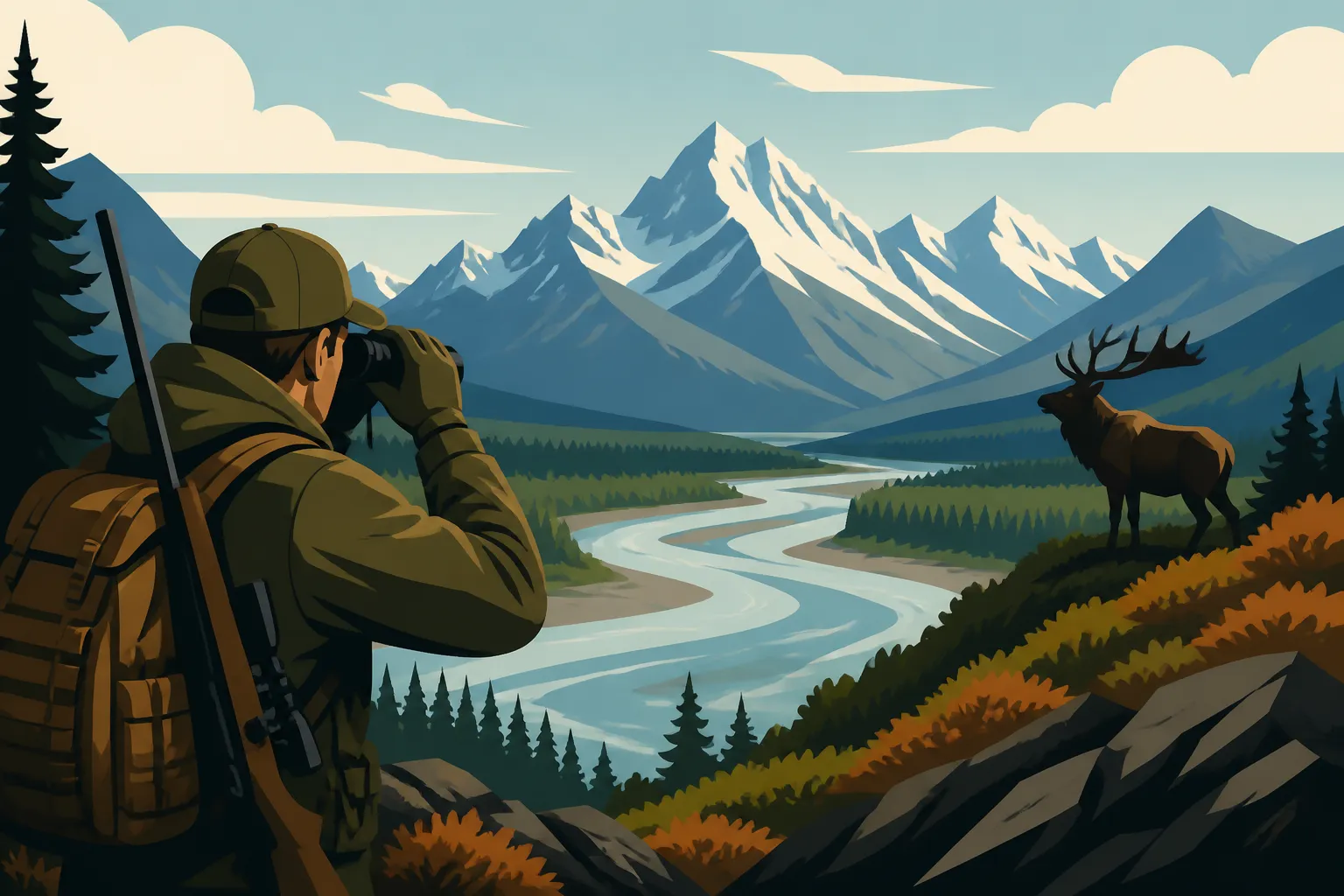
The Stikine River, often called "The Grand Canyon of the North," carves its way through an immense swathe of northern British Columbia. This isn't just a river; it's the artery of a sprawling ecosystem, surrounded by towering peaks, dense boreal forests, and expansive alpine plateaus. To truly hunt the Stikine, you first have to understand its heart.
The Vastness and Varied Terrain
Imagine a place where horizons stretch further than the eye can see, where the next mountain range appears to ripple endlessly into the distance. That's the Stikine. The terrain shifts dramatically, from the powerful, braided channels of the river itself, flanked by dense willow and alder bottoms, to steep, forested slopes that quickly give way to jagged rock and barren scree fields at higher elevations. Above the timberline, vast alpine tundras roll out, interspersed with glaciers and snowfields that cling to the peaks year-round.
This sheer variety means a hunter must be versatile. You might be navigating a jet boat up a swift current one day, then scrambling up a loose shale slide the next, or pushing through thick spruce and pine in a valley bottom. The isolation is profound; cell service is almost non-existent, and the nearest human habitation can be hours, or even days, away. This remote character is precisely what draws many to the Stikine, but it also demands a level of self-reliance and preparedness that other hunting grounds simply don't. The very ground you walk on can be a test, from boggy muskeg in the lowlands to knife-edge ridges high in the mountains.
Key Species and Their Habitat
The Stikine River Country is a wildlife haven, supporting a diverse array of iconic northern game species. For many, it's the ultimate destination for a true mountain hunt.
Moose: These giants often stick to the willow and alder bottoms along the river and its tributaries, especially during the rut. They also frequent marshy areas and newly regenerating clearcuts, where available. The sheer size of the Stikine moose is legendary, drawing hunters seeking a truly impressive trophy. Moose Hunting British Columbia's Interior is a good read for general moose habits.
Stone's Sheep: High up in the remote alpine, above timberline, is where you'll find these coveted dark-coloured sheep. They thrive in the rugged, precipitous terrain, often grazing on sparse vegetation on south-facing slopes. Spotting them requires sharp optics and endless patience, followed by an arduous stalk through unforgiving rock and scree. Sheep and Goat Hunting in British Columbia provides more insights into hunting these magnificent animals.
Mountain Goat: Often sharing the same steep, rocky habitat as sheep, mountain goats are equally challenging to pursue. They prefer the sheerest cliffs and steepest rock faces, making their pursuit a test of both physical endurance and mental fortitude. Their white coats make them stand out against dark rock, but they are masters of camouflage in snow and can vanish in an instant.
Black Bear: Abundant throughout the region, black bears can be found from the river bottom to the subalpine. They often frequent berry patches in late summer and fall, and in the spring, they can be seen grazing on new growth in avalanche chutes or along logging roads (if present). The Stikine is known for producing large black bears, some with various colour phases.
Grizzly Bear: While grizzly bear hunting is closed in British Columbia, their presence in the Stikine is undeniable. Hunters must be acutely aware of grizzly activity, from scat and tracks to potential encounters, and be prepared with appropriate safety measures. Understanding Bear Safety While Hunting in British Columbia is not just advised, it's critical.
Caribou: Certain areas within the broader Stikine region may offer limited caribou hunting opportunities where seasons are open. These animals typically inhabit the high country, favoring open tundra and sparse forests, often covering vast distances. Their populations are sensitive, so always check specific regulations carefully.
Wolves: The Stikine is prime wolf country. Often heard howling in the valleys, wolves are elusive predators. While challenging to hunt, their presence adds to the raw wilderness experience, and opportunities for hunting them can arise. Calling Wolves in British Columbia can offer some useful tips.
| Species | Primary Habitat | Hunting Challenge | Key Season Notes |
|---|---|---|---|
| Moose | River bottoms, willow flats, marshy areas | Dense cover, calling in thick timber, large animals | Rut (late Sept/Oct) for calling, early season for glassing. |
| Stone's Sheep | High alpine, rocky slopes, exposed ridges | Extreme elevation, steep terrain, long stalks | Early fall (Aug/Sept) before heavy snow, calm weather windows. |
| Mountain Goat | Steep cliffs, rugged rock faces, high peaks | Dangerous footing, vertical climbs, thick coats | Early fall (Aug/Sept) before heavy snow, durable gear. |
| Black Bear | Forests, berry patches, avalanche chutes, riverbanks | Spotting in dense cover, judging size, variable colour phases | Spring (May/June) on green-up, Fall (Sept/Oct) on berries. |
| Caribou | Open tundra, sparse forests (check regs) | Vast ranges, unpredictable movements, sensitive populations | Check specific open seasons and draw opportunities. |
| Wolf | Everywhere, especially near large game herds | Elusive, wary, requires patience and calling skill | Throughout big game seasons. |
Climate and Seasonal Considerations
The Stikine's climate is characterized by its northern latitude and mountainous terrain, leading to dramatic shifts in weather. This isn't a place for lightweight gear or a casual attitude toward the elements.
Early Season (August – Early September): This is often the window for sheep and goat hunts in the high alpine. Days can be warm, even hot, but nights can drop to freezing. Expect clear, sunny mornings that can quickly turn into violent afternoon thunderstorms, bringing rain, hail, and even snow at higher elevations. The alpine can be glorious but also brutally exposed. Meat care in these earlier, warmer conditions is a serious concern, as detailed in Meat Care in British Columbia's Warm Early Seasons.
Mid-Season (Mid-September – October): As fall progresses, temperatures drop significantly. Snow becomes common in the high country and begins to creep down into the valleys. This is prime time for moose rutting and often good for bears as they gorge on berries. Rain can be persistent, turning trails into mud and rivers into torrents. Layers are absolutely critical, as are waterproof and windproof outer shells. The river itself can become much more challenging to navigate due to increased flow or early ice.
Late Season (November): By November, winter is in full swing. Heavy snow can make many areas impassable, closing forest roads and grounding float planes. Access becomes severely restricted, and hunting conditions are truly extreme. While hardy hunters might find opportunities for some species, planning must account for deep snow, bitter cold, and very short daylight hours.
Always be prepared for rapid weather changes. A bluebird sky can be replaced by a whiteout blizzard in a matter of hours. This means packing extra clothing, emergency shelter, and sufficient food and fuel for unexpected delays.
Accessing the Remote Stikine Region
Getting to the Stikine River Country is a journey in itself, often requiring multiple modes of transport and meticulous planning. This isn't a drive-up-and-hunt destination; the remoteness is both its greatest appeal and its most significant hurdle.
Primary Access Points and Challenges
For most hunters, the journey to the Stikine will start with a long drive north, likely along Highway 37, the Stewart-Cassiar Highway. Towns like Dease Lake or Telegraph Creek serve as essential staging points, offering limited supplies, fuel, and vital connections.
Air Charter: For truly remote access, air charter is often the only realistic option. Float planes or bush planes can take you to lakes, remote river sections, or even gravel bars if conditions permit. Dease Lake is a common departure point for these charters. This dramatically cuts down travel time but adds significant cost and requires strict weight limits. Weather can also ground planes, leading to frustrating delays at either end of your trip. Flying Into a Remote British Columbia Camp gives an idea of what this entails.
Jet Boat Access: The Stikine River itself is a primary access route once you're in the region. Jet boats are indispensable for navigating its braided channels, swift currents, and shallow sections. Hunters often put in at Telegraph Creek and run up or downriver, depending on their target area. This requires specialized equipment, intimate knowledge of river navigation, and a keen eye for changing water conditions. Jet Boat Access on British Columbia Rivers explains more about this method. The Stikine is not a river for amateur boaters.
Driving and Forest Service Roads: While there are some active and deactivated forest service roads in the broader region, particularly closer to Highway 37, they generally provide limited deep penetration into the Stikine drainage itself. These roads are typically gravel, often rough, and can be impassable due to washouts, mud, or snow. Always verify road conditions before relying on them, and be prepared for self-rescue with robust tires, recovery gear, and a full-size spare. For planning these routes, digital mapping tools like onX Hunt can be incredibly useful for identifying potential access points and understanding the local terrain, even if the roads are rudimentary.
Navigating the River and Tributaries
The Stikine River is a powerful, dynamic waterway. Its character changes with the seasons and even by the day, making navigation a constant challenge.
Main Channel: The main channel of the Stikine is wide and fast, often braided with numerous sandbars and gravel flats that shift with water levels. Jet boats are essential due to their shallow-draft capabilities. Reading the water, identifying deep channels, and avoiding submerged hazards are critical skills. A moment's inattention can lead to a stranded boat or worse.
Tributaries: Numerous smaller rivers and creeks feed into the Stikine. Some of these might be navigable for a short distance by jet boat, offering access to otherwise inaccessible valleys. However, they are often even shallower, faster, and more prone to logjams and other obstructions. Scout ahead whenever possible.
Canoeing/Kayaking: While possible for experienced whitewater paddlers on certain sections, float hunting the Stikine by canoe or kayak is an extreme undertaking due to the sheer size, speed, and remoteness of the river. It requires extensive planning, specialized skills, and a robust support system. Float Hunting a British Columbia River gives an idea, but the Stikine is in a league of its own.
Planning for Extended Backcountry Travel
Once you leave the main river or the end of a fly-in strip, you're truly on your own. Most Stikine hunts involve significant backcountry travel on foot or horseback.
Foot Travel: For sheep, goat, and high-country moose, foot travel is the norm. Expect long days of strenuous hiking through dense bush, over uneven ground, and up steep, rocky slopes. A good frame pack is essential for carrying your gear in and the meat out. Packing Meat With a Frame Pack is a skill you'll absolutely need.
Spike Camps: Establishing a main camp, perhaps on a gravel bar or near a lake, and then setting up lighter, mobile "spike camps" higher up the mountainside is a common strategy. This allows hunters to get closer to game animals without carrying a full heavy load every day. These camps consist of minimalist shelter, food, and sleeping gear.
Horse Packing: For extended hunts deep into the valleys or across large alpine areas, horses offer a significant advantage. They can carry heavy loads of gear, feed, and meat, allowing hunters to penetrate further and stay longer. However, using horses adds another layer of logistical complexity and requires experienced wranglers and animals accustomed to mountain travel. Horseback Hunting British Columbia's Backcountry is highly relevant here.
Strategies for a Successful Stikine Hunt
Success in the Stikine isn't just about sharp shooting; it's about meticulous planning, adapting to the environment, and employing sound hunting techniques specific to the region.
Pre-Season Planning and Scouting
Before you even set foot in British Columbia, your Stikine hunt begins at home with extensive research.
Regulations and Licences: First and foremost, understand the specific hunting regulations for the management units (MUs) you plan to hunt. The Stikine region falls within a particular BC hunting region, and species regulations, bag limits, and season dates vary. Pay close attention to any Limited Entry Hunting (LEH) requirements for species like moose, sheep, or mountain goat. British Columbia's Species Licences and Tags and British Columbia's Limited Entry Hunting Draws are crucial resources. Using tools like GoHunt can help you analyze LEH odds and research specific zones, giving you an edge in deciding where to apply.
Mapping and Topography: This is where modern tools shine. Digital mapping applications, particularly onX Hunt, are invaluable for "scouting" from afar. You can pore over satellite imagery, topographical maps, and public/private land designations (though most of the Stikine is Crown land). Look for:
- Access points: Where can a boat realistically land? Are there any trails or old clearcuts?
- Travel corridors: Natural passes, old game trails, river drainages.
- Habitat features: Alpine basins for sheep/goat, willow flats for moose, berry slopes for bears.
- Elevation changes: Plan your routes, understanding the vertical challenge involved.
- Water sources: Crucial for camp locations.
Print out physical maps as a backup; electronics can and will fail in the remote Stikine. Scouting a British Columbia Management Unit Online details how to get started.
Hunting Techniques for Different Species
Adapting your hunting technique to the Stikine's unique landscape and the target species is paramount.
Spot-and-Stalk: This is the quintessential Stikine hunting method, especially for sheep, goat, and high-country moose and bears.
- Optics are King: Invest in the best binoculars, spotting scope, and tripod you can afford. You'll spend countless hours glassing distant mountainsides, basins, and timber edges. Patience is key; often, animals reveal themselves only after hours of intense glassing.
- Elevation Advantage: Get high and glass low, or glass opposing slopes. Use ridges and timberlines to your advantage for concealment.
- Slow and Deliberate: Once an animal is spotted, the stalk begins. This can take hours, even days. Use terrain features, wind direction, and animal behaviour to close the distance. Glassing an Alpine Basin for Rams is a prime example of this strategy.
Calling: Primarily effective for moose during the rut.
- Cow Calls and Bull Grunts: Mimicking the sounds of a cow in heat or a challenging bull can draw moose out of dense cover.
- Raking Brush: Simulating a bull thrashing brush with its antlers can be highly effective in provoking a response. Calling Moose in the Rut provides detailed advice.
- Patience and Positioning: Call from a concealed position with good shooting lanes. Give the moose time to respond, often they move slowly.
Tracking and Still-Hunting: More challenging in the vastness of the Stikine, but can be effective for bears or lower-elevation moose.
- Reading Sign: Look for fresh tracks, droppings, rubs, and feeding areas.
- Moving Slowly: Still-hunting means moving at a snail's pace, pausing frequently to listen and observe. Use the wind to your advantage.
- Dense Cover: This technique is best suited for dense timber or river bottoms where visibility is limited, forcing you to rely on stealth and keen observation.
Essential Gear and Safety in Remote Wilderness
Your gear needs to be robust, reliable, and capable of handling anything the Stikine can throw at it. Your life, and the success of your hunt, literally depends on it.
Navigation: GPS device (with pre-loaded maps), satellite phone or messenger (Garmin InReach, Zoleo), compass, and waterproof paper maps. Cell service is unreliable, so a satellite communication device is non-negotiable for emergency communication and checking in with loved ones. Satellite Communication on a Remote Hunt cannot be stressed enough for this area.
Shelter: A sturdy, waterproof tent or tarp setup capable of withstanding high winds and heavy precipitation. For spike camps, ultralight options are ideal.
Clothing: Layering is critical. Wicking base layers, insulating mid-layers (fleece, down, synthetic), and a waterproof/windproof outer shell. Bring duplicates of key items like socks and base layers. Good quality, broken-in mountain boots are essential for steep, uneven terrain.
Food and Water: Enough calorie-dense, non-perishable food for your entire trip, plus extra for delays. Water filtration system or purification tablets.
First Aid: A comprehensive first aid kit, including personal medications, wilderness first aid training is highly recommended.
Bear Safety: Bear spray (read up on proper deployment), and a robust plan for food storage (bear-resistant containers, hung from trees). A firearm for bear defence, if legally carried and you are proficient, is also a consideration.
Tools: High-quality knife, sharpening stone, headlamp with spare batteries, fire starting kit (multiple methods), rope/cord, emergency repair kit for gear, small shovel/trowel.
Optics: High-quality binoculars (10×42 or 10×50), spotting scope (20-60x or similar) with a sturdy tripod.
Overcoming the Unique Challenges of the Stikine
The Stikine is not for the faint of heart. Its challenges are part of its allure, but they must be respected and meticulously planned for.
Logistical Hurdles and Contingency Planning
Logistics in the Stikine are often the biggest hurdle, far more complex than just the hunting itself.
Transportation Breakdowns: Whether it's a jet boat engine failure miles upriver, a flat tire on a remote forest service road, or a problem with your charter flight, breakdowns happen. Have backup plans: spare parts, tools for field repairs, an emergency satellite phone for calling for help, and enough supplies to wait out a prolonged delay. For road travel, understanding Driving a Deactivated Logging Road and having the right vehicle is key.
Weather Delays: As discussed, weather can change rapidly. A sudden storm can ground planes, make river travel unsafe, or trap you in a high basin. Factor in extra "weather days" to your trip itinerary and budget. Don't push through unsafe conditions; the game isn't worth a life.
Food and Fuel Resupply: Once you leave a major staging point like Dease Lake, resupply options are virtually non-existent. Plan meticulously, pack more than you think you'll need, and understand your consumption rates for both food and fuel (especially for jet boats). Running out of either in the middle of nowhere is a critical situation.
Emergency Evacuation: What's your plan if someone gets seriously injured or sick? This ties back to satellite communication. Ensure everyone in your party knows how to use the comms device and understands the emergency protocol. Medical evacuation from such a remote area can be incredibly complex and expensive.
Weather Extremes and Environmental Awareness
The Stikine demands respect for its raw power and unpredictability.
Rapid Weather Changes: As mentioned, be prepared for anything. Dress in layers, carry extra insulation, and have full rain gear always accessible. What starts as a mild day can quickly turn into a survival situation if you're caught unprepared by a sudden cold snap or heavy snow. Hunting Above Timberline in Cold Weather offers insights into dealing with these conditions.
River Conditions: The Stikine's water levels and currents can change dramatically due to rain or glacial melt. What was a navigable channel one day might be a shallow gravel bar the next. Always be mindful of the current and potential hazards when traveling by boat or crossing tributaries on foot.
Terrain Hazards: Steep scree slopes, loose rock, slippery mud, and deep snow can all pose significant fall risks. Always use caution, test your footing, and consider trekking poles for stability. Hunting Mountain Goat on British Columbia Rock highlights some of these dangers.
Bear Country Precautions
The Stikine is prime grizzly and black bear habitat. Being "bear aware" isn't a suggestion; it's a mandatory mindset.
Food Storage: All food, cooking equipment, and scented items must be stored in a bear-proof manner, away from your sleeping area. This typically means hanging it from a sturdy tree limb well out of reach, using bear canisters, or storing it in a secure electric fence around your camp. Cooking away from where you sleep is also a good practice.
Carrying Bear Spray: Everyone in the hunting party should carry bear spray in an easily accessible holster and know how to use it. Make sure it's current and hasn't expired.
Making Noise: When traveling through dense brush, especially near water or areas with limited visibility, make noise to avoid surprising a bear. Yell out "Hey bear!" or sing loudly.
Knowing How to React: Understand the difference between defensive and predatory bear behaviour and how to react to each. Most charges are bluffs, but knowing when to stand your ground or play dead can be life-saving. Review What to Do If You See a Grizzly before your trip.
Meat Care: After a successful kill, process meat quickly and efficiently. Get it cooled as soon as possible and hang it well out of reach of predators. The smell of fresh meat is a powerful attractant. Be extra vigilant during the quartering and packing process.
Table: Planning Checklist for a Stikine River Country Hunt
| Category | Essential Items | Notes |
|---|---|---|
| Navigation | GPS, satellite messenger, paper maps, compass | Redundancy is key; onX Hunt data loaded on device. |
| Shelter/Camp | Durable tent, sleeping bag (rated to -10°C), pad | Account for extreme weather, compact for packing. |
| Clothing | Layering system, full rain gear, sturdy boots | Avoid cotton, pack extra socks and base layers. |
| Food & Water | High-calorie food (extra days), water filter, stove | Plan for no resupply; consider dehydrated meals. |
| Safety/Emergency | Comprehensive FAK, bear spray, fire starter, repair kit | Wilderness first aid skills highly recommended. |
| Hunting Gear | Quality optics, rifle/bow, ammo, knife, game bags | Zero your rifle before the trip; practice with your gear. |
| Personal | Headlamp, toiletries, prescription meds, sunglasses | Keep essential items in a waterproof dry bag. |
| Documentation | Licence, species tags, ID, emergency contacts | Keep photocopies, store securely. |
Hunting the Stikine River Country is an immense undertaking, a true test of skill, endurance, and preparation. But for those willing to embrace its challenges, it offers an unparalleled wilderness experience and the chance to pursue some of North America's most magnificent big game animals in an environment that few ever get to see. It’s a hunt that will stay with you long after you’ve left the wild and winding river behind.
Disclaimer
This article is for general informational purposes only and does not constitute professional advice. Laws, prices and regulations vary by location and change over time. Consult a qualified professional for guidance on your specific situation.