British Columbia Trespass and Private Land Law
The frustration of encountering "No Trespassing" signs or fenced-off areas when you're just trying to enjoy a hunt on what you thought was public land is a feeling every British Columbia hunter knows all too well. It can be confusing to navigate the patchwork of Crown land, private holdings, and industrial forests, especially when access rules seem to change without warning. This comprehensive guide is here to untangle the complexities of private land and trespass law in BC, helping you understand your rights and responsibilities so you can hunt with confidence and respect.
Understanding Crown Land Versus Private Land in British Columbia
British Columbia is celebrated for its vast, wild landscapes, and much of this is indeed Crown land, meaning it's publicly owned and generally accessible for recreational pursuits like hunting. However, interspersed within this vastness are significant tracts of private land, and understanding the distinction is absolutely crucial for any hunter. Misidentifying land ownership can lead to uncomfortable confrontations, legal trouble, and a black eye for the hunting community.
The Vastness of Crown Land and Public Access
Roughly 94% of British Columbia is Crown land, managed by the provincial government. This means a tremendous amount of territory is theoretically open for hunting, fishing, and other outdoor activities. This includes everything from remote alpine peaks and dense interior forests to coastal inlets and vast stretches of the northern wilderness. The general rule is that you have a right to access and hunt on Crown land, provided you adhere to all provincial and federal hunting regulations, including season dates, bag limits, and ethical hunting practices. You're free to explore, camp, and pursue game across these expansive areas without seeking specific permission, unless there are specific closures or restrictions in place. Often, these areas are accessed via the extensive network of British Columbia's Forest Service Road Network, which crisscrosses much of the province. It's truly one of the gifts of living and hunting in BC, offering unparalleled opportunities for adventure.
However, "Crown land" isn't a blanket term for all public access. Some Crown land is managed differently, such as provincial parks or ecological reserves, where hunting may be restricted or entirely prohibited. Hunters must always check the specific regulations for the Management Unit (MU) they intend to hunt in, as well as any regional or local notices that might impact access. Knowing your MU and checking the synopsis is paramount.
Identifying Private Land Boundaries
Despite the prevalence of Crown land, private property ownership plays a significant role in British Columbia's landscape, particularly in settled valleys, agricultural zones, and around communities. These private parcels can be farms, ranches, residential properties, or large industrial timber holdings. The critical point here is that private land is not accessible for hunting without the express permission of the landowner. Period. There's no "implied" permission. If you step onto private land to hunt without permission, you are trespassing, regardless of whether it's posted with signs or not.
Identifying these boundaries accurately is perhaps the biggest challenge for many hunters. While some private lands are clearly marked with fences or "No Trespassing" signs, many are not, especially in more rural or undeveloped areas where the transition from Crown to private can be subtle. Tools like the Integrated Land and Resource Management Plan (ILRMS) maps, available through the provincial government's iMapBC service, are invaluable. Additionally, modern hunting apps such as those offered by GoHunt have become indispensable for overlaying property boundaries onto topographical maps, providing real-time location data, and showing you exactly where you stand. It takes the guesswork out of navigating potentially tricky areas. Always assume land is private if you're unsure, and verify ownership before stepping foot on it.
Understanding British Columbia Wildlife Management Area Rules
Within British Columbia, there are also designated Wildlife Management Areas (WMAs). These are specific Crown lands set aside for the conservation of wildlife and their habitats, but they often have their own unique set of rules regarding hunting, access, and other recreational activities. These rules can vary significantly from one WMA to another, and it’s a common mistake for hunters to assume general Crown land rules apply.
For example, some WMAs might have restrictions on vehicle access, prohibitions on certain types of hunting (e.g., no waterfowl hunting in a deer-focused WMA), or even specific season dates that differ from the broader Management Unit. While the primary goal of WMAs is conservation, many still offer excellent hunting opportunities, provided you’ve done your homework. Always check the regulations synopsis and the specific WMA management plan before you head out. These areas are vital for maintaining healthy wildlife populations and represent a public investment in our shared hunting heritage, so respecting their specific guidelines is crucial for everyone. You can find more detailed information on British Columbia Wildlife Management Area Rules through the government's official channels.
The Legal Framework of Trespass in British Columbia
Understanding the legal definition of trespass is paramount for any hunter in British Columbia. It's not just about avoiding confrontation; it's about adhering to the law and upholding the ethical standards of hunting. Ignorance of the law is never an excuse, and violations can carry significant penalties, affecting your hunting privileges and potentially leading to fines or even imprisonment.
What Constitutes Trespass Under BC Law
In British Columbia, trespass on private property is primarily governed by the Trespass Act. Simply put, you are trespassing if you are on private land without the permission of the owner or occupier. This includes, but is not limited to, hunting, fishing, or simply being present on the land. Crucially, permission doesn't have to be explicit; it can be implied if, for example, there's a well-worn path leading to a business where public access is clearly encouraged. However, for hunting purposes, explicit permission is always the safest and legally sound approach. If a landowner has posted signs, fenced their property, or directly told you to leave, their intention to restrict access is clear. Even if no signs are posted, or the land appears undeveloped, it is still private property if it's legally owned by an individual or company.
This means that if you're out Hunting British Columbia's Logging Road Network and you veer off a main road onto an old spur that leads onto private timber land, you could be trespassing. It also extends to airspace; drones flying over private property without permission could be considered a form of trespass, though this is a newer and more complex area of law. The key takeaway is: when in doubt, find out. Verify land ownership using available mapping resources, and if it's private, seek permission.
Distinguishing Between Posted and Unposted Land
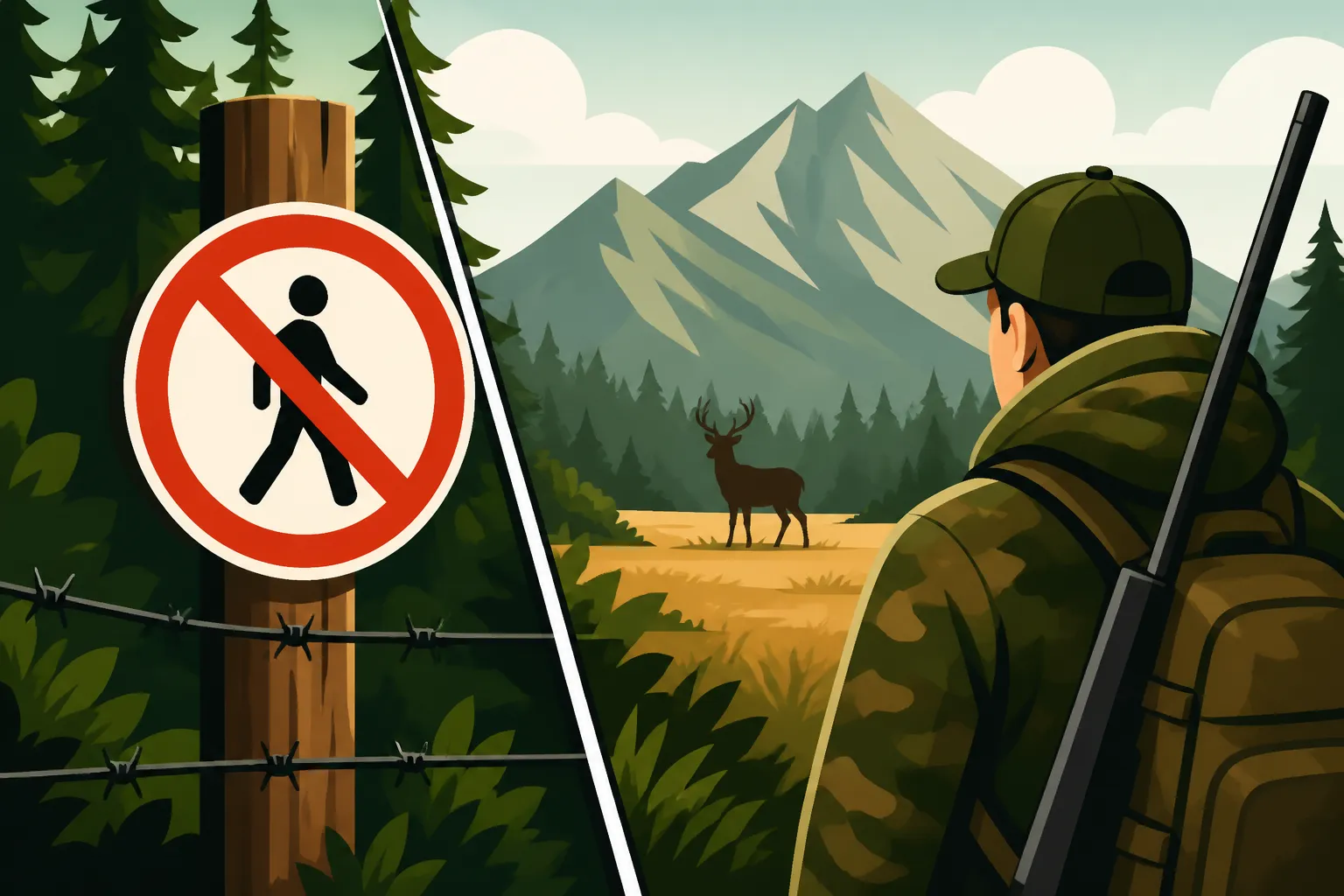
A common misconception among hunters is that if private land isn't explicitly "posted" with "No Trespassing" signs, it's fair game. This is absolutely false in British Columbia. While prominently displayed "No Trespassing" signs or clear fencing certainly serve as undeniable notice that entry is prohibited, their absence does not grant you permission to enter or hunt on private land. The Trespass Act does not require land to be posted for it to be considered private property.
The purpose of signs is primarily to make it easier to prove a landowner's intent to prohibit entry, which can be relevant in legal proceedings. However, whether marked or unmarked, the legal status of the land as private remains. It's the hunter's responsibility to know whose land they are on. This is where tools like the GoHunt app, which provides detailed property boundaries, become indispensable. They help you avoid those awkward situations where you've unknowingly crossed a property line into an unposted private field while trying to intercept a herd of elk. Always err on the side of caution.
Penalties for Illegal Trespass While Hunting
The consequences of trespassing while hunting in British Columbia can be severe and far-reaching. Under the Trespass Act, a person who trespasses on enclosed land or enters private land after being asked to leave by the owner can be fined up to $2,000 for a first offense, or face imprisonment for up to six months. Repeat offenders can face higher fines and longer jail terms.
Beyond the Trespass Act, trespassing while hunting can also lead to charges under the Wildlife Act. If you are found hunting on private property without permission, you could face significant fines, potentially have your hunting licence suspended or revoked, and even have your firearms and equipment seized. These penalties are not taken lightly by the BC Conservation Officer Service (BCCOS) or the RCMP. A conviction can permanently impact your ability to acquire hunting licences in the future, not just in BC but potentially across Canada, as inter-jurisdictional agreements often share this information. It's a serious matter that can quickly end a hunting career, making it crucial to always ensure you have explicit permission before hunting on any land that isn't clearly identified as public Crown land.
Gaining Access to Private Land for Hunting
For many hunters, the ideal scenario is to hunt on public land. However, some of the best hunting opportunities, particularly for species like deer, elk, or waterfowl, can be found on private agricultural lands or timber holdings. Gaining access to these areas requires a proactive, respectful approach and a clear understanding of what landowners need and expect.
Seeking Permission: The Golden Rule
The absolute golden rule of hunting on private land is to always seek and obtain explicit permission from the landowner or occupier before stepping foot on their property. There are no shortcuts or grey areas here. This isn't just a legal requirement; it's a matter of courtesy, respect, and building positive relationships between hunters and landowners. Many landowners are open to granting access, especially if you approach them respectfully, explain your intentions, and demonstrate that you are a responsible and ethical hunter.
When approaching a landowner, be polite, well-groomed, and concise. Introduce yourself, explain why you're interested in hunting their property (e.g., "I've noticed some great deer activity near your back forty"), and clearly state your proposed hunting methods (e.g., archery only, specific dates, target species). Offer to share some of your harvest, help with chores, or provide your contact information. Be prepared for a "no," and accept it graciously if that's the answer. A simple "no" today doesn't mean "no" forever; circumstances can change, and a polite request might open doors in the future. Remember, it's their property, and they have every right to refuse.
Formal Access Agreements and Leases
For properties where hunting pressure is high, or for landowners who want more structured control, formal access agreements or hunting leases might be an option. These can range from a simple written agreement outlining the terms of access (e.g., specific dates, areas, species, safety rules) to a more complex, paid lease arrangement. A written agreement protects both parties by clearly defining expectations and responsibilities. It's especially useful for larger properties or for securing access over multiple seasons.
In these agreements, landowners might specify things like vehicle access points, areas to avoid (e.g., near livestock, residences), specific game management goals, or even requirements like carrying extra liability insurance. While less common for the average resident hunter in BC than in some other jurisdictions, formal agreements can be a solid option for securing consistent access to prime hunting ground. Sometimes, local rod and gun clubs or conservation organizations may also negotiate these agreements with landowners, providing their members with controlled access and often carrying the necessary insurance. This can be a great way to gain reliable access while supporting conservation efforts.
Leveraging Local Knowledge and Community Connections
One of the most effective ways to gain access to private land often involves tapping into local knowledge and community connections. If you're new to an area or simply looking for new hunting opportunities, spending time in small towns, talking to local residents, and building relationships can be invaluable. This isn't about being sneaky; it's about being part of the community.
Visit local diners, general stores, or hardware shops. Engage in respectful conversation, mention your interest in hunting, and ask if anyone knows landowners who might be open to granting permission. Often, a trusted local resident can make an introduction for you, which goes a long way in building trust with a landowner. Being known as a responsible, ethical hunter within a community can open doors that simply knocking on a stranger's door might not. Supporting local businesses and contributing to the community can also indirectly help foster goodwill that benefits hunters as a whole. Remember that building these relationships takes time and effort, but the rewards—in terms of both access and camaraderie—are often well worth it.
Navigating Private Industrial Forest Lands
British Columbia has vast tracts of privately owned industrial forest lands, particularly on Vancouver Island and in other coastal regions. Companies like Mosaic Forests and TimberWest manage huge areas that, while private, often have unique access policies that differ from smaller private holdings. These lands present both opportunities and challenges for hunters.
Understanding Private Forest Land Regulations
Unlike small private farms, large industrial forest companies manage their lands primarily for timber production. They often have specific regulations and access policies designed to ensure safety, manage wildfire risk, protect their assets, and maintain operations. These regulations can change frequently due to logging activity, weather conditions (like fire bans), or road maintenance. It's a common area of confusion for hunters, especially those unfamiliar with Hunting Vancouver Island Blacktail in Second Growth.
Companies like Mosaic Forests, for example, often operate a complex system of gates, permits, and designated access points. You cannot assume that just because a road is open today, it will be open tomorrow, or that general public access is allowed without specific permission or a permit. These companies invest heavily in infrastructure and managing their operations, and unauthorized access can disrupt their work, create safety hazards, and lead to significant liability issues for them. It's vital to research the specific company owning the land you're interested in and understand their rules.
Access Permits and Gates
Access to private industrial forest lands often requires purchasing a permit or checking specific online resources for daily access information. GoHunt's mapping features can sometimes highlight these areas, but it's always best to go directly to the source. Companies like Mosaic Forests typically offer recreational access permits for a fee, which grant you access to specific areas during certain times, often with restrictions. These permits are crucial. Attempting to bypass a gate, even if it appears unlocked or damaged, is a serious offence and can lead to prosecution for trespass.
Gates are put in place for a reason – usually safety, security, or operational control. Even if you have a permit, you must adhere to all listed conditions, which often include restrictions on certain activities, specific hours of access, or requirements to contact the company if you encounter issues. Checking for British Columbia Road and Weather Closures is also critical, as active logging operations or fire risks can lead to sudden closures of vast areas, even if you hold a permit. Always assume that if there's a gate, you need official permission or a permit to proceed beyond it.
Respecting Industrial Operations and Closures
When you do gain access to private industrial forest lands, whether through a permit or specific permission, it's absolutely essential to show the utmost respect for their ongoing operations. This means being aware of active logging areas, heavy equipment, and log trucks. These are industrial workplaces, and safety is paramount. Always give way to industrial traffic, and if you encounter active logging, maintain a safe distance and avoid interfering with their operations.
Respect also extends to closures. If a road or area is closed, even if it seems inconvenient for your hunt, it's closed for a reason. These closures might be due to active falling, blasting, road building, or high fire danger. Disregarding these closures not only puts you at risk but also jeopardizes future public access for all hunters. Companies might react to repeated trespass incidents by closing more areas permanently, leading to a loss of hunting opportunities for everyone. Hunters who demonstrate responsible behaviour, follow rules, and respect industrial operations are more likely to see continued access to these valuable hunting grounds.
Dealing with Landowner Disputes and Enforcement
Even the most careful and well-intentioned hunter can sometimes encounter a situation involving private land and potential disputes. Knowing how to de-escalate, communicate effectively, and understand the role of law enforcement is crucial for resolving these situations constructively.
Preventing Confrontations and Misunderstandings
The best way to deal with landowner disputes is to prevent them from happening in the first place. Clear communication is key. Before you even head out, confirm property boundaries using reliable maps, and if you have permission to hunt private land, carry that permission with you—preferably in writing. If you're hunting near a boundary, be acutely aware of where you are and avoid taking shots that could send game onto neighbouring private property without permission.
If a landowner approaches you while you're hunting, remain calm and polite. Introduce yourself, explain what you're doing, and if you have permission, present it clearly. Listen to their concerns without becoming defensive. Often, misunderstandings arise from simple misidentifications or a lack of awareness about boundaries. A friendly conversation can often resolve issues before they escalate. It's also a good idea to wear highly visible clothing, like blaze orange, when in areas with potential for shared public/private access, not just for safety but also to identify yourself clearly as a hunter. This can help prevent misunderstandings from a distance.
The Role of Conservation Officers and RCMP
If a dispute escalates or if you witness blatant trespass or poaching, it's important to know who to contact. In British Columbia, the primary enforcement agencies are the BC Conservation Officer Service (BCCOS) and the RCMP (Royal Canadian Mounted Police). Conservation Officers specifically enforce the Wildlife Act and other environmental legislation, while the RCMP handles general criminal matters, including the Trespass Act.
If you're involved in a dispute over land access, and you feel threatened or the situation is becoming confrontational, disengage and contact the RCMP non-emergency line. For concerns related to hunting violations, such as hunting without a licence, hunting out of season, or poaching, contact the BCCOS Report All Poachers and Polluters (RAPP) line. Never attempt to enforce the law yourself or escalate a situation. Provide clear, factual information, including location, descriptions of individuals or vehicles, and the nature of the issue. Both agencies are trained to handle these situations, and they are the appropriate authorities to intervene.
Reporting Trespass Incidents
If you witness someone else trespassing while hunting, or if your property is being trespassed upon, reporting the incident to the appropriate authorities is crucial. For property owners experiencing repeated trespass, documenting incidents with photos, dates, and times can be very helpful for law enforcement. As a hunter, if you observe another hunter trespassing, especially if they are also committing wildlife violations, you have an ethical responsibility to report it.
The RAPP line (1-877-952-RAPP (7277)) is the dedicated provincial hotline for reporting known or suspected violations of environmental and wildlife laws. When you call, be prepared to provide as much detail as possible:
- What you observed (e.g., hunter on private land without permission, shooting over a road).
- Where it occurred (specific location, MU, nearest landmark).
- When it happened (date and time).
- Who was involved (descriptions of individuals, vehicles, licence plates).
- Why you believe a violation occurred.
Your anonymity can be protected. By reporting irresponsible or illegal behaviour, you contribute to the safety of all outdoor users and help maintain the integrity of hunting in British Columbia. Responsible reporting is a key part of self-policing within the hunting community.
Retrieving Game from Private Property
It's a hunter's worst nightmare: you make a good shot, but the animal runs, crosses a fence, and drops dead on private property. What do you do? This situation requires careful consideration of both ethics and legal obligations. Your primary goal is to retrieve your game respectfully and legally.
Legal Obligations After a Shot Animal Crosses a Boundary
British Columbia's Wildlife Act generally dictates that you must make a reasonable effort to retrieve game you have wounded or killed. Wasting game meat is a serious offense. However, this obligation does not automatically grant you the right to trespass on private property to retrieve an animal. The moment that animal crosses onto private land, the landowner's rights regarding their property take precedence.
Therefore, you are legally obligated to retrieve your game, but you must do so without trespassing. This creates a dilemma, and the only legal solution is to immediately seek permission from the landowner. If you shoot an animal that travels onto private land, the very first step, after ensuring the animal is down and safe to approach, is to locate the landowner. Do not cross the property line until you have their explicit permission. Taking a few extra minutes to find the owner, rather than rushing across a fence, can save you a world of legal trouble and prevent a bad encounter.
Contacting the Landowner for Retrieval
This is where all those efforts in building relationships and researching land ownership pay off. If you've been using tools like GoHunt to identify property lines, you might also have landowner contact information, or at least be able to quickly identify the owner's name to ask locals. Approach the landowner calmly and respectfully. Explain the situation: you've lawfully harvested an animal, it's now on their property, and you are seeking their permission to retrieve it.
Be prepared to offer proof that the animal is yours and was legally harvested (e.g., your licence, tag, showing them where you shot it from public land). Many landowners, when approached respectfully, will understand the situation and grant permission, perhaps with conditions (e.g., "only walk through this field," "don't bring a vehicle"). They might even offer to help. If they refuse, you are in a difficult spot. You cannot force access. In rare cases, if a landowner absolutely refuses, you may need to contact the BC Conservation Officer Service for assistance or guidance on how to proceed, as abandoning lawfully killed game could put you in violation of the Wildlife Act. This is a nuanced situation and the BCCOS can sometimes mediate or advise on such cases.
When to Involve Law Enforcement
Involving law enforcement should be a last resort, after you have exhausted all attempts to gain permission directly from the landowner. If a landowner refuses permission to retrieve your legally harvested game, and you are concerned about violating the Wildlife Act by wasting meat, you should contact the BC Conservation Officer Service. Explain the full situation to them, including your efforts to contact the landowner and their refusal. The BCCOS can then assess the situation and provide guidance, or potentially intervene on your behalf.
It's important to understand that while they can advise and sometimes mediate, the BCCOS cannot compel a private landowner to grant access. Their role would be to ensure you are not violating the Wildlife Act by abandoning game and to determine if any other regulations apply. In cases where retrieval becomes impossible due to a landowner's refusal, documenting your efforts to gain permission (who you contacted, when, their response) will be crucial if you are ever questioned about not retrieving the animal. This is a complex ethical and legal tightrope, and respect for private property rights must always be balanced with your responsibility as a hunter.
Key Differences: Crown Land vs. Private Land Access
To help visualize the distinctions and requirements, here’s a quick overview of access rules for hunting in British Columbia:
| Feature | Crown Land (General Public Access) | Private Land (Agricultural, Residential) | Private Industrial Forest Land (e.g., Mosaic, TimberWest) |
|---|---|---|---|
| Ownership | Provincial Government (publicly owned) | Individual or private entity | Large timber companies |
| Default Access for Hunting | Generally open, with adherence to hunting regulations. | No access without explicit permission from owner. | Restricted access; often requires permits, specific hours, or closures. |
| Trespass Signs Required? | N/A (not applicable, it's public) | No. Trespass can occur even without signs or fences. | Often posted with company-specific rules, gates, and closure signs. |
| Permission Needed? | Not for general entry, but specific areas (parks) may have rules. | Absolutely essential and should be verified. | Yes, typically through formal permits or by contacting the company directly. |
| Mapping Tools | iMapBC, Backroad Mapbooks, GoHunt for MUs/features. | GoHunt, iMapBC, regional district maps for property boundaries & owners. | Company websites (e.g., Mosaic Forests), GoHunt for boundary overlays. |
| Typical Activities | Hunting, fishing, camping, hiking, trapping. | Primarily agriculture, residence; hunting by permission. | Logging, silviculture; hunting by permit/specific access agreements. |
| Enforcement | BCCOS for wildlife violations; RCMP for other criminal matters. | RCMP for Trespass Act violations; BCCOS for Wildlife Act violations. | RCMP for Trespass Act violations; company security/enforcement. |
Always double-check official resources and the current British Columbia's Two-Year Regulations Synopsis before heading out. Staying informed is the best defense against accidental trespass.
Disclaimer
The information provided in this guide is for general informational purposes only and does not constitute legal advice. Laws and regulations regarding hunting and land access in British Columbia can change, and specific situations may require legal counsel. Always consult the official British Columbia Hunting and Trapping Regulations Synopsis, relevant provincial acts, and local authorities for the most accurate and up-to-date information. It is the hunter's responsibility to understand and comply with all applicable laws and regulations.