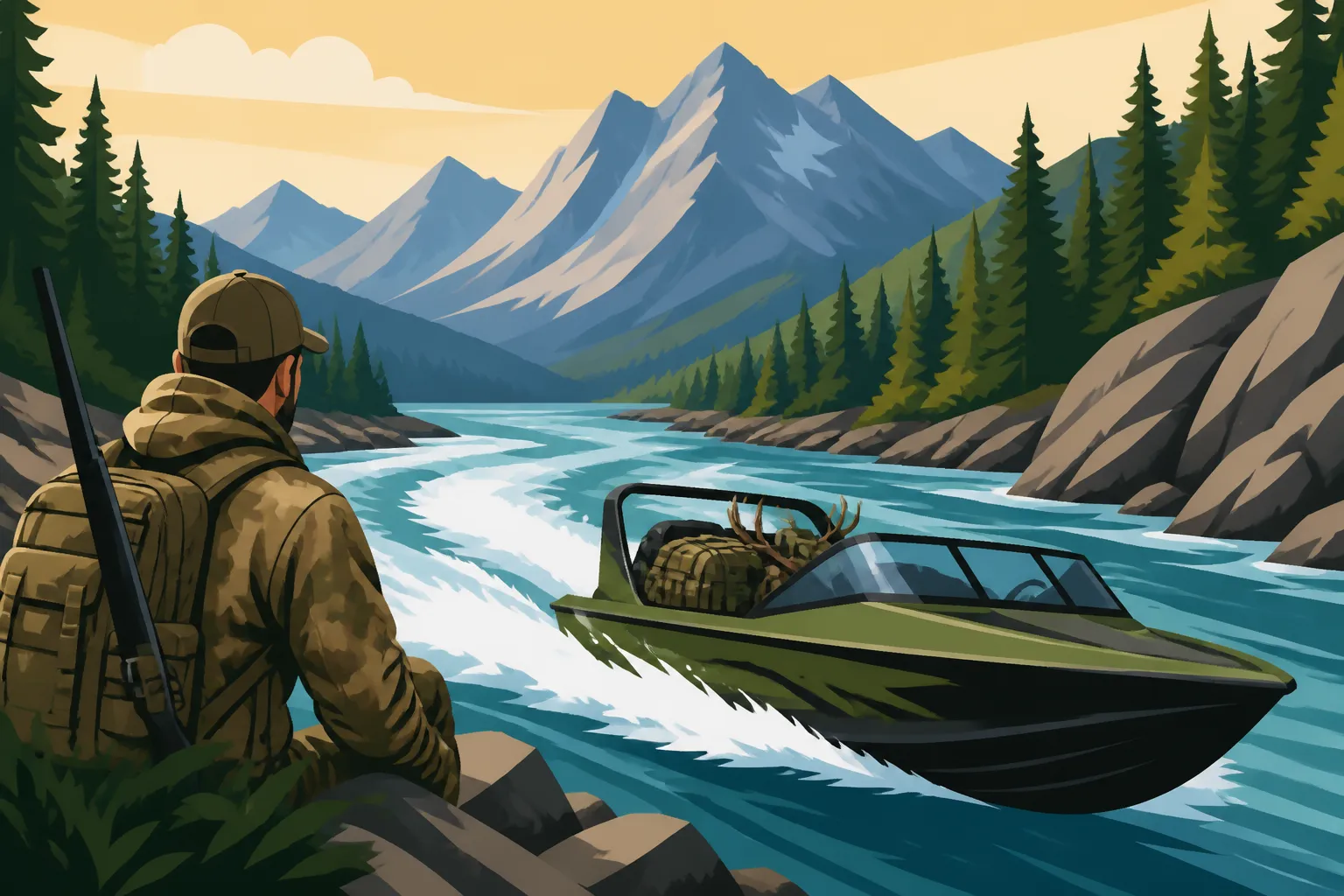
Jet Boat Access on British Columbia Rivers
The gnawing frustration of staring at a map, seeing pristine hunting grounds just out of reach because a river cuts off access, is a feeling many British Columbia hunters know intimately. Those deep valleys and untouched mountainsides hold incredible potential, but conventional vehicles can't get you there, and a long backpack slog might not be feasible for a full hunt or packing out heavy game. This guide is all about demystifying jet boat access on British Columbia rivers, transforming those distant dreams into tangible hunting adventures by showing you how to safely and effectively use these specialized vessels to unlock truly remote wilderness.
Unlocking Remote Hunting Opportunities with a Jet Boat
British Columbia is a vast wilderness, with countless rivers carving through its diverse landscapes, creating natural highways into otherwise inaccessible regions. For the intrepid hunter, these waterways represent a unique opportunity to escape the heavily pressured areas found closer to road networks and discover grounds where game might be less wary and populations more robust. A jet boat isn't just a means of transport; it's a key that unlocks a different kind of hunting experience, one defined by solitude, raw wilderness, and the thrill of self-reliance.
Overcoming Geographical Barriers
Imagine standing on a logging road, looking across a wide, swift river at a mountain slope teeming with potential mule deer or moose habitat. Without a jet boat, that slope remains a tantalizing but unreachable promise. Rivers, with their ever-changing currents, hidden shoals, and rocky bottoms, are formidable barriers to traditional prop-driven boats. Most conventional vessels simply can't handle the shallow, turbulent conditions characteristic of many interior BC rivers. This is where the jet boat shines, designed specifically to operate in water so shallow it would shred a propeller. It transforms those challenging rivers into your personal hunting highway, allowing you to bypass dead-end roads, navigate around private land, and penetrate deep into provincial forests and mountain ranges where the only other access might be by foot, horseback, or float plane.
Reaching Unpressured Hunting Grounds
One of the most significant advantages of utilizing a jet boat for hunting in British Columbia is the ability to reach areas that see minimal human pressure. Near towns and main roads, game animals are often more educated, nocturnal, and dispersed due to constant human activity. Further upriver, however, beyond the reach of casual hikers, quadders, or even most other hunters, the environment changes dramatically. Here, you're likely to find game that hasn't seen a human in weeks, if not months. This translates to animals that are more predictable in their movements, less skittish, and often hold greater trophy potential because they haven't been subjected to relentless hunting pressure. The commitment required for a jet boat hunt inherently filters out many hunters, ensuring that the reward for your effort is a truly wild and challenging experience in untouched wilderness.
Choosing the Right Jet Boat for British Columbia's Demanding Rivers
Selecting the proper jet boat for hunting British Columbia's diverse and often treacherous rivers is a critical decision. It’s not a one-size-fits-all scenario; the ideal boat depends on the specific rivers you plan to navigate, the species you're pursuing, and the size of your hunting party and gear. Investing in the right vessel means the difference between a successful, safe trip and one fraught with mechanical issues or accessibility problems.
Types of Jet Boats and Their Suitability
When you start looking at jet boats, you'll quickly discover there's a spectrum of designs, each with its own strengths.
- Aluminum Flat-Bottom or Mod-V Hulls: These are arguably the most common and versatile for BC river hunting. Manufacturers like KingFisher, Outlaw Marine, and Custom Weld produce robust aluminum boats that can withstand repeated impacts with rocks and gravel bars. Flat-bottom designs offer incredible shallow-water performance, often running in just a few inches of water, but can be rougher in choppy conditions. Mod-V hulls, with a slight V-shape, offer a smoother ride in rougher water while still maintaining excellent shallow-water capability. Their open design often provides ample space for gear, hunters, and packed-out game. These are excellent for longer river runs and carrying significant loads.
- Smaller Outboard Jet Skiffs/Jon Boats: For those on a tighter budget or planning to navigate exceptionally tight and shallow creeks, a smaller aluminum skiff equipped with an outboard jet motor (where the propeller is replaced by a jet pump) can be a viable option. These are often lighter, more maneuverable, and easier to launch and retrieve in remote locations. However, they typically have less carrying capacity and are more susceptible to larger waves or strong currents. They excel in tight, technical water but might feel underpowered or overloaded on a main river with a large hunting party and several days of gear.
- Inflatable Jet Boats: While less common for dedicated big game hunting in BC due to their vulnerability to punctures from sharp rocks or submerged logs, inflatable jet boats do offer extreme portability and excellent shock absorption. They are primarily used for white-water rafting or accessing very specific, extremely shallow rapids that even aluminum boats might struggle with. They are generally not recommended for hauling out large game or multi-day expeditions due to their limited robust carrying capacity and overall durability concerns in a harsh environment.
Essential Features for River Hunting
Beyond the basic hull type, several features are non-negotiable for a British Columbia hunting jet boat.
- Robust Hull Construction: This is paramount. British Columbia rivers are unforgiving. You will hit rocks, scrape gravel bars, and potentially bump into submerged timber. A heavy-gauge aluminum hull (typically 1/4 inch on the bottom) with reinforced keel protection and sturdy construction is essential to absorb these impacts without structural damage. Look for fully welded seams, not riveted, for maximum integrity.
- Powerful, Reliable Engine: You need enough horsepower to fight strong currents, get on plane quickly, and carry a heavy load of hunters and gear. A reliable, well-maintained engine (e.g., Mercury, Yamaha, Honda) is crucial. Many experienced BC jet boaters swear by specific brands and models for their proven reliability in these demanding conditions. A minimum of 150-200 horsepower is often recommended for larger river boats, but more is always better when you're hauling several hundred pounds of meat upriver against a stiff current.
- High-Quality Jet Pump: The heart of a jet boat is its pump. Brands like Hamilton Jet are renowned for their performance and durability. A good pump efficiently converts engine power into thrust, allowing the boat to move effectively in shallow water and handle heavy loads. Look for features like clean-out ports that allow you to easily clear debris (like weeds or small sticks) that can get sucked into the intake.
- Fuel Capacity: Remote hunting means long stretches without fuel. Ensure your boat has adequate built-in fuel tanks or plan for auxiliary fuel containers. Calculating fuel consumption needs to account for upstream travel against current (which uses significantly more fuel), downstream travel, and potential idling or maneuvering. It’s always wise to carry more fuel than you think you’ll need, plus a healthy reserve.
- Navigation and Safety Equipment: GPS and detailed river maps are indispensable. A good marine GPS with charting capabilities can mark waypoints for known hazards, campsites, and hunting spots. A depth sounder, even if it only gives you a few inches, can be incredibly useful in identifying shallow areas. VHF radio is critical for communication if you encounter other boats or need to call for help (though cell service is often non-existent). Don't forget all standard safety gear: life jackets for every occupant, a first-aid kit, fire extinguisher, paddle, bailing device, and a throw bag. Considering the remote nature of these hunts, a satellite communication device like a Garmin inReach or a Satellite Communication on a Remote Hunt device is absolutely essential for emergencies.
Budgeting and Ownership Considerations
The reality is that jet boats are a significant investment. A new, well-equipped aluminum jet boat suitable for serious BC hunting can easily range from $80,000 to over $150,000. Used boats can be found for less, but thorough inspection by a knowledgeable mechanic is vital. Beyond the initial purchase, consider:
- Maintenance: Jet boat engines and pumps require regular, specialized maintenance. Impellers, wear rings, and intake grates can suffer wear and tear from running in abrasive, shallow water. Regular oil changes, spark plug replacements, and winterizing are also crucial.
- Fuel Costs: As mentioned, these engines are powerful and thirsty, especially when pushing heavy loads upstream. Fuel will be one of your largest ongoing expenses.
- Storage and Insurance: Where will you keep it? Can you insure it for the kind of remote use you intend? These are important questions to answer upfront.
- Trailering: A robust, reliable trailer is also a necessity, capable of handling rough launch ramps and long hauls.
While the upfront costs can seem daunting, for those committed to accessing the unparalleled hunting British Columbia offers off the beaten path, a jet boat represents a worthwhile investment that opens up years of incredible adventures.
Mastering the Waters: Navigating British Columbia's Dynamic Rivers Safely
Navigating a jet boat on British Columbia's rivers is an art form, demanding a unique skill set and an intimate understanding of river dynamics. These aren't lakes or calm ocean bays; they are living, ever-changing waterways with inherent dangers that require constant vigilance and respect. Safety isn't just a recommendation; it's a non-negotiable aspect of every trip.
Reading the River and Identifying Hazards
The most crucial skill for any jet boat operator is the ability to "read" the river. This means understanding how water moves and what its surface tells you about what lies beneath.
- Currents and Eddies: Learn to identify main current lines, back eddies, and boils. Strong currents require more throttle to overcome, while eddies can provide brief rests or a safe spot to turn around. Pay attention to how currents interact with banks and obstructions.
- Shallow Water and Shoals: This is where the jet boat excels but also where risks lie. Look for changes in water color – darker water is often deeper, lighter or milky water can indicate shallows or sandbars. Ripples and disturbances on an otherwise smooth surface can signal rocks just beneath. Experience is the best teacher here, but always proceed with caution in unknown territory. A technique called "reading the riffles" involves observing the pattern of small waves and disturbances to identify the deepest channels.
- Submerged Obstructions (Sweepers and Strainers): Logs, fallen trees, and debris are constant hazards. "Sweepers" are logs partially submerged, with one end anchored to the bank and the other swinging freely in the current, ready to sweep an unwary boater overboard. "Strainers" are entire fallen trees or log jams that allow water to pass through but catch anything solid, including boats. These are incredibly dangerous, as the force of the current can pin and quickly swamp a boat. Always give them a wide berth.
- Rapids and Whitewater: Not all BC rivers are navigable by jet boat throughout their entire length. Some sections will have legitimate rapids that are either impassable or require very specific, high-skill maneuvers. Never attempt rapids that are beyond your capability or that you haven't thoroughly scouted (ideally from shore) beforehand. Sometimes, portaging around a particularly dangerous section is the only safe option.
Essential Seamanship and Safety Protocols
Beyond reading the river, excellent seamanship and adherence to strict safety protocols are paramount for any jet boat hunting expedition.
- Pre-Trip Planning and Communication: Before even launching, meticulous planning is essential. This includes studying detailed topographical maps, satellite imagery (like what you might use on GoHunt for scouting), and any available river navigation charts. Share your float plan with someone reliable who isn't on the trip, including your expected route, timeline, and emergency contacts. As mentioned, a Satellite Communication on a Remote Hunt device is critical.
- Loading and Balance: Properly loading your boat is vital for performance and safety. Distribute weight evenly, keeping heavy items low and centered. Overloading the boat will severely impact its shallow-water capability, fuel efficiency, and overall handling. Remember that coming out with heavy game will change the boat's characteristics dramatically.
- "Running Smart": This means always maintaining situational awareness, keeping an eye out for changes in the river, and never pushing beyond your comfort or skill level. Maintain a safe speed, especially in unfamiliar waters or areas with poor visibility. Always wear your kill switch lanyard.
- River Etiquette: On some BC rivers, you might encounter other recreational users, anglers, or even other hunters. Be courteous, slow down when passing smaller craft, and understand that excessive noise or reckless driving can disturb wildlife and other users.
- Emergency Preparedness: Beyond the standard safety gear, consider carrying extra parts for your engine (e.g., fuel filter, spark plugs), a toolkit, rope, a small anchor, and a high-power winch if your boat doesn't have one permanently mounted. Knowing basic mechanical fixes can save your trip. Always have a robust Emergency Planning in British Columbia's Backcountry strategy in place.
Fuel Management and Remote Logistics
Fuel is the lifeblood of a jet boat hunt, and managing it effectively in remote British Columbia is a complex logistical challenge.
- Accurate Consumption Calculations: Your fuel burn rate will vary significantly depending on current, load, and throttle usage. Always calculate consumption generously, accounting for more upstream travel and potential weather delays. A common rule of thumb is to plan on using 1/3 of your fuel to get to your destination, 1/3 for the return trip, and saving 1/3 in reserve for emergencies or unexpected detours.
- Carrying Auxiliary Fuel: For multi-day trips deep into the backcountry, you'll almost certainly need to carry extra fuel. This means sturdy, marine-grade fuel cans that are properly secured to prevent spills and safely stored away from ignition sources. Consider how the added weight of these cans will affect your boat's performance and handling, especially in shallow water.
- Caching Fuel: In some extreme cases, hunters might pre-cache fuel at strategic locations along the river during a prior scouting trip or by working with a local outfitter or air service. This is a complex operation with significant safety and environmental considerations and must be done in full compliance with all regulations.
- Managing Weight: Every ounce counts. When planning for fuel, food, gear, and then the inevitable weight of game meat on the return trip, you must be meticulous. Minimizing unnecessary items, opting for dehydrated food, and efficient packing are key to maximizing your boat’s performance and fuel economy. For example, understanding the best methods for Getting a Moose Out on a British Columbia River will significantly impact your loading strategy.
| Jet Boat Consideration | Important Aspects for BC Hunting | Risks if Ignored |
|---|---|---|
| Hull Material | Heavy-gauge aluminum (1/4" bottom), fully welded | Punctures, structural damage from rock impacts |
| Engine Power | 150-250+ HP, reliable brand | Inability to fight current, slow progress with load |
| Jet Pump Quality | Hamilton Jet or equivalent, clean-out port | Frequent clogging, reduced thrust, impeller damage |
| Fuel Capacity | Adequate for round trip + 1/3 reserve | Stranding, emergency fuel runs, safety risk |
| Navigation Tools | GPS with detailed maps, depth sounder | Running aground, getting lost, missing hazards |
| Communication | VHF radio, satellite messenger | Inability to call for help in emergencies |
| Storage Space | Ample room for gear, hunters, game | Overloading, unsafe conditions, damaged gear |
| Trailer | Heavy-duty, robust for rough roads | Trailer breakdown, launch/retrieval issues |
Strategic Planning for a Successful Jet Boat Hunt
A successful jet boat hunt in British Columbia doesn't happen by chance; it's the culmination of meticulous planning, detailed research, and a healthy dose of adaptability. This type of hunt is an expedition, requiring a different level of preparation than a roadside or short backpack trip.
Researching Accessible River Systems and Management Units
The first step in any jet boat hunt is identifying where you can actually go and what you can legally hunt.
- Management Unit (MU) Research: Begin by diving deep into the British Columbia hunting regulations synopsis. This biennial publication is your bible. Use it to understand season dates, bag limits, and specific regulations for the species you're targeting within particular MUs. Some areas might have General Open Seasons, while others are Limited Entry Hunting Zones, requiring a successful draw. Sites like the BC Hunting and Trapping Regulations Synopsis online portal, or specialized mapping tools, can help you visualize these boundaries. For detailed planning, you'll also want to understand British Columbia's Management Units and Regions.
- River Navigability and Access Points: This is perhaps the trickiest part. Not all rivers are suitable for jet boats, and navigability can change dramatically with water levels. Early spring runoff might make some rivers too high and fast, while late summer can make them too low. Local knowledge is invaluable here; talk to other jet boaters, local guides, or even forestry workers if you can. Satellite imagery and topographical maps, such as those found on platforms like GoHunt, are indispensable for identifying potential launch points, major rapids, and large obstructions. Look for areas where forest service roads might offer initial access to the river. You might also be trying to locate river access points to complement your search for Finding Open Forest Roads in British Columbia.
- Target Species and Habitat: Once you have a river system in mind, research the game species that inhabit that particular drainage. Are you after moose in a willow-choked river bottom, or mule deer on alpine slopes accessible from a riverside camp? Understanding their preferred habitat, feeding patterns, and seasonal movements (e.g., when the rut peaks for moose or elk) will help you pinpoint specific areas along the river to focus your efforts. This research might inform whether you're trying to combine your trip with Moose Hunting British Columbia's Interior or even Elk Hunting in British Columbia.
Gear Selection and Packing for River Expeditions
Packing for a jet boat hunt is a delicate balance between having everything you need for safety and comfort in a remote setting, and not overloading your vessel.
- Shelter: A sturdy, waterproof wall tent or expedition-grade dome tent is essential. Consider the weather; British Columbia can throw anything at you, from driving rain to snow, even in what are typically mild seasons. Ensure your tent can withstand strong winds and heavy precipitation.
- Cooking and Food: Propane stoves are popular for ease of use. Plan nutritious, high-energy meals that are relatively lightweight. Dehydrated options are excellent for reducing bulk and weight. Don't forget ample water or a reliable water filter/purifier.
- Hunting Gear: This includes your firearm or bow, ammunition, optics (binoculars, spotting scope), knives, game bags, and an appropriate pack for day hunting from your camp. Remember to bring all necessary licenses and tags.
- Clothing: Layering is key. Waterproof and windproof outer layers are non-negotiable. Bring plenty of warm base layers, insulated mid-layers, and extra socks. Waders or hip boots can be very useful for wading ashore in shallow areas.
- Emergency and Repair Kits: A comprehensive first-aid kit, emergency shelter, fire-starting supplies, navigation tools, and a basic jet boat repair kit (including tools, duct tape, zip ties, epoxy, and spare engine parts) are essential. Don't forget a satellite communication device!
- Game Handling Supplies: Plan for quartering and packing out game. This means sharp knives, a game processing kit, strong game bags, and a tarp. For early season hunts, methods for Keeping Meat Cool in an Early Season will be critical. If you're looking at a larger animal like a moose, understanding how to quarter and move the meat efficiently is vital, especially when dealing with river conditions. Packing Out of British Columbia's Steep Country is a consideration even if you’re using a jet boat for river access, as the kill site may still be some distance from the water.
Setting Up a Secure River Camp
Your river camp will be your base of operations, and its location and setup are crucial for comfort, safety, and hunting success.
- Site Selection: Look for a high, flat, well-drained area away from deadfall and potential avalanche paths. Proximity to fresh water (but not right on the bank) is a plus. Consider natural cover for protection from wind and rain. Pay attention to how the camp is situated relative to prevailing winds if you plan to have a campfire, and think about potential game trails.
- Bear Safety: You are in bear country. Rigorous Bear Safety While Hunting in British Columbia protocols are a must. This includes storing all food and scented items in bear-proof containers away from your sleeping area, using a bear hang or electric fence, and carrying bear spray (and knowing how to use it). Keep a clean camp, pack out all garbage, and never bring food into your tent.
- Boat Security: Secure your jet boat properly to prevent it from drifting away, especially if water levels fluctuate. Use multiple ropes, tie-offs to sturdy trees, and consider a small anchor if leaving it for extended periods. Protect the hull from sharp rocks.
- Leave No Trace: Practice strict "Leave No Trace" principles. Pack out everything you pack in, and minimize your impact on the environment. Disperse human waste properly, and ensure any fires are completely extinguished. The goal is for the next visitor (or even yourself on a future trip) to find the area as pristine as you did.
Life on the River: Setting Up Camp and Managing Logistics
Once you've navigated your way upriver and chosen your spot, setting up an effective camp and managing the day-to-day logistics becomes paramount. The remoteness amplifies the importance of every decision, from where you pitch your tent to how you manage your resources.
Establishing a Functional and Safe Camp
Your river camp is more than just a place to sleep; it’s your central hub for the entire hunt. A well-organized camp enhances safety, comfort, and ultimately, your chances of success.
- Zoned Camp Layout: Think of your camp in zones. The sleeping area should be distinct and separate from the cooking/eating area. This helps prevent attracting wildlife, especially bears, to where you rest. A dedicated "gear zone" keeps everything organized and protected from the elements, ensuring you can quickly find what you need. Consider setting up a tarp or fly over your cooking area for protection from rain and sun.
- Water Management: Access to clean drinking water is vital. If you're drawing water from the river, always filter and purify it, even if it looks clean. British Columbia's rivers are wild, and giardia or other contaminants can be present. Consider setting up a gravity filter system for ease of use. If you've identified a spring during your Scouting a British Columbia Management Unit efforts, that might be an even better option.
- Firewood and Comfort: A campfire can be a morale booster, provide warmth, and even help dry wet gear, but always check current fire restrictions and ensure it's safe to have one. Gather dead and downed wood, and never cut live trees. Keep a shovel and water nearby to fully extinguish your fire. Portable propane heaters for a wall tent can offer excellent warmth in colder conditions without the smoke and ash of a wood stove, especially if you anticipate Hunting Above Timberline in Cold Weather conditions during your trip.
- Daily Routine: Establish a routine. Knowing when and where to eat, when to head out for a hunt, and when to return to camp helps maintain discipline and maximize hunting time. Discuss plans for each day with your hunting partners, including where everyone is going and what time they expect to be back.
Daily Hunting Strategies from a River Base
Hunting from a jet boat camp allows for a unique blend of hunting methods. You can utilize the river for travel, then pivot to various land-based techniques.
- Morning Boat Hunts: Some species, like moose or bears, might be active along riverbanks in the early morning or late evening. Quietly drifting or motoring slowly along the river can offer excellent opportunities for spotting animals coming down to drink or feed. This is especially true for Hunting a British Columbia River Estuary or other riparian zones. Remember, however, the Rules on Hunting From a Vehicle generally apply to motorized boats when actively pursuing game, so know your regulations.
- Day Hunts from Shore: Most of your hunting will involve anchoring the boat and hiking inland. This could mean still-hunting through timber, glassing hillsides, or calling for moose or elk. Plan your day packs carefully, ensuring you have water, snacks, emergency gear, and appropriate clothing. Mark your boat's location on your GPS to avoid getting disoriented. Consider the effort of Hunting British Columbia's Coastal Rain if you’re in a wet region, and pack accordingly.
- Spike Camps: For areas further away from your main river camp, you might consider setting up a lightweight spike camp. This involves carrying minimal gear for an overnight stay, allowing you to penetrate deeper into prime hunting areas without having to return to the main boat each evening. This strategy can be particularly effective when you're exploring vast areas or when focusing on species that range widely.
- Game Retrieval: This is where the jet boat truly pays off. Unlike pure backpack hunts where every pound of meat must be carried on your back, having the boat means you can often get much closer to your kill site. Plan your retrieval carefully. Quartering large game like moose or elk is almost always necessary. Use heavy-duty game bags to protect the meat from flies and dirt. Efficient retrieval methods, as described in guides like Getting a Moose Out on a British Columbia River, are critical. If you have to traverse steep or challenging terrain from the kill site to the boat, methods for Packing Out of British Columbia's Steep Country will still be relevant.
Navigating Fluctuating Water Levels and Weather
British Columbia's wilderness environment is dynamic, and river levels and weather can change quickly, impacting your trip.
- Monitoring River Levels: Keep an eye on weather forecasts and, if available, local river gauge data. Significant rainfall or sudden snowmelt can cause rivers to rise rapidly, changing currents and submerging previously visible hazards. Conversely, prolonged dry spells can lead to dangerously low water, making sections impassable.
- Adapting to Weather: Be prepared for all types of weather. British Columbia is known for its unpredictable mountain climate. A sunny morning can quickly turn into a stormy afternoon. Always carry rain gear, extra layers, and be ready to adjust your hunting plans or even your camp location if severe weather threatens. High winds can make river travel treacherous, creating large waves that a jet boat, especially smaller ones, can struggle with.
- Contingency Plans: Always have a "Plan B." What if the river drops too low to exit? What if a major log jam develops? What if someone gets injured? This is where your detailed float plan and satellite communication device become lifesavers. Knowing an alternate exit route, or having emergency supplies for an extended stay, is not paranoia; it's prudent planning in the BC backcountry. This is part of comprehensive Emergency Planning in British Columbia's Backcountry.
Post-Hunt Care and Regulatory Compliance
The hunt isn't over when the animal hits the ground; in fact, some of the most critical work begins then. Proper meat and trophy care, coupled with strict adherence to British Columbia's hunting regulations, are essential for a successful and ethical harvest, especially when operating from a remote jet boat camp.
Meat and Trophy Care in Remote Environments
Far from processors and cold storage, you are solely responsible for ensuring your hard-earned game is properly cared for, preventing spoilage and respecting the animal.
- Field Dressing Immediately: As soon as an animal is down, field dress it promptly. Remove the entrails to allow the carcass to cool down as quickly as possible. This is crucial for preventing bacterial growth, especially in warmer early-season conditions. For large animals like moose or elk, quartering in the field is almost always necessary to manage the meat and cool it efficiently.
- Cooling and Airflow: The primary enemy of fresh meat is heat. Once field dressed and quartered, get the meat off the ground and into game bags. Hang the quarters in a cool, shady, breezy spot if possible, ideally overnight. A strong breeze helps create a "crust" on the meat, further protecting it. This is where your knowledge of Keeping Meat Cool in an Early Season becomes invaluable. Never stack meat directly in the sun or in a pile without airflow.
- Protection from Pests: Game bags are essential to protect meat from flies, wasps, and birds. Pepper can also be used as a deterrent. Once the meat is on the boat, keep it covered and as cool as possible. If you have ice or can make ice, it can be beneficial for longer trips, but usually, proper cooling and airflow are your best tools.
- Trophy Care: If you're taking a skull or hide, clean it as thoroughly as possible in the field. Remove as much flesh and fat as you can. For hides, salting and drying are necessary for long-term preservation, especially in warmer weather. Ensure you have the appropriate supplies for this, which can be heavy. A small amount of borax powder can help with initial preservation of capes and skulls in the field.
Understanding Regulations Specific to River Access
British Columbia has detailed hunting regulations, and some apply uniquely to how you access and hunt from a boat. Ignorance is no excuse, and violations can lead to severe penalties.
- Hunting from a Motorized Boat: It is illegal to hunt from a motorized vehicle, which includes a motorized boat, while the engine is running or in motion. You must stop the boat, kill the engine, and exit the boat (or be clearly dismounted from the boat itself) before shooting. The specific wording in the regulations about "being out of the conveyance" means you can't simply lean out and shoot while the boat is idling or even just drifting with the current. This is a critical distinction from Hunting From a Boat on the Coast where some regulations for waterfowl might differ.
- Transporting Firearms: All firearms must be transported safely and legally. This generally means unloaded and either cased or otherwise made inoperable during transit. Always refer to both provincial and federal firearms regulations.
- Compulsory Reporting and Inspection: Many big game species in British Columbia require compulsory reporting after harvest, and some also require compulsory inspection of the skull or specific parts. Know which species you're hunting and what their specific requirements are. Failure to report or inspect can result in fines and loss of future hunting privileges. You typically have 30 days to report a harvest, and there are specific locations to take heads for inspection if required.
- Evidence of Sex and Species: You must retain evidence of the animal's sex (e.g., antlers on a buck, specific parts of the carcass for an antlerless animal) and species during transport to prove legal harvest. Always consult the regulations for the specific requirements for your animal.
- Trespass Laws: While jet boats grant access to vast Crown land, always be mindful of private property along the riverbanks. Respect private land boundaries and avoid trespassing. British Columbia Trespass and Private Land Law is clear that you need permission to access private land.
- Float Hunting vs. Jet Boating: While a jet boat can be used for "float hunting" (drifting downstream while hunting), it's more commonly used for upstream access and establishing a base camp. For dedicated Float Hunting a British Columbia River, you'd often use non-motorized rafts or canoes. The regulations for hunting from any kind of boat, however, are critical to understand.
Maintaining Your Investment: Jet Boat Care and Off-Season Prep
A jet boat is a significant investment, and like any specialized equipment, it requires diligent care and maintenance to ensure longevity and reliable performance year after year. Neglecting maintenance, especially in the harsh environment of British Columbia's rivers, will inevitably lead to costly repairs and potentially ruined hunting trips.
Routine Maintenance for River Boating
Consistent, preventative maintenance is the key to keeping your jet boat running smoothly in demanding conditions.
- Post-Trip Inspection and Wash Down: After every trip, especially one that involved running in shallow, silty, or rocky rivers, thoroughly inspect your boat. Check the hull for any new dents, scrapes, or gouges. Inspect the jet pump intake grate for debris and clear it. Wash down the boat, inside and out, to remove mud, sand, and river grime. Pay special attention to flushing the jet pump and engine cooling system if you've been in silty water, as fine particles can cause abrasive wear.
- Engine Maintenance: Follow the manufacturer's recommended service schedule for your engine. This typically includes regular oil and filter changes, spark plug replacement, and checking belts and hoses. Given the intense use a hunting boat sees, it's often wise to perform these tasks more frequently than the absolute minimum. Keep an eye on your engine's gauges (temperature, oil pressure) during operation, as they are your first indicators of a problem.
- Jet Pump Maintenance: The jet pump is the workhorse in shallow water and needs particular attention. Regularly inspect the impeller and wear ring for damage or excessive wear. Running in sand or gravel will naturally abrade these components. Minor nicks on the impeller can often be filed smooth, but significant damage or wear will require replacement to maintain optimal thrust and efficiency. Ensure the steering nozzle and reverse gate operate smoothly.
- Electrical System Checks: Inspect all wiring, connections, and battery terminals for corrosion or damage. Ensure all lights, bilge pumps, and navigation electronics are functioning correctly. A reliable electrical system is non-negotiable for safety and convenience, especially when operating in remote areas where a dead battery can quickly turn into a serious problem.
Winterizing and Long-Term Storage
Once hunting season winds down, properly preparing your jet boat for the off-season is crucial to protect it from British Columbia's harsh winter elements and ensure it's ready for action come spring.
- Fuel System Care: Stabilize your fuel to prevent degradation over several months. Fill your tank to capacity to minimize condensation, or, conversely, run it nearly dry and add stabilizer. Fog the engine cylinders with fogging oil to protect internal components from rust and corrosion. Drain fuel from any smaller, auxiliary tanks.
- Engine Winterization: This involves flushing the cooling system (if not already done after your last trip), changing the oil and filter, and replacing the gear oil in the jet pump unit if applicable. Disconnect the battery and store it in a warm, dry place, keeping it charged periodically throughout the winter. Consult your engine's owner's manual for specific winterization procedures.
- Hull and Exterior Protection: Clean the hull thoroughly and apply a good quality wax or protectant. This helps shield the aluminum from oxidation and makes spring cleaning easier. Ensure the bilge is completely dry to prevent ice damage. Consider removing any valuable electronics or detachable accessories for secure, indoor storage.
- Trailer Maintenance: Don't forget the trailer! Inspect the tires for wear and proper inflation, grease wheel bearings, and check all lights and wiring. Store the trailer with the tires off the ground if possible, or rotate them periodically to prevent flat spots.
- Covering and Storage: Invest in a high-quality, breathable boat cover that protects your vessel from snow, rain, and UV rays while allowing moisture to escape. If possible, store the boat indoors or under a carport. If stored outside, ensure the cover is properly secured to prevent wind damage. Blocking the boat up slightly can also help with air circulation underneath. By following these steps, you're not just storing a boat; you're preserving your access to the incredible Bowhunting British Columbia's September Seasons and Rifle Hunting British Columbia's General Open Seasons that lie upriver for years to come.
Disclaimer
The information provided in this guide is for general informational and educational purposes only. Hunting in British Columbia involves inherent risks and complex regulations. Always consult the official British Columbia Hunting and Trapping Regulations Synopsis, relevant federal laws, and local authorities before undertaking any hunting activity. Safety should always be your top priority. Neither the author nor the publisher assumes any liability for accidents, injuries, or legal infractions incurred while following this advice.