Hunting a Mountain Pass in British Columbia
Hunting a British Columbia mountain pass can feel like cracking a secret code. Many hunters see these high-elevation routes as mere obstacles to get over, a strenuous climb to another valley. But what they often miss is that these passes aren't just pathways for us; they're vital arteries for the wildlife too, offering some of the most overlooked and rewarding hunting opportunities in the province. This guide is here to shed light on why these challenging landscapes are goldmines, how to approach them, and what you need to master them safely and successfully.
Why British Columbia Mountain Passes are Prime Hunting Territory
Mountain passes, those saddles and low points in a ridgeline, aren't just breaks in the mountains; they're bustling intersections in the wilderness. For big game animals, they represent the path of least resistance, a critical thoroughfare for everything from daily routines to seasonal migrations. Ignoring them means missing out on some incredible action.
Natural Funnels for Game Movement
Think of a mountain pass as a natural bottleneck. Animals, much like humans, prefer the easiest route, and a pass often provides the most efficient way to travel between different areas. This makes them incredibly strategic locations for hunters. During the early season, you might find mule deer traversing a pass to move from higher alpine summer ranges down to more sheltered subalpine feeding grounds as the weather begins to shift. Elk herds will use passes to travel between distinct drainages, perhaps moving from a bedding area on one side to a feeding meadow on the other. Even bears will use these natural corridors to access different berry patches or transition between timbered cover and open slopes.
These funnels become even more critical during periods of stress or seasonal change. When heavy snow starts to fall in the high country, animals are pushed down, and passes become essential exit routes to lower elevations. Conversely, in the spring, animals will start to filter back up through these same passes as new green-up appears. The sheer volume of game that can move through these relatively narrow corridors makes them fantastic places to focus your efforts. You're not just looking for a single animal; you're often looking for patterns of movement that funnel multiple animals right into your general hunting area.
Diverse Habitats and Species Concentration
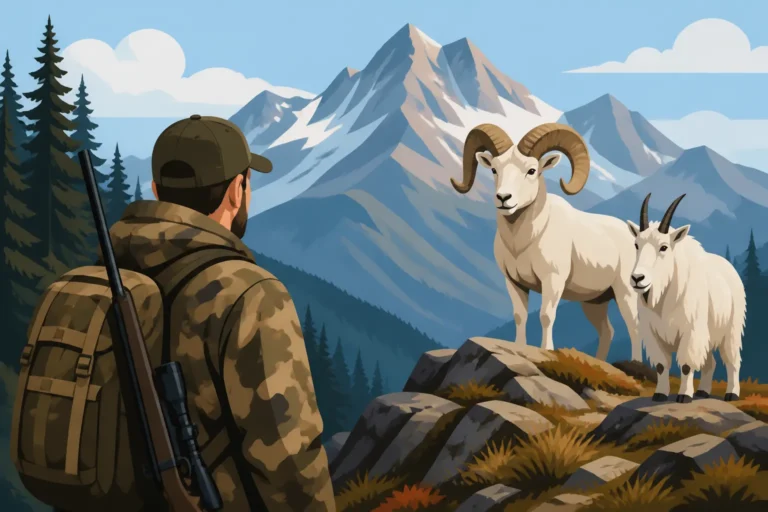
Another fantastic aspect of hunting a mountain pass is the incredible diversity of habitat packed into a relatively small geographic area. A single pass might encompass rugged, exposed rock faces ideal for mountain goats, leading into grassy slopes favoured by sheep, which then transition into dense subalpine timber that holds deer and black bears. Below the timberline, you'll often find wetlands or small tarns that provide crucial water sources, attracting even more game. This mosaic of ecosystems means that a well-chosen pass can offer opportunities for multiple species, sometimes even on the same hunt.
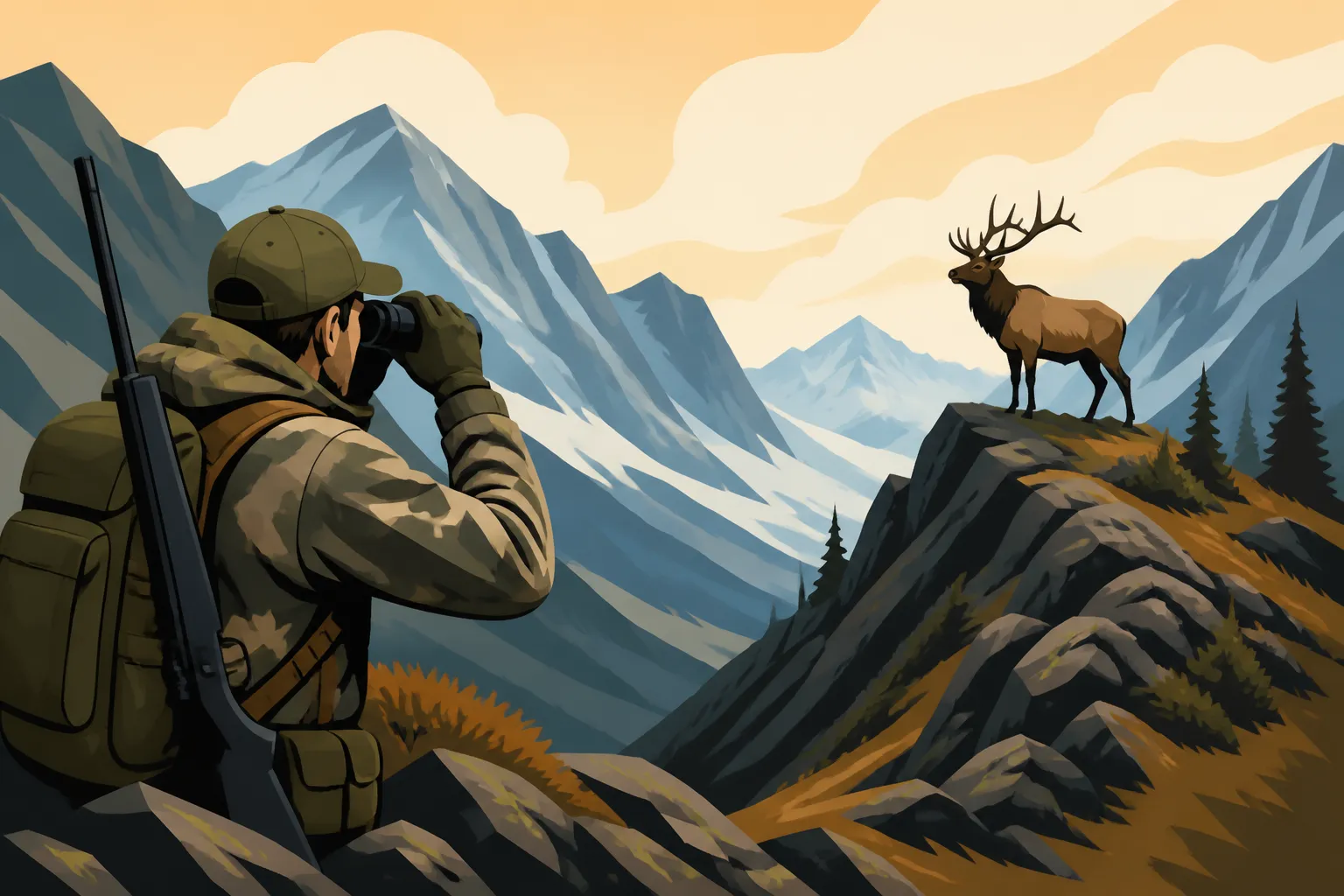
Imagine a scenario where you're set up on a high vantage point overlooking a pass. To your left, you might be glassing rocky pinnacles, hoping to spot a mature billy. As you shift your gaze to the right, sweeping across open grassy benches, you could pick out a band of bighorn ewes and lambs, with a ram not far behind. Below you, a timbered draw leading up to the pass could hold a wary mule deer buck slipping through the shadows, or a sow black bear with cubs foraging on a berry-laden slope. This concentration of diverse species, all using the same general corridor, is a unique characteristic of mountain passes and makes for an exciting, target-rich hunting environment.
Understanding the Dynamics of a British Columbia Mountain Pass
Successfully hunting a mountain pass goes beyond simply knowing animals use them. It requires a deep understanding of how the topography, weather, and seasons dictate animal behaviour within these challenging environments. This is where truly effective hunting begins.
Topography and Wind Patterns
Mountain passes are, by their very nature, shaped by extreme forces, and these forces, especially wind, play a huge role in how animals move and how you should hunt them. Passes are often wind tunnels, acting as conduits for air movement between valleys. This constant airflow creates predictable thermal currents that rise in the morning and fall in the evening, often with swirling, unpredictable winds in between, especially around saddles and high points. Animals are keenly aware of these air currents. They'll use rising thermals to carry their scent away from their bedding areas in the morning, and falling thermals to detect predators below them in the evening.
When you're trying to Stalking a Bedded Buck in Open Timber, or even just moving through the terrain, understanding these wind patterns is paramount. A sudden shift in wind can betray your presence instantly, sending animals scattering. Hunters need to meticulously plan their approach, often moving slowly and deliberately, constantly checking wind direction with a puffer bottle or a piece of string. What might appear as a steady wind at your current elevation could be swirling wildly just a few hundred feet higher or lower in the pass. Topographic features like rock outcrops, dense timber, or small ravines can also create localized micro-eddies, making scent control an ongoing challenge. Scouting these specific wind patterns beforehand can give you a significant advantage.
Seasonal Game Movement Through Passes
The timing of your hunt in a mountain pass is critical, as animal activity varies dramatically with the seasons. Early autumn, particularly September, is often prime time for high-country hunting. During this period, animals like mule deer, elk, and even bears are actively feeding and consolidating their fat reserves before winter. Passes at this time can be crucial for animals transitioning between summer feeding grounds and areas with more thermal cover. This is when you might consider Hunting British Columbia's Alpine in Early September, focusing on high passes where deer and sheep are still lingering.
As fall progresses into the colder months, the dynamics shift. Lower passes become more active as animals are pushed down from the deep snows of the high country towards their winter ranges. This can create excellent opportunities for ambush hunting, particularly for moose and elk, as they funnel through these lower elevation corridors. Later in the season, during the deer rut, bucks may use passes as they travel long distances searching for does, making these natural pinch points excellent places to intercept them. For species like mountain goats, passes can be used year-round, but specific weather events will dictate their movement patterns, often seeking shelter on certain aspects of the mountain during storms. Understanding these seasonal changes, often with the help of advanced mapping features found on services such as GoHunt, can illuminate these patterns and help you predict exactly when and where to focus your efforts.
Strategic Hunting Approaches for British Columbia Passes
Hunting mountain passes demands a calculated approach, combining diligent preparation with on-the-fly adaptability. Success in this challenging terrain often hinges on a blend of keen observation and strategic movement.
Scouting and Observation Tactics
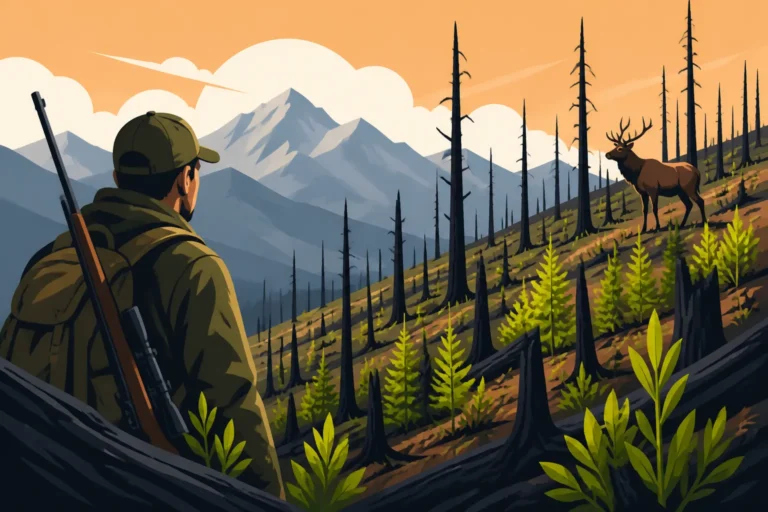
Before you even step foot in the pass with a rifle or bow, effective scouting is your most potent weapon. Start your planning by thoroughly examining detailed topographic maps and satellite imagery, much like the tools found on platforms like GoHunt. Look for key features: benches, hidden basins, water sources, natural funnels, and escape routes. Identify potential bedding areas—often on south-facing slopes for warmth, or north-facing for cooler summer bedding—and connect them to feeding areas using game trails that crisscross the pass. Pay close attention to any historical burn areas or recent clearcuts, as these can create new forage and dramatically alter game movement patterns.
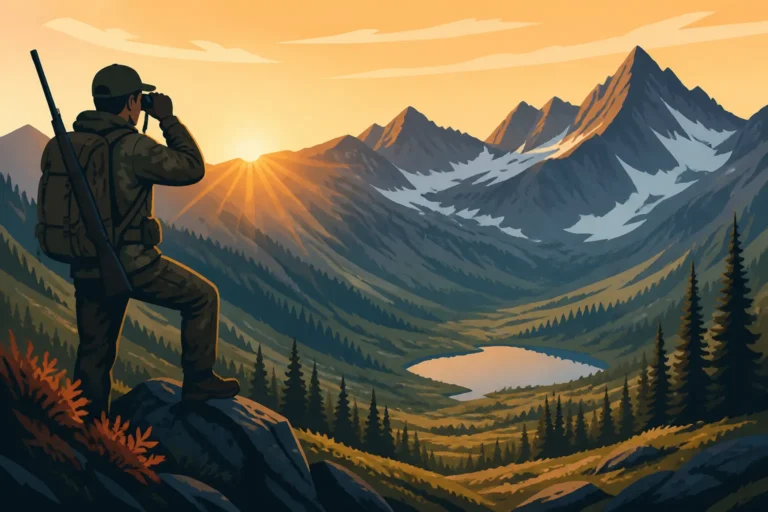
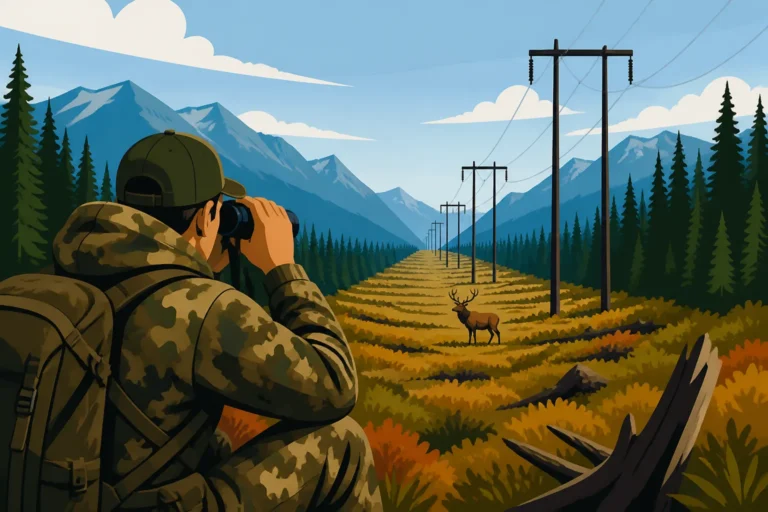
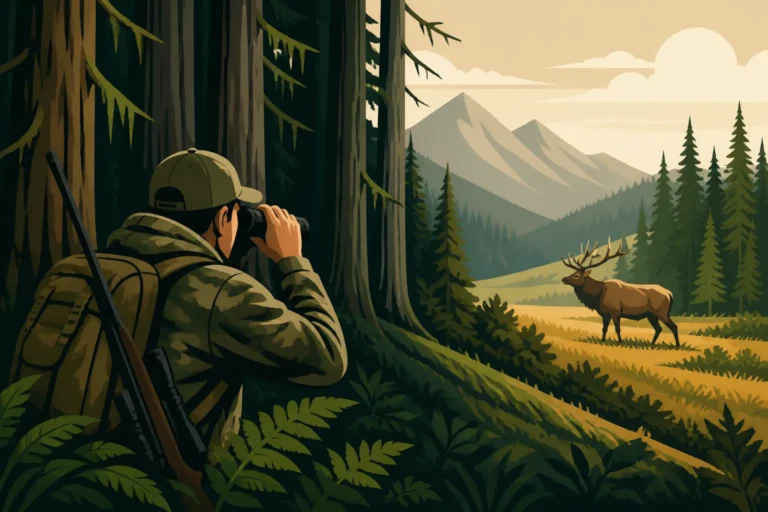
Once you're on the ground, patience becomes your virtue. Spend significant time glassing from a high vantage point, preferably one that gives you an expansive view of the entire pass and its approaches. Use high-quality optics and systematically break down the terrain. Don't just scan; pick apart every square foot of the mountain, looking for subtle movements, a patch of hide, or an antler tip. Look for old rubs, fresh tracks, and droppings to confirm recent animal activity. Even if you don't spot anything immediately, understanding the "lay of the land" – where the animals could be – is invaluable. You can refer to resources like Scouting a British Columbia Management Unit Online or Reading a British Columbia MU Map to fine-tune your understanding of the area. Early morning and late evening are usually the best times for spotting, as animals are most active.
Still-Hunting and Ambush Techniques
Depending on the specific pass and the behaviour of the game, you'll employ either a still-hunting or an ambush strategy. Still-hunting is a slow, methodical approach, where you move through the terrain, taking a few steps, then stopping to scan and listen for an extended period. This works particularly well in timbered draws leading into a pass, or along the edges of broken country. The key is to be incredibly stealthy, moving into the wind or crosswind, and using every bit of available cover to mask your approach. Be acutely aware of your footing to avoid snapping twigs or dislodging rocks. This method is all about patiently detecting game before it detects you, and then initiating a careful stalk.
Ambush techniques, on the other hand, involve setting up in a concealed position overlooking a known game trail, a saddle, or a natural feeding area within the pass. This strategy is highly effective during times of predictable game movement, such as early morning or late evening when animals are transitioning between bedding and feeding, or during the rut when they are actively seeking mates. On a platform like GoHunt, you can identify prime bedding areas just off the main travel routes, then position yourself downwind on an intercept course. The longer you can sit and observe without being detected, the higher your chances of success. Choose a spot with good visibility, comfortable back support (you'll be there a while!), and a clear shooting lane. Be prepared to wait, sometimes for hours, for the right opportunity to present itself.
Glassing Steep Country
In the expansive and often open terrain of British Columbia's mountain passes, your binoculars and spotting scope are arguably more important than your rifle. Effective glassing is the cornerstone of mountain hunting, especially when you're Glassing an Alpine Basin for Rams or searching for elusive mountain goats. It's a skill that takes practice and patience, but it's essential for locating game without expending excessive energy or spooking animals by blindly walking into them.
To glass effectively, find a comfortable, stable position with a clear view. Begin by systematically sweeping the nearest terrain, then slowly work your way outwards and upwards. Don't rush. Break the mountainside into small, manageable grids and scrutinize each section. Look for anything that seems "out of place" – a horizontal line in a vertical world, a patch of colour that doesn't quite match the surroundings, or even just the flick of an ear. Pay extra attention to areas where animals might feed, bed, or seek shelter, such as timber fringes, avalanche chutes, rocky benches, and shady pockets. Use your spotting scope to confirm details once you've located something with your binoculars. Remember, a good portion of mountain hunting isn't about walking; it's about sitting, observing, and letting your optics do the work. This disciplined approach will save you countless miles and greatly increase your chances of finding game in the vastness of a mountain pass.
Essential Gear and Safety for Pass Hunting in British Columbia
Hunting in British Columbia's mountain passes presents unique challenges that demand specific gear and a robust approach to safety. The remote, rugged, and often unforgiving environment means being prepared isn't just a good idea; it's absolutely critical for a successful and safe hunt.
Navigating Challenging Terrain
The terrain in British Columbia's mountain passes can be incredibly diverse and demanding. You'll encounter everything from steep scree slopes and loose rock slides to dense timber, boggy patches, and potentially fast-flowing creeks. Your footwear is paramount. Investing in high-quality, waterproof, sturdy mountaineering or backpacking boots designed for steep country is non-negotiable. They need to provide excellent ankle support, stiff soles for side-hilling, and superior traction on varied surfaces. You'll be glad you read up on Boots for Steep British Columbia Country when you're halfway up a shale slide.
Trekking poles are another essential tool, providing stability, reducing strain on your knees, and helping you navigate uneven ground, especially when you're Packing Out of British Columbia's Steep Country with a heavy load. In late season hunts, or even early season at higher elevations, understanding and being prepared for avalanche risk is crucial. Carry appropriate safety gear like a beacon, shovel, and probe, and know how to use them. Always assess the snowpack and avoid questionable slopes.
Weather Preparedness
Mountain weather in British Columbia is notoriously unpredictable, capable of shifting from clear skies to a torrential downpour or a sudden blizzard in a matter of hours. Being prepared for all conditions is not just smart, it's a lifeline. Layering your clothing is key: a good base layer to wick moisture, an insulating mid-layer for warmth, and a waterproof, windproof outer shell to protect against the elements. Always carry an extra warm layer, even on a seemingly mild day.
Beyond clothing, a compact, lightweight emergency shelter (like a tarp or bivy bag), a reliable fire-starting kit, and enough extra food and water to last beyond your planned trip duration are vital. Rain, fog, and unexpected cold snaps can quickly lead to hypothermia, especially if you're stationary for long periods glassing. Keep an eye on the forecast, but always pack for the worst-case scenario. Learning about Weather Windows in British Columbia's Mountains can help you plan, but never rely solely on a sunny forecast.
Emergency Planning and Communication
Hunting in remote mountain passes means you are largely on your own if something goes wrong. Being self-sufficient and having a robust emergency plan is non-negotiable. Always inform someone reliable of your exact hunting location, your planned route, and your expected return time. Carry a comprehensive first-aid kit and know how to use it for common hunting injuries.
Cell service is virtually non-existent in many British Columbia backcountry areas, so a satellite communication device like a Garmin inReach or a Zoleo is a critical piece of gear. This allows you to send and receive messages, access weather forecasts, and, most importantly, send an SOS signal in a true emergency. If you're going into deep wilderness, a satellite phone might be warranted. Bear safety is also paramount, especially in areas with grizzlies. Carry bear spray, know how to use it, and consider carrying a firearm for defense if you are properly trained and legally authorized. Taking the time to craft a thorough Emergency Planning in British Columbia's Backcountry strategy, including understanding Satellite Communication on a Remote Hunt, could very well save your life or the life of a hunting partner.
Packing Out Heavy Loads
The ultimate challenge, and indeed the reward, of a successful hunt in a mountain pass is the pack-out. Getting an animal, especially a large one like a moose or an elk, out of steep, rugged terrain is physically demanding and often requires multiple trips. This is where a high-quality external frame pack becomes invaluable. It allows you to distribute weight effectively and carry larger, awkward loads, like quarters of an animal. Make sure your pack is properly fitted and you've practiced hiking with heavy loads before your hunt.
Game bags are essential for protecting the meat from dirt, insects, and drying out. Knowing how to efficiently quarter an animal in the field is also critical. For species like mountain goat, the challenge is amplified, making you truly appreciate articles like Why Goat Hunting Is the Hardest Pack Out. The elevation, the steepness, and the distance can turn a triumphant harvest into a brutal ordeal if you're not physically prepared and equipped with the right gear. Be realistic about your physical capabilities and consider hunting with partners to share the load.
| Season | Primary Species | Movement Pattern | Hunting Strategy | Notes |
|---|---|---|---|---|
| Early Season | Mule Deer, Elk, Black Bear, Sheep, Goat | Transitioning between alpine feeding and subalpine cover | Glassing, Spot-and-Stalk | High elevations, animals still widely dispersed. Check for new green-up. |
| Mid-Season | Mule Deer, Elk, Black Bear | Using passes for daily travel between bedding/feeding | Still-hunting, Ambush | More predictable patterns, pre-rut activity for some species. |
| Rut (Fall) | Moose, Elk, Mule Deer, Blacktail Deer | Actively seeking mates, using passes as crossing points | Calling, Ambush, Still-hunting | Increased movement, often less wary animals. Focus on lower passes for moose. |
| Late Season | Mule Deer, Elk, Moose, Mountain Goat | Migrating to winter range, using lowest accessible passes | Ambush, Tracking in Snow | Snow concentrates animals, but access becomes difficult and weather more severe. |
Disclaimer
Hunting is an inherently risky activity. The information provided in this guide is for informational purposes only and should not replace professional guidance, local regulations, or personal judgment. Always prioritize safety, understand and follow all British Columbia hunting regulations, obtain the necessary licenses and tags, and be prepared for all eventualities in the backcountry.