Hunting From a Boat on the Coast
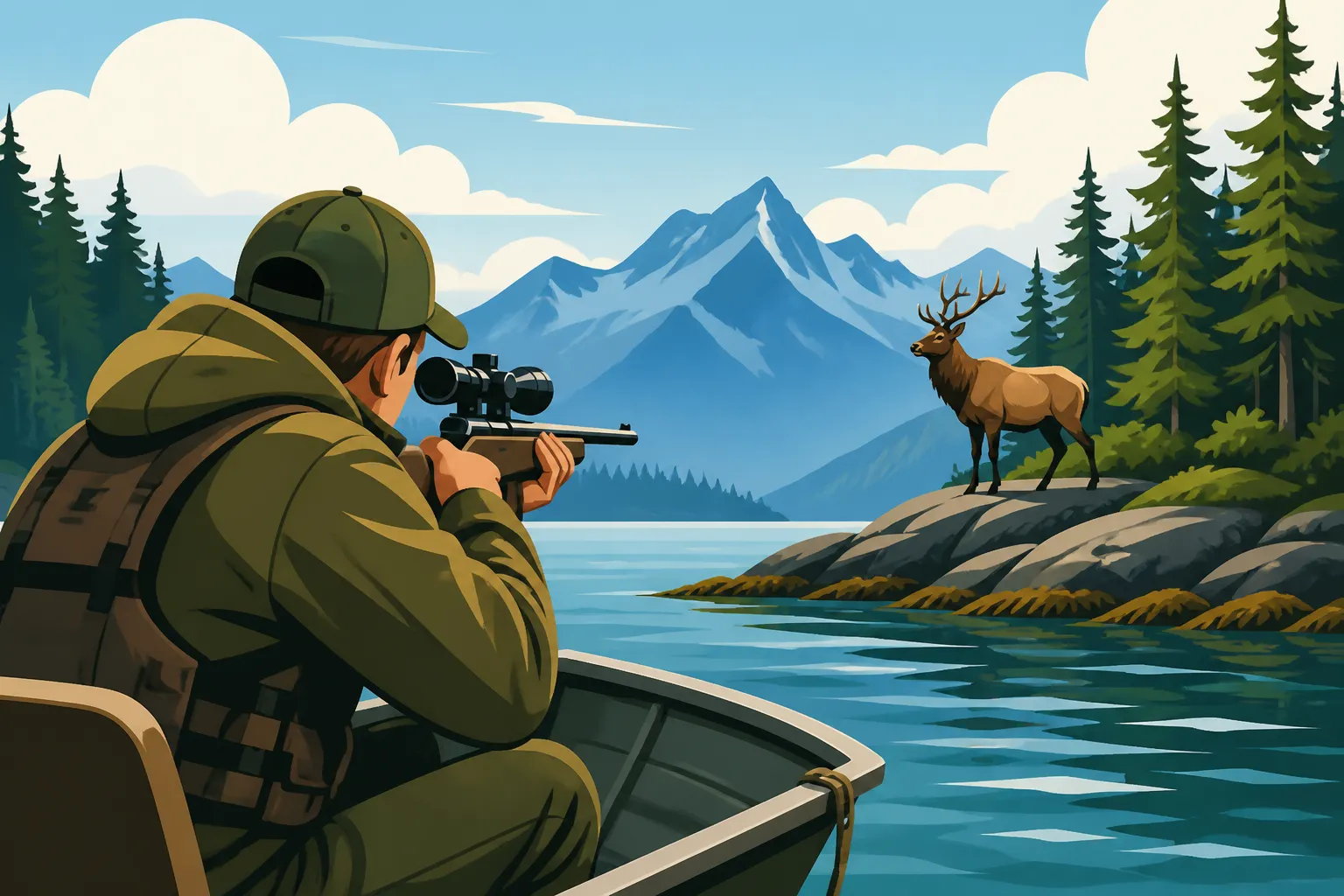
Much of British Columbia’s coast has no roads at all, so the only way to reach the blacktail on a logged hillside, the bears feeding on a sedge flat or the goats on a cliff above an inlet is by water. That sounds romantic until you are juggling tides, weather, boat law and hunting law at once. This guide explains how to hunt from a boat on the coast safely and legally.
Why the Coast Is a Boat Hunter’s Country
On a map, the BC coast looks like someone shattered a plate: thousands of kilometres of shoreline, deep fjord-like inlets, islands of every size and river mouths that open onto wide tidal flats. Roads reach only a small fraction of it. For a hunter, that is both the challenge and the reward. A boat turns an inaccessible coastline into a hunting area with almost no competition, but it also adds a layer of risk that land-based hunters never think about.
What You Can Hunt From the Water
The coast offers a surprising range of hunting for a boat-based hunter. Black bears are the classic example. In spring, coastal bears come down to the estuaries and beaches to feed on new sedge and grasses, and a hunter cruising slowly along the shoreline or anchored off a river mouth can glass a lot of country. In the fall, bears return to the creeks when salmon are running. Columbian and Sitka blacktail deer use beach fringes, logged slopes and old-growth edges, and a boat lets you reach slopes no truck ever will.
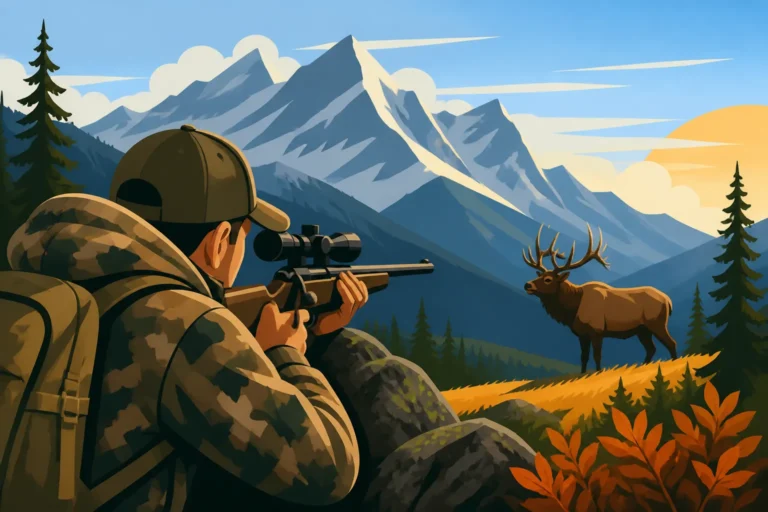
Mountain goats are another coastal species that often require a boat. In parts of the Coast Range, goats live on cliffs that rise straight out of the inlets, and the only realistic approach is to land at the bottom and climb. Roosevelt elk, where open seasons or draws exist, sometimes live in valleys that open onto the ocean. And sea ducks, geese and brant are waterfowl hunts that almost always involve a boat of some kind.
If you are new to choosing ground for this kind of hunt, Hunting a Coastal Inlet From a Boat is a good companion, and so is British Columbia Units That Need a Boat, which covers the management units where water access is the norm rather than the exception.
The Kind of Boat That Works
Coastal boat hunters use everything from big aluminium landing craft to modest open skiffs. The ideal boat for most hunters is a seaworthy aluminium boat in the range that can handle a short chop, carry two or three hunters and their gear, and be beached or anchored close to shore. A landing craft with a bow door is the gold standard for getting a moose or elk quarter aboard, but plenty of hunters do well with a simple open boat and a little creativity.
Size is a trade-off. A larger boat handles weather better and carries more, but it is harder to beach, burns more fuel and is harder to tow to a launch. A smaller boat is nimble and cheap to run, but it limits the weather you can go out in and the distance you can safely travel. Many experienced hunters use a mid-sized boat as a mother ship and carry a small inflatable or skiff for getting to shore, especially where beaches are steep or rocky.
Whatever you run, it needs to be reliable. Coastal hunting puts you far from help. A reliable engine, a backup kicker motor, spare fuel, tools and a working bilge pump are not luxuries; they are the difference between an adventure and a rescue.
The Upside and the Downside
The upside of boat hunting is obvious. You can reach country that land hunters will never see. Animals in remote inlets are often less pressured and more predictable. And there is something special about glassing a beach at first light from a quiet boat, with the tide coming in and the mist lifting off the water.
The downside is that the coast does not forgive mistakes. Wind can come up in minutes and turn a calm inlet into whitecaps. Tides can strand a boat on a mudflat or float it away from a beach. Fog can roll in and make navigation difficult. And everything takes longer than you expect: launching, travelling, landing, retrieving game. The best coastal boat hunters are cautious people who plan for things to go wrong.
The Rules for Hunting From a Boat
Hunting law and boating law overlap on the coast, and you need to understand both. The rules below are a general overview; always read the current synopsis and federal regulations before you head out, because details change and specific areas carry their own restrictions.
Shooting From a Boat
British Columbia’s hunting rules restrict hunting from a boat that is under power. In general, a hunter may not hunt or shoot from a motorboat while the motor is propelling it. Once the motor is off and the boat has stopped moving under power, the situation is different, but you still need to be sure it is safe and legal to shoot. Many hunters simplify things by never shooting from the boat at all, using it purely as transport and landing to hunt on foot.
Federal migratory bird regulations add their own rules for waterfowl. Shooting migratory birds from a power boat that is under power is not allowed, and there are specific rules about what condition the boat must be in. Sea duck hunters who work from boats need to read these rules carefully. For a deeper look at waterfowl from the water, see Hunting Sea Ducks From a Boat.
You also cannot use a boat to chase, harass or herd wildlife. Driving a boat toward a swimming deer, cutting off a bear on a beach, or pushing goats along a cliff with the boat are all illegal, and they are also unethical. The boat is transport, not a hunting tool.
Swimming Animals and Loaded Firearms
British Columbia prohibits hunting big game while it is swimming. Deer, elk and bears regularly swim between islands and across inlets, and a swimming animal is an easy target that has no chance. Leave it alone. If an animal you have already shot enters the water, the situation is different, but think through how you will handle retrieval before you take a shot anywhere near the shoreline.
Loaded firearms in boats are another area where hunters get into trouble. The rules on loaded firearms in vehicles and boats are strict, and the safest approach is simple: keep firearms unloaded while the boat is moving, and load only when you are ashore or the boat is stopped and you are actually about to hunt. Read the synopsis definitions of a loaded firearm, because they include more than just a round in the chamber.
Safe shooting from a boat also means thinking about your backstop. A rifle round fired over water can skip a long way. Shooting at an animal on a beach with the open ocean behind it is a recipe for disaster if you miss.
Boating Law and Safety Requirements
Hunting law is only half the picture. Federal boating law applies to every boat on the coast. Operators of motorized pleasure craft need proof of competency, usually the Pleasure Craft Operator Card. Every boat must carry the required safety equipment for its size, including a lifejacket or personal flotation device for every person aboard, a means of signalling, a bailer or pump and other gear. Many hunters wear their lifejackets at all times, and that is a good habit.
Beyond the legal minimum, coastal hunters should carry a VHF marine radio, a chart or chartplotter, a GPS, a compass and a satellite communication device. Marine forecasts from Environment Canada are essential reading, and so are tide tables for the area you are hunting. For help choosing a satellite device, see Satellite Communication on a Remote Hunt.
The table below summarises the main legal and safety requirements to think about before a coastal boat hunt.
| Requirement | What it covers | Why it matters on a hunt |
|---|---|---|
| No hunting from a boat under power | Hunting and shooting from motorboats | Avoids illegal shots and dangerous situations |
| No hunting swimming big game | Deer, elk and bears in the water | Fair chase and legal requirement |
| No harassing wildlife with a boat | Chasing or herding animals | Protects animals and keeps hunts ethical |
| Unloaded firearms while moving | Rifles and shotguns aboard | Prevents accidents in rough water |
| Operator competency and safety gear | Every motorized pleasure craft | Legal requirement and basic survival |
| Federal migratory bird rules | Waterfowl hunting from boats | Separate from provincial rules |
Land Status Along the Shore
Just because you can reach a beach by boat does not mean you can hunt it. The coast is a patchwork of Crown land, private land, First Nations reserves, parks, conservancies and ecological reserves. Some protected areas allow hunting, others do not. Reserves are private lands for the First Nations who hold them, and you need permission to land or hunt there. Private forest land on parts of the coast has its own access rules.
Check land status before every trip. GoHunt and similar mapping apps can show land status layers alongside unit boundaries, which helps when you are planning a route along a complicated shoreline. Confirm anything important against official maps, and when in doubt, do not land.
Planning and Running a Coastal Boat Hunt
With the rules in hand, the next step is planning the hunt itself. Coastal boat hunts reward careful planning more than almost any other kind of hunt, because there is so much that can go wrong and so little help available.
Reading Tides, Wind and Weather
Tides control almost everything on the coast. A beach that is easy to land on at high tide can become a wide mudflat at low tide. A boat beached on a falling tide can be stranded for hours. A boat anchored too close to shore on a rising tide can drag or end up bumping on rocks. Before you go, read the tide tables for the area and plan your landings and pick-ups around them.
Wind is the next big factor. Many inlets have predictable daily wind patterns, with calm mornings and strong afternoon winds funnelling up or down the inlet. Outflow winds in the fall and winter can be brutal. Learn the local patterns, listen to the marine forecast, and be willing to stay in camp or turn back. No animal is worth risking a crossing in bad weather.
Fog is the third factor. Coastal fog can come in fast and stay for days, and it makes navigation difficult even with a GPS. If you are new to fog, practise navigating by chart and GPS on calm days before you need to do it in earnest. Navigating Fog on a British Columbia Coast Hunt covers the practical side.
A Step-by-Step Day on the Water
Here is how a typical day of coastal boat hunting might run for a pair of hunters chasing black bears on a spring estuary.
- Check the marine forecast and tide table the night before and decide whether the day is safe to go.
- Leave a trip plan with someone at home, including your route, landing spots and expected return time.
- Launch early, run to the hunting area with firearms unloaded and cased, and keep a lookout for logs and debris.
- Stop well off the estuary, shut the motor down and glass the shoreline and the sedge flats.
- Once you spot a legal bear, plan the approach, considering wind, tide and where you will land.
- Land quietly, secure the boat with the tide in mind, and make the stalk on foot.
- After a shot, recover the animal, field dress it and move it to the boat before the tide changes your options.
- Run home with the firearms unloaded and the boat trimmed for the extra weight.
This sequence keeps the boat as transport and the hunt on land, which is the simplest and safest way to stay within the rules. For a closer look at glassing estuaries, read Glassing for Bears on a Coastal Estuary.
Making Sure of Your Target
On the coast, species identification matters more than almost anywhere else. Grizzly bears use many of the same estuaries and creeks as black bears, and grizzly hunting is closed in British Columbia. Colour is not a reliable way to tell the two apart; coastal black bears can be brown and grizzlies can be dark. Learn to recognise the shoulder hump, face profile, ears and claws. Read British Columbia’s Grizzly Bear Closure so you know exactly what the rules say.
Sows with cubs are protected, and cubs can be hard to spot in tall sedge. Take your time. A bear that is alone on a beach for twenty minutes is much more likely to really be alone than one you glance at for ten seconds. On the coast, patience is not just a virtue; it is the law.
GoHunt and similar resources sometimes include species identification guides and harvest information. Use them, along with the official materials, to build your confidence before the hunt.
Handling Game and Getting Home
The hunt is not over when the animal is down. On the coast, getting meat out cleanly and safely is often the hardest part, and the boat is both your best friend and your biggest constraint.
Field Care in the Wet
Coastal weather is wet, mild and humid, which is hard on meat. Field dress the animal quickly, get the body cavity open to cool, and keep the meat as dry and clean as you can. Game bags are essential, and so is a tarp to keep meat out of the sand and seaweed. For more on this, see Field Dressing in British Columbia’s Wet Weather.
Bears in particular need fast attention. Their thick fat and heavy hides hold heat, and meat can sour quickly if it is not skinned and cooled. In spring, the weather can still be cool enough to give you a few hours, but in the fall the margin is much smaller.
Remember your evidence of sex and other requirements. Some species require you to keep specific parts attached to the meat or hide, and compulsory reporting applies to some animals. Plan for this before the hunt so you are not scrambling at the boat.
Loading the Boat
Getting an animal aboard is easier with a landing craft or a boat with a low transom, but even an open skiff can work if you quarter or bone out the meat. Load heavy items low and centred, and watch your trim. An overloaded boat is unsafe, especially in a chop. If you have a long run home, consider making two trips or waiting for calmer conditions.
Keep firearms, meat and gear secured. Things move around in a boat, and a rifle sliding into the bilge or a game bag going over the side is a sad way to end a good day. A few cargo straps and a couple of dry bags solve most of these problems.
When to Book an Outfitter Instead
Not every hunter has the boat, experience or local knowledge to run a coastal hunt on their own. Non-residents, of course, must hunt big game with a licensed guide outfitter or a qualifying resident. But even residents sometimes choose a guided hunt on the coast, especially for species like mountain goat or for long-distance trips into remote inlets.
Coastal outfitters often run mother ships or lodge-based hunts with skiffs for daily use, and they know the tides, winds and animals of their territories intimately. For a look at how these hunts are run, see Boat-Based Coastal Hunts in British Columbia. Whether you go guided or on your own, the principles are the same: respect the water, know the rules, and make sure of every shot.
Disclaimer
This article is for general informational purposes only and does not constitute professional advice. Laws, prices and regulations vary by location and change over time. Consult a qualified professional for guidance on your specific situation.