Deactivated Roads on British Columbia Crown Land
It's incredibly frustrating when you've scoured maps, found what looks like the perfect patch of British Columbia Crown land, only to drive up to a gate or a trench that screams "no access." We've all been there, and it can feel like a solid wall between you and prime hunting ground. This guide is all about navigating those often-overlooked and underutilized deactivated roads, transforming them from frustrating barriers into your secret weapon for accessing remote hunting opportunities across British Columbia.
Understanding Deactivated Roads in British Columbia
There's a unique language when you talk about roads in the British Columbia backcountry. You have your active logging roads, which are often well-maintained but come with their own set of rules and heavy traffic. Then you have those forgotten arteries, the deactivated roads, which present a whole different challenge and opportunity.
What "Deactivated" Really Means for Hunters
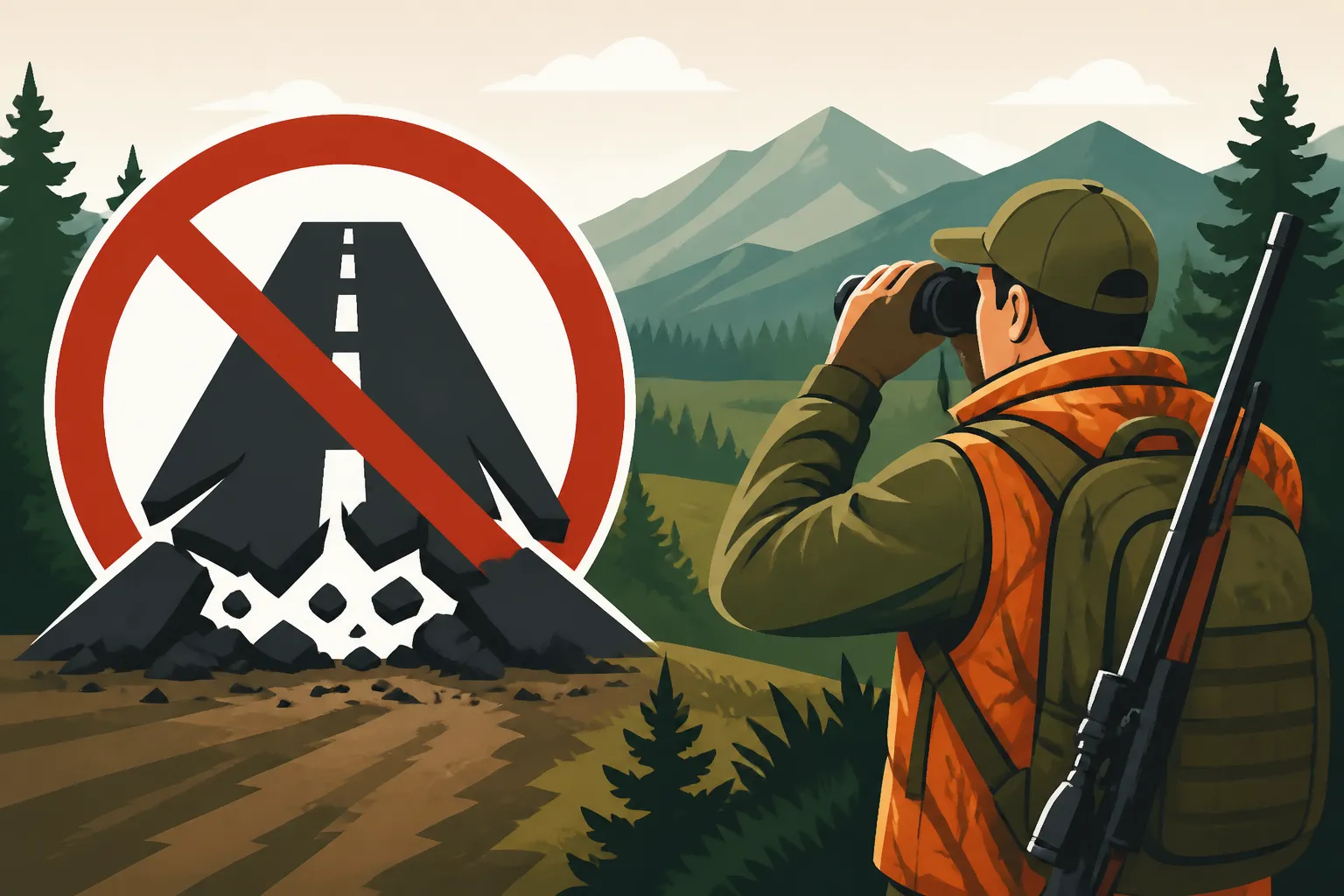
When we talk about a "deactivated" road in British Columbia, we're generally referring to old logging or resource roads that are no longer actively used or maintained by industry. Forest companies or the government will often physically block or damage these roads to prevent vehicle access, reduce environmental impact, and limit liability. This can mean anything from a sturdy gate chained shut, to massive cross-ditches dug across the roadbed, culverts removed, or even the road simply being allowed to wash out and revegetate over time. You might encounter sections completely overgrown with alder and willow, or stretches where the old bridge is gone, leaving a significant gap. The intent is clear: they don't want regular vehicle traffic on these routes. But for the adventurous hunter, this doesn't always mean no access. It simply means a different kind of access. Understanding these physical barriers and the reasoning behind them is the first step in unlocking some truly secluded hunting areas.
Why Deactivated Roads Are Hunter Gold
It might seem counterintuitive to celebrate a road that's been deliberately made difficult to use, but deactivated roads are often a hunter's best friend. The primary reason is simple: reduced pressure. When vehicle access is cut off, the vast majority of hunters are filtered out. This means you're far more likely to find undisturbed game that hasn't been pressured by trucks rumbling by every few hours. Animals in these areas tend to be less wary, hold tighter, and exhibit more natural feeding and bedding patterns.
Beyond the reduced pressure, these old roads often lead into fantastic habitat that's a perfect blend of old growth, regenerating cutblocks, and natural clearings. They penetrate deep into country that would otherwise be a grueling bushwhack. You can often follow the old road bed, even if overgrown, which provides a much easier walking surface than true virgin bush. For backpack hunters, they can be a critical pathway to establish spike camps further into the backcountry, allowing you to Set a Spike Camp Above Timberline or access pristine alpine bowls. The effort required to get past the initial deactivation often pays dividends in terms of quality hunting experiences and less competition.
Legalities and Access on Deactivated Crown Land Roads
The good news for hunters in British Columbia is that much of the province is Crown land, and as long as you have a valid hunting licence and adhere to regulations, you generally have the right to access it. Deactivated roads that are entirely on Crown land are, for the most part, legally accessible by foot, bicycle, or sometimes ATV/dirt bike, even if there's a gate. The key distinction is that while the road itself might be impassable by truck, the land it traverses remains public. However, this is where it gets tricky: you can't damage the gate or bypass it by driving off-road around it with a vehicle unless explicitly allowed. The goal of deactivation is to stop motorized traffic, not to stop foot traffic or non-motorized access.
The main legal considerations revolve around how you actually get past the physical barriers. If there's a gate, walking or biking around it is usually fine, assuming it's on Crown land and not blocking private property. British Columbia Trespass and Private Land Law outlines your rights and responsibilities. Cross-ditches and removed culverts mean you'll need to use your own power to get over or around them. What you can't do is modify the deactivation (e.g., filling in a cross-ditch, cutting a lock, or driving around a gate on private property). It's crucial to verify the land status of any road you plan to use. Most of the time, the road is Crown, but sometimes an old road might cross a small parcel of private land, and that's where you need to be cautious and seek permission if necessary.
Identifying and Researching Deactivated Roads
Finding these hidden gems isn't always easy, but with the right tools and a bit of detective work, you can unlock some fantastic new hunting opportunities. It takes more than just glancing at a paper map from a gas station.
Mapping Tools for Uncovering Old Roads
Modern mapping applications are an absolute game-changer for identifying deactivated roads. Platforms like onX Hunt and GoHunt are incredibly powerful for this. They allow you to layer different maps, such as satellite imagery, topographic maps, and even specific FSR (Forest Service Road) layers.
- Satellite Imagery: This is your primary tool. Zoom in on areas you're interested in, and look for linear disturbances in the forest canopy. Even if overgrown, old road beds often show up as faint lines, changes in vegetation texture, or breaks in the forest. You'll often see the tell-tale signs of cross-ditches or washouts as distinct breaks in the linear feature.
- Topographic Maps: These maps will show contours that reveal old road grades, even if the road itself is no longer visible on satellite. Look for consistent, gentle gradients cutting across steeper terrain. Roads typically follow the easiest path, so they'll often hug contour lines.
- FSR Maps: While not always up-to-date on deactivation status, these maps show the historical road network. Cross-referencing current satellite imagery with old FSR maps can help confirm if a faint line on the satellite is indeed a former road.
By using these tools, you can often identify a network of old roads that aren't marked as active on current recreational maps. You can also use them to differentiate British Columbia Crown Land Access from private holdings, ensuring you're only planning routes on public ground. Spend time digitally exploring your chosen British Columbia management unit for these potential access points.
Ground Truthing and Scouting Strategies
Once you've identified potential deactivated roads on your maps, the next step is "ground truthing." This means physically visiting the area to see the condition of the road for yourself. Satellite imagery can be months or even years old, and conditions can change rapidly in the backcountry.
- Pre-Season Drives: Drive to the last known point of accessible road and then walk or bike the deactivated section. This lets you assess the real-world condition: Is the gate new? How deep are the cross-ditches? Are there new washouts or massive blowdowns? Are there signs of other hunter traffic (footprints, old camps)? This is also a fantastic opportunity to do some early season Scouting a British Columbia Management Unit, looking for game sign and potential hunting locations.
- Talk to Locals: Old-timers, local trappers, or long-time residents often know the history of these roads. They can tell you if a road was permanently put to bed, or if it occasionally sees industrial traffic. Local forest districts might also have information, though it's not always readily available to the public.
- Google Earth Pro: This free tool offers historical satellite imagery. You can slide a timeline back and forth to see how a road has changed over the years, from active logging to deactivation and subsequent regrowth. This can give you a better understanding of how long a road has been "off the grid."
Don't underestimate the value of scouting. A few hours spent confirming access and conditions can save you a full day of frustration during hunting season.
Reading the Landscape: What to Look For
When you're out there, either virtually or physically, you'll start to recognize patterns that indicate a deactivated road. Beyond the obvious physical barriers, there are subtler signs:
- Vegetation Differences: Old road beds, even when overgrown, often have different vegetation than the surrounding forest. They might be dominated by specific grasses, alders, or poplars, especially in areas that were heavily disturbed. This linear change in species can often be seen from a distance, or even on satellite imagery.
- Consistent Grade: As mentioned, roads maintain a relatively consistent grade. If you see a line cutting across a hillside that looks too regular to be a natural game trail or creek bed, it's likely an old road.
- Culvert Remains/Stream Crossings: Even if culverts have been removed, you'll often see the remnants of where they once were, or clear cuts in the bank where the stream was diverted through a pipe. These are key indicators of an engineered passage.
- Old Blazes or Paint: Occasionally, you might find old survey blazes on trees along the former right-of-way, or faded paint marks that were used during construction. These are rarer but definitive clues.
- Animal Use: Once a road is deactivated and regrows, it often becomes a highway for game. Look for tracks, scat, and rubs on the edges. The open nature of the old road bed, even if brushy, provides an easier travel corridor for deer, elk, and bears. You might be surprised how much game utilizes these forgotten paths.
Navigating Deactivated Roads Safely and Effectively
So, you've found your deactivated road and you're ready to tackle it. This isn't your typical Sunday drive. It requires planning, the right equipment, and a healthy dose of caution.
Equipment for Overland Travel
The mode of transport you choose will largely depend on the condition of the deactivated road and how far you plan to go.
- Foot Power: Walking is always an option, and for moderately deactivated roads with some washouts or minor overgrowth, it's often the simplest. You need good boots, a comfortable pack, and enough endurance for potentially long distances. It's quiet, allows for thorough scouting, and can get you into some phenomenal country.
- Mountain Bike: For roads that are mostly intact but blocked by gates or cross-ditches, a mountain bike is fantastic. It allows you to cover ground much faster than walking, quietly, and with less physical exertion. A sturdy mountain bike with good tires is essential. Consider a bike trailer if you anticipate needing to pack out heavy gear or game. You can literally bike past a gate and into areas that most vehicles can't touch.
- ATVs or Dirt Bikes: This is where the rules can get a bit more nuanced. While you can't drive around a gate or a ditch on Crown land, many deactivated roads eventually become ATV trails. It's vital to know if the area you're in allows ATV use off designated trails, or if the deactivated road itself has become a de facto "trail." Always check current regional regulations for specific restrictions on Vehicle Rules on British Columbia Crown Land. If you do use an ATV, ensure it's in good repair, carry repair kits, and consider a winch. These machines excel at carrying heavy loads and tackling tougher terrain, but they also bring noise and a larger footprint. Be mindful of others and wildlife, and use them responsibly. For truly deep access, some hunters rely on these machines to penetrate areas well beyond foot traffic, then transition to walking for the actual hunt.
Regardless of your chosen method, always carry water, snacks, a first-aid kit, navigation tools (GPS with offline maps like onX Hunt is vital), and emergency gear. You are going into remote country.
Crossing Barriers and Overcoming Obstacles
Deactivated roads are designed to impede travel, so expect to encounter obstacles.
- Gates: The most common barrier. If on Crown land, you can typically walk or bike around them. Don't climb over or cut locks. If a gate is locked and appears to be on private property, do not proceed without permission. A quick check with your mapping app (like onX Hunt) can help confirm land ownership.
- Cross-ditches: These are V-shaped trenches dug across the road. For walkers and bikers, you'll need to carefully cross them. For ATVs, some might be manageable with skill and a powerful machine, but others are impassable and require winching or turning back. Never attempt to drive through a ditch that looks too deep or might damage your machine. The damage to the environment from repeated attempts is also a concern.
- Washouts and Slumps: Sections where the road has eroded away, often near stream crossings or on steep hillsides. These can range from minor gullies to complete obliteration of the road. On foot, you might be able to scramble across. With a bike or ATV, you'll need to assess if it's safe to traverse or if a significant detour is required.
- Overgrowth: Alders, willows, and conifers can quickly reclaim a roadbed. This can make travel slow and tiring. A machete or a sturdy pruning saw can be useful for clearing small sections, but you're usually better off pushing through if it's not too dense. Dense overgrowth can also hide hazards like fallen logs or holes.
The key is to understand that these obstacles are part of the game. They're there to deter easy access, and by being prepared to overcome them (ethically and safely), you gain a significant advantage. Remember, the challenge is part of the reward when accessing these hidden gems.
Bear Safety and Backcountry Preparedness
Hunting in British Columbia means being in bear country, and deactivated roads often lead into some of the wildest parts of it. When you're far from any vehicle access, your preparedness level needs to be top-notch.
- Bear Spray: Absolutely non-negotiable. Carry it in a readily accessible holster, not buried in your pack. Know how to use it.
- Firearms: If legally carrying a firearm, be proficient with it and consider it a last resort for bear defense.
- Making Noise: Especially in areas of dense cover along the road, make noise to avoid surprising a bear. Call out, sing, or talk loudly.
- Food Storage: Practice proper backcountry food storage. Hang food, use bear-resistant containers, or store it well away from your camp. Do not leave food in your vehicle if it's parked at a trailhead for a multi-day hunt, as bears can learn to break into vehicles.
- Emergency Communication: Cell service is non-existent in many remote areas. A satellite messenger or satellite phone is a critical piece of gear for emergency communication. Satellite Communication on a Remote Hunt can literally be a lifesaver if you have an accident, a serious injury, or an unexpected encounter.
- First Aid: A comprehensive first-aid kit is essential. Know how to use its contents for common backcountry injuries.
- Navigation: While you've researched your route, carrying a physical map and compass in addition to your GPS device (with spare batteries!) is crucial. Understand how to use them, especially if your electronics fail. Remember, you're venturing into areas with minimal human presence. Bear Safety While Hunting in British Columbia isn't just a suggestion; it's a fundamental part of responsible hunting here.
Hunting Strategies Around Deactivated Roads
These old roads aren't just a means to an end; they're an integral part of your hunting strategy. Their unique characteristics can be leveraged to increase your chances of success.
Still-Hunting the Road Bed
One of the most effective ways to hunt deactivated roads is to still-hunt them. Because the roadbed itself provides a relatively clear path, you can move much more quietly and cover ground efficiently compared to crashing through thick timber.
- Slow and Steady: Take your time. Move 10-20 yards, then stop and scan thoroughly with binoculars. Look for horizontal lines, patches of contrasting colour, or flicking ears that betray an animal's presence. Focus on the edges of the road, where animals often feed or cross.
- Use the Wind: Always hunt into the wind or with a crosswind. Animals will often hear you before they see you, but scent is their primary defense. A swirling wind in a valley can be challenging, so be extra vigilant.
- Tracking Opportunities: The softer ground of an old roadbed can be excellent for picking up fresh tracks. Learn to identify deer, elk, or moose tracks, and use them to follow an animal's path into the adjacent cover. This is particularly effective during damp conditions. Still-Hunting Second Growth for Blacktail is a perfect example of how quiet movement along these natural corridors can be highly productive.
The lack of vehicle traffic means game is less likely to bolt at the sound of a human on the road. They may simply melt into the timber, giving you an opportunity to spot them.
Accessing Beyond the Road
While still-hunting the road itself can be productive, the real power of deactivated roads lies in their ability to serve as a deep penetration point into otherwise inaccessible country.
- Jumping-Off Points: Use the road to get deep, then leave it to hunt the surrounding terrain. Hike up a ridge, drop into a drainage, or cut across a series of benches. The road provides an excellent base from which to launch excursions into different types of habitat. You can follow an old game trail leading off the road, or simply pick a promising looking slope and start hiking.
- Glassing Advantages: Deactivated roads often traverse varied terrain. Find a vantage point along the road – perhaps a small knoll or a bend in the road that offers a view into a valley or clearcut. Set up your spotting scope or binoculars and spend serious time glassing. Animals often feed in clearings or along cutblock edges, and you might spot them from the relative openness of the road. This is an excellent technique for Glassing an Interior Hillside for Mule Deer or even Glassing Logging Roads for Spring Bears.
- Setting Up Ambush Points: If you've scouted well and know where animals are moving, the road can be a great place to set up an ambush. Perhaps a game trail crosses the road at a predictable point, or an old road parallels a productive feeding area. Getting in early and waiting quietly can pay off.
The further you get from easy access, the less likely you are to encounter other hunters, and the more "unpressured" the game will be.
Understanding Animal Behaviour Near Deactivated Roads
Animals react differently to human presence in remote areas accessed by deactivated roads compared to more accessible zones.
- Less Wary Game: In general, game in these areas will be less accustomed to human scent, sound, and sight. They might not bolt at the first sign of danger, instead opting to melt quietly into cover. This gives you more time to react, make a positive identification, and plan a stalk.
- Using the Clearings: While deactivated roads eventually grow over, they often retain open sections or corridors where forage can be plentiful. Deer, elk, and moose will often use these clearings for feeding, especially during low light conditions. Bears also frequent these areas, especially in spring, looking for greens, or in fall, searching for berries along the edges. Hunting a Recent Cutblock in Its Third Year adjacent to a deactivated road can be incredibly productive for these reasons.
- Cover and Escape Routes: Animals will also use the dense cover along the sides of the road for bedding down during the day and as escape routes when disturbed. Pay close attention to thicker patches of timber or dense brush adjacent to the road where an animal might be hiding.
- Predictable Travel: Just as hunters use these roads, so do animals. They often provide the path of least resistance through dense terrain. Look for areas where the road connects different habitat types – a feeding area to a bedding area, or summer range to winter range – as these can be high traffic zones.
The key is to think like the animal. If it's easier for you to travel the old road, it's often easier for them too.
Packing Out and Environmental Considerations
Successfully harvesting an animal deep in the backcountry via a deactivated road is only half the battle. Getting it out and leaving the area pristine are critical final steps.
Strategies for Getting Game Out
This is often the most challenging part of hunting remote areas accessed by deactivated roads, especially if you're alone or your vehicle is miles away.
- Frame Packs: Your primary tool for packing out meat. Invest in a good quality external frame pack that can handle heavy, awkward loads. Learn how to quarter an animal efficiently and pack it in stages. Packing Meat With a Frame Pack is an essential skill for this type of hunting.
- Game Carts: For relatively flat or gently graded deactivated roads that aren't too overgrown or riddled with cross-ditches, a robust game cart can be a lifesaver. It allows you to move significantly more weight than a pack, but it's useless if the terrain is too steep, rocky, or brushy. Assess the road condition carefully before relying on one.
- Portable Winches/Pulleys: For extremely steep sections or pulling an animal out of a ditch or ravine to the road, a small, portable winch (manual or battery-powered) or a block and tackle system can save your back and prevent injury.
- Horse Packing: For truly remote, multi-day hunts accessed by deactivated roads that are suitable for stock, horses can be an incredible asset for packing out meat. This is a specialized skill, but if you have access to horses and the expertise, it transforms the logistics of deep backcountry hunting. Using Horses to Pack Out in British Columbia opens up vast amounts of otherwise unreachable territory.
No matter the method, plan for multiple trips if necessary. Don't try to carry too much at once, risking injury or damaging the meat. Prioritize cooling the meat quickly, especially in early season. Keeping Meat Cool in an Early Season is vital to prevent spoilage.
Respecting the Resource and Leave No Trace
Hunting remote areas comes with a heightened responsibility to be a steward of the land.
- Pack It In, Pack It Out: Everything you carry in, you must carry out. This includes all garbage, spent cartridges, and any waste. Leave your camp spot cleaner than you found it.
- Minimize Impact: If using ATVs or dirt bikes, stick to the established roadbed or trail. Avoid creating new trails or disturbing sensitive vegetation. Be extra cautious around wet areas to prevent rutting and erosion. Camping Rules on British Columbia Crown Land also apply, encouraging minimal impact camping.
- Responsible Fire Use: If having a fire, ensure it's allowed and safe, especially during dry periods. Keep it small, contained, and fully extinguished before leaving. Better yet, use a portable stove for cooking.
- Ethical Harvest: Only take what you can reasonably pack out and care for. Wasting game meat is illegal and unethical. Ensure you understand and follow all compulsory reporting rules and regulations for your harvested animal. What Information a Harvest Report Needs is important, even if you’re far from civilization.
- Consider Future Access: Your actions reflect on all hunters. By behaving ethically and responsibly, you help preserve access to these incredible hunting opportunities for years to come. Poor behaviour can lead to further restrictions or even permanent closures.
Dealing with Changing Conditions
British Columbia's backcountry is dynamic, and conditions on deactivated roads can change without warning.
- Weather: Rain can quickly turn a dry creek bed into a raging torrent, making stream crossings dangerous. Heavy snow can make an already challenging road impassable, or even trap you in the backcountry. Always check the weather forecast before heading out and be prepared for sudden changes. Weather Windows in British Columbia's Mountains are a critical consideration for any extended hunt.
- Road Degradation: What was a mild washout last year could be a major impassable canyon this year. Heavy rain, spring melt, or even animal traffic can rapidly degrade a road. Relying solely on old information without ground truthing can lead to being stranded or forced to turn back.
- New Deactivations or Closures: Industry activity can lead to new deactivations, or even temporary closures for safety reasons. While rare on truly deactivated roads, it can happen on the fringes. Keep an eye on local forest district websites for any alerts.
- Adaptability is Key: The ability to adapt to changing conditions is paramount. If a particular access point is impassable, have a backup plan. If the weather turns foul, know when to hunker down or when to safely retreat. Being flexible and prepared for the unexpected is what separates a successful and safe backcountry hunter from one who gets into trouble.
Deactivated roads in British Columbia are more than just old pathways; they are gateways to some of the most challenging, yet rewarding, hunting experiences the province has to offer. With careful planning, proper equipment, and a healthy respect for the wild, you can transform these overlooked routes into your preferred path to success.
| Access Method | Pros | Cons | Ideal Deactivated Road Condition |
|---|---|---|---|
| Walking | Quiet, allows for detailed scouting, minimal impact | Slow, physically demanding, limited gear capacity | Any condition, but slow on heavily overgrown/damaged roads |
| Mountain Bike | Faster than walking, quiet, moderate gear capacity | Challenging on steep climbs, deep washouts, or dense overgrowth | Gates, moderate cross-ditches, mostly intact roadbed |
| ATV/Dirt Bike | Fast, high gear capacity, good for rough terrain | Noisy, higher environmental impact, legal restrictions apply, maintenance | More significant washouts, soft ground, longer distances |
Disclaimer
This article is for general informational purposes only and does not constitute professional advice. Laws, prices and regulations vary by location and change over time. Consult a qualified professional for guidance on your specific situation.