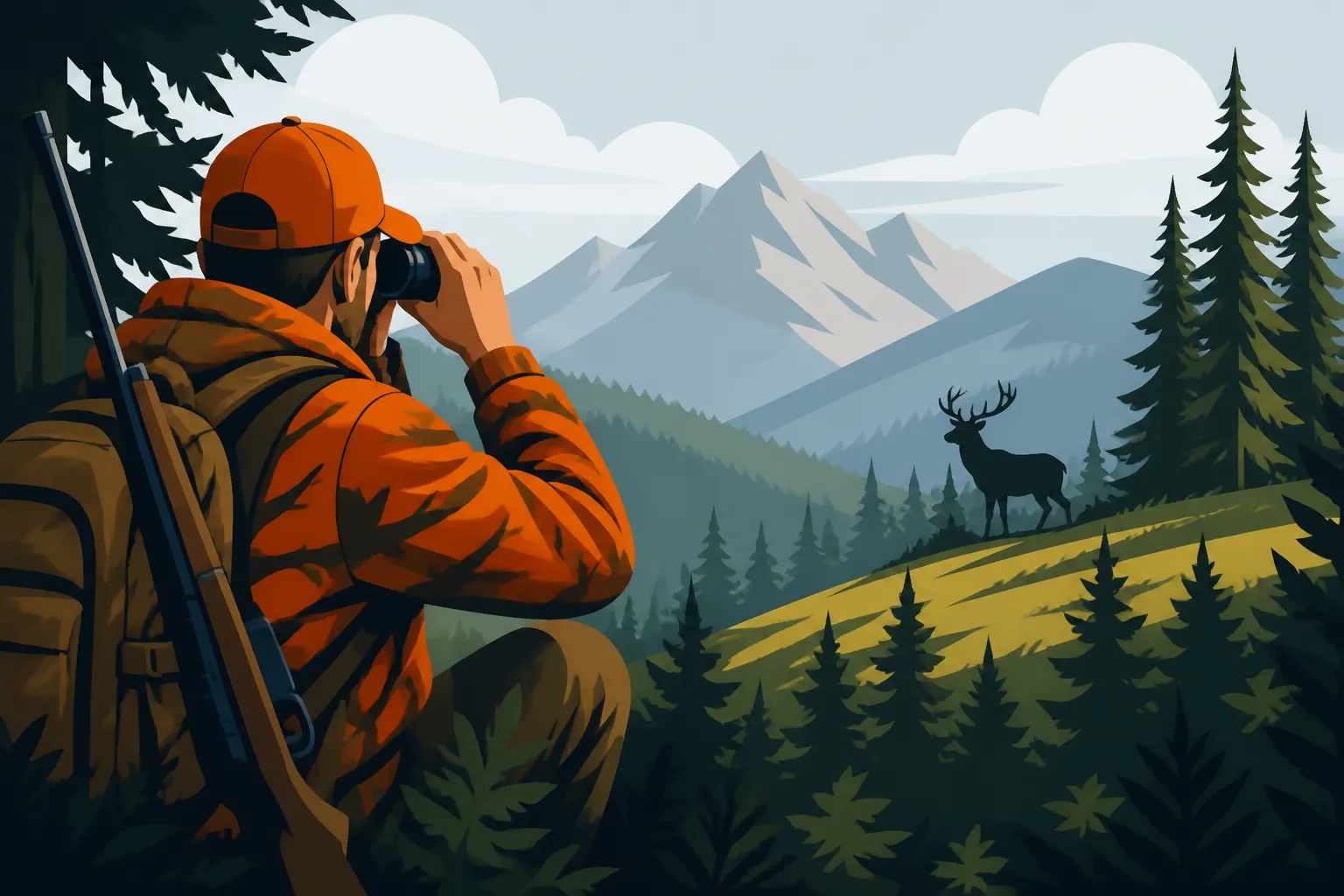
Hunting an Interior Douglas Fir Bench
Trying to navigate the dense, often bewildering world of British Columbia's interior Douglas fir benches can feel like a fool's errand. You know game is using these spots, but the sheer thickness of the timber, the lack of clear sightlines, and the often-rugged terrain make it incredibly frustrating to locate and approach animals. This guide is here to cut through that frustration, offering practical strategies and insights for successfully hunting these challenging, yet incredibly productive, habitats.
Understanding the Interior Douglas Fir Bench Ecosystem
Interior Douglas fir benches are a distinctive and vital part of British Columbia's diverse landscape, particularly in regions like the Okanagan, Thompson-Cariboo, and parts of the Kootenays. These aren't just random patches of trees; they represent a specific ecological niche that provides critical resources for a variety of game animals, making them prime hunting grounds if you know how to read them.
Why Douglas Fir Benches Attract Game
The appeal of Douglas fir benches to wildlife lies in a combination of factors that provide both sustenance and security. Imagine a landscape where steep, open slopes transition into benches or plateaus, often characterized by mature, dense stands of Douglas fir trees. This unique structure creates an ideal environment.
Firstly, these benches offer a crucial mix of food sources. While the understory in dense fir stands can be sparse, the edges and openings within these benches often boast an abundance of grasses, forbs, and various types of browse that deer and elk relish. On a warm fall day, you might find deer delicately picking through patches of kinnikinnick or feeding on succulent Oregon grape, while in the cooler months, they rely heavily on evergreen browse. These areas also tend to have a diverse array of mushroom growth, providing an often-overlooked food source for various species, including bears, during certain times of the year. The transition zones, where the fir benches meet more open ponderosa pine slopes or grassy draws, are particularly productive, acting as natural cafeterias for browsing and grazing animals.
Secondly, the dense canopy of Douglas firs provides unparalleled cover and thermal regulation. During the hot days of early season, these thick stands offer deep, cooling shade, allowing animals to escape the oppressive sun and conserve energy. As the seasons shift, and the crisp British Columbia autumn gives way to colder temperatures and snow, these same dense stands act as vital thermal cover, shielding animals from biting winds and heavy snowfall. This thermal advantage helps game animals retain body heat and reduces their energetic demands during harsh weather. It's common to find deer and elk bedded down in the thickest parts of these benches, often on south-facing slopes, catching any available warmth while remaining hidden from predators, including human hunters.
Lastly, the varied terrain of these benches, often interspersed with steep ravines, rock outcroppings, and natural benches or ledges, offers excellent escape routes and a broken landscape that makes detection difficult. An animal can vanish into the shadows and broken timber in seconds, utilizing the complex topography to put distance between itself and perceived danger. This combination of food, cover, and complex terrain creates a haven that animals are reluctant to leave, making these benches a consistent draw throughout the hunting season.
Key Species Found in Douglas Fir Benches
While many animals will traverse these areas, three species in particular — mule deer, elk, and black bears — show a strong affinity for interior Douglas fir benches in British Columbia. Understanding how each uses this habitat is key to successful hunting.
Mule deer are perhaps the most iconic residents of these fir benches. They are masters of using broken country and dense cover to their advantage. You'll often find them bedding in the thickest pockets of the fir, where visibility is limited, and they can easily melt away if disturbed. These benches provide ideal bedding sites, especially on slightly elevated ground that offers a vantage point downwind. During the day, particularly in the mid-morning or late afternoon, they'll often move from their deep cover to the edges of the benches or into small openings to feed, before returning to the security of the dense timber. Bucks, especially mature ones, are notoriously fond of these dense, dark hideouts, making them a challenging but rewarding target. If you're Hunting British Columbia's Four-Point Antler Rules, these fir benches are where those elusive mature bucks often reside.
Elk, while often associated with more open grasslands or mixed forest, also utilize Douglas fir benches, particularly during specific times of the year. They seek the same thermal cover and protection as deer, especially when winter approaches or during periods of heavy hunting pressure. You might find bachelor herds of bulls, or cow-calf groups, taking refuge in these dense fir stands. While they may not feed as extensively within the deepest parts of the fir as mule deer, they will certainly use the edges and transitional areas where the fir gives way to more palatable forage. The deep draw systems and north-facing slopes adjacent to fir benches can be fantastic places to find elk during the heat of the day, or as escape cover when disturbed from more open feeding grounds.
Black bears are another frequent visitor, and sometimes resident, of Douglas fir benches. These areas provide excellent foraging opportunities throughout the spring, summer, and fall. Bears will seek out berries, roots, and grubs that thrive in the slightly more open patches or along the edges of the dense timber. The dense cover also offers ideal denning sites for winter hibernation, often in rocky crevices or under large fallen trees. During the fall, especially as bears are putting on weight for winter, they can be found actively foraging in these zones. If you're Hunting Fall Bears on British Columbia Berry Slopes, remember that nearby fir benches offer crucial cover and bedding. When hunting black bears in these areas, always be mindful of your surroundings and consider carrying bear spray, as close-quarter encounters are a real possibility.
Scouting and Planning Your Hunt on a Douglas Fir Bench
Successfully hunting interior Douglas fir benches requires a good amount of homework and strategic planning before you ever step foot in the woods. These aren't areas you can just wander into blindly; understanding the terrain and animal patterns beforehand will significantly increase your odds.
Pre-Season Scouting Strategies
Effective scouting for Douglas fir benches blends modern technology with boots-on-the-ground exploration. Starting with a thorough digital scout can save you countless hours. Websites like GoHunt provide invaluable mapping tools that allow you to analyze satellite imagery, topographical maps, and public land boundaries right from your computer.
Begin by identifying potential benches—these are often flatter or gently sloping areas situated on hillsides, frequently surrounded by steeper terrain. Look for distinct changes in vegetation density on satellite images; the darker green, more uniform patches often indicate dense fir stands. Trace the contours of the land, identifying natural funnels, saddles, and draws that animals might use to access or cross these benches. Pay close attention to any water sources, even small seeps or springs, which are magnetic to wildlife. I like to mark these potential hotspots on my GoHunt map, creating waypoints for future reference.
Once you have a few promising locations identified, an early-season trek, ideally before hunting season begins, is invaluable. This allows you to walk the ground without the pressure of an open season. You'll be looking for actual game trails, confirming the density of the timber, and assessing potential access routes. Take note of prevailing wind directions, how the sun hits certain slopes, and any unique features like large rock slides or old burns that could concentrate game. This reconnaissance will help you refine your hunting plan, decide on specific ambush points, and identify areas that might be too thick or inaccessible to be worth your time. Remember, the goal is to build a detailed mental map, or even better, a physical one marked with your findings.
Reading Sign in Dense Timber
Finding fresh animal sign in the shadowy, often duff-covered floor of a dense Douglas fir bench can be challenging, but it's an essential skill. The key is to slow down, look carefully, and learn to differentiate old sign from fresh.
Tracks are your most obvious clue, but they can be tricky. In dry conditions, tracks might be indistinct, while in wet, soft ground, they can be very clear. Focus on the edges of the bench, or near small openings, where the ground cover might be thinner or softer. Look for hoof prints that show sharp, clear edges, indicating they're recent. If the edges are rounded or crumbling, the track is likely older. Pay attention to the size and stride; a large, wide-splaying mule deer track in the soft earth, perhaps with a dewclaw impression, could indicate a mature buck. Similarly, deeper, larger tracks often signal an elk. If you're unsure about specific species, comparing it to known track photos on your phone can be a quick reference. Sometimes, the only sign might be faint impressions on moss or disturbed pine needles, requiring keen observation.
Droppings offer another excellent indicator of animal presence and freshness. For deer and elk, fresh droppings will be moist and shiny, often dark in color. As they age, they become drier, duller, and lighter. The location of the droppings can also tell a story—concentrations in a particular area might indicate a preferred bedding site or a frequent feeding spot. For bears, fresh scat is often soft and can contain remnants of their diet, such as berry seeds, indicating recent feeding activity. Being able to read the difference between old, crusty pellets and fresh, glistening ones is crucial for determining if an animal is currently using the area. This practice directly applies to situations like Reading Blacktail Sign in Wet Ground, even if the specific species and habitat differ slightly.
Finally, browse lines, rubs, and scrapes provide invaluable information about an animal's habits and the current season. Browse lines, where plants have been nipped or torn by feeding animals, can show you what game is eating and how heavily they're using an area. Fresh browse will have crisp, green edges, while older browse will be faded and dry. Rubs, particularly from bucks and bulls, are a clear sign of their presence. Fresh rubs will have bright, exposed wood and sometimes sap, indicating recent activity during the rut or pre-rut. Look for them on smaller trees and saplings. Scrapes, patches of ground pawed clear by bucks, with an overhanging branch often licked or rubbed, indicate rutting activity and are essentially a communication hub. These are rarer in dense timber but can be found in more open pockets. Observing these subtle signs will paint a much clearer picture of animal movement and density within the fir bench.
Effective Hunting Techniques for Douglas Fir Benches
Hunting in dense Douglas fir benches is a game of patience, stealth, and adapting to the terrain. It's often intimate, close-quarters hunting where a keen eye and quiet movement are paramount. Forget wide-open shots; this is about picking apart the shadows.
Still-Hunting and Stalking Approaches
When you're deep in a Douglas fir bench, still-hunting and stalking are your most potent tools. This isn't about covering ground quickly; it's about covering ground effectively and silently. The philosophy is simple: move a few steps, then stop, listen, and glass. Then repeat. This methodical approach allows you to detect subtle movements, catch glimpses of deer or elk before they detect you, and process the complex visual information of the dense forest.
Start by considering the wind. In these thick timber stands, swirling winds can be a major challenge, but doing your best to stay downwind of where you expect game to be is critical. Use the terrain to your advantage: move slowly along contours, through small dips, or along ridge lines that offer a slight elevation advantage. Every few steps, pause for at least a minute, sometimes longer. Use your binoculars, even in dense cover, to pick apart every shadow, every cluster of trees, and every piece of deadfall. A horizontal line, a patch of contrasting colour, or the subtle flick of an ear can give an animal away. This slow pace also allows the forest to "reset" around you, meaning any deer or elk that might have been briefly alerted by your presence might settle down, thinking you've passed.
Footwear and clothing are incredibly important for this type of hunting. Opt for soft-soled boots that allow you to feel the forest floor, helping you avoid stepping on crunchy leaves or snapping twigs. Your clothing should be quiet, avoiding synthetic materials that swish or rustle as you move. Fleece or wool are excellent choices. In British Columbia, where blaze orange is mandatory in many situations, choose quiet orange garments that won't give you away audibly. The goal is to move like a ghost, blending into the environment and becoming part of the natural rhythm of the forest. This patient, observant approach is central to Stalking a Bedded Buck in Open Timber and similar close-quarters methods.
Utilizing Natural Funnels and Ambush Points
Even in the seemingly uniform density of a Douglas fir bench, nature creates pathways and choke points that funnel animal movement. Identifying these natural funnels and setting up strategic ambush points can greatly increase your chances of success. Animals are creatures of habit and efficiency; they'll almost always take the path of least resistance.
Game trails are your primary indicators. Look for well-worn paths that cut through the thick undergrowth, connecting bedding areas with feeding grounds, or leading to water sources. Pay close attention to where multiple trails converge, or where a trail is pinched between a steep slope and a rock outcropping. These are prime ambush points. Small saddles or low spots along a ridge within a bench can also act as natural crossing points, funnelling animals over a predictable path. A little time spent on GoHunt studying the topography can help you predict these spots before you even get boots on the ground.
Water sources, even tiny seeps or muddy wallows, are absolute magnets. While larger rivers and lakes are obvious, within a dry Douglas fir bench, a small, hidden spring can be an absolute lifeline for game. Find these, and you've found a high-traffic area. Setting up an ambush along a game trail leading to or from such a water source, especially in the early morning or late evening, can be highly effective. The edges of the Douglas fir bench are also crucial. Where the dense fir meets a more open clearcut, a recent burn, or a different timber type, you'll often find a natural travel corridor. Animals use these edges for security while still being able to access the sunnier, more varied forage. These transition zones often provide slightly better visibility for the hunter, offering a critical advantage.
Calling and Decoying in Fir Benches
Calling and decoying can be effective in Douglas fir benches, but they need to be employed with a nuanced understanding of the environment and the animals you're pursuing. The dense cover changes the dynamics significantly compared to open country.
For deer, subtle calls are usually more effective than aggressive ones. A soft fawn bleat or a quiet grunt can pique the curiosity of a nearby buck, especially during the rut. The dense timber means that an animal might only be able to hear you from a relatively short distance, so repeated, soft calls can draw them in. Imagine a small doe or fawn wandering through the timber; your calls should mimic that unassuming presence. Aggressive rattling or loud grunting can often sound out of place in such close quarters and may spook wary deer.
Elk calling in fir benches requires careful consideration. While bugling can certainly challenge a bull, the sound doesn't carry as far in thick timber, and the bull may try to circle downwind to get your scent. Cow calls and soft mews can be very effective, mimicking a contented herd moving through the timber. Again, the goal is realism and subtlety. If you're Calling Moose in British Columbia's Interior, similar principles apply; the dense boreal forest also limits sound, making close-range, subtle communication more realistic.
For black bears, predator calls can be used, but extreme caution is advised. A dying rabbit or fawn distress call can bring a bear in quickly, often silently, and from unexpected directions. This is a high-adrenalin technique, and you must be absolutely ready for a close encounter. Decoys are generally less effective in dense Douglas fir benches due to the limited visibility. A deer decoy might work if placed in a small opening with a clear line of sight, but the thick cover often makes it difficult for an animal to see it from a distance. For elk, a silhouette decoy might occasionally draw in a curious bull if placed strategically, but it's less of a primary tactic and more of a situational enhancer in these particular habitats.
Gear and Safety Considerations for Douglas Fir Bench Hunting
Hunting in British Columbia's Douglas fir benches, with their steep slopes, thick timber, and often unpredictable weather, demands specific gear choices and a strong emphasis on safety. Being prepared for the challenges of this environment is just as crucial as understanding animal behavior.
Essential Gear for Dense Timber
Your gear setup for hunting in dense fir benches should prioritize stealth, navigation, and the ability to operate effectively in close quarters. Optics are still vital, but their application changes. Instead of powerful long-range spotting scopes, focus on a good pair of 8x or 10x binoculars. These are used constantly, not just for scanning distant hillsides, but for picking apart the shadows and identifying movement within the dense trees a few dozen yards away. Look for high-quality glass that performs well in low light, as the deep canopy often creates perpetual dusk.
Clothing should be chosen for layering, quietness, and durability. The physical exertion of still-hunting through thick timber means you'll generate a lot of body heat, even in cool weather, so easily adaptable layers are key. Fabrics like wool or quiet fleece are superior to noisy synthetics. Ensure your outer layers are tough enough to withstand snags from branches and thorns. As British Columbia has mandatory blaze orange requirements during general open season for rifle hunters, select a vest or hat that meets regulations but is still durable and quiet.
Navigation is paramount in dense timber, where visibility can be limited to mere yards. A reliable GPS unit or a smartphone with an offline mapping app like GoHunt is indispensable. Mark your starting point, your vehicle, and any significant terrain features or game signs as you go. Always carry a traditional compass and a physical map as a backup, and know how to use them. Cell service is often non-existent in these areas, making offline maps and satellite communication devices, like an InReach or Zoleo, critical for safety. This is especially true when you're deep in the backcountry, where Satellite Communication on a Remote Hunt can be a lifesaver.
Your choice of weapon also warrants consideration. While any legal firearm will work, a rifle with a shorter barrel or a shotgun with slugs can be more maneuverable in thick brush. Bowhunters will appreciate a compact bow. Regardless of your weapon, practice shooting from various positions—kneeling, sitting, standing without a clear rest—as opportunities for clean, broadside shots in open lanes are rare. A good quality sling for a rifle, or a comfortable harness for a bow, will be appreciated as you navigate tough terrain.
Navigating Challenging Terrain and Weather
Douglas fir benches often come hand-in-hand with challenging terrain and unpredictable weather, demanding your full respect and preparedness. You'll likely encounter steep slopes, especially leading up to and down from the benches themselves. These can be treacherous, made worse by loose rock, slippery moss, or hidden deadfall. Foot placement is critical to avoid falls and to move silently. Trekking poles can be invaluable for stability and to test uncertain ground ahead. Deadfall, often abundant in mature fir stands, creates natural obstacles that require careful navigation, sometimes clambering over, sometimes crawling under.
British Columbia's weather is famously variable. You could start your day under clear skies and end it in a torrential downpour or a sudden snow squall. Always pack rain gear, even if the forecast looks good. Wet weather turns slippery slopes into icy hazards and makes tracking game more difficult. Fog can roll in quickly, especially in coastal-influenced interior regions, reducing visibility to zero and disorienting even experienced hunters. When fog descends, it's often best to stop, rely on your GPS, and wait for it to clear rather than risk getting lost. Understanding Weather Windows in British Columbia's Mountains can help you plan, but flexibility is key.
Bear safety is paramount, particularly for black bears and the possibility of encountering grizzlies in some interior regions. Always carry bear spray, readily accessible, and know how to use it. Make noise as you move through thick cover, especially in areas with dense berry bushes, to avoid surprising a bear. If you encounter a bear, particularly a grizzly, know the appropriate response: talk calmly, make yourself look large, and never run. Understanding Bear Safety While Hunting in British Columbia is crucial for any hunter in this province.
Packing Out Your Harvest
The challenge of hunting an animal in a Douglas fir bench is often compounded by the arduous task of packing it out. These areas are typically remote and rugged, making extraction a significant undertaking that requires careful planning.
Once you've made a harvest, your immediate priority is proper field dressing and cooling the meat. In the often-dense, shaded environment of a fir bench, ambient temperatures might be cooler, but proper gutting and quartering are essential to prevent spoilage, especially in warmer early seasons. If you're fortunate enough to tag a large animal like an elk, be prepared to quarter it, bone out the meat, and make multiple trips.
A sturdy internal or external frame pack is absolutely essential. Attempting to drag an entire animal out of a fir bench, especially on a steep slope, is not only incredibly difficult but can also damage the meat. Quartering the animal into manageable loads allows you to distribute the weight and navigate the uneven terrain more safely and efficiently. Remember, your pack should be comfortable when loaded, as you might be carrying 60-80 pounds or more through rough country. For larger animals, consider Getting Meat Out of Steep British Columbia Country, which often involves breaking down the animal into smaller, more manageable pieces.
Finally, always consider the buddy system. Hunting with a partner, especially in challenging terrain, vastly improves safety and makes the packing-out process significantly easier. If you hunt alone, ensure someone knows your exact hunting location and your expected return time, and carry that satellite communication device. The satisfaction of a successful hunt in a Douglas fir bench is immense, but ensuring a safe extraction of your hard-earned meat is the final, crucial step.
Here's a quick comparison of techniques often used for different game species in these challenging Douglas fir benches:
| Technique / Focus | Mule Deer | Elk | Black Bear |
|---|---|---|---|
| Primary Method | Still-hunting, slow stalking | Stalking, strategic ambush | Still-hunting, spot-and-stalk |
| Calling Strategy | Soft fawn bleats, subtle grunts | Cow calls, soft mews, occasional bugle | Distress calls (caution!), quiet movement |
| Key Sign to Look For | Fresh tracks, small rubs, browse | Large tracks, rubs on larger trees, wallows | Scat (especially berry-filled), overturned logs |
| Typical Range of Encounter | 20-75 yards | 40-100 yards | 15-50 yards |
| Visibility Challenge | Extremely high, requires constant glassing | High, focus on edges and draws | Extremely high, sudden encounters are common |
| Preferred Terrain within Bench | Thickets for bedding, edges for feeding | Edges, draws, thermal cover in dense sections | Berry patches, dense cover for denning |
| Patience Required | Very high | High | High |
Disclaimer
Always consult the most current British Columbia Hunting and Trapping Regulations Synopsis before heading afield. Hunting regulations, season dates, and specific rules can change annually. The information provided here is for general guidance and educational purposes only and should not be considered legal advice.