Black Bear Hunting British Columbia’s Spring
There’s nothing quite like the feeling of British Columbia slowly shaking off winter's chill, and for many of us, that means the start of spring black bear season. It’s a time of renewed energy in the woods, but it also brings unique challenges – from shifting snowlines to tricky access and the ever-present question of judging bears. This guide is here to walk you through the ins and outs of spring black bear hunting in BC, helping you prepare for a successful and memorable adventure in our wild country.
The Unique Appeal of British Columbia's Spring Black Bear Season
Spring black bear hunting in British Columbia isn't just another season; it's a rite of passage for many of us. After the long, quiet months of winter, the woods burst back to life, and with that comes the opportunity to pursue one of BC's most abundant and fascinating big game animals. But it's not without its distinct characteristics and challenges that set it apart from other hunts.
Why Spring Bear Hunting is a Rewarding Challenge
There's something inherently thrilling about a spring bear hunt. You're often dealing with unpredictable weather, varying snow depths, and bears that are just emerging from their dens, often lean and eager to feed. This isn't a "sit and wait" kind of hunt; it demands active scouting, keen observation, and often, a lot of hiking. The landscape itself is in transition, with splashes of vibrant green pushing through the last vestiges of winter snow. This dynamic environment makes every outing an adventure, a true test of a hunter's adaptability and persistence. You’ll find yourself glassing vast hillsides, trying to pick out a black smudge against a backdrop of budding alders or new grass. The sheer abundance of black bears across British Columbia means opportunities are generally plentiful, but actually connecting with a mature, lone boar requires patience and a deep understanding of their early spring movements. Many hunters appreciate the opportunity to stretch their legs and hone their spot-and-stalk skills after months of being cooped up, making it an excellent precursor to fall big game seasons.
Navigating British Columbia's Spring Bear Regulations and Dates
Understanding the regulatory landscape for spring black bear hunting in British Columbia can sometimes feel like trying to solve a puzzle. The province is divided into nine hunting regions, and within those, numerous Management Units (MUs), each with its own specific season dates and rules. While many areas offer generous general open seasons, it’s absolutely crucial to consult the official BC Hunting and Trapping Regulations Synopsis. This document, updated every two years, is your bible for legal hunting. For instance, specific regions like the Peace River or Omineca might have different start and end dates than, say, Vancouver Island or the Okanagan. You’ll find that most spring seasons typically open in April or May and run through to mid-June, though some areas may extend longer.
A common frustration is how quickly these regulations can change, or how granular they are. It’s not enough to know the general season; you need to pinpoint the exact Management Unit you plan to hunt. Some MUs might be general open season, while others could have Limited Entry Hunting (LEH) requirements for specific species, though black bear is usually general open. Always double-check the current synopsis for the specific dates for your chosen area, as it’s the most accurate source. Remember, ignorance of the rules is no excuse, and a simple mistake could lead to a hefty fine or loss of hunting privileges. Detailed information can often be found by searching for specific regions or dates, like the current British Columbia Spring Bear Season Dates or reviewing the comprehensive British Columbia's Two-Year Regulations Synopsis. Take the time to read it thoroughly, highlight relevant sections, and even make notes on your maps.
Locating Spring Black Bears: Habitat and Behavior
Finding black bears in the vastness of British Columbia during spring requires more than just luck; it demands a solid understanding of their post-denning behaviour and habitat preferences. They aren't just roaming aimlessly; they are driven by specific needs after months of hibernation.
Where Bears Emerge: Elevation and Aspect Preferences
When bears first emerge from their dens, usually in late March or April, they are often groggy, dehydrated, and most importantly, hungry. Their immediate goal is to find easy food and warm up. This instinct drives them to specific areas. Think low-to-mid elevations, typically below the current snowline. South and west-facing slopes are absolute magnets. Why? Because these aspects receive the most sunlight, melting snow faster and causing vegetation to green up earlier. An avalanche chute, for example, especially one facing south, can be a prime early-season spot. The force of an avalanche clears out dense timber, allowing sunlight to reach the forest floor, and the disturbed earth provides a rich bed for early emerging grasses and forbs. These areas become natural "bear cafeterias" where the first flush of green offers digestible food.
It's not uncommon to see bears feeding just meters from persistent snow patches, sometimes even digging through shallow snow for roots or lingering carcasses. As the season progresses and the snowline recedes, bears will follow that green-up higher and higher in elevation. So, early season means lower, sun-drenched slopes, while later in spring, you might find them traversing higher, newly accessible alpine meadows. This constant movement with the receding snowline is a critical pattern to understand when scouting your hunting grounds.
Following the Green-Up: Essential Spring Food Sources
The primary driver for spring black bear activity is food, and in early spring, their diet is dominated by fresh, easily digestible plant matter. After months of fasting, their digestive systems need a gentle restart. The first green shoots of grasses, sedges, and forbs are incredibly important. These tender plants, high in moisture and digestible nutrients, are the equivalent of a gourmet meal to a bear emerging from hibernation. Look for areas where these plants are abundant: open meadows, clear-cuts, old logging roads, and river bottoms. The edges of new clearings, where sunlight penetrates and encourages growth, are especially productive.
Along the coast, bears often frequent estuaries and river deltas, particularly during low tide. Here, they'll forage for nutrient-rich skunk cabbage, sedges, and even dig for shellfish or scavenge winter-killed marine life. You can learn more about these specific coastal feeding habits by looking into What Bears Eat on a Coastal Estuary. In the interior, burns from previous wildfires can be incredible attractants, as the disturbed soil and increased sunlight promote lush new growth of fireweed and various berry bushes, even if berries aren't ripe yet. They will also seek out areas with exposed soil where they can dig for roots and grubs. As the season warms, bears might start turning over rocks or logs in search of insects. Understanding this progression of food sources is key to predicting where bears will be feeding throughout the spring.
Understanding Bear Movements and Activity Patterns
Beyond just where to find food, understanding when bears are most active is equally important. In early spring, bears are often most active during the warmer parts of the day. The cool mornings can still be quite chilly, and bears will often wait for the sun to warm things up before venturing out to feed. You'll typically see peak activity from mid-morning through late afternoon, perhaps tapering off as the sun dips lower in the evening, though they can be active any time. They tend to follow consistent patterns in their early spring feeding areas, often returning to the same productive slopes day after day until the food source is depleted or new, better options emerge at higher elevations.
As the season progresses and temperatures rise, especially in late spring, bears might become more crepuscular, meaning they're most active at dawn and dusk to avoid the midday heat. This is particularly true in areas where human activity is higher, or in warmer interior regions. Bears will often spend their midday hours bedded down in thick timber, seeking shade and cover. Understanding these daily and seasonal shifts in activity helps you plan your hunt. Early season, you might glass a south-facing slope all day, while later on, you'll concentrate your efforts on the first and last hours of light, focusing on shady draws and timber edges during midday. Pay attention to fresh tracks, scat, and rubbed trees – these are clear indicators of recent bear activity and can help confirm your scouting observations.
Proven Hunting Techniques for Spring Black Bears
Hunting spring black bears in British Columbia is an active pursuit that often requires covering ground and keen observation. While there are a few methods that can be effective, spot-and-stalk is arguably the most common and often the most successful.
Mastering the Art of Spot-and-Stalk Hunting
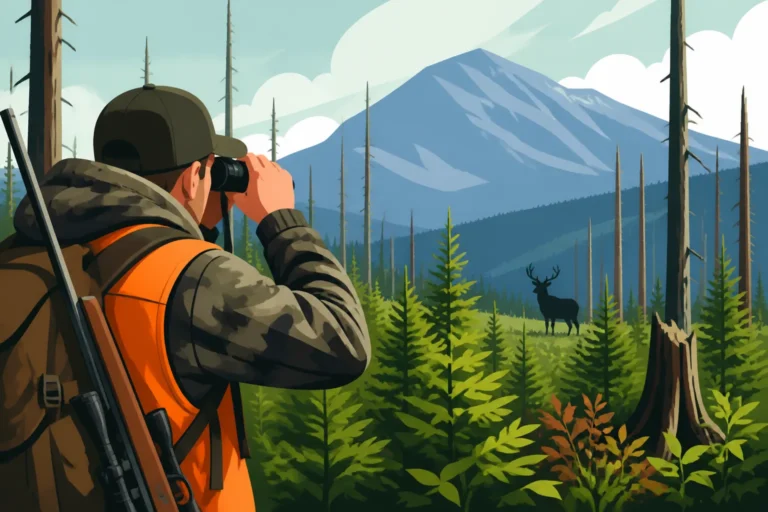
Spot-and-stalk hunting for black bears is a quintessential BC experience, especially in the more open country of the interior or on coastal clear-cuts. This method relies heavily on your optics and patience. The first step is to get to a high vantage point overlooking potential bear habitat, such as south-facing slopes, avalanche chutes, or clear-cuts where green-up is occurring. Then, you settle in and glass, systematically picking apart the landscape. This isn't a quick scan; it's a slow, deliberate search, often covering the same areas multiple times. Bears, even black ones, can blend in surprisingly well, looking like stumps or shadows until they move. Utilizing a good spotting scope on a sturdy tripod is absolutely essential for identifying bears at long distances and, critically, for judging their size and sex. Platforms like GoHunt can be invaluable for identifying potential glassing knobs and understanding the contours of the land, helping you pinpoint those crucial south-facing slopes.
Once you spot a bear you intend to pursue, the real work begins. You need to assess the terrain, wind direction, and the bear's behaviour. The goal is to close the distance undetected, getting into an advantageous position for a shot. This might mean a long, circuitous route, using ridges, timber, and creeks for cover. Wind is your absolute enemy; a bear's nose is incredible, and if they catch your scent, they're gone. Always approach with the wind in your favour. Movement needs to be slow and deliberate, especially as you get closer. When you’re trying to spot bears on those crucial early-season feeding grounds, checking out resources like Glassing Logging Roads for Spring Bears can give you even more specific tactics, though the principles of glassing apply broadly, even to other species like those covered in Glassing an Alpine Basin for Rams. This method is physically demanding but incredibly rewarding, offering an intimate connection with the landscape and the animal.
Effective Still-Hunting in British Columbia's Timber and Clearings
While spot-and-stalk is popular in open country, still-hunting becomes a more viable option in denser timber or on logging roads where visibility is limited. Still-hunting involves moving slowly and deliberately through the woods, stopping frequently to observe, listen, and scan your surroundings. It's about blending in and moving like part of the forest, using your senses to detect a bear before it detects you. This technique is particularly effective in areas like the dense second-growth timber blocks on Vancouver Island or the interior's mixed forests, where bears often feed along the edges of openings or in drainages.
When still-hunting, pay close attention to the wind, as scent control is paramount. Move against the wind or quartering into it. Foot placement is critical; try to step on soft ground, moss, or fallen leaves to minimize noise. Stop every few steps, sometimes for several minutes, using your binoculars to scrutinize every shadow and movement. Look for subtle signs: a rustle in the bushes, the snap of a twig, a fresh track in the mud, or a patch of disturbed grass. Black bears often frequent the edges of old clear-cuts or along deactivated logging roads where new vegetation is sprouting. These "soft" edges can be ideal still-hunting zones. For more specific insights on navigating these types of areas, you might find valuable tips in articles like Hunting British Columbia's Logging Roads or even on topics like Still-Hunting Second Growth for Blacktail, as the fundamental principles of quiet movement and observation translate well across species in similar habitats. Patience is the ultimate virtue here; it's less about covering miles and more about covering ground stealthily and thoroughly.
Utilizing Water Access for Coastal and Interior Opportunities
British Columbia's vast network of rivers, lakes, and extensive coastline opens up unique possibilities for spring bear hunting that are often overlooked. Water access can provide unparalleled opportunities, especially for those seeking a different kind of adventure or trying to reach less-pressured areas. Along the coast, boat-based hunting for black bears is incredibly effective, particularly around estuaries, tidal flats, and river mouths. Bears are drawn to these areas for the abundant early spring feed, like skunk cabbage, sedges, and even opportunistic scavenging of marine life.
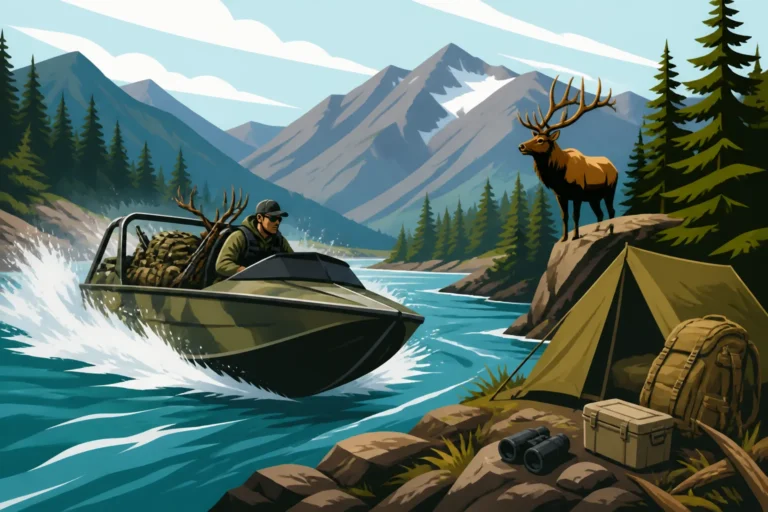
A typical coastal boat hunt involves slowly cruising the shoreline, glassing the edges of the water and the adjacent hillsides. When a bear is spotted, you can beach your boat quietly and initiate a stalk on foot. The tides play a huge role here; hunting at low tide often exposes more feeding grounds. If you're planning a trip to the coast in May, you'll find more detailed strategies in a resource like Hunting Bears on a Coastal Estuary in May. Similarly, in the interior, jet boats are fantastic tools for accessing remote river bars and riparian zones that are otherwise difficult to reach. These river systems often host lush green-ups along their banks, attracting bears. For a broader understanding of water-based hunting strategies, you might want to review Hunting From a Boat on the Coast. Regardless of whether you're on a saltwater inlet or a freshwater river, remember that water travel often means you’ll be able to quickly cover ground, but it also demands extra attention to navigation, weather, and boat safety. It's a method that combines the thrill of exploration with effective hunting, allowing access to areas that might be foot-locked otherwise.
Essential Gear and Preparedness for Your Spring Hunt
Being well-prepared is paramount for any hunting trip in British Columbia, and spring bear hunting is no exception. The weather can be notoriously unpredictable, and the terrain often challenging. Having the right gear isn't just about comfort; it's about safety and increasing your chances of success.
Optics: Your Best Friends in Bear Country
In the world of spring bear hunting, your optics are arguably more important than your rifle. Finding a bear on a vast hillside or in a dense clear-cut often comes down to the quality of your binoculars and spotting scope. Invest in the best you can afford. A good pair of 10×42 or 10×50 binoculars is your primary scouting tool, allowing you to constantly scan the landscape for movement or that tell-tale black smudge. They need to be clear, bright, and comfortable for extended viewing.
For serious spot-and-stalk hunting, a high-quality spotting scope (e.g., 20-60x or 22-75x) on a sturdy tripod is indispensable. This allows you to differentiate between a black rock and a bear, and more importantly, to critically judge the animal's size, condition, and sex from a safe distance before committing to a stalk. Remember, a mature boar is the goal for most spring hunters, and distinguishing it from a sow, potentially with cubs, requires meticulous observation. You'll spend hours behind the glass, so comfort and optical performance are key. Lightweight options from brands like Vortex, Swarovski, or Kowa are popular among BC hunters. Don't skimp here; poor optics will severely limit your success and can lead to frustration when you can't confirm what you're seeing.
Dressing for Success: Layers, Rain Gear, and Footwear
British Columbia's spring weather is famously fickle. You can experience all four seasons in a single day, especially in the mountains or along the coast. Proper layering is the foundation of comfortable and safe hunting. Start with a moisture-wicking base layer (merino wool or synthetic, never cotton). Add a warm mid-layer, such as a fleece or lightweight puffy jacket. Your outer layer needs to be windproof and, critically, waterproof. For coastal hunts, or anywhere heavy precipitation is expected, reliable rain gear is non-negotiable. There's nothing that will cut a hunt short faster than being soaked to the bone and shivering. Understanding how to tackle Hunting in British Columbia's Coastal Rain will be key for many, as it’s a distinct challenge.
Footwear is equally important. You'll be covering varied terrain, from muddy logging roads to steep, wet slopes. Invest in high-quality, waterproof, sturdy hiking boots with good ankle support. Break them in well before your hunt to avoid blisters. Good socks (again, wool or synthetic) are essential to keep your feet dry and comfortable. Don't forget a hat and gloves; your extremities are where you lose the most heat. Being prepared for everything from sunshine to sleet, sometimes within an hour, is just part of the deal when chasing bears in BC's spring.
Firearms and Ammunition: Making the Right Choice
Choosing the right firearm and ammunition for spring black bears in British Columbia is a personal decision, but there are some practical considerations. Black bears are tough animals, and while not typically huge, they require adequate cartridge and bullet selection for a quick, humane kill. For rifles, popular calibers range from .270 Win up to .300 Win Mag or .338 Win Mag. What's more important than the specific caliber is bullet construction. You want a well-constructed bullet that will expand reliably and penetrate deeply, ensuring it reaches vitals and breaks bone if necessary. Premium bonded or monolithic bullets are excellent choices for bears.
Shot placement is paramount. The vitals on a bear are located further forward and lower than on a deer, directly behind the shoulder. A bear's heavy muscle and thick hide can make shot placement tricky, especially if the animal is quartering away or angled. Practice shooting from various field positions – off a pack, kneeling, or prone – to be confident when the moment comes. For archery hunters, a modern compound bow with at least 50-60 lbs draw weight and heavy, sharp broadheads designed for penetration is recommended. Whatever your chosen weapon, ensure you are proficient with it and that your ammunition performs consistently. Confidence in your equipment translates to confidence in the field.
Prioritizing Bear Safety and Emergency Planning
Hunting in British Columbia's backcountry always carries inherent risks, and springtime, with its hungry bears, adds an extra layer of caution. Black bears, while generally not aggressive, can be unpredictable, especially sows with cubs, or if they are surprised. Always carry bear spray and know how to use it. It should be easily accessible, not buried in your pack. Familiarize yourself with bear behaviour – what warning signs to look for, and how to react in an encounter. Understanding Bear Safety While Hunting in British Columbia is critical, not just for black bears, but for the potential of encountering grizzlies in some areas, though grizzly hunting is closed province-wide.
Beyond bear encounters, general backcountry safety is paramount. You'll often be in remote areas with limited cell service. Always let someone know your hunt plan: where you're going, your route, and when you expect to return. Carry a detailed map and compass, along with a GPS device. A satellite communication device, such as an inReach or Zoleo, is highly recommended for emergency communication, as discussed in Satellite Communication on a Remote Hunt. A well-stocked first-aid kit, extra water, fire-starting materials, and emergency shelter are also essential. Be prepared for unexpected weather changes, getting lost, or sustaining an injury. Self-reliance is key in BC's vast wilderness.
From Harvest to Home: Field Care and Trophy Preservation
The moment of truth arrives when you successfully harvest a spring black bear. The work, however, is far from over. Proper field care is critical, not just for preserving the meat, but also for ensuring your hide and skull are in prime condition for taxidermy. Neglecting these steps can ruin both your meat and your trophy.
Field Dressing and Cooling for Optimal Meat Quality
Unlike some big game where the meat is the sole focus, with black bears, you often have a dual purpose: meat and trophy (hide/skull). However, the meat is absolutely delicious when handled properly. The most crucial step for meat quality is to cool the carcass down as quickly as possible. Bears have thick fat layers, and their body heat can take a long time to dissipate, especially in warmer spring temperatures. Get the hide off immediately. Quarter the bear into manageable pieces and remove as much fat as possible from the meat. Fat can go rancid quickly and impart an undesirable flavour.
Once quartered, get the meat off the ground and into breathable game bags. If you're in a warm early season environment, you’ll definitely want to know about Keeping Meat Cool in an Early Season. Hang the meat in a shady, breezy spot, away from insects and scavengers. If you’re dealing with British Columbia’s often wet weather, careful attention to Field Dressing in British Columbia's Wet Weather is paramount to keep things clean. The goal is to get air circulating around the meat to cool it rapidly. Don't stack meat directly on top of itself in a cooler; allow air gaps. If temperatures are consistently warm, consider packing ice around the bagged meat, ensuring the meat doesn't sit directly in melted water. Proper and swift field care is the difference between delicious bear meat and a disappointing experience.
Skinning Your Trophy: Techniques for Hide and Skull Care
For most spring bear hunters, the hide is a significant part of the trophy. Skinning a bear properly for taxidermy requires care and a bit of know-how. The most common method for a rug or full mount is a "rug-cut," which involves cutting up the belly from the chin to the vent, and then skinning down each leg to the paw pads, leaving the claws intact. For a shoulder mount, a "life-size" cut is usually preferred, which means skinning further down the front legs and carefully around the shoulders. No matter the intended mount, ensure you leave plenty of hide on the legs and neck.
Once skinned, the hide needs to be cooled and preserved quickly. Flesh it thoroughly, removing all meat and fat. This is where many hides get ruined if not done meticulously. Then, salt the hide heavily with non-iodized salt, rubbing it into every crevice, especially around the ears, nose, and lips. Fold the hide flesh-to-flesh, roll it up, and let it sit for a day or two to draw out moisture. After this initial salting, you can re-salt it, then fold it up and transport it to your taxidermist. Detailed instructions like those found in Skinning and Caring for a Bear Hide are invaluable. The skull also needs to be cleaned and frozen or dried for your taxidermist. The sooner you get the hide processed or in a freezer, the better the chances for a perfect mount.
The Critical Skill of Judging a Bear in the Field
One of the most challenging aspects of spring black bear hunting is accurately judging the size and, crucially, the sex of the animal in the field. This skill is paramount for ethical hunting, as most hunters prefer to harvest a mature boar and avoid sows, especially those with cubs. Several factors come into play when judging a bear. Size can be deceptive; a bear can look massive when alone on a hillside. Look for physical characteristics. Boars often have blockier, wider heads compared to the more pointed, slender head of a sow. Their ears will appear smaller relative to their head size, sitting wider apart. Boars also tend to have thicker, more muscular necks and shoulders. Their gait might appear more deliberate and less hurried than a sow, which can sometimes appear more nervous.
The biggest giveaway for a sow is, of course, the presence of cubs. Always glass a bear for an extended period, searching for any accompanying youngsters. Cubs can be very small and easily hidden by terrain or vegetation. If you see cubs, or even suspect they might be present, do not shoot. Another excellent indicator of a mature boar is its overall body shape. They'll often have a "pot-belly" or swayback look, with their gut sagging below their chest line, especially after a few weeks of heavy feeding. Sows often appear more evenly proportioned. Take your time, use your optics, and observe their behaviour. When in doubt, let it walk. For more in-depth comparison, you can look for resources like Judging a Boar From a Sow With Cubs. It takes practice, but it's an essential skill for any responsible bear hunter.
Here's a quick comparison to help visualize some key differences:
| Trait | Mature Boar (Male) | Sow (Female) |
|---|---|---|
| Head Shape | Blocky, wide, often with a broader forehead | More pointed, slender, triangular |
| Ear Size | Appears small relative to head, set wide apart | Appears larger relative to head, closer together |
| Neck/Shoulders | Thicker, more muscular, "bulldog" neck | Thinner, more proportional to body |
| Body Shape | Often a "pot-belly" or swayback, chest deeper | More streamlined, evenly proportioned, less sag |
| Gait | Slow, deliberate, confident | Often more nervous, hesitant, may look around more |
| Presence of Cubs | Absent (usually solitary) | May have one or more cubs in tow or nearby |
Ethical Considerations and Mandatory Requirements
Hunting in British Columbia comes with a responsibility to uphold ethical practices and adhere strictly to the provincial regulations. This isn't just about legality; it's about respecting the animal, the land, and the hunting tradition itself.
Understanding Compulsory Reporting and Inspection Rules
When it comes to harvesting a black bear in British Columbia, it's not simply a matter of getting your animal out of the woods. There are specific mandatory reporting and inspection requirements that all hunters must follow. Black bears are one of the species that still require compulsory reporting, meaning that after you harvest a bear, you are legally obligated to submit a report of your kill. This usually involves reporting the kill online or through designated channels provided by the government. The purpose of this reporting is crucial for wildlife management, helping biologists track harvest numbers, monitor population health, and make informed decisions about future seasons and bag limits.
Beyond reporting, in some regions, black bears may also require compulsory inspection. This means you might need to present a specific part of the animal – usually the skull and/or hide – to a designated provincial inspector or Conservation Officer within a specified timeframe. This allows officials to collect biological data, such as age and sex, which further contributes to robust wildlife management. Failure to comply with these compulsory requirements can result in significant penalties, including fines or even the suspension of hunting privileges. It's vital to check the current regulations synopsis for your specific Management Unit to understand exactly what is required. For a deeper dive into species-specific requirements, you might find more information on Which Species Still Need Compulsory Inspection. Don't leave this step until the last minute; plan ahead for how and when you will fulfill these obligations.
Practicing Responsible Hunting and Shot Placement
Ethical hunting goes hand-in-hand with effective hunting. For black bears, this primarily means ensuring a quick, clean, and humane kill. This starts long before you pull the trigger or release an arrow. It means practicing your shooting skills regularly, knowing your rifle or bow intimately, and being confident in your ability to make a precise shot under field conditions. When you're in the field, it means exercising patience and discipline. Only take a shot when you have a clear, unobstructed path to the bear's vitals, and the animal is in a calm, stationary position. Rushing a shot or taking a low-percentage shot can lead to a wounded animal and a difficult, if not impossible, recovery.
Understanding bear anatomy is paramount. The vitals (heart and lungs) are located relatively far forward in the chest cavity, directly behind the shoulder. Aim for the "middle of the middle" in this area. Avoid head or neck shots, as these are often unreliable for a humane kill. If a bear is standing broadside, aim for a point one-third of the way up the body, just behind the front leg. If it's quartering away, aim to hit the vitals that are further forward on the opposite side. Wait for the ideal angle. After the shot, observe the bear's reaction and listen carefully. Give the bear time before following up, especially if you're not entirely sure of your shot placement. A quick, ethical harvest reflects your respect for the animal and your commitment to responsible hunting practices.
Planning Your British Columbia Spring Bear Adventure
Successfully planning a spring black bear hunt in British Columbia involves more than just knowing where to shoot. It requires detailed scouting, understanding access points, and carefully timing your trip to align with peak opportunities and favourable weather.
Leveraging Online Mapping and Scouting Resources
In today's digital age, planning a British Columbia spring bear hunt has been greatly enhanced by online mapping and scouting tools. Gone are the days of relying solely on paper maps (though you should always carry them as a backup!). Platforms like GoHunt, iHunter BC, or even Google Earth, provide invaluable insights. You can spend hours studying satellite imagery to identify prime bear habitat: south-facing slopes, avalanche chutes, clear-cuts, and riparian zones. Use topographical features to pinpoint glassing vantage points, potential stalking routes, and areas with dense timber for bedding.
These digital maps also allow you to identify logging roads and their status (active, deactivated, overgrown), which is crucial for determining access. You can mark potential denning areas, feeding zones, and even water sources. Some platforms even layer in land ownership, although most of BC is Crown Land, understanding the boundaries is still important for private parcels. Before you even set foot in the field, these tools allow you to virtually scout vast areas, saving you precious time and effort. When you’re trying to figure out where to focus your efforts, especially if you’re new to a Management Unit, a resource like Scouting a British Columbia Management Unit Online can give you an excellent head start. Using these resources to build a detailed plan will significantly improve your chances of success.
Accessing Prime Bear Country: Roads, Boats, and Backcountry
British Columbia offers diverse access options for spring bear hunting, but each comes with its own set of considerations. The most common method of access is via the extensive network of forest service roads (FSRs) and logging roads. These roads penetrate deep into the backcountry, providing vehicle access to many prime hunting areas. However, not all roads are created equal. Some are active logging roads requiring radio protocols, some are deactivated (often gated or trenched) and require foot or ATV access, and others might be overgrown or washed out. Information on navigating these roads, especially in the interior, can be found in Hunting British Columbia's Logging Road Network. Always check current road conditions and closures, as spring runoff can cause significant damage.
For coastal hunts, or areas along large lakes and rivers, boat access can open up incredible opportunities. Using a jet boat on interior rivers or a larger craft on the coast allows you to cover vast distances and reach otherwise inaccessible areas. If you're considering a river hunt, understanding the logistics of Jet Boat Access on British Columbia Rivers is essential. Finally, for those seeking a true wilderness experience, backcountry hiking or horseback hunting allows access to remote, unpressured areas where bears may be less wary. This requires significantly more physical fitness and robust gear, but the rewards can be substantial. Regardless of your chosen method, always plan your access and egress carefully, anticipating potential challenges like downed trees, muddy conditions, or changing water levels.
Timing Your Hunt for Peak Opportunities and Weather
Timing is everything when it comes to spring black bear hunting. The season generally runs from April to mid-June, but the "best" time can vary significantly based on the specific region and yearly conditions. Early season (April to early May) is often characterized by lower elevation hunting, as bears follow the receding snowline and seek out the first green vegetation. This period can offer excellent opportunities on south-facing slopes and clear-cuts, but you might contend with more unpredictable weather, including late-season snowfalls and muddy conditions.
As the season progresses into late May and early June, the snowline pushes higher, and bears will often move up to follow the green-up into higher elevation meadows and avalanche chutes. Temperatures also rise, which can make field care more challenging, but also means more comfortable hunting weather. Some hunters prefer this later window, as bears have had more time to feed and put on weight, making them a more appealing trophy. Always pay close attention to the local weather forecast and historical patterns for your chosen Management Unit. Understanding Weather Windows in British Columbia's Mountains is crucial for planning not only the timing of your trip but also your daily hunt schedule. Flexibility is key; if a warm, sunny spell is predicted, that might be your prime window, while a cold, rainy week might slow bear activity down significantly. Aligning your trip with the peak green-up in your specific area is often the golden ticket.
Disclaimer
Hunting is an inherently risky activity. The information provided in this guide is for informational purposes only and is not a substitute for thoroughly reading the official British Columbia Hunting and Trapping Regulations Synopsis. Always prioritize safety, ethics, and legal compliance. Consult local authorities and stay informed about current conditions and regulations before embarking on any hunting trip.