Jet Boating a British Columbia River to Camp
For many hunters in British Columbia, the dream of reaching truly untouched wilderness is often thwarted by impassable terrain, deep bush, or simply the sheer distance from any road access. Trying to pack enough gear for an extended hunt into these remote zones can feel like an impossible puzzle, leaving you wishing there was a more efficient way to get your camp and all your essentials deep into the backcountry. This guide is all about one of the most effective, albeit specialized, solutions to this challenge: using a jet boat to unlock incredible hunting opportunities along British Columbia's vast network of rivers.
Why a Jet Boat is a Game Changer for British Columbia Hunters
When you look at a map of British Columbia, you see an intricate web of rivers, from roaring glacial-fed torrents to meandering interior streams. Many of these waterways carve through wild country, far from any established roads or trails. This is where a jet boat truly shines, offering a unique blend of speed, cargo capacity, and shallow-water capability that no other form of motorized transport can match for river access.
Unlocking Remote Backcountry Access
The primary advantage of a jet boat is its ability to bypass geographical barriers that stop other vehicles dead in their tracks. Think about those areas on a map where the logging roads just… end, or where mountain ranges create an impenetrable wall. Often, a river snakes right through these very places. With a jet boat, you can put in at a accessible launch, often near a town like Quesnel or Williams Lake, and then travel dozens, even hundreds, of kilometres upriver, penetrating deep into pristine wilderness. This kind of access can take you to hunting grounds that see very little human pressure, increasing your chances of finding mature animals. It's not just about getting there, but getting past where everyone else stops. It opens up vast tracts of public hunting land in British Columbia that are simply unreachable by truck or ATV.
Hauling More Gear and Sustaining Longer Hunts
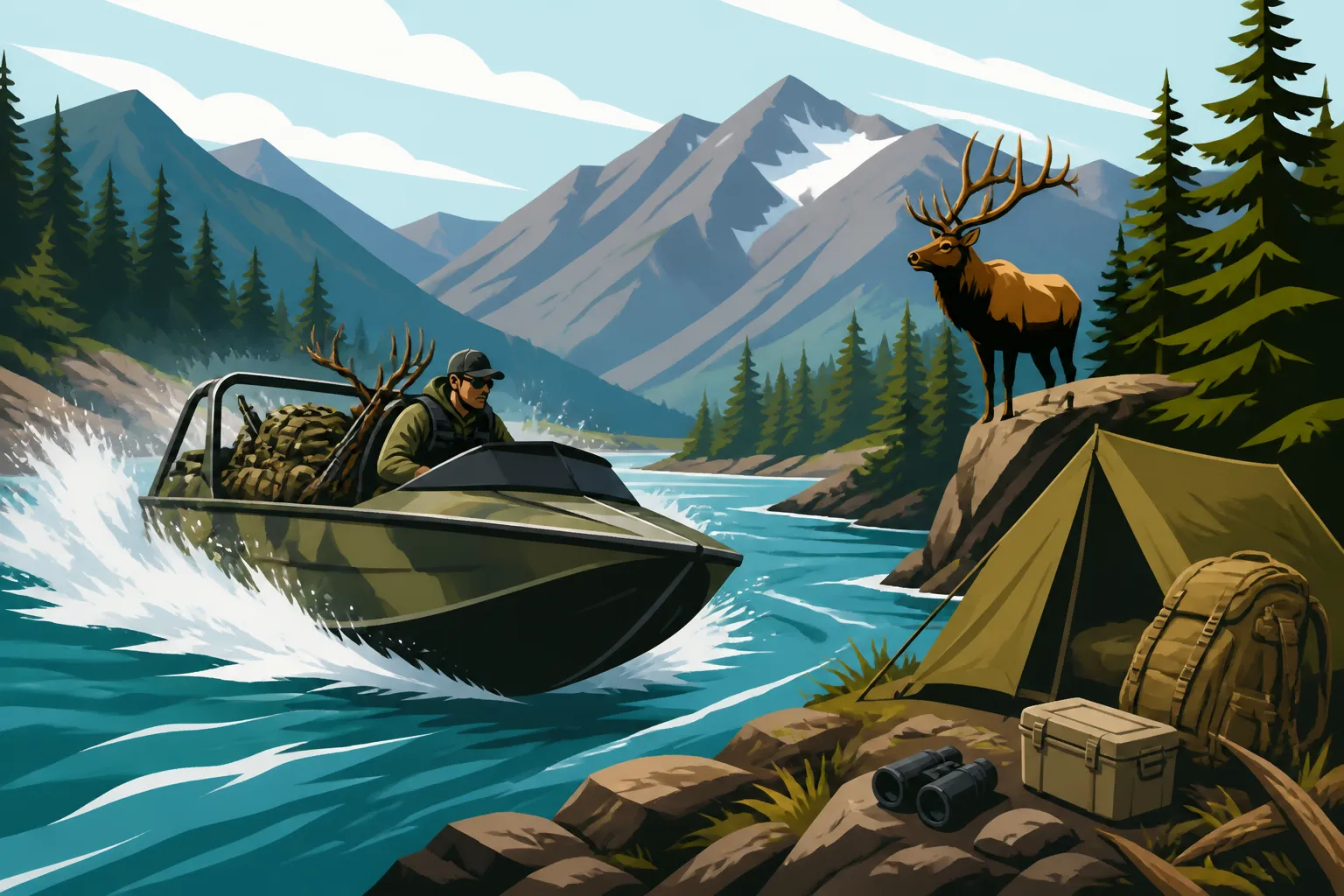
Anyone who's done a backpack hunt knows the agonizing process of weighing every single item. What to leave behind? What luxury can you afford? With a jet boat, that equation changes dramatically. You're no longer limited to what you can carry on your back. This means you can bring a significantly more comfortable camp, complete with wall tents, wood stoves, coolers full of good food, and even extra fuel for extended stays. For a longer hunt, especially when chasing species like moose or elk, this ability to haul a substantial amount of gear can transform a grueling survival mission into an actual expedition. Imagine being able to bring enough water, cooking supplies, and even a robust first-aid kit without compromise.
Efficient Game Retrieval and Meat Care
After a successful hunt, the real work begins: getting the animal out. If you're deep in the bush on foot, packing out quarters can be an exhausting, multi-day affair. With a jet boat, if you can get your animal to the river's edge, you've essentially got a highway back to your truck. This dramatically simplifies the logistics of game retrieval, allowing for faster and more efficient transport of meat. This is particularly critical in British Columbia's warm early seasons, where proper meat care can make or break your harvest. You can quickly get the meat into coolers or even use the river water to help cool it down before the journey home. The larger capacity of a boat also means you can often bring out an entire animal in one trip, rather than making multiple grueling packs.
Planning Your British Columbia Jet Boat River Trip
Embarking on a jet boat hunting trip in British Columbia isn't something you just "wing." It demands meticulous planning, an intimate understanding of river conditions, and a strong emphasis on safety. Rivers here are dynamic, unpredictable, and often remote, making preparation paramount.
Understanding British Columbia River Dynamics
British Columbia's rivers are incredibly diverse, and each presents its own set of challenges. Glacial rivers, common in the northern and central parts of the province, often have high sediment loads, constantly shifting sandbars, and variable water levels influenced by melt. Interior rivers might have more stable flows but can feature numerous log jams, sweepers, and shallow gravel bars. Before you even think about putting your boat in, you need to research the specific river you intend to travel.
Water levels are arguably the most critical factor. What might be easily navigable in spring runoff could become a series of impassable rapids or exposed gravel flats by late summer or fall. Websites from BC Hydro or the Water Survey of Canada (WSC) offer real-time and historical water level data for many major rivers. Pay close attention to these readings and understand what constitutes a safe operating level for your specific boat. For example, some rivers are only viable during spring run-off, while others are best in the drier late summer. Utilize tools like the satellite imagery on apps like GoHunt to get a visual lay of the land, identifying potential braided sections, rapids, or large sandbars before you even leave home. This can be crucial when scouting a British Columbia Management Unit online.
Essential Pre-Trip Safety and Gear Checks
Your safety, and the success of your hunt, hinges on a thoroughly prepared boat and crew. Here's a breakdown of what needs to be on your checklist:
- Boat Condition: Beyond the obvious, check your impeller and wear ring for any damage. Ensure your jet intake is clear. Test all electrical systems: bilge pump, lights, horn. Carry a spare prop if you have an outboard jet, or spare impeller tools for an inboard.
- Fuel Management: This isn't just about bringing enough; it's about bringing more than enough. Calculate your fuel consumption generously, adding at least a 25-50% buffer for unforeseen circumstances like strong headwinds, currents, or having to re-run sections. Fuel caddies must be secure and properly vented. Remember, running out of fuel 50 km upriver can quickly turn into a dangerous situation.
- Safety Gear: Beyond Transport Canada requirements (PFDs for everyone, sound signaling device, bailing device, throw bag, reboarding device), consider additional items for a remote hunting trip. A comprehensive marine first-aid kit, a repair kit for your boat (epoxy, patch materials, tools), a spare kill switch lanyard, and spare shear pins for your motor are absolute necessities.
- Communication: Cell service is almost non-existent on most remote BC rivers. A satellite communication device like a Garmin inReach or a Zoleo is non-negotiable for emergency planning in British Columbia's backcountry. Make sure someone back home has your float plan, including your route, expected timeline, and a contact schedule.
- Contingency Plans: What happens if your boat breaks down? Can you walk out? Do you have enough supplies to wait for help? Always have a 'go-bag' with emergency rations, shelter, and fire-starting tools, separate from your main camp gear.
Navigating Regulations and Access
Before you launch, familiarize yourself with British Columbia's specific boating and hunting regulations. Are there any horsepower restrictions on the river? Are there designated no-wake zones or protected areas you need to avoid? Always carry your Pleasure Craft Operator Card (PCOC) and boat registration.
Additionally, consider the land status along your chosen river. While most riverbeds and adjacent lands are Crown Land, there can be private parcels, Indigenous territories, or park boundaries where hunting and access rules differ. Use detailed maps to identify these areas. While onX is popular for land ownership, cross-reference it with official British Columbia's Management Units and Regions maps to ensure you're compliant. Access to launch points might also be an issue if you're not using an official boat launch; sometimes, these are on private property, and permission will be required.
On the Water: Navigating British Columbia Rivers with a Jet Boat
Once you're on the river, the real adventure begins. Operating a jet boat effectively and safely in British Columbia's dynamic river environments requires skill, constant vigilance, and a healthy respect for the power of the water. This isn't like cruising on a lake; rivers have their own personality and can change in an instant.
Reading the Water and Identifying Hazards
One of the most crucial skills for a jet boat operator is the ability to "read the water." This means understanding what the surface of the river tells you about what lies beneath.
- Ripples and Waves: Small, crisp ripples in otherwise calm water often indicate very shallow areas or gravel bars. Larger, standing waves or "boils" can signal deeper water over submerged rocks or turbulent currents.
- Colour: Clear, fast-moving water over light-coloured gravel often means shallow. Darker, glassy water usually indicates deeper, calmer sections. Silty, glacial rivers can be deceiving, as visibility is nil; here, you rely more on current and prior knowledge.
- Current Lines: The main current will often be the deepest, fastest part of the river. Look for debris flowing quickly to identify it. However, the deepest channel isn't always the safest, especially if it runs close to obstacles.
- Upstream Glimpses: Always look as far ahead as possible. A distant shimmer or change in pattern could be a new sandbar or a set of rapids forming. If you can't see what's ahead, slow down.
- Deadheads and Strainers: British Columbia rivers are notorious for carrying submerged logs ("deadheads") or fallen trees that create "strainers" across the current. These are incredibly dangerous, as they can flip a boat or trap you against them. Learn to spot the subtle ripples or disturbances they create. Often, if there's one, there are more.
- Braided Channels: Many BC rivers, especially in the interior, split into multiple shallow channels. Deciding which one to take can be a challenge. Often, the deepest channel will show slightly faster flow or fewer visible obstructions. When in doubt, it's safer to go slower, or even walk a section to scout if feasible.
Operating Techniques in Shallow Water and Currents
Jet boats excel in shallow water, but there are still limits and specific techniques to master.
- Momentum is Your Friend: Unlike propeller boats, jet boats need constant forward momentum to steer effectively. In very shallow sections, maintaining a steady, moderate speed can help you "plane" over the water, minimizing contact with the bottom. Losing momentum in shallow water can leave you stuck.
- Avoiding Obstacles: If you see an obstacle, resist the urge to slow down drastically. A sudden deceleration can cause the boat to drop lower in the water, increasing the chance of hitting something. Instead, aim to maintain control and steer around it. For unexpected hazards, a quick, sharp turn at speed is often more effective than attempting to brake.
- Upstream Travel: Going upstream against a strong current requires more power and attention. Stick to the deepest channels and use the slower water along inside bends if possible. If the current is too strong, you might have to "work" your way up, using eddies and slower water to gain ground.
- Downstream Travel: Going downstream means the current is working with you. This can be faster but also less forgiving. You need to maintain good control and anticipate obstacles earlier, as the current will push you into them. Use less throttle and allow the current to assist your speed, but always be ready to power up to steer away from trouble.
Establishing a Safe and Secure Camp
Once you've reached your chosen hunting area, setting up camp involves more than just pitching a tent.
- Boat Security: The river that brought you there can also take your boat away. Choose a secure mooring spot where the boat is protected from the main current and potential rising water levels. Anchor it securely on both the bow and stern, preferably to sturdy trees or large rocks. Pull it as far out of the water as possible, or at least above the anticipated high-water mark if levels might fluctuate.
- Camp Location: Set your camp well above the water line, considering any potential for rain or upstream snowmelt that could raise river levels. Look for flat, well-drained ground. Be mindful of game trails; you don't want your camp directly in a high-traffic area for animals or, more critically, bears. Always practice bear safety while hunting in British Columbia, ensuring food is stored appropriately and cooking is done away from sleeping areas.
- Unloading and Organization: Efficiently unload your gear, organizing it so essential hunting items are easily accessible, and camp supplies are stored securely. Think about what you'll need first for the hunt versus what can wait. For example, your hunting packs, rifles, and optics should be easy to grab, while firewood can be organized later.
Choosing the Right Jet Boat and Essential Gear for British Columbia Conditions
Selecting the proper jet boat and outfitting it correctly is paramount for success and safety on British Columbia's diverse waterways. This isn't a "one size fits all" situation; what works for a recreational day trip might not cut it for a multi-day hunting expedition deep in the wilderness.
Jet Boat Types and Considerations
British Columbia rivers present specific challenges that influence boat choice. Shallow water, swift currents, debris, and long distances are common, requiring a robust and reliable vessel.
- Aluminum vs. Composite Hulls:
- Aluminum Jet Boats: These are the workhorses of British Columbia rivers. Their robust welded aluminum hulls are incredibly durable, capable of shrugging off impacts with rocks and gravel bars that would instantly destroy a fiberglass or composite boat. This makes them ideal for the unforgiving conditions often found when Hunting British Columbia's Coastal Rain or in the interior. They come in various thicknesses (e.g., 1/4" bottom plating is common for heavy-duty river boats). They can be loud and might not offer the smoothest ride, but their resilience is unmatched. Brands like Kingfisher, Silver Streak, and Custom Weld are popular choices among serious BC river users.
- Composite/Fiberglass Jet Boats: While offering a smoother, quieter ride and often more refined finishes, these are generally not recommended for true backcountry hunting on unmaintained BC rivers. Their hulls are more susceptible to damage from impacts with rocks and logs, which are an inevitable part of river travel in this province. They might be suitable for larger, deeper, and well-charted rivers like parts of the Fraser or Skeena, but for exploring smaller tributaries or unknown waters, aluminum is king.
- Inboard vs. Outboard Jets:
- Inboard Jets: These boats have the engine mounted inside the hull, driving a jet pump. They typically offer more power, can carry heavier loads, and often have a flatter, shallower draft. Their enclosed engine also means less exposure to the elements. They are excellent for larger rivers and heavier hauling, making them a great option for Moose Hunting British Columbia's Interior where big loads are often required. However, they can be more complex to maintain and repair in the field.
- Outboard Jets: These use a standard outboard motor with a jet drive unit instead of a propeller. They sit higher out of the water, allowing for extremely shallow operation. They are generally lighter, more fuel-efficient for their size, and easier to service or replace. This makes them versatile for smaller rivers or areas where you might need to portage the engine. However, they can be less powerful for very heavy loads compared to dedicated inboards. For solo hunters or smaller groups, an outboard jet might be a more manageable option.
- Size and Capacity: Consider the number of people you'll typically hunt with and the amount of gear you need to carry. A 16-18 foot boat might be sufficient for two hunters and gear, while 20+ foot boats are better for larger groups, heavier loads, or longer expeditions. Always check the boat's maximum weight capacity and adhere to it. Overloading a jet boat severely impacts its performance, maneuverability, and safety.
Essential Gear for British Columbia Jet Boating Hunts
Beyond the standard safety equipment required by Transport Canada, specific items are crucial for a successful and safe hunting trip.
| Category | Item | Why It's Essential |
|---|---|---|
| Navigation & Comms | GPS with topographic maps | Essential for knowing your location, planning routes, and marking camps or game retrieval points. |
| Satellite messenger (Garmin InReach, Zoleo) | Critical for emergency communication and sending/receiving messages where cell service doesn't exist. | |
| Waterproof marine charts | Backup for electronic navigation, good for overall river understanding. | |
| Safety & Repair | Comprehensive First Aid Kit | Must be robust enough for remote wilderness emergencies, including trauma supplies. |
| Boat Repair Kit | Marine epoxy, duct tape, zip ties, spare shear pins (for outboard jets), impeller tools (for inboards), wrenches. | |
| Extra PFDs | For guests or if one becomes damaged. | |
| Heavy-duty anchor(s) with ample rope | Securely mooring your boat in strong currents or fluctuating water levels. | |
| Winch and extraction kit | For freeing a beached boat from sandbars or shallow gravel. | |
| Air horn or marine distress signals | For signaling in emergencies. | |
| Fuel & Power | Extra fuel tanks | Always carry at least 25-50% more fuel than you estimate. Securely tie them down. |
| Portable fuel transfer pump | Makes refueling easier and safer in the field. | |
| Spare battery and jump starter | For ensuring your boat starts when you're ready to head home. | |
| Hunting Specific | Game bags and hoist | For proper meat care, especially when hanging meat at a backcountry camp. |
| Coolers (heavy duty) | For preserving game meat during transport, especially in warmer weather. | |
| Camp gear (wall tent, stove) | For comfortable and warm overnight stays, crucial in variable BC weather. | |
| Weapons and ammunition in waterproof cases | Protecting your firearms from moisture and damage during river travel. | |
| Miscellaneous | Dry bags and waterproof containers | Essential for keeping all sensitive gear, clothing, and electronics dry. |
| Powerful spotlight or headlamp | For navigating in low light or emergencies. | |
| Heavy-duty tie-downs/straps | Securing all gear within the boat to prevent loss or shifting. |
Remember that a jet boat is a tool. Like any tool, its effectiveness depends on the skill of the operator and the quality of the preparation. With the right boat, the right gear, and a solid understanding of British Columbia's rivers, a jet boat can truly open up a world of remote hunting opportunities that few others get to experience. This kind of access can be the difference between a good hunt and a truly unforgettable one.
Disclaimer
Please be aware that hunting regulations, seasons, and access rules in British Columbia can change. Always consult the most current British Columbia Hunting and Trapping Synopsis before planning any hunt. Safety should always be your top priority when operating a boat and hunting in the backcountry.