What Bears Eat on a Coastal Estuary
When you picture a bear in British Columbia, especially along our rugged coast, it’s easy to imagine them knee-deep in a salmon-choked river. While that’s certainly a iconic image, it doesn't tell the whole story of their incredible adaptability. If you spend any time observing bears on our rich coastal estuaries, you’ll quickly realize their diet is far more varied and opportunistic than you might first think. Understanding what these powerful animals forage for in these unique tidal environments is not just fascinating for wildlife enthusiasts, but absolutely critical for hunters looking to anticipate their movements and for anyone keen on truly understanding coastal ecology.
The Coastal Estuary: A Dynamic Feast for Bears
British Columbia's coastal estuaries are truly unique ecosystems, acting as a crucial bridge between terrestrial and marine environments. For bears, these aren't just scenic spots; they are absolute feeding grounds, offering a diverse, ever-changing pantry throughout the year. The constant ebb and flow of the tides, the influx of freshwater from rivers, and the rich intertidal zones create a bounty of food sources that allow bears, particularly black bears, to thrive in what might seem like a challenging habitat.
Think about it: the coast here, from Vancouver Island to the Great Bear Rainforest, is a mosaic of steep mountainsides dropping directly into the ocean. But where those rivers meet the sea, you often find these incredible, flat, silty areas – the estuaries. These are nutrient traps, dynamic zones where sediment settles, and life explodes. It’s this unique combination of fresh and saltwater influences, coupled with the seasonal cycles, that dictates what bears will be eating and, by extension, where they’ll be spending their time. For those of us who hunt or just enjoy observing wildlife, understanding these complex dynamics is key to truly appreciating the coastal experience.
Why Estuaries Are Bear Magnets
Estuaries are biological powerhouses. They receive nutrients from both the land (via rivers and streams) and the sea (via tides), creating an incredibly productive environment. This translates directly into abundant food sources for bears. Unlike the deep, dense forests where food can be scattered, estuaries often concentrate food in relatively accessible areas, making them efficient foraging grounds.
Imagine a bear, having just emerged from its den in the spring, looking for easy calories. The estuary, with its early-growing grasses and newly exposed tidal life, offers a much quicker payoff than trying to find sparse berries in the still-frozen forest. The sheer biomass available in these areas – from vegetation to various forms of marine life – makes them indispensable to the health and survival of coastal bear populations. Why British Columbia Grows Big Black Bears is directly tied to these rich feeding opportunities.
Seasonal Diet Shifts in the Estuary
A bear’s diet on a coastal estuary isn't static; it's a dynamic menu that changes dramatically with the seasons. What they’re feasting on in April is vastly different from their September supper. This adaptability is one of the reasons black bears are so successful across British Columbia's diverse landscapes.
In the spring, as bears emerge from hibernation, their digestive systems are just waking up. They're looking for easily digestible greens and protein. As summer progresses, the focus shifts to calorie-dense items like berries. And, of course, when fall arrives, the legendary salmon runs become the main event, providing a crucial fat-loading opportunity before winter. Understanding these seasonal preferences is vital, whether you're a photographer hoping to capture an image or a hunter planning your approach during British Columbia Spring Bear Season Dates or later in the year.
Specific Estuary Delicacies for Coastal Bears
The sheer variety of food items available to bears on a British Columbia coastal estuary is truly impressive. They are incredibly opportunistic feeders, taking advantage of whatever is most abundant and calorically valuable at any given time. It's not just about what's obvious; bears often utilize the full spectrum of what these rich environments have to offer.
Let's break down some of their favourite estuary foods:
Early Spring Greens and Sedges
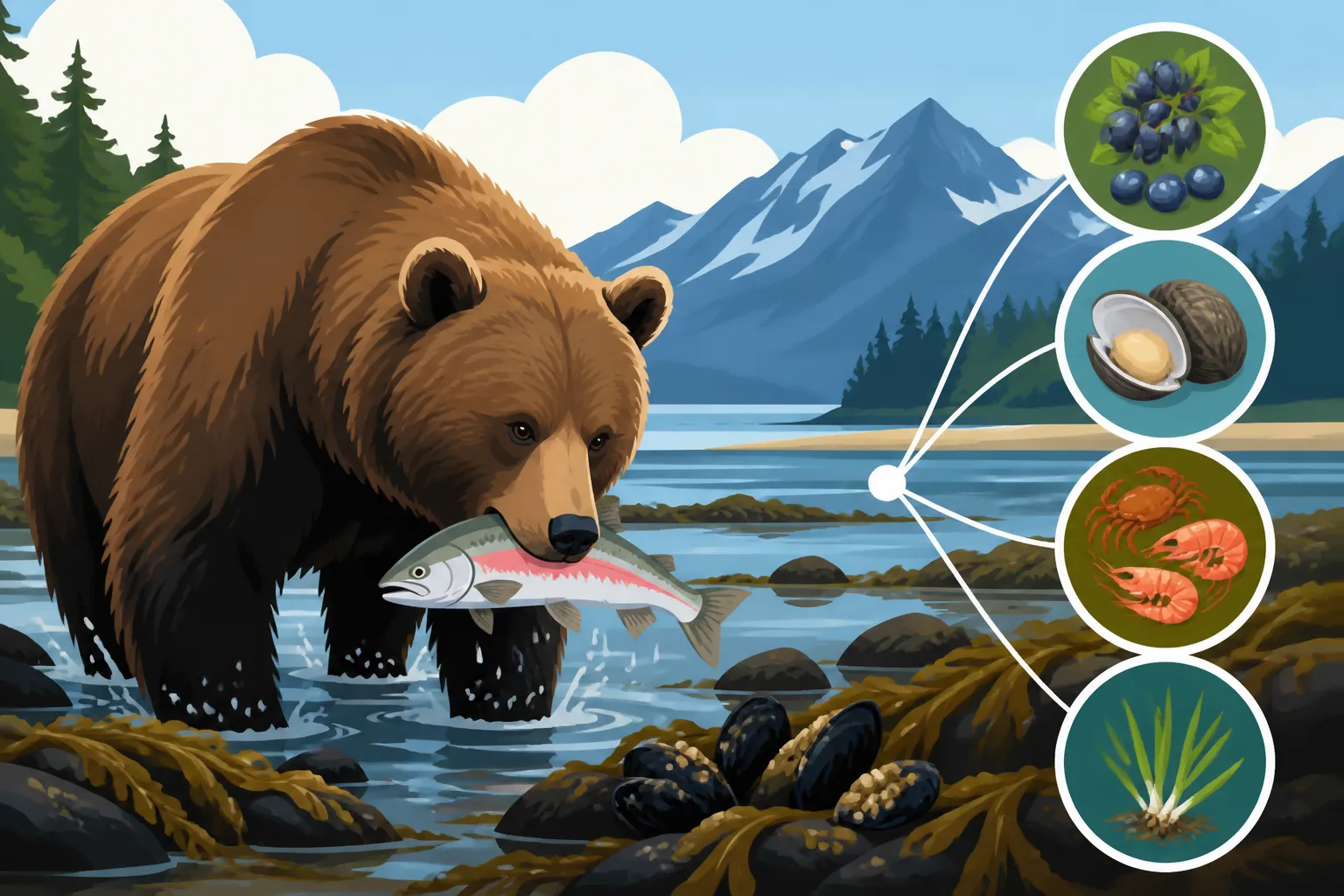
When bears first emerge from their dens, often around April or May, their bodies are craving fresh, green vegetation. The estuary flats are among the first places to "green up" after winter. Here, bears will gorge on young grasses, sedges, and forbs. These plants, while not high in calories, are rich in fibre and moisture, helping to kickstart their sluggish digestive systems.
Picture a black bear, freshly out of its winter slumber, ambling along a tidal flat, methodically grazing like a cow. They're not being picky; they're simply consuming vast quantities of easily accessible plant matter. This initial flush of green is critical for their early season recovery, providing essential roughage to get their systems back in order before the more calorically dense foods become available. When British Columbia Bears Leave the Den often coincides with this first burst of estuary growth.
Root Systems and Bulbs
Bears are expert diggers, and the soft, silty soils of estuaries often hide a treasure trove of roots and bulbs. They'll use their powerful claws to unearth these underground snacks, which can provide a concentrated source of carbohydrates. While specific species vary by location, the presence of edible roots means bears will often tear up patches of ground, leaving obvious signs of their foraging activity.
These root systems can be a consistent food source when other options are scarce, bridging gaps between seasonal availability of berries or salmon. It's tough work, but a bear's powerful build is perfectly suited for it, and the nutritional payoff makes it worthwhile.
Intertidal Invertebrates and Carrion
This is where the unique marine influence of the estuary really comes into play. As the tide recedes, it exposes vast mudflats and rocky shores that are teeming with life. Bears will actively flip rocks, paw through seaweed, and dig in the mud for crabs, clams, and other shellfish. These protein-rich morsels are a vital part of their diet, especially when larger prey isn't available.
They're not above scavenging either. Dead fish, marine mammals, or even birds washed ashore by the tide are quickly consumed. A keen-eyed hunter using a mapping application like GoHunt can often identify large, flat estuary areas that will be exposed at low tide, giving them an idea of where bears might be concentrating their efforts looking for these tide-line treats. This scavenging behaviour highlights their opportunistic nature and their incredible ability to utilize every available food source. Hunting a Coastal Inlet From a Boat often reveals these types of foraging scenarios.
Berries and Other Ripening Fruits
As summer progresses into late summer and early fall, the vegetation around the estuary edges and nearby clearings becomes laden with berries. Salmonberries, huckleberries, blueberries, and cranberries are all high-energy foods that bears will gorge on to build up fat reserves. These berry patches are often found in transition zones between the tidal flats and the forest, making them prime foraging locations.
Bears have an incredible sense of smell, and they'll travel considerable distances to find productive berry patches. You'll often see them moving through these areas, systematically stripping branches of their fruit, sometimes leaving behind piles of scat full of berry seeds. This is a critical time for fat accumulation, as they prepare for the lean months of winter.
Here's a quick look at how their estuary diet changes through the seasons:
| Season | Primary Estuary Food Sources | Nutritional Focus | Bear Activity |
|---|---|---|---|
| Spring | Young grasses, sedges, forbs, early roots, carrion | Fibre, moisture, initial protein | Grazing, digging, scavenging along tide lines |
| Summer | Berries (salmonberries, huckleberries), roots, insects, crabs | Carbohydrates, early fat | Intensive berry foraging, continued digging and scavenging |
| Fall | Salmon (if runs are present), berries, roots, residual carrion | High fat, protein, calories | Concentrated fishing, last-minute berry gorging, preparing for denning |
The Mighty Salmon Runs
Without a doubt, the most iconic and calorically significant food source for coastal bears in the estuary environment is salmon. When the salmon runs begin in late summer and fall, it's a true feast. Different species of salmon, from pinks to coho to chum, spawn at various times, offering bears a prolonged window of opportunity to consume massive amounts of protein and fat.
Bears will position themselves at the mouths of rivers, along gravel bars, and in shallow riffles, skillfully plucking fish from the water. They often prioritize the roe (eggs) and the fattiest parts of the fish, discarding less calorie-dense portions. This is an incredibly important time for them to put on crucial weight for hibernation. A single large salmon can provide a huge energy boost, and bears will consume dozens, if not hundreds, over the course of the spawning season. This intense feeding during the salmon runs explains What Salmon Runs Do to Bear Behaviour and why British Columbia's Coastal Black Bears grow so large.
Understanding Bear Behaviour on Estuaries for Hunters
For those of us heading out into British Columbia's coastal country with a tag in our pocket, understanding what bears eat on an estuary is not just academic; it's foundational to a successful and ethical hunt. Bears are creatures of habit, driven by the most fundamental need: food. If you can predict where their food sources are, you're well on your way to predicting where the bears will be.
Hunting coastal estuaries for bears can be an incredible experience, but it comes with its own set of challenges, not least of which is the often-wet, dense terrain and the sheer power of the tides. You need to be methodical in your scouting and patient in your approach.
Reading the Landscape for Food Signs
When you're scouting an estuary, you're not just looking for bears; you're looking for evidence of their feeding. Torn-up patches of ground signal digging for roots or crabs. Fresh scat, especially if it's purple with berry seeds, tells you they're in a berry patch. Fisheye balls or partially eaten salmon carcasses are a dead giveaway that the run is on and bears are actively fishing.
Using tools like GoHunt to analyze aerial imagery can help identify promising estuarial flats, pinch points where salmon might concentrate, or the transition zones where berries grow. Pay attention to tide charts too; bears will often time their foraging for intertidal invertebrates with low tide, meaning you might find them actively working the exposed mudflats. Hunting an Estuary Flat at Low Tide requires precise timing and knowledge of these patterns.
Timing Your Hunt with Peak Foraging
The timing of your hunt should ideally align with peak foraging opportunities. For example, if you're targeting a spring bear, focus on areas with abundant early greens or exposed tidal flats. If it's a fall bear, and salmon are running, you'll want to be near the river mouths and spawning channels.
It's a dance with nature. Bears are often most active during dawn and dusk, but on an estuary, their activity can also be heavily influenced by the tides. A bear might be active at midday if that's when the tide exposes a prime clam bed. Flexibility and observation are key. Consider a trip focusing on Hunting British Columbia's September Archery Opener if berries are peaking and salmon are just starting to show up.
Safety in Bear Country
While black bears are generally shy, any bear should be treated with respect, especially when food sources are concentrated. Estuaries, with their rich food supply, can sometimes have higher concentrations of bears. Always carry bear spray, make noise as you travel, and be aware of your surroundings. If you encounter a bear, give it plenty of space, and never get between a sow and her cubs.
Understanding their diet also helps you understand their motivation. A bear gorging on salmon or berries is highly focused on food. While they might be less likely to notice you, an unexpected encounter could startle them. Always be prepared for a close encounter and know how to react. Check out Bear Safety While Hunting in British Columbia for comprehensive tips on staying safe in the backcountry.
Conclusion
The diet of a bear on a British Columbia coastal estuary is a testament to their incredible adaptability and the richness of these unique ecosystems. From the first shoots of spring grass to the bounty of a fall salmon run, these intelligent animals meticulously work the landscape, exploiting every available calorie. For hunters, this deep understanding of their seasonal foraging patterns, specific food preferences, and the signs they leave behind, is invaluable. It not only increases your chances of a successful hunt but also fosters a deeper appreciation for the complex interplay of life in British Columbia's wild coastal environments. So, the next time you're near an estuary, take a moment to look for those tell-tale signs – you might just learn a thing or two from our coastal bears.
Disclaimer
This article is for general informational purposes only and does not constitute professional advice. Laws, prices and regulations vary by location and change over time. Consult a qualified professional for guidance on your specific situation.