Elk Hunting in British Columbia
Elk hunting in British Columbia is often portrayed as a dream, but the reality for many aspiring hunters is that it can feel incredibly daunting. This vast province, with its diverse landscapes from dense coastal rainforests to rugged interior mountains, offers incredible opportunities, but figuring out where to start, what regulations apply, and how to effectively pursue these magnificent animals can be a huge hurdle. This guide is designed to demystify elk hunting in BC, offering practical strategies and insights for both the seasoned hunter and those new to the pursuit.
Understanding British Columbia's Elk Populations and Habitats
British Columbia is home to two distinct subspecies of elk: the Roosevelt elk and the Rocky Mountain elk. Each has adapted to vastly different environments, and understanding these differences is crucial for any hunter planning a trip. Their distribution, physical characteristics, and behavioural patterns dictate entirely different hunting approaches.
Roosevelt Elk: Giants of the Coastal Rainforest
Roosevelt elk, often called "Roosies," are North America's largest subspecies of elk, known for their impressive body size rather than exceptionally massive antlers, although trophy bulls certainly exist. They are primarily found in the dense, wet coastal forests of Vancouver Island and the mainland coast, typically below the snow line. This habitat is characterized by towering old-growth timber, incredibly thick underbrush, steep terrain, and consistent rainfall.
Hunting Roosevelt elk is a unique challenge. Their habitat, often a tangle of salal, salmonberry, and devils club, makes visibility extremely limited, sometimes to mere yards. This means traditional glassing methods common in open country are largely ineffective. Instead, hunters must rely on their ears during the rut, listening for bugles, and focusing on still-hunting and tracking through the dense cover. Accessing these areas often involves logging roads that can be deactivated or overgrown, or even boat access into remote inlets. The wet conditions also demand specific gear choices, emphasizing waterproof clothing and durable boots. Hunters pursuing these animals often find themselves in a constant battle against the elements and the terrain, a truly immersive and physically demanding experience. For more on this challenging pursuit, delve into Hunting British Columbia's Coastal Blacktail, which shares similar habitat considerations.
Rocky Mountain Elk: Masters of the Interior Mountains
Rocky Mountain elk are more widespread in British Columbia, inhabiting the eastern and central interior regions. These elk are generally smaller in body size than their coastal cousins but are renowned for their impressive antlers. Their habitat varies widely, from the rugged mountains and timbered slopes of the Kootenays and Peace River region to the open grasslands and forested benches of the Cariboo and Okanagan.
Unlike Roosevelt elk, Rocky Mountain elk often occupy more open terrain, especially during the early seasons and late in the rut, allowing for glassing opportunities. However, they also frequent dense lodgepole pine and spruce forests, requiring hunters to adapt. Hunting strategies often involve covering significant ground, either on foot, horseback, or utilizing ATVs/UTVs where permitted, to locate herds. Calling, particularly bugling and cow calls, can be highly effective during the rut. The diverse terrain means hunters need to be prepared for everything from high-altitude alpine basins to lower elevation river bottoms. Their seasonal movements are often dictated by snow levels and forage availability, pushing them between high summer ranges and lower wintering grounds. Understanding these patterns is key to success. You can explore more about these specific animals in Roosevelt and Rocky Mountain Elk in British Columbia.
| Elk Subspecies | Primary Habitat | Body Size | Antler Potential | Common Hunting Methods | Key Challenge |
|---|---|---|---|---|---|
| Roosevelt Elk | Coastal Rainforest | Large | Moderate to Large | Still-hunting, tracking, calling (rut) | Dense cover, limited visibility, wet weather |
| Rocky Mountain Elk | Interior Mountains, Forests, Grasslands | Medium | Large to Very Large | Glassing, calling (rut), spot-and-stalk | Vast terrain, herd location, migratory patterns |
British Columbia Elk Season Dates and Regulations
Navigating British Columbia's hunting regulations can be a puzzle, especially with varying season dates, bag limits, and specific rules for different management units (MUs) and regions. Elk hunting in BC often falls under two main categories: General Open Seasons (GOS) and Limited Entry Hunting (LEH) draws.
General Open Seasons: Opportunity for All
General Open Seasons provide an opportunity for all licensed resident hunters to pursue elk without needing a special draw. These seasons typically have more restrictive bag limits and antler requirements to manage herd health and hunter pressure. For example, many GOS areas will only allow the harvest of "spikes" (bulls with antlers that do not branch beyond 4 inches from the skull) or "6-points or greater" (bulls with at least six points on one side).
The timing of GOS can vary significantly by region and MU. Archery seasons often precede rifle seasons, providing a valuable early opportunity. Rifle seasons usually kick off in September or October, extending into November in some areas. These seasons are a great option for hunters who want to explore different areas without the lottery system of LEH. However, GOS areas can also experience higher hunter pressure, especially in easily accessible areas. Thoroughly reviewing the current year's British Columbia Hunting Regulations Synopsis is absolutely critical, as rules can change annually. The online version is always the most up-to-date. You can find general dates for British Columbia Big Game Season Dates here.
Limited Entry Hunting Draws: Targeting Specific Opportunities
Limited Entry Hunting (LEH) is a draw system designed to manage hunter numbers and specific species in certain areas, ensuring sustainable harvest and high-quality hunting opportunities. For elk, LEH draws often allow for the harvest of "any bull" or "antlerless" animals, providing more flexibility than many GOS. These draws are highly sought after, especially for trophy opportunities or for hunting in areas with high elk populations but limited access.
Applying for an LEH draw requires careful planning. Hunters must choose their desired species, management unit, and season date window. The odds of drawing a tag can vary wildly, from near-certainty in some antlerless hunts to extremely long shots for prime bull tags. Many hunters build up "loyalty" points over years of applying, increasing their chances in subsequent draws. Researching historical draw odds, which are often available through platforms like GoHunt, can help you make informed decisions about where to apply. The application period typically opens in the spring, with results released later in the year. Missing the deadline means missing out entirely, so keep a close eye on the calendar. More detailed information on this system is available in British Columbia's Limited Entry Hunting Draws.
Antler Restrictions and Regional Variations
British Columbia uses various antler restrictions to protect younger bulls and manage herd demographics. "Spike-fork" regulations, for example, allow the harvest of bulls with unbranched antlers or only a single fork, while protecting prime breeding bulls. "Six-point or greater" rules are designed to target older, more mature animals. These restrictions are in place to ensure a healthy age structure within the elk herds and allow younger bulls to reach their full potential.
It’s not just antler points; sometimes, it’s about the brow tines or the length of the main beam. Always double-check the specific regulations for the management unit you plan to hunt. Furthermore, regulations can vary significantly even within the same species across different hunting regions in BC. For instance, the regulations for elk in the Kootenays (Region 4) might be entirely different from those in the Peace Region (Region 7) or on Vancouver Island (Region 1). What's legal in one place could be a violation just a few hundred kilometers away. This complexity means that relying on general knowledge alone is risky; always consult the official synopsis.
Hunting Strategies for Rocky Mountain Elk
Hunting Rocky Mountain elk in British Columbia's interior demands a blend of physical endurance, strategic thinking, and adaptability. These animals are smart, resilient, and often live in some of the most beautiful yet challenging terrain the province has to offer.
High Country Tactics: Glassing and Spot-and-Stalk
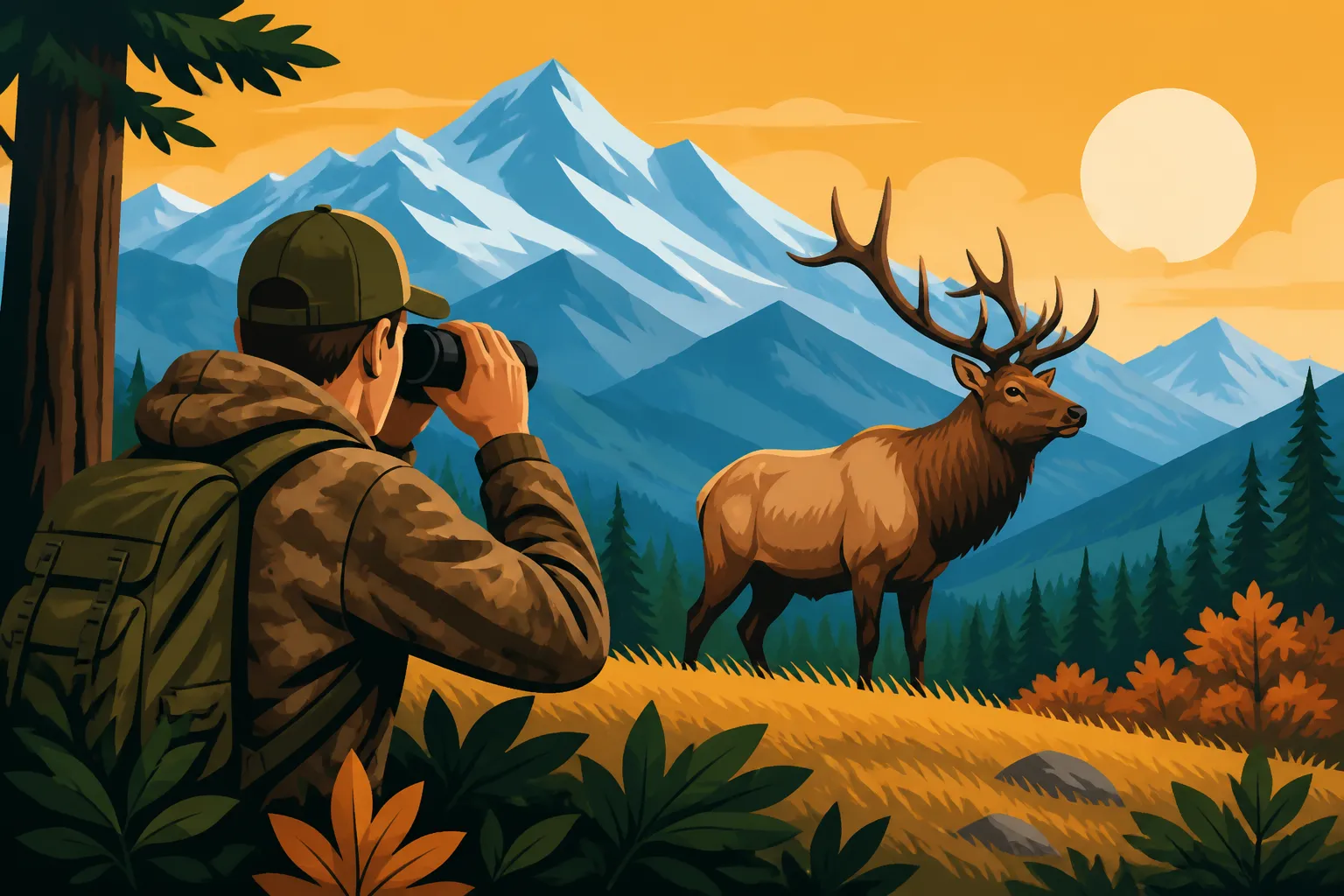
During the early archery seasons and sometimes into the early rifle season, particularly in September, Rocky Mountain elk can often be found in the higher elevations, utilizing alpine and subalpine meadows. This is classic glassing and spot-and-stalk country. Hunters will often hike into vantage points before first light and spend hours systematically glassing open slopes, timberline fringes, and avalanche chutes, searching for feeding elk or bedded animals.
Once elk are spotted, the real challenge begins: planning and executing a successful stalk. This involves assessing wind direction, understanding the terrain, and anticipating the elk's movements. The elevation changes, often loose rock, and scattered timber can make closing the distance quietly a monumental task. A good spotting scope and high-quality binoculars are invaluable tools for this type of hunting. Investing in lightweight, durable gear for long hikes and potential overnight spike camps is also crucial. This type of hunting is incredibly rewarding, offering breathtaking views and intense hunting experiences. If you're interested in the nuances of hunting this terrain, Hunting British Columbia's Alpine in September offers more insights.
Timber Hunting: Still-Hunting and Tracking
While high country hunting offers expansive views, a significant portion of Rocky Mountain elk hunting, especially once pressure increases or the weather turns, occurs in the timbered slopes and valleys. Here, dense forests of lodgepole pine, spruce, and fir provide security cover for elk. Traditional spot-and-stalk from a distance becomes much harder, if not impossible.
In these conditions, still-hunting and tracking are highly effective. Still-hunting involves moving slowly and deliberately through the forest, pausing frequently to listen, look, and scan for any sign of elk. This requires extreme patience and a keen eye for detail, looking for rubs, fresh tracks, droppings, and feeding areas. Tracking, on the other hand, involves locating fresh sign and patiently following the trail, trying to intercept the elk. Both methods demand an intimate understanding of elk behavior and their preferred travel corridors, bedding areas, and feeding grounds within the timber. It's often a game of inches, relying on stealth and the ability to detect subtle movements or sounds before the elk detect you. This is where a good pair of waterproof, quiet boots and quiet clothing truly shine.
Calling During the Rut: The Ultimate Interaction
The elk rut, typically peaking in late September and early October, is arguably the most exciting time to hunt Rocky Mountain elk. During this period, bulls become vocal, bugling to attract cows and challenge rivals. This heightened activity presents incredible opportunities for calling. Bugling, cow calls, and even raking a tree to simulate a bull thrashing brush can draw curious or aggressive bulls into range.
Successful calling isn't just about making noise; it's about communicating with the elk and understanding their responses. A well-placed bugle can elicit a challenge from a bull, allowing you to gauge his location and temperament. Cow calls can draw in a bull searching for a mate, or even bring in a whole herd. Setting up properly, with the wind in your favor and an escape route or shooting lane established, is paramount. Often, having a partner helps, with one hunter calling from a distance to draw the bull past the other hunter positioned closer. This strategy can lead to heart-pounding encounters and is a core part of Calling Moose in British Columbia's Interior, a principle that often applies to elk as well. The thrill of having a bull bugle back and slowly approach your position is an experience every elk hunter cherishes.
Hunting Strategies for Roosevelt Elk
Roosevelt elk hunting is a beast all its own. Forget the open country glassing of the Rockies; this is a game played in the dark, wet, and incredibly dense coastal rainforests. It requires a different mindset, different gear, and a whole lot of grit.
Coastal Rainforest Challenges: Terrain and Visibility
The coastal rainforest habitat of Roosevelt elk presents significant challenges. We're talking about extremely steep terrain, often choked with windfall, devil's club, salal, and dense second-growth timber. Visibility is typically measured in feet, not hundreds of yards. The constant rain and fog can limit even that. This environment is physically demanding, requiring hunters to be in peak condition to navigate the rugged landscape.
Traditional hunting methods like wide-area glassing are virtually useless here. Instead, hunters focus on finding fresh sign – tracks in the mud, fresh droppings, and rub lines on trees. The goal is to get into the elk's living room and find them where they feel secure. This often means slow, methodical still-hunting through the timber, moving only a few steps at a time, pausing to listen intently for any rustle, snap of a twig, or subtle scent. The thick cover also means shots are usually close-range, requiring quick, decisive action. For additional strategies for dealing with dense coastal vegetation, consider Hunting British Columbia's Coastal Rain.
Still-Hunting and Tracking in Old-Growth Timber
Still-hunting is the bread and butter of Roosevelt elk hunting outside of the peak rut. This involves moving through the forest with extreme stealth, using the terrain and cover to your advantage. Every step is calculated, every sound noted. The goal is to move as quietly as possible, allowing you to hear the elk before they hear you, or see them before they see you.
Tracking involves following fresh sign, especially in softer ground or snow. This is an art form, requiring the ability to distinguish fresh tracks from old, understand the elk's direction of travel, and anticipate where they might be heading to feed, water, or bed. When tracking, the hunter must also be aware of the wind and constantly scan ahead for any movement. Often, Roosevelt elk will bed down in the thickest, nastiest patches of timber they can find, making a final approach incredibly difficult. Success often hinges on a hunter's patience, persistence, and ability to stay focused in a challenging environment for hours on end. This is where silent movements become crucial, and good, durable rain gear and waterproof boots are non-negotiable. More insights into this specific habitat can be found in Hunting Roosevelt Elk in British Columbia Old Growth.
Bugling and Cow Calling: Close-Quarters Excitement
During the rut, Roosevelt elk, like their Rocky Mountain counterparts, become vocal, but the dense cover changes the dynamics of calling significantly. While a Rocky Mountain bull's bugle might carry for miles across an open basin, a Roosevelt's bugle in the rainforest is often muffled and localized. This doesn't mean calling isn't effective; in fact, it can be incredibly exciting.
When a Roosevelt bull bugles nearby, it often means he's close, perhaps only dozens of yards away. The challenge is pinpointing his location and getting into a shooting position without being busted. Cow calls and calf mews can be very effective for drawing in curious bulls, especially if you can mimic the sounds of a lost cow or calf. Unlike open country where a bull might respond from a distance, Roosevelt bulls often respond aggressively and move in quickly, leading to intense, close-quarters encounters. It's a high-stakes game of cat and mouse where the dense cover makes every rustle and branch snap amplified. Hunters need to be prepared for a quick shot and aware of their surroundings, including the possibility of a grizzly bear in these coastal regions. For an in-depth look at this thrilling method, check out Bugling Roosevelt Elk on the Coast.
Essential Gear and Preparation for British Columbia Elk Hunts
A successful elk hunt in British Columbia is as much about preparation as it is about execution. The right gear and physical conditioning can make the difference between a miserable trip and a memorable experience.
Physical Fitness and Mental Toughness
Elk hunting in BC is not for the faint of heart. Whether you're navigating the steep, slick terrain of the coastal rainforest for Roosevelt elk or covering vast distances in the interior mountains for Rocky Mountain elk, it's a physically demanding pursuit. Hunters need strong legs, good cardiovascular endurance, and the ability to carry heavy loads, especially if you're lucky enough to pack out an elk.
Beyond physical strength, mental toughness is crucial. British Columbia weather can be unpredictable, ranging from scorching sun to relentless rain and early snow. Frustration is a common companion when elk aren't cooperating, or the terrain seems insurmountable. The ability to stay positive, persist through discomfort, and remain focused on the task at hand is vital. Training should include hiking with a loaded pack, simulating the kind of effort required to ascend and descend steep grades. Don't underestimate the mental fortitude required for multi-day hunts in remote areas.
Optics, Navigation, and Communication
High-quality optics are non-negotiable, especially for Rocky Mountain elk hunting. A good pair of 10x binoculars, a spotting scope for long-range glassing, and a rangefinder will significantly increase your chances of spotting and accurately judging elk. For Roosevelt elk in the thick timber, a compact pair of binoculars or even just your rifle scope might be sufficient, as close encounters are more common.
Navigation is paramount in BC's vast and often unmarked wilderness. A reliable GPS unit, coupled with downloaded maps on a smartphone app like GoHunt, is essential. Always carry a physical map and compass as a backup, and know how to use them. Many areas of BC lack cell service, so a satellite messenger or inReach device is highly recommended for communication and emergency situations. These devices allow you to send messages and trigger an SOS if needed, providing peace of mind in remote locations.
Clothing, Footwear, and Meat Packing Gear
Layered clothing is key to adapting to British Columbia's variable weather conditions. Start with moisture-wicking base layers, add insulating mid-layers like fleece or down, and top it with a waterproof and windproof outer shell. For coastal Roosevelt hunts, robust rain gear is a must. Camouflage patterns that blend with the specific habitat you're hunting can be beneficial, but prioritizing quiet, functional fabrics is more important than specific patterns.
Footwear needs to be sturdy, waterproof, and provide excellent ankle support. Many hunters opt for high-quality leather or synthetic hunting boots, often insulated for colder weather. Break in your boots well before the hunt to prevent blisters. Consider bringing gaiters to keep debris and moisture out of your boots, especially in wet or snowy conditions.
Finally, bring the right gear for packing out your game. This includes a sturdy frame pack, game bags to protect the meat, a sharp knife, a saw or hatchet for quartering, and latex gloves for hygiene. Elk are large animals, and getting the meat off the mountain quickly and cleanly is crucial for quality. Having a plan for Packing Out of British Columbia's Steep Country before you even start hunting can save you a lot of trouble.
Scouting and Locating Elk in British Columbia
Finding elk in British Columbia's vast landscapes is often the biggest challenge. Effective scouting, both digitally and on the ground, significantly increases your odds of success.
E-Scouting and Digital Resources
Before you even set foot in the field, invest time in e-scouting. Online mapping platforms, including dedicated hunting apps like GoHunt, provide invaluable tools. These platforms offer detailed topographic maps, satellite imagery, public/private land overlays, and often provide historical data on draw odds for specific LEH units. Look for areas with a mix of feed, water, and cover. Identify potential bedding areas on north-facing slopes, south-facing slopes for early morning sun, and travel corridors like saddles and benches.
Pay attention to elevation changes, dense timber patches, clearcuts (especially those a few years old that provide good browse), and natural funnels. Identifying road networks, both active and deactivated, can also help plan access points and potential routes. Utilize these tools to mark waypoints for potential glassing spots, water sources, and areas of interest. This digital reconnaissance allows you to narrow down vast areas and focus your on-the-ground efforts more efficiently. You can cross-reference with information on Scouting a British Columbia Management Unit Online for a holistic approach.
On-the-Ground Scouting and Sign Reading
While e-scouting provides a solid foundation, nothing beats boots on the ground. Pre-season scouting, if possible, is incredibly beneficial. This allows you to verify what you saw on the map, check road conditions, identify new logging activity, and, most importantly, find fresh elk sign. Look for tracks, droppings, rubs on trees, wallows, and feeding areas.
Elk sign tells a story. Fresh tracks in mud or dust indicate recent activity. Shiny, moist droppings mean elk were there very recently. Wallows, especially during the rut, are prime locations to find bulls. Rubs on trees can tell you the size of the bull and his presence in the area. Pay attention to how elk use the terrain – where they cross creeks, how they navigate steep slopes, and where they find thermal cover during the day. Setting up trail cameras in key areas like pinch points, water sources, or established trails can provide valuable information on elk presence, travel patterns, and even specific animals. Remember, elk are constantly on the move, so fresh sign is always the most important indicator.
Understanding Seasonal Movements and Habitat Use
Elk movements are heavily influenced by the season, weather, and available forage. In the spring and early summer, they often utilize green-up on lower elevations, moving to higher alpine and subalpine meadows as the snow recedes and forage becomes abundant. As the rut approaches in late September and early October, bulls become more active and vocal, often moving into areas with good cow concentrations.
Once hunting pressure begins, elk will often retreat to thicker cover and become more nocturnal. As winter approaches, snow depth and cold temperatures push them down to lower elevations, often to south-facing slopes or valley bottoms where snow is shallower and forage is more accessible. Understanding these seasonal patterns is critical for knowing where to focus your efforts at different times of the year. For instance, hunting an avalanche chute in September might be prime, but in November, they'll likely be much lower. This adaptive behavior is what makes elk such a challenging, yet rewarding, quarry.
Overcoming Common Challenges in British Columbia Elk Hunting
British Columbia's wilderness, while breathtaking, presents a unique set of challenges to elk hunters. Being prepared for these obstacles is key to a successful and safe hunt.
Unpredictable Weather and Remote Access
The weather in British Columbia, particularly in the mountains and along the coast, is notoriously unpredictable. A warm, sunny morning can quickly turn into a cold, driving rainstorm, or even an unexpected early snowfall. Hunters must be prepared for all four seasons in a single day. This means packing versatile clothing, having reliable shelter, and staying vigilant for changing conditions. Hypothermia is a real risk in wet, cold environments, so ensuring you have dry layers and emergency supplies is non-negotiable.
Accessing prime elk habitat often means venturing into remote areas. Logging roads, while providing access, can be deactivated, overgrown, or require high-clearance 4×4 vehicles. Rivers and lakes might require jet boats or other watercraft. Furthermore, many remote areas have no cell service, highlighting the need for satellite communication devices. Always inform someone of your hunting plans, including your route and expected return time. Be prepared for vehicle breakdowns, flat tires, or getting stuck, carrying appropriate recovery gear and spare parts. This is vital when considering options like Jet Boat Access on British Columbia Rivers.
Encountering Grizzly Bears and Other Wildlife
British Columbia is grizzly bear country, especially in elk habitat. Encounters are a very real possibility, and hunters must be prepared. Carrying bear spray, knowing how to use it, and keeping it readily accessible is paramount. Making noise while traveling through dense brush, especially in areas with poor visibility, can help avoid surprising a bear. Be extra cautious in areas with fresh bear sign, recent kills, or along salmon spawning streams.
Beyond grizzlies, you might encounter black bears, wolves, cougars, and other wildlife. Always be aware of your surroundings. While elk are the target, respecting all wildlife and understanding their behavior is essential for safety. For comprehensive safety measures, consult Bear Safety While Hunting in British Columbia. Remember, you are a visitor in their home, and responsible conduct is paramount.
Thick Cover and Difficult Shot Opportunities
Whether you're in the dense coastal rainforest or the thick timber of the interior, thick cover is a constant factor in British Columbia elk hunting. This often leads to difficult, close-range shot opportunities. Elk can appear and disappear quickly, requiring fast target acquisition and decisive shooting. Practice shooting in various positions – standing, kneeling, and from awkward angles – to prepare for these scenarios.
Knowing your firearm and its capabilities, as well as your own shooting limitations, is crucial. Avoid taking risky shots that could wound an animal. Ensure your rifle is zeroed, and you are confident in your ability to place a bullet accurately. For archery hunters, practice shooting from short distances with broadheads, as brush deflection can be a major concern. The goal is a clean, ethical harvest, and that often means waiting for the best possible shot, even if it means passing on a marginal opportunity. Always ensure you are familiar with British Columbia Legal Firearms and Bows for specific regulations.
Ethical Hunting and Meat Care in British Columbia
Hunting in British Columbia comes with a deep responsibility to the resource and the animals we pursue. Ethical considerations and proper meat care are not just legal requirements but are fundamental to the spirit of hunting.
Responsible Hunting Practices and Fair Chase
Ethical hunting in British Columbia means adhering to the principles of fair chase. This involves respecting the animal, giving it a fair chance, and refraining from practices that would provide an unfair advantage. This includes understanding and following all regulations regarding vehicle use, baiting, and the use of technology. For example, understanding British Columbia Rules on Hunting From a Vehicle is critical. Using artificial light to spot animals at night, or pursuing them with a vehicle, are strictly prohibited and unethical.
It also means respecting other hunters and non-hunters. Be mindful of your presence in the wilderness, pick up your trash, and leave no trace. Report poachers or unethical behavior to the Report All Poachers and Polluters (RAPP) line. Our collective behavior as hunters shapes public perception, and it's our duty to uphold the highest standards of respect and responsibility. The long-term health of British Columbia's wildlife populations depends on all hunters making ethical choices.
Field Dressing and Quartering in the Backcountry
Once an elk is down, rapid and efficient field dressing is paramount, especially in warmer early seasons. The goal is to cool the meat as quickly as possible to prevent spoilage. This means removing the entrails promptly and, ideally, skinning the animal and quartering it for easier cooling and transport. Elk are large animals, and this process can be physically demanding, requiring sharp knives, a game saw, and plenty of patience.
In remote backcountry settings, you'll need to work quickly and meticulously. Hang the quarters in game bags to allow for airflow and protect them from insects and debris. In warm weather, consider placing the meat in a stream or covering it with leafy vegetation to aid cooling. If you’re hunting in grizzly country, taking extra precautions during field dressing is essential, such as working with a partner and keeping bear spray accessible. Understanding how to manage Meat Care in British Columbia's Warm Early Seasons can make a huge difference in the quality of your harvested meat.
Transporting and Preserving Your Harvest
Getting an entire elk out of British Columbia's rugged terrain is a significant undertaking. Most hunters will quarter the animal, bagging each section, and then pack it out using a sturdy frame pack. This often requires multiple trips, or the help of hunting partners, horses, or ATVs where permitted. The weight of elk quarters can be substantial, so good physical conditioning truly pays off here.
Once the meat is out, proper preservation is key. Ideally, get the meat to a cooler or professional butcher as soon as possible. If that's not immediately feasible, keep the meat cool and dry. Ice chests, kept out of direct sunlight, can work for a few days. The goal is to drop the internal temperature of the meat quickly and keep it consistently cool until it can be processed. Whether you plan to process it yourself or take it to a butcher, ensuring the meat is clean, well-cooled, and properly packaged will ensure you enjoy the fruits of your labor for months to come.
Disclaimer
The information provided in this guide is for general informational purposes only and does not constitute legal advice. Hunting regulations in British Columbia are complex and subject to change. It is the sole responsibility of every hunter to consult and comply with the most current British Columbia Hunting Regulations Synopsis, available from the provincial government, before engaging in any hunting activity. Failure to do so can result in serious penalties.