Waterfowl and Upland Hunting in British Columbia
So many hunters in British Columbia focus solely on the pursuit of big game, often overlooking the incredible, diverse, and accessible opportunities that our province offers for wingshooting. If you've ever felt like deer and moose seasons are too short, or that good spots are hard to come by, then you're missing out on a vibrant hunting tradition that can extend your time in the field significantly. This comprehensive guide is designed to open your eyes to the rewarding world of waterfowl and upland bird hunting in BC, covering everything from species and regulations to techniques and finding your next hunting ground.
The Abundant World of British Columbia's Game Birds
British Columbia is a truly unique place, boasting an incredible array of habitats that support a wide variety of game birds. From the salty air of coastal estuaries to the rugged peaks of the alpine, and the dry grasslands of the interior, there's a different feathered quarry waiting to challenge every hunter. It’s this diversity that makes bird hunting here such an engaging and continuous learning experience, whether you're chasing fast-flying ducks or wily grouse.
Diverse Waterfowl Opportunities
Our province is a critical part of the Pacific Flyway, a major migratory route for millions of waterfowl. This means we see an influx of ducks and geese throughout the fall and winter, offering fantastic hunting for dedicated waterfowlers. These birds utilize a range of different aquatic environments, each presenting its own unique challenges and rewards.
On the coast, the vast estuaries and river deltas, particularly around the Fraser Valley and Vancouver Island, are teeming with migratory ducks and geese. Here, you'll find everything from dabblers like Mallards, American Wigeon, and Northern Pintails, to impressive divers such as Canvasbacks and Lesser Scaup. The sheer volume of birds can be astounding, with flocks of Greater White-fronted Geese and Canada Geese also making these fertile floodplains their temporary home. Hunting these areas often involves careful tide predictions, strategic decoy spreads, and robust concealment to fool wary birds accustomed to heavy pressure. For those who brave the rougher waters further offshore, sea ducks like Harlequins and Surf Scoters offer a completely different, fast-paced challenge, requiring specialized gear and boats.
Moving inland, British Columbia’s interior offers a mosaic of lakes, marshes, and sloughs that provide vital staging and breeding grounds. The Cariboo-Chilcotin region, the Okanagan, and the Peace River country are renowned for their duck hunting. Here, smaller, more intimate bodies of water can hold impressive numbers of Mallards, Northern Shovelers, and Ring-necked Ducks. Hunters often employ methods like jump-shooting along marsh edges or setting up small decoy spreads in cattail-lined sloughs. While the scale might be different from the expansive coastal deltas, the intensity of the action can be just as thrilling. The quiet solitude of an interior marsh at dawn, with the unmistakable sound of wings overhead, is a quintessential BC hunting experience.
Upland Bird Hunting Hotspots
Beyond the wetlands, British Columbia's forests, grasslands, and alpine zones hide a treasure trove of upland birds. These hunts are often more physically demanding, requiring hunters to cover ground, understand habitat, and sometimes, navigate steep or dense terrain. The reward, however, is often a sudden flush of wings and a delicious meal.
The vast majority of our upland hunting revolves around forest grouse, primarily Ruffed, Spruce, and the various species of Blue Grouse (Dusky and Sooty). Ruffed grouse, often called "pats" or "partridge" locally, are commonly found in young, regenerating forests, alder bottoms, and along the edges of logging roads, particularly where berry bushes are abundant. They are known for their explosive flush and erratic flight through timber. Spruce grouse, or "chickens," are more common in dense coniferous forests, especially those with pine and spruce, and are typically less wary, sometimes allowing a closer approach. Blue Grouse, on the other hand, often migrate to higher elevations in the fall, frequenting open timbered slopes and clearcuts, providing excellent hunting opportunities as they descend to lower elevations later in the season. These hunts often involve covering many miles on foot, systematically working promising cover, or simply walking old two-track roads.
For the adventurous hunter willing to climb, the alpine regions of British Columbia offer a unique opportunity to pursue ptarmigan. There are three species of ptarmigan in BC—Willow, Rock, and White-tailed—all known for their camouflage and hardy nature, thriving in the harsh, high-elevation environments above the timberline. Hunting ptarmigan is a truly challenging and rewarding experience, requiring significant physical exertion, navigational skills, and often, an early season start before heavy snows set in. These small, often overlooked birds offer some of the most spectacular hunting backdrops in the province, a true taste of the high country.
In the warmer, drier interior regions, especially around the Okanagan and Thompson-Nicola valleys, hunters can find a completely different suite of upland birds, including pheasants, Chukar Partridges, and California Quail. Pheasants are not native to British Columbia but are sustained by release programs in specific agricultural areas, offering excellent opportunities for hunters, especially those with bird dogs. Chukar are perhaps one of the most physically demanding upland birds to hunt, inhabiting steep, rocky, arid hillsides. Their challenging terrain makes success incredibly satisfying. California Quail, with their distinctive topknots and covey-forming habits, are found in brushy creek bottoms and agricultural edges. Finally, though less common than they once were, Sharp-tailed Grouse can still be found in remnant grassland habitats in the Cariboo and Peace River regions, providing a glimpse into the province's prairie-like ecosystems.
Understanding Seasons, Regulations, and Licenses
Diving into bird hunting in British Columbia means getting familiar with a dual system of regulations: provincial and federal. Unlike big game, migratory birds fall under federal jurisdiction, adding an extra layer to your preparation. Missing a detail could turn a great day afield into a serious headache, so it's always worth taking the time to understand the nuances.
Navigating Provincial and Federal Regulations
The first step for any hunter in British Columbia, regardless of what they are pursuing, is to meticulously review the current BC Hunting & Trapping Regulations Synopsis. This document is your bible for all provincial game, including upland birds like grouse, ptarmigan, pheasants, chukar, and quail. It outlines season dates, daily bag limits, and possession limits for each species, broken down by Management Unit (MU) and region. These regulations can change year to year, so relying on outdated information is a big mistake. Pay close attention to any specific rules regarding weapon types or methods of take for upland birds, though they are generally less restrictive than for big game. For instance, while blaze orange is often highly recommended for safety during upland hunting, whether it's legally mandatory can vary based on specific conditions or locations.
When it comes to waterfowl and other migratory game birds, you'll need to consult a separate document: the federal Migratory Birds Regulations, which is updated annually by Environment and Climate Change Canada. This synopsis details the season dates, bag limits, and possession limits for ducks, geese, and other migratory birds. A crucial aspect of federal regulations, and one that trips up many new waterfowl hunters, is the strict requirement for non-toxic shot when hunting migratory game birds and within any designated National Wildlife Area. Lead shot is absolutely prohibited for waterfowl hunting in Canada. This means hunters must use alternatives like steel, bismuth, or tungsten, ensuring you buy the correct ammunition before heading out. Furthermore, federal regulations dictate specific shooting hours for migratory birds, typically from one-half hour before sunrise to one-half hour after sunset, another detail to confirm for your specific hunting zone. It’s important to remember that these federal rules supersede provincial regulations for migratory species where there might be an overlap.
Essential Licenses and Stamps
Before you can even think about heading afield, you'll need to ensure all your paperwork is in order. This isn't just a formality; it's a legal requirement that supports conservation efforts across the province and country. For any hunting in British Columbia, the foundation is your basic Resident Hunting Licence. This licence confirms you have a valid FWID (Firearms and Hunter Safety Identification) and allows you to purchase species tags. You can easily purchase your British Columbia Hunting Licences and Fees online through the BC Hunting & Trapping system.
Once you have your basic hunting license, you'll need to secure the necessary species authorizations. For upland birds, in most cases, your resident hunting licence automatically covers general open season hunting for grouse and ptarmigan, meaning no additional "tags" are required beyond your base licence and the associated fees. However, if you're targeting pheasants in a managed release area, there might be specific permits or fees associated with that program. Always double-check the current synopsis for any unique requirements for species like pheasant or chukar in particular regions.
For migratory bird hunting, the requirements include two non-negotiable items. First, you need a valid Federal Migratory Game Bird Hunting Permit, often referred to as a "duck stamp," which you can purchase online through the federal government's website or at Canada Post outlets. Secondly, you must also purchase the Wildlife Habitat Conservation Stamp. While often purchased in conjunction with your federal permit, it's a separate, mandatory requirement for migratory bird hunting in Canada. The funds generated from these stamps go directly towards conservation efforts, helping to protect and enhance wetland habitats crucial for waterfowl populations. Both the federal permit and the conservation stamp are typically valid for one year, expiring on specific dates, so ensure yours are current before each hunting season.
Strategies and Techniques for Waterfowl Hunting
Waterfowl hunting is an art form, a blend of meticulous planning, strategic execution, and a good understanding of bird behavior. It’s not just about shooting; it’s about reading the weather, understanding the tides, and creating an irresistible invitation for birds to land in your spread. From the vast coastal marshes to the quiet interior sloughs, the methods you employ will largely dictate your success.
Decoying and Calling Ducks and Geese
One of the most classic and effective methods for hunting ducks and geese is using decoys and calls. This approach aims to mimic a safe feeding or resting area, drawing birds within shooting range. The success of decoying hinges on several factors: location, decoy spread, and calling proficiency. In expansive coastal estuaries, like those in the Fraser River Delta, setting up a large, realistic spread of 50-100 decoys or more can be highly effective for attracting wary flocks of Wigeon and Pintails. Hunters often position their blinds along the edges of tidal channels or on mudflats where birds naturally feed, using the incoming or outgoing tide to their advantage. Effective spreads often leave a landing zone upwind of the blind, allowing birds to approach naturally into the wind.
In British Columbia's interior marshes, such as those found around the Okanagan or Cariboo regions, decoy spreads can be smaller, perhaps 12-36 decoys, due to the more confined nature of the water bodies. The key here is often identifying key flight paths between roosting and feeding areas. Blinds can be constructed from natural vegetation—cattails, willows, or reeds—or portable pop-up blinds can be used. When Decoying Ducks on a Coastal Estuary, or in any wetland setting, concealment is paramount. Birds have excellent eyesight, and a poorly hidden hunter or blind will quickly send them flaring away. Practice with your calls is essential; while a perfect mallard "hail call" isn't always necessary, a realistic chuckle or feeding call can make all the difference, signaling to overhead birds that your setup is safe and inviting.
For geese, especially the large flocks of Snow Geese that frequent the Fraser Delta, the strategy shifts. Field Hunting Snow Geese in the Fraser Delta typically involves huge spreads of white decoys (shells or full-bodies), often numbering in the hundreds, to imitate a feeding flock. Hunters lie concealed in layout blinds amidst the decoys. Goose calling is a different skill set than duck calling, often requiring deeper, louder honks and clucks to mimic the social chatter of a large flock. The collective sound of a well-executed goose call can be incredibly effective at pulling high-flying birds down into range. For Canadas, especially in agricultural fields, smaller spreads with full-body decoys and motion elements can work wonders.
Jump-Shooting and Pass-Shooting Opportunities
While decoying offers a social and strategic hunt, jump-shooting and pass-shooting provide more dynamic, often solo opportunities for waterfowl, especially in less accessible or smaller water bodies. Jump-shooting is a thrilling method where a hunter stealthily approaches sloughs, creeks, or small ponds, surprising ducks and geese that are resting or feeding on the water.
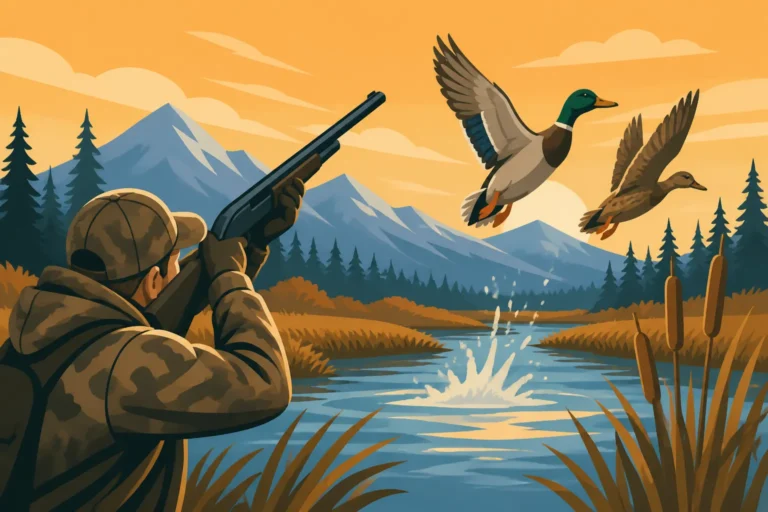
In British Columbia’s interior, particularly along the winding river systems and numerous small sloughs, Jump-Shooting a Slough in the Interior is a popular and effective technique. The key is to approach quietly, often using available cover like tall grass or willow thickets, keeping an eye out for birds before they see you. Walk slowly, paying attention to the wind, as ducks typically flush into the wind. A good pair of waterproof boots or waders is essential, as you'll often be navigating muddy banks and shallow water. The thrill of a dozen mallards exploding from a hidden bend in a creek is unmatched, demanding quick reflexes and accurate shooting. This method is also great for exploring new areas and can often be combined with upland hunting along river edges or in mixed timber.
Pass-shooting, on the other hand, involves positioning yourself along known flight paths between roosting areas and feeding grounds, or as birds move between different water bodies. This often occurs at dawn or dusk when birds are most active. This method requires scouting to identify these flight corridors and understanding wind direction, as birds will typically fly into a headwind. Pass-shooting can be challenging, as the birds are often flying high and fast, making for difficult shots. It's less about luring them in and more about anticipating their movement and being ready when they pass overhead. Safety is paramount with pass-shooting, ensuring you have a clear line of sight and a safe backdrop for your shots, away from populated areas or other hunters.
Boat-Based and Specialized Waterfowl Hunts
British Columbia's extensive coastline and vast lake systems also open up unique avenues for boat-based and specialized waterfowl hunting, offering access to areas unreachable by foot and targeting specific species like sea ducks.
Hunting Sea Ducks From a Boat is an entirely different ballgame from inland puddle duck hunting. Species like Surf Scoters, White-winged Scoters, Harlequin Ducks, and Goldeneyes inhabit the saltwater environments of the coast, often far from shore. These hunts typically require a robust boat capable of handling choppy ocean conditions, as well as specialized decoys designed for saltwater use. Layout blinds, low-profile vessels from which hunters shoot, can be deployed in open water, allowing for an incredibly immersive experience as ducks cup their wings and commit to the decoys over the rolling swells. Safety gear is non-negotiable on these hunts, including personal flotation devices, marine radios, and an understanding of tides and weather patterns, which can change rapidly on the coast. These hunts offer some of the most challenging and rewarding waterfowl experiences in BC, often taking place against a stunning backdrop of rugged islands and misty fjords.
Beyond sea ducks, boats can also provide invaluable access to large interior lakes or remote marsh systems that are difficult to reach otherwise. A small jon boat or canoe can allow hunters to navigate through extensive cattail beds or flooded timber, setting up decoys in pristine, unpressured locations. This access can be especially useful for early-season hunts when water levels are high, or for retrieving downed birds in thick cover. Moreover, jet boats can be incredibly useful for accessing distant sandbars or gravel islands on larger rivers in the interior, setting up for geese or staging ducks. Regardless of the type of boat used, it's crucial to be familiar with marine safety regulations and to operate responsibly, respecting other water users and fragile ecosystems.
Mastering Upland Bird Hunting Techniques
Upland bird hunting in British Columbia is a deeply personal pursuit, often involving long walks, keen observation, and the thrill of the unexpected flush. Unlike waterfowl hunting where you often wait for the birds to come to you, upland hunting is about actively seeking out your quarry in their natural habitats. Each species and habitat demands a slightly different approach, making it a constant learning experience.
Forest Grouse: Still-Hunting and Flushed Birds
Hunting British Columbia's forest grouse – the Ruffed, Spruce, and Blue (Dusky/Sooty) – is a quintessential fall activity for many residents. These hunts often involve covering a lot of ground, usually on foot, in areas ranging from dense timber to old logging roads and clearcuts.
For Ruffed Grouse, also affectionately known as "pats," you'll want to focus on early successional habitats. Think tangled alder bottoms, aspen groves, willow thickets, and the edges of clearcuts that are several years old and choked with berries. Hunting Ruffed Grouse in an Alder Bottom can be incredibly productive. These birds love dense cover for protection and feed on various berries and buds. The most common technique is still-hunting: walking slowly, pausing frequently to listen and scan, then advancing a few steps. Ruffed grouse are notorious for their explosive flush, often bursting from cover with a startling whir of wings, giving you only a split second for a shot. The key is to be constantly ready, with your gun mounted and safety off, anticipating where a bird might appear. They also tend to "drum" in the fall, a distinctive sound made by the male's wings, which can give away their presence.
Spruce Grouse, often found in dense coniferous forests with a mix of pine and spruce, tend to be less wary than their ruffed cousins. They are sometimes called "fool hens" because they might sit tight or even walk away rather than flush wildly. While this can make for an easier shot, it's still important to be respectful and ethical. You'll typically find them along the forest floor, feeding on needles and buds. A slow, quiet walk through their habitat, paying attention to areas with good ground cover, is often effective. Blue Grouse, especially the Dusky and Sooty species, offer a unique challenge. Early in the season (September), they are often high in the alpine, feeding on berries and other vegetation. As the season progresses and snow starts to fall, they move down to lower elevations, often congregating on sunnier, south-facing slopes in open timber. Walking Up Blue Grouse on a Logging Road that winds through these transitional zones can be highly productive, as they often feed on the road shoulders. The key is to be physically prepared for climbing and to pay close attention to changes in elevation and vegetation.
Open Country Birds: Chukar, Quail, and Sharptails
Hunting the open country birds of British Columbia's interior is a vastly different experience, often characterized by breathtaking landscapes and demanding physical exertion. These species thrive in arid, rugged environments and offer a true test of a hunter's endurance and marksmanship.
Chukar Partridges are perhaps the poster child for challenging upland hunts. They inhabit the steepest, rockiest, sagebrush-covered hillsides of the Okanagan and Thompson valleys. To be successful at Where Chukar Live in the Dry Interior, you need to be in good physical condition, as these birds will often run uphill rather than fly, leading you on grueling climbs. The strategy usually involves working across hillsides with a partner or a dog, trying to get above the covey and push them downhill, as they prefer to fly down. When they do flush, it's often a rapid, noisy explosion of birds rocketing downhill at incredible speeds, demanding quick and accurate shooting. A good pair of sturdy hiking boots and plenty of water are essential for a chukar hunt. These hunts are as much about the incredible scenery and physical challenge as they are about the birds themselves.
California Quail, with their distinctive calls and tight coveys, are found in brushy cover along creek bottoms, agricultural edges, and vineyards in the same dry interior regions. They love thick cover, making them a challenge to flush. Often, the best strategy is to walk through dense riparian zones, forcing the covey to flush. When they do, they burst out as a group, offering multiple targets for a brief moment before scattering into cover. Hunting with a flushing dog can significantly increase your success with quail, as they excel at pinpointing and holding these tight-sitting birds. The challenge lies in getting a clean shot amidst the brush and quickly recovering any downed birds before they disappear into the thicket.
Sharp-tailed Grouse, though not as widespread as they once were, can still be found in limited numbers in the grasslands of the Cariboo and Peace River regions. These birds prefer open prairies with scattered brush and can be elusive. Hunting them often involves walking large tracts of grassland, sometimes with a pointing dog to help locate scattered coveys. Their flush is powerful and direct, and they can fly long distances before re-settling. Recognizing their preferred habitat and covering ground efficiently are key to finding these beautiful prairie birds. For hunters looking to scout these unique habitats, resources like GoHunt's mapping tools can be invaluable for identifying potential grassland areas and understanding land ownership.
Pheasant Hunting and Dog Work
Pheasant hunting in British Columbia, while not as widespread as in some other regions, offers fantastic opportunities, especially through managed release programs. These vibrant, long-tailed birds provide exciting action and are a firm favorite for hunters, particularly those who enjoy working with dogs.
The primary pheasant hunting opportunities in British Columbia stem from release programs, notably in the Fraser Valley (like on the Chilliwack Pheasant Club grounds) and other select agricultural areas. These programs ensure a healthy population of birds for hunters, often extending the season or providing consistent action where wild populations might struggle. Hunting British Columbia's Released Pheasants typically involves walking through cornfields, hedgerows, and dense cover that pheasants love to hide in. These birds are renowned for their cunning; they will often run far ahead of hunters rather than flush, or hide so tightly that you can almost step on them before they burst into the air with a cackle.
This is where a good bird dog becomes an absolute game-changer. Dogs, whether pointers, flushers, or retrievers, elevate the pheasant hunting experience to an art form. A pointing dog, like a German Shorthaired Pointer or an English Setter, will locate birds and "point" them, holding steady until the hunter walks in to flush the bird. A flushing dog, such as a Springer Spaniel or Labrador Retriever, will work within gun range, pushing birds out of cover. Both types of dogs are invaluable for finding birds that would otherwise be missed and, crucially, for quickly locating and retrieving downed birds in thick cover, preventing lost game. Using a Bird Dog in British Columbia Timber for grouse is one thing, but for pheasants, it's almost a necessity due to their running habits and the dense cover they inhabit. The bond between hunter and dog, working in tandem to outsmart a wily pheasant, is one of the most rewarding aspects of this type of hunting. The success of these programs and the opportunities they provide highlight the importance of active management and hunter participation in maintaining diverse hunting experiences in BC.
Essential Gear and Safety Considerations
Heading out for a day of waterfowl or upland hunting in British Columbia means being prepared, not just for the hunt itself, but for the diverse and often challenging conditions our province throws at you. Having the right gear isn't about luxury; it's about comfort, safety, and ultimately, success. Neglecting proper equipment or safety protocols can quickly turn an exciting adventure into a miserable or even dangerous situation.
Shotguns, Ammunition, and Non-Toxic Shot
Your choice of shotgun is fundamental to bird hunting, and thankfully, most common gauges are perfectly suitable. The 12-gauge shotgun is arguably the most popular and versatile choice for both waterfowl and upland birds, offering a wide range of shot sizes and loads. Many hunters also favour the 20-gauge for upland birds, appreciating its lighter weight and reduced recoil, which can be a blessing when covering many miles on foot. The 28-gauge and .410 bore also have their devotees, particularly for close-range grouse or for experienced shooters looking for an extra challenge.
Ammunition choice is equally critical. For upland birds like grouse, pheasants, chukar, and quail, lead shot is generally permissible, and common shot sizes range from 7.5 to 4, depending on the bird and conditions. Smaller shot like 7.5 is excellent for grouse and quail, while 6s or 5s are often preferred for pheasants and chukar, offering a bit more knockdown power for these tougher birds. Always ensure your chosen shot size is appropriate for the species and the choke you're using in your shotgun.
However, the most crucial distinction regarding ammunition is the strict requirement for non-toxic shot when hunting waterfowl and other migratory birds. As detailed in Non-Toxic Shot Rules in British Columbia, lead shot is explicitly prohibited. This means you must use alternatives such as steel, bismuth, or various tungsten alloys. Steel shot is the most common and affordable non-toxic option, but it is lighter than lead, so you often need to go up a shot size or two (e.g., use steel #3 instead of lead #5 for ducks) to achieve similar downrange energy. Bismuth and tungsten alloys are denser and perform more like lead but come at a higher cost. It's vital to ensure you have the correct non-toxic loads for your waterfowl hunt, not only for legality but also for effective and ethical shooting. Always check your shotgun's barrel for compatibility with steel shot if you're unsure, especially with older firearms, as some might require specialized chokes.
Decoys, Calls, and Blinds
For waterfowl hunters, a well-chosen and effectively deployed array of decoys, coupled with proficient calling, is the cornerstone of success. Decoys come in various forms, each designed for different scenarios. Floater decoys are the standard for open water, mimicking ducks and geese resting or feeding. Shell decoys are lighter and used for field hunting, especially for geese, while full-body decoys offer the most realistic look but are bulkier to transport. The quantity of decoys needed can vary wildly; a small spread of a dozen for an interior slough versus hundreds for a large goose field. Motion decoys, such as spinning wing "mojos" or jerk strings, can add a crucial element of realism to your spread, attracting the attention of distant birds.
Effective calling is another skill that significantly increases your chances. A good mallard call, goose call, or even a wigeon whistle can entice wary birds into range. Practice is key; listening to real bird sounds and mimicking them accurately will make your calls more convincing. You don't need to be an award-winning caller, but knowing the basic calls and when to use them is essential. GoHunt's resources can also aid in scouting locations where these tools will be most effective.
Concealment is paramount. A good blind, whether it's a portable layout blind for field hunting, a pop-up blind for a marsh edge, or a cleverly constructed natural blind from local vegetation, is vital. The goal is to disappear into your surroundings, breaking up your outline and eliminating any shine or unnatural movement. Investing in good camouflage clothing that matches your environment is also part of this strategy.
Clothing, Footwear, and Safety
British Columbia weather is notoriously unpredictable, especially during hunting seasons, so appropriate clothing and footwear are not optional—they are essential for comfort and safety. Layering is always the best approach, allowing you to adapt to changing temperatures throughout the day. Start with a moisture-wicking base layer, add insulating layers like fleece or down, and top it off with a waterproof and windproof outer shell. For coastal hunts or any wetland environment, waterproof gear is non-negotiable.
Waders are an absolute must for waterfowl hunters. Chest waders or even hip waders can keep you dry and comfortable when setting decoys, retrieving birds, or navigating shallow marshes. For upland hunters covering rugged terrain, sturdy, waterproof hiking boots with good ankle support are crucial. Ensure they are well broken-in before your hunt to prevent blisters. Consider footwear that can handle wet, muddy, or snowy conditions, as you'll likely encounter all of them.
Safety in the field is paramount. Blaze orange, while not always legally mandatory for upland bird hunting in BC, is highly recommended for visibility, especially during busy seasons or in areas where big game hunters might also be present. Always wear eye protection and hearing protection when shooting. Carry a comprehensive first aid kit, and know how to use it. Navigation tools (GPS, map, and compass) are vital, even in seemingly familiar areas. Always inform someone of your hunting plans, including your route and expected return time. In British Columbia's backcountry, especially in more remote areas, bear encounters are a possibility. Carrying bear spray and knowing how to use it, or understanding Bear Safety While Hunting in British Columbia, is a responsible precaution, even on a bird hunt. Finally, always practice safe gun handling, ensuring your firearm is unloaded and pointed in a safe direction when not actively hunting, and know your target and what's beyond it before taking any shot.
Finding Your Perfect Bird Hunting Spot in British Columbia
One of the biggest hurdles for any hunter, especially when exploring new territory or new species, is finding suitable hunting ground. British Columbia offers an immense amount of public access, but knowing where to look and how to interpret the rules is key. For bird hunters, this means identifying specific habitat types and understanding access points, often far from major roads.
Researching Management Units and Access
The starting point for finding any hunting location in British Columbia is the provincial BC Hunting & Trapping Regulations Synopsis. This document outlines the boundaries of British Columbia's Management Units (MUs) and provides a detailed breakdown of seasons and regulations specific to each unit and region. For bird hunting, you'll want to focus on sections pertaining to game bird seasons, noting the dates and bag limits for your target species in your chosen region. While the synopsis provides a general overview, you'll need more detailed maps for on-the-ground navigation.
Online mapping tools have revolutionized this process. Platforms like GoHunt offer incredibly detailed mapping layers that clearly delineate Crown land (public land), private land, and various restricted areas like parks or wildlife management areas. This is invaluable for identifying areas where hunting is permitted and planning your access routes. Using GoHunt's satellite imagery and topographic maps, you can scout potential bird habitat from your couch: look for wetland features, agricultural fields, clearcuts, and logging road networks. By cross-referencing these features with the MU boundaries, you can effectively narrow down your search for productive areas. Furthermore, tools like these can help you with Scouting a British Columbia Management Unit Online, giving you a visual advantage before you even leave home. This pre-scouting is particularly useful for identifying potential access points and understanding the terrain, which is vital for planning physically demanding upland hunts.
Understanding access is also about knowing the difference between open Forest Service Roads (FSRs) and deactivated roads. Many logging roads provide excellent access into prime bird country, but some might be gated or officially deactivated. While Finding Open Forest Roads in British Columbia can lead you to accessible areas, a deactivated road (often marked with a sign or a physical barrier) usually means no vehicle access beyond that point. However, these deactivated roads often make for fantastic foot access into unpressured grouse habitat, as many hunters won't venture past the gate. Always check for current road closures due to wildfire, flooding, or logging operations before you go, as conditions can change rapidly.
Coastal Estuaries, Interior Marshes, and Agricultural Lands
British Columbia's diverse geography means there are distinct types of landscapes that concentrate game birds, each requiring a tailored approach to scouting and access.
For waterfowl, the coastal estuaries are incredibly productive, though often heavily pressured due to their proximity to population centres. The Fraser River Delta, including areas like Ladner and Boundary Bay, is world-renowned for its concentrations of ducks and geese. Access here often involves specific boat launches, knowledge of tide tables, and navigating a mix of Crown land and private property. Similarly, estuaries around Vancouver Island and other coastal inlets offer excellent Waterfowl Hunting British Columbia's Estuaries, but may require boat access. It's crucial to be aware of local bylaws and protected areas within these regions, as some popular birding spots might have hunting restrictions. GoHunt's mapping can help delineate these boundaries clearly.
In the interior, rich agricultural lands interspersed with wetlands create ideal conditions for ducks, geese, and pheasants. Regions like the Okanagan Valley, the Cariboo, and especially the Peace River country offer numerous sloughs, lakes, and irrigated fields. Hunting British Columbia's Interior Marshes often involves identifying smaller, less obvious water bodies that might hold significant numbers of ducks, or gaining permission from landowners to hunt agricultural fields for geese or pheasants. Respecting private land is paramount, and a courteous knock on a farmer's door can often lead to fantastic opportunities. Without explicit permission, avoid private property and stick to Crown land accessible via roads or waterways.
Forest Service Roads and Alpine Zones for Upland Birds
For upland bird hunters, especially those chasing grouse, British Columbia's extensive network of Forest Service Roads (FSRs) and logging cutblocks are your best friend. These roads provide the primary access into vast tracts of forest that hold Ruffed, Spruce, and Blue Grouse.
Driving or walking Hunting British Columbia's Logging Road Network allows you to cover significant ground and find areas with good habitat. Look for roads that cut through diverse forest types – areas with young regenerating trees, alder thickets, and berry bushes are ideal for Ruffed Grouse, while dense coniferous stands will hold Spruce Grouse. Old, decommissioned roads that are growing over can be absolute gold mines, offering less disturbance and prime feeding areas. Remember, logging operations are ongoing, so be aware of active worksites and use appropriate radio channels if required.
For those pursuing ptarmigan, access means heading to higher elevations, typically above the timberline. This usually involves driving up FSRs as far as they go, then embarking on a challenging hike into the alpine basins and ridges. Hunting British Columbia's Alpine in September can be an incredible experience, but it demands physical fitness, good navigation skills, and appropriate gear for rapidly changing mountain weather. Using detailed topographic maps or GoHunt's relief shading can help identify promising alpine terrain, scree slopes, and saddles where ptarmigan might be found. These remote, high-country hunts offer not just unique bird hunting but also unparalleled wilderness experiences.
Conservation and Ethical Hunting Practices
Hunting in British Columbia is not just a recreational pursuit; it's a privilege that comes with significant responsibilities. As hunters, we are stewards of the land and its wildlife, and our actions directly impact the future of these resources. Practicing conservation and ethical hunting is not merely about following the rules; it's about embodying a deep respect for the animals we pursue and the wild places they call home.
Respecting Bag Limits and Regulations
One of the most fundamental aspects of ethical hunting is adhering strictly to all regulations, especially daily bag limits and possession limits. These limits are not arbitrary numbers; they are carefully determined by wildlife biologists to ensure sustainable populations of game birds for future generations. For instance, the British Columbia Game Bird Seasons synopsis will clearly state the daily bag and possession limits for each species of grouse, pheasant, or ptarmigan, often varying by region. For migratory birds, the federal regulations will specify these limits for ducks and geese.
It's common for inexperienced hunters, or those caught up in the excitement of a productive hunt, to lose track of how many birds they have taken. This is a critical error. Always count your birds, and if you are hunting in a group, ensure everyone is aware of the collective bag limit if one applies, or their individual limits. Exceeding limits can have severe consequences, including hefty fines and loss of hunting privileges, and it undermines the very principle of sustainable harvest. Beyond bag limits, other regulations like hunting hours, restrictions on baiting (generally prohibited for game birds), and legal methods of take are all designed to ensure fair chase and population health. Responsible hunters take the time to understand these rules thoroughly and follow them diligently, because the future of hunting depends on our collective adherence to these principles. Furthermore, avoiding waste of game meat is a core ethical principle, ensuring that every harvested animal is utilized respectfully.
Wildlife Habitat and Sustainable Hunting
True conservation extends beyond simply following bag limits; it involves understanding and actively supporting the habitat that wildlife relies upon. Hunters are often the most ardent conservationists because they recognize that healthy populations are impossible without healthy ecosystems. In British Columbia, this means appreciating the delicate balance of our coastal estuaries, interior wetlands, and vast forests.
Organizations like Ducks Unlimited Canada play a crucial role in conserving, restoring, and managing wetlands and associated habitats for North America’s waterfowl. Their work directly benefits migratory birds and countless other species, ensuring that the Pacific Flyway remains vibrant. By purchasing your Federal Migratory Game Bird Hunting Permit and the Wildlife Habitat Conservation Stamp, you are directly contributing funds to these vital initiatives. Beyond financial contributions, hunters can also get involved in local conservation efforts, participating in habitat restoration projects, or advocating for sound wildlife management policies. Every time you leave a hunting area cleaner than you found it, picking up spent shotgun shells and other litter, you are demonstrating respect for the environment and for the non-hunting public who also enjoy these wild spaces.
Sustainable hunting means making choices that minimize our impact. This includes using non-toxic shot for waterfowl to prevent lead contamination in wetland ecosystems, and being mindful of our presence in sensitive areas. It also means educating new hunters on the importance of these practices, fostering a culture of stewardship within the hunting community. By actively engaging in and supporting habitat conservation, we ensure that the places where we hunt today will continue to sustain wildlife and provide opportunities for future generations of hunters.
Responsible Shot Placement and Game Recovery
Ethical hunting demands not only legal compliance but also a commitment to clean, quick, and humane kills. This starts with responsible shot placement and extends to diligent game recovery, minimizing any suffering and ensuring every bird harvested is found and utilized.
For both waterfowl and upland birds, shot placement is crucial. Practice is essential to improve your wing-shooting skills, ensuring you can consistently hit moving targets in varied conditions. Understanding choke and shot patterns for your shotgun and chosen ammunition will help you gauge effective range, preventing shots that are too far or too close to be ethical. A quick, clean kill is the goal, aiming for the bird’s vital areas. This reduces the chance of wounding a bird that then flies off to suffer or be lost. Many experienced bird hunters will pass on questionable shots, opting to wait for a better, closer opportunity rather than risking a marginal hit.
Once a bird is shot, the next responsibility is quick and thorough game recovery. This is where a well-trained retriever truly shines. A good bird dog can dramatically increase recovery rates, especially in dense cover or over water, preventing lost game and ensuring that every bird contributes to the table. If you don't hunt with a dog, mark the fall of the bird carefully, noting landmarks, and then move immediately to the spot. Even a seemingly clear fall can be challenging to find in tall grass or thick brush. For Meat Care in British Columbia's Warm Early Seasons, especially for birds, retrieving them quickly helps ensure the meat is in prime condition. After recovery, proper field dressing and cooling are important, particularly in warmer weather, to preserve meat quality. This might involve opening the body cavity to allow heat to escape or packing birds with ice if you have a cooler nearby. Respecting the harvest through careful recovery and handling is the final, vital step in ethical bird hunting.
Disclaimer
Please remember that hunting regulations in British Columbia, both provincial and federal, are subject to change. While this guide provides comprehensive information, it is your responsibility to consult the most current British Columbia Hunting & Trapping Regulations Synopsis and the federal Migratory Bird Regulations before heading into the field. Ensure you have all required licenses, tags, and permits, and adhere to all safety guidelines.