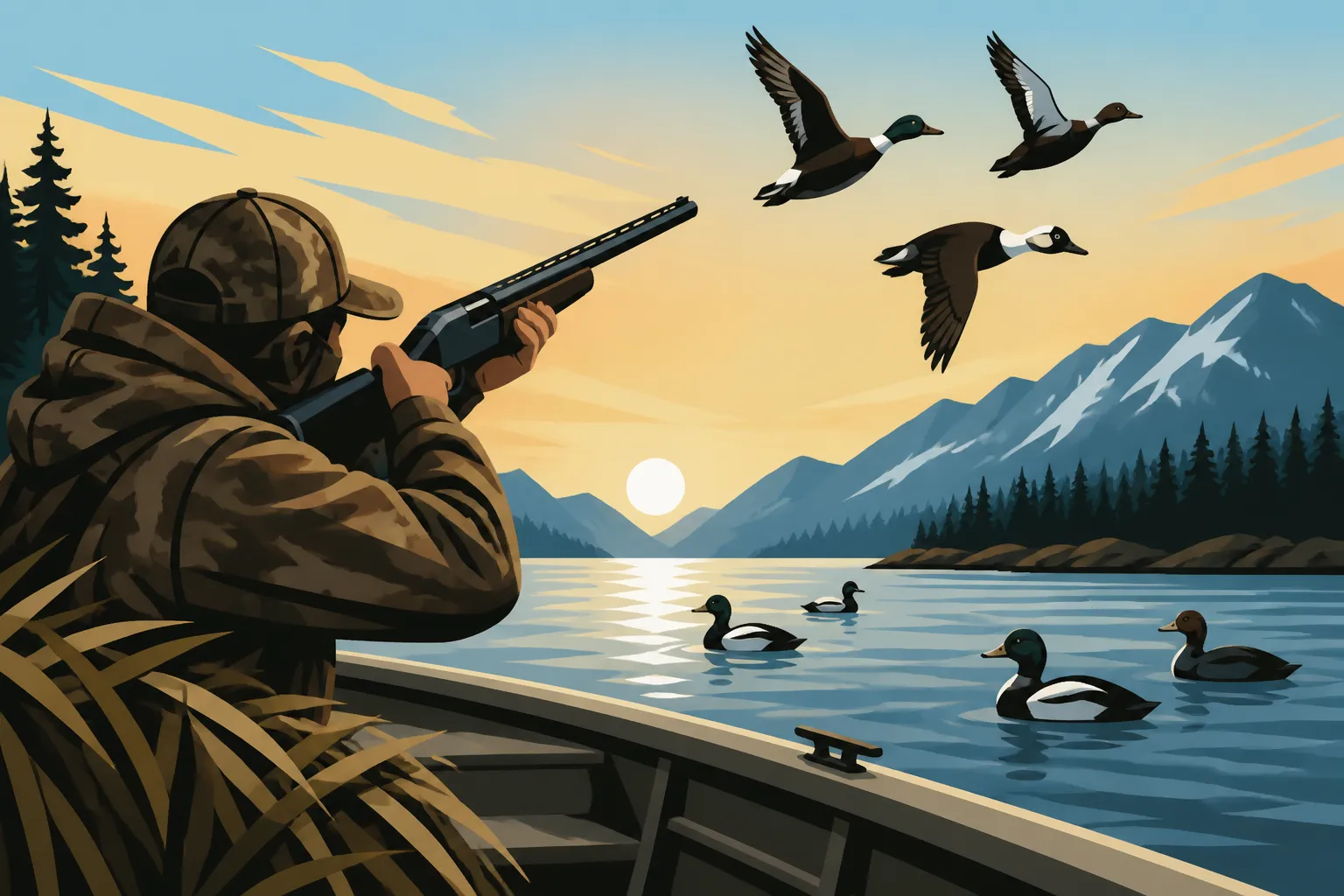
Hunting Sea Ducks From a Boat
There’s something uniquely challenging and incredibly rewarding about hunting sea ducks from a boat in British Columbia. The vast, dynamic coastal environment here offers an experience unlike anything you'll find inland, but it also comes with its own set of hurdles. You’re not just battling cunning birds; you're contending with tides, currents, unpredictable weather, and the sheer scale of the Pacific coastline. For many, the idea of heading out onto those choppy waters in pursuit of ducks like hefty Scoters or colourful Harlequins can feel daunting, leading to hesitations about where to start or how to stay safe and successful. This guide is here to walk you through everything you need to know, from understanding the species you're chasing to setting up your boat and decoys effectively, ensuring your next sea duck adventure on BC's waters is both thrilling and fruitful.
Understanding British Columbia's Sea Duck Species and Regulations
Hunting sea ducks in British Columbia is a specialized pursuit, requiring an understanding of the specific species that inhabit our coastal waters and the particular regulations that govern their harvest. It's not like chasing mallards in a slough; these birds live in a different world, and so do the rules surrounding them.
Identifying Common Coastal Duck Species
British Columbia's coast is home to a fantastic array of sea duck species, each with its own unique characteristics and preferred habitats. Knowing what you’re looking at and where to find them is half the battle.
- Scoter Species (Surf, White-winged, Black): These are perhaps the most commonly targeted sea ducks. Surf Scoters are identifiable by their colourful, multi-patterned bills, while White-winged Scoters sport a distinct white patch on their wings visible in flight. Black Scoters are sleek, all-black birds with a bright orange knob on the male's bill. You'll often find them rafted up in large groups, diving for shellfish and crustaceans in shallow coastal waters, often near estuaries, bays, and inlets. They're powerful flyers and can be quite vocal.
- Goldeneyes (Barrow's and Common): Barrow's Goldeneyes are a quintessential BC bird, especially common in the calmer waters of inlets and bays. Males have a distinct purplish crescent mark on their face. Common Goldeneyes are also present, often recognizable by the round white spot on the male's face. Both are fast, agile flyers and dive with remarkable speed. They frequent similar habitats to scoters but might be found further up protected estuaries where there's a mix of salt and fresh water.
- Buffleheads: These tiny, energetic ducks are often found in sheltered bays and harbours. The males are unmistakable with their large, puffy white heads and black back. They are incredibly quick on the wing and can be a challenging target, often seen bobbing and diving close to shore or in small groups.
- Harlequin Ducks: Known for their striking blue, chestnut, and white plumage, Harlequins are truly beautiful birds. They prefer turbulent, rocky coastlines, often feeding in strong currents and around wave-battered rocks. They are a smaller, more challenging target and their population can be sensitive, so specific regulations often apply to them. Always double-check current bag limits, as these can vary.
- Long-tailed Ducks (Oldsquaws): While less common in large numbers, these ducks with their distinctive long tail feathers (on males) can be encountered. They are exceptionally vocal and spend much of their time diving for food in deeper coastal waters. Their black and white plumage makes them stand out.
Each of these species has slightly different flight patterns, diving habits, and preferred foods, which influences where you'll find them and how you might approach your hunt.
Navigating British Columbia's Waterfowl Regulations
The regulations for waterfowl hunting in British Columbia can feel like a labyrinth at times, combining both federal and provincial rules. Getting it wrong isn't just a minor inconvenience; it can lead to hefty fines and loss of privileges, so understanding the legal framework is paramount.
Firstly, every waterfowl hunter in British Columbia needs a valid British Columbia Resident Hunting Licence (or appropriate non-resident licence), along with a Provincial Upland Game Bird and Waterfowl Licence. On top of that, you absolutely must have a Federal Migratory Game Bird Hunting Permit and the accompanying Canadian Wildlife Habitat Conservation Stamp. This federal permit dictates the general seasons and bag limits for most migratory birds, including sea ducks. You can purchase these online or at most post offices.
When it comes to the specific British Columbia Duck Season Dates, these will vary by region and species. It's crucial to consult the annual BC Hunting and Trapping Synopsis, which is published every two years, for the most up-to-date information. Pay close attention to the specific zones and their corresponding opening and closing dates, as well as daily bag and possession limits. Some species, like Harlequins, might have very restrictive bag limits or shorter seasons due to population management.
A critical point for any waterfowl hunter in BC is adherence to Non-Toxic Shot Rules in British Columbia. Federally, it is illegal to hunt migratory game birds with lead shot anywhere in Canada. This means you must use approved non-toxic shot (steel, bismuth, tungsten-iron, etc.) for all your sea duck hunting. This applies not just to migratory birds, but often extends to hunting game birds in general, particularly near water bodies or wildlife management areas. Always confirm the exact requirements for your specific hunting area.
Finally, always be aware of special area restrictions. For instance, specific British Columbia Wildlife Management Area Rules might apply to certain estuaries or coastal marshlands, often prohibiting hunting or restricting methods in certain zones. Using a mapping tool like GoHunt can be incredibly helpful for overlaying these restricted areas with your chosen hunting grounds, ensuring you don't inadvertently stray into a no-go zone. Planning your hunt through tools like this helps ensure you are fully compliant with all rules and regulations before you even leave the dock.
Essential Gear and Boat Setup for Coastal Hunting
Successfully hunting sea ducks from a boat in British Columbia requires specialized gear and a thoughtfully set-up vessel. The coastal environment can be harsh and unforgiving, so preparation isn't just about success—it's about safety.
Choosing the Right Watercraft
Your boat is your mobile hunting blind and your lifeline on the water. It needs to be up to the task of handling coastal conditions.
- Stability and Seaworthiness: Unlike inland lakes, BC’s coastal waters are subject to strong winds, tides, currents, and open-ocean swells. A stable, deep-V hull design is generally preferred. Look for boats that can handle chop without swamping. Aluminum skiffs are a popular choice due to their durability and relatively shallow draft, allowing access to varied terrains. Rigid Hull Inflatable Boats (RIBs) or Zodiacs are also excellent for their stability and ability to absorb impact in rougher conditions. Larger center console boats offer more comfort and range but might be limited in shallower areas.
- Size and Capacity: Consider how many hunters you'll typically have and the amount of gear (decoys, dog, cooler) you'll carry. Overloading a boat is incredibly dangerous. A 16-18 foot boat is often a good starting point for a couple of hunters and gear, but for more exposed waters, something in the 20-24 foot range provides much more safety margin.
- Engine Redundancy: A kicker motor (small auxiliary outboard) is almost non-negotiable for coastal hunting. If your main engine fails due to fuel issues, a fouled prop, or mechanical breakdown, that kicker can literally save your life by getting you back to shore or a sheltered area. Reliable main engine maintenance is also critical.
- Essential Safety Equipment: This is where you absolutely cannot cut corners. Transport Canada regulations mandate specific safety gear, which includes personal flotation devices (PFDs) for everyone on board, a sound-signalling device, a bailing device, a buoyant heaving line, waterproof flashlight, paddles/oars, and a first-aid kit. For offshore operations, add flares, a VHF marine radio, an emergency position indicating radio beacon (EPIRB) or personal locator beacon (PLB), and a robust anchor system with ample chain and rode. Remember, a satellite messenger is a fantastic backup for communication where cell service is non-existent, which is common in many remote BC inlets.
Decoys and Spreads for Sea Ducks
Sea ducks are often found in open water, and a robust, realistic decoy spread is key to drawing them in close.
- Species-Specific Decoys: Sea ducks are generally not attracted to mallard or pintail decoys. You need decoys that mimic their species. Invest in high-quality Surf Scoter, White-winged Scoter, Black Scoter, Goldeneye, and Bufflehead decoys. These can be expensive, but they are crucial for success. Flocked decoys can reduce glare, which is especially important on bright coastal days.
- Rigging Methods:
- Long Lines: This is the most common and efficient way to deploy large numbers of sea duck decoys. Decoys are clipped at intervals along a main line (often thick tarred rope or heavy mono filament) with a heavy anchor at each end. This allows for quick deployment and retrieval of dozens of decoys.
- Individual Anchors: While more labour-intensive for large spreads, individually anchored decoys allow for more natural spacing and movement, especially in areas with varying depths or currents.
- Jerk Cords: Adding a few jerk cords can create lifelike motion in your spread, simulating ducks feeding or dabbling. This can be particularly effective on calm days to attract wary birds.
- Motion Decoys: While traditional motion decoys like spinners aren't always necessary for sea ducks, a realistic feeding motion can be achieved with diver decoys or simple jerk cords that mimic a duck dipping its head.
- Numbers Game: For sea ducks, bigger spreads often work better. Think in terms of dozens, not just a few. These birds are often found in large rafts, and a big spread can create a compelling illusion of safety and numbers. When you're working an estuary, remember to consider the tactics for Decoying Ducks on a Coastal Estuary, which might combine long-line sea duck rigs with a few puddle duck decoys closer to shore if you're targeting mixed bags.
Essential Hunting Gear and Safety
Beyond the boat and decoys, your personal gear must also be coastal-ready. British Columbia’s weather, especially along the coast, can change dramatically in minutes.
- Layered, Waterproof Clothing: Forget cotton. Think wool, fleece, and high-quality waterproof-breathable outer layers. You need to stay warm and dry, even when dealing with spray, rain, and cold winds. Good quality chest waders or a dry suit are indispensable for setting and retrieving decoys in icy water. For more advice on dealing with the inevitable moisture, read up on Hunting in British Columbia's Coastal Rain.
- Warmth and Hydration: Pack extra layers, gloves, and a hat – even on seemingly mild days. A thermos of hot coffee or soup can be a morale booster and a lifesaver. Carry plenty of fresh water.
- Navigation Tools: A reliable GPS (with updated marine charts) and a compass are essential. Even if you're familiar with an area, fog can roll in quickly, disorienting you.
- Retrieval Aids: A good retriever dog (dressed in a dog vest for warmth and visibility) is invaluable for recovering downed birds quickly from cold water. If you don't have a dog, a long-handled landing net or a sturdy gaff can help.
- Firearms and Ammunition: A reliable shotgun, typically 12-gauge, is the standard. Make sure it's rated for steel shot. Bring plenty of non-toxic ammunition appropriate for tough sea ducks. Steel shot in BBB or #1 shot size is a common choice for larger birds like scoters, while #2 or #3 can work for goldeneyes and buffleheads.
Remember, a successful sea duck hunt isn't just about shooting birds; it's about returning home safely. Being overly prepared for the conditions is always the best approach when you're Hunting From a Boat on the Coast.
Strategic Approaches to Hunting Sea Ducks From a Boat
Hunting sea ducks isn’t just about putting out decoys and hoping for the best. It’s a nuanced game of understanding bird behaviour, reading the water, and knowing how to strategically position yourself for success.
Scouting and Location Selection
Your success hinges almost entirely on where you choose to set up. Sea ducks are highly localized, often frequenting specific feeding grounds or sheltered areas.
- Pre-Season Reconnaissance: Before the season opens, spend time cruising likely areas. Look for rafts of birds, observe their feeding patterns, and identify their flight paths. Pay attention to how they use specific points, bays, or current lines. Even in the off-season, you can learn a lot about their movements.
- Understanding Tides and Currents: British Columbia's coast is defined by its powerful tides and currents. These play a massive role in where sea ducks feed and rest. Many species prefer to feed during specific tidal stages, especially low tide when shellfish beds are more accessible in shallower water. Strong currents can also concentrate birds or dictate their travel routes. Use tide charts and local knowledge to your advantage. For instance, when you're Hunting an Estuary Flat at Low Tide, you'll often find birds actively feeding on exposed mudflats or along the edges of receding water.
- Sheltered Bays and Points: Sea ducks will often seek refuge in protected bays or on the leeward side of prominent points during rough weather. Conversely, on calm days, they might be scattered over more open water. Identifying these key features on a nautical chart and matching them with current weather patterns is crucial. Look for areas with a mix of shallow and slightly deeper water.
- Using Mapping Tools: Modern mapping applications like GoHunt are invaluable for scouting. They allow you to overlay bathymetric data, satellite imagery, and even public land boundaries. You can mark potential hunting spots, identify channels, and understand the underwater topography from your couch, saving precious time and fuel on the water. This digital scouting can significantly narrow down your physical search efforts.
- Identifying Foraging Areas: Sea ducks primarily feed on molluscs, crustaceans, and small fish. Look for areas known for clam beds, mussel banks, or kelp forests. These are prime foraging grounds.
Setting Up Your Spread
Once you’ve identified your spot, the way you deploy your decoys and position your boat can make or break your hunt.
- Playing the Wind and Current: Always set your decoys so they appear to be swimming or resting naturally into the wind or current. Ducks land and take off into the wind, so position your boat downwind or down-current of your spread, allowing incoming birds to fly over your decoys and ideally, offer a shot as they commit to landing.
- The J-Hook or Hook Spread: A common and effective sea duck spread configuration is the "J-hook" or "hook" spread. This involves a main line of decoys forming the long arm of the "J," with your boat tucked into the bend. Incoming birds will often follow the line of decoys to the bend, putting them in prime shooting range.
- Gaps for Landing Zones: Leave an open "landing strip" within or directly in front of your spread. Ducks prefer to land among or just short of other ducks. Don't crowd your decoys too tightly.
- Boat Concealment: Your boat needs to disappear. Many hunters use boat blinds made from camouflage netting, natural vegetation, or commercially available blind systems. Position your boat against a dark shoreline, a stand of trees, or even amongst large rocks to break up its outline. For those hunting the more remote estuaries, strategies might overlap with Hunting a Coastal Inlet From a Boat, where blending with the natural shoreline is paramount.
- Anchor Systems: Given the strong tides and potential for heavy seas, a robust anchoring system is critical. You'll likely need two anchors: one at the bow and one at the stern, set to keep your boat stable and prevent it from swinging. Ensure you have plenty of anchor rode (at least 5-7 times the depth of the water) for secure holding.
Calling and Shooting Techniques
Sea duck hunting generally involves less calling than puddle duck hunting, but effective shooting is key.
- Minimal Calling: Sea ducks are not typically "called" in the same way mallards are. A deep "oooooh" sound can sometimes be used to get their attention, mimicking a scoter's call, or a goldeneye whistle. However, aggressive calling is usually counterproductive. Focus more on decoy realism and position.
- Pass Shooting vs. Decoying: While decoying is the primary method, sometimes you'll encounter birds flying past points or along shorelines. Be prepared for opportunities for pass shooting, but always prioritize safe shooting lanes and know what's beyond your target.
- Fast, Decisive Shooting: Sea ducks are tough birds, often flying at high speeds. They also have a thick layer of feathers and fat, so you need to hit them hard and accurately. Lead them sufficiently. A clean kill is always the goal, and quickly dispatching any wounded birds is an ethical imperative.
- Ethical Shooting Range: Know your effective range with your shotgun and ammunition. For most hunters, this is within 40-50 yards. Taking shots beyond this range often leads to wounded birds that are difficult to retrieve. Patience is a virtue; let the birds commit to the spread.
Safety and Ethical Considerations on the Water
Hunting sea ducks from a boat inherently carries risks that are amplified by British Columbia's rugged coastal environment. Beyond personal safety, upholding ethical hunting practices is paramount.
Prioritizing Marine Safety
The ocean demands respect. Ignoring safety protocols can have severe consequences, not just for you but for rescue services.
- Weather Monitoring: Always, always, check marine weather forecasts before heading out and throughout your hunt. Conditions can change rapidly on the BC coast, turning calm waters into treacherous seas in a matter of hours. Pay attention to wind speed, wave height, and fog warnings. If in doubt, stay on shore. No duck is worth risking your life for.
- File a Float Plan: Inform someone reliable on shore of your hunting plans: where you're going, your route, who's with you, and your estimated return time. If you don't check in by a specified time, they should know to contact authorities.
- Communication Devices: While a cell phone is handy, never rely solely on it. Carry a marine VHF radio for communication with other vessels and the Coast Guard. In remote areas, a satellite phone or a satellite messenger like a Garmin inReach is an essential lifeline, especially since cell coverage is incredibly spotty along much of the BC coastline.
- Cold Water Immersion: Even on a sunny day, British Columbia's coastal waters are cold enough to cause hypothermia very quickly. Dress in layers, wear your PFD, and have a plan for what to do if someone falls overboard. A spare change of warm, dry clothes in a dry bag is also a wise precaution.
- Emergency Kit: Beyond the basic marine safety gear, consider adding a comprehensive emergency kit: extra fuel, tools, spare parts, a first-aid kit, emergency rations, and water. Being self-sufficient is key in remote coastal areas.
Respecting the Resource and Other Users
Our coastal waters are shared by many. Hunters have a responsibility to be good stewards of the environment and respectful of others.
- Shared Waterways: Anglers, kayakers, commercial fishers, and other recreational boaters all use the same waters. Be courteous, maintain safe distances, and avoid setting up your spread in high-traffic areas if possible. Minimize noise and disturbance, especially when approaching sensitive wildlife areas.
- Private Property Boundaries: While much of British Columbia's coast is Crown land, be aware of private property along the shoreline. Respect "no trespassing" signs and obtain permission before accessing private land for retrieving birds or setting up.
- Retrieval of Downed Birds: It is your ethical responsibility to retrieve every bird you shoot. Wounded birds that swim away represent wasted game. Use a well-trained retriever dog if possible, and have a clear plan for chasing down cripples. This often means quickly bringing in your decoys and moving the boat. Prompt retrieval also minimizes the chance of losing a bird to seals or other predators.
- Minimizing Disturbance: Avoid unnecessary harassment of non-target wildlife. Observe from a distance and avoid flushing large groups of birds repeatedly if you're not actively hunting them.
Processing Your Harvest and Waste Reduction
Ethical hunting extends beyond the shot to how you handle your harvest. Sea ducks, particularly scoters, are known for having a strong flavour if not handled properly.
- Field Dressing Quickly: As soon as a bird is retrieved, field dress it (gut it). This removes the internal organs that can spoil quickly and taint the meat. Some hunters even remove the skin and breast the bird immediately, discarding the rest of the carcass. This is especially important if you're hunting in British Columbia's relatively mild early seasons, where ambient temperatures can accelerate spoilage, so refer to tips on Meat Care in British Columbia's Warm Early Seasons.
- Keeping Birds Cool: Once field dressed, get your birds on ice as soon as possible. A cooler filled with ice is indispensable. Rapid cooling dramatically improves the meat quality.
- Meat Preparation: For many sea duck species, the fat directly under the skin can contribute to a "fishy" flavour. Removing the skin and fat (breast out only) and soaking the breasts in brine or buttermilk overnight can significantly improve the taste.
- Responsible Waste Disposal: Leave no trace. All spent shotgun shells must be collected. Any discarded carcasses or trimmings should be disposed of responsibly – either deep in the water (away from swimming beaches or boat launches) or packed out for proper disposal. Never leave refuse on shore or where it can wash up.
- Respecting Bag and Possession Limits: Never exceed the legal bag limit for each species, nor the possession limit (the total number of birds you can have at any given time, whether in the field, at camp, or at home). These limits are in place to ensure sustainable populations.
- Compulsory Reporting: Some species may require compulsory reporting or even inspection. Always check the regulations synopsis to ensure you comply with any such requirements for your harvest.
By adhering to these safety and ethical guidelines, you not only ensure a safer and more enjoyable experience for yourself but also contribute to the positive image and sustainability of hunting in British Columbia's incredible coastal environment.
| Sea Duck Species | Primary Diet | Typical Habitat | Taste Profile (General) | Flight Speed |
|---|---|---|---|---|
| Surf Scoter | Shellfish, Crabs | Bays, Inlets, Estuaries | Strong, "Gamey" (can be improved with proper care) | Fast, Direct |
| White-winged Scoter | Shellfish, Mussels | Bays, Larger Inlets | Strong, "Gamey" | Fast, Direct |
| Black Scoter | Mussels, Shellfish | Coastal Waters, Open Bays | Strong, "Gamey" | Fast, Direct |
| Barrow's Goldeneye | Aquatic Insects, Crustaceans | Sheltered Bays, Inlets, Rivers | Mild to Medium, Lean | Very Fast, Erratic |
| Common Goldeneye | Aquatic Insects, Fish | Sheltered Bays, Lakes | Mild to Medium, Lean | Very Fast, Erratic |
| Bufflehead | Aquatic Insects, Fish | Sheltered Bays, Harbours | Mild, Tender | Extremely Fast, Erratic |
| Harlequin Duck | Aquatic Insects, Crustaceans | Turbulent, Rocky Coastlines | Mild, Lean (Often protected/limited) | Fast, Low |
| Long-tailed Duck | Mussels, Crustaceans | Deeper Coastal Waters | Strong, "Fishy" | Fast, Erratic |
Disclaimer
Hunting is an inherently dangerous activity. This guide provides general information and recommendations; however, conditions, regulations, and individual skill levels vary. Always prioritize safety, adhere to all current federal, provincial, and local regulations, and exercise good judgment in the field. The author and publisher are not responsible for any accidents, injuries, or legal infractions that may occur. Always consult the most recent British Columbia Hunting and Trapping Synopsis for official regulations.