Hunting British Columbia’s September Archery Opener
The crisp air of September mornings in British Columbia holds a special kind of magic, but it can also be incredibly frustrating for bowhunters. You’ve spent countless hours practicing, tuning your gear, and dreaming of that perfect shot, only to find the animals behaving differently than you expected, the weather swinging wildly, and the terrain more challenging than maps suggest. This comprehensive guide is here to unravel the complexities of hunting British Columbia's archery opener, offering proven strategies and insights to help you navigate the early season for mule deer, blacktail, elk, and bear.
The Allure and Challenges of British Columbia's September Archery Opener
There's nothing quite like the start of hunting season, and for many, the British Columbia archery opener in September is the pinnacle. It's a time of fresh beginnings, eager anticipation, and the unique challenges that come with pursuing big game with a bow in hand. Yet, it's also a period marked by its own specific hurdles, demanding a blend of specialized gear, nuanced tactics, and a deep understanding of early-season animal behavior.
Why September Archery Draws Hunters In
The allure of September archery in British Columbia is undeniable. For starters, it's often the earliest opportunity to get into the backcountry for big game, offering a head start on the general rifle seasons. The landscapes are often still vibrant green, not yet dulled by winter's approach, making for incredibly picturesque hunts. Imagine glassing a high alpine basin at sunrise, the peaks just dusted with the first hints of snow, or creeping through a mist-shrouded coastal forest, every sense heightened. This early access often means you're targeting animals still in their summer patterns, frequently less wary than they become once rifle season pressure kicks in. It's a chance to connect with the wilderness on its own terms, relying on stealth, patience, and precise shot placement.
Beyond the early start, the archery opener offers a more intimate and challenging experience. It pushes you to improve your woodsmanship, requiring you to get incredibly close to your quarry. This isn't just about bagging an animal; it's about the journey, the test of skill, and the profound satisfaction of executing a silent, ethical hunt. Many hunters cherish the peace and quiet of an archery-only season, where the primary sounds are the rustle of leaves, the distant call of an animal, or the thud of your own footsteps on the forest floor, free from the constant report of firearms that often accompanies later seasons. It’s an immersion into the wild that few other hunting methods can replicate.
The Unique Difficulties of Early Season Bowhunting
While the rewards are great, let's be real: early season bowhunting in British Columbia is tough, and it often throws up some unique difficulties that can truly test your resolve. One of the biggest frustrations is the weather. September can swing from blistering heat to torrential rain, sometimes all within the same day. This means you’re often dealing with animals that are sluggish during the midday heat, making them less active and harder to find. When the weather does break, it might mean heavy rain that soaks you to the bone and makes tracking incredibly difficult. You’re also contending with often lush, thick foliage, making it hard to spot animals and even harder to get a clear shooting lane for your bow. That "perfect shot" you dreamed of in the off-season quickly becomes a game of threading the needle through dense timber.
Then there's the pressure. Even though it's archery-only, many popular areas can still see significant hunter numbers, especially on the opening weekend. Finding solitude and undisturbed animals requires going deeper or being more creative with your access. Furthermore, animals haven't yet been pushed by heavy hunting pressure, so they might not be in their predictable migration or rutting patterns. They're still focused on their summer food sources and can be widely dispersed, making them feel like ghosts in the vast British Columbia landscape. All these factors combined mean that success in the September archery opener often comes down to meticulous planning, adaptable tactics, and a whole lot of mental fortitude. If you're looking for an honest challenge, you've found it here.
Key Species and Their Behaviour in Early September
Understanding how different game animals behave in early September is crucial for any bowhunter. The patterns you might expect later in the fall simply aren't in play yet, and you need to adapt your strategies to target animals still largely influenced by summer feed and pre-rut conditions. British Columbia offers fantastic opportunities for deer, elk, and bear during this period, provided you know where to look and what to expect.
Mule Deer and Blacktail Patterns
For mule deer and blacktail hunters, September can be a bit of a mixed bag, offering both challenges and unique opportunities. In the interior, mule deer bucks are still often in their summer velvet, hanging out in bachelor groups in high alpine basins or thick timbered areas, feeding heavily to build up reserves before the rut. They haven't been pressured much, which can make them slightly more predictable, but they are also still very much in their summer range, which can be expansive. You might find them higher up, particularly if temperatures are warm, seeking cooler air and fresh forage. This often means long hikes and meticulous glassing for that tell-tale antler tip moving through the alders or across a remote basin. For more specific guidance, consider learning about Mule Deer Hunting in British Columbia.
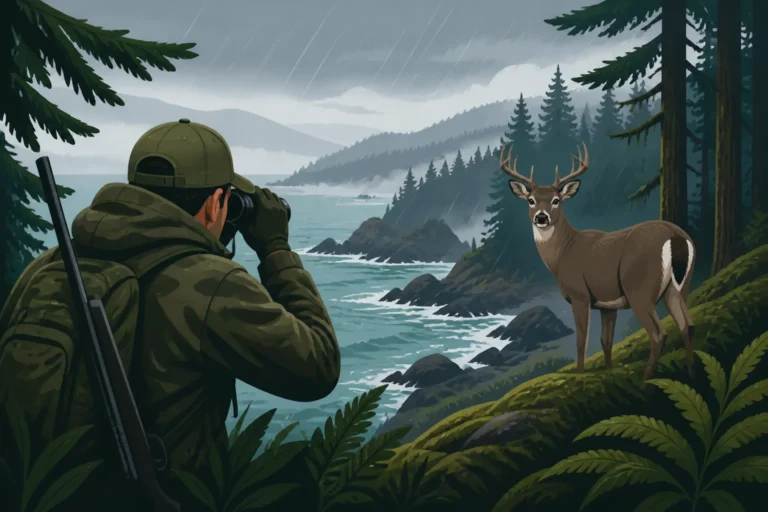
Coastal blacktail, on the other hand, present a different kind of challenge. They are masters of thick, second-growth timber and often operate under the cover of dense rainforests. In September, they are still scattered and feeding on berries, fresh greens, and browse. The key here is stealth and patience. You'll likely be still-hunting through very dense cover, looking for subtle signs like fresh tracks, droppings, and rubbed saplings. They might be using travel corridors more frequently as they move between bedding and feeding areas. Understanding Black-Tailed Deer Hunting in British Columbia will serve you well, as these animals are notoriously elusive, and getting a clear shot with a bow often means literally being within spitting distance. Their senses are incredibly sharp, so wind direction and quiet movement are paramount.
Early Season Elk Strategies
Hunting elk with a bow in British Columbia during September can be an incredibly thrilling experience, especially as the rut begins to ramp up towards the end of the month. Early in September, though, bulls are often still in bachelor groups, focused on feeding in higher elevation meadows and secluded timber patches, much like mule deer. They're working hard to put on weight and grow their antlers to full maturity. Your best bet in the first couple of weeks might be to locate these feeding areas, often at dawn or dusk, and plan a spot-and-stalk approach. Patience and excellent glassing skills will be your best friends here. As the month progresses, especially towards the latter half, the pre-rut tension builds, and you might start hearing sporadic bugles. This is when things get exciting, and calls can become more effective.
However, don't expect the full-blown, aggressive bugling of peak rut just yet. Early season elk calls are often more subdued, perhaps a solitary challenge bugle or a soft cow call. It’s a good time to use cow and calf calls to pique their curiosity without being overly aggressive. You'll need to really listen to the tone of any calls you hear and respond in kind. Locating water sources and wallows can also be highly productive, as bulls will frequent these spots to cool down, drink, and wallow in preparation for the upcoming breeding season. Combining these tactics with an understanding of Elk Hunting in British Columbia can greatly increase your odds of success.
Black Bear Opportunities Before the Rut Intensifies
September offers fantastic opportunities for black bears, especially as they continue their intense feeding efforts in preparation for hibernation. While many hunters associate bear hunting with spring, the fall season, particularly the archery opener, can be highly productive. Bears are still out and about, often concentrated in areas with abundant food sources. Think berry patches—huckleberries, blueberries, saskatoons—and areas with rich mast crops like acorns or beechnuts. Along the coast, they might be frequenting estuaries and salmon streams as the salmon runs begin to move upstream, though this is often later in September or into October.
The key to early September bear hunting is scouting for these food sources. Bears are incredibly driven by their stomachs at this time of year and will travel significant distances to access calorie-rich foods. Look for scat, overturned rocks (indicating they’ve been foraging for insects), and disturbed berry bushes. Spot-and-stalk can be very effective in open clearcuts or along forest edges where these food sources are plentiful. Just remember that many sows will still have cubs, so always take your time to properly identify your target and be absolutely sure it's a lone boar before you even think about releasing an arrow. While this isn't technically Black Bear Hunting British Columbia's Spring, many of the same principles of locating food sources and careful stalking apply.
Essential Gear and Preparations for an Archery Opener
Stepping into the British Columbia backcountry for the September archery opener demands not just skill and knowledge, but also the right equipment. The conditions can be challenging and unpredictable, so having reliable gear that performs when it matters most is paramount. From your bow setup to your navigation tools, every item plays a crucial role in your safety and success.
Bowhunting Setup and Field Maintenance
Your bow is, naturally, the most critical piece of equipment for a September archery opener. Ensure it's meticulously tuned, sighted in, and that you've practiced extensively at various distances, including odd angles and from different positions you might encounter in the field. This isn't the time to be trying new broadheads or a different release; stick with what you know and trust. Your arrows should be matched to your bow, and your broadheads should be razor-sharp. Mechanical broadheads are popular for their flight characteristics, but fixed blades offer reliable penetration in any situation, which can be a huge comfort when you're facing a tough hide or a less-than-ideal shot angle. Don't forget a sturdy quiver, a rangefinder that you've practiced with so much it's second nature, and a small, lightweight toolkit for minor field adjustments like tightening screws or replacing a D-loop.
Beyond the core setup, consider the environmental factors. September often means rain, especially on the coast, so a waterproof bow case is a good idea for transport, and ensuring your sights, rest, and strings are well-maintained and protected from moisture is crucial. A small piece of string wax and a damp cloth for cleaning are light additions that can save your hunt. Remember, your gear needs to be as resilient as you are, capable of handling variable temperatures and potential wet conditions without failing. Ensuring your bow is legal and meets draw weight rules is also a key part of your preparation; always check the latest Bow Draw Weight Rules in British Columbia.
Clothing and Footwear for Warm, Wet Conditions
British Columbia's September weather can be notoriously fickle, meaning your clothing system needs to be adaptable. You’ll likely start your day in cool, possibly frosty conditions, but by midday, you could be sweating profusely under a warm sun or enduring a sudden downpour. Layering is your best friend. Start with a moisture-wicking base layer to manage sweat, add a mid-layer for insulation (like a fleece or lightweight puffy), and top it off with a waterproof and windproof outer shell. This shell is non-negotiable, especially in coastal or alpine environments. Brands like Sitka Gear or Kuiu offer excellent layering systems designed for hunters, but any quality technical apparel will do. Avoid cotton at all costs; it holds moisture and will leave you cold and miserable if it gets wet.
Footwear is equally critical. You'll be covering varied terrain, from steep, rocky slopes to muddy, slick forest floors. A good pair of waterproof, ankle-supporting hiking boots with aggressive tread is essential. Ensure they are well broken-in before your hunt to prevent blisters. Many hunters also carry gaiters, especially in areas with wet brush or deep dew, to keep their lower legs and boots dry. Merino wool socks are highly recommended for their moisture-wicking and odor-resistant properties, and carrying a spare pair or two can feel like a luxury in the backcountry. Proper footwear isn't just about comfort; it's about preventing injuries and maintaining your mobility when you're miles from the truck.
Navigation and Communication Tools for Remote Areas
Hunting in British Columbia's vast wilderness, particularly in more remote management units, demands robust navigation and communication tools. Relying solely on your phone is a recipe for disaster, as cell service quickly disappears once you leave populated areas. A dedicated GPS unit or a reliable mapping app on a device like your phone (with downloaded offline maps, crucial for areas like those found when Scouting a British Columbia Management Unit Online) is absolutely essential. Combine this with a physical map and a compass, and know how to use them. Technology can fail, but a paper map won't run out of battery. It's not just about finding your way in; it's about confidently finding your way out, especially after a successful hunt in the dark or adverse weather.
For communication, especially when hunting solo or in remote areas, a satellite messenger or satellite phone is a must-have safety item. Devices like the Garmin inReach or Zoleo offer two-way messaging, GPS tracking, and an SOS function, connecting you to emergency services even without cell signal. This provides immense peace of mind, not just for you but for your loved ones back home. These tools are indispensable for Satellite Communication on a Remote Hunt. Additionally, a fully charged power bank to keep all your electronic devices alive, a reliable headlamp with spare batteries, and a small whistle for signaling in emergencies complete your essential safety and navigation kit.
Here's a quick rundown of essential gear for the September archery opener:
| Category | Essential Items | Notes |
|---|---|---|
| Bow Setup | Tuned bow, matching arrows, broadheads, release, quiver, arm guard, rangefinder, small field repair kit | Practice often; ensure broadheads are razor sharp. |
| Clothing | Moisture-wicking base layers, insulating mid-layers, waterproof/windproof outer shell, gaiters, wool socks, hat, gloves | Layering is key for variable BC weather; avoid cotton. |
| Footwear | Waterproof, broken-in hiking boots | Provide ankle support and good traction. |
| Navigation | GPS unit/app with offline maps, physical map, compass, headlamp with spare batteries, power bank | Know how to use all tools; redundancy is vital. |
| Communication | Satellite messenger/phone, fully charged cell phone (for accessible areas) | Essential for remote areas and emergencies. |
| Hunting Tools | Binoculars, spotting scope (optional for alpine), game bags, sharp knife, game cleaning supplies, rope | Quality optics save miles; game bags are critical for meat care. |
| Safety | First-aid kit, bear spray, fire starter, emergency shelter, water filter/purifier | Be prepared for the unexpected; consider a water bladder for hands-free hydration. |
| Misc. | Backpack (appropriate size), food, water, sunglasses, sunscreen, trekking poles (optional) | Pack light but don't compromise on essentials. |
Scouting and Locating Game Prior to the Hunt
Success on the British Columbia archery opener often hinges on the quality of your pre-season scouting. Animals aren't just going to walk into your lap; you need to understand their habitat, their movement patterns, and their preferred hangouts before you even step foot in the woods with your bow. This involves a combination of digital research and boots-on-the-ground investigation.
Utilizing Online Resources for Pre-Season Planning
In today's age, the internet is an invaluable scouting tool, offering a wealth of information at your fingertips. Start by thoroughly reviewing the current British Columbia hunting regulations synopsis for the specific management unit (MU) you plan to hunt. Pay close attention to season dates, bag limits, and any antler restrictions, as these can vary significantly even between adjacent units. Tools like the British Columbia government's iMapBC or specific hunting apps can provide detailed topographic maps, satellite imagery, and overlays for Crown land, private land, and hunting unit boundaries. This allows you to identify potential travel corridors, bedding areas, water sources, and feeding grounds long before you hit the trail.
For a deeper dive into unit specifics, platforms like GoHunt provide comprehensive data on draw odds, harvest statistics, and detailed maps with various layers that can highlight potential hotspots. You can often see historical fire perimeters, logging activity, and even specific habitat types, all of which influence animal distribution. Using these tools to plan your access points, identify natural funnels, and pinpoint areas that might hold animals based on elevation, aspect, and vegetation types is incredibly efficient. It’s like having an aerial view of the entire landscape, helping you narrow down vast areas into manageable sections for physical scouting. This digital reconnaissance is a crucial first step, especially when trying to decipher a British Columbia LEH Zone Map for a limited entry hunt.
Boots-on-the-Ground Scouting Tactics
While digital maps are excellent for broad planning, nothing replaces the intelligence gathered from physical scouting. Ideally, you want to spend time in your chosen hunting area a few weeks or even months before the season opens. This allows you to observe animal patterns without the pressure of a bow in your hand. Look for fresh tracks, droppings, rubs, and active feeding areas. Pay close attention to benches, saddles, and dense timber pockets that might serve as bedding locations. Glassing from high vantage points at dawn and dusk is incredibly effective, allowing you to cover vast amounts of terrain with your optics and identify where animals are moving. A good pair of binoculars and a spotting scope can save you miles of walking.
Setting up trail cameras on game trails, near water sources, or in suspected feeding areas can provide invaluable intel on what animals are in the area, their size, and their movement timings. This is especially useful for understanding nocturnal patterns or identifying elusive bucks or bulls. When scouting, think like the animal: where would they feel safe? Where would they find food and water? How would they travel between these areas? Even driving British Columbia's Logging Road Network slowly, stopping frequently to glass clearcuts and draws, can reveal fresh sign or even direct animal sightings. Remember to be quiet, use good wind discipline, and disturb the area as little as possible to keep animals from becoming wary before the season even begins.
Understanding Animal Sign and Movement in Summer Range
Reading animal sign is a skill honed over time, but in early September, there are specific things to look for that indicate where animals are spending their time. Fresh tracks in soft ground or mud near water sources are a clear indicator of recent activity. Mule deer and blacktail, especially bucks, will often leave rubs on small trees or saplings as they shed their velvet, providing clues to their size and presence. Elk will also start to rub velvet from their antlers, and you might find wallows that show signs of recent use as bulls prepare for the rut. Droppings can tell you a lot about an animal's diet and how recently they were in an area; fresh, soft droppings are a positive sign.
Beyond individual signs, consider the broader movement patterns. In September, animals are often still on their summer range, which can be at higher elevations in the mountains, taking advantage of lush alpine forage, or in dense, shaded timber during warmer periods. They are focused on feeding, so identify primary food sources for your target species – berries for bears and deer, succulent grasses and forbs for elk and deer. Look for natural funnels like saddles, creek bottoms, or narrow strips of timber between clearcuts where animals might travel. Water sources are always critical, especially in drier areas, as animals will visit them regularly. By piecing together these various signs, you can start to build a picture of where and when animals are most likely to be encountered, drastically improving your chances for a successful archery encounter.
Effective Archery Hunting Tactics for Early Season
Once you've done your homework and found an area holding game, it's time to put your archery skills to the test. Early season bowhunting requires specific tactics that account for warm weather, dense cover, and animals that aren't yet in their predictable rut patterns. Stealth, patience, and adaptability are your most valuable assets.
Spot-and-Stalk in Open Country
Spot-and-stalk is arguably one of the most exciting and rewarding archery hunting methods, and it's particularly effective in early September in British Columbia's more open terrain, such as alpine basins, old clearcuts, or interior grasslands. The key here is good optics and immense patience. Get to a high vantage point before first light and spend hours systematically glassing every detail of the landscape. Look for movement, subtle differences in colour or texture, or the tell-tale horizontal line of a deer's back or an elk's flank against a vertical backdrop. Once you spot an animal you want to pursue, the real work begins. This is where Glassing an Interior Hillside for Mule Deer really pays off.
Planning your stalk is critical. Analyze the wind direction meticulously—it's your biggest enemy or your best friend. Plan a route that keeps you out of sight, using terrain features like ridges, draws, and timber pockets for cover. Always approach from downwind. Move slowly, deliberately, and quietly, paying attention to every twig and leaf underfoot. This isn't a race. You might spend hours covering a few hundred yards. Be prepared to stop, listen, and re-evaluate your approach as the animal moves. The goal is to get within bow range (often 30-50 yards for a comfortable shot, depending on your skill and comfort level) without being detected. Executing a successful spot-and-stalk often involves getting on your hands and knees or even crawling the last few yards to get a clear, ethical shot on an animal that is completely unaware of your presence. This also applies when Stalking a Bedded Buck in Open Timber.
Ambushing Game on Travel Corridors and Water Sources
When conditions don't favour spot-and-stalk, or if you're hunting in dense timber, ambushing game can be a highly effective strategy for the archery opener. This involves identifying key areas where animals are naturally funnelled or concentrated and setting up an ambush point, whether on the ground or from a treestand. Early season animals are often focused on food and water, so these are prime locations. Look for heavily used game trails that connect bedding areas to feeding zones, especially those that run along benches, creek bottoms, or the edges of dense timber. These natural travel corridors are like highways for deer and elk moving at dawn and dusk.
Water sources are another excellent ambush point, particularly in drier regions or during warm spells. Animals need to drink daily, and setting up near a secluded pond, a slow-moving creek, or even a seep can yield opportunities. Pay attention to fresh tracks around these areas to confirm recent use. Before setting up, evaluate the wind direction and ensure your scent cone is blowing away from the expected approach of the animals. Also, make sure you have clear shooting lanes that allow for an ethical shot within your comfortable bow range. Patience is paramount with this method; you might sit for hours without seeing anything, but when an animal does appear, you need to be ready to draw and shoot quickly and quietly.
Calling and Decoying Strategies for September
While the peak rut is still weeks away for most species, subtle calling and decoying can still be effective during the September archery opener, especially as the month progresses. For elk, the pre-rut period can see bulls beginning to respond to cow calls or very soft, inquisitive bugles. Don't go overboard with aggressive challenge bugles early in the month, as this can often spook unready bulls. Instead, focus on soft cow and calf talk to pique their curiosity or locate them. If you hear a distant bugle, a soft response might draw them in or at least get them to reveal their location for a stalk. Learning to use a variety of calls for Bugling to a Roosevelt Elk Bull will be beneficial, even in early season.
For deer, fawn bleats can be surprisingly effective for blacktail and mule deer, especially if a doe thinks her fawn is in distress. This can bring does in looking for their offspring, and sometimes a curious buck will follow. This is a common tactic for Calling a Blacktail Buck With a Fawn Bleat. Decoys can also play a role, particularly if you're hunting in more open areas. A lone bedded doe decoy can sometimes draw in a curious buck, giving you a few extra seconds for a shot. Always consider the wind when using decoys, and ensure your setup allows for a safe shot without drawing attention to yourself. Remember, the goal with early season calling and decoying is often more about drawing curiosity or revealing an animal's location rather than provoking an aggressive charge, which is more common during the full rut.
Overcoming Archery Opener Obstacles and Ensuring Success
Hunting the British Columbia archery opener is an exercise in preparedness and adaptability. The environment throws unique challenges at bowhunters, from unpredictable weather to the critical task of meat preservation in warmer temperatures. Anticipating these obstacles and having a plan to overcome them is key to a successful and ethical hunt.
Dealing with Unpredictable Weather and Temperatures
British Columbia's September weather is anything but predictable. You can experience scorching heat, driving rain, thick fog, and even light snow, sometimes all within a single day or a multi-day hunt. This extreme variability poses significant challenges for bowhunters. Heat can make animals lethargic and nocturnal, pushing them into dense cover and making daytime spotting difficult. It also means you'll be sweating, increasing scent dispersal and requiring constant hydration. Conversely, sudden cold snaps or heavy rain can drench you, leading to hypothermia risks if you're not properly prepared with waterproof layers and warm clothing. This is why having versatile clothing that allows for effective layering, as discussed earlier, is so crucial.
The best way to deal with this unpredictability is to monitor weather forecasts constantly, both before and during your hunt if you have signal (or via satellite messenger if you don't). Pack for all eventualities: lightweight, breathable clothing for warmth, full rain gear, and extra layers for insulation. Don't be afraid to sit out periods of extreme weather, whether it's the midday heat or a severe storm. Your safety and comfort are paramount. Adapt your hunting schedule to the conditions; if it's hot, focus your efforts on early mornings and late evenings. If it's pouring rain, try still-hunting in the timber where animals might be seeking shelter, or consider if Hunting British Columbia's Coastal Rain is an option. Staying hydrated in the heat and dry in the wet are non-negotiable for success and safety.
Managing Meat Care in Early Fall Conditions
One of the most critical and often underestimated aspects of early season hunting in British Columbia is proper meat care, especially given the warmer temperatures of September. Unlike a late-season hunt where you might have natural refrigeration, early fall heat can quickly spoil meat if not handled correctly. As soon as an animal is down, the clock starts ticking. Your priority must be to field dress the animal immediately, removing all internal organs to allow the carcass to begin cooling. For larger animals like elk or moose, you'll need to quarter the animal and get the hide off as quickly as possible to dissipate body heat. This is an essential skill, especially when Quartering a Moose in Grizzly Country.
Once quartered, get the meat into breathable game bags – not plastic bags, which trap heat and moisture. Hang the game bags in the shade, ideally in a cool, airy spot. If temperatures are consistently warm, you might need to find a way to get the meat cooled down further, perhaps by packing it out to a cooler with ice, or even utilizing a nearby cold stream if you can keep it dry and clean. Flies and other insects are also a major concern in early fall; game bags offer some protection, but keeping the meat clean and cool is the primary defense. Don't underestimate the challenge of getting meat out of the backcountry quickly and safely in the heat. Having a solid plan for Meat Care in British Columbia's Warm Early Seasons before you even leave home is crucial for ethical harvest and delicious table fare.
Staying Safe in the British Columbia Backcountry
The British Columbia backcountry is wild, beautiful, and can be unforgiving. Ensuring your safety is paramount. One of the primary concerns for hunters is encounters with bears, particularly grizzlies in certain regions. Always carry bear spray (and know how to use it) and consider a firearm as a backup, even when bowhunting, for self-defense against dangerous wildlife. Make noise while hiking through dense areas to avoid surprising a bear. Store food properly in bear-resistant containers or hung from a tree well away from your camp. Know What to Do If You See a Grizzly and how to react defensively. This proactive approach to Bear Safety While Hunting in British Columbia can prevent dangerous situations.
Beyond bears, the sheer ruggedness of the terrain and the potential for rapid weather changes present other risks. Always let someone know your detailed hunt plan, including your intended route, expected return date, and emergency contacts. Carry a well-stocked first-aid kit, a fire starter, and an emergency shelter. Be mindful of your physical limits, especially when packing out meat from steep country. Dehydration, sprains, and getting lost are real possibilities. Consider taking a wilderness first-aid course. Remember, no animal is worth risking your life or limb. Hunters often push themselves hard, but knowing when to turn back, when to call for help, or when to simply wait out a storm is a sign of experience and wisdom.
Disclaimer
The information provided in this guide is for general informational purposes only and is not a substitute for reviewing the official British Columbia hunting regulations. Hunters are responsible for knowing and adhering to all current regulations, seasons, and licensing requirements as set forth by the Province of British Columbia. Always prioritize safety and ethical hunting practices.