Hunting a British Columbia River Estuary
Hunting a British Columbia river estuary can be one of the most rewarding, yet undeniably challenging, experiences for a hunter. These dynamic environments, where fresh river water meets the salty ocean, present a unique set of circumstances that can throw off even seasoned hunters, from rapidly changing tides that strand boats to the unpredictable movements of game seeking food or shelter. This guide aims to demystify these complex ecosystems, offering practical advice and strategies to help you successfully navigate and hunt British Columbia's captivating river estuaries.
Understanding the Estuary Environment
British Columbia's estuaries are truly special places, blending the rich nutrients of our rivers with the vastness of the Pacific. But what makes them such a unique hunting ground also presents their biggest challenges. Success here hinges on a deep respect for and understanding of these shifting landscapes.
Tidal Influence and Its Impact
The tides are the heartbeat of any estuary, and understanding their rhythm is paramount to a successful hunt. Unlike stillwater hunting, where water levels remain relatively constant, an estuary's landscape can transform completely in just a few hours. High tide pushes saltwater far upriver, submerging vast mudflats and pushing game further inland or into dense cover. This can be a prime time for boat access to areas normally unreachable, or for targeting species like blacktail deer that might be moving to higher ground.
Conversely, low tide exposes extensive mudflats and sandbars, revealing rich feeding grounds for various species. Waterfowl will often drop in to feast on invertebrates and plant life, while bears might patrol the exposed shoreline for crabs or dead fish. However, low tide also means limited boat access, potentially stranding you or making foot travel through deep, clingy mud incredibly arduous. Slack tide, the brief period between high and low (or low and high) when the water is still, offers a different dynamic, often seeing less current and clearer water, which can be advantageous for certain approaches. Planning your hunt around the specific tide schedule for your chosen estuary, which can vary significantly even along the same coast, is non-negotiable. Many hunters find tools like those available through GoHunt incredibly useful for studying these intricate tidal patterns and predicting game movement.
Vegetation and Habitat Types
Estuaries are mosaics of diverse habitats, each attracting different game species. Closer to the ocean, you'll find expansive saltmarshes dominated by salt-tolerant grasses, sedges, and rushes. These areas are vital feeding and roosting grounds for migrating waterfowl and shorebirds. As you move upstream, the influence of freshwater increases, leading to brackish and then freshwater wetlands, often lined with dense stands of willow, alder, and cottonwood. This transition zone is particularly rich, providing cover and food for black-tailed deer and black bears, which frequently follow these riparian corridors.
Beyond the immediate shoreline, the surrounding uplands, often a mix of coniferous forest and recent clearcuts, play a crucial role. Deer and bears will use these adjacent forest edges for bedding and escape cover, only venturing onto the open estuary flats to feed during specific tidal stages or times of day. Understanding these habitat transitions and how different species utilize them at varying times is key to predicting where game will be. It's not just about the water's edge; it's about the entire ecosystem from the deepest channel to the highest adjacent ridge.
Weather Patterns and Microclimates
Hunting British Columbia's coastal estuaries means being prepared for a dynamic range of weather. The Pacific Ocean heavily influences these areas, bringing frequent rain, especially during fall and winter. This isn't just a minor inconvenience; the persistent drizzle and strong winds can dramatically affect visibility, scent conditions, and animal behavior. A sunny morning can quickly give way to a thick fog or a torrential downpour, making navigation challenging and impacting how game animals move and feed.
Estuaries also often create their own microclimates. Valleys that funnel down to the coast can become wind tunnels, even on otherwise calm days. Fog can roll in thick and fast off the ocean, obscuring your view and forcing you to rely on sound and scent. Always pack for the worst-case scenario, with waterproof layers, extra warm clothing, and emergency shelters. Understanding how game animals react to these conditions is also vital; deer might hunker down in dense cover during heavy rain, while waterfowl might seek sheltered bays or be more active on blustery days as they are pushed around by the winds. Hunting British Columbia's Coastal Rain is a skill in itself, especially in these exposed environments.
Key Species and Their Behavior in Estuaries
British Columbia's river estuaries are biodiversity hotspots, attracting a variety of game species. Knowing what to expect from each, and how their behavior changes with the ebb and flow of the tide and seasons, is crucial.
Waterfowl and Migratory Birds
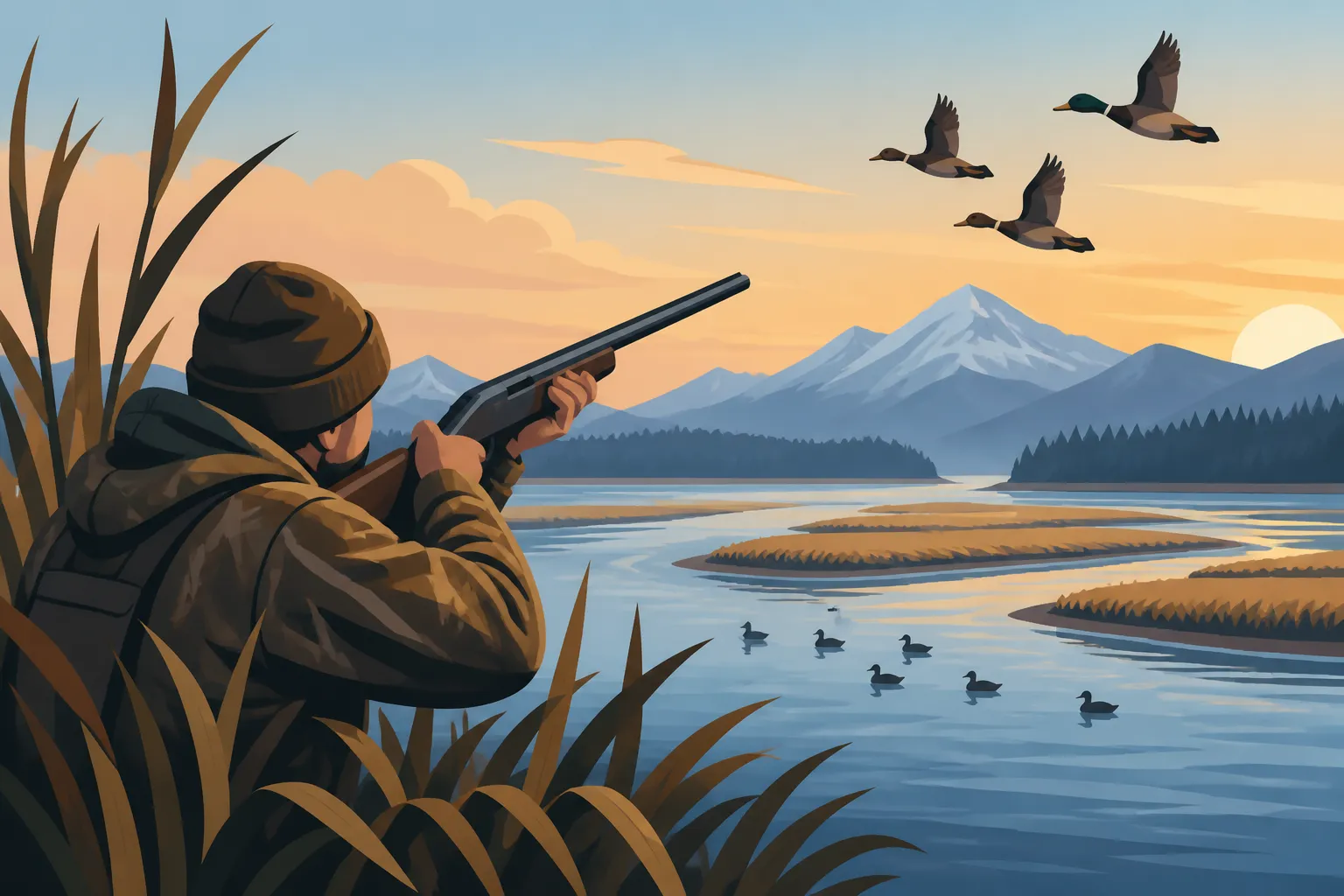
Estuaries are world-renowned stopovers and wintering grounds for an incredible array of waterfowl, making them prime locations for duck and goose hunting. Species like mallards, pintails, wigeon, and various diving ducks (scaup, goldeneyes) are common, along with different species of geese, including Canada geese and snow geese in some areas like the Fraser Delta. Their behavior is intrinsically linked to the tides and available food sources. At low tide, dabbling ducks will often feed on exposed mudflats, sifting through the shallow water for seeds, shoots, and invertebrates. Divers prefer deeper channels and open water, feeding on submerged vegetation and shellfish.
Hunting success often comes from identifying these feeding patterns and setting up decoys accordingly. Early mornings and late evenings typically see the most flight activity as birds move between roosting and feeding grounds. However, changes in weather, like a sudden cold snap or heavy winds, can also trigger significant movements. Remember that British Columbia's migratory bird hunting requires a federal permit in addition to your provincial hunting licence, and non-toxic shot rules in British Columbia are strictly enforced for waterfowl hunting. Decoying Ducks on a Coastal Estuary is an art form that greatly increases your chances here.
Black Bears and Their Foraging Habits
British Columbia's Coastal Black Bears are incredibly adaptable, and estuaries provide them with a smorgasbord of seasonal food sources. In spring and early summer, as bears emerge from their dens, the lush, nutrient-rich sedges and grasses that grow along estuary edges are a critical food source. These greens provide a much-needed flush of digestible plant matter after a long winter. Bears will often be seen grazing openly on these flats, particularly at low tide when more foraging opportunities are exposed.
As summer progresses and into the fall, their diet shifts. Estuaries become crucial as salmon begin their spawning runs. Bears will patrol the riverbanks and tide lines, looking for migrating salmon or fish carcasses left by receding tides. Crabs and other shellfish exposed on mudflats also become a significant food source. This seasonal abundance makes estuaries exceptional spots for bear hunting, especially in the spring and fall. However, hunting bears on a coastal estuary in May, or any time really, requires extreme caution and awareness of your surroundings, as you're sharing their prime feeding grounds.
Coastal Deer Blacktail Movement
While waterfowl and bears are perhaps the most iconic estuary dwellers, coastal deer, primarily blacktail, also utilize these environments, though often more subtly. Black-Tailed Deer on British Columbia's Coast are masters of stealth and cover. They don't typically spend extended periods on wide-open mudflats but will frequent the dense transitional zones between the saltmarsh and the upland forest. They'll use the thick alder and willow stands for bedding during the day and will often emerge onto the edges of the marsh to browse on various forbs and shrubs, especially during dawn and dusk.
Tidal movements can also influence their patterns. During very high tides, when much of their typical low-lying cover is submerged, blacktail may be pushed further up into the adjacent forested slopes. Conversely, exposed mudflats during low tide might reveal new pathways for them to access different feeding areas along the treeline. Look for tracks along soft edges and trails leading into the thicker vegetation. Hunting Blacktail in British Columbia's Coastal Rain demands patience and a keen eye for subtle signs, as these deer are notoriously elusive.
Effective Hunting Strategies for British Columbia Estuaries
Hunting in an estuary demands a unique blend of planning, patience, and adaptability. Your typical forest hunting tactics might not cut it here, so let's dive into some strategies that prove effective in these watery worlds.
Scouting and Timing Your Hunt
Effective scouting is the bedrock of successful estuarine hunting. This isn't just about looking for game sign; it's about understanding the entire ecosystem. Before your hunt, spend time observing the tides, noting how the water level changes and where game moves at different stages. Use high-quality optics from a vantage point to watch how ducks land on certain flats at low tide, or where bears emerge from the bush. Pay attention to wind direction, as it can funnel scent and influence where game feels secure.
For waterfowl, scouting helps you identify natural flight paths and preferred feeding areas. For bears and deer, look for fresh tracks, browse lines, and scat along the edges of the mudflats and riparian zones. Remember, the same spot might be great for ducks at low tide but completely barren for deer at high tide. Using digital tools like those found on GoHunt can help you overlay tidal charts with topographic maps, allowing for detailed planning before you even step foot in the field. This level of preparation will allow you to pinpoint the most productive times and locations.
Boat-Based Versus Land-Based Approaches
Accessing British Columbia's vast estuaries can be a challenge, and often, a boat is your best friend. Hunting From a Boat on the Coast offers unparalleled flexibility, allowing you to quickly cover large distances, navigate intricate channels, and reach areas inaccessible by foot. Jon boats, Zodiacs, or even small inflatables with an outboard motor are common choices. They allow for easy deployment of decoys, retrieving downed birds, and can be critical for packing out big game. However, a boat also requires careful planning around tides to avoid getting stranded on a receding flat. Always carry marine charts, a GPS, and emergency paddles.
Land-based hunting, on the other hand, typically involves hiking in along dikes, old logging roads, or through dense coastal brush. This approach can be very effective for targeting deer and bears that skirt the edges of the estuary or move between the estuary and the uplands. It often involves more strenuous physical exertion but can offer a quieter, more intimate hunting experience. Consider using game carts or frame packs for meat retrieval. Many hunters combine both methods, using a boat to access a remote section of the estuary, then disembarking to hunt on foot.
| Feature | Boat-Based Hunting | Land-Based Hunting |
|---|---|---|
| Pros | Covers large areas quickly, easy decoy deployment, retrieves game from water, accesses remote areas. | Quieter, less equipment to manage, potentially less visible to game, good for stalking. |
| Cons | Tidal dependency, noisy engine, requires marine safety gear, potential for stranding, can be expensive. | Physically demanding, limited range, difficult for waterfowl retrieval, may require long pack-outs. |
| Ideal For | Waterfowl, large predator hunting, remote access. | Deer, small predator hunting, stalking in dense cover. |
| Key Challenge | Navigating tides and currents, engine failure. | Physical exertion, dense vegetation, limited visibility. |
Decoying and Calling Techniques
For waterfowl, decoys are almost non-negotiable in an estuary setting. A spread of realistic duck and goose decoys, often combined with motion decoys, can draw birds in from a distance. The key is to position your spread strategically, often on exposed mudflats at low tide or in shallow water near feeding areas. Pay attention to wind direction; birds almost always land into the wind. A well-placed blind, whether natural or constructed, is essential for concealment. Calling, mimicking the quacks, honks, and clucks of your target species, adds another layer of realism and can convince wary birds to commit to your spread.
For deer and bears, calling is less about direct imitation and more about subtle communication. For deer, a fawn bleat or a grunt can sometimes pique curiosity, especially during the rut. For bears, especially in areas with dense cover, a predator call can sometimes draw them in, though this is a more specialized tactic. More often, successful bear and deer hunting here relies on spot-and-stalk techniques, using the terrain and vegetation for cover, and patiently waiting for animals to emerge from the thicket.
Essential Gear and Safety Considerations for Estuarine Hunts
Estuary hunting is truly an immersive experience, but it also means being extra diligent about your gear and safety. The unique environment demands specific equipment and a heightened sense of awareness.
Waterfowl Hunting Essentials
Beyond your firearm and ammunition (remembering those non-toxic shot requirements for waterfowl), a few items are absolutely critical for a productive and safe waterfowl hunt in a British Columbia estuary. First and foremost, a reliable boat if you plan on accessing open water or remote flats. This means not just the boat itself, but a dependable motor, extra fuel, paddles, anchors, and all required marine safety gear (life jackets, bailer, whistle, first-aid kit, etc.). Chest waders are a must, as you'll invariably be wading through shallow, muddy water to set decoys or retrieve birds. Choose sturdy, puncture-resistant waders, and consider studded boots for better traction on slippery mud and rocks.
A high-quality, waterproof blind bag for your calls, extra shells, snacks, and any electronics is also vital. Optics, like binoculars, are indispensable for spotting distant birds and identifying species. For comfort and concealment, a portable blind or Ghillie suit can make a huge difference, especially in exposed areas. And finally, bring plenty of rope for securing your boat, anchoring blinds, or even as a safety line if you find yourself in tricky mud. Every piece of gear should be able to withstand the wet, corrosive environment of a saltwater marsh.
Bear Safety in Coastal Areas
Hunting in coastal British Columbia means you are in prime grizzly and black bear country. While you may be targeting black bears, encounters with grizzlies are always a possibility, particularly in certain regions like the Squamish or Fraser estuaries, or further north. What to Do If You See a Grizzly is not a question you want to ponder for the first time in the field. Always carry bear spray, readily accessible, and know how to use it. Many hunters also choose to carry a firearm chambered in a powerful cartridge as a last line of defense. Remember, the goal is always to avoid confrontation. Make noise when moving through dense cover, especially near streams where your sound might be masked.
Proper meat care in British Columbia's warm early seasons is also a critical bear safety measure. If you harvest a deer or black bear, field dress it quickly and cleanly, getting the meat cooled and hung as soon as possible. Bears are drawn to carcasses, and a quickly processed animal minimizes the time you spend around an attractant. If you're overnighting, ensure your camp is bear-safe, with all food and scented items stored in bear-resistant containers or hung from a tree. Never cook or eat where you sleep.
Navigational Tools and Emergency Preparedness
Estuaries, with their constantly changing landscape and often featureless mudflats, can be disorienting. A reliable GPS unit or a smartphone with detailed mapping apps (like GoHunt) is absolutely essential. Don't rely solely on one device; carry a physical map and compass as backup, and know how to use them. Mark your entry and exit points, and any potential hazards like deep channels or quicksand-like mud. Even on short day hunts, carry a small pack with emergency essentials: a first-aid kit, fire-starting materials, a multi-tool, extra layers, high-energy snacks, and sufficient water.
Cell service can be spotty or non-existent in many estuarine areas, especially those more remote. A satellite communication device, like an inReach or Spot device, is highly recommended for staying in touch and, critically, for summoning help in an emergency. The weather can change in an instant, and getting stranded by a rogue tide or fog bank is a real possibility. Emergency Planning in British Columbia's Backcountry applies just as much to these coastal lowlands as it does to the mountains. Tell someone your detailed hunt plan, including your expected return time and exact location. Be humble, be prepared, and always prioritize safety over success.
Disclaimer
Hunting is an inherently risky activity. The information provided in this guide is for educational purposes only and should not be considered a substitute for formal training, adherence to all local regulations, and personal responsibility. Always consult the most current British Columbia Hunting Regulations Synopsis and obtain all necessary licenses and tags before hunting. Prioritize safety, ethical conduct, and respect for wildlife and the environment.