Navigating Fog on a British Columbia Coast Hunt
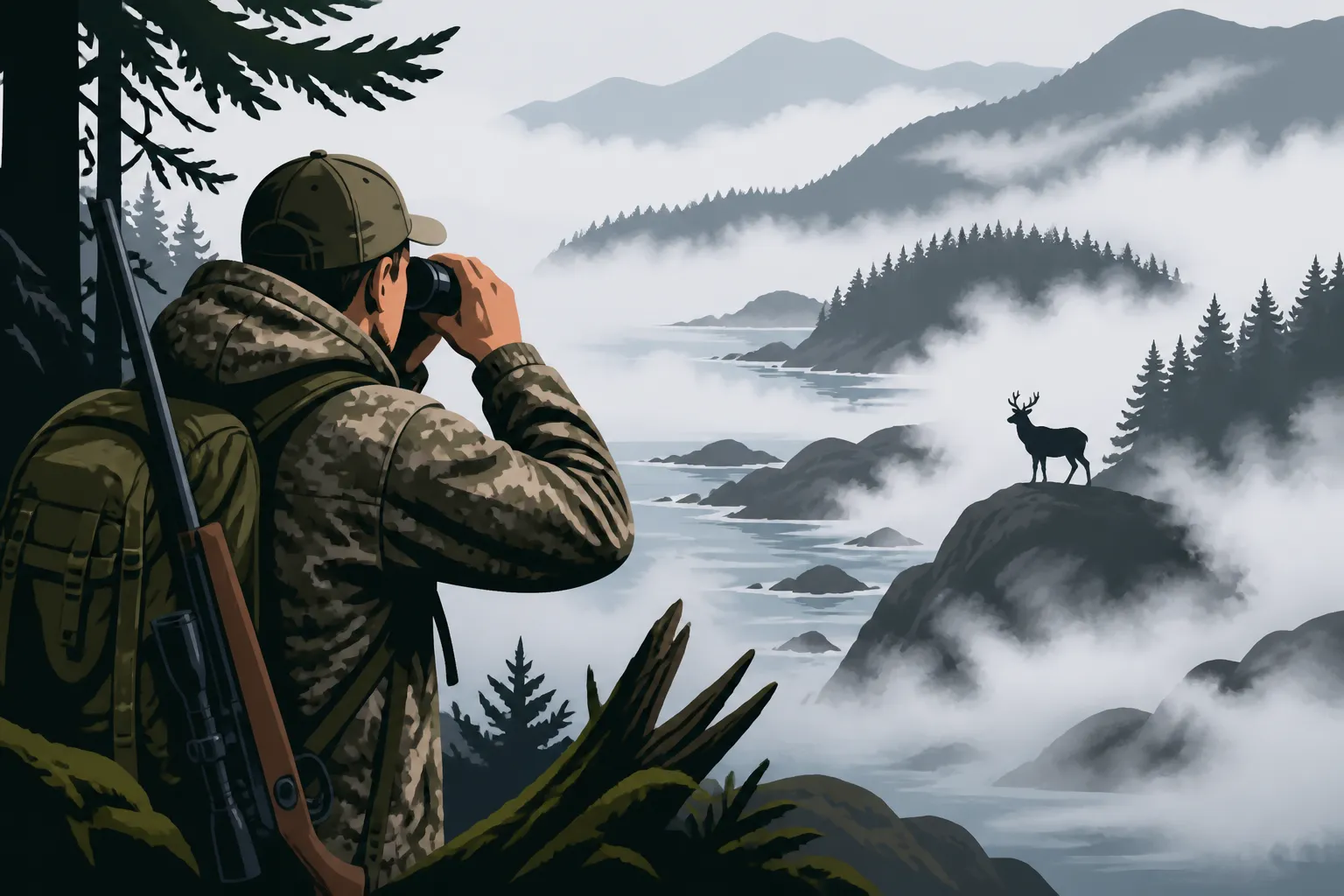
Hunting the rugged British Columbia coast can be an incredibly rewarding experience, offering breathtaking scenery and challenging opportunities for species like blacktail deer and bears. However, the sudden, often relentless, descent of dense fog can transform a pristine wilderness into a disorienting, even dangerous, maze in mere moments. This comprehensive guide is designed to equip you with the knowledge, gear, and tactics needed to confidently and safely navigate those pea-souper conditions, ensuring your coastal hunt remains memorable for all the right reasons.
Understanding British Columbia's Coastal Fog Phenomenon
Coastal fog isn't just a nuisance; it's a fundamental aspect of the British Columbia coastline that demands respect and understanding from every hunter. Unlike the patchy mist you might encounter in the interior, coastal fog can be thick, widespread, and incredibly persistent, drastically altering the landscape and impacting every aspect of your hunt.
The Science Behind the Shroud: Types of Coastal Fog
While many types of fog exist, the British Columbia coast is primarily affected by a specific kind: advection fog. This occurs when warm, moist air moves horizontally over a cooler surface, like the often-chilly Pacific Ocean currents. As this warm air passes over the colder water, it cools rapidly, causing the moisture within it to condense into tiny water droplets, forming a dense layer of fog. This is why you'll often see fog rolling in from the ocean, blanketing islands, inlets, and mountainsides with startling speed.
Another less common but still present type is radiation fog, which forms on clear, calm nights when the ground cools rapidly, cooling the air above it to its dew point. However, the sheer scale and oceanic influence mean advection fog is the primary challenge for coastal hunters. Understanding this helps you predict its arrival somewhat – a shift in wind direction bringing warm, moist air from the open ocean over cooler coastal waters or land can be a strong indicator that the visibility is about to plummet. It's not just a weather event; it's an immersive environmental condition unique to the marine environment.
The Disorienting Effects of Low Visibility
When dense fog descends, it does more than just obscure your view; it profoundly disorients your senses. Visual landmarks vanish, making it nearly impossible to gauge distance or direction. That prominent headland you used for navigation suddenly disappears, and the familiar shoreline becomes an indistinguishable grey mass. What's even more insidious is the way fog distorts sound. Distant sounds can seem much closer, and close sounds can be muffled or appear to come from an entirely different direction. This acoustic deception can be particularly dangerous when you're trying to pinpoint the location of game, your hunting partners, or even your boat.
The damp, clinging nature of coastal fog also contributes to a general sense of cold and wetness, further impacting comfort and morale. Without clear visual cues, hunters can quickly lose their bearing, even in areas they know well. A five-minute walk through what seemed like open timber can suddenly feel like an hour-long trek through an unfamiliar wilderness. This is why having robust navigational skills and tools is absolutely non-negotiable when hunting anywhere near the British Columbia coast.
Psychological Toll: Avoiding Panic and Poor Decisions
The combination of extreme low visibility, distorted sounds, and the chilling dampness can quickly take a psychological toll. It's easy to feel isolated and vulnerable when you can't see more than a few feet in front of you. This feeling can lead to panic, which in turn leads to poor decisions. Hunters might rush, attempt shortcuts, or continue pushing forward when they should be stopping to assess their situation. The urge to "just get back to camp" can override common sense and safe practices.
It’s crucial to acknowledge these feelings and have a pre-planned strategy to counteract them. Recognizing the onset of frustration or fear is the first step. Take a deep breath, pause, and consciously engage your pre-established safety protocols. Remember that the animals you're pursuing are often just as affected by the conditions, perhaps even more so, creating opportunities if you maintain composure. Developing a resilient mindset for adverse conditions is as important as any piece of gear you carry.
Essential Gear for Hunting in British Columbia's Coastal Mist
When you're heading out on a British Columbia coast hunt, especially one where you anticipate Hunting in British Columbia's Coastal Rain, your gear list needs to be meticulously curated to handle not just the wet, but the potential whiteout conditions that fog brings. Simply having "waterproof" isn't enough; you need equipment that facilitates navigation, communication, and basic survival when visibility drops to near zero.
Advanced Navigation Tools: Your Eyes in the Fog
Gone are the days when a simple compass and paper map were sufficient for navigating truly dense fog. While those traditional tools are still absolutely vital as backups, modern technology offers an incredible advantage. A reliable GPS unit, either a dedicated handheld device like a Garmin inReach or a robust smartphone app, is your primary "eye" when the fog blinds you. These devices, especially those with pre-loaded topographical maps, allow you to see your precise location, track your movement, and plot waypoints that can lead you safely back to your boat or camp. Consider using an app like GoHunt, which can be invaluable for detailed mapping and planning. Its ability to download offline maps means you won't be stranded without navigation if cell service disappears, which is a common occurrence in remote coastal areas.
Beyond digital tools, don't neglect the fundamentals. Always carry a physical compass and a waterproof, up-to-date topographical map of your specific hunting area. Batteries die, screens crack, and signals can be lost. Knowing how to dead reckon with a compass is a skill that could literally save your life. Regularly cross-referencing your digital maps with a physical one, and understanding a British Columbia MU map, will create a robust navigational backup system.
Communication Devices: Staying Connected When You Can't See
In thick fog, visual contact with your hunting partners or your basecamp can be lost in seconds. This makes reliable communication devices paramount. While cell phones are often spotty or non-existent on the BC coast, a satellite messenger or phone is an absolute game-changer. Devices like the Garmin inReach mentioned earlier offer two-way satellite communication, allowing you to send and receive text messages, track your location, and even trigger an SOS in an emergency. This is far superior to a simple personal locator beacon (PLB) which only sends out a distress signal. When planning for Emergency Planning in British Columbia's Backcountry, satellite communication is at the top of the list.
For shorter-range communication within your hunting party, robust two-way radios with good range and battery life are essential. Test them thoroughly before your trip. Establish clear communication protocols: check-in times, specific channels, and what to do if contact is lost. Remember that sound distortion in fog can make voice communication tricky, so keep messages clear and concise. A simple air horn or loud whistle can also be invaluable for short-range alerts or to signal your position to nearby partners.
Visibility Enhancers: Making Yourself Seen
While you can't see much in the fog, doing what you can to make yourself visible to others – and to game, in certain scenarios – is important. Blaze orange is a mandatory safety requirement in many hunting situations in British Columbia, and in fog, its importance is amplified. Wear a blaze orange vest and hat, and consider adding blaze orange strips or covers to your backpack. This isn't just for other hunters; it also helps your partners maintain visual contact with you if you briefly separate.
A powerful headlamp with fresh batteries, and ideally a spare, is also critical. Even during daylight hours, dense fog significantly darkens the environment. A good headlamp allows you to see the immediate terrain, field dress an animal, or perform essential camp tasks should you be caught out after dark. Some hunters even carry small, bright LED strobe lights that can be attached to their pack for continuous visibility, especially if stationary or waiting for retrieval.
Shelter and Survival Gear: Prepared for an Unplanned Overnight
The risk of becoming disoriented and having to spend an unexpected night out increases dramatically in dense fog. Your pack should always contain basic survival essentials. This includes an emergency blanket or lightweight tarp, fire-starting materials (waterproof matches, lighter, ferro rod), a small first-aid kit, extra high-energy food, and enough water or a filtration system. Remember that the BC coast can get quite cold and wet, even in early fall, so having an insulated layer you haven't been wearing (to keep it dry) is also crucial.
If you're Packing Out of British Columbia's Steep Country or Hunting a Coastal Inlet From a Boat, having a small, lightweight bivy sack or an emergency shelter can provide crucial protection from hypothermia if you're forced to hunker down. Think about what you would need to sustain yourself for 12-24 hours in adverse conditions and pack accordingly. It’s better to carry a little extra weight than to be caught unprepared.
Hunting Tactics and Safety Protocols in the Mist
Successfully hunting in coastal fog demands a shift in strategy. It's no longer about spotting game at long distances but rather about relying on other senses, moving deliberately, and prioritizing safety above all else. This isn't just a physical challenge; it's a mental one that requires patience and discipline.
Pre-Hunt Planning: The Foundation of Fog Safety
Before you even step foot out of camp, thorough pre-hunt planning is your first line of defense against the perils of coastal fog. Always check multiple weather forecasts for your specific hunting area, paying close attention to marine forecasts which often provide more detailed information about fog formation and dissipation. Sites like Environment Canada or dedicated marine weather apps can give you a heads-up. If a dense fog warning is issued, seriously reconsider your plans, or at least adjust them to stay very close to a known safe zone or your primary access point.
Equally important is leaving a detailed trip plan with someone responsible. This includes your exact hunting location (e.g., specific inlets, islands, or GPS coordinates), your planned route, your estimated return time, and who to call if you don't check in. When you're out there, regularly update your partners on your location and intentions. This level of communication and planning is fundamental for all hunts, but it becomes absolutely critical when facing the unpredictable nature of coastal weather.
Navigational Strategies: Your Path Through the Grey
Once the fog rolls in, your navigational strategy needs to be precise and continuous. Rely heavily on your GPS device, whether a handheld unit or a capable app like GoHunt. Before you leave a known location (like your boat, camp, or a trail start), mark a waypoint. As you move, mark periodic waypoints, especially at any junctions or significant changes in terrain. This creates a breadcrumb trail that you can follow back if visibility remains poor.
Dead reckoning, the art of navigating by estimating direction and distance from a known point, becomes more relevant in fog. Use your compass frequently, setting a bearing and following it for a measured distance. Count your paces to estimate distance. Even when using a GPS, periodically confirming your bearing with a compass helps maintain your situational awareness and provides a critical backup. Pay attention to subtle changes in elevation, the direction of water flow in creeks, or the texture of the forest floor – these can be critical sensory cues when visual ones are absent. Try to navigate along natural features like ridgelines or the edge of a bay, but be acutely aware that these too can disappear without warning.
Movement and Awareness: Slowing Down to Stay Safe
In thick fog, the urge to hurry can be strong, but it's a dangerous impulse. Slow down your pace significantly. Every step needs to be deliberate, testing the ground in front of you. Utilize all your senses:
- Sound: Listen intently for breaking twigs, rustling leaves, the distant call of a bird, or the subtle sound of water. These sounds can reveal game movement or indicate nearby features. Remember how fog distorts sound and verify any auditory cues with your other senses.
- Smell: The damp air might carry the scent of recent rain, pine needles, or even the distinct musky odor of a nearby bear.
- Touch: Feel the texture of the ground underfoot, the slope of the terrain, or the type of vegetation you're pushing through.
Frequently stop, look, and listen. Take the time to confirm your location on your GPS. If you're with a partner, maintain voice contact or use short whistle blasts to keep track of each other. The goal isn't speed; it's safe, methodical progression. This careful approach might also increase your chances of surprising game that's also moving cautiously in the low visibility.
Communication Within a Hunting Party: Staying Together
Hunting in fog with a partner requires constant, deliberate communication. Establish clear protocols before you even leave camp. Decide on a maximum distance you'll allow between partners. Use short, distinct whistle signals (e.g., two blasts to indicate "I'm here," three to indicate "I need help"). Verbal communication should be frequent, even if it's just a regular "check-in."
If one person takes point, they should periodically pause and confirm the presence of the follower. If visual contact is lost, stop immediately. Do not keep moving. Use your pre-arranged signals to re-establish contact. When Hunting from a Boat on the Coast, it's vital that the person piloting the boat and those on shore have clear communication channels and know precisely where the boat is anchored or located. A common mistake is for one person to assume the other knows where they are, leading to potentially dangerous separation.
Bear Safety in Low Visibility: An Elevated Threat
The British Columbia coast is bear country, home to both black bears and grizzlies, and thick fog significantly increases the danger from these animals. Low visibility means you might stumble upon a bear, particularly a sow with cubs, before either of you has a chance to react. This is precisely why Bear Safety While Hunting in British Columbia emphasizes making noise and carrying appropriate deterrents.
In foggy conditions, make continuous noise by talking loudly, clapping your hands, or occasionally yelling "Hey bear!" Carry bear spray in an easily accessible holster, and know how to use it. A powerful firearm suitable for bear defense should also be readily available, and you should be proficient with it. When moving through dense brush or areas known for bears, increase your vigilance and slow your pace even further. Be extra cautious around salmon streams or berry patches, as bears tend to concentrate in these areas. Your heightened senses, especially smell and hearing, become your best defense.
What to Do When the Fog Rolls In Unexpectedly
Despite all your planning, coastal fog has a way of appearing out of nowhere, sometimes so quickly that you barely have time to react. The key is to have a structured response plan, so you can act calmly and decisively when the world turns grey.
Prioritizing Safety: Stop, Assess, Don't Panic
The moment you realize visibility is rapidly deteriorating due to fog, your absolute first priority is safety. Stop moving. Do not try to rush to a perceived safer location, as this is often when disorientation and accidents occur. Take a few deep breaths and consciously work to stay calm. Panic is your biggest enemy in this situation.
Assess your immediate surroundings. Do you recognize any nearby features? Can you determine your precise location on your GPS? Check your map and compass to orient yourself. If you're with a hunting partner, immediately establish and maintain verbal contact. The goal here is to halt any uncontrolled movement and regain control of your situation before proceeding. This might mean deciding to stay put, or if a safe, clearly marked route to safety is visible on your navigation device, slowly and deliberately following it.
Setting Up a Temporary Shelter: When Conditions Worsen
If the fog is incredibly dense, your navigational tools aren't providing clear answers, or you're simply unsure of your way, the safest option might be to hunker down and wait it out. Fog can persist for hours or even days on the coast. In such a scenario, setting up a temporary shelter is crucial, especially if evening is approaching or the weather is turning colder.
Look for a relatively sheltered spot, out of direct wind, if possible. Use your tarp, emergency blanket, or even natural features like large downed logs or dense evergreen boughs to create a basic shelter. The goal is to get out of the damp, reduce heat loss, and make yourself as comfortable as possible. Get a small fire going if safe to do so and you have the materials, not just for warmth, but also for morale and a visible signal if conditions improve. If you've been doing some Spot-and-Stalk Mule Deer in British Columbia near the coast, you're likely already carrying lightweight gear that can be adapted for an unexpected overnight.
Signalling for Help: When All Else Fails
If you've been caught out in severe fog, are injured, or your situation has become genuinely dire, knowing how to signal for help is critical. Your satellite messenger is your primary tool here. Use its SOS function to alert search and rescue. Ensure your device is registered and your emergency contacts are up-to-date. This is why investing in Satellite Communication on a Remote Hunt is so important.
Other signaling methods, while less reliable than satellite communication, can still be effective if searchers are nearby. Three shots from your firearm, spaced evenly, is a universal distress signal (only use this in a true emergency). A powerful whistle, blown in three short bursts, is another. If you have a mirror, use it to flash signals when there's a break in the fog. At night, a bright headlamp or flashlight can be flashed in Morse code or in a series of three short bursts. A signal fire, producing lots of smoke, can also be effective if you have enough fuel and the conditions are safe. Remember, if you reported your trip plan, searchers will know where to start looking, significantly increasing your chances of being found.
| Navigation Tool | Pros | Cons | Best Use in Fog |
|---|---|---|---|
| GPS Device/App | Precise location, detailed maps, waypoint tracking (e.g., GoHunt) | Battery dependent, signal loss possible, screen visibility issues | Primary navigation, plotting routes, emergency locator |
| Physical Map & Compass | No batteries, reliable, teaches fundamental skills | Requires practice, can be difficult to use in wind/rain, less precise | Essential backup, macro-navigation, situational awareness |
| Satellite Messenger | Two-way communication, SOS function, tracking (e.g., Garmin inReach) | Subscription required, battery dependent, can be slow | Emergency communication, daily check-ins, remote contact |
| Two-Way Radio | Instant communication with party, no service needed (line of sight) | Limited range, battery dependent, can be muffled in fog | Maintaining contact with hunting partners |
| Whistle/Air Horn | Simple, effective short-range signal | Limited range, can be mistaken for other sounds | Alerting partners, distress signal |
| Headlamp | Illumination, can be used for signaling | Battery dependent, short-range visibility | Night navigation, signaling, immediate area illumination |
Navigating British Columbia's coastal fog is a skill honed by experience and preparation. By understanding the unique challenges it presents, arming yourself with the right gear, and adopting a disciplined approach to movement and communication, you can ensure that your pursuit of game, whether it's Black-Tailed Deer Hunting in British Columbia or Black Bear Hunting British Columbia's Spring, remains a safe and successful adventure, even when the world around you vanishes into the grey.
Disclaimer
The information provided in this guide is for informational purposes only and is not a substitute for professional training or local expertise. Hunting in British Columbia's backcountry carries inherent risks. Always prioritize safety, adhere to all provincial hunting regulations, and ensure you have the necessary skills, gear, and permits before venturing out. Weather conditions can change rapidly and unexpectedly; always be prepared for the worst-case scenario.