British Columbia’s Wild Sheep and Where They Live
For many hunters, the thought of pursuing wild sheep in British Columbia evokes a powerful mix of awe, respect, and perhaps a little trepidation. The sheer scale of the mountains, the unpredictable weather, and the incredible challenge of locating these elusive animals can feel insurmountable. This guide is here to demystify the journey, offering a comprehensive look at British Columbia's magnificent wild sheep species, their unique habitats, and what it truly takes to hunt them ethically and successfully in some of the continent's most remote and beautiful landscapes.
The Allure of British Columbia's Wild Sheep
There's something uniquely captivating about wild sheep. Their ability to thrive in some of the most unforgiving, high-alpine environments on Earth makes them truly iconic. For hunters, the pursuit of a ram isn't just about the harvest; it's a profound test of physical endurance, mental toughness, and a deep appreciation for wild places. British Columbia, with its vast and rugged mountain ranges, offers unparalleled opportunities to encounter these magnificent creatures.
Why Sheep Hunting Captures the Imagination
It’s hard to put into words the feeling of cresting a ridge and spotting a band of rams silhouetted against a glacier-clad peak. For generations, the image of a hunter packing out a heavy set of horns from the high country has been synonymous with the pinnacle of North American hunting. This isn't just about bagging a trophy; it's about the journey itself. The physical demands, the solitude of the wilderness, and the intrinsic challenge of outsmarting an animal perfectly adapted to its harsh environment combine to create an experience that transforms those who undertake it. Stories of sheep hunts are etched into memory, tales of grit, perseverance, and profound connection to the wild that resonate long after the boots are taken off. It's often said that a sheep hunt isn't just a hunt; it's an expedition, a pilgrimage into the untamed heart of the mountains.
The Ultimate Backcountry Challenge
Hunting wild sheep in British Columbia is not for the faint of heart. It demands a level of physical fitness, mental resilience, and self-sufficiency rarely tested in other forms of hunting. Hunters often spend days, sometimes weeks, miles from the nearest road or even trail, carrying everything they need on their backs. This means navigating treacherous terrain, crossing swift alpine streams, enduring unpredictable weather that can shift from warm sunshine to freezing snow in hours, and glassing vast expanses of rock and scree for hours on end. Every decision, from what gear to pack to which ridge to traverse, carries weight. When you're Backpack Hunting British Columbia's Sheep Country, you quickly realize that comfort is a luxury you can't afford, and every ounce in your pack counts. The reward, however, is a profound sense of accomplishment and an intimate understanding of a landscape few ever experience. It's a stark reminder that in the sheep mountains, you are truly a guest, and success is earned through respect for the wild.
Conservation and Sustainable Harvest
The opportunity to hunt wild sheep in British Columbia is a privilege, underpinned by robust conservation efforts. Wildlife managers, biologists, and passionate hunters work tirelessly to ensure healthy sheep populations for future generations. British Columbia employs a Limited Entry Hunting (LEH) system for many sheep species, which carefully controls harvest numbers to prevent overhunting and ensure the long-term viability of herds. This involves extensive research into population dynamics, habitat health, and genetics. Hunters themselves play a crucial role, contributing through license fees, tag purchases, and voluntary conservation groups that fund habitat improvement projects and anti-poaching initiatives. The sustainable harvest model in BC recognizes the value of sheep as a renewable resource and the economic contributions hunters make to local communities, especially in remote northern regions where outfitters rely on these hunts.
Understanding British Columbia's Sheep Species
British Columbia is home to several distinct species and subspecies of wild sheep, each with its own unique characteristics and preferred habitats. While all are incredible animals, understanding the differences is key to appreciating their role in BC's diverse ecosystems and for successful hunting.
Stone's Sheep: The Northern Gems
Perhaps the most sought-after wild sheep in British Columbia is the Stone's sheep (Ovis dalli stonei). These magnificent animals are a subspecies of Dall's sheep, known for their striking dark bodies, often ranging from charcoal grey to dark brown, contrasted by a white rump patch, belly, and inner legs. Their horns are typically a beautiful amber-yellow, curling tightly back from their heads. Stone's sheep are found predominantly in the mountainous regions of northern British Columbia, particularly in the vast, untamed landscapes around the Spatsizi Plateau and the Cassiar Mountains. They thrive in rugged, high-alpine environments, preferring steep, rocky slopes and alpine meadows above timberline where they can find both forage and protection from predators. Learning to differentiate them from other species, and understanding their habitat, is crucial when you are Hunting Stone's Sheep in Northern British Columbia.
California Bighorn Sheep: Interior Icons
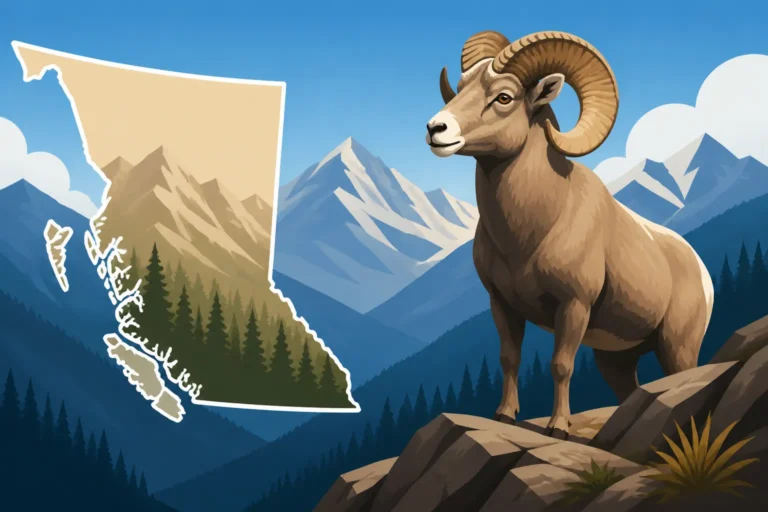
The California bighorn sheep (Ovis canadensis californiana) is another incredible species found in British Columbia, primarily in the dry, rugged interior regions of the province. Unlike the darker Stone's sheep, California bighorns are typically lighter in colour, with a coat that ranges from light brown to tan, also featuring a distinct white rump patch. Their horns are a robust, dark brown, and form tight, heavy curls. These sheep are true mountain dwellers, preferring the arid, rocky canyons, grassy slopes, and open timber of areas like the Chilcotin, Fraser Canyon, and Okanagan. They are perfectly adapted to these drier climates, often found in lower elevations compared to their northern counterparts, moving between open grasslands for feeding and steep, broken terrain for escape. This species offers unique challenges and incredible scenery for those hunting in British Columbia's Interior.
Rocky Mountain Bighorn Sheep: The Eastern Giants
On the eastern side of British Columbia, primarily in the Kootenay region and along the Rocky Mountain Trench, you'll find the impressive Rocky Mountain bighorn sheep (Ovis canadensis canadensis). These are often the largest of the bighorn subspecies, known for their massive, heavy horns that can form a full curl and a half on mature rams. Their coat is typically a rich, chocolate brown, also with a prominent white rump. Rocky Mountain bighorns inhabit steep, exposed terrain, often in areas with a mix of grassy slopes, cliffs, and sparse timber. They are incredibly hardy animals, adapted to the colder, snowier conditions of the Rockies. Their sheer size and impressive horn growth make them highly sought-after, and managing healthy herds is a priority for their continued presence. The chance to see or hunt British Columbia's Rocky Mountain Bighorns in their natural habitat is truly special.
Dall's Sheep: Rare Northern Visitors
While primarily found further north in the Yukon and Alaska, a small, isolated population of Dall's sheep (Ovis dalli dalli) can be found in the extreme northwestern corner of British Columbia, bordering these territories. These are the classic white sheep of the North, distinguished by their pure white coats and yellow-amber horns. Their presence in BC is limited to very specific, remote high-alpine areas. Hunting opportunities for Dall's sheep in British Columbia are exceedingly rare and often part of specialized, high-demand draw allocations. While visually stunning, their distribution in BC is not as widespread as Stone's or bighorn sheep, making them a true rarity for hunters within the province's borders. For those interested in the broader picture of wild sheep in BC, it's important to recognize this subtle but significant presence.
To help visualize the distinctions, here's a quick comparison:
| Species | Primary Range in BC | Coat Colour | Horn Colour/Shape | Key Habitat | Conservation Status |
|---|---|---|---|---|---|
| Stone's Sheep | Northern BC (Spatsizi, Cassiar) | Dark Grey to Brown | Amber-Yellow, tight curl | Steep, rocky alpine, high elevation | Stable, LEH Managed |
| California Bighorn Sheep | Southern Interior (Chilcotin, Fraser Canyon) | Light Brown to Tan | Dark Brown, heavy, tight curl | Arid, rocky canyons, grasslands, open timber | Stable, LEH Managed |
| Rocky Mountain Bighorn Sheep | Eastern BC (Kootenays, Rocky Mountain Trench) | Chocolate Brown | Dark Brown, massive, full curl | Steep cliffs, grassy slopes, sparse timber | Stable, LEH Managed |
| Dall's Sheep | Extreme Northwestern BC (border regions) | Pure White | Yellow-Amber, open curl | Very high, remote alpine, sparse presence | Very Limited Hunting, LEH |
Where British Columbia's Stone's Sheep Roam
Stone's sheep, with their dark coats and striking horns, are emblematic of British Columbia's northern wilderness. Their range is truly a testament to the rugged, untamed beauty of the province.
The Spatsizi Plateau and Northern Ranges
The heartland of Stone's sheep in British Columbia lies within the vast and remote northern ranges, most notably the legendary Spatsizi Plateau Wilderness Park. This incredible area, alongside the Cassiar Mountains, Muskwa-Kechika Management Area, and other contiguous ranges spreading towards the Yukon border, represents some of the largest tracts of untouched wilderness in North America. These regions are characterized by towering, glaciated peaks, expansive alpine plateaus, deep river valleys, and a dense network of high-elevation basins. Access into these areas is often challenging, typically requiring bush planes, horses, or extensive backpacking, making any journey into Stone's country a true expedition. This remoteness, however, is precisely what makes these areas ideal for robust sheep populations, as human disturbance is minimal and habitat remains pristine. Exploring these remote units for British Columbia's Record Stone's Sheep is a dream for many.
Habitat Characteristics and Preferences
Stone's sheep are creatures of the high country, expertly adapted to life above the timberline. Their preferred habitat consists of steep, broken terrain, often characterized by scree slopes, rocky outcrops, and cliffs that provide excellent vantage points and escape routes from predators like wolves and grizzlies. They favour a mosaic of alpine meadows and sparse tundra where they can graze on nutritious grasses, forbs, and lichens that flourish during the short summer growing season. These areas offer both food and crucial mineral licks. During the colder months, they might descend slightly to find sheltered south-facing slopes where snow depth is less prohibitive and forage remains accessible, but generally, they remain at high elevations year-round. Understanding these habitat preferences is key when Glassing an Alpine Basin for Rams and trying to predict where sheep will be at different times of the year. The ability to navigate this type of terrain is paramount for any hunter hoping to pursue these animals.
Population Status and Conservation Efforts
British Columbia's Stone's sheep populations are generally considered stable, though they face ongoing challenges from habitat fragmentation, climate change, and predation. Conservation efforts focus heavily on habitat protection, responsible resource management, and controlled hunting. The LEH system is vital, ensuring that only a limited number of tags are issued each year, based on scientific population assessments. This prevents overharvesting and allows herds to maintain healthy age and sex structures. Organizations like the Wild Sheep Foundation and local conservation groups also play a significant role, funding research, habitat restoration, and anti-poaching efforts. For hunters using platforms like GoHunt, understanding these population dynamics and applying for LEH draws in strong units is a critical part of the planning process. By actively participating in these efforts, hunters contribute directly to the long-term health and prosperity of Stone's sheep in British Columbia.
California Bighorn Sheep Strongholds
Moving south, the landscape changes dramatically, but the presence of wild sheep remains equally captivating. British Columbia's dry interior is the domain of the California bighorn.
The Southern Interior's Dry Slopes
California bighorn sheep are perfectly at home in the parched, rugged landscape of British Columbia's southern interior. This region, characterized by deep river canyons, expansive grasslands, and rolling sagebrush-covered hills, provides a stark contrast to the glaciated peaks of the north. Areas like the Chilcotin Plateau, the Fraser Canyon, and specific zones within the Okanagan are prime habitats for these iconic sheep. The climate here is significantly drier, with hot summers and relatively mild winters compared to the higher elevations. This environment dictates different foraging and survival strategies for the sheep, who must contend with different predators and distinct vegetation types. The open nature of much of this terrain, while still steep and challenging, often allows for extensive glassing, a primary hunting method for British Columbia's California Bighorn Range.
Key Habitat Areas: Chilcotin, Fraser Canyon, Okanagan
Within the southern interior, specific areas are renowned for their California bighorn populations. The Chilcotin, with its vast grasslands and basalt cliffs, supports significant herds. Here, sheep often move between the open plateaus and the protective, broken terrain of the river drainages. The Fraser Canyon is another crucial stronghold, where the sheep navigate the incredibly steep and often unstable slopes carved by the mighty Fraser River. The Okanagan region, particularly its more remote and rugged sections, also holds pockets of bighorns, often found on the sun-baked hillsides interspersed with Ponderosa pine and Douglas fir. Each of these areas presents unique challenges and rewards for the sheep hunter, requiring different strategies and local knowledge. Understanding the nuances of these specific zones is vital for anyone planning a hunt or simply hoping to observe these majestic animals.
The Role of Grasslands and Open Timber
California bighorns rely heavily on a mosaic of grasslands and open timber for their survival. The nutrient-rich grasses and forbs found on south-facing slopes and plateau edges provide essential forage, particularly during spring and summer. These open areas also allow sheep to detect predators from a distance. However, they are rarely found far from escape terrain – the steep, rocky cliffs and broken ground that offer immediate refuge when danger approaches. The open timber, typically Ponderosa pine or Douglas fir, provides some thermal cover during extreme weather and can offer concealment, but the sheep prefer areas where they can easily transition to steep, open ground. This preference for "escape terrain with a view" is a defining characteristic of their habitat selection and a critical factor to consider when scouting or planning a hunt. This ecosystem balance is delicate, and factors like wildfire, overgrazing, and disease can significantly impact herd health, necessitating continuous monitoring and management efforts.
Rocky Mountain Bighorn Sheep in the Kootenays
Venturing further east, into the shadow of the imposing Canadian Rockies, we find the largest and arguably most visually impressive of BC's wild sheep: the Rocky Mountain bighorn.
Eastern British Columbia's Rugged Mountains
The Kootenay region of eastern British Columbia is the primary domain of the Rocky Mountain bighorn sheep. This area is defined by the majestic peaks of the Canadian Rockies and Purcell Mountains, characterized by towering limestone cliffs, extensive scree fields, and deep, glaciated valleys. The climate is typically more severe than the interior plateau, with colder winters and heavier snowfall, which profoundly influences sheep behaviour and movements. Here, the bighorns share their habitat with other iconic species like elk, moose, and mountain goats. The sheer scale of the landscape and the robust nature of these sheep make hunting here a truly epic endeavour. It's a land where ruggedness isn't just a characteristic; it's a way of life for the wildlife that calls it home.
Preferred Terrain and Seasonal Movements
Rocky Mountain bighorns exhibit strong preferences for steep, exposed, rocky terrain, especially cliffs and rocky slopes with relatively sparse tree cover. These areas offer excellent visibility and protection from ground predators. They often utilize ridges and high points for resting and keeping watch. During the summer months, they can be found at very high elevations, grazing on alpine meadows and soaking up the sun. As winter approaches and snow begins to accumulate, they typically descend to lower, more sheltered elevations, often south-facing slopes that shed snow more quickly, or river valleys where forage remains accessible. These seasonal migrations are critical for their survival, allowing them to adapt to changing food availability and snow depths. Understanding these patterns is crucial for hunters. For instance, knowing How Elevation Moves British Columbia Game can provide a distinct advantage in locating these magnificent animals.
Managing for Healthy Herds
Maintaining healthy populations of Rocky Mountain bighorn sheep involves a multi-faceted approach. Disease, particularly pneumonia, is a significant threat to bighorn herds, often exacerbated by contact with domestic sheep. Wildlife management efforts include disease surveillance, selective culling of infected animals, and minimizing contact between wild and domestic sheep. Habitat protection is also paramount, ensuring that critical winter ranges and lambing grounds remain undisturbed. As with other sheep species, the LEH system plays a critical role in managing harvest pressure, and hunters are active partners in reporting observations and participating in conservation projects. The goal is to ensure that these iconic animals continue to thrive in the rugged beauty of the Kootenays for generations to come, embodying the wild spirit of British Columbia.
The Elusive Dall's Sheep Presence
While Stone's sheep get most of the attention in British Columbia's north, there's a lesser-known, truly elusive resident in the furthest reaches of the province: the Dall's sheep.
Far Northwestern British Columbia's Remote Borders
Dall's sheep in British Columbia are an extremely rare sight, with their range confined to the very remote and rugged northwestern tip of the province, primarily bordering the Yukon and Alaska. This is truly the wild frontier, characterized by vast, uninhabited wilderness, immense mountain ranges, and glaciers. These populations are often extensions of larger herds found in neighbouring territories, occasionally spilling over into BC's most northern units. The sheer remoteness of this region means that human presence is minimal, and access is incredibly difficult, usually requiring specialized bush plane charters and extensive backcountry travel. These are not areas one simply drives into; they demand significant planning, resources, and a true pioneering spirit.
Distinguishing Dall's from Stone's Sheep
For the uninitiated, distinguishing Dall's sheep from Stone's sheep can be a subtle art, especially given that Stone's sheep are considered a subspecies of Dall's. The primary distinguishing factor is coat colour. True Dall's sheep are almost entirely white, often with a slight creamy tint, and their horns are typically yellowish-amber. Stone's sheep, as discussed, are characterized by their darker, charcoal to dark brown bodies, though they retain the white rump and sometimes have lighter patches on their legs or belly (these lighter phased Stone's are sometimes referred to as Fannin sheep, which are considered a colour phase rather than a distinct subspecies). In the limited areas where their ranges might potentially overlap or where a Fannin sheep is spotted, careful observation of the overall body colour is key. Generally, if you see a truly white sheep in BC, especially in the far north, it's likely a Dall's.
Limited Opportunities and Unique Challenges
Hunting opportunities for Dall's sheep in British Columbia are extremely limited and highly competitive. They are typically offered through the LEH draw system, and the odds of drawing a tag are very low, often requiring many years of application. For those fortunate enough to draw, the hunt itself presents unique challenges. The extreme northern latitude means shorter daylight hours during much of the hunting season, colder temperatures, and unpredictable weather, including early snowfalls. The logistics of accessing these remote areas are formidable, often necessitating significant financial investment for charter flights and extended expeditions. Furthermore, the populations are often small and isolated, requiring immense effort to locate and successfully harvest an animal. A Dall's sheep from British Columbia is a truly once-in-a-lifetime trophy, reflecting not just the animal's rarity but the extraordinary effort required to pursue it.
The Life Cycle and Behavior of BC's Wild Sheep
Understanding the life cycle and behaviours of British Columbia's wild sheep is crucial for both conservation and hunting success. These animals are masters of their environment, and their actions are meticulously timed to the rhythm of the seasons.
Seasonal Migrations and Rutting Behavior
Wild sheep in British Columbia exhibit distinct seasonal movements driven by food availability, snow depth, and predator avoidance. In the spring, as the snow recedes, sheep typically move to lower-elevation green-ups and then gradually ascend into the high alpine meadows as summer progresses, taking advantage of the fresh, nutritious forage. As autumn approaches, they may begin to stage at slightly lower elevations or on specific ridges. The rut, or breeding season, typically occurs in late October through November, though it can vary slightly by species and region. During this time, mature rams engage in spectacular head-butting clashes to establish dominance and breeding rights. The sounds of horns crashing echo through the mountains, a truly primal display. After the rut, sheep will then move to their winter ranges, seeking out south-facing slopes and areas where snow accumulation is less severe. Knowing When British Columbia Bulls Drop Antlers for other species can sometimes inform general animal movements, but sheep antler cycles are different as their horns are permanent.
Diet and Foraging Habits
British Columbia's wild sheep are herbivores, and their diet consists primarily of grasses, forbs (broad-leafed plants), sedges, and some shrubs. Their ability to thrive in harsh environments is largely due to their efficient digestive systems and their skill in finding nutritious forage even in seemingly barren landscapes. During the summer, they graze extensively on the lush alpine vegetation. In winter, when fresh growth is scarce and snow covers much of the ground, they adapt by foraging on dried grasses, lichens, mosses, and even small woody browse. They often use their hooves to paw through shallow snow to access buried vegetation. Mineral licks, rich in essential salts and minerals, are also critical components of their diet, especially during periods of high nutritional demand like lambing or horn growth. Access to diverse and healthy forage across all seasons is fundamental to the health and productivity of sheep herds.
Lambing Grounds and Predator Avoidance
Spring is a critical time for wild sheep, as ewes seek out safe, secluded lambing grounds to give birth. These areas are typically characterized by extremely steep, broken terrain and cliffs that offer protection from predators. Ewes will often separate from the main herd to minimize disturbance during and immediately after birth. The newborn lambs, though small and vulnerable, are incredibly agile and can navigate steep terrain within hours of being born. Predator avoidance is a constant for wild sheep, particularly from wolves, cougars, bears (especially grizzlies), and golden eagles, which prey on lambs. Their primary defense mechanism is their exceptional eyesight, keen hearing, and their preference for steep, open country where they can spot threats from a distance and use their climbing ability to escape. The collective vigilance of a band of ewes and lambs is vital for survival against persistent predators.
The Challenges and Realities of Hunting Wild Sheep in BC
Hunting wild sheep in British Columbia is often described as the pinnacle of North American big game hunting, and for good reason. It's an undertaking that demands significant preparation, skill, and an unwavering spirit.
Physical Demands and Mental Fortitude
Make no mistake: a British Columbia sheep hunt is an extreme physical challenge. Hunters must be in peak physical condition, capable of hiking for days on end with a heavy pack over steep, uneven, and often dangerous terrain. This means climbing thousands of feet in elevation, navigating rock slides, scree fields, and dense alpine scrub. The thin air at high altitudes adds another layer of difficulty, testing cardiovascular endurance to its limits. Beyond the physical, the mental fortitude required is immense. Long periods of glassing with no sheep sightings, grueling weather conditions, the constant awareness of grizzlies in some areas, and the sheer isolation can wear on even the most experienced hunter. You must be prepared for discomfort, fatigue, and the psychological ups and downs that come with any demanding backcountry expedition. When you are planning to go Packing Out of British Columbia's Steep Country, a high level of fitness is not just recommended, it's essential.
Scouting, Glassing, and Stalking Strategies
Successful sheep hunting hinges on effective scouting, patient glassing, and a meticulous stalk. Because sheep inhabit such vast and open landscapes, pre-season scouting, even from a distance, can yield valuable information about potential sheep haunts, water sources, and access routes. Once in the field, glassing is the primary method for locating sheep. This involves spending hours, often days, systematically scanning mountain faces, ridges, and basins with high-quality optics – binoculars and a spotting scope on a sturdy tripod are indispensable. Patience is key; sheep blend incredibly well into their environment. Once a ram is spotted and identified as legal (usually adhering to Judging a Full-Curl Ram in the Field rules), the real work begins. The stalk is an exercise in stealth, precision, and strategy. It requires using terrain features to remain out of sight, moving slowly and deliberately, and often waiting for hours for the sheep to move into a more favourable position before attempting a shot. A single mistake can send the entire band scattering.
Regulatory Framework and Limited Entry Hunting (LEH)
Hunting wild sheep in British Columbia is strictly regulated to ensure sustainable populations. For most sheep species, hunting is managed through a Limited Entry Hunting (LEH) draw system. This means hunters must apply for specific management units and time periods, with a limited number of tags available each year. The odds of drawing a sheep tag can be very low, especially for highly desirable units or specific ram types, and many hunters accumulate priority points over years of applying before being successful. Non-resident hunters have even more restrictive rules; they must hire a licensed British Columbia guide outfitter or be accompanied by a resident under a British Columbia's Permit to Accompany. These regulations underscore the value and scarcity of sheep hunting opportunities. Resources like GoHunt are invaluable for researching draw odds, understanding unit characteristics, and making informed application choices. The system is designed to provide fair chase opportunities while meticulously managing these precious wildlife resources.
Planning Your British Columbia Sheep Hunt
Embarking on a British Columbia sheep hunt requires meticulous planning, often years in advance. From understanding the draw system to physical preparation, every detail matters.
Navigating the Limited Entry Hunting (LEH) Draw
The LEH system is the cornerstone of sheep hunting in British Columbia. For residents, it's a matter of applying through the provincial system. For non-residents, it's essential to understand that you cannot simply buy an over-the-counter sheep tag. You must either book with a licensed British Columbia guide outfitter, who holds specific LEH allocations within their territory, or hunt under a Permit to Accompany a British Columbia resident. This means planning your hunt usually starts with either researching reputable outfitters specializing in sheep or connecting with a resident hunter willing to host.
The LEH application period typically opens in the spring, with results released later in the summer. It's crucial to consult the annual British Columbia Hunting Synopsis for specific dates, regulations, and draw odds. Using tools like GoHunt can provide insights into historical draw success rates for various management units, helping applicants strategize for species like Stone's, California bighorn, and Rocky Mountain bighorns. Understanding the nuances of British Columbia's Limited Entry Hunting Draws is your first critical step.
Booking with a British Columbia Guide Outfitter
For non-residents, booking a hunt with a British Columbia guide outfitter is the most common path to sheep hunting. These outfitters operate within specific guiding territories and often have years, if not decades, of experience pursuing sheep in those areas. They handle all the logistics, from securing the necessary LEH tags within their allocation to providing guides, horses, camps, and equipment.
When considering a guide, research is paramount. Look for outfitters with a proven track record, excellent references, and transparent communication. Inquire about success rates, what the hunt package includes (e.g., specific species, hunt duration, access methods like horses or aircraft), and what level of physical fitness is expected. Remember, a reputable outfitter will be honest about the challenges and never "guarantee" a kill. It's a significant financial investment, with costs for What a British Columbia Sheep Hunt Costs easily reaching into the tens of thousands of dollars, so due diligence is essential. Be prepared to book years in advance, as prime sheep hunt slots fill up quickly.
Essential Gear and Physical Preparation
Success on a British Columbia sheep hunt is heavily dependent on having the right gear and being in peak physical condition. Your gear needs to be lightweight, durable, and reliable enough to withstand extreme mountain conditions.
Key Gear Considerations:
- Optics: High-quality binoculars (10x-15x), a spotting scope (20x-60x), and a sturdy tripod are non-negotiable for glassing vast terrain.
- Backpack: A comfortable, load-bearing frame pack capable of carrying 60+ pounds is essential, especially when Packing Meat With a Frame Pack is necessary.
- Shelter: A lightweight, durable tent or bivy system suitable for alpine conditions.
- Clothing: Layered clothing system (base layers, mid-layers, outer shell) that is waterproof, breathable, and provides warmth even when wet. Expect dramatic temperature swings, so having appropriate gear for Hunting British Columbia's Alpine in Early September is crucial.
- Footwear: Sturdy, broken-in mountain boots with good ankle support and traction are critical.
- Navigation: GPS device with pre-loaded maps, compass, and physical maps. A satellite messenger or phone is vital for emergency communication.
Physical Preparation:
Training should begin months, if not a year, before your hunt. Focus on cardiovascular endurance (running, hiking with a pack, stair climbing), strength training (especially legs and core), and flexibility. Simulating hunt conditions by hiking with a weighted pack on steep terrain is incredibly beneficial. The fitter you are, the more enjoyable and successful your hunt will likely be.
British Columbia's Wild Sheep: Beyond the Hunt
The allure of wild sheep extends far beyond the moment of harvest. These animals hold immense ecological, cultural, and aesthetic value, contributing to the rich tapestry of British Columbia's natural heritage.
Ecological Importance and Indicator Species
Wild sheep are vital components of their mountain ecosystems. As grazers, they influence vegetation patterns, helping to maintain healthy alpine meadows and open slopes. Their presence also provides a food source for predators, forming an integral part of the food web. Beyond their direct ecological role, wild sheep are often considered "indicator species." The health and stability of sheep populations can signal the overall health of their high-alpine habitats. Declines in sheep numbers, or changes in their distribution, can alert biologists to broader environmental issues such as habitat degradation, disease outbreaks, or climate change impacts. Protecting wild sheep therefore contributes to the preservation of entire mountain ecosystems.
Cultural Significance and Historical Perspective
For Indigenous peoples across British Columbia, wild sheep have held significant cultural and spiritual importance for millennia. They are often featured in traditional stories, art, and ceremonies, revered for their strength, agility, and resilience in harsh environments. Historically, sheep were also a crucial food source and provided hides for clothing and tools.
In more recent history, wild sheep hunting has become a cherished tradition for many, drawing hunters from around the world to British Columbia's mountains. The pursuit is seen as a test of character and a connection to a wilder past. Conservation groups, often driven by hunters, have been instrumental in advocating for and funding the protection of sheep populations and their habitats. This blend of Indigenous heritage and modern conservation ethics shapes the narrative around wild sheep in BC.
The Future of British Columbia's Wild Sheep
The future of British Columbia's wild sheep populations depends on ongoing, adaptive management and robust conservation efforts. Challenges persist, including habitat fragmentation from resource development, the impacts of climate change on high-alpine environments, and the threat of disease transmission from domestic livestock. Continued investment in scientific research, monitoring, and habitat restoration is crucial.
The role of hunters and conservation organizations will remain vital. Their financial contributions, advocacy, and commitment to ethical hunting practices directly support the provincial wildlife management agencies in their efforts. By working collaboratively, and by fostering a deep respect for these magnificent animals and the wild places they inhabit, we can ensure that future generations will continue to marvel at British Columbia's wild sheep roaming free in their stunning mountain kingdoms.
Disclaimer
This article is intended for informational purposes only and does not constitute legal advice. Hunting regulations in British Columbia are complex and subject to change. Always consult the most current British Columbia Hunting and Trapping Regulations Synopsis and relevant government resources before planning any hunting activity. Ensure you are familiar with all licensing requirements, season dates, bag limits, and ethical hunting practices. Safety in the backcountry is paramount; always inform someone of your trip plan and be prepared for emergencies.