Judging a Full-Curl Ram in the Field
There are few hunting experiences as revered and challenging as pursuing wild sheep in British Columbia. The sheer difficulty of the terrain, combined with the stringent legal requirements for harvesting a ram, can be incredibly daunting, especially when you're staring through your spotting scope at a distant herd, trying to discern if a particular ram is legal. This guide is here to walk you through the essential techniques and critical visual cues you need to confidently judge a full-curl ram in the field, helping you avoid mistakes and make an ethical harvest.
The British Columbia Full-Curl Standard: What It Means for Hunters
British Columbia is home to some truly majestic wild sheep, namely Rocky Mountain Bighorns, California Bighorns, Stone's Sheep, and occasionally Dall's Sheep in the far northwest. The pursuit of these animals is deeply regulated, and understanding the "full-curl" standard is absolutely paramount to a legal and ethical hunt. This isn't just a suggestion; it's the law, and misjudging can lead to severe penalties, not to mention the immense regret of taking a non-legal animal.
Deciphering British Columbia's Legal Ram Requirements
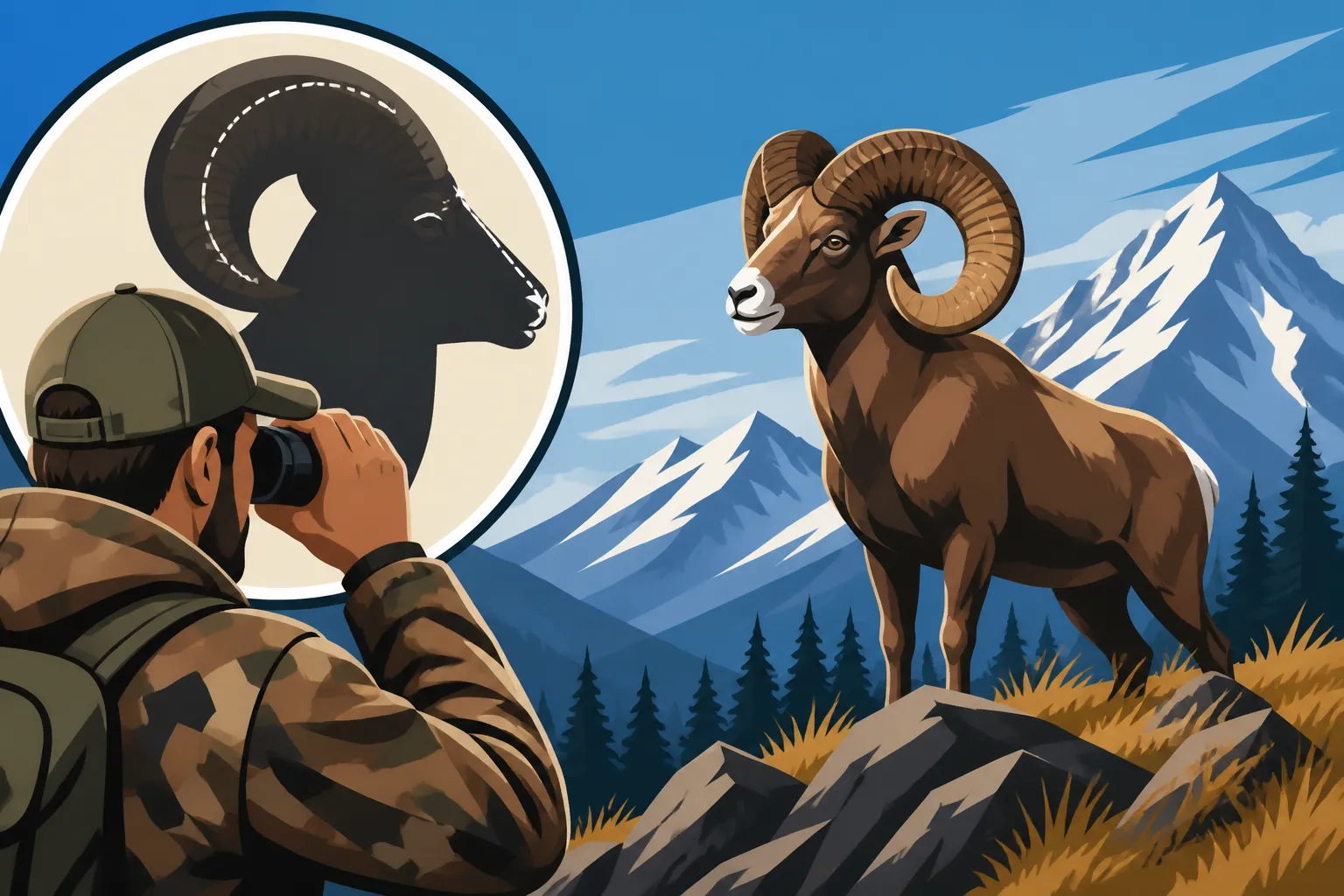
For most British Columbia wild sheep species, the legal requirement for harvesting a ram centers on a combination of age and horn development. The general rule is that a ram must be "full-curl" or "8 years old." While the 8-year-old rule is tricky to determine definitively in the field without extensive experience and clear viewing conditions, the "full-curl" standard provides a more tangible, albeit still challenging, benchmark. A ram is considered full-curl when the tip of its horn, if projected forward in a natural spiral, extends beyond the plane of its eye. Essentially, imagine a straight line from the back of the ram's eye, parallel to its face. If the horn tip crosses that line, it's considered full-curl.
These regulations are explicitly laid out in the annual British Columbia Hunting Synopsis, which every hunter should study thoroughly. For specific details on species, seasons, and regions, always refer to the most current regulations. It's also worth noting that some areas might have antler point restrictions or other specific rules, especially for species like the Bighorn. Understanding British Columbia's Species Licences and Tags is the first step to ensuring you're compliant with all regulations before you even step foot in sheep country.
The Conservation Imperative Behind the Full-Curl Rule
The full-curl rule isn't some arbitrary hurdle designed to make hunting harder; it's a vital conservation measure. Wild sheep populations, particularly those like Stone's Sheep and Bighorns, are sensitive and take a long time to recover from overharvesting. Historically, easily accessible rams were often targeted, leading to skewed age structures and fewer mature animals to pass on their genetics. By establishing a full-curl or 8-year-old minimum, the regulations ensure that younger rams have a chance to mature, contribute to the breeding pool, and develop impressive horns that truly represent the trophy potential of the species.
This approach helps maintain healthy breeding populations, allowing the older, stronger rams to disseminate their genes, contributing to overall herd health and robust horn growth in future generations. As hunters, we are stewards of the resource, and adhering to these rules is a critical part of ethical hunting and ensuring the longevity of these incredible animals for future generations. The challenge of Judging a Ram's Horn Curl and Age correctly becomes a testament to our commitment to conservation.
Mastering Visual Cues to Judge a Ram in the Field
When you're miles from the truck, perched precariously on a mountain slope, and a band of rams appears in your glass, every detail counts. Judging a full-curl ram requires a keen eye, patience, and a deep understanding of what constitutes a legal animal. It's not just about the curl, but a combination of factors that, when assessed together, paint a clearer picture of the ram's age and legality.
The Critical "Broom" and Eye Line Method
The most direct way to assess the full-curl status is by applying the "eye line" rule. Imagine a line extending from the back of the ram's eye, straight back, parallel to the ground or the ram's facial line. If the tip of the horn extends past this imaginary line, the ram is legal. This sounds simple, but it's incredibly difficult to do accurately, especially when the animal is moving, quartering away or towards you, or at extreme distances.
A "broomed" horn tip often indicates a mature ram. Brooming is when the horn tips break off naturally over time as the ram rubs its horns on rocks and trees. When a ram's horns are heavily broomed, the actual tip might be missing or worn down, making the full-curl assessment harder. In these cases, you still need to project where the horn would end if it wasn't broomed. However, a heavily broomed ram is often an older ram, which can aid in your assessment. Conversely, a ram with sharp, un-broomed tips is usually younger and less likely to be full-curl. When you're Glassing an Alpine Basin for Rams, always look for these critical details first.
Assessing Overall Horn Mass, Length, and Distinctive Features
While the curl is critical, it's not the only indicator. Horn mass and length are also excellent clues to a ram's age and maturity. Older rams typically have horns that are much thicker at the base and carry that mass well out through the length of the horn. Younger rams, even those with decent length, often have thinner, more "spindly" horns. A ram's horns grow throughout its life, with each year adding another growth ring. These rings, while hard to count from a distance, contribute to the overall mass and visual impression of age.
Look for a heavy, blocky appearance to the horns. They should look substantial, not delicate. For Stone's Sheep, the dark, rich colour of their horns can often deepen with age, and you might notice unique wear patterns or scarring from years of rubs and battles. What a Fannin Sheep Looks Like can offer specific insights into horn characteristics if you encounter them, but the principles of mass and robust development remain constant across species. Similarly, British Columbia's Rocky Mountain Bighorns and British Columbia's California Bighorn Range animals will have their own distinct horn characteristics, but the rule of thumb about mass and age holds true.
Beyond the Horns: Reading the Ram's Age Through Body Characteristics
Don't let "horn fever" blind you to the ram's overall appearance. A truly mature, legal ram will exhibit several other physical characteristics that signal its age. Look for:
- Body Size: Older rams are typically much larger and more heavily muscled than younger animals. They'll have a dense, barrel-chested appearance.
- Neck Thickness: A mature ram's neck will be notably thick and powerful, especially during the rut. Younger rams have leaner necks.
- Facial Features: Older rams often have a more grizzled, rugged look to their faces, with thicker muzzles and a heavier brow. Their eyes might appear smaller in proportion to their massive heads.
- Behavior: Mature rams often exhibit more confident and dominant behaviour within the herd. They might hold their ground longer when spooked or graze with a more unhurried demeanor.
Combining all these visual cues—horn curl, brooming, mass, length, body size, and facial features—gives you the best chance of making an accurate judgment. It's a holistic assessment, not just a single measurement.
| Feature | Young Ram (Illegal) | Mature Ram (Potentially Legal) |
|---|---|---|
| Horn Curl | Tip does not cross eye line (when projected). | Tip crosses or is behind the eye line (when projected). |
| Horn Tip | Usually sharp, pointed, and intact (not broomed). | Often broomed (worn down or broken off) from rubbing. |
| Horn Mass | Thinner at base, tapers quickly, looks delicate. | Thick at base, carries mass well throughout, looks substantial. |
| Body Size | Leaner, smaller frame, often appears more "athletic." | Large, heavily muscled, barrel-chested, powerful build. |
| Neck | Slimmer, less pronounced. | Very thick, muscular, especially during the rut. |
| Facial Features | Smoother, more youthful appearance. | Rugged, grizzled, thicker muzzle, heavier brow. |
| Behaviour | More skittish, often on the periphery of the herd. | Confident, often leads or holds central position within a group. |
Field Strategies for Confident Ram Identification
Successfully judging a ram in the field isn't just about knowing what to look for; it's also about how you look for it. The right gear, patience, and a methodical approach can make all the difference between a confident shot and a doubtful regret. British Columbia's sheep country demands the utmost respect for both the animal and the hunter's ethical responsibilities.
Effective Glassing Techniques and Optics for Sheep Country
Your optics are your most important tool in sheep hunting, perhaps even more so than your rifle. A high-quality spotting scope is absolutely indispensable. I'm talking about scopes with good light gathering capability, excellent clarity, and reliable zoom, like those from Swarovski, Kowa, or Zeiss. Paired with a sturdy, lightweight tripod, these will allow you to scrutinize distant rams for hours without fatigue. Binoculars (10×42 or 12×50 are common) are great for initial spotting and wider field of view, but the fine details of horn curl and brooming require a spotting scope.
When glassing, find a comfortable, stable position. Use your tripod to set up your spotting scope. Start by systematically sweeping the terrain, paying close attention to benches, slide paths, and any green feed. Once you spot sheep, don't rush. Watch them. Let them move. Observe them from multiple angles if possible. Utilize features from scouting tools like GoHunt, which can provide topographical maps and satellite imagery to help you predict where sheep might be holding and how to best position yourself for glassing. When you're Backpack Hunting British Columbia's Sheep Country, every ounce of gear counts, but quality optics are non-negotiable.
Overcoming Challenges: Judging at Distance and Difficult Angles
Sheep rarely stand perfectly broadside in ideal light. You'll often be judging them quartering away, bedded down, or at extreme distances. This is where patience and practice come in.
- Distance: The further the ram, the harder to judge. Use your rangefinder, but also remember that a ram that looks legal at 800 yards might appear much smaller and younger at 400. Try to close the distance slowly and carefully to get a better view.
- Angles: A ram quartering towards or away from you makes the eye-line judgment incredibly difficult. The horn might appear to curl tighter or looser than it actually is. Ideally, you want to see the ram broadside or slightly quartering. If you can't get an ideal angle, you must move to improve your position, even if it takes hours.
- Light Conditions: Early morning or late evening light can play tricks, obscuring details or creating long shadows. Midday, when the sun is high, often provides the best light for judging, though sheep are often bedded during these hours. Always be wary of shooting in low light unless you are 100% certain of the animal's legality.
Remember that British Columbia's mountains can be incredibly steep and unforgiving. Getting close can sometimes be a massive undertaking, but it's often necessary. Having the right Boots for Steep British Columbia Country is essential, as is a good fitness level to get into these remote areas.
The Ethical Imperative: When to Let a Ram Walk
This is perhaps the most critical piece of advice for any sheep hunter. If there is any doubt, let him walk. It's a simple, golden rule. The consequences of taking a non-legal ram are severe: heavy fines, loss of hunting privileges, confiscation of your rifle, and the deep personal disappointment of making an unethical harvest. No trophy is worth that.
It takes immense discipline to watch a beautiful ram walk away, especially after days or weeks of arduous hunting. But a true sheep hunter understands that the future of the resource and the integrity of the sport depend on our ethical choices. You might spend an entire season, or even several, pursuing sheep without pulling the trigger. That's part of the game. The hard-earned satisfaction comes from knowing you made the right decision, whether it was to take a legal ram or to let one go. Getting Meat Out of Steep British Columbia Country is a physical challenge, but making the ethical call is a mental one.
Species-Specific Details and Learning from Experience
While the general principles of judging full-curl apply across all sheep species, there are subtle differences to be aware of. Furthermore, the journey to becoming a proficient sheep hunter is one of continuous learning, often accelerated by mentorship and leveraging available resources.
Nuances of Judging Stone's Sheep Versus Bighorns
British Columbia offers opportunities for both thinhorn (Stone's, Fannin, Dall's) and bighorn (Rocky Mountain, California) sheep. While the full-curl rule generally applies, their horn growth patterns can appear different, influencing your field assessment.
- Stone's Sheep (and Fannin/Dall's): These thinhorn sheep typically have more open, sweeping curls. Their horns often curl back, then down, then forward, eventually sweeping up past the eye. Because their curl can be more "open," it might take longer for them to achieve the full-curl status than a bighorn of similar age. When you're Hunting Stone's Sheep in the Far North, you'll often see distinctively dark horns that are usually quite smooth.
- Bighorn Sheep (Rocky Mountain and California): Bighorns tend to have tighter, more compact curls that spiral close to their face. Their horns often appear heavier and more robust overall. The full-curl line can sometimes be harder to judge on a bighorn if it's tightly curled, as the tip might be pointing directly back at the eye rather than sweeping clearly past it. Look for the extreme tip, even if it's broomed, and project its trajectory. British Columbia's Rocky Mountain Bighorns are known for their impressive, massive headgear.
Regardless of species, the fundamental principle of projecting the horn tip past the eye line remains the same. The variations simply mean you need to pay even closer attention to the nuances of their specific horn architecture.
Leveraging Technology and Mentorship for Better Field Decisions
In today's hunting world, we have access to incredible tools that can significantly aid in preparation and decision-making. Digital mapping applications, for instance, are invaluable. Tools like GoHunt or OnX Hunt allow you to scout from home, identify potential sheep habitat, mark glassing knobs, and even study topographical features that might influence how rams move and where they bed. You can analyze terrain, plan your approach, and have a detailed map on your phone or GPS unit when you're in the field. This kind of preparation is crucial for Sheep and Goat Hunting in British Columbia.
Beyond technology, there's no substitute for human experience. If you have the opportunity, go on a sheep hunt with an experienced mentor or a licensed guide. Their seasoned eyes and years of practical knowledge are priceless. They can teach you the subtle tells, the common mistakes, and the critical patience required. Watching a skilled veteran glass and judge rams can dramatically shorten your own learning curve. Don't be afraid to ask questions, learn from their triumphs and challenges, and build your own mental library of what a legal ram truly looks like. Reading about Scoring a Ram for the Record Book also gives you a deeper appreciation for horn geometry and size.
Disclaimer
The information provided in this article is for general guidance and informational purposes only. Hunting regulations in British Columbia can change frequently. It is the hunter's sole responsibility to consult and adhere to the most current British Columbia Hunting and Trapping Regulations Synopsis, as well as all applicable federal and local laws, before engaging in any hunting activities. Always prioritize safety and ethical hunting practices.