Roosevelt and Rocky Mountain Elk in British Columbia
Hunting elk in British Columbia is a dream for many, but the sheer size and diversity of the province's landscapes, coupled with the elusive nature of these magnificent animals, can make planning and executing a successful hunt feel overwhelming. Whether you're chasing the massive Roosevelt elk on the rain-soaked coast or the regal Rocky Mountain elk in the interior valleys, understanding their distinct behaviours, preferred habitats, and the specific regulations that govern them is crucial. This comprehensive guide will break down everything you need to know about pursuing both Roosevelt and Rocky Mountain elk across British Columbia, offering insights to help you navigate these challenging yet rewarding hunts.
Understanding British Columbia's Elk Species
British Columbia is one of the few places in North America where you can find two distinct subspecies of elk, each presenting its own unique challenge and charm to the hunter. While they share the same genus, Cervus canadensis, their adaptations to vastly different ecosystems have shaped them into animals with noticeable differences in size, behaviour, and habitat preferences. This diversity is what makes elk hunting in BC so fascinating, but it also demands a tailored approach from anyone hoping to punch an elk tag.
A Tale of Two Elk: Roosevelt vs. Rocky Mountain
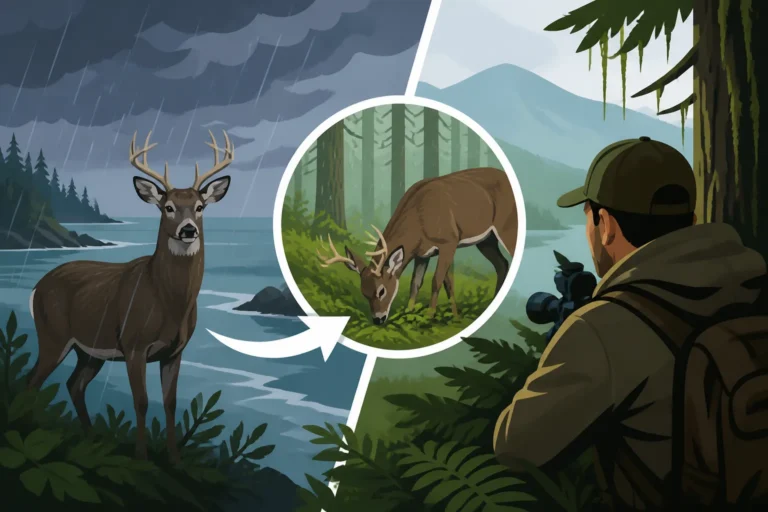
Imagine the dense, moss-draped coastal rainforests of Vancouver Island, where the air is perpetually damp and the undergrowth is thick as soup. That's the realm of the Roosevelt elk. These are truly coastal giants, known for their immense body size and impressive, heavy antlers. They thrive in rugged, wet environments, often found in challenging terrain that can test even the most seasoned hunter's endurance. Their sheer power and ability to vanish into the dense timber make them legendary.
Contrast this with the drier, more open landscapes of the Kootenays, the Peace River region, or the Cariboo, where you'll find the Rocky Mountain elk. While still impressive, they are typically a bit smaller in body than their coastal cousins, but renowned for their broad, towering antler racks. These elk often inhabit a mosaic of open grasslands, timbered slopes, and river bottoms, presenting a different kind of hunting puzzle. Their social structure and vocalizations, particularly during the rut, are hallmarks of the species, and something every hunter dreams of experiencing.
Historical Presence and Population Status
Both elk subspecies have a rich history in British Columbia, though their populations have seen significant fluctuations over the centuries. Prior to European settlement, elk were widespread, but overhunting and habitat loss in the late 19th and early 20th centuries led to severe declines. Roosevelt elk, for example, were nearly extirpated from Vancouver Island by the early 1900s. Thankfully, conservation efforts, including reintroductions and strict management, have helped many herds rebound. You can dive deeper into these historical patterns and current population numbers by exploring resources like the province's wildlife reports or even online mapping tools such as GoHunt, which often highlight management unit specifics.
Today, Roosevelt elk populations are primarily concentrated on Vancouver Island and along the central and north coasts, where suitable old-growth and second-growth forests provide their preferred habitat. While their numbers are stable or increasing in many areas, their elusive nature and the challenging terrain they inhabit mean hunting opportunities often remain limited and highly sought after. Rocky Mountain elk have seen even more dramatic restoration success, expanding from stronghold regions like the East Kootenays into new territories across the interior, including the Peace Region and parts of the Thompson-Okanagan. This expansion has led to more varied hunting opportunities, from general open seasons in some areas to highly coveted Limited Entry Hunting (LEH) draws in others. Understanding this history helps underscore the incredible conservation work that has gone into making British Columbia a premier elk hunting destination.
The Mighty Roosevelt Elk: Coastal Giants
When you think of Roosevelt elk, picture an animal built for the damp, dense, and demanding environment of the Pacific Northwest rainforests. These are truly incredible creatures, not just in their physical stature but in their resilience to some of North America's harshest weather conditions. Hunting them is an experience unlike any other, demanding a specific skill set and a hefty dose of determination.
Physical Characteristics and Size
Roosevelt elk are recognized as the largest subspecies of elk in North America, a fact that becomes immediately apparent when you encounter one in its natural habitat. Mature bulls can stand over five feet tall at the shoulder and weigh upwards of 1,000 pounds, with some records pushing even higher. Their bodies are deep and robust, covered in a coarse, dark brown coat that provides excellent camouflage in the shadows of old-growth timber. Their antlers, while perhaps not always as wide as some Rocky Mountain elk, are incredibly heavy and dense, forming thick main beams with numerous points. This mass is a defining feature, and judging a mature bull often comes down to assessing the sheer heft of his headgear rather than just the number of points. Learning How Heavy a Roosevelt Elk Bull Gets and appreciating their size is key to preparing for a hunt.
The sheer scale of a Roosevelt elk means that field dressing and packing out a harvested animal is a monumental task, often requiring multiple trips or a substantial crew. This is a critical consideration for any hunter venturing into the backcountry for these giants. The terrain they inhabit, combined with their weight, can turn a successful hunt into an epic endurance challenge, something many veteran hunters can attest to with weary smiles.
Coastal Rainforest Habitat
Roosevelt elk are intrinsically linked to the temperate rainforests of British Columbia's coast, with strongholds on Vancouver Island and parts of the mainland coast. These habitats are characterized by towering ancient trees, thick undergrowth of salal, ferns, and devil's club, and a constant moisture that shapes the entire ecosystem. They prefer a mix of dense cover for bedding and security, interspersed with openings like clearcuts, avalanche chutes, and riparian areas where they can browse on lush vegetation. Accessing these areas can be incredibly difficult, often requiring extensive hiking through challenging terrain, navigation through dense bush, or even boat access to remote inlets.
The coastal environment also means fluctuating weather conditions, with rain and fog being constant companions. Hunters often find themselves navigating through a perpetually damp landscape, where tracking can be a nightmare on wet moss and visibility can change in an instant. Understanding the intricacies of Hunting British Columbia's Coastal Rain is not just about gear, but also about adapting your entire strategy to this unique climate. These elk are masters of their environment, using the dense cover and broken terrain to their advantage, making every stalk a true test of stealth and patience.
Behavioural Traits and Rut Activity
Roosevelt elk display specific behavioural traits adapted to their coastal home. They are often more solitary than their Rocky Mountain cousins, particularly the older bulls, who may range alone for much of the year, only joining herds during the breeding season. Their vocalizations, while still powerful bugles, can sometimes sound a bit different — perhaps a touch deeper or more guttural, tailored to carry through the dense forest. When the rut peaks, usually in late September into early October, the coastal forests come alive with the sounds of their challenges.
Hunting during the rut for Roosevelt elk means listening for those tell-tale bugles in the misty mornings, then attempting to pinpoint the location of a bull in incredibly thick cover. It's a game of cat and mouse where the elk often has the upper hand, capable of moving silently through terrain that a human finds nearly impenetrable. Calling them in can be effective, but their wariness, especially in areas with hunting pressure, requires impeccable calling skills and an understanding of their responses. For many, hearing a bull Bugling Roosevelt Elk on the Coast is the highlight of their hunting year, regardless of whether a tag is filled. Their incredible senses and ability to disappear make every encounter with a Roosevelt bull a truly memorable one.
Rocky Mountain Elk: Interior Royalty
Shifting from the damp coastal rainforests, we move eastward into the majestic mountains and sprawling valleys of British Columbia's interior, the domain of the Rocky Mountain elk. These elk, while perhaps slightly smaller-bodied than their Roosevelt cousins, are no less impressive and offer a completely different hunting experience marked by open country, challenging elevations, and often large, vocal herds.
Physical Characteristics and Size
Rocky Mountain elk are undeniably majestic animals. Mature bulls typically weigh between 600 and 800 pounds, though some can certainly exceed that. They are generally lighter in colour than Roosevelt elk, with a tan body, darker brown legs and neck, and a distinctive light rump patch. Their antlers are often wider and taller than those of Roosevelt elk, with long, elegant main beams sweeping back and upward, culminating in multiple points. This impressive rack is what often draws hunters, with many bulls sporting classic six-point configurations, though variations are common. The sheer spread and height of a Rocky Mountain elk's antlers are truly a sight to behold, making them one of North America's most iconic big game animals.
While still a significant animal to pack out, their generally lighter body weight compared to a Roosevelt can be a small mercy in the steep, rugged terrain they inhabit. However, the distances covered and the elevation gains in the interior mountains more than make up for any perceived ease. Hunters often focus on the antler characteristics when targeting a bull, making antler scoring a key part of their evaluation process in the field.
Interior Valley and Mountain Habitat
Rocky Mountain elk thrive in the diverse landscapes of interior British Columbia, from the open grasslands and sagebrush benches of the Okanagan and Thompson regions to the dense timber and alpine meadows of the Kootenays and Peace River country. They are adaptable animals, favouring a mosaic of habitats that provide forage, water, and cover. This often includes deciduous river bottoms, coniferous forests on mountain slopes, and large, grassy clearings or farm edges. The vastness of their range means that hunting conditions can vary dramatically from one region to another, even within the same season.
For instance, hunting in the East Kootenays might involve navigating steep, heavily timbered drainages and glassing expansive hillsides, while hunting in the Peace Region might see you focusing on agricultural interfaces and large cutblocks. The key here is adaptability and a good understanding of the specific management unit you're hunting. Using tools like GoHunt can provide invaluable insights into topographical features and habitat types within a given area. The presence of water sources, south-facing slopes for wintering, and secure bedding areas are all crucial factors that influence where these elk will be found.
Rutting Behaviour and Herd Dynamics
The rut for Rocky Mountain elk is an unforgettable spectacle, typically peaking from mid-September to early October. During this time, the bulls become incredibly vocal, filling the air with their distinctive, piercing bugles and challenging growls. They establish harems of cows, fiercely defending them from rival bulls, leading to dramatic displays of dominance, including antler clashes. This intense period of activity offers some of the most exciting hunting opportunities.
Rocky Mountain elk tend to live in larger herds than Roosevelt elk, particularly outside of the breeding season. These herds can be quite dynamic, constantly moving between feeding and bedding areas. Understanding these herd movements and being able to interpret their vocalizations are critical skills for a successful hunt. Whether you're trying to call in a bull or waiting for a herd to move into an accessible position, the rut is a high-energy, high-stakes game. Experienced hunters spend countless hours refining their calling techniques, aiming to mimic the various sounds of the herd to entice a bull within range. You can learn more about Calling Moose in the Rut or, for elk, apply similar principles to your calling strategy, though elk calls are distinctly different. The thrill of having a bull respond to your call is a core part of the Rocky Mountain elk hunting experience.
Habitat and Range: Where the Elk Roam
Understanding the specific habitats and geographical ranges of both Roosevelt and Rocky Mountain elk is paramount to any successful hunt in British Columbia. These animals are deeply intertwined with their environments, and knowing where to look and why they're there can save you countless hours of unproductive searching. The diverse topography of BC means that "elk country" looks vastly different depending on which subspecies you're pursuing.
Roosevelt Elk Strongholds
The heartland of Roosevelt elk in British Columbia is undoubtedly Vancouver Island. Here, the dense, ancient rainforests and regenerating clearcuts provide ideal conditions. Areas around Campbell River, Port Alberni, and the more remote northern reaches of the island are known for supporting healthy populations. Beyond Vancouver Island, smaller, more fragmented populations exist along the mainland coast, often in remote inlets and river valleys that empty into the Pacific. These coastal herds are generally found in extremely rugged, heavily timbered terrain, making them exceptionally challenging to access and hunt.
These elk rely heavily on a mosaic of old-growth forest for thermal cover and security, and younger, regenerating clearcuts for forage. The constant rainfall keeps the vegetation lush, providing year-round food sources. However, this also means visibility can be severely limited, and tracking becomes an art form in the soft, wet ground. When Hunting Vancouver Island Blacktail in Second Growth, you'll notice similar challenges regarding dense cover, but the sheer size and power of a Roosevelt elk in that environment elevate the difficulty considerably. Access points are often limited to logging roads, which can be gated, or require boat access to reach truly remote territories.
Rocky Mountain Elk Territories
Rocky Mountain elk are much more widespread across the interior of British Columbia. Their largest concentrations are found in the East Kootenays, a region synonymous with robust elk herds, particularly around Cranbrook, Fernie, and the Elk Valley. These areas feature expansive national forests, private agricultural lands, and numerous river drainages, offering a mix of open meadows, timbered slopes, and riparian zones. Another significant population resides in the Peace River Region in the northeastern part of the province, where agricultural lands meet vast boreal forests, creating excellent habitat for elk.
Beyond these primary strongholds, increasing populations are also found in the Cariboo-Chilcotin, Thompson-Okanagan, and even parts of the Omineca regions. These interior habitats typically experience more pronounced seasonal changes than the coast, with hot, dry summers and cold, snowy winters. Elk will adjust their movements according to these seasons, often moving to higher elevations in the summer and descending to lower, more sheltered winter ranges as snow accumulates. Hunting Rocky Mountain Elk in British Columbia requires an understanding of these seasonal movements and the diverse topography of the interior.
Migration Patterns and Seasonal Movements
Both subspecies exhibit seasonal movements, though the triggers and distances can vary greatly. Roosevelt elk on the coast often move vertically, shifting between lower elevation winter ranges and higher elevation summer feeding grounds, though these movements can be relatively short distances compared to their interior cousins due to the less extreme temperature swings. They will seek out areas with less snow accumulation in winter and new growth in spring.
Rocky Mountain elk, especially those in mountainous regions, undertake more pronounced migrations. In spring, they'll often follow the green-up, ascending to alpine and subalpine meadows as the snow melts. In the fall, as hunting seasons intensify and snow begins to fall at higher elevations, they'll gradually move down to their traditional wintering grounds in valley bottoms, south-facing slopes, or agricultural lands. Understanding these patterns is critical for successful hunting. For example, knowing Why Mule Deer Move to Winter Range can offer similar insights into elk movements in shared habitats. Tools like GoHunt can be invaluable for pinpointing historical migration corridors and understanding how elk utilize different areas throughout the year. These seasonal shifts create distinct hunting challenges and opportunities, requiring hunters to adapt their strategies throughout the season.
Key Differences and Identification
For the uninitiated, an elk is an elk. But for those pursuing these magnificent animals in British Columbia, understanding the nuanced differences between Roosevelt and Rocky Mountain elk is vital. Not only does it inform your hunting strategy, but it's also crucial for identifying which subspecies you're observing, especially in regions where their ranges might potentially overlap or where misidentification could lead to regulation violations.
Antler Configuration and Body Mass
The most striking and often debated difference between the two subspecies lies in their antlers and overall body mass. As previously discussed, Roosevelt elk are generally larger and heavier-bodied, built like tanks to navigate their dense, wet environment. Their antlers tend to be dense and robust, with thick main beams and often a wider palmation towards the crown, creating a somewhat "bushier" or more compact look. They might not always have the impressive width of a Rocky Mountain bull, but their sheer mass is undeniable.
Rocky Mountain elk, conversely, typically have a more athletic build and are lighter in body weight. Their antlers are often characterized by impressive length, height, and width, with long, slender main beams that sweep majestically backward. The points (tines) are usually well-defined and often longer than those of a Roosevelt. When you're out in the field, especially with glass, pay close attention to the antler mass versus the overall spread and length. For a more direct comparison of their physical traits, consider Why Roosevelt Elk Are Bigger Bodied and how this relates to their specific habitat. This distinction is not just aesthetic; it speaks to the evolutionary pressures each subspecies has faced.
Vocalizations and Rutting Sounds
While both subspecies bugle during the rut, there are subtle differences in their vocalizations that experienced elk hunters learn to recognize. Roosevelt elk bugles often sound deeper, more guttural, and perhaps a bit "raspier," reflecting their larger body size and the dense, sound-absorbing environment they inhabit. Their chuckles and grunts can also be quite powerful, carrying through the thick timber.
Rocky Mountain elk bugles, while incredibly loud and far-reaching, tend to be higher-pitched and more drawn out, often ending with a series of sharp chuckles. Their vocalizations are designed to carry across open valleys and through varied terrain, establishing dominance and attracting cows over long distances. If you've spent time listening to different elk calls online or in person, you'll start to pick up on these nuances. During the peak of the rut, the soundscapes of a coastal inlet versus an interior mountain valley are distinctly different, a testament to the diverse acoustic environments these animals call home. Learning to differentiate these calls is a valuable skill, particularly if you're engaging in Calling Moose in the Rut, which requires an entirely different set of vocalizations, but similar listening acuity.
Habitat Cues for Species Identification
Perhaps the most reliable way to identify which elk subspecies you're observing (besides specific physical traits) is by their habitat. If you're deep in the temperate rainforests of Vancouver Island, surrounded by giant cedars, firs, and a lush understory, you are almost certainly looking at a Roosevelt elk. Their presence is a tell-tale sign of this unique coastal ecosystem.
Conversely, if you're glassing an open, timbered hillside in the Kootenays, or spotting animals along an agricultural field edge in the Peace River country, you are in Rocky Mountain elk territory. The vegetation, topography, and climate all provide strong clues. While some peripheral overlap might occur in certain transitional zones, generally, these species stick to their established environmental niches. When using mapping platforms like GoHunt, paying attention to ecological zone overlays can further aid in this identification, helping you target your efforts effectively. This habitat-specific knowledge is not just academic; it's a practical tool for every hunter in British Columbia.
Hunting Strategies for BC Elk
Hunting elk in British Columbia is an undertaking that requires immense physical and mental preparation, a deep understanding of the animals, and a flexible approach to strategies. Given the distinct habitats and behaviours of Roosevelt and Rocky Mountain elk, your tactics will need to be tailored to the specific subspecies and terrain you're targeting. There's no one-size-fits-all solution, and what works on the coast will likely fall flat in the interior, and vice-versa.
Coastal Roosevelt Elk Tactics
Hunting Roosevelt elk on the coast is often described as a grueling physical challenge that blends spot-and-stalk with still-hunting in extremely dense cover. Given their preference for thick timber and mountainous terrain, road hunting is rarely an option. Instead, expect to cover vast distances on foot, often through regenerated clearcuts, old-growth forests, and steep drainages. Early morning and late evening are crucial, as elk move between bedding and feeding areas. One effective strategy is to locate fresh sign—tracks, scat, rubs, and wallows—and then systematically still-hunt the thickets. Patience is your greatest ally here, as visibility can often be limited to mere yards.
Calling can be highly effective during the rut (late September into early October), but it requires skill and stealth. A bull's bugle will sound much closer than it actually is in the dense forest, and they are incredibly adept at circling downwind. Setting up quickly and quietly after a response, ensuring the wind is in your favour, is paramount. Many hunters will work slowly into the wind, stopping frequently to call and listen, hoping to entice a bull to investigate. Backpack hunting deep into remote areas can increase your chances of finding less pressured animals, but demands top physical conditioning and extensive wilderness skills. Remember, packing out a massive Roosevelt bull from tough terrain is a Herculean task, so planning for extraction is just as important as the hunt itself.
Interior Rocky Mountain Elk Tactics
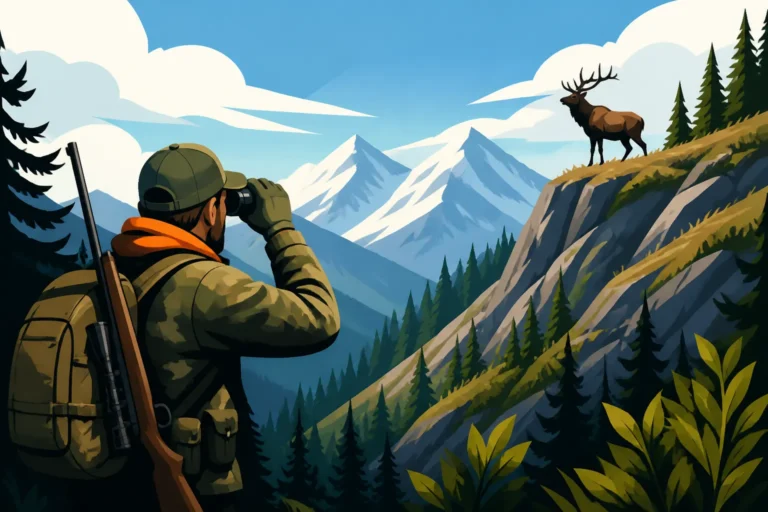
For Rocky Mountain elk in the interior, hunting strategies often shift towards a more open-country approach, though dense timber hunting is still very much a part of it. Glassing is an incredibly effective technique, especially in regions with large valleys and expansive slopes like the Kootenays or Peace River country. Spend hours patiently scanning hillsides, clearcuts, and meadows at first light and last light with high-quality binoculars and spotting scopes. Elk will often be visible feeding in open areas before retreating to timber for bedding during the day. Consider Glassing an Interior Hillside for Mule Deer as a foundational skill that directly translates to elk hunting.
During the rut, calling strategies are exceptionally popular and often highly successful. Bulls are vocal and responsive, and a well-executed bugle or cow call can bring them right into your lap. However, over-calling or poor setup can spook wary animals. It's often effective to set up with a caller and a shooter, with the shooter positioned strategically while the caller draws the bull's attention. Spot-and-stalk is also very effective, particularly outside of the rut or when a bull is located feeding in a vulnerable position. This requires careful wind assessment, silent movement, and an intimate knowledge of the terrain. Hunters often use logging road networks for access, then proceed on foot to reach prime elk habitat. Understanding Hunting Rocky Mountain Elk in British Columbia will invariably involve a combination of these tactics.
Scouting and Preparation
Regardless of which elk you're chasing, thorough scouting and preparation are non-negotiable. This isn't a hunt you can wing. Start long before the season by studying maps (topographic, forest service, and satellite imagery) to identify potential access points, bedding areas, feeding zones, and water sources. Online resources like GoHunt can provide valuable data on historical harvest rates, terrain features, and even recent wildfire impacts that might influence elk movement.
Physical fitness is critical for both subspecies, but especially for the coastal Roosevelt hunts where steep, brushy terrain and constant rain can drain your energy quickly. Practice shooting from various field positions, as shots can be long in open country or quick and close in the timber. Familiarize yourself with all regulations for your specific management unit, including antler restrictions, season dates, and reporting requirements. Ensure your gear—backpack, navigation tools, first-aid kit, and meat bags—is up to the task. Remember, a successful elk hunt begins months before you ever step foot in the woods.
Season Dates, Tags, and Regulations
Navigating the regulations for elk hunting in British Columbia can feel like a complex puzzle, especially with the provincial system's mix of General Open Seasons (GOS) and Limited Entry Hunting (LEH) draws. Each subspecies and even different regions within the province have their own specific rules, season dates, and tag requirements. A solid understanding of these regulations is absolutely essential to ensure a legal and ethical hunt.
General Open Seasons and LEH Opportunities
British Columbia employs a dual system for elk hunting. General Open Seasons allow licensed resident hunters to pursue elk within specific dates and management units, often with antler restrictions (e.g., spike-fork, 3-point, or 6-point minimums). These GOS opportunities are typically found in areas with robust and widespread populations, such as parts of the Kootenays or the Peace Region for Rocky Mountain elk. While GOS offers more accessible hunting, these areas often experience higher hunting pressure.
However, many of British Columbia's premier elk hunting opportunities, especially for mature bulls of either subspecies, are allocated through the Limited Entry Hunting (LEH) draw system. The LEH system is designed to manage harvest pressure, distribute hunting opportunities, and protect specific age classes of animals. British Columbia's Limited Entry Hunting Draws are highly coveted, with some zones having extremely low odds of success, particularly for trophy bulls. Applying for an LEH draw requires careful research into specific zones, species, and antler requirements. Many of the top Roosevelt elk hunts on Vancouver Island, for example, are LEH-only, and for good reason—these are world-class animals that require careful management.
Specific Regional Regulations
It's impossible to overstate the importance of checking the most current British Columbia Hunting and Trapping Synopsis for the specific region and management unit you plan to hunt. Regulations can vary wildly. For instance, antler restrictions for Rocky Mountain elk might be different in the Kootenays compared to the Peace Region. Some zones might be "Any Bull" LEH hunts, while others might have a "4-point or greater" restriction. Roosevelt elk seasons on Vancouver Island will have different dates and restrictions than Rocky Mountain elk seasons in the Cariboo.
Furthermore, bowhunting and muzzleloader seasons often have different, usually earlier, dates than general rifle seasons, providing unique opportunities. Always pay close attention to the specific dates for British Columbia elk season in your chosen area. The province is divided into nine administrative regions, and each region has its own set of detailed regulations. Ignoring these specifics can lead to serious fines or loss of hunting privileges, so take the time to read the synopsis thoroughly.
Tagging and Compulsory Reporting
Once you've successfully harvested an elk, adhering to tagging and reporting procedures is critical. Every elk hunter in British Columbia must purchase a specific elk tag before heading into the field. This tag must be immediately attached to the animal after harvest, clearly indicating the date and time of kill. Failing to tag an animal promptly is a serious offence. You can find information on British Columbia Deer and Elk Tags to understand the costs and requirements involved.
Additionally, British Columbia has compulsory reporting requirements for elk, much like for moose and other species. This means that within a specified timeframe (typically 30 days of harvest), you must submit a harvest report to the provincial government, either online or through designated vendors. This report provides vital data for wildlife managers to monitor population health and adjust future regulations. In some cases, specific elk (like certain LEH draws) may also require compulsory inspection of the head or hide by a provincial conservation officer. Always check if your specific hunt has this additional requirement. Diligently fulfilling these responsibilities is a fundamental part of being a responsible hunter in British Columbia.
Conservation and Future of BC Elk
British Columbia’s elk populations are a conservation success story, especially considering the severe declines faced in the early 20th century. However, maintaining and enhancing these populations for future generations of hunters and wildlife enthusiasts requires ongoing, diligent effort. Hunters play a crucial role, not just through their license fees and tag purchases, which directly fund wildlife management, but also through ethical practices and advocacy for habitat preservation.
Management Challenges and Successes
British Columbia's wildlife management efforts have successfully brought elk back from the brink. Reintroduction programs, such as those that brought Rocky Mountain elk back to the Peace River region and bolstered Roosevelt elk on Vancouver Island, have been instrumental. The LEH system, while challenging for hunters to draw, is a key tool for managing harvest pressure and ensuring sustainable populations of mature animals, especially in sensitive areas or for specific trophy opportunities. For example, Roosevelt Elk Draw Rules are strict for a reason: to protect and enhance those unique coastal herds.
Despite these successes, challenges persist. Habitat fragmentation due to logging, urban development, and resource extraction remains a concern. Increasing road densities can lead to higher human-elk encounters and poaching. Climate change, with its impacts on vegetation and water availability, also poses a long-term threat. Chronic Wasting Disease (CWD), while not yet detected in British Columbia, is a growing concern in neighbouring jurisdictions, prompting proactive surveillance programs. Managing human-wildlife conflict, particularly where elk range near agricultural lands, also requires ongoing attention and creative solutions.
The Role of Hunters in Conservation
Hunters are, and always have been, front-line conservationists. In British Columbia, a significant portion of hunting license and tag fees goes directly into funding wildlife research, habitat improvement projects, and enforcement of regulations. By adhering to ethical hunting practices, respecting bag limits, and accurately reporting harvests, hunters provide crucial data that informs management decisions. Furthermore, hunter organizations actively participate in habitat restoration, acquire and protect crucial winter range, and lobby for sound wildlife policies.
Every time you buy a license or an elk tag, you are contributing directly to the health of British Columbia's wildlife populations. Beyond financial contributions, the boots-on-the-ground presence of hunters in the backcountry often leads to the reporting of poaching activities or habitat concerns, acting as additional eyes and ears for conservation officers. This commitment to stewardship is vital for ensuring that future generations can experience the thrill of Elk Hunting in British Columbia.
Outlook for Future Elk Hunting
The future of elk hunting in British Columbia looks promising, largely due to adaptive management strategies and the dedication of conservationists and hunters alike. While some regions may see adjustments to seasons or quotas to address localized issues, the overall trend suggests stable to increasing populations for both Roosevelt and Rocky Mountain elk in most of their core ranges. Continued habitat protection, responsible resource development, and ongoing research will be key to sustaining these trends.
For hunters, this means that while opportunities will likely remain competitive, particularly for LEH draws, the chance to pursue these magnificent animals will endure. The province is committed to robust wildlife management, which includes providing sustainable hunting opportunities. As hunters, it's our responsibility to stay informed, participate in conservation efforts, and pass on a strong ethical tradition to those who follow. The legacy of elk in British Columbia is a testament to what dedicated conservation can achieve, and it's a future we all have a part in shaping.
Disclaimer
Please remember that hunting regulations, season dates, and specific requirements for British Columbia are subject to change. Always consult the most current British Columbia Hunting and Trapping Synopsis issued by the provincial government, as well as any regional updates, before planning or engaging in any hunting activities. This guide is for informational purposes only and should not be considered a substitute for official regulatory documents.