Coastal Wolves and What They Eat
For hunters and nature enthusiasts exploring the wild, rain-soaked edges of British Columbia, understanding the intricate web of predator and prey can feel like trying to decipher an ancient, whispered secret. Many of us are used to thinking of wolves as strictly terrestrial hunters, focused on deer, moose, and elk, but the coastal wolves of B.C. offer a fascinating, often misunderstood, deviation. This guide aims to pull back the misty veil, revealing the truly unique diet and lifestyle of these remarkable animals and how they navigate their marine-rich territories.
The Unique World of British Columbia's Coastal Wolves
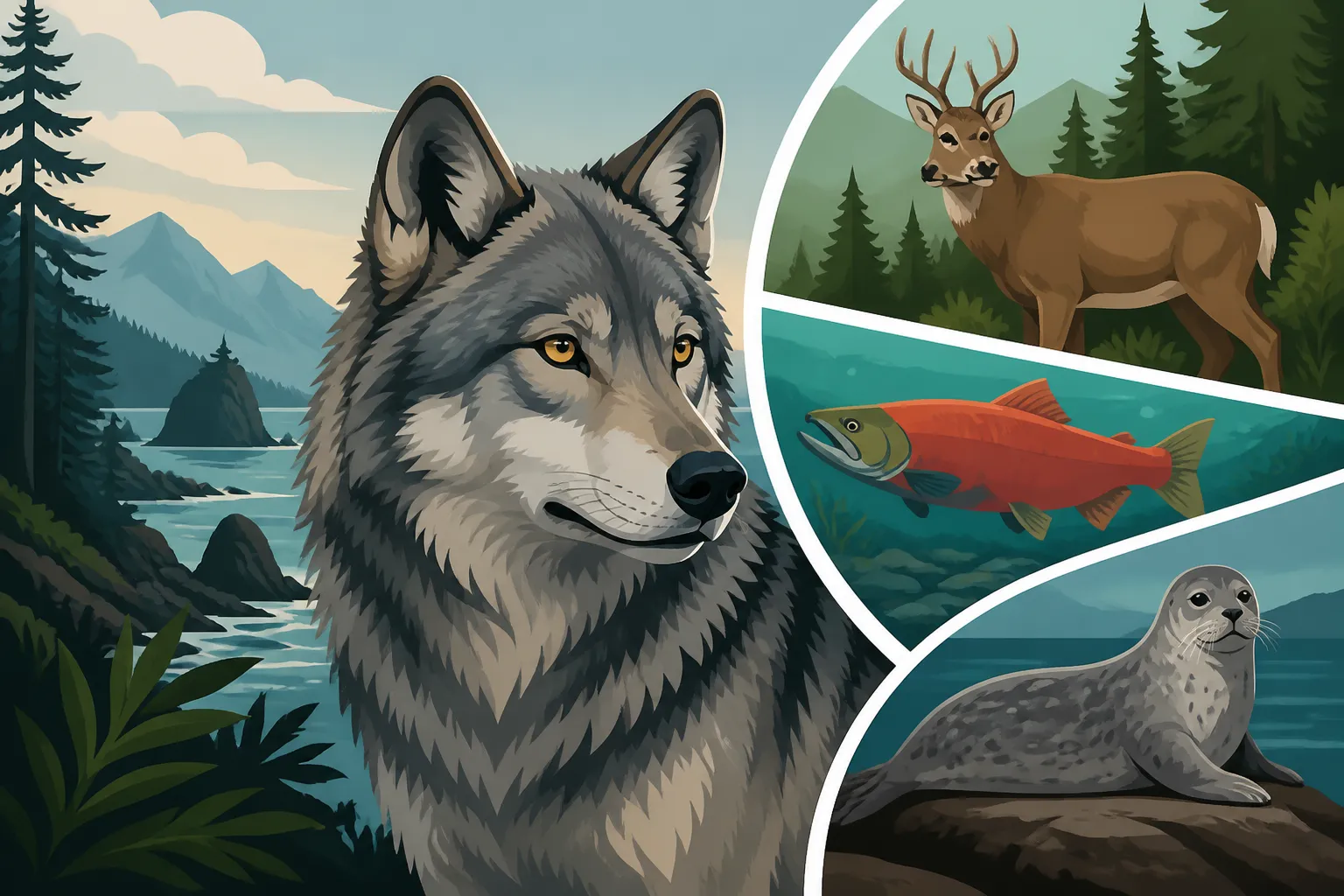
When you picture a wolf, you might imagine vast boreal forests or expansive plains, but British Columbia's coast presents a dramatically different backdrop. Here, the temperate rainforest meets the Pacific Ocean, creating a world of dense timber, winding fjords, and countless islands. This isn't your typical wolf country, and the wolves that thrive here are far from typical themselves. These are the wolves of the Great Bear Rainforest, often referred to as "sea wolves," and their existence is deeply entwined with the rhythm of the ocean.
Imagine navigating a labyrinth of inlets in a small boat, the air thick with the smell of salt and cedar. This is the home of the coastal wolf, an animal that has adapted its entire life to this amphibious environment. Unlike their interior cousins, these wolves are accomplished swimmers, often traversing significant stretches of saltwater between islands, a feat that would astound anyone unfamiliar with their capabilities. Their physical adaptations, such as slightly smaller size and a more sleek build compared to some inland populations, reflect this marine-centric existence. You won't find them roaming wide-open plains; instead, their territories are often shaped by shorelines and tide charts as much as by mountain ranges. This unique habitat forces them to diversify their diet in ways that might surprise those who only know about traditional wolf predation.
Unpacking the Coastal Wolf Diet: More Than Just Deer
The diet of British Columbia's coastal wolves is a masterclass in opportunistic feeding and ecological adaptation. While they absolutely hunt land mammals, their true distinction lies in how heavily they rely on marine and intertidal resources. It’s a far cry from the purely terrestrial hunting habits often assumed for wolves, and it shapes everything from their population dynamics to their hunting techniques.
Salmon: The Coastal Wolf's Seasonal Feast
Perhaps the most iconic and significant component of the coastal wolf's diet is salmon. When the salmon runs hit the rivers and streams of the coast, it's an all-you-can-eat buffet for these intelligent predators. From late summer through fall, these wolves congregate along the waterways, expertly fishing for sockeye, pink, chum, coho, and Chinook salmon. They'll wade into shallow waters, pin fish with their paws, or snatch them directly from the current. It's a behaviour you'd typically associate with bears, not wolves, and it provides an incredible protein and fat boost just before the leaner winter months. The abundance of salmon allows wolf packs to sustain larger numbers and provides critical nutrition for pups. For those interested in what salmon runs do to bear behaviour, it’s clear these aquatic migrations are a lifeblood for many coastal species, not just bears.
Marine Mammals and Intertidal Treats
Beyond salmon, coastal wolves are incredibly adept at utilizing other marine resources. They've been observed scavenging carrion like deceased whales or seals washed ashore, providing massive, infrequent windfalls of food. But their engagement with the ocean isn't purely opportunistic scavenging; they actively hunt smaller marine mammals and exploit intertidal zones. Think about a wolf nosing through barnacle-encrusted rocks at low tide, digging for crabs, clams, or even small marine invertebrates. This foraging behavior demonstrates an extraordinary flexibility in their feeding habits. They are truly masters of their environment, capable of finding sustenance where many other predators would simply go hungry. Understanding these complex feeding patterns is crucial for anyone using tools like GoHunt to scout and predict game movement, as the presence of accessible marine resources can influence wolf territories and, consequently, deer populations.
Terrestrial Game: Still a Core Component
While their marine diet is fascinating, it doesn't mean coastal wolves ignore land-based prey. Black-tailed deer, specifically the Columbian blacktail on the mainland and Sitka blacktail on Vancouver Island and Haida Gwaii, remain a significant food source, especially outside of salmon season or in areas with fewer fish-bearing streams. These deer thrive in the dense, wet forests and along the edges of clearcuts, providing a consistent, albeit challenging, food source. Wolves will employ classic pack hunting strategies, often targeting the young, old, or infirm deer. Hunters familiar with What a Coastal Blacktail Weighs know these deer are substantial animals, offering a good return for a successful hunt.
However, the dynamics are different from interior ecosystems where ungulates might be the primary prey year-round. Along the coast, the wolves shift their focus seasonally. When salmon are running, deer might get a temporary reprieve, allowing their populations to potentially recover or disperse. In winter, or when fish resources are scarce, the pressure on deer increases. Other terrestrial animals like beavers, raccoons, and even snowshoe hares can supplement their diet, showcasing their adaptability to whatever the local ecosystem provides. The dense coastal cover, which makes Hunting British Columbia's Coastal Rain a unique challenge for humans, also offers ample hiding spots for both predator and prey.
Here’s a simplified breakdown of typical coastal wolf diet components:
| Diet Component | Primary Season | Importance | Notes |
|---|---|---|---|
| Salmon | Late Summer – Fall | High; crucial fat/protein boost | Provides energy for winter, supports larger pack sizes |
| Black-Tailed Deer | Year-round | High; staple prey when salmon are unavailable | Hunted individually or in packs; important in leaner months |
| Marine Mammal Carrion | Opportunistic | Moderate; significant but infrequent food source | Washed-up whales, seals, sea lions provide large protein dumps |
| Intertidal Invertebrates | Year-round | Low to Moderate; consistent supplemental foraging | Crabs, clams, mussels; important during low tide |
| Small Mammals (Beaver, Raccoon) | Year-round | Low; opportunistic filler food | Taken as available; less energy return than larger prey |
| Birds (Waterfowl, Gulls) | Opportunistic | Very Low; incidental prey or scavenged | Less common, but coastal wolves are not picky scavengers |
Hunting Strategies and Ecological Impact
The coastal wolf's unique diet is mirrored by their distinct hunting strategies and profound ecological impact. Their methods are shaped by the dense rainforest, the rugged coastline, and the seasonal availability of their diverse food sources. And, in turn, their presence heavily influences the health and balance of this delicate ecosystem.
Adapting to a Watery World
Unlike wolves in more open terrain, these coastal predators often use the water to their advantage. They'll swim across channels to intercept deer or to access prime fishing grounds. Their intimate knowledge of tides and currents is evident as they move between islands, often choosing routes that minimize effort or maximize chances of an ambush. When hunting deer, they utilize the thick undergrowth and the sound-dampening qualities of the rainforest to conduct stealthy pursuits. A hunter needs to be acutely aware of how quiet it can be in the rainforest, and how quickly an animal can disappear into the foliage, making Reading Blacktail Sign in Wet Ground an essential skill. They might also corner deer against the water, forcing them into a disadvantageous position.
The pack dynamics, while still fundamental, can also vary. During peak salmon runs, multiple packs or even individual wolves might disperse to capitalize on the fish, showcasing a temporary shift from strict pack cohesion for hunting. Once the salmon recede, larger packs might reform to tackle larger prey like deer more efficiently. Their movements are often predictable when it comes to seasonal resources, a point which tools like GoHunt can help hunters understand for game patterns.
The Role of a Coastal Keystone Predator
Coastal wolves are considered a keystone species, meaning their presence has a disproportionately large impact on their ecosystem. By preying on deer, they help regulate herbivore populations, which in turn influences forest regeneration and plant diversity. Without wolves, deer populations can explode, leading to overbrowsing that degrades habitat for other species.
Their role in the salmon ecosystem is also profound. While they consume salmon, they also inadvertently distribute marine nutrients from the fish carcasses into the forest. Wolves, like bears, often drag salmon away from the stream banks to eat, leaving behind nutrient-rich remains. This "marine-derived nutrient subsidy" acts as a natural fertilizer, enriching the soil and supporting a healthier forest ecosystem. The very trees grow taller and stronger because of the nutrients brought in by these predators. For anyone wondering Wolves in British Columbia generally, the coastal populations offer a compelling example of a deep ecological connection between predator and multiple prey types.
Coexisting with Coastal Wolves: Hunter's Perspective
For hunters in British Columbia, especially those exploring the coastal regions, understanding the local wolf populations and their behaviour is more than just academic interest – it’s a crucial part of responsible and effective hunting. The presence of wolves directly impacts game numbers and movement, and knowing how to interpret their signs can enhance your own success and safety.
Impact on Deer Populations and Hunting Opportunities
Coastal wolves are a significant predator of black-tailed deer. While they are a natural part of the ecosystem, their presence can mean deer are warier, more scattered, and harder to find. When scouting an area using resources like GoHunt, look for indicators of wolf activity, such as tracks, scat, or past kills. A high concentration of wolf sign might suggest deer are on high alert or have moved to different areas. Conversely, periods of high salmon abundance might temporarily reduce pressure on deer, potentially leading to more visible deer as wolves focus on easier protein. Understanding When the Blacktail Rut Peaks and how that coincides with salmon runs can give you insights into deer vulnerability and wolf hunting patterns.
It's not about seeing wolves as competition, but as an integral part of the landscape. Their selective pressure can actually lead to healthier, more resilient deer herds over time, as weaker animals are culled. However, hunters should adjust their expectations; hunting in wolf country often requires more patience, deeper penetration into the backcountry, and excellent tracking skills. Considering how these predators operate can inform your own strategy when Still-Hunting Second Growth for Blacktail or trying to locate a hidden buck.
Respecting Their Territory and Ensuring Safety
When you're out in coastal wolf country, it's essential to practice good wildlife etiquette and safety. While wolves generally avoid humans, they are powerful predators. Never approach a wolf or habituate them to human presence. Store food securely to avoid attracting them to your camp. If you do encounter a wolf or pack, maintain a safe distance and never run. Make yourself look large and make noise. While encounters are rare, being prepared is always wise, especially if you're exploring remote areas where Bear Safety While Hunting in British Columbia is also a primary concern.
As hunters, we share the landscape with these magnificent animals. Understanding their life, their diet, and their role allows us to appreciate the complexity of British Columbia's wilderness. It reminds us that hunting isn't just about the pursuit of game, but about being deeply connected to, and respectful of, the entire ecosystem. Whether you’re Hunting a British Columbia River Estuary or exploring a high island ridge, the coastal wolf is an omnipresent, albeit often unseen, force shaping the wild world around you.
Disclaimer
This article is for general informational purposes only and does not constitute professional advice. Laws, prices and regulations vary by location and change over time. Consult a qualified professional for guidance on your specific situation.