Hunting a Peace Country Grain Field
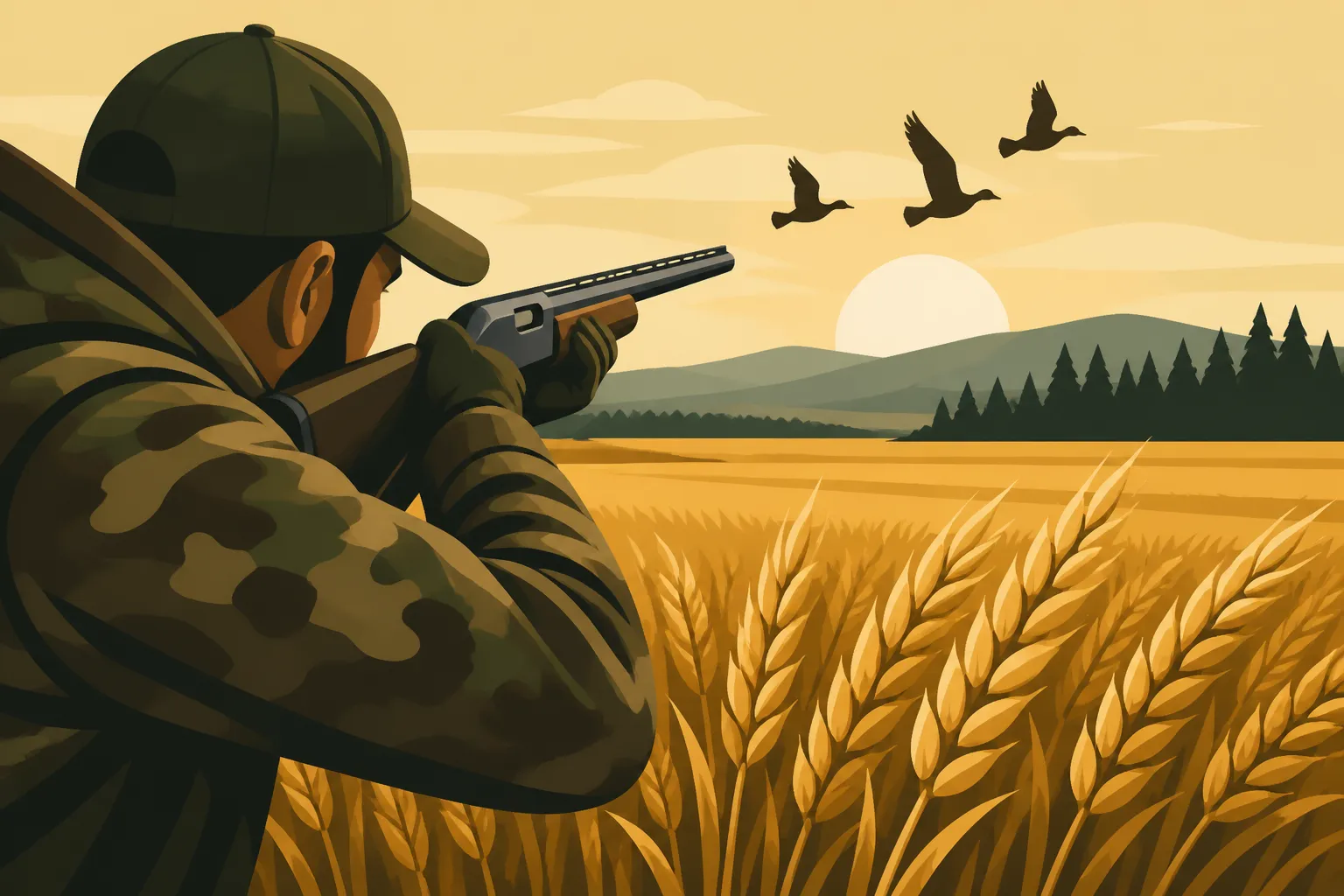
There’s a unique challenge and immense satisfaction that comes with hunting in British Columbia's Peace Country, especially when you're looking at vast grain fields. It can feel daunting, like trying to hide in a billiard table with a target on your back, but these fertile lands are absolute magnets for big game. This guide is dedicated to helping you unravel the secrets of successfully hunting these expansive agricultural zones, from understanding animal patterns to mastering stealth in wide-open spaces.
Understanding the Peace Country Landscape and Its Game
The Peace Country, stretching across the northeastern corner of British Columbia, is a distinct blend of boreal forest, rolling foothills, and surprisingly, expansive agricultural lands. These grain fields, planted with everything from wheat and barley to canola, create an irresistible buffet for various big game species, making them prime hunting grounds. However, the open nature of these fields presents a completely different set of challenges compared to the dense timber or alpine basins many hunters are used to.
The Allure of Grain Fields for Wildlife
Imagine being an animal in a world of limited, seasonal forage. Then, suddenly, there's a sprawling, nutrient-dense field of grains or legumes, offering an easily accessible, high-energy food source. This is precisely why British Columbia's Peace Country grain fields become such hotspots for wildlife, particularly as fall progresses and natural forage diminishes. Deer, moose, and elk often move from the surrounding bush and timber into these fields, especially during dawn and dusk, to capitalize on the abundant food.
The types of crops play a huge role too. Freshly sprouted winter wheat in the fall can be a draw, as can leftover grains after harvest. Canola fields, with their thick growth, offer not just food but also surprising cover for animals, particularly whitetail deer who are masters of concealment. Pea and oat fields, rich in protein and carbohydrates, are absolute magnets. These fields are not just feeding stations; they are also places where animals will stage before retreating to bedding areas in the adjacent timber or coulees. Understanding what crop is planted where, and its stage of growth or harvest, is crucial intelligence for any hunter. It's about thinking like the animals: where's the easiest, most nutritious meal, and what's the safest route to get there?
Key Game Species to Target
While the Peace Country hosts a variety of wildlife, several big game species are particularly prominent in and around grain fields, offering exciting hunting opportunities.
- Mule Deer: You’ll often find mule deer bucks browsing along the edges of these fields, especially where the field meets a treeline or a brushy draw. They’re less likely to commit deep into the wide-open expanse during daylight hours compared to whitetails, but they will certainly feed in the fields. Look for their distinct bounding gait as they move between cover and food.
- White-tailed Deer: The Peace Country is a stronghold for whitetails, and these deer absolutely love grain fields. They are incredibly adept at using the slightest topographical dips, standing crops, or even tall stubble for cover. During the rut, a big whitetail buck might be found cruising the edges of a field, scent-checking for does, or even chasing them right out in the open. Understanding how to Telling a Whitetail From a Mule Deer is essential, as their behavior in open country can differ significantly.
- Moose: Yes, even moose are drawn to grain fields! While they prefer more boreal forest habitat, the Peace Country's blend of forest and agriculture means they'll often venture out into fields, particularly oats or peas, for a quick meal. You might spot a bull moose grazing placidly in a field at first light, looking almost out of place. They typically feed closer to the treeline and will quickly retreat into the bush when disturbed. If you're Hunting Moose on a Cutblock Edge, an adjacent grain field can provide an excellent indicator of their presence.
- Elk: Rocky Mountain Elk have made a strong comeback in parts of British Columbia, and the Peace Country is no exception. Herds will readily utilize grain fields for feeding, especially larger fields that offer a sense of security in numbers. Spotting a herd of elk emerge from the timber into a grain field at dusk is an unforgettable sight. They tend to stick together, making them visible but also wary.
Unique Challenges of Field Hunting
Hunting grain fields isn't like hunting the dense forests of Vancouver Island or the rugged alpine. It comes with its own set of hurdles that, if not addressed, can quickly lead to a frustrating experience.
One of the most obvious challenges is the sheer lack of cover. You're often dealing with vast, open spaces where an animal can spot you from hundreds of yards away. This makes approaches incredibly difficult and demands extreme patience and skill in utilizing any available terrain features – a small rise, a drainage, even tall stubble – to break up your silhouette. Secondly, wind is a constant factor. In open fields, it can swirl unpredictably, making scent control paramount. Animals will bust you by scent long before they see you if you're not meticulous.
Furthermore, landowner relations are absolutely critical. Most grain fields are on private land, meaning you must secure permission before stepping foot on the property. Showing respect, asking politely, and even offering to help out can go a long way. Disregarding this vital step can not only ruin your hunt but also jeopardize hunting access for everyone in the area. Finally, the presence of other hunters can be an issue. Grain fields, being obvious food sources, often attract a lot of attention, especially during peak season. You need to be mindful of safe shooting lanes and communicate with anyone else in the vicinity to avoid conflicts and ensure safety.
Scouting and Planning Your Hunt in Peace Country Grain Fields
Effective hunting in Peace Country grain fields doesn't start with opening day; it begins weeks, sometimes months, beforehand. Pre-season scouting and meticulous planning are your best friends in these open, often private land scenarios. You need to understand not just where the animals are, but why they are there, and how they are using the landscape.
Pre-Season Scouting Strategies
Before you even think about putting a boot to the ground, arm yourself with information. Start by studying maps – topographical maps and satellite imagery are invaluable. They can reveal hidden draws, treelines, small woodlots, and even fence lines that act as natural travel corridors or bedding areas adjacent to the fields. Websites and apps like GoHunt offer incredible tools for identifying property lines, public land access, and terrain features from your couch. This digital reconnaissance can save you countless hours of driving.
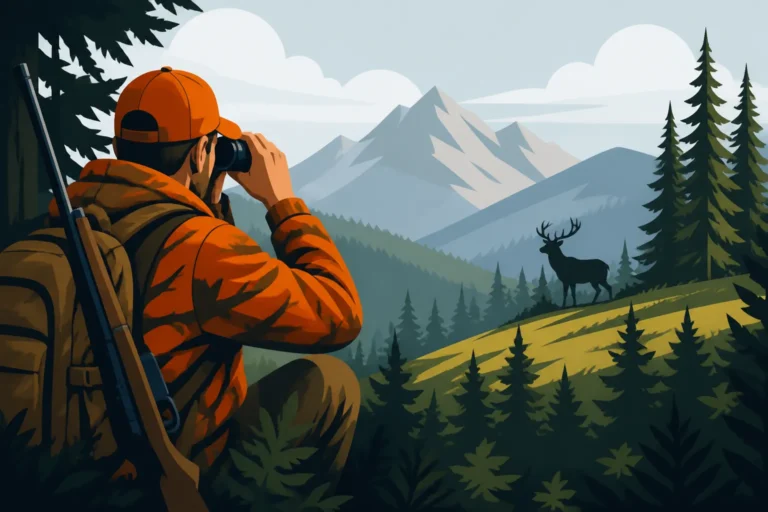
Once you have a general idea, it’s time for some serious glassing. Drive the roads bordering potential fields, using high-powered binoculars and a spotting scope to scan for activity during early morning and late evening. Look for animals entering and exiting the fields, note their exact points of entry, and try to discern their travel patterns. Are they consistently using a particular corner? Is there a subtle dip in the terrain they use for cover? Pay attention to crops. Are they harvested? Is there standing grain? Are there any natural features like a creek bed or a small pond that might also attract game?
Trail cameras can be extremely useful, especially if you can get permission from a landowner to place them on their property. Set them up on likely travel routes between bedding cover and the fields, or directly on the field edge where tracks or droppings indicate activity. They can confirm nocturnal feeding patterns and give you a better understanding of the quality and quantity of game present. Remember to check them discreetly and disturb the area as little as possible. For more insights, consider learning how to Scouting a British Columbia Management Unit Online.
The Importance of Landowner Relations
This point cannot be overstated: always get permission to hunt private land. The Peace Country has a significant amount of private agricultural land, and without explicit consent, you are trespassing, which can lead to serious legal trouble and a black eye for all hunters.
Start early in the year, well before hunting season. Knock on doors, introduce yourself respectfully, and explain your intentions. Be polite, well-groomed, and offer to help with small chores if appropriate. Often, landowners are more amenable to granting access if they know you and trust you. Show them you're a responsible hunter who will respect their property, close gates, avoid driving on wet fields, and share some venison if you're successful.
Some landowners might even welcome hunters to help manage deer or elk populations that are impacting their crops. If they say no, accept it gracefully and thank them for their time. Never sneak onto land. Building a positive reputation with landowners is crucial for maintaining future hunting opportunities for everyone. A good relationship can also give you invaluable intel on where animals are being seen.
Reading the Field: Identifying Key Areas
Grain fields, despite their seemingly uniform appearance, are rarely flat, undifferentiated expanses. There are always subtle nuances that animals exploit for safety and efficiency, and learning to "read" these features is a game-changer.
Look for areas where the field meets different types of cover: a treeline, a brushy fence row, a creek bed, or even a small coulee running through it. These transition zones are prime areas for game entry and exit. Animals will often stage in the cover, observe the field, and then quickly move out to feed. Within the field itself, look for topographical depressions or rises. Even a subtle dip of a few feet can provide enough cover for a whitetail buck to traverse a field undetected or a group of elk to bed down during the day. These are natural travel corridors.
Pinch points are also vital. These are narrow areas where natural obstacles like thick bush, a steep bank, or a water feature funnel animals into a predictable path. A narrow strip of grain field between two blocks of timber, for instance, will almost certainly see animal traffic. Pay attention to how the crop grows; taller, denser areas might offer more concealment. Finally, don't overlook edge habitat. The very edge where the field meets the forest is where you'll often find animals browsing, leaving tracks, and scent marking. This is where you might set up an ambush or start your still-hunt. Understanding these subtle cues transforms a seemingly flat field into a dynamic landscape full of hunting opportunities.
Effective Hunting Techniques for Peace Country Grain Fields
Once you've done your homework and secured access, it's time to put boots on the ground. Hunting grain fields requires patience, precision, and an understanding of how to use limited cover to your advantage. Different species and field conditions will dictate which tactics are most effective.
Still-Hunting and Stalking Approaches
Still-hunting in a wide-open grain field might sound counterintuitive, but it's entirely possible and highly effective with the right mindset. The key is to move incredibly slowly, using any available cover, no matter how sparse, to your advantage. This means walking along the edge of the field where it meets a treeline, using the shadows cast by the trees, or moving within a standing crop, if available and permitted, to break up your outline. Take one or two steps, then pause for several minutes, scanning every inch of the field and its edges with your binoculars. Look for movement, an ear twitch, a horizontal line in a vertical world.
When stalking an animal you've spotted in a field, stealth is paramount. This is where those subtle topographical features become your best friend. Plan your approach using ditches, tall stubble, or even the back side of a gentle rise to stay out of sight. Keep the wind in your favor, always. Crawling might be necessary for significant distances. If the animal looks up, freeze immediately. Only move when its head is down or it's looking away. This slow, deliberate approach is a test of patience, but it’s often the only way to get within shooting range in such exposed environments. You might find some useful crossover with Stalking a Bedded Buck in Open Timber as the principles of using cover and moving slowly are similar.
Ambush and Stand Hunting
For many hunters, especially those targeting whitetails and elk in grain fields, ambush hunting from a stand or blind is a highly productive strategy. The predictability of animals moving to and from feeding areas, especially at dawn and dusk, makes setting up an ambush a smart move.
A ground blind, carefully brushed in along a field edge where animals enter or exit, can provide excellent concealment and protection from the elements. Look for pinch points or natural funnels that animals consistently use. Alternatively, a treestand can offer an elevated vantage point, allowing you to see over tall stubble or low vegetation, and helping to keep your scent above the animals. However, treestands can be difficult to set up discreetly in areas with sparse tree cover.
When setting up a stand or blind, always consider the prevailing wind direction and the sun's position. You want the wind blowing from the animals towards you, and you want the sun at your back in the morning or evening so it's in the animals' eyes, not yours. If you're hunting during the rut, a well-placed stand overlooking a field edge where bucks are cruising for does can be incredibly exciting. For larger animals like moose, positioning yourself near a popular crossing into the field can pay dividends, particularly if you're also considering Calling Moose in the Rut.
Decoying and Calling in Open Terrain
Decoys and calling can be surprisingly effective in the open landscape of a grain field, especially for deer and elk, but they require careful execution.
For whitetail and mule deer, a single buck decoy, or even a doe decoy during the rut, can draw in curious or territorial bucks. Place the decoy where it’s highly visible, broadside to your position, mimicking a deer feeding or standing alert. Always set it upwind of your shooting lane so approaching deer will come into your scent cone. Combine this with fawn bleats or buck grunts to pique their interest. In the vastness of a grain field, a deer decoy can act as a visual magnet that an animal might not otherwise have seen.
For elk, a life-sized elk decoy, often a cow, can be incredibly persuasive. Place it strategically, perhaps with a caller hidden a good distance away, mimicking bugles or cow calls. The visual of another elk, combined with realistic vocalizations, can draw in a bull, especially during the breeding season. The open nature of the fields means the decoy is visible from afar, increasing its drawing power. However, always be acutely aware of other hunters in the area when using decoys, and ensure you are clearly visible from your position to avoid any safety incidents. Decoy placement and careful use of calls, such as Bugling to a Roosevelt Elk Bull, can be key.
Calling moose in open fields can be tricky but not impossible. While they prefer thicker cover, a series of cow calls or raking brush noises from the edge of a field can sometimes draw a curious bull out, especially during the rut. The key is patience and knowing when to back off the calling.
Essential Gear and Safety Considerations
Hunting Peace Country grain fields means preparing for diverse conditions and ensuring you have the right tools and safety protocols in place. The open nature often translates to longer shots, colder winds, and greater visibility.
Optics, Clothing, and Firearms
Your gear choices are paramount in these open environments. Optics are your first and best tool. High-quality binoculars (10×42 or 12×50) and a spotting scope on a sturdy tripod are non-negotiable for effectively scanning vast fields and identifying game at extreme distances. You need to be able to judge an animal's size, sex, and legal points long before you even consider an approach. Brands like Vortex, Swarovski, or Leupold offer excellent choices that hold up to BC's conditions.
Clothing needs to be quiet, warm, and offer good camouflage for open country. Layers are crucial, as temperatures can swing wildly, especially with a brisk wind whipping across the fields. Good windproof and waterproof outer layers are essential. Given the longer ranges and sparse cover, specialized camouflage patterns designed for open country or agricultural settings can be more effective than dense forest patterns. Don't forget hunter orange; in British Columbia, while not always mandatory for certain seasons, wearing a blaze orange vest or hat significantly increases your visibility to other hunters, which is critical in shared areas. Refer to British Columbia Blaze Orange Rules for specific regulations.
For firearms, consider a flat-shooting rifle chambered in calibers like .270 Win, .30-06, 7mm Rem Mag, or .300 Win Mag. These calibers offer the necessary range and energy for clean kills on deer, elk, or moose at extended distances that are common in open fields. Practice shooting from various field positions, including prone with a bipod, as stable shots are often required. Ensure your rifle is sighted in accurately at 200-300 yards. For Legal Rifle Calibres for Big Game, make sure your chosen firearm meets BC regulations.
Navigating Open Fields and Private Land
Even with permission, navigating private land and open fields requires diligence. A reliable GPS device or a mapping app on your phone (like GoHunt, Gaia GPS, or OnX Hunt) is absolutely critical. These tools allow you to precisely identify property lines, ensure you stay within permitted areas, and mark important waypoints like game sightings, entry points, or hidden draws. Always download offline maps, as cell service can be spotty or non-existent in many parts of the Peace Country.
Respecting property boundaries isn't just about avoiding trespassing; it's about maintaining trust. Double-check your location frequently, especially if an animal moves close to a boundary line. Never pursue an animal onto unpermitted land without first re-securing permission. If you down an animal near a fence line, always communicate with the landowner before retrieving it, even if it's technically on land you have permission to hunt, out of courtesy. Knowing British Columbia Trespass and Access Law is paramount.
Be mindful of your vehicle. Stick to designated access roads, and never drive on cultivated fields, especially when wet, to avoid damaging crops. Park your vehicle in a way that doesn't block gates or farm equipment access. The goal is to leave the land exactly as you found it, if not better.
Safety Best Practices
Hunting in open areas, especially those near roads or other hunters, demands heightened safety awareness.
- Target identification: Always be 100% certain of your target and what lies beyond it. In open fields, a bullet can travel for miles. Identify your game clearly, distinguish between species and sexes if required by regulations (e.g., British Columbia's Four-Point Antler Restriction), and ensure there are no other hunters, livestock, or structures in your line of fire.
- Hunter orange: As mentioned, wearing hunter orange significantly increases your visibility to others, especially when stalking or moving through tall stubble.
- Communication: If you encounter other hunters, politely acknowledge them and ensure everyone is aware of each other's general location. A quick chat can prevent misunderstandings or unsafe situations.
- Field dressing and meat care: Once you've harvested an animal, especially in warmer early seasons, rapid field dressing and cooling are critical to prevent spoilage. Have a plan for getting your animal out of the field quickly, as you might be a long way from a vehicle. For comprehensive guidance, look into Keeping Meat Cool in an Early Season.
- Emergency preparedness: Always carry a first-aid kit, emergency shelter, fire starter, and communication device (satellite messenger, inReach, or satellite phone) even for what seems like a simple field hunt. Conditions can change rapidly, and accidents happen. Having a plan and letting someone know your itinerary is non-negotiable.
Here's a quick comparison of strategies for different species in these environments:
| Species | Primary Attraction to Grain Fields | Preferred Field Tactics | Best Time of Day | Key Scouting Focus |
|---|---|---|---|---|
| Mule Deer | Browsing along field edges, occasional feeding | Still-hunting edges, ambush near timber | Dawn/Dusk | Field-to-timber transitions, draws, historical crossings |
| Whitetail | Direct feeding, rut cruising | Stand/blind hunting, careful stalking | Dawn/Dusk, Mid-day (rut) | Hidden dips, dense crop cover, field corners |
| Moose | Opportunistic feeding on specific crops | Ambush near heavy cover, still-hunting edges | Dawn/Dusk | Adjacent bush, water sources near fields, specific crops |
| Elk | Herd feeding, moving between fields & cover | Ambush, spot-and-stalk (with cover) | Dawn/Dusk | Herd movement patterns, natural funnels, large fields |
Hunting Peace Country grain fields can be incredibly rewarding, offering opportunities for multiple species and unique challenges that hone your hunting skills. Remember to always prioritize safety, respect the land, and enjoy the vast beauty of British Columbia's agricultural heartland.
Disclaimer
Hunting is an inherently risky activity. This guide provides general information and recommendations. Always consult the official British Columbia Hunting and Trapping Synopsis for the most current regulations, season dates, and specific rules. Hunter safety courses and landowner permissions are mandatory. The author and publisher are not responsible for any accidents, injuries, or legal infractions incurred while hunting. Hunt ethically, responsibly, and safely.