Telling a Whitetail From a Mule Deer
It's a classic scenario, isn't it? You're out in the British Columbia wilderness, glassing a distant hillside, and you spot a deer. Your heart starts to thump, but then the crucial question hits you: is it a whitetail or a mule deer? In many parts of BC, particularly where their ranges overlap, distinguishing between these two iconic species can be genuinely challenging, especially if you only get a quick glimpse. Knowing the difference is not just about bragging rights; it's essential for legal compliance, understanding animal behaviour, and ultimately, making smart hunting decisions. This guide will walk you through all the key identifiers, from the most obvious to the subtle clues, to help you confidently tell a whitetail from a mule deer in the field.
The Basics: What Makes Them Different at a Glance?
When you're out there, often in less-than-ideal viewing conditions, you need quick, reliable indicators. While every deer is an individual, these two primary features are usually your best bet for a rapid identification.
Antler Configuration and How to Spot It
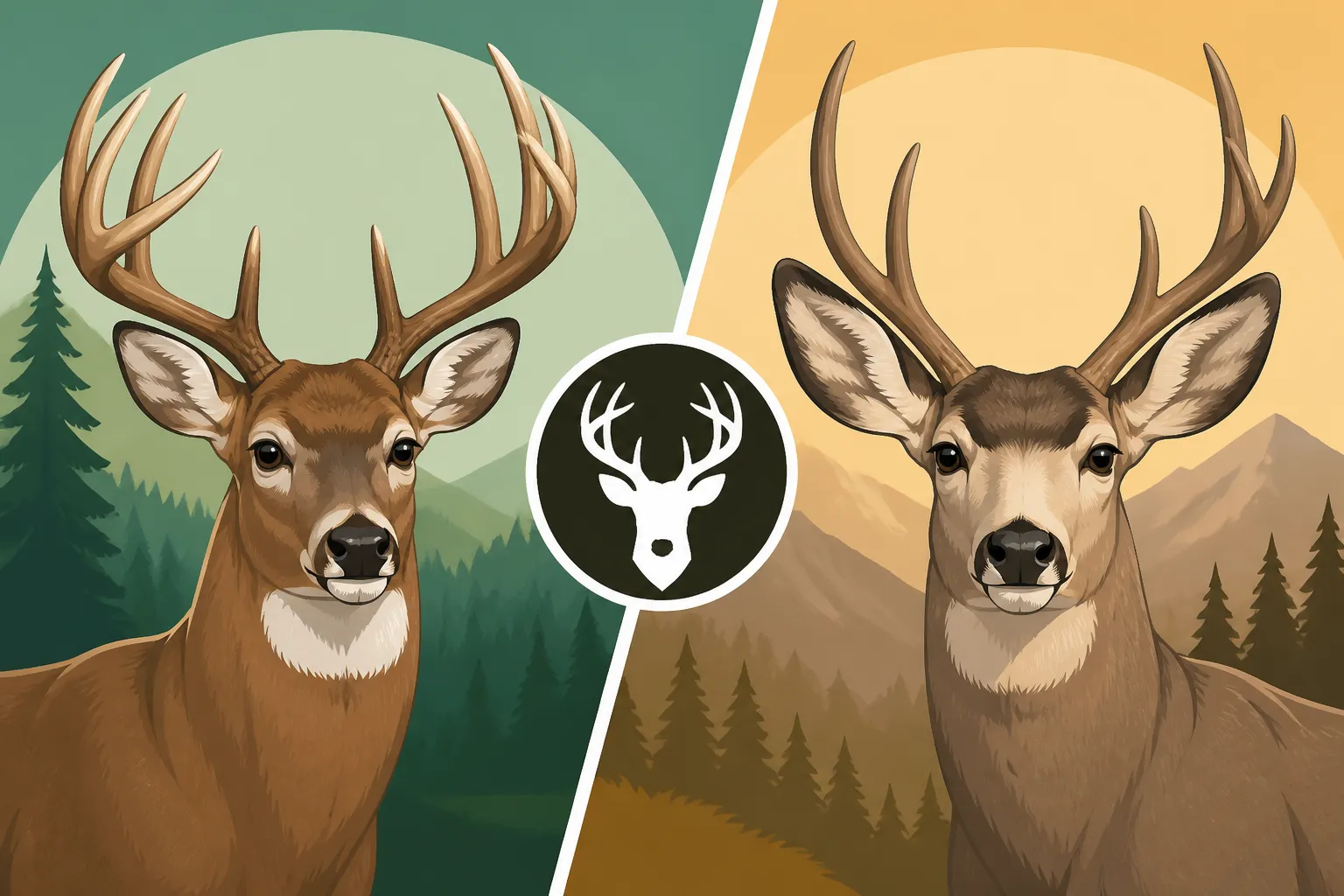
The antlers are often the first thing a hunter looks for, and for good reason—they offer one of the most consistent ways to tell these deer apart, especially when dealing with mature bucks. Mule deer antlers are typically "bifurcated," which is a fancy way of saying they fork or branch. From the main beam, each tine tends to fork again into two points. Think of it like a "Y" shape that repeats itself. So, a typical mule deer four-point on one side would have a main beam, a fork coming off it, and then each of those two points forks again. It creates a very distinct, almost symmetrical, branching pattern.
On the flip side, whitetail antlers are generally characterized by a main beam that sweeps forward and outward, with individual tines (or points) growing vertically straight up from that main beam. They don't typically fork repeatedly like a mule deer's. If you see a deer with a strong main beam from which distinct, un-forked points rise, you're likely looking at a whitetail. Of course, there are always exceptions: non-typical antlers, broken tines, or young bucks might not perfectly fit these descriptions. A young mule deer buck might only have a fork or two, making it look simpler, while a whitetail might have a drop tine or a small cheater point that complicates things. This is why it’s never wise to rely on just one characteristic. Also, understanding the rules, such as British Columbia's Four-Point Antler Restriction, often relies on correctly identifying the species.
Tail Talk: The Most Obvious Field Clue
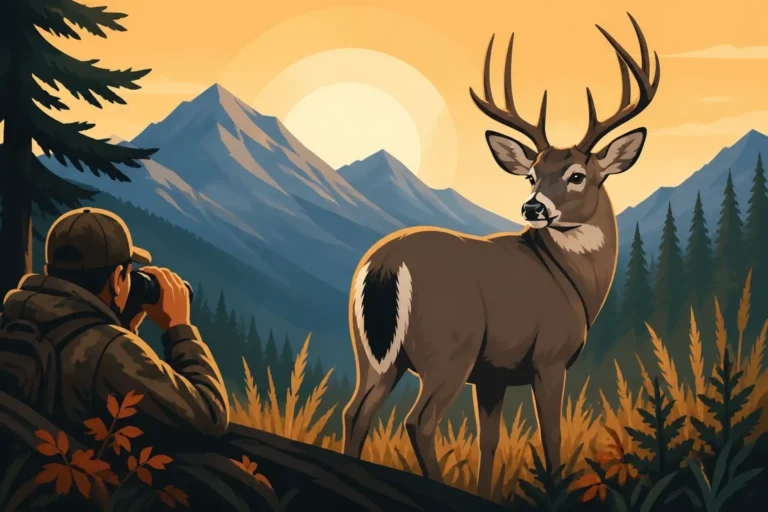
If antlers are tricky, the tail is your next best friend, especially if the deer is moving away from you. This is often the most definitive and easiest field identification cue. Whitetails get their name for a very good reason: their tail is broad, typically brown on top, but with a brilliant, fluffy white underside. When a whitetail is alarmed and flees, it will usually raise its tail high, fanning out that white underside like a flag. This "flagging" motion is unmistakable and designed to signal danger to other deer. It's a truly spectacular sight to witness.
Mule deer tails, on the other hand, are quite different. Most mule deer in British Columbia have a narrow, rope-like tail that is almost entirely white, often with a distinct black tip. They rarely, if ever, "flag" their tail like a whitetail. Instead, they typically hold it down while running, sometimes flicking it side to side, or it might just hang loosely. There are regional variations, with some mule deer (often referred to as "blacktails" in certain areas, though distinct from the true Black-Tailed Deer on British Columbia's Coast) having a completely black or dark brown tail with only a small fringe of white hair. However, the rope-like shape and lack of flagging behaviour remain consistent differentiators from the whitetail's broad, bright flag.
Beyond the Obvious: Subtler Physical Distinctions
Once you've looked at the antlers and tail, or if those initial clues aren't clear, you'll need to dig a little deeper into their physical characteristics. These details become particularly important when you have more time to observe the animal.
Ear Size and Shape
The size and shape of a deer's ears can provide another strong indicator, and it's where the mule deer truly lives up to its name. Mule deer have conspicuously large ears, often described as being similar to a mule's ears. They are long and broad, typically proportionate to the size of their head, giving them an almost comical appearance sometimes. These large ears are incredibly sensitive and can swivel independently, allowing the deer to pinpoint sounds with remarkable accuracy. If you see a deer with ears that seem almost too big for its head, constantly scanning the environment, you're likely looking at a mule deer.
Whitetail deer, while still possessing good hearing, have ears that are noticeably smaller and more proportionate to their head size. They are still quite mobile, but they lack the prominent, almost oversized look of a mule deer's ears. When observed side-by-side, the difference becomes quite striking. This ear distinction can be particularly helpful if the deer is facing you or quartering away, where the tail or antler pattern might be obscured.
Body Shape, Size, and Gait
While both are deer, their overall body structure and how they move can be quite different. Mule deer tend to have a stockier, more robust build compared to the more agile whitetail. They often appear heavier-bodied, with stronger legs suited for navigating rougher, mountainous terrain. This sturdier frame contributes to their distinctive mode of travel. When alarmed, a mule deer often employs a unique bounding gait called "stotting" or "pronking." All four feet push off the ground simultaneously, launching the deer into the air, landing on all four feet again in a stiff-legged bounce. It's an energy-efficient way to cover broken ground and clear obstacles. Watching a mule deer stot across a rocky slope or through thick brush is truly something to behold.
Whitetail deer, in contrast, generally have a more slender, athletic build. They appear more graceful and fluid in their movements. When running, a whitetail typically gallops with an undulating, flowing motion, using its powerful hind legs to propel it forward in long, efficient strides. They rely on bursts of speed and quick changes of direction, often dodging through dense cover. This difference in gait is a strong behavioral clue. If you see a deer bounding stiff-legged, it's almost certainly a mule deer. If it's running with long, graceful strides, especially through timber, it's likely a whitetail.
Facial Markings and Colouration
Beyond the big features, a closer look at their faces and general coat colour can also offer clues, though these can be more subtle and vary with season and individual deer. Whitetail deer often have very distinct white markings on their face. Look for prominent white rings around their eyes, a white band across their muzzle, and a clear white patch on their throat. These markings tend to make their face look more "masked" or "painted." Their overall body coat often has more reddish-brown tones in summer, fading to a greyer-brown in winter.
Mule deer generally have a plainer face. While they can have lighter hair around the muzzle and eyes, it's usually less pronounced than a whitetail's distinct white bands. Many mule deer also have a noticeable dark patch or "forehead badge" between their eyes. Their overall coat colour tends to be a more uniform greyish-brown, which provides excellent camouflage against rocky slopes and sagebrush. This can make them incredibly hard to spot even when standing still, especially in classic mule deer habitat like the interior hillsides you might explore using a tool like GoHunt. For hunters keen on finding Where the Biggest Interior Bucks Live, these subtle colour differences can make all the difference in spotting them.
Habitat and Behavioural Clues in British Columbia
Knowing where each species typically lives and how they behave can significantly narrow down your identification, especially in British Columbia where their ranges overlap in interesting ways. Understanding these patterns is crucial for successful hunting and ethical observation.
Where British Columbia's Whitetails Are Spreading
Historically, whitetail deer were more confined to specific areas of eastern North America, but they've been expanding their range across British Columbia for decades. You'll primarily find them in the agricultural fringes, river bottoms, and lower-elevation deciduous and mixed forests. Areas like the Kootenay valleys, parts of the Cariboo, and the Peace River region are prime whitetail country. They thrive in areas with a mix of dense cover for bedding and nearby open fields or riparian zones for feeding. They are masters of using broken cover, often sticking to willow thickets, alder bottoms, and the edges of farmlands. Understanding Where British Columbia's Whitetails Are Spreading is key because if you're hunting in thick, low-lying river bottom habitat near a farm, your chances of encountering a whitetail are much higher than a mule deer. Using detailed maps on platforms like GoHunt can help you identify these specific habitat types within a British Columbia Management Unit.
Mule Deer Habitat Preferences
In contrast, mule deer are classic inhabitants of British Columbia's interior and higher elevations. They prefer more open country, ranging from the dry, sagebrush flats of the Okanagan to the rugged, timbered mountain slopes and subalpine basins of the Cariboo and Chilcotin. They are adept at navigating steep, broken terrain and often seek out south-facing slopes in winter for warmth and foraging. Think about areas with open Ponderosa pine forests, fir benches, clearcuts that have some regrowth, or expansive grasslands bordered by timber. If you're Glassing an Interior Hillside for Mule Deer high up, scanning for deer moving between timber and rock slides, you're almost certainly looking for a mule deer. They typically avoid the dense, swampy lowlands that whitetails often frequent. Knowing their preferred feeding habits, such as What Mule Deer Eat in the Dry Interior, can also help you pinpoint their likely locations.
Interpreting Tracks and Sign
Even their tracks and other signs can offer subtle clues, especially when you can't get eyes on the animal itself. While a deer track is a deer track in many ways, understanding their gaits can help. When a mule deer stots, it often leaves a "four-track" pattern where all four hooves land close together, or sometimes even overlap, indicating the unique bounding motion. A running whitetail, with its longer, more graceful stride, will typically leave more staggered tracks, with the hind hooves often landing in front of where the front hooves were.
Beyond tracks, look at their general behaviour. Whitetails are often more secretive, preferring to slink through cover and rely on concealment. Mule deer, while still cautious, can sometimes be found in more exposed areas, especially at higher elevations, where they rely on their excellent eyesight and hearing to detect danger from afar. They might bed on an open ridge, trusting their ability to spot threats and then stot away. Observing rub lines or browsing patterns might also hint at which species is present, though these are much harder to differentiate definitively. A savvy hunter might consult resources or use mapping apps to confirm typical range boundaries for Mule Deer Across British Columbia's Interior versus areas where British Columbia's Whitetail Expansion is more prevalent.
Here's a quick summary table of the key differences:
| Feature | Whitetail Deer | Mule Deer |
|---|---|---|
| Antlers (Bucks) | Main beam with tines growing vertically. Rarely fork. | Bifurcated (forked) antlers. Each point tends to fork again. |
| Tail | Broad, brown on top, white underside. "Flags" high when alarmed. | Narrow, rope-like. White with a black tip (most common in BC). Held down or flicked when running. |
| Ears | Smaller, proportionate to head. | Large, "mule-like." Often appear oversized. |
| Body Shape | More slender, athletic, graceful. | Stockier, heavier-bodied, robust. |
| Gait | Gallops with fluid, undulating motion. | Stots or "pronks" (all four feet land together). |
| Facial Markings | Distinct white eye rings, muzzle band, throat patch. | Plainer face, often with a darker forehead patch. |
| Habitat | River bottoms, agricultural edges, dense low cover. | Open timber, sagebrush flats, mountain slopes, higher elevations. |
Ultimately, confidently distinguishing between a whitetail and a mule deer in British Columbia comes down to keen observation and combining multiple clues. Don't rely on just one feature, especially with young deer or unusual antler configurations. Take your time, observe their behaviour, and check the habitat they're in. With practice, you'll soon be able to make that call with confidence, whether you're stalking a buck on an Interior Douglas Fir Bench or exploring a potential Kootenay Creek Draw. This knowledge will not only enhance your hunting experience but also deepen your appreciation for these magnificent creatures of the British Columbia wild.
Disclaimer
This article is for general informational purposes only and does not constitute professional advice. Laws, prices and regulations vary by location and change over time. Consult a qualified professional for guidance on your specific situation.