Stalking a Bedded Buck in Open Timber
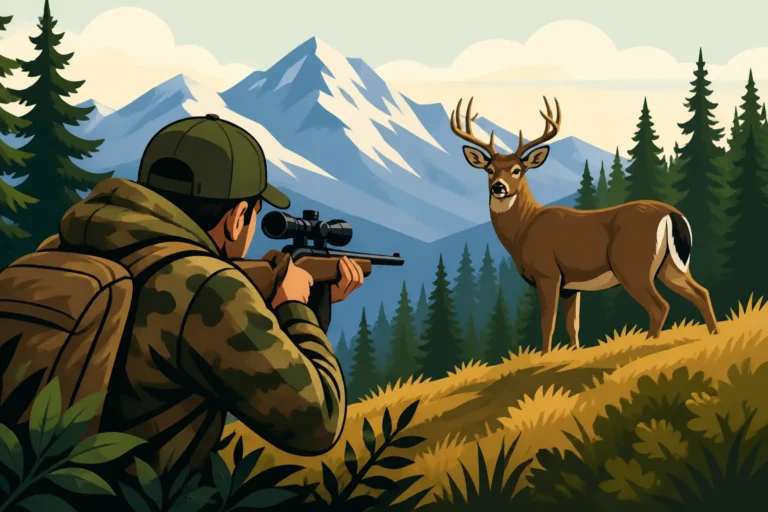
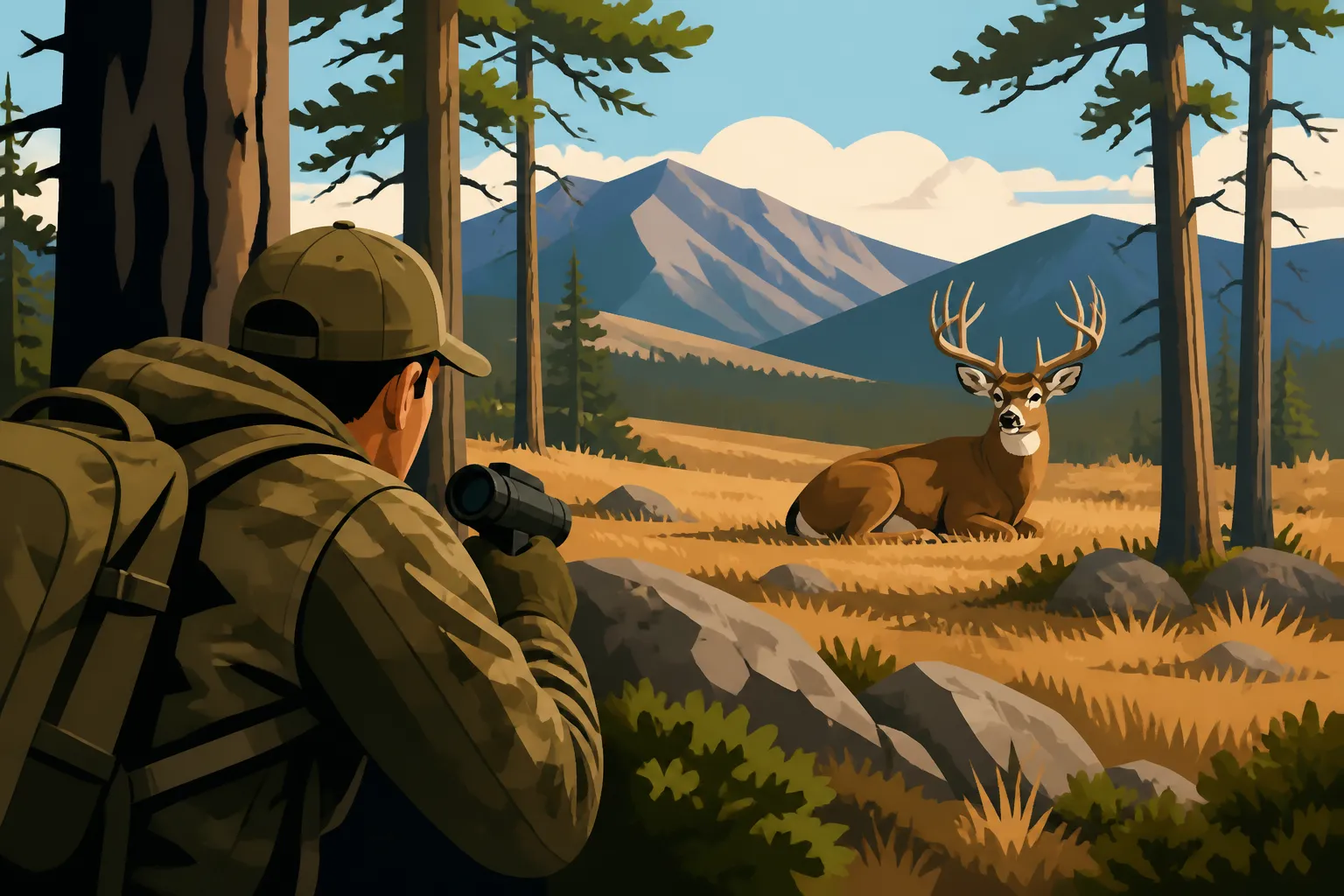
There’s nothing quite as heart-stopping as finally spotting that elusive buck you’ve been chasing, only to realize he’s bedded down in a patch of open timber, eyes wide open, seemingly aware of your every breath. That moment of excitement quickly morphs into intense pressure as you grapple with how to get close without blowing your cover. This guide is all about turning that daunting challenge into a successful harvest, breaking down the art and science of stalking a bedded buck in British Columbia’s often-tricky open timber.
Understanding the Bedded Buck's World
Before you even think about taking a step, you need to understand why that buck chose that particular spot and what his senses are telling him. A bedded buck isn't just resting; he's actively monitoring his surroundings, relying on a trifecta of senses to stay safe.
Reading the Deer's Vantage Point
When a buck beds down, especially in open timber, he's typically chosen a spot that offers him a clear advantage. He wants to see potential threats approaching from downhill or downwind, while his back might be against a rise, a thicket, or even a large tree trunk, protecting his rear. This isn't random; it's a calculated defensive position. Imagine yourself in his spot: what can you see? What are the immediate escape routes? Is he facing into the wind, letting his nose do the heavy lifting, or is he facing away, relying on his eyes for a wider field of view?
Often, especially with mature mule deer in the Okanagan Highlands or other interior grasslands, they'll bed on a slight rise or bench where they can survey a significant area. They'll use sparse timber for just enough broken cover to obscure their outline, but still maintain excellent visibility. This means you need to get inside his visual range without being seen, which requires understanding his line of sight from his exact bed. Use your binoculars to really glass the area, not just for the buck, but for the terrain features around him. Look for dips, folds, or even solitary trees that could provide precious inches of cover as you move. This is where tools like GoHunt, with its detailed mapping, can be invaluable for understanding the contours of the land even before you get there, helping you predict potential bedding areas and approach routes.
Wind, Thermals, and Sound Management
The wind is your absolute master and commander when stalking. Even a slight shift can instantly give you away. Deer have an incredible sense of smell, and the smallest scent cone carried by a fickle breeze will send them bounding away. In open timber, wind can swirl unpredictably, especially in hilly or mountainous terrain that characterizes much of British Columbia. You might feel a consistent breeze at your height, but closer to the ground, or in a draw, it could be doing something entirely different.
Beyond the prevailing wind, you must factor in thermals. In the morning, as the sun rises, warm air begins to ascend, carrying scent uphill. In the evening, as temperatures drop, cool air descends, carrying scent downhill. This means your approach will often need to be entirely different depending on the time of day. If you're hunting in a Kootenay creek draw, for instance, a morning thermal will draw your scent uphill, potentially right to a buck bedded on a bench above. Later in the day, that same thermal might pull scent downhill, allowing for an approach from above. Always carry a wind checker – a small bottle of scent-free powder or even a piece of milkweed fluff – and use it constantly, every few steps, to verify the exact air currents. Remember, sound carries incredibly far in still, open timber. Every twig snap, every rustle of your clothing, is amplified. You need to move like a ghost, which we'll delve into next.
The Art of the Approach
Once you've analyzed the buck's position and the environmental factors, it's time to put your plan into action. This is where patience and meticulous movement become paramount.
Utilizing Available Cover and Terrain
Open timber, by its very nature, means limited cover, but "limited" doesn't mean "non-existent." You need to become a master of using every available fold in the terrain, every large tree trunk, every cluster of brush. Think of it like a game of chess, planning several moves ahead. Your goal is to keep as much solid material between you and the buck as possible, for as long as possible.
Start wide. If you have the option, make a large loop to approach from a direction that maximizes cover and wind advantage, even if it adds significant distance. Don't be afraid to drop to your hands and knees, or even crawl on your belly, especially during the final stages. A slight rise that seems insignificant from afar can suddenly become impenetrable cover when you're low to the ground. Pay attention to the light; if the sun is low, use shadows to your advantage. A buck looking into the sun will struggle to pick out movement in a shadowed area. In a stand of Douglas fir, for example, the trunks themselves can be excellent vertical cover. If you're Still-Hunting Second Growth for Blacktail, you'll be constantly using the regenerating trees and brush, and the same principle applies here – albeit with less overall density.
Slow, Deliberate Movement and Pausing
This is the hardest part for many hunters. Our natural inclination is to get there quickly. But a successful stalk demands the opposite: incredibly slow, deliberate movement. Each step should be planned. Before you move, scan the area ahead for potential hazards – loose rocks, crunchy leaves, or other deer you might disturb. Place your foot down slowly, testing for sound before committing your weight. Think about moving one body part at a time, freezing between movements.
The "pause and glass" technique is critical. After every few steps, or every time you pass a piece of cover, freeze completely. Remain motionless for a minute or two, scanning the buck's position through your binoculars. Look for any change in his demeanor: an ear flick, a head turn, a tensing of muscles. If he's looking your way, freeze and become one with the landscape. Do not move until he looks away or relaxes. Often, a buck will "test" the area by looking intently. If he sees no movement, he'll eventually relax. This is your cue to make your next slow move. This extreme patience is what separates a successful stalk from a blown opportunity. When you're Hunting British Columbia's Alpine in Early September, these pauses are even more critical as the open, high-elevation terrain leaves little room for error.
Overcoming Obstacles and Making the Shot
Even with the best plan, stalks rarely go perfectly. You'll encounter unexpected challenges, and how you react will determine success.
Dealing with Other Animals and Changing Conditions
It's common to have satellite deer, grouse, or even smaller critters in the vicinity that can inadvertently blow your stalk. If a squirrel starts barking or a grouse flushes, freeze. The buck will likely notice, but if he doesn't see direct danger, he might dismiss it. Never assume you're alone in the woods. Always be scanning for other eyes, especially in areas known for high deer density. Sometimes, you might even encounter another buck, perhaps a smaller one, bedded near your target. In such cases, you might have to adjust your entire approach or even back out and try again later.
Weather conditions can also change rapidly in British Columbia. A sudden gust of wind, a light rain that helps muffle sound, or even a cloud cover that changes light conditions can all impact your stalk. Be ready to adapt. If the wind shifts unfavorably, you might have to abandon the stalk or wait for it to stabilize. If a downpour begins, it could be your best friend for a noisy approach, but ensure your gear stays dry and your optics clear. Tools like GoHunt can help you understand micro-weather patterns in different drainages, giving you an edge in planning.
Setting Up for the Shot
Getting within range is only half the battle; the other half is being able to take an ethical shot. As you get closer, start looking for shooting lanes. Open timber can be deceiving, with small branches and twigs capable of deflecting a bullet. Before you reach your final shooting position, identify multiple potential lanes.
When you're finally ready to make the move for the shot, do it slowly and deliberately. If the buck is still bedded, you might have to wait for him to stand, or for him to shift his position to offer a clean shot. If he stands up on alert, he’s probably going to flee. Take the shot if you have a clear, ethical opportunity. If not, be prepared to wait him out. Sometimes, a well-placed grunt or a quiet bleat might get him to stand and present a shot. Make sure you have a solid rest – a bipod, a backpack, or even a tree branch – especially if your heart is pounding after a long, tense stalk. Remember the importance of Legal Rifle Calibres for Big Game and proper shot placement to ensure a quick, humane harvest. If you're Hunting British Columbia's Four-Point Antler Rules, ensure you've properly identified your buck before pulling the trigger.
Common Mistakes and How to Avoid Them
Even seasoned hunters make mistakes, especially when the adrenaline kicks in. Being aware of these common pitfalls can help you avoid them.
Rushing the Stalk or Misjudging the Wind
The most common mistake is impatience. We get so fixated on the buck that we rush, and that's usually when a twig snaps, or we expose ourselves. Remember, it’s not about how fast you get there, but if you get there. Slow down. Take twice as long as you think you need. Each move should be deliberate and calculated. Another frequent error is underestimating the wind. Just because you don't feel a strong breeze doesn't mean your scent isn't swirling. Microcurrents are killers. Always use your wind checker, and if you have any doubt about the wind, either reposition or wait. Don't gamble on the wind; it's a bet you'll almost always lose. This is particularly true when you're Hunting British Columbia's October Rifle Opener and winds can be notoriously unpredictable.
Inadequate Scouting and Lack of Contingency Planning
Many stalks are doomed before they even begin due to poor scouting. Knowing the terrain, potential bedding areas, and escape routes beforehand is crucial. If you're on unfamiliar ground, spend time glassing from a distance to understand the landscape. Using mapping tools like GoHunt can give you a significant advantage, allowing you to identify potential cover, contour lines, and even prevailing wind directions for specific areas.
Always have a backup plan. What if the wind shifts completely? What if another hunter or an animal walks into your path? What if the buck stands and bolts? Think through these scenarios before they happen. Sometimes the best option is to back out quietly, regroup, and try another day or from a different angle. It takes discipline, but walking away from a high-risk stalk is often better than spooking the animal and ruining future opportunities. When you're Scouting a British Columbia Management Unit Online, consider these variables.
| Stalking Scenario | Best Approach Strategy | Key Considerations |
|---|---|---|
| Buck Bedded Uphill | Approach from below and upwind, using thermals to your advantage (morning) | Utilize rising thermals; extreme caution with visual |
| Buck Bedded Downhill | Approach from above and upwind, using descending thermals (evening) | Maintain low profile; avoid rolling debris |
| Crosswind Stalk | Position yourself directly crosswind, using terrain folds for cover | Constant wind checking; narrow scent cone |
| Thick Timber Patch | Embrace the broken sightlines; move slower, listen intently | Focus on quiet movement; less emphasis on visual |
| Sparse, Open Timber | Maximize use of every tree trunk, small bush, and ground undulation | Extreme patience and slow movement; utilize shadows |
| Wind Swirling | Reassess frequently; may need to wait for stable conditions or abort | Prioritize wind above all else; check every few feet |
Remember, every stalk is a lesson. Even if you don't seal the deal, analyze what went right and what went wrong. The more you practice, the more intuitive the art of stalking a bedded buck in open timber will become. Good luck out there, and stay safe!
Disclaimer
The information provided in this guide is for general informational purposes only and is not intended as legal advice. Hunting regulations in British Columbia can change, and it is the responsibility of every hunter to consult the most current British Columbia Hunting and Trapping Regulations Synopsis before heading afield. Always prioritize safety, ethical hunting practices, and respect for wildlife and the environment.