Hunting Stone’s Sheep in the Far North
Hunting Stone's sheep in the far reaches of British Columbia isn't just a hunt; it's a profound wilderness expedition that tests every fiber of your being. Many hunters dream of the majestic Stone's ram, but the sheer remoteness, challenging terrain, and the animal's elusive nature can make planning seem insurmountable. This comprehensive guide is designed to demystify the process, offering practical, empathetic advice for tackling one of North America's most coveted mountain hunts.
Understanding Stone's Sheep and Their Habitat
Stone's sheep, with their distinctive dark brown bodies and contrasting white patches, are truly a marvel of the northern mountains. These animals are a subspecies of thinhorn sheep, sharing a close lineage with the all-white Dall's sheep. However, their coloration sets them apart, ranging from almost black to a smoky grey-brown, often with a white rump, belly, and inner legs. This unique aesthetic is part of what makes them so desirable for hunters worldwide. They are incredibly wary, masters of their rocky domain, and thrive in some of the most unforgiving landscapes imaginable. If you've ever wondered What a Fannin Sheep Looks Like, you'll find Stone's sheep share similar characteristics, with Fannin often considered a color phase or hybrid of Stone's and Dall's.
The Unique Characteristics of Stone's Sheep
These sheep are perfectly adapted to their high-altitude environment. Their coats are dense and insulating, providing warmth against bitter winds and freezing temperatures. Their hooves are like natural mountaineering boots, offering exceptional grip on steep, rocky slopes and loose scree. Rams can grow magnificent horns, which are thick at the base and curl upwards and outwards, often completing a full curl or more. Judging a ram's age and legality, especially the crucial "full curl" rule that dictates many hunting seasons, is a skill developed over time and often requires significant experience.
Beyond their physical traits, Stone's sheep possess an innate wildness. They live in small, scattered bands, often with rams segregated from ewes and lambs for much of the year. Their survival depends on keen eyesight, incredible agility, and an intimate knowledge of their mountainous homes, which makes approaching them a formidable challenge. They are constantly alert to predators like wolves, grizzlies, and even eagles, so any movement in their territory is quickly noticed. This natural vigilance is a huge part of what makes a successful Stone's sheep hunt so incredibly rewarding.
Key Habitats in British Columbia's Far North
The primary range of Stone's sheep in British Columbia is concentrated in the northern interior, specifically the vast and rugged Cassiar and Spatsizi Plateaus. These are areas of immense, untamed wilderness, characterized by towering peaks, expansive alpine basins, deep valleys, and winding rivers. When considering Where British Columbia's Stone's Sheep Live, it's important to visualize a landscape where true wilderness begins. Access to these regions is often limited to float planes, helicopters, or arduous multi-day pack-in trips by horseback or foot.
Their preferred habitat consists of high-elevation, open alpine terrain where visibility is excellent, allowing them to spot threats from a distance. They seek out south-facing slopes in winter for sun exposure and snowmelt, and rugged, broken cliffs and rockslides that offer escape routes and security from predators. In the summer and early fall, they feed on alpine grasses, forbs, and lichens, often found near steep, inaccessible areas. Understanding these preferences is critical for any hunter looking to effectively glass and locate sheep. The vastness of this terrain can be overwhelming, making meticulous scouting and understanding specific geographical features absolutely vital.
Seasonal Movements and Behaviour
Stone's sheep exhibit distinct seasonal movements driven by food availability, breeding cycles, and predator avoidance. In the spring, after the harsh winter, they move to lower elevations or south-facing slopes where fresh green shoots emerge earliest. As summer progresses, they ascend into the higher alpine, spreading out across the basins to graze on abundant forage. This is often when rams are in their bachelor groups, feeding heavily to build up reserves for the rut.
The rut, or breeding season, typically occurs in late fall, usually November and December, though earlier signs of rutting activity can be observed in October. During this period, rams will descend from their high-elevation summer ranges to join ewe bands, often clashing in spectacular head-butting contests to establish dominance. For hunters, understanding these seasonal patterns is key to timing a hunt. Most hunting seasons for Stone's sheep are in the late summer and early fall, before the deepest snows and the intense rutting activity, allowing hunters to target rams in their summer feeding grounds. The challenge here is predicting where they'll be in specific weather conditions, as a sudden cold front or early snow can push them to lower, more timbered areas.
Planning Your Far North Stone's Sheep Hunt
A Stone's sheep hunt in British Columbia's Far North is not a spontaneous trip. It requires meticulous planning, often years in advance. From understanding the complex tag system to choosing your hunting area and considering the logistics of reaching such remote destinations, every detail matters. This isn't your average weekend hunt; it's an expedition into true wilderness.
Choosing Your Hunting Area and Access
British Columbia is divided into various regions and Management Units (MUs), each with its own regulations and characteristics. For Stone's sheep, you'll primarily be looking at the vast northern regions, such as the Skeena and Omineca, particularly MUs within the Cassiar and Spatsizi country. These areas are characterized by vast, untracked wilderness. Access is the first major hurdle. Many Stone's sheep areas are accessible only by aircraft – think float planes landing on remote lakes or wheel planes on primitive airstrips. Some outfits utilize horses to pack deep into the mountains, which can be an incredible experience in itself.
If you're planning an unguided resident hunt, detailed topographical maps are your best friend. Services like GoHunt provide invaluable tools for researching specific MUs, examining terrain features, and identifying potential sheep habitat. You'll need to consider how you'll get into the area, set up a base camp, and then spike out from there. It's not uncommon for hunters to fly into a remote lake, cache supplies, and then spend weeks exploring drainages. Remember, the further you go, the fewer people you'll encounter, which often correlates to better hunting opportunities, but also increased logistical complexity and risk. Always have a contingency plan for weather delays, especially when relying on air charters.
Navigating Regulations and Tags
British Columbia's hunting regulations can be complex, especially for species like Stone's sheep. For non-residents, a Stone's sheep hunt almost always requires the services of a licensed guide outfitter, as stipulated by Rules for Non-Residents Hunting British Columbia. This adds significantly to the cost and requires booking well in advance, often years out due to limited quota and high demand. For residents, Stone's sheep are typically managed through a combination of General Open Seasons in certain MUs and the highly competitive British Columbia's Limited Entry Hunting Draws system.
Understanding the specific tag requirements is crucial. Stone's sheep tags are among the most expensive for non-residents and often carry strict antler restrictions (e.g., full curl or 8 years old). These are in place to ensure sustainable harvesting and the propagation of trophy-class animals. This is also Why the Sheep Tag Costs the Most compared to other big game species. Before you even start thinking about gear or physical training, you need to pore over the current BC Hunting and Trapping Regulations Synopsis. Pay close attention to the specific MU you're interested in, as rules can vary even within a region. Missing a deadline for an LEH application or misunderstanding a measurement rule could derail your entire hunt.
Scouting and Pre-Season Preparation
For any sheep hunt, scouting is paramount. While physical boots-on-the-ground scouting might not be feasible for a remote Stone's sheep hunt, extensive digital scouting is. Utilizing satellite imagery and topographic maps to identify potential sheep country – high alpine basins, broken rock, escape terrain, and feeding areas – is critical. Services like GoHunt can again be instrumental here, offering detailed layers for terrain analysis. Look for distinct features: steep avalanche chutes, benches above timberline, and areas that offer both feeding and security.
Beyond digital scouting, physical preparation is non-negotiable. A Stone's sheep hunt is arguably one of the most physically demanding hunts in North America. Months, if not a year, of rigorous training focusing on cardiovascular endurance, leg strength, and carrying heavy loads at elevation is essential. You'll be traversing steep, uneven terrain, often at altitudes well above 6,000 feet, with a heavy pack. Furthermore, securing your access method, whether it's booking a float plane charter from a remote outpost like Smithers or Whitehorse, or coordinating horses with an outfitter, needs to be done well in advance. Consider that these remote charters are weather-dependent, so building in buffer days is a smart move.
Essential Gear and Preparation for the Alpine
Hunting Stone's sheep means venturing into some of the most remote, rugged, and weather-prone environments British Columbia has to offer. Your gear isn't just about comfort; it's about survival. Every item in your pack needs to be meticulously chosen for its weight, durability, and functionality. Cutting corners here is simply not an option.
Clothing and Layering for Mountain Weather
The weather in British Columbia's Far North alpine can change dramatically and without warning, even in late summer. You can experience all four seasons in a single day: brilliant sunshine, sudden rain or hail, strong winds, and even snow. This is why a robust layering system is absolutely critical. Start with a moisture-wicking base layer to manage sweat, which can quickly lead to hypothermia when you stop moving. Mid-layers should provide insulation, such as fleece or lightweight puffy jackets.
Your outer shell must be utterly waterproof and windproof, capable of shedding relentless rain and cutting through biting winds. Look for high-quality GORE-TEX or similar membrane fabrics. Brands like Sitka Gear and Kuiu are popular among mountain hunters for their specialized alpine hunting apparel. Don't forget durable, comfortable hiking boots that are well broken-in and waterproof, along with multiple pairs of merino wool socks. Gloves, a warm hat, and gaiters to keep snow and debris out of your boots are also essential. Remember, every ounce counts when you're Packing Out of British Columbia's Steep Country and every piece of clothing needs to earn its place in your pack.
Optics: The Hunter's Best Friend
In sheep hunting, your eyes are your most important tool, and quality optics are an extension of those eyes. You'll spend countless hours, often days, simply glassing. A good pair of 10x binoculars is indispensable for spotting sheep at distance and evaluating terrain. Beyond that, a powerful spotting scope (20-60x or 25-75x) with a stable tripod is absolutely non-negotiable. This is what allows you to pick apart distant slopes, identify sheep, and crucially, Judging a Full-Curl Ram in the Field from miles away without spooking them.
Top-tier brands like Swarovski Optik, Leica, and Zeiss are popular for a reason—their clarity and light transmission are unparalleled, which makes a significant difference during those crucial dawn and dusk hours. Many hunters also bring a rangefinder, which is vital for ethical shot placement in steep, often deceptive mountain terrain. Investing in the best optics you can afford will significantly increase your chances of success and enjoyment on a sheep hunt. Being able to effectively identify a legal ram from a long distance saves countless hours of unnecessary, energy-sapping stalks.
Backpacking Essentials and Camp Setup
Your backpack is your lifeline. A sturdy, comfortable internal or external frame pack with a capacity of 65-80 liters is typically needed for a multi-day alpine hunt, especially if you plan to pack out meat and horns. It needs to fit well, distribute weight effectively, and be durable enough to withstand sharp rocks and rugged abuse. Within that pack, you'll need a lightweight, four-season tent or robust bivy sack capable of standing up to high winds and heavy precipitation when Setting a Spike Camp Above Timberline.
A compact, efficient cooking system (stove, fuel, pot), dehydrated meals, water filter or purification tablets, and a satellite communication device like a Garmin inReach or Zoleo are mandatory. Cell service is virtually non-existent in the Far North, making Satellite Communication on a Remote Hunt absolutely vital for emergencies. Don't forget a comprehensive first-aid kit, a headlamp with extra batteries, fire-starting materials, and navigation tools (GPS, compass, and physical maps). Everything should be organized in waterproof bags to protect against moisture. Remember, you'll be carrying everything on your back, so extreme care must be taken to minimize weight without compromising safety or functionality.
Hunting Strategies and Tactics for Stone's Sheep
Stone's sheep hunting is a game of patience, stealth, and keen observation. It’s less about covering vast distances quickly and more about intelligently dissecting the landscape, moving deliberately, and executing a flawless stalk. These animals don't give up their secrets easily.
Effective Glassing Techniques
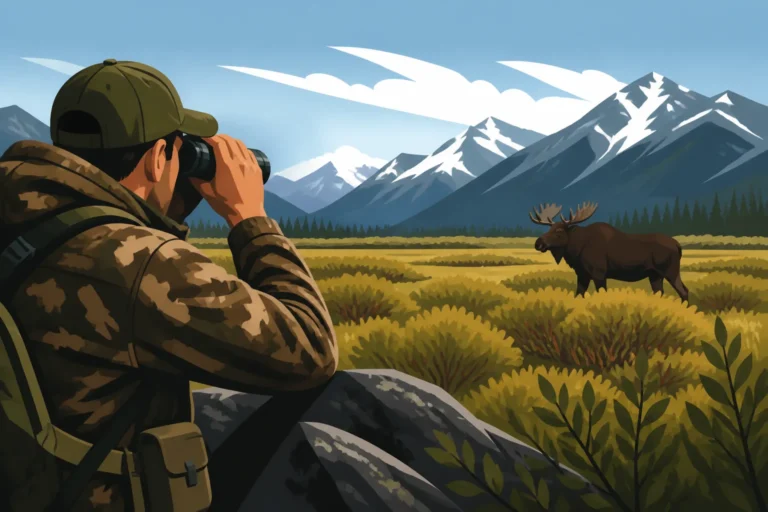
The vastness of Stone's sheep country dictates that glassing is the primary method for finding animals. You won't be still-hunting through timber; you'll be sitting for hours, often days, with your binoculars and spotting scope, meticulously scanning distant slopes. The key is to find a high vantage point that offers a panoramic view of potential sheep habitat, especially basins with good feeding areas and escape terrain. When you're Glassing an Alpine Basin for Rams, you're not just looking for a whole sheep; you're looking for movement, a subtle color difference, a horizontal line in a vertical world, or the glint of a horn in the sunlight.
Set up your spotting scope on a stable tripod and grid search the landscape. Start close and work your way out, focusing on all the sheepy-looking spots: steep rock slides, green benches, and the edges of snowfields. Take breaks to let your eyes rest, and then start again. Sheep often bed down for hours, perfectly camouflaged against their surroundings. Patience is your greatest virtue here; many sheep are found by spotting a tiny detail that only becomes apparent after repeated, diligent glassing. GoHunt's map layers can also highlight prime glassing points and potential bedding areas.
The Art of the Stalk
Once you've spotted a ram you want to pursue, the real challenge begins: the stalk. This is often an hours-long, physically and mentally draining endeavor that requires absolute focus and meticulous planning. Before you even take a step, plan your route. Identify terrain features that will offer cover from the sheep's keen eyesight – ridgelines, draws, rock formations, and even changes in elevation. Consider the wind direction; sheep have an excellent sense of smell, and a shifting wind can quickly give you away.
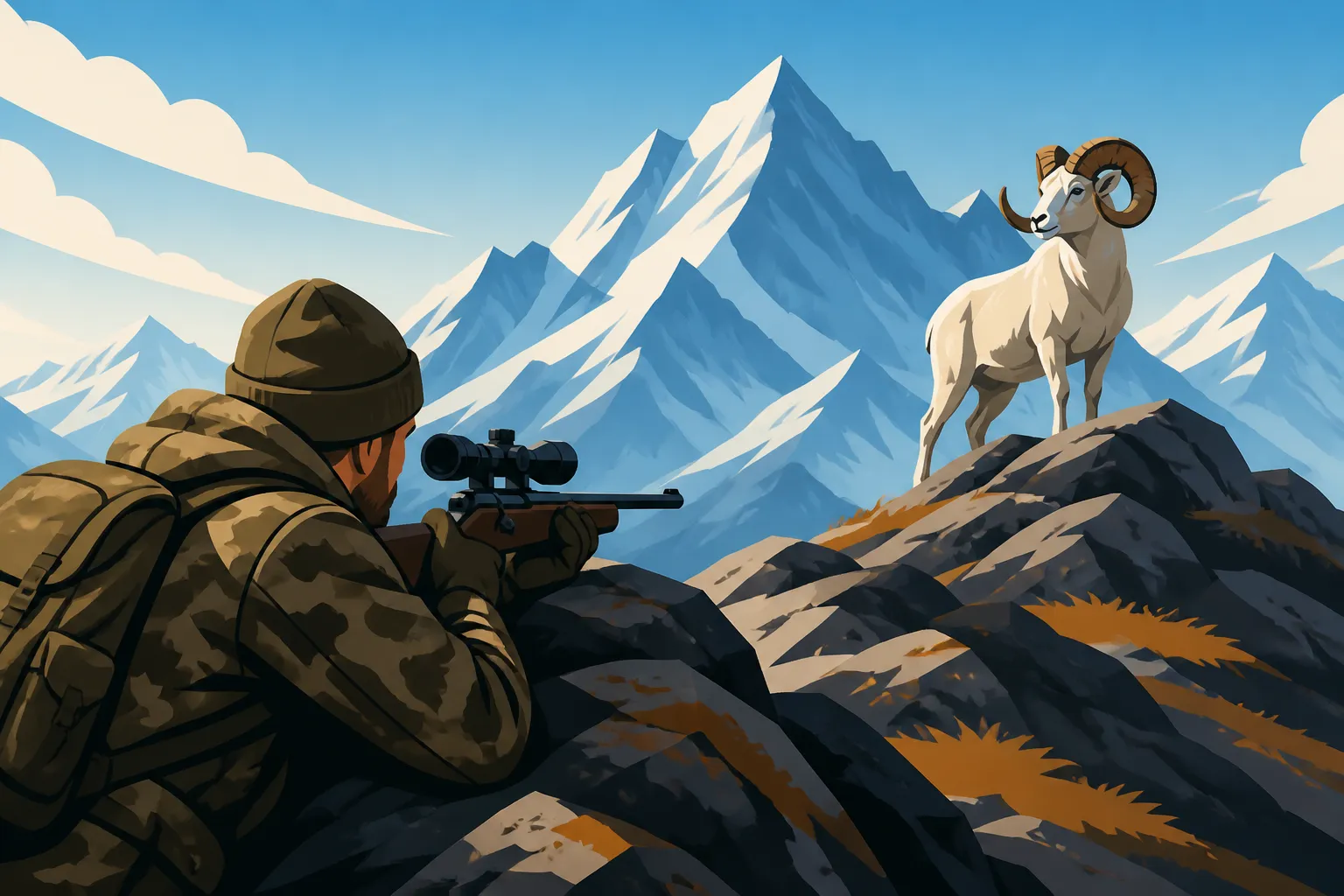
Move slowly, deliberately, and always stay hidden. Use natural contours to your advantage. Test the ground for loose rocks or noisy footing before committing. Sometimes, a stalk might involve descending into a deep valley only to ascend another mountain face to get into a shooting position. Be prepared for this kind of exertion. The final approach to within shooting range is the most critical. You might need to crawl, move at a snail's pace, or wait for the sheep to move into a better position. The goal is to get into a stable shooting rest, usually within 200-400 yards, without being detected.
Shot Placement and Follow-Up
Ethical shot placement is paramount, especially on a valuable animal like a Stone's ram in remote country. Mountain hunting often presents challenging shooting scenarios: steep angles, high winds, and varying distances. Practice shooting from unconventional positions – kneeling, sitting, prone over your pack – and at steep uphill and downhill angles. Know your rifle and ammunition intimately, including its ballistics at different ranges and elevations. A rangefinder with angle compensation is incredibly helpful.
Aim for the vital organs—the lungs and heart—just behind the shoulder. If the ram is quartering away, aim to penetrate through the opposite shoulder. After the shot, observe the animal's reaction. If it runs, mark the spot where it was standing and its direction of travel. Then, reload and be prepared for a follow-up shot. Wait a reasonable amount of time (15-30 minutes for a good lung shot, longer for a gut shot) before beginning your tracking, especially in steep country where a wounded animal can quickly disappear or fall into an unrecoverable area. Losing an animal in the Far North is not just heartbreaking; it can be incredibly dangerous and wasteful.
Physical Demands and Mental Fortitude
A Stone's sheep hunt is a true test of grit. It demands not only peak physical condition but also an unwavering mental resilience. The mountains will break those who are unprepared, both physically and emotionally.
Training for a Mountain Hunt
This isn't a walk in the park; it's an extreme physical challenge. Your training regimen should start many months, ideally a year, before your hunt. Focus on building cardiovascular endurance through activities like running, hiking with a weighted pack, and stair climbing. Leg strength is critical for ascending and descending steep terrain, so incorporate squats, lunges, and calf raises. You also need a strong core and back for carrying heavy loads.
Don't just train in a gym. Get outside and hike rugged trails with your actual hunting pack loaded to 30-50 pounds, mimicking the conditions you'll face. Practice hiking up and down hills, over uneven ground. If you live at sea level, try to incorporate some altitude training if possible, or at least understand the effects of high altitude and how to mitigate them. Being in top physical shape will not only increase your chances of success but, more importantly, your safety and overall enjoyment of the arduous journey. It's about being strong enough to keep going when every fiber of your being wants to quit.
Altitude Sickness and Wilderness First Aid
Hunting in the high alpine means dealing with increased altitude, which can bring on altitude sickness (Acute Mountain Sickness, or AMS). Symptoms can range from headaches and nausea to more severe, life-threatening conditions like High-Altitude Pulmonary Edema (HAPE) or High-Altitude Cerebral Edema (HACE). The best prevention is a slow, gradual ascent and staying well-hydrated. Discuss preventive medications with your doctor, such as Diamox, if you're particularly susceptible or planning a rapid ascent.
Given the remoteness of the Far North, access to medical help is hours, if not days, away. A comprehensive wilderness first aid kit is essential, and at least one member of your party should have advanced first aid training (e.g., Wilderness First Responder). You need to be prepared for everything from blisters and cuts to sprains, fractures, and hypothermia. Knowing how to stabilize an injury, manage pain, and communicate an emergency via your satellite device is non-negotiable. Don't underestimate the dangers of exposure in these environments; a sudden storm can turn a minor injury into a major crisis.
Mental Resilience and Patience
Beyond the physical demands, a Stone's sheep hunt is a tremendous mental challenge. You'll face long days of arduous hiking, often with no sheep sightings. The weather can be miserable, pushing your comfort levels to their limits. You might get within striking distance of a ram only for the wind to shift or the animal to disappear into a draw. Frustration and disappointment are common emotions.
This is where mental fortitude comes into play. The ability to push through discomfort, maintain a positive attitude, and stay focused despite setbacks is what separates successful sheep hunters. Patience is not just a virtue; it's a critical hunting skill. You might spend days Hunting British Columbia's Alpine in Early September, enduring cold, wet conditions, before finally getting an opportunity. Trust your preparation, rely on your team (if hunting with others), and maintain an unwavering belief that the next ridge or the next basin holds your opportunity. A strong mental game is just as important as strong legs.
Post-Harvest Care and Regulations
Successfully taking a Stone's ram in British Columbia's Far North is an immense accomplishment, but the work isn't over. Proper field care of your trophy and meat, followed by meticulous adherence to regulations, is crucial for preserving your harvest and ensuring a legal export.
Field Dressing and Meat Care in Remote Areas
Once a ram is down, the clock starts ticking, especially in warmer early season conditions. The first priority is to quickly and efficiently field dress the animal. This means removing all internal organs to allow the carcass to cool as rapidly as possible. In sheep country, you'll typically be quartering the animal right where it fell, as packing out a whole ram is often impractical due to terrain and weight. When Hanging Meat at a Backcountry Camp, ensure it's protected from scavengers and shaded from the sun.
Skinning for a full shoulder mount or life-size mount requires careful attention to detail. Make sure you know your incision lines or have an outfitter or experienced guide who can handle it. The cape needs to be fleshed and cooled as quickly as possible. Many hunters carry a small amount of salt to apply to the cape if they're in the field for extended periods. Protect the meat from dirt, flies, and excessive moisture. Game bags are indispensable for this purpose. Getting the meat and cape off the mountain is often the hardest part, requiring multiple trips or a single, extremely heavy pack out, potentially taking days.
Cape and Horn Preservation
Proper preservation of the cape and horns is essential to honour your trophy. After fleshing the cape, it needs to be thoroughly salted, rolled up, and allowed to drain. This process draws out moisture and prevents bacterial growth. If you're in the backcountry for several days, you'll need to re-salt the cape. Once back at base camp or civilization, the cape should be taken to a reputable taxidermist or frozen if immediate processing isn't possible.
For the horns, ensure they are clean of any flesh or tissue at the base. The skull plate (often called a 'skull cap' or 'horn plate') will usually be left attached to the horns and needs to be cleaned as well. If you're planning for a full skull mount, the entire skull will need to be transported. Be mindful of weight and fragility when packing out. Documenting your harvest with clear photos is also a good practice, showcasing the animal and its environment. If you're interested in pursuing British Columbia's Record Stone's Sheep, meticulous measurements and a professional scorer will be needed.
Compulsory Reporting and Exporting Trophies
British Columbia has specific compulsory reporting rules for certain species, including Stone's sheep. This usually involves presenting the head, and sometimes other parts of the animal, to a provincial official for inspection and data collection. Make sure you understand Compulsory Reporting Within Thirty Days for your specific species and region. Failing to comply can result in fines or penalties. The Wildlife Act is clear on these requirements, and ignorance is not an excuse.
If you are a non-resident, particularly from the United States, exporting your trophy and meat involves additional paperwork. You'll need permits from both Canadian and U.S. Fish and Wildlife services. This typically includes a CITES (Convention on International Trade in Endangered Species of Wild Fauna and Flora) permit for sheep and other certain species. Your guide outfitter, if you used one, will typically assist with this complex process. Make sure all necessary tags are properly affixed to the animal parts for transport. It’s a tedious but absolutely necessary part of the process to ensure your hard-earned trophy makes it home legally.
Disclaimer
The information provided in this guide is for general informational purposes only and is not intended as legal advice. Hunting regulations in British Columbia are subject to change, and it is the hunter's responsibility to consult the most current British Columbia Hunting and Trapping Synopsis, the Wildlife Act, and any other relevant provincial or federal regulations before planning or undertaking any hunting activity. Always prioritize safety, ethical hunting practices, and respect for wildlife and the environment.