What a Fannin Sheep Looks Like
The world of British Columbia's wild sheep can be a truly captivating, yet sometimes confusing, one for hunters. While many are familiar with the iconic Dall's, Stone's, and Bighorn sheep, there's another stunning and often misidentified sub-species that roams our high country: the Fannin sheep. It's common to hear hunters express frustration trying to discern the subtle differences in the field, especially when you're glassing from a distance. This guide aims to demystify the Fannin sheep, giving you a comprehensive understanding of its unique appearance so you can confidently identify this magnificent animal if you're lucky enough to encounter one.
The Unique Identity of Fannin Sheep in British Columbia
Fannin sheep, often referred to as a "colour phase" of Stone's sheep, occupy a fascinating place in British Columbia's wild sheep lineage. They are not a separate species but rather a distinct genetic variant that exhibits a unique colouration, leading to much discussion and admiration among hunters and biologists alike. Imagine spending countless hours on a steep, windswept ridge, scrutinizing distant white dots through your spotting scope, only to realize the "Dall's" you thought you saw has a dark body. That's often the moment when the Fannin sheep enters the conversation. Their range is typically nestled between the pure white Dall's to the north and the darker Stone's to the south, creating a transitional zone where their distinctive coats shine.
This intermediate colouration is what truly sets them apart and can make identification a real challenge if you're not prepared. For those interested in pursuing sheep, understanding these nuances isn't just academic; it's crucial for legal harvest and appreciating the incredible biodiversity we have in British Columbia. While their genetics are closely linked to Stone's sheep, their appearance can throw even experienced hunters for a loop. They represent a beautiful blend, a visual bridge between the light and the dark of our northern wild sheep populations. This unique position means that careful observation is key, and sometimes, it's those subtle hints of grey and brown that tell the full story.
Where Fannin Sheep Are Typically Found
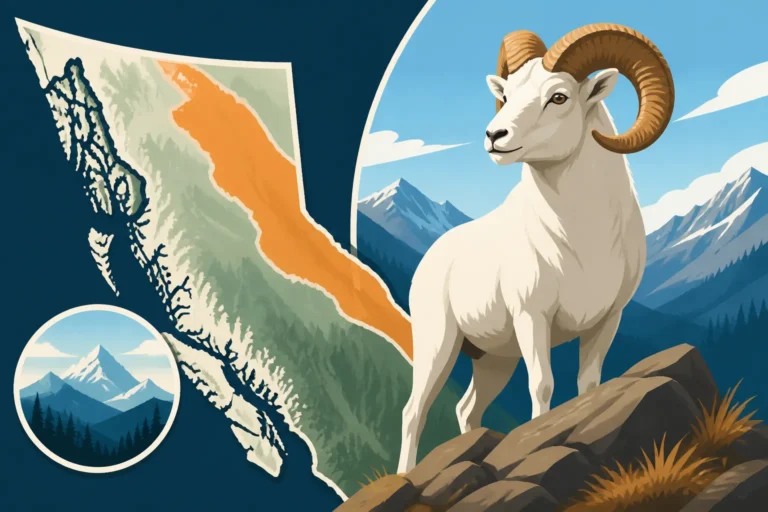
Fannin sheep primarily inhabit the northern reaches of British Columbia, particularly in the Yukon border region and some parts of the northwestern Skeena and Omineca regions. Think of the rugged, expansive mountain ranges where the alpine truly begins to stretch out towards the far north. This is the kind of country where Fannin sheep thrive. They tend to prefer the same kind of high-elevation, open, windswept terrain that other thinhorn sheep (Dall's and Stone's) call home. It's often country that requires considerable effort and a dedicated Backpacking Into British Columbia Sheep Country mindset to access.
Their distribution often overlaps with areas where Stone's sheep are found, but they are generally found further north or in specific high-elevation pockets. You might encounter them on steep, rocky slopes, alpine meadows, or along rugged ridge lines, always on the lookout for predators. These sheep are masters of their environment, blending into the grey and brown rock faces, making spotting them an exercise in patience and precision glassing. Using detailed mapping tools like those offered by GoHunt can be incredibly useful to scout potential Fannin sheep habitat from afar, helping you understand the topography and likely wintering and summering ranges before you even set foot on the mountain. Understanding their general range is the first step in knowing what kind of sheep you might encounter. British Columbia's Wild Sheep and Where They Live provides an excellent overview of all the species.
The "Salt and Pepper" Reputation
The most iconic description of a Fannin sheep is its "salt and pepper" appearance. This isn't just a catchy phrase; it perfectly encapsulates their distinctive coat colouration. Unlike the pure white of a Dall's or the predominantly dark brown-black of a classic Stone's sheep, Fannin sheep exhibit a striking combination of both. Imagine a dark body that fades into a lighter saddle patch on the back, with a mostly white or light-coloured head and neck. It’s this contrast that makes them so visually captivating and, at times, perplexing.
The dark parts of their body can range from a light brown to a rich, almost black hue, while the white or creamy patches on their rump, legs, and face provide a stark contrast. This variation is why they are often considered a colour phase rather than a distinct species; it's a spectrum of colour that runs from light to dark. When you're glassing distant slopes, trying to discern the exact hue, this "salt and pepper" blend becomes the primary identifier. It’s a truly unique adaptation to their rugged environment, allowing them to blend seamlessly with both dark rock faces and patches of snow or light scree.
Key Physical Characteristics: A Detailed Breakdown
When you're out in the field, whether you're new to sheep hunting or a seasoned veteran, every detail matters. The distinction between sheep species and sub-species, especially when dealing with Fannin sheep, often comes down to very specific visual cues. It's not just about seeing a sheep; it's about seeing which sheep. This section will dive deep into the specific physical characteristics that define a Fannin sheep, helping you differentiate them from their relatives and appreciate their unique beauty.
Coat Colouration and Markings
The coat of a Fannin sheep is its most distinguishing feature, and it's a magnificent display of nature's artistry. The "salt and pepper" description is just the beginning. Typically, a Fannin ram will have a body that ranges from a medium greyish-brown to a darker, almost blackish-brown. This darker colour usually covers the main body, including the shoulders, flanks, and belly. However, the magic happens in the lighter areas. They will almost always feature a prominent white or creamy-white rump patch, similar to a Dall's sheep but often less expansive. This rump patch can extend up onto the back as a distinctive "saddle" or "cape" area, creating that classic two-toned effect.
The legs of a Fannin sheep are also usually lighter, often white or light grey, which contrasts sharply with the darker body. Perhaps the most telling feature, however, is the head. Fannin sheep generally have a white or very light-coloured face, muzzle, and often the neck, sometimes extending down the chest. This bright head against a darker body is a significant identifier. Imagine seeing a ram with a dark body, but its head and neck are glowing white in the sun – that's a strong indicator you might be looking at a Fannin. These subtle but consistent patterns are what you need to train your eye to spot.
Horns and Body Size
When it comes to horns, Fannin sheep are essentially thinhorn sheep, sharing many characteristics with both Dall's and Stone's sheep. Their horns are typically a yellowish-brown or amber colour, often lighter than the darker horns you might see on some Bighorns. They grow in a tight curl, sweeping back and up, then out, and finally forward and down, often forming impressive full or even over-full curls in mature rams. Judging a Ram's Horn Curl and Age is a critical skill for any sheep hunter, regardless of species, and applies directly to Fannin rams.
While the horn shape is consistent with other thinhorns, the colour can sometimes be a subtle clue. However, it's primarily the body colour that will help you distinguish a Fannin. In terms of body size, Fannin sheep are robust mountain animals, similar in stature to Stone's or Dall's sheep. A mature ram can be quite large, with a solid, muscular build designed for navigating steep, unforgiving terrain. They are smaller than Rocky Mountain Bighorns but are still substantial animals, possessing the physical prowess needed to survive in the high alpine. Their powerful legs and keen eyesight are perfectly adapted for their vertical world, making them elusive and challenging to hunt.
Distinguishing Fannin from Other British Columbia Sheep Species
This is where the rubber meets the road for many hunters. British Columbia is home to several magnificent wild sheep species, and correctly identifying them in the field is paramount. Misidentification can lead to serious consequences, not to mention the disappointment of realizing you've passed up or, worse, harvested the wrong animal. Fannin sheep, with their intermediate colouration, are often the culprits behind these moments of confusion. Let's break down how to tell them apart from their closest relatives.
Fannin vs. Dall's Sheep
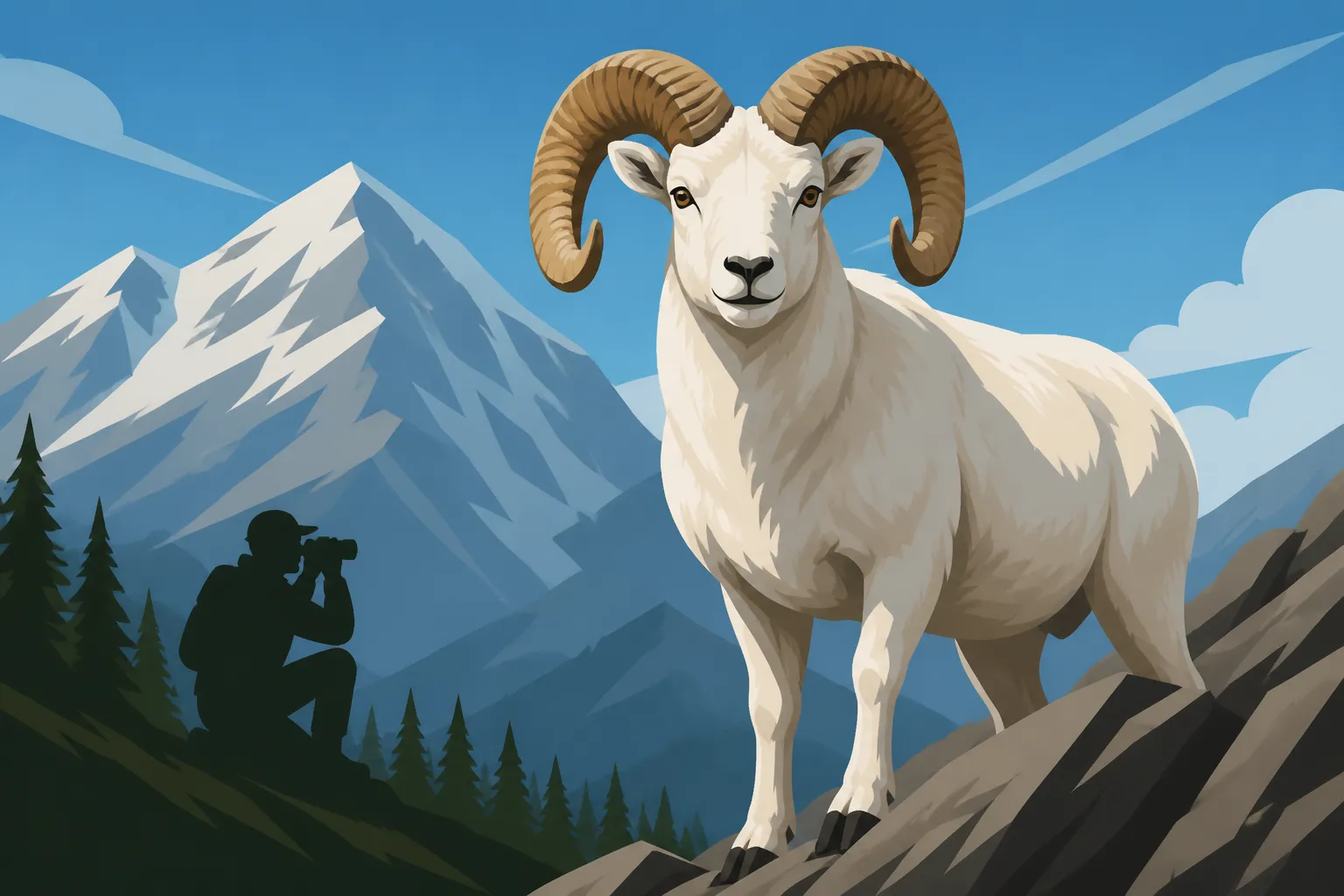
The primary difference between Fannin and Dall's sheep is pretty straightforward: Dall's sheep are almost entirely white. A classic Dall's ram will have a pure white coat, from head to tail, with very little, if any, dark pigment. There might be some very subtle grey "frosting" on older rams, but nothing approaching the dark body of a Fannin. If you see a sheep that is mostly white but has any significant amount of dark brown or grey on its body, especially a distinct darker saddle or flanks, you are not looking at a pure Dall's sheep. Where Dall's Sheep Range in British Columbia will show you that Dall's typically live further north than the main Fannin range.
Think of it this way: if it looks like it just rolled in a dust cloud but still has a dark coat underneath, it's probably not a Dall's. The Fannin sheep's dark body with a white head and lighter rump patches is the key. While a Fannin might have more white than a Stone's, it will never be as predominantly white as a Dall's. This distinction is usually clear once you get a good look, but in poor light or at extreme distances, the "white" areas on a Fannin can sometimes be mistaken for an all-white Dall's. That's when a strong spotting scope and patience are your best friends.
Fannin vs. Stone's Sheep
This is perhaps the trickiest distinction, as Fannin sheep are essentially a lighter colour phase of Stone's sheep. A true Stone's sheep typically has a much darker, almost uniformly dark brown or black body coat. While Stone's sheep also have white on their rump, belly, and inside of their legs, the overall impression is one of a much darker animal. Their head and neck, unlike the Fannin, are usually dark brown or black, matching the body, although some older rams can develop a grizzled or frosted appearance, especially around the muzzle. This can make Telling a Bighorn From a Stone's Sheep a challenge, let alone a Fannin.
The "white head" or significantly lighter head and neck of the Fannin is your biggest clue here. If the sheep has a dark body but a clearly contrasting white or very light grey head, you're likely looking at a Fannin. If the head is dark brown, matching the body, it's a Stone's. There is, of course, a spectrum, and you can find sheep that are truly intermediate, making definitive calls challenging. These are the animals that spark the most debate in sheep camp! Again, GoHunt's detailed maps and information can help you understand the specific areas where Fannin sheep are more prevalent, giving you a better idea of what to expect when you're hunting in a specific management unit.
Fannin vs. Bighorn Sheep
Distinguishing Fannin sheep from Bighorn sheep is generally easier due to several distinct differences. Bighorns (both Rocky Mountain and California) have much heavier, more massive horns that are typically a darker brown colour and form a more open, flared curl compared to the tighter spiral of thinhorn sheep like the Fannin. Their horns are also thicker at the base and taper more dramatically. British Columbia's Rocky Mountain Bighorns are a sight to behold, but very different.
In terms of coat, Bighorn sheep usually have a much browner, often grizzled brown body coat, lacking the distinct "salt and pepper" contrast of the Fannin. While Bighorns also have a prominent white rump patch, their legs are typically the same brown as their body, not white or light grey like a Fannin. Most importantly, Bighorn sheep generally have a dark face and muzzle, not the bright white face of a Fannin. Their habitat also differs; while both are mountain dwellers, Bighorns tend to prefer drier, more open, grassy slopes and lower elevations in certain regions compared to the high alpine, rugged terrain favoured by Fannin sheep. The physical differences are quite pronounced once you know what to look for.
Here's a quick comparison table:
| Feature | Fannin Sheep | Dall's Sheep | Stone's Sheep | Bighorn Sheep |
|---|---|---|---|---|
| Body Colour | Dark brown/grey body, lighter saddle | Pure white to creamy white | Dark brown to black body | Grizzled brown |
| Head Colour | White or very light grey/white face & neck | Pure white | Dark brown to black, grizzled in older | Dark brown, often grizzled |
| Leg Colour | White or light grey | White | White or light on inner legs/rump | Brown, matching body |
| Rump Patch | Prominent white/creamy white | Prominent white | Prominent white | Prominent white |
| Horn Colour | Yellowish-brown, amber | Yellowish-brown, amber | Yellowish-brown, amber | Dark brown, sometimes greyish |
| Horn Shape | Thinhorn, tight curl, sweeping back/down | Thinhorn, tight curl, sweeping back/down | Thinhorn, tight curl, sweeping back/down | Thick, heavy, more open curl, flared tips |
Habitat and Behavioural Clues for Fannin Sheep
Beyond just looking at a sheep's coat and horns, understanding where they live and how they behave can significantly aid in identification. Fannin sheep are creatures of the high mountains, adapted to some of the most challenging environments British Columbia has to offer. Their preferences for certain types of terrain and their typical patterns of movement can often confirm your visual identification, especially when you're dealing with those tricky in-between colourations.
High Alpine and Transitional Zones
Fannin sheep are typically found in the high alpine regions, often at or above timberline. This means you'll be looking for them on steep, rocky slopes, vast alpine meadows, scree fields, and along windswept ridges. They thrive in rugged, unforgiving terrain that offers both excellent visibility to spot predators and plenty of escape routes up cliffs and broken rock. This habitat preference means that Hunting British Columbia's Alpine in September will often put you in prime Fannin country.
What's particularly interesting about Fannin habitat is that it often sits in the transitional zones between the pure Dall's range to the north and the darker Stone's sheep range to the south. This geographical overlap is a key reason for their unique colouration and the confusion they sometimes cause. If you're hunting in a region known for both Stone's and Dall's sheep, you should definitely be prepared to encounter Fannin sheep, too. Understanding the specific management units and regional boundaries where these transitions occur can be immensely helpful when you’re planning a hunt. Using tools like GoHunt's layering system to view wildlife data alongside topographical maps can highlight these potential crossover areas.
Gregarious Nature and Vigilance
Like other wild sheep, Fannin sheep are highly social animals, typically found in groups. You'll rarely see a single sheep unless it's an old ram that has become solitary. Ewes, lambs, and younger rams form nursery bands, while mature rams often form separate bachelor groups for much of the year, only joining the ewes during the rut. This gregarious nature means that if you spot one Fannin sheep, chances are there are more nearby. Their collective vigilance is a formidable defense mechanism.
Fannin sheep are incredibly wary and possess exceptional eyesight. They are constantly scanning their surroundings for danger, and any unusual movement or sound can send them bounding up a cliff face. When you are Glassing an Alpine Basin for Rams, you'll notice their alertness. Their behaviour often involves feeding in open areas but always staying within quick reach of steep, broken terrain where they can quickly disappear if threatened. Observing their behaviour—how they move, feed, and react to their environment—can sometimes provide additional clues to confirm their species, especially when combined with their visual characteristics. This constant alertness is why successful sheep hunting often requires extreme patience and careful stalking.
Conclusion: Appreciating the Fannin Sheep
Understanding what a Fannin sheep looks like is more than just knowing a few details; it's about appreciating the unique biodiversity of British Columbia's wild places. Their "salt and pepper" coats, combined with the distinct white head and lighter leg markings, set them apart as a truly special thinhorn sheep. While their close relation to Stone's sheep can sometimes make identification a challenging puzzle, armed with detailed knowledge of their coat patterns, horn characteristics, and habitat preferences, you'll be much better equipped to distinguish them in the field.
Whether you're pouring over maps, reading regulations, or spending countless hours behind your optics, the journey of understanding and pursuing British Columbia's wild sheep is one of the most rewarding experiences a hunter can undertake. The Fannin sheep stands as a testament to the incredible adaptations of wildlife in our rugged mountains, a beautiful and elusive prize for those dedicated enough to seek them out.
Disclaimer
This article is for general informational purposes only and does not constitute professional advice. Laws, prices and regulations vary by location and change over time. Consult a qualified professional for guidance on your specific situation.