Hunting British Columbia’s Four-Point Antler Rules
Figuring out hunting regulations in British Columbia can feel like deciphering ancient scrolls, especially when you hit those specific antler point restrictions. Many hunters, myself included, have stood in the field squinting at a buck, heart pounding, wondering if those points truly count or not. The uncertainty can lead to missed opportunities or, worse, unintended violations. This guide is here to clear up the confusion surrounding British Columbia's four-point antler rules, ensuring you can hunt confidently and legally in the diverse landscapes of our province.
Understanding British Columbia's Antler Point Regulations
British Columbia's hunting regulations are designed to manage wildlife populations, often aiming to protect younger animals and encourage the growth of older, more mature bucks. Antler point restrictions are a prime example of this strategy, particularly the well-known "four-point rule" that applies to specific deer species and regions. It's not just about counting bumps; there's a specific definition you need to understand to stay compliant.
What Constitutes a "Point" in British Columbia?
When we talk about a "point" on a deer antler in British Columbia, the definition is quite precise. A point is typically defined as a projection on the antler that is at least one inch (2.54 cm) long and longer than it is wide at its base. This distinction is crucial because it helps differentiate true points from small bumps, burrs, or abnormal growths that might otherwise confuse a hunter in the field.
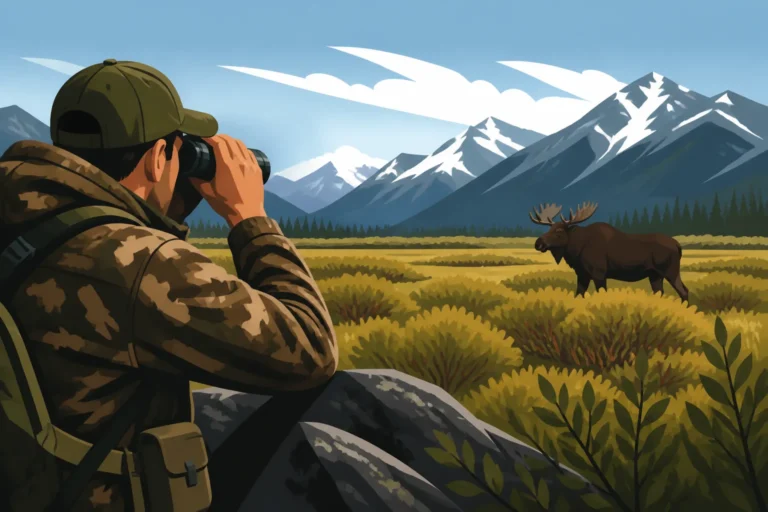
Imagine you're glassing an interior hillside for mule deer. You spot a buck with what looks like three solid points on one side, but there’s a small, blunt projection near the base. If that projection doesn't meet the one-inch length and length-over-width criteria, it doesn't count as a point. This is where your binoculars or spotting scope become your best friend, allowing you to scrutinize every detail. It’s a common frustration to second-guess yourself, especially when a buck is on the move or the light is fading. Taking your time and getting a clear view is paramount. Don't rush the shot if you're unsure; a tag isn't worth a potential violation.
The Purpose Behind Antler Point Restrictions
These specific rules aren't arbitrary; they are a key tool in wildlife management. For many years, British Columbia wildlife biologists and conservationists observed that continuous harvest of bucks, regardless of age, could skew herd demographics towards younger animals, potentially impacting breeding success and overall herd health. The four-point antler rule, particularly for species like mule deer, is largely implemented to protect yearling and two-and-a-half-year-old bucks, allowing them to mature and contribute to the gene pool for longer.
By protecting these younger animals, the regulations aim to increase the number of older, larger-antlered bucks in the population over time. This approach not only enhances the hunting experience for those seeking mature animals but also contributes to healthier, more robust deer herds in the long run. It's about sustainable hunting and ensuring future generations have ample opportunities to pursue game. While it can sometimes make hunting more challenging, it's a worthwhile compromise for the health of our wildlife. For a deeper dive into the specific characteristics of these animals, check out our guide on Mule Deer Across British Columbia's Interior.
Species Affected and Regional Variations
British Columbia is a vast province with diverse ecosystems, and its hunting regulations reflect this complexity. The four-point antler rule doesn't apply universally to all deer species or in all regions. It's vital to know which species are affected and in which specific Management Units (MUs) these rules are in effect, as boundaries can often mean a change in regulations.
Mule Deer: The Primary Focus of Four-Point Rules
In British Columbia, the four-point antler rule is most commonly associated with mule deer. These magnificent animals are found predominantly in the interior regions of the province, from the dry grasslands of the Okanagan to the rugged mountains of the Kootenays and the Cariboo. The objective of protecting younger bucks is particularly relevant for mule deer herds, which have seen fluctuations in population numbers due to various factors including habitat loss, predation, and harsh winters.
For mule deer, a "four-point" buck means the animal must have at least four points on one antler, or in some specific MUs, four points total on one side, excluding the brow tines. Always consult the current British Columbia Hunting and Trapping Synopsis to verify the exact wording for your chosen Management Unit. A helpful tool like GoHunt can provide detailed maps and overlays that highlight MU boundaries and the specific regulations that apply to each, which is invaluable when planning your hunt. Without carefully checking, you might assume a rule applies everywhere when it only applies in certain areas, leading to potential issues. Our comprehensive guide on Mule Deer Hunting in British Columbia goes into further detail about hunting this species.
White-Tailed Deer and Other Deer Species
While mule deer are the main focus, it’s crucial to understand that white-tailed deer, which are increasingly common in various parts of British Columbia, especially in the Kootenays, Peace Region, and parts of the Cariboo, generally have different or no antler point restrictions depending on the specific zone. For white-tailed deer, many areas have "any buck" seasons, or specific rules like a "2-point or better" requirement.
It's common for hunters to confuse mule deer and white-tailed deer in the field, especially in areas where their ranges overlap. Take the time to properly identify your target species before making any decisions. The tail is often the most distinguishing feature: mule deer have a thin, rope-like tail with a black tip, while white-tailed deer have a broad, flag-like tail that is brown on top and pure white underneath, often held high when spooked. Always check the regulations for your specific MU for both species. Don't assume the four-point rule for mule deer automatically applies to a whitetail buck you might encounter.
Regional Specifics and Management Unit Variations
The regulations are highly localized. What's legal in one Management Unit (MU) might be illegal in an adjacent one. For example, some MUs might have a four-point antler restriction on mule deer for the entire general open season, while others might have it only during specific periods, or perhaps a two-point rule might apply in areas where herd numbers are lower or management objectives differ.
A common frustration is driving just a few kilometers and crossing into a new MU with entirely different rules. This is where meticulous planning using resources like the provincial government's online synopsis or a mapping tool like GoHunt is non-negotiable. Always cross-reference the exact MU number with the regulations. Ignorance of the law is not an excuse. Many seasoned hunters make it a habit to scout these boundaries extensively, sometimes using mapping apps to literally draw the lines on their GPS before they even step foot in the woods. For more on navigating these zones, see Reading a British Columbia LEH Zone Map and British Columbia's Management Units and Regions.
| Deer Species (Commonly Hunted) | Primary Regions Affected by 4-Point Rule | Specific Regulation Notes (Check Synopsis for MU Specifics) |
|---|---|---|
| Mule Deer | Interior (e.g., Kootenays, Okanagan, Cariboo, Thompson) | Often requires 4 points on one side, excluding brow tines. Some MUs may specify "4 points total on one side." |
| White-Tailed Deer | Kootenays, Peace, parts of Cariboo | Generally "any buck" or "2 points or better" rules, rarely 4-point restrictions. |
| Black-Tailed Deer | Coast, Vancouver Island, Haida Gwaii | Typically "any buck" or "2 points or better." 4-point rules are not common for blacktail. |
Disclaimer: This table provides general guidance. Always refer to the most current British Columbia Hunting and Trapping Synopsis for specific, up-to-date regulations for your chosen Management Unit.
Practical Tips for Field Judging and Compliance
Making an accurate judgment call on antler points in the heat of the moment can be one of the most stressful parts of a hunt. The buck might be moving, the light could be low, or the terrain might obscure your view. However, with practice, the right gear, and a disciplined approach, you can significantly improve your chances of ethical and legal compliance.
Using Optics Effectively for Identification
Your binoculars and spotting scope are your most important tools when it comes to field judging antler points. Don't rely solely on the naked eye, especially at distance. High-quality optics will allow you to count points accurately, assess their length, and confirm they meet the "one inch and longer than wide" definition.
When you spot a buck, immediately get your optics on it. If it’s standing still, take your time. Look at each antler individually. Pay close attention to the brow tines, G1s, G2s, G3s, and any kickers or abnormal points. Remember that brow tines generally do not count towards the four-point minimum for mule deer in British Columbia unless explicitly stated in specific regulations for that MU. Angle matters too; sometimes a point looks short from one angle but long enough from another. If you're hunting an area known for big deer, you might be surprised by how many small points can appear. Using a good mapping tool like GoHunt can also help you understand the landscape features that might influence a buck's movement, giving you more time to evaluate before it disappears.
Common Mistakes and How to Avoid Them
One of the most frequent mistakes hunters make is rushing the decision. Buck fever is real, but a quick, adrenaline-fueled shot at an unidentified animal can lead to regret. Another common error is misjudging points due to distance, poor light, or obscured views. A tree branch might hide a crucial point, or a point might appear shorter than it is when viewed head-on.
To avoid these pitfalls:
- Be patient: If you're not 100% sure, don't shoot. The animal may offer a better view, or another legal buck might appear.
- Use your full range of optics: Don't just glance through binoculars; set up a spotting scope if you have time and stable ground.
- Change your position: If safe and possible, try to reposition yourself to get a different angle on the buck. What looks like a three-point from the front might reveal a hidden fourth point when viewed from the side.
- Look for symmetry (but don't rely on it): While many bucks are symmetrical, some are not. A four-point on one side and a three-point on the other means it's still a four-point buck. However, if the rule is "four points on one antler," then it only needs it on one side. This is where precise regulation reading is vital, as discussed in British Columbia's Four-Point Antler Restriction.
- Study pictures: Before your hunt, spend time looking at photos of legal and illegal bucks. This mental conditioning will help you make faster, more accurate decisions in the field.
Scouting for Legal Bucks
Effective scouting is paramount to success under antler point restrictions. Instead of just looking for "a buck," you're now specifically looking for "a legal buck." This means focusing your efforts on areas known to hold older, more mature animals. Mature bucks often use different terrain and cover than younger bucks.
Utilize resources like GoHunt or other mapping software to identify potential bedding areas, feeding zones, and travel corridors where older bucks might be more prevalent. Look for historical data on harvest reports in your chosen Management Unit. Early season scouting, even before the deer shed their velvet, can give you a crucial advantage. Keep an eye out for larger tracks and rub lines, which often indicate the presence of a mature animal. Understanding Scouting a British Columbia Management Unit before the season opens will significantly increase your chances of finding and confirming legal game. Remember, finding a four-point buck isn't always easy, especially in heavily hunted areas. It requires patience, knowledge of deer behaviour, and a good understanding of the specific area you're hunting.
Consequences of Non-Compliance and Ethical Considerations
Hunting in British Columbia is a privilege, not a right, and it comes with significant responsibilities. Understanding and adhering to the regulations, especially complex ones like antler point rules, is fundamental to maintaining that privilege and ensuring the sustainability of our wildlife resources. Violating these rules carries serious consequences, both legal and ethical.
Legal Penalties for Hunting Violations
The British Columbia Wildlife Act outlines strict penalties for hunting violations, including those related to antler point restrictions. If you mistakenly harvest an animal that doesn't meet the legal antler point requirements, you could face hefty fines, confiscation of your gear (including your firearm and vehicle), and even a suspension of your hunting license for a period of years.
These penalties are designed to be a significant deterrent. Imagine losing your truck, your rifle, and your ability to hunt for several years, all because you rushed a shot or didn't double-check the regulations. It's a sobering thought, and one that underscores the importance of absolute certainty before pulling the trigger. The Conservation Officer Service takes these violations very seriously, as they directly undermine wildlife management efforts. Staying informed about regulations, including updates, is your responsibility, which you can do by consulting the British Columbia's Two-Year Regulations Synopsis before every hunting season. For specific details on potential repercussions, you might also find our guide on Penalties for a Hunting Violation informative.
Ethical Hunting and Conservation
Beyond the legal ramifications, harvesting an illegal animal goes against the core tenets of ethical hunting and conservation. As hunters, we are stewards of the land and its wildlife. Our actions reflect on the entire hunting community. Making a mistake due to carelessness or impatience not only impacts the individual animal but also jeopardizes the social license that allows us to hunt.
Ethical hunters prioritize responsible harvest, respect for the animal, and adherence to all regulations. If you find yourself in a situation where you're unsure about the legality of a buck, the most ethical choice is to pass on the shot. There will always be another opportunity, another season. Contributing to conservation means making wise choices in the field that support healthy populations for the long term. This mindset is crucial for preserving hunting traditions and ensuring that future generations can enjoy the same opportunities we do. Remember that taking the mandatory British Columbia Hunter Education and CORE course instills many of these ethical principles from the start.
Reporting and Accountability
If, despite your best efforts, you accidentally harvest an illegal animal, it is your legal and ethical obligation to report it immediately to the Conservation Officer Service. Attempting to hide or misrepresent the harvest will only compound the problem and lead to more severe penalties. While it’s a difficult conversation to have, honesty is always the best policy.
Conservation Officers understand that mistakes can happen, especially in challenging field conditions. While consequences will still apply, a prompt and truthful report demonstrates accountability and respect for the regulations and the resource. It's a tough situation, but facing it head-on is part of being a responsible hunter. By understanding the rules, practicing good field judgment, and prioritizing ethical decisions, we can all contribute to a positive hunting culture in British Columbia.
Disclaimer
The information provided in this guide is for general informational purposes only and is not a substitute for the official British Columbia Hunting and Trapping Synopsis. Hunters are solely responsible for knowing and understanding all current regulations for the specific Management Unit and species they intend to hunt. Always consult the most recent official regulations before heading into the field.