Raking Brush for a Bull Moose
Finding that elusive bull moose during the rut can feel like searching for a ghost in the vast British Columbia wilderness. You've hiked for miles, called until your throat is raw, and still, nothing. It's incredibly frustrating when you know they're out there, but they just won't show themselves. This comprehensive guide is here to unravel the mystery of raking brush, a powerful and often overlooked calling technique that can turn a silent hunt into an unforgettable encounter with a rutting bull moose.
Understanding the Moose Rut and Why Raking Works
The autumn air in British Columbia holds a special kind of magic, and for moose hunters, it signals the intense drama of the rut. This period, usually spanning from late September through October, is when bull moose are at their most vulnerable and aggressive, driven by the primal urge to breed. Understanding this season of heightened activity is crucial to making sense of why a technique like raking brush is so incredibly effective.
The Dynamics of the Moose Rut
During the rut, the entire social structure of moose changes dramatically. Bulls that were once solitary become bold and territorial, constantly searching for receptive cows and challenging any perceived rivals. They're wired for competition, looking to establish dominance and secure breeding rights. This intense rivalry often manifests in physical displays, including thrashing vegetation with their antlers, digging scrapes, and vocalizing with deep grunts and bawls. When British Columbia's moose rut peaks, usually around the first two weeks of October, this behavior reaches its crescendo. It's not just about finding a mate; it's about proving their strength and superiority to other bulls in the vicinity.
The woods literally come alive with their presence. You might hear the distinct sounds of a bull rubbing his antlers on a tree, or even the crashing of brush as two bulls spar. It's during this time that they are most susceptible to calls that mimic these natural behaviors. A bull might be with a cow, but the sound of another bull challenging him can often be enough to pull him away, or at least tempt him to investigate who dares trespass on his domain. This natural aggressive tendency is what we aim to exploit with raking.
Mimicking a Dominant Bull's Presence
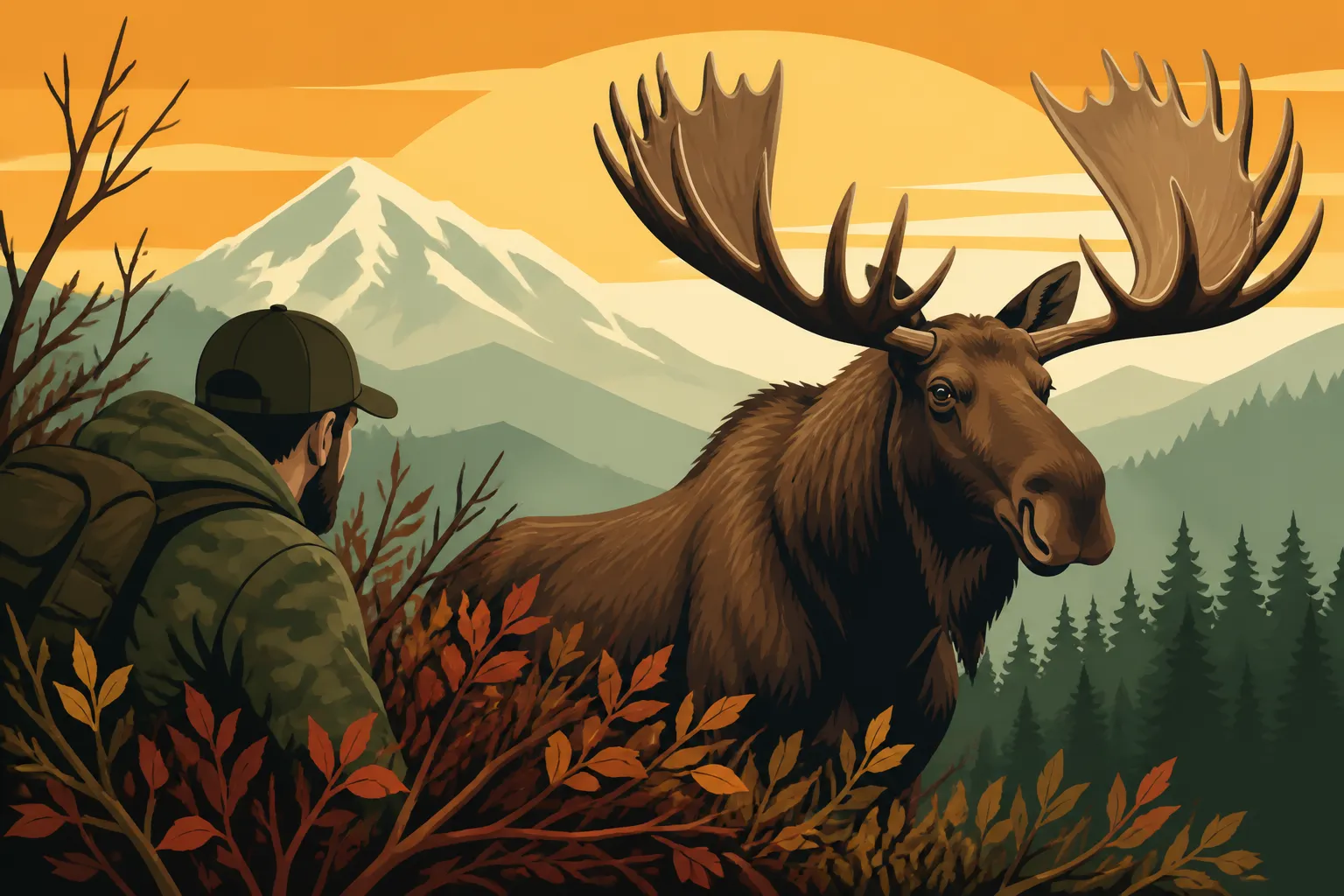
Raking brush is, at its core, an imitation of a bull moose thrashing his antlers on trees and brush, a clear sign of his presence and a direct challenge to other bulls. Imagine a massive bull, antlers gleaming, tearing through a stand of young willows or alders, breaking branches, digging his antlers into the soft earth, and creating a ruckus. This isn't just random destruction; it's a deliberate advertisement of his size and strength. He's saying, "I'm here, I'm big, and I'm ready to fight."
When you rake, you're not just making noise; you're painting a picture in the mind of any nearby bull. You're simulating the exact sounds and, if done correctly, the visual disturbance that another dominant bull would create. The snapping of twigs, the scraping of "antlers" against wood, the rustling of leaves – all these sounds contribute to a realistic illusion. It signals competition, which can be an irresistible lure to a rutting bull. He might be curious, he might be angry, but either way, he's likely to come check it out. This method is particularly potent when combined with the occasional low, guttural grunt that further mimics an agitated bull, making your setup even more convincing. It's all about making him believe another bull is challenging his territory or his potential breeding cows.
Best Conditions and Locations for Raking
For raking brush to be truly effective, you need to consider the specific conditions and locations where moose are most likely to respond. While the general period of the rut is key, certain environments enhance its drawing power. Moose, especially in the interior and northern regions of British Columbia, favour areas with thick cover, water sources, and abundant browse.
Think about dense willow flats, thick alders along creek bottoms, or stands of young pine and spruce where cover is dense enough for a moose to feel secure, yet open enough for them to move through. When you're Glassing a Willow Flat for Moose, these are prime spots for raking. Early mornings and late evenings, when moose are most active, are often the best times to try this technique. Overcast days, or even light rain, can also work to your advantage as it dampens sound, making it harder for a bull to pinpoint your exact location immediately, often drawing him in closer to investigate.
When you're Hunting Moose on a Cutblock Edge, or along a Hunting British Columbia's Logging Road Network, look for pockets of dense regrowth where moose feed and seek cover. A perfect location would be a thicket just off a natural travel corridor, or on the edge of a small swamp or beaver pond. The thick cover helps conceal you and provides the bull with a sense of security as he approaches. Just remember, a bull often won't come crashing in directly. He'll circle downwind, using his incredible sense of smell to verify what he heard. Therefore, choose a spot where the wind is consistent, and you have good visibility in the direction you expect him to approach. Utilizing tools like GoHunt can help you scout these prime areas digitally before you even set foot in the field, identifying optimal cover and terrain features.
The Art of Raking: Step-by-Step Technique
Raking isn't just about randomly hitting a tree with a stick; it's a nuanced performance. To truly sell the illusion of a dominant bull, you need to pay attention to your "tools" and your actions, making them as realistic as possible.
Choosing the Right "Rake"
The most authentic "rake" you can use is, of course, a shed antler. Many dedicated moose hunters collect these specifically for rut hunts, as the sound of bone on wood is incredibly realistic. However, if you don't have a shed antler, a sturdy branch that’s roughly the size and thickness of a moose antler beam can work wonderfully. Look for a branch that has some smaller protruding nubs or forks that can simulate the tines of an antler, allowing you to scrape and break smaller branches effectively.
The key is to use something that makes a natural sound. Avoid metal objects or anything that sounds distinctly artificial. The goal is to mimic the sound and feel of a bull interacting with his environment. Practice a bit before you head into the field; listen to the sounds you create. Are they sharp and brittle like breaking branches, or dull and thudding? You want to replicate the former as much as possible to convince any discerning bull that a rival is indeed in his territory.
Simulating the Sounds of a Bull
Once you have your "rake," the performance begins. Start by gently scraping the "antlers" against the trunks of small trees or bushes, mimicking a bull rubbing his rack. Then, gradually increase the intensity. Thrash bushes, break small branches, and even dig your "antlers" into the ground a little. Don't be shy – real bulls make a lot of noise!
Vary the sounds. Sometimes it's a long, drawn-out scrape, other times it's a series of quick, aggressive thrashing motions. Interject these sounds with the occasional deep, guttural bull grunt. These grunts, when combined with the raking, create a powerful image of an agitated bull. Think about how a bull moves: he's not always frantic, but he can be very destructive when he wants to make a point. The combination of sound and perceived effort is what makes this technique so potent. It might take a few attempts to get the rhythm down, but consistency and realism are your best friends here.
Strategic Positioning and Approach
Your setup is just as critical as your calling. When you're raking, you're essentially challenging a bull to come find you. This means you need to be prepared for his arrival, which could be silent and sudden. Always set up with the wind in your favour, ideally with the wind blowing from your calling position towards where you expect the bull to be. This ensures he won't smell you as he circles to investigate.
Position yourself in an area with good visibility, but also with enough cover to break up your outline. Clear shooting lanes are essential, as a bull might present himself for only a brief moment. Often, hunters will work in pairs for this strategy. One person does the raking and calling from a slightly concealed position, while the other positions themselves 30-50 yards away, downwind and with a clear view of the approach, ready to spot and potentially take a shot. This allows the caller to focus purely on the performance without worrying about scanning for movement, and the spotter can watch for any subtle approach. Remember that a bull may approach from any direction, but most often he will try to circle downwind to get your scent. Keep alert, remain quiet between raking sequences, and be ready to react quickly.
Integrating Raking with Other Calling Methods
Raking brush is incredibly effective on its own, but its power is amplified significantly when you weave it into a broader calling strategy. Moose are complex animals, and a multifaceted approach often yields the best results.
Combining Raking with Cow Calls
One of the most potent combinations in moose calling is pairing aggressive raking with soft, inviting cow calls. Imagine a bull thrashing his antlers, making a lot of noise, and then, faintly, a cow call emanates from his vicinity. This setup is incredibly enticing. The raking tells other bulls, "I'm a big, aggressive bull," while the cow call says, "And I've found a receptive cow." This can be a double whammy for a rutting bull. He hears a rival, and he hears a potential mate – an irresistible combination that often sparks an immediate desire to investigate.
The cow call doesn't need to be loud or prolonged. A few soft, inquiring moans, almost like she's trying to find the bull, can be enough. Timing is important: you might rake aggressively for 30-60 seconds, then pause, listen, and then issue a few cow calls. This simulates a realistic scenario in the woods and leverages both the bull's competitive and reproductive instincts. Mastering the art of Calling Moose in the Rut involves learning when to use which vocalizations.
Pairing Raking with Bull Grunts
While raking itself implies the presence of a bull, directly incorporating bull grunts into your sequence takes it to another level of realism. A bull grunt, especially a deep, guttural one, sounds aggressive and territorial. When you combine this with the visual and auditory disturbance of raking, you create a very convincing portrayal of an agitated bull.
Think of the grunts as conversational. A series of short, choppy grunts while raking can sound like a bull letting off steam, asserting his dominance. A longer, drawn-out bawl might signal his search for a cow or a challenge to another bull. The goal is to make your presence undeniable and intimidating to any other bull within earshot. If you're Calling Moose in British Columbia's Interior, these specific vocalizations are part of the local dialect, so to speak, and will resonate with the moose in that area. Remember to vary the intensity and frequency of your grunts to keep the illusion alive and avoid sounding repetitive or unnatural.
The Importance of Silence and Observation
Perhaps the most critical, yet often overlooked, aspect of effective calling is silence and observation. Moose are incredibly intelligent and cautious animals, especially older, larger bulls. They don't just come crashing in; they often approach silently, circling downwind to catch your scent before committing to a visual. This is why long periods of listening are just as important as your active calling.
After a raking and calling sequence, settle down and become completely motionless for 5-10 minutes, or even longer. Listen intently for any subtle sounds: a twig snapping, a soft grunt, the rustle of leaves, or even the faint swish of antlers through brush. Use your binoculars or scope to meticulously scan the dense cover, looking for any movement, any flicker of an ear, or the dark outline of a body. A moose might be standing just inside the timber, watching and listening, trying to pinpoint the source of the sounds. Many times, bulls will approach cautiously, stopping just out of sight to confirm what they heard. Patience is not just a virtue in moose hunting; it's a strategic necessity. A valuable tool like the GoHunt app can assist in identifying terrain features that a moose might use for a silent approach, helping you anticipate their movements.
Common Mistakes and Advanced Tips for Success
Even with the best intentions and the right techniques, raking brush for moose can be challenging. Understanding common pitfalls and incorporating advanced strategies can significantly increase your chances of success in the field.
Avoiding Over-Calling and Impatience
One of the biggest mistakes novice callers make is over-calling. They get excited, they keep raking and grunting, and they don't give the moose enough time to respond or approach. Remember, moose operate on their own timeline, not yours. A bull might hear your call from a mile away and take 20-30 minutes to slowly make his way to your position, carefully checking the wind and cover along the way.
Patience is paramount. After a vigorous raking and calling sequence (perhaps 1-2 minutes of activity), settle into a period of complete silence and intense listening for 10-15 minutes, or even longer. If you hear nothing, try another sequence. If you hear a distant grunt, reply with a less aggressive call, mimicking a bull who has acknowledged the challenge but isn't rushing in. Let the moose dictate the pace. A good rule of thumb is to call for a minute, then listen for ten. It takes incredible discipline, but it’s often the difference between success and failure when you're after Moose in British Columbia's Interior and North.
Reading a Moose's Response
Moose often communicate in subtle ways, and understanding their responses can tell you a lot about whether your calling is working and how to proceed. A bull that is interested might not always come crashing in. Instead, you might hear a distant grunt, a branch breaking far off, or even silence as he circles to get downwind.
If you hear a distant grunt or a faint thrashing sound, it means he's heard you and is likely interested. At this point, you might respond with a slightly less aggressive series of rakes and grunts, almost as if you’re saying, "Come on over." If he starts circling downwind, as they often do when Hunting Moose Off a British Columbia Forest Road, try to reposition if possible, or prepare yourself for an approach from that direction. Sometimes, a bull will even "ghost" you, coming in completely silently, so constant vigilance is crucial. Look for flicking ears, a dark shape against the trees, or the movement of a rack. Learning to read these subtle cues is a critical skill for any serious moose hunter.
Safety Considerations in Moose Country
Hunting in British Columbia's moose country, especially during the rut, demands a heightened awareness of safety. These animals are immense; a mature bull can weigh upwards of What a British Columbia Bull Moose Weighs of 1,200 pounds and stand six feet at the shoulder. A rutting bull, driven by hormones, can be aggressive and unpredictable. When you're actively challenging them with raking and grunts, you're essentially inviting a confrontation.
Always be aware of your surroundings, especially if you're alone. Have an escape route planned and know which way you’ll move if a bull charges. Carry bear spray, not just for grizzlies but also as a last resort against an aggressive moose. It's also crucial to remember that you're in prime Bear Safety While Hunting in British Columbia territory. Grizzlies and black bears are common in many moose habitats, and they might be attracted to your calling, or simply be present in the same area. Being prepared for an encounter with either species is non-negotiable. Furthermore, when the hunt is successful, you'll be faced with the monumental task of Quartering a Moose in Grizzly Country or Getting a Moose Out on a British Columbia River, both of which require careful planning and often multiple hands to do safely. Never let the excitement of the rut override your commitment to safety.
Disclaimer
Hunting is an inherently risky activity. This guide provides general information and recommendations. Always consult and adhere to the most current British Columbia Hunting Regulations Synopsis and local laws. Safety should always be your top priority. The author and publisher are not responsible for any accidents, injuries, or legal issues that may arise from hunting activities.