British Columbia’s Nine Hunting Regions
Navigating the vast and varied landscapes of British Columbia for hunting can feel like an immense undertaking, especially when you're faced with an entire province of potential hunting grounds. It's easy to get lost in the sheer scale of it all, wondering where to even begin your research. This comprehensive guide is designed to cut through that complexity, breaking down British Columbia into its nine distinct hunting regions, giving you a clearer picture of what each offers, the challenges you might face, and the incredible opportunities that await in every corner of this wild province.
Navigating British Columbia's Diverse Hunting Landscape
British Columbia is a truly immense place, covering over 944,000 square kilometres (364,000 square miles) of incredibly diverse terrain. From the temperate rainforests of the coast to the arid interior grasslands, and from vast boreal forests to jagged, snow-capped peaks, the sheer variety is astounding. For hunters, this diversity is both a blessing and a challenge. It means a huge array of game species and hunting styles, but it also means that understanding where to go, what to expect, and how to prepare is absolutely paramount. You can't hunt the Coast like you hunt the Peace, and expecting the same results from the same approach across the province is a recipe for frustration.
The Importance of Regional Divisions
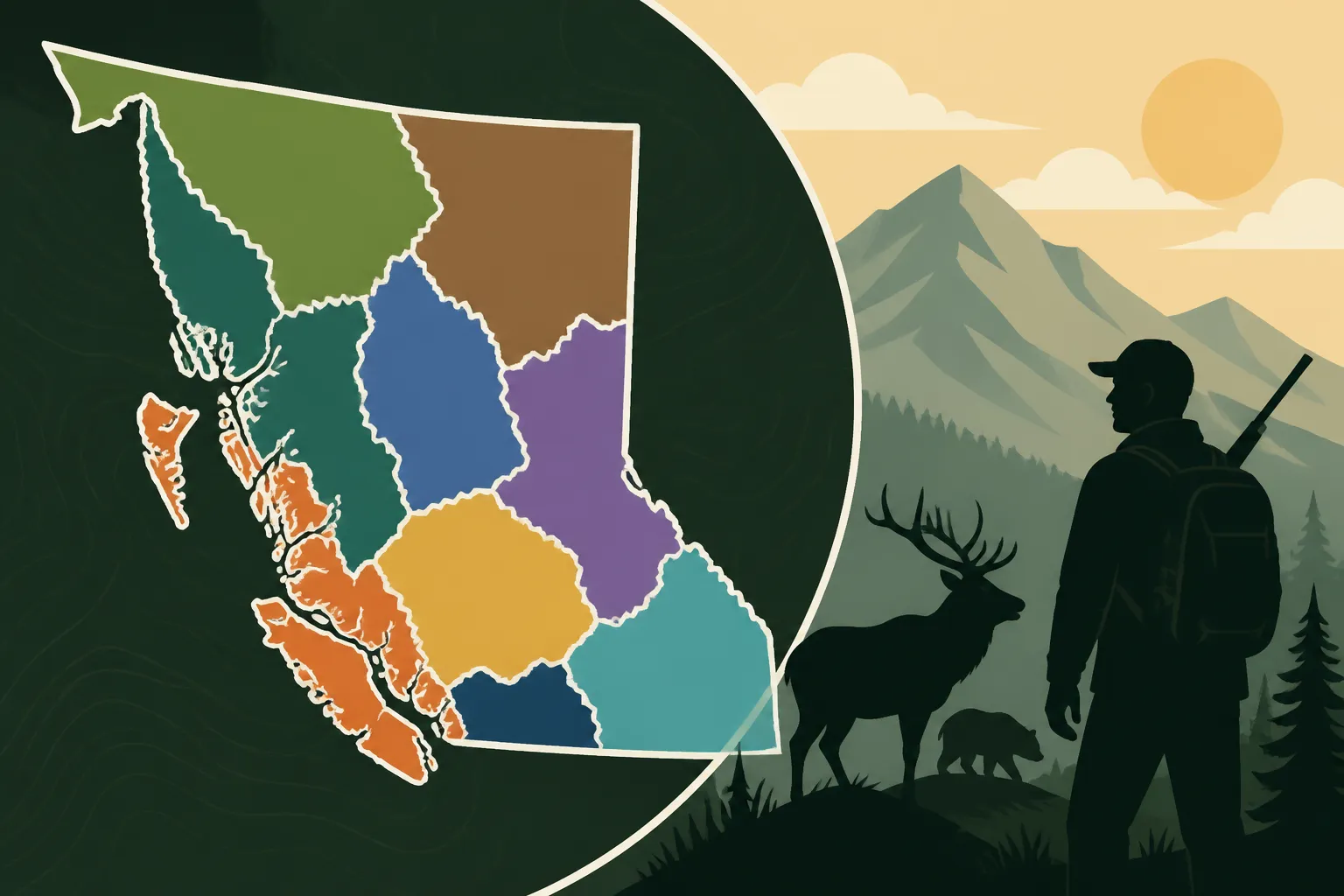
The provincial government has, for administrative and management purposes, divided British Columbia into nine distinct hunting regions. These aren't just arbitrary lines on a map; they represent significant ecological and geographical differences that directly impact hunting opportunities, species presence, and even regulatory nuances. Each region has its own general open seasons, its own set of Limited Entry Hunting (LEH) zones, and often, its own dominant game species or populations that thrive in its specific environment. Failing to understand these regional distinctions is like trying to navigate a city without a map – you might get somewhere, but it'll be by accident and probably not where you intended.
Think of it this way: a hunter targeting Roosevelt elk will be looking at vastly different regions than someone hoping to harvest a Stone's sheep or a Peace Country whitetail. The climate, vegetation, access points, and even the local hunting culture can vary dramatically from one region to the next. Knowing which region you're in, or which region you should be in for your target species, is the very first step in effective hunt planning. It dictates everything from the type of gear you'll need to the kind of terrain you'll be scouting and traversing. British Columbia's Management Units and Regions are designed to help with this, giving hunters a framework to understand the complexities.
How Management Units Fit In
Within each of these nine large regions, the province is further subdivided into numerous, smaller Management Units (MUs). These MUs are even more granular, often following natural geographic features like drainages, mountain ranges, or major river systems. While the regions give you the big picture, the MUs are where the rubber meets the road for regulations. All specific hunting regulations—like open seasons, bag limits, antler restrictions, and LEH boundaries—are defined at the MU level. You'll find that one MU might be open for a particular species, while an adjacent one is closed, or has different dates and rules.
This intricate system, while sometimes daunting to new hunters, is crucial for sustainable wildlife management. It allows biologists and conservation officers to tailor regulations to specific local populations and habitats, ensuring that hunting pressure is managed effectively. When you're planning a hunt, it's not enough to just know the region; you absolutely must drill down to the specific Management Unit you intend to hunt. Tools like onX Hunt or GoHunt can become your best friends here, allowing you to overlay these MU boundaries onto detailed topographical maps, making it much easier to visualize your hunting area and understand the rules that apply to that exact spot. Understanding Reading a British Columbia LEH Zone Map is a skill every BC hunter needs to master.
Region 1: Vancouver Island – The Emerald Isle's Big Blacktail
Vancouver Island, Region 1, stands apart geographically and ecologically from the rest of British Columbia. Separated from the mainland by the Strait of Georgia, it's a world unto itself, characterized by lush, temperate rainforests, rugged coastlines, and a dense network of active and deactivated logging roads. While many species found on the mainland are absent here, Vancouver Island is legendary for its Columbian blacktail deer, often growing to impressive sizes, and its Roosevelt elk, which are the largest subspecies of elk in North America. Black bears are also very common, with some truly massive specimens roaming the island.
The island's hunting landscape is dominated by heavy timber, thick undergrowth, and a perpetual dampness that can make tracking and visibility challenging. However, this environment also provides incredible cover for game, allowing them to thrive in close proximity to human activity without being easily spotted. For those who embrace the challenge of still-hunting through dense forests or patiently watching clearcuts, Vancouver Island offers some of the most rewarding hunting experiences in the province.
Hunting the Coastal Rainforests
Hunting in Vancouver Island's coastal rainforests is a unique experience. Forget long-range glassing across open sagebrush flats; here, your world is often limited to 50-100 yards, sometimes even less. The dense canopy, abundant rainfall, and rich soil create a jungle-like environment, especially in areas of older growth or regenerating second-growth timber. This means you'll be relying heavily on your ears and your ability to move silently, interpreting subtle signs like fresh tracks in the mud, a recently browsed sapling, or the distant snap of a twig.
Blacktail deer thrive in this environment, using the dense cover for security and feeding on the plentiful browse. They are masters of their domain, often seeming to vanish into thin air. A typical blacktail hunt might involve slowly still-hunting through an old clearcut edge, working down a skid trail, or carefully picking your way through a mossy old-growth forest. Patience is a virtue, as is the ability to adapt to sudden changes in weather, as the island is famous for its sudden downpours. Focusing on Still-Hunting Second Growth for Blacktail can significantly increase your odds.
Accessing the Island's Timber and Old Growth
Accessing prime hunting grounds on Vancouver Island can be both straightforward and incredibly complex. A vast network of logging roads permeates the island, providing access to areas that would otherwise be impenetrable. Many of these roads are actively used by logging companies, meaning hunters must be vigilant, understand radio call procedures, and yield to industrial traffic. Other roads are deactivated, often with gates, washouts, or heavy brush growth, requiring high-clearance 4×4 vehicles, ATVs, or simply a good pair of boots and a willingness to walk.
A significant portion of the productive land is privately owned by timber companies, who often manage access through gates and sometimes require permits or fees. This is where researching Getting Onto Private Forest Land in British Columbia becomes crucial. Knowing which gates are open, which roads are accessible, and where you are legally allowed to hunt is paramount. Some of the most productive blacktail and elk country can be found deep within these timber blocks, but getting to it requires careful planning, reliable navigation tools like onX Hunt, and sometimes a willingness to camp remotely to maximize your time in the field.
Region 2: Lower Mainland – From Suburbia to Steep Mountains
Region 2, the Lower Mainland, presents a fascinating paradox for hunters. It's the most densely populated region in British Columbia, encompassing metropolitan Vancouver and its sprawling suburbs. Yet, within a relatively short drive, one can find themselves deep in rugged mountains, vast forests, and productive river valleys that offer surprisingly good hunting opportunities. This region stretches from the coast into the Coast Mountains, extending east through the Fraser Valley towards Hope, and north towards Whistler and Pemberton. The challenge here is often finding accessible public land that isn't heavily impacted by human activity or closed to hunting due to proximity to communities.
While large game populations might not be as widespread or numerous as in more remote regions, dedicated hunters can find deer (both blacktail and some whitetail), black bears, and even opportunities for mountain goat and grizzly bear in the highest, most remote reaches of the Coast Mountains. Waterfowl hunting in the Fraser River Delta is also world-class, but typically falls under federal migratory bird regulations rather than provincial big game rules.
Balancing Urban Sprawl with Backcountry Hunts
The biggest hurdle for hunters in the Lower Mainland is undoubtedly the urban-wild interface. Expanding communities, recreational areas, and private property create a patchwork of accessible and restricted zones. It's vital to be acutely aware of municipal bylaws, no-shooting zones, and private property boundaries. Discharging a firearm too close to a dwelling or within city limits can lead to serious legal consequences, and understandably, public perception of hunting is often most scrutinized in these populated areas.
However, once you push beyond the immediate urban fringe, the landscape quickly changes. The mountains rise steeply from the valley floor, creating vast tracts of challenging but wild terrain. Hunters often find themselves navigating a blend of Crown land, private timber holdings, and even provincial parks or protected areas where hunting might be restricted or prohibited. This requires meticulous scouting and reliance on detailed maps, often using digital tools like onX Hunt, to ensure you are legally hunting in an open area. Success often comes to those willing to hike further and climb higher, leaving the crowds behind.
Hunting Opportunities in the Fraser Valley and Beyond
Despite the challenges, the Lower Mainland offers distinct hunting opportunities for those who know where to look. The Fraser Valley itself provides pockets of habitat for blacktail deer, particularly in the foothills and agricultural fringes where cover meets feed. Black bears are common throughout the mountains surrounding the valley and can be pursued during spring and fall seasons. For the truly adventurous, the high country in the Coast Mountains, accessible via logging roads or demanding hikes, holds potential for mountain goats, though these hunts are extremely physically demanding and often require Limited Entry Hunting (LEH) authorizations.
Waterfowl hunting, as mentioned, is a significant draw in the Fraser Delta, attracting hunters from far and wide for ducks and geese, including large flocks of snow geese. While big game opportunities are certainly tougher to come by than in, say, the Cariboo, the ability to be in prime habitat within a few hours of a major city is a unique advantage. Persistence, respect for private property, and a thorough understanding of local regulations are the keys to successful hunting in this often-misunderstood region. Check the British Columbia Game Bird Seasons for specific migratory bird dates.
Region 3: Thompson-Nicola – Where Grasslands Meet the High Country
Region 3, the Thompson-Nicola, is a geographically diverse and game-rich area, stretching from the semi-arid grasslands of the Okanagan and Fraser Canyon up into the rugged peaks of the Coast and Monashee Mountains. This region is a melting pot of habitats, offering everything from sagebrush-covered hillsides to deep timbered valleys, and expansive alpine bowls. It's renowned for its thriving populations of mule deer, which often grow to impressive sizes, and is home to healthy herds of California bighorn sheep. Elk, black bears, and even some white-tailed deer in specific river bottoms can also be found.
The Thompson-Nicola offers a stark contrast to the coastal regions, with generally drier conditions, hotter summers, and colder, snowier winters. This climate creates distinct seasonal movements for game, which savvy hunters learn to exploit. Access can range from easy road hunting along established forest service roads to demanding backcountry excursions deep into designated wilderness areas.
Mule Deer and Bighorn Heaven
If you're after mule deer, Region 3 is often considered prime territory. The combination of nutrient-rich grasslands, scattered timber, and broken terrain provides ideal habitat. Hunters often focus on glassing expansive hillsides, especially during the early mornings and late evenings, looking for bucks moving between bedding and feeding areas. The rut, typically peaking in November, can offer incredible opportunities as bucks become more active and less cautious, pushing out into open areas. Understanding Glassing an Interior Hillside for Mule Deer is a fundamental skill here.
The California bighorn sheep found in the Thompson-Nicola are another major draw. These majestic animals inhabit steep, rocky terrain, often at moderate to high elevations. Hunting bighorns is a physically demanding pursuit, requiring excellent optics, patience, and a willingness to climb. Tags for these animals are almost exclusively through the highly competitive Limited Entry Hunting (LEH) draw system, making them a true trophy. British Columbia's California Bighorns are a testament to the region's unique ecosystems.
Diverse Habitats and Varied Access
The sheer variety of habitats in the Thompson-Nicola region means that hunting strategies must be equally diverse. In the lower elevations, particularly around areas like the Nicola Valley or the Fraser Canyon, hunters might find themselves navigating private ranchlands (with permission) or hunting pockets of Crown land amidst grasslands and aspen bluffs. As you ascend, the terrain shifts to mixed forests of Douglas fir and pine, then eventually to subalpine and alpine environments, offering completely different hunting experiences.
Access to these diverse areas is generally good, with a vast network of Forest Service Roads (FSRs) crisscrossing the region. However, many of these roads can be in rough shape, requiring a robust 4×4 vehicle, and some more remote areas might require ATVs or extensive hiking to reach. It’s critical to use up-to-date maps, checking for road closures or active logging. For planning, tools like GoHunt or British Columbia's online mapping systems can show you Finding Open Forest Roads in British Columbia and help pinpoint Crown land accessible via these roads. Knowing your chosen MU's specific boundaries and regulations is essential, as some popular areas may have specific closures or LEH restrictions.
Region 4: Kootenay – British Columbia's Rocky Mountain Stronghold
Region 4, the Kootenay, is arguably the most iconic mountain hunting region in British Columbia, encompassing the western slopes of the Canadian Rockies, the Purcell Mountains, and the Selkirk Range. This is a land of dramatic, glaciated peaks, deep, timbered valleys, and rushing rivers. It's renowned for its incredible populations of Rocky Mountain elk, whitetail deer, mule deer, and a strong presence of mountain goats and bighorn sheep. Black bears and even grizzly bears are found throughout the region, though grizzly hunting is not permitted in British Columbia.
The Kootenay region offers some of the most challenging yet rewarding hunting experiences, with terrain that demands physical fitness, mental toughness, and a deep understanding of mountain hunting tactics. Winters here are typically cold and snowy, and summers are warm, providing ideal conditions for a wide array of game species.
Chasing Elk in the Mountain Valleys
The Kootenay is synonymous with elk hunting in British Columbia. Both Rocky Mountain elk and some smaller pockets of whitetail elk thrive in the region's diverse habitats. During the early archery seasons, hunters can experience the thrill of bugling bulls echoing through the valleys, particularly in areas like the Elk Valley and Flathead Drainage. Rifle seasons open later, and success often hinges on locating herds in their traditional feeding and bedding areas, or intercepting them during seasonal migrations. Hunting Elk in British Columbia's Kootenay Valleys is a dream for many.
Hunting elk here typically involves extensive hiking, often at elevation, and can mean packing out heavy loads over rugged terrain. It's not uncommon to cover many miles in a day, ascending steep slopes and descending into dense timber. Understanding elk behaviour, particularly their use of cover and their response to hunting pressure, is paramount. Many hunts focus on large cutblocks, natural meadows, or the fringes of old burns where feed is plentiful.
Pursuing Sheep and Goats in Rugged Terrain
For many, the Kootenay region is the ultimate destination for British Columbia's iconic mountain sheep and goats. Healthy populations of Rocky Mountain bighorn sheep cling to the steep, open slopes and rocky outcrops of the Rockies, while mountain goats inhabit the most precipitous cliffs and alpine bowls of the Purcell and Selkirk ranges. These are truly aspirational hunts, often requiring years of applying for LEH tags and months of intense physical preparation.
A sheep or goat hunt in the Kootenay is an experience in pure mountain wilderness. It involves long days of glassing, often covering vast expanses of vertical terrain from a single vantage point, searching for the tell-tale white patches of a goat or the distinctive curl of a ram. Once an animal is spotted, a stalk can be a multi-hour or even multi-day affair, navigating treacherous scree slopes, crossing alpine basins, and enduring unpredictable mountain weather. Getting a Mountain Goat Tag Costs a fair bit, but the experience is priceless. Success here is measured not just in a harvested animal, but in the journey, the physical challenge, and the unparalleled beauty of the alpine environment. Backpacking Into British Columbia Sheep Country provides insights into these demanding hunts.
Region 5: Cariboo – Vast Interior Forests and Lakes
Region 5, the Cariboo, is a quintessential British Columbia interior hunting region, vast in scale and rich in wildlife. It extends from the eastern slopes of the Coast Mountains across the expansive Cariboo Plateau, characterized by rolling hills, countless lakes, and a mix of coniferous and deciduous forests. This region is a stronghold for moose, black bears, mule deer, and also holds significant populations of both Rocky Mountain and Roosevelt elk in different areas. Wolf and coyote populations are also strong, offering predator hunting opportunities.
The Cariboo's landscape is generally more accessible than the high mountains of the Kootenay or the far north, with a dense network of logging roads and secondary trails. This makes it a popular destination for resident hunters seeking a more accessible big game experience, though its sheer size ensures there are still plenty of remote corners for those willing to venture deeper.
Moose and Bear Dominance
The Cariboo is perhaps best known as moose country. The region's abundant willow flats, regenerating burns, and vast stretches of mixed forest provide ideal habitat for these impressive animals. Hunters often focus on areas around lakes, river systems, and recent cutblocks where moose browse is plentiful. Calling moose during the rut, usually in late September and October, is a popular and effective technique, creating heart-pounding close encounters. Moose Hunting British Columbia's Interior is a cornerstone of this region.
Black bears are also incredibly prevalent throughout the Cariboo, making it an excellent destination for both spring and fall bear hunts. Bears are often found feeding on new growth in clearcuts, berries on open slopes, or congregating near riparian areas. Road hunting or spot-and-stalk techniques are commonly employed, always keeping an eye out for fresh sign like scat, rubbed trees, or overturned rocks.
Expansive Public Land Access and Logistics
One of the most appealing aspects of hunting the Cariboo is the sheer amount of accessible public land. While private ranches certainly exist, vast tracts of Crown land, crisscrossed by forest service roads, are open to hunters. This makes it easier for hunters to find areas away from heavy pressure, even if it means driving further down a rougher road. Camping on Crown land is generally permitted, allowing for flexible hunt planning and the establishment of remote spike camps. British Columbia Random Camping on Crown Land rules are important to know.
However, the vastness of the Cariboo also presents its own logistical challenges. Distances between towns can be significant, meaning hunters need to be self-sufficient with fuel, food, and emergency supplies. Cell service is spotty at best in many areas, making satellite communication devices a wise investment. Researching road conditions, especially after heavy rains or early snowfalls, is crucial to avoid getting stranded. Using detailed maps, whether paper or digital like those offered by onX Hunt, and understanding Finding Open Forest Roads in British Columbia will ensure you spend more time hunting and less time lost.
Region 6: Skeena – The Remote North Coast and Untamed Interior
Region 6, the Skeena, is a wild and rugged expanse in northwestern British Columbia, stretching from the dramatic coastal fjords and islands, across the Coast Mountains, and into the vast interior plateau and northern reaches of the province. This region is truly remote, characterized by massive river systems like the Skeena itself, dense coastal rainforests, vast wilderness areas, and alpine tundra. It's famous for its huge black bears, significant moose populations, mountain goats, Stone's sheep, and some of the highest concentrations of grizzly bears in the province (though, again, no grizzly hunting is permitted).
Hunting in the Skeena region often demands a higher level of preparation, self-sufficiency, and a willingness to embrace true wilderness. Access can be challenging, often requiring jet boats, ATVs, or even charter planes to reach prime hunting grounds. The weather can be notoriously unpredictable, especially on the coast, with sudden storms and heavy rainfall being common.
Challenges of a Wild and Remote Region
Hunting the Skeena is not for the faint of heart. The terrain is often steep, dense, and unforgiving, particularly in the coastal mountains. The weather systems that roll off the Pacific can bring relentless rain, fog, and cold temperatures, even in what might seem like milder seasons. These conditions can quickly turn a challenging hunt into a dangerous one, making robust gear, an understanding of Hunting in British Columbia's Coastal Rain, and strong backcountry skills absolutely essential.
Logistics are also a major consideration. Many of the most productive areas are far from paved roads and even further from services. Fuel, food, and emergency supplies must be carefully planned and carried in. Communication in this vast region is often limited to satellite phones or messengers, highlighting the importance of Satellite Communication on a Remote Hunt. Moreover, with healthy populations of bears, particularly grizzlies, stringent bear safety protocols and carrying bear spray are not just recommendations but vital necessities. Bear Safety While Hunting in British Columbia should be a top priority.
Prime Big Game Opportunities
Despite, or perhaps because of, its remoteness and challenges, the Skeena offers some of British Columbia's most exceptional big game hunting. The coastal areas are renowned for their giant black bears, which often feed on salmon in the fall or new growth in spring along estuaries and logging roads. Further inland, in the Omineca-Skeena plateau, moose populations are strong, thriving in the vast timbered country and around numerous lakes.
For mountain hunters, the Skeena region is a prime destination for mountain goats and Stone's sheep. The rugged mountains provide ideal habitat, and while these hunts are physically grueling, the rewards of a successful harvest in such pristine wilderness are immense. Stone's sheep, a truly unique North American game animal, draw hunters from around the world to this region's high country. Hunting Stone's Sheep in Northern British Columbia is a highly sought-after experience, requiring extensive scouting and a demanding physical effort.
Region 7: Omineca-Peace – The Northern Frontier's Wilderness
Region 7, the Omineca-Peace, is another immense northern region that embodies the essence of British Columbia's wilderness. Located primarily in the central interior and stretching east towards the Peace River country, this region is characterized by vast boreal forests, countless lakes and rivers, and rolling hills. It's a land where true wilderness still exists, and human presence diminishes rapidly once you leave the few major highways. This region is a powerhouse for moose hunting, boasts significant black bear numbers, and offers opportunities for elk, caribou (where open), and various predators.
The Omineca-Peace often experiences harsh, long winters and relatively short, warm summers. This environment shapes the game populations and the hunting season windows. Access, while extensive through logging roads, frequently leads into truly remote and isolated areas, demanding self-reliance from hunters.
Moose, Caribou, and Endless Forests
The Omineca-Peace region is an absolute mecca for moose hunters. The vast tracts of mixed forest, with abundant willow swamps, regenerating clearcuts, and numerous water bodies, provide ideal habitat for dense moose populations. Many hunters consider this region the heart of British Columbia's moose country, offering excellent chances for both resident and non-resident hunters. Early season archery hunts, mid-season rifle hunts, and late-season opportunities (often requiring LEH) can all be highly productive. Moose Hunting British Columbia's Interior becomes a truly immersive experience here.
While caribou populations in British Columbia have faced significant challenges, limited hunting opportunities for certain herds may still exist in parts of the Omineca-Peace, generally via LEH. Hunters pursuing caribou here are typically seeking a true wilderness experience, often involving extensive backcountry travel. Additionally, black bears are plentiful, and the vastness of the forests means big boars are often present.
Navigating a Truly Remote Landscape
The scale of the Omineca-Peace region is difficult to overstate. Driving from one end to the other can take days, and once you leave the main highway corridors, you are quickly immersed in genuine wilderness. Access is primarily via a sprawling network of forest service roads, many of which can be rough, rarely maintained, or prone to washouts. It's not uncommon to encounter deactivated roads or stretches where communication is nonexistent. Having reliable navigation, like onX Hunt, and being prepared for self-rescue are paramount. Driving a Deactivated Logging Road is a common reality.
Planning for a hunt in the Omineca-Peace requires meticulous attention to detail. This includes packing extra fuel, spare tires, a robust first-aid kit, and enough supplies to last longer than anticipated. Many hunters choose to establish remote camps for extended periods, using ATVs or even jet boats to access further reaches of the territory. The sheer amount of open, unpressured country is a major draw, but it comes with the inherent responsibility of being prepared for anything the wilderness can throw at you.
Region 8: Peace – Where Prairies Meet the Northern Bush
Region 8, the Peace, stands out as one of British Columbia's most unique hunting regions. Located in the far northeast of the province, it's characterized by its expansive agricultural lands, rolling prairies, and river systems that transition into the vast boreal forests and foothills of the northern Rockies. This is a region where the Canadian Prairies meet the northern wilderness, creating a fascinating blend of habitats. It's particularly known for its strong populations of white-tailed deer, moose, and elk (especially Rocky Mountain elk), as well as black bears and various furbearers and predators.
The hunting experience in the Peace region often differs from other parts of BC. While there are remote wilderness areas, a significant portion of the hunting occurs on the fringes of agricultural land, where animals utilize farm fields for feed and adjacent bush for cover. This creates different challenges and opportunities, requiring hunters to be acutely aware of land ownership and trespass laws.
Big Game on the Agricultural Edge
The Peace region is a prime destination for white-tailed deer, particularly in the areas bordering extensive agricultural operations. Whitetails thrive in the patchwork of fields, bush, and riparian zones, often growing to impressive sizes. Hunting techniques here can include spot-and-stalk along field edges, still-hunting through bluffs of aspen and willow, or setting up ambush points near known travel corridors between feeding and bedding areas. Understanding the British Columbia White-Tailed Deer in British Columbia's Valleys is key.
Moose are also incredibly abundant in the Peace, especially in the more forested areas and along river systems like the Peace River itself. While hunting often occurs on Crown land, the proximity to agriculture means many moose may move between public and private holdings. Elk herds, particularly Rocky Mountain elk, are also found here, often utilizing river bottoms and the interface between open fields and forested cover. Hunting Elk on a Peace Country Farm Edge can be very effective.
Unique Hunting Scenarios and Access Points
Hunting in the Peace region demands a keen understanding of land ownership. While there are vast areas of accessible Crown land, especially as you move north and west into the more forested country, many productive zones are adjacent to or interspersed with private farmlands. Gaining permission from landowners is often essential for accessing prime hunting spots and avoiding trespass issues. Always have detailed maps, such as those provided by onX Hunt, that clearly show property boundaries. Respect for private property is not just a legal requirement but a fundamental aspect of hunting ethics in this region. British Columbia Trespass and Private Land Law needs to be thoroughly understood.
Access to Crown land is often facilitated by a grid of agricultural roads, oil and gas roads, and forest service roads. However, many of these can be unmaintained, especially in the northern reaches, and weather conditions can quickly render them impassable. Hunters should be prepared for muddy conditions, especially during the fall, and have reliable 4×4 vehicles. Remote camping is common, allowing hunters to stay close to their chosen areas. The blend of open country and dense bush provides diverse hunting scenarios, from long-range glassing opportunities to close-quarters still-hunting.
Region 9: Okanagan – Sunny Valleys and Arid Highlands
Region 9, the Okanagan, is a striking contrast to many of British Columbia's other hunting regions. Located in the south-central interior, it's famous for its warm, dry climate, semi-arid landscapes, and beautiful lakes. The region is characterized by deep, sunny valleys, sagebrush-covered hillsides, ponderosa pine forests, and high-elevation plateaus. While it's also a popular destination for tourism and agriculture (particularly orchards and vineyards), the Okanagan offers excellent hunting for mule deer, a strong population of California bighorn sheep, and black bears. Elk populations are present but often limited and managed primarily through LEH.
The Okanagan's unique climate and topography create distinct hunting challenges and opportunities. While accessibility is generally good due to a well-developed road network, hunting pressure can be high in more accessible areas, making scouting and a willingness to hike into less-pressured zones crucial for success.
Trophy Mule Deer and California Bighorns
The Okanagan is renowned for its trophy mule deer. The dry, open country, combined with abundant browse and good genetics, allows bucks to grow to impressive sizes. Hunting here often involves extensive glassing of hillsides and draws, particularly during the early morning and late evening, to spot deer moving between bedding areas in the timber and feeding areas in the grasslands. The November rut can be especially productive, as bucks become more visible. Learning Hunting a Sagebrush Flat for Mule Deer is a great start.
California bighorn sheep are another jewel of the Okanagan, found on the steep, rocky slopes overlooking the valleys. These magnificent animals offer a truly challenging hunt, requiring extreme physical fitness and patience. As with all sheep hunts, tags are highly coveted and typically obtained through the LEH draw. The sight of a full-curl ram against the backdrop of the arid Okanagan mountains is a memory that lasts a lifetime. British Columbia's California Bighorn Range is limited, making these specific spots precious.
High Recreation Pressure and Strategic Hunting
While the Okanagan offers fantastic hunting, it's also a heavily utilized region for recreation, particularly around its many lakes and trails. This means hunters need to be extra vigilant about safety, respecting other users of the land, and being aware of areas closed to hunting or shooting due to proximity to communities or recreational sites. The popularity of the region can also lead to higher hunting pressure in easily accessible areas.
To counter this, strategic hunting is key. This might involve pushing further into the backcountry beyond vehicle access, targeting mid-week hunts to avoid weekend crowds, or focusing on less obvious areas that might be overlooked. Leveraging topographical maps and public land data from tools like GoHunt or onX Hunt can help identify these quieter zones. Understanding local game movements, particularly how deer use different elevations during seasonal changes or in response to hunting pressure, can provide a significant advantage in this beautiful but often busy region. Hunting a Grassland Draw in the Okanagan requires specific tactics to find success.
British Columbia's Hunting Regions at a Glance
To summarize the diverse offerings of British Columbia's hunting regions, here's a quick overview of each, highlighting key characteristics and primary game species. This table is a simplified guide; remember that detailed regulations for each Management Unit (MU) within these regions are paramount.
| Region No. | Region Name | Dominant Habitat & Terrain | Primary Big Game Species | General Access Characteristics | Key Hunting Challenge |
|---|---|---|---|---|---|
| 1 | Vancouver Island | Temperate rainforest, rugged coast, dense timber | Blacktail Deer, Roosevelt Elk, Black Bear | Logging roads (active & deactivated), private timber land (permits) | Thick cover, heavy rain, private land access |
| 2 | Lower Mainland | Coastal mountains, Fraser Valley, urban interface | Blacktail Deer, Black Bear, Waterfowl (LEH for Goat) | Extensive roads, urban proximity, restricted zones | Balancing urban proximity with huntable areas |
| 3 | Thompson-Nicola | Semi-arid grasslands, mixed forests, high mountains | Mule Deer, California Bighorn, Elk, Black Bear | Good FSR network, some remote backcountry | High hunting pressure in accessible areas |
| 4 | Kootenay | Rocky Mountains, deep valleys, high alpine | Rocky Mountain Elk, Whitetail Deer, Sheep, Goat, Bear | Extensive FSRs, rugged backcountry, physically demanding | Extreme terrain, high fitness requirements |
| 5 | Cariboo | Vast interior forests, rolling hills, numerous lakes | Moose, Black Bear, Mule Deer, Elk | Extensive FSRs, large tracts of Crown land | Vastness, distances, limited cell service |
| 6 | Skeena | Coastal fjords, dense rainforest, interior mountains | Moose, Black Bear, Goat, Stone's Sheep | Jet boat, bush plane, remote FSRs | Remoteness, unpredictable weather, grizzly presence |
| 7 | Omineca-Peace | Boreal forests, numerous lakes, remote wilderness | Moose, Black Bear, Caribou (LEH), Elk | Extensive FSR network, very remote, long distances | True wilderness self-sufficiency, road conditions |
| 8 | Peace | Agricultural land, boreal forest, rolling prairies | Whitetail Deer, Moose, Elk, Black Bear | Mix of farm roads, FSRs, private land access | Landowner permission, balancing private/public land |
| 9 | Okanagan | Sunny valleys, sagebrush hills, ponderosa forests, plateaus | Mule Deer, California Bighorn, Black Bear | Good road network, high recreation use | Managing high recreational pressure, public land access |
Disclaimer
This article is for general informational purposes only and does not constitute professional advice. Laws, prices and regulations vary by location and change over time. Consult a qualified professional for guidance on your specific situation.