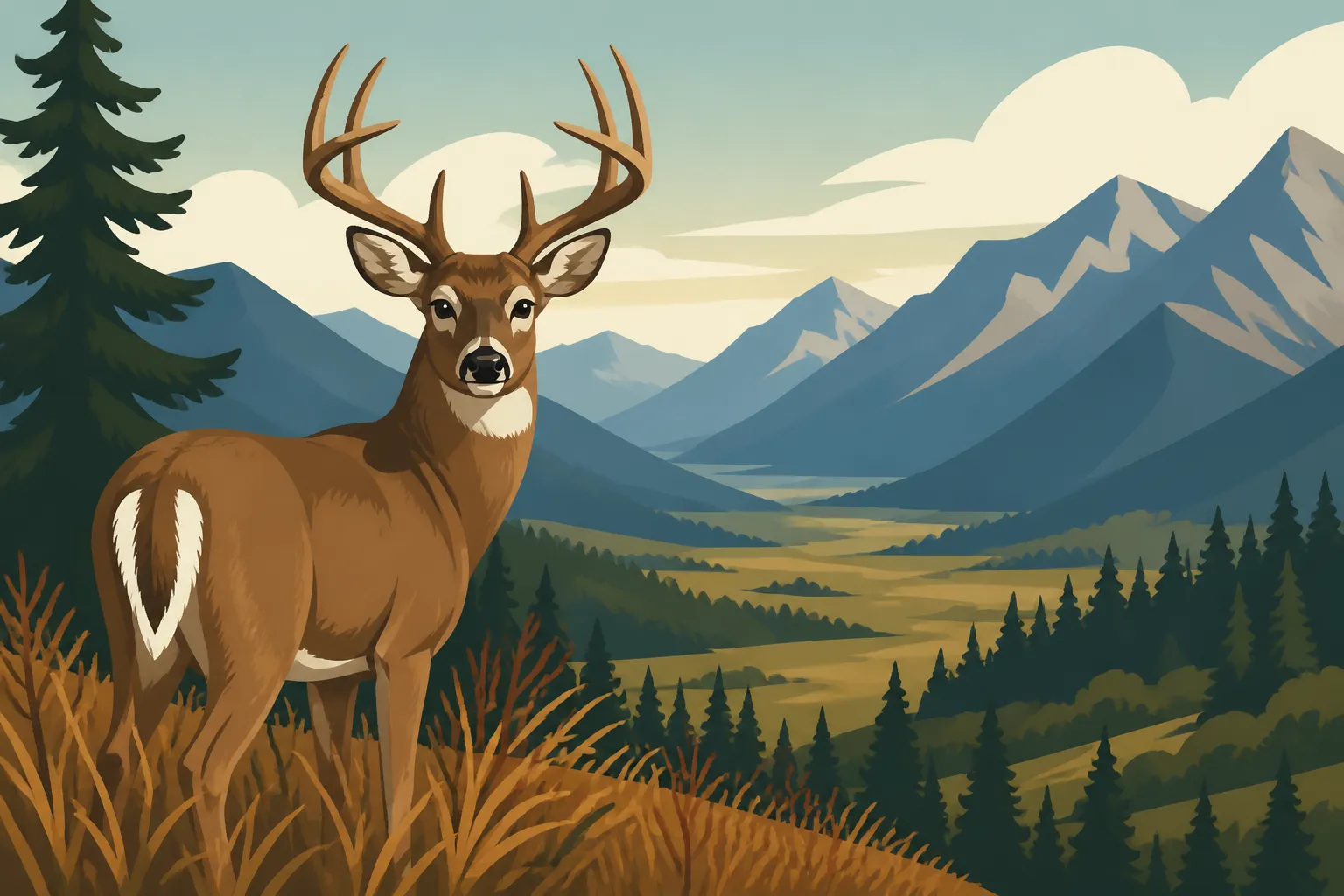
White-Tailed Deer in British Columbia’s Valleys
Many hunters in British Columbia find themselves focusing almost exclusively on mule deer or blacktail, often overlooking the growing opportunities and unique challenges presented by white-tailed deer, particularly in the province's burgeoning valley systems. This comprehensive guide aims to shed light on the elusive whitetail in BC, offering insights into their habitat, behavior, and effective hunting strategies so you can better understand and pursue these cunning deer.
The Expanding Footprint of White-Tailed Deer in British Columbia
For decades, the mention of deer hunting in British Columbia conjured images of robust mule deer in the high country or elusive blacktail on the rainy coast. However, over the last few decades, white-tailed deer have steadily pushed their range westward, establishing healthy, huntable populations in many of BC's interior valleys. This expansion presents exciting new prospects for resident hunters, but it also requires a shift in traditional tactics.
Where British Columbia's Whitetails Are Spreading
Historically, whitetails were largely confined to the Peace River region in the northeast of British Columbia, which borders Alberta and has more typical whitetail habitat. However, their adaptive nature and our changing landscape have seen them spread significantly. Today, you'll find them populating river bottoms, agricultural areas, and timbered draws in places like the Kootenay, Columbia, Okanagan, and even some Cariboo regions. They thrive where there's a mosaic of cover – dense bush, mature timber – interspersed with food sources, which often means agricultural fields, river floodplains, and old clearcuts. This expansion is a testament to their resilience and ability to capitalize on new opportunities, often coexisting, and sometimes even competing, with mule deer. Hunters focused on deer species in specific regions should definitely pay attention to the increasing presence of whitetails. You can read more about Where British Columbia's Whitetails Are Spreading to understand their specific areas of concentration.
Key Valley Habitats and Preferred Terrain
Unlike the high-country preferences of mule deer, whitetails are masters of the valley floor and lower-elevation slopes. They favour areas with thick cover—dense patches of regenerating timber, willow thickets along riverbanks, or heavy brush in creek bottoms. These areas provide excellent security cover, allowing them to remain hidden even when human activity is nearby. They are particularly drawn to riparian zones, which offer abundant browse, water, and linear travel corridors. When hunting these areas, don't overlook the edges where these thickets meet open fields or mature timber; these transition zones are prime spots for whitetails moving between bedding and feeding areas. Understanding these habitat preferences is crucial for effective scouting, whether you're using tools like GoHunt to analyze land features or walking the ground yourself. They often utilize small, overlooked pockets of cover right near human activity, making them notoriously challenging to spot.
Understanding Whitetail Forage and Feeding Habits
A successful whitetail hunter in British Columbia isn't just looking for deer; they're looking for what the deer are looking for. Whitetails are opportunistic browsers and grazers, and their diet can shift dramatically with the seasons and the availability of food sources. Understanding these patterns is key to predicting their movements and finding them consistently.
Seasonal Diet Changes and Agricultural Impacts
Whitetail diets are incredibly varied and dictated by seasonal availability. In spring and summer, they feast on lush green forbs, grasses, and young browse. As autumn progresses, their focus shifts to high-energy foods like acorns, berries, and agricultural crops. In many BC valleys, agricultural fields—especially those growing alfalfa, corn, or grain—become irresistible magnets for whitetails once the hunting seasons open. Farmers in the Peace Country, for instance, are very familiar with deer browsing on their fields. When hunting near these agricultural areas, consider where deer are bedding during the day and what routes they use to access these prime feeding grounds under the cover of darkness. The presence of these cultivated foods can drastically alter deer movement patterns, often concentrating them in predictable locations. Hunting a British Columbia river bottom or Hunting a Peace Country Grain Field can often yield whitetails drawn to these rich food sources.
Identifying Whitetail Sign: Rubs, Scrapes, and Trails
Whitetails are creatures of habit, and they leave behind clear evidence of their presence and movements. Learning to read these signs is like deciphering a map to their daily lives.
Rubs are areas where bucks have rubbed their antlers on small trees and saplings, removing the bark. These are typically created during the pre-rut and rut phases as bucks express dominance, strengthen their neck muscles, and deposit scent. Larger rubs often indicate a more mature buck. Look for rubs along travel corridors, near bedding areas, and leading to scrapes.
Scrapes are patches of bare earth, typically 1-3 feet in diameter, where a buck has pawed away the leaf litter and urinated, often under an overhanging branch (called a "licking branch"). Bucks will mouth, rub, and scent-mark these branches, further depositing scent. Scrapes serve as communication hubs for deer, letting other deer know who is in the area. Primary scrapes, often found on field edges or prominent travel routes, are visited repeatedly. Secondary scrapes are smaller and more numerous. Fresh scrapes, especially those with an actively used licking branch, are high-value spots to set up for a hunt. When scouting, pay close attention to the freshness of these signs. A primary scrape, regularly worked, signals a buck's consistent presence and can be a fantastic ambush point. GoHunt's mapping features can sometimes help identify areas where deer sign might be concentrated based on habitat features, even before you step foot on the ground.
The Whitetail Rut in British Columbia's Interior Valleys
The rut is arguably the most exciting, and often the most successful, time to hunt whitetails. During this period, bucks become more active and less cautious, driven by the urge to breed. Understanding the phases of the rut and how it manifests in British Columbia's diverse landscapes can significantly improve your chances of success.
Calling Whitetail Bucks During the Peak Rut
The whitetail rut in British Columbia typically peaks in mid-November, though it can vary slightly depending on the region and specific year's weather patterns. This is when bucks are actively searching for does, leading to increased daytime movement. This heightened activity makes them more susceptible to calling strategies. Common calls include grunts, snort-wheezes, and rattling.
Grunts: A basic grunt tube can imitate a buck trailing a doe or a buck challenging another. Short, soft grunts can pique a curious buck's interest, while a series of aggressive grunts might challenge a dominant buck.
Snort-wheezes: This is a very aggressive call, usually made by dominant bucks to warn off rivals. Use it sparingly and only when you know a mature buck is in the vicinity and you're ready for an immediate response.
Rattling: Mimicking the sound of two bucks fighting, rattling can be incredibly effective, especially when bucks are actively sparring. Light rattling can simulate a brief dominance dispute, while aggressive, prolonged rattling can draw in bucks looking for a fight or an easy doe. Remember to use rattling antlers or a rattling bag for this. Positioning yourself downwind with good cover is crucial when calling, as a buck might circle to get your scent. For more general calling techniques, you might find some useful crossover tips in Calling a Blacktail Buck With a Fawn Bleat, even though it's a different species.
Using Scrapes and Rubs for Hunting Advantage
As discussed earlier, rubs and scrapes are vital communication tools for whitetails, and they become even more important during the rut. Bucks will actively create and revisit these signposts throughout the pre-rut and rut to establish their presence and check for does.
Scrape Lines: Look for "scrape lines" – a series of scrapes leading into a bedding area or along a travel corridor. Setting up downwind of an active scrape line, particularly one with a fresh licking branch, can be a highly productive strategy. Bucks will often cruise these lines to check for does.
Ambush Points: Rubs can indicate a buck's travel route, especially larger rubs that show consistent use. These can point to a buck's core area. Look for clusters of rubs and scrapes in areas that provide both cover and food access. A good strategy is to find a fresh rub line or an active scrape, then locate a suitable stand site or ground blind that gives you a clear shooting lane downwind of these key signs. Remember, whitetails are incredibly wary; stealth and scent control are paramount when hunting over these high-traffic areas. Utilizing mapping software like GoHunt can help you identify potential scrape locations by looking for key habitat features like bottlenecks and transitions.
Population Dynamics and Management Challenges
Understanding the health and trends of the white-tailed deer population in British Columbia is vital for both hunters and wildlife managers. Like all game species, whitetails face various pressures, and effective management relies on monitoring these factors closely.
British Columbia's CWD Surveillance Program
Chronic Wasting Disease (CWD) is a serious concern for deer populations across North America, and British Columbia is actively working to prevent its spread into the province. CWD is a fatal, neurological disease affecting deer, elk, and moose. While BC has not yet detected CWD in its wild populations, neighboring jurisdictions in Alberta have confirmed cases, making surveillance a top priority.
The provincial government has implemented a comprehensive British Columbia's CWD Surveillance Program that encourages hunters to submit heads for testing, particularly in high-risk areas near the Alberta border. This program is crucial for early detection, which is the best defense against CWD. Hunters play an indispensable role by participating in mandatory or voluntary submission programs. Always be aware of the rules regarding carcass transportation, especially when crossing management unit boundaries, to help prevent potential spread. Knowing Whether British Columbia Has CWD is on the minds of many hunters, and participation in these programs helps keep the herds healthy.
Impacts of Habitat Loss and Predation
While whitetails have expanded their range in British Columbia, they still face significant challenges, including habitat loss and fragmentation due to human development, logging, and agricultural expansion. While some agricultural practices can benefit whitetails by providing abundant food, unchecked development can destroy critical bedding and fawning cover.
Predation also plays a natural role in regulating whitetail populations. Wolves, cougars, and bears are all natural predators of deer in British Columbia. While a healthy ecosystem can typically balance predator and prey, localized increases in predator populations can put pressure on deer numbers, especially in harsh winters or where other prey species are scarce.
Furthermore, severe winters, especially those with deep, persistent snow, can significantly impact whitetail survival rates, particularly for fawns and older deer. Management strategies often consider these environmental factors, adjusting harvest quotas or season lengths to ensure sustainable populations. Responsible hunting contributes to healthy herds by helping to manage populations within the carrying capacity of their habitat, reducing competition for resources, and allowing for the removal of older animals.
Effective Hunting Strategies for British Columbia Whitetails
Hunting whitetails in British Columbia's valleys often requires a different approach than chasing mule deer in the alpine. These deer are masters of concealment, preferring to live in dense cover, and their cunning can challenge even the most experienced hunter.
Stand Hunting and Still-Hunting Techniques
Successful whitetail hunting in British Columbia often boils down to two primary methods: stand hunting and still-hunting.
Stand Hunting: This involves setting up in an elevated position (tree stand) or a ground blind along a known travel corridor, near a feeding area, or overlooking a scrape line. The key is patience and meticulous scouting. Set up your stand well before the season, allowing deer to become accustomed to its presence. Choose locations that offer clear shooting lanes but also provide concealment. Wind direction is paramount; always hunt with the wind in your favour. Stand hunting is particularly effective during the rut when bucks are moving more, and also during early morning and late evening when deer are transitioning between bedding and feeding areas. A strategically placed stand overlooking a Hunting a Kootenay Creek Draw or a forested edge can pay off handsomely. Using a quality rangefinder is crucial for making ethical shots from a stand.
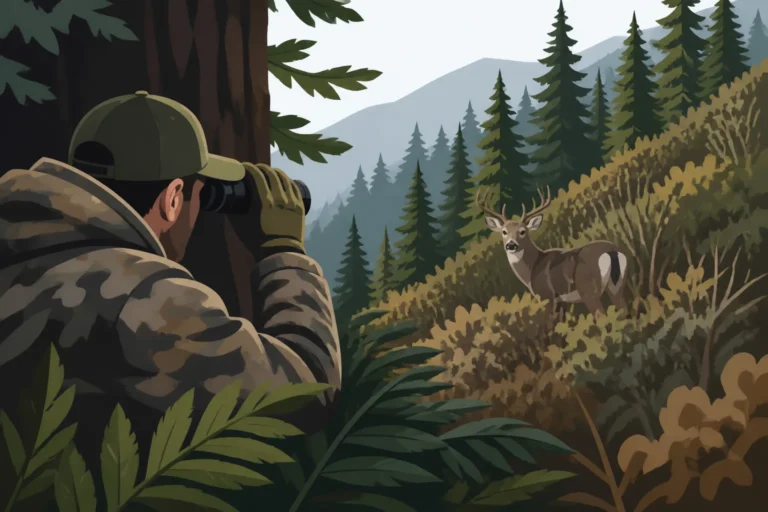
Still-Hunting: This method involves moving very slowly and deliberately through the woods, pausing frequently to scan for deer. It's an active, stealthy approach that requires intense focus and attention to detail. Take one or two steps, then pause, listen, and glass every patch of cover, every shadow, and every movement. Look for parts of a deer—a flicker of an ear, a horizontal line in a vertical world, an antler tine. Still-hunting is excellent for covering ground and finding deer in thicker cover, especially during the middle of the day when deer might be bedded. It's particularly effective on windy or rainy days when the weather helps mask your noise and scent. When Still-Hunting Second Growth for Blacktail, many of the same principles apply to whitetails.
Reading the Landscape: Funnels, Edges, and Bedding Areas
Whitetails are experts at using the terrain to their advantage. Learning to identify key landscape features that deer use for travel, feeding, and bedding is critical for success.
Funnels: These are natural bottlenecks in the landscape that concentrate deer movement. Think narrow strips of timber between open fields, saddles in ridges, creek crossings, or fence lines with limited crossing points. Deer are naturally funneled through these areas, making them excellent ambush points.
Edges: Whitetails are often found along the edges where two different types of habitat meet, such as a forest edge bordering a field, a clearcut next to old growth, or a riparian zone bordering dry uplands. These edges provide both food sources and quick access to security cover.
Bedding Areas: These are typically dense, thick patches of cover where deer feel safe resting during the day. They can be thickets of young conifers, dense willow bottoms, or heavy blowdowns. Locating bedding areas allows you to understand where deer spend their day and then plan your approach to intercept them as they move out to feed in the evenings or return in the mornings. Often, bedding areas will be on slopes that allow deer to watch their backtrail or smell approaching danger. GoHunt can be invaluable here, letting you analyze topographical maps and satellite imagery to pinpoint these funnels, edges, and bedding areas before you even put boots on the ground.
Navigating British Columbia's Whitetail Regulations
Hunting in British Columbia comes with specific regulations that every hunter must understand and adhere to. Whitetails, like other deer species, have particular rules regarding seasons, bag limits, and antler restrictions.
Antler Point Restrictions and General Open Seasons
British Columbia implements various antler point restrictions (APRs) for different deer species and regions, and it's absolutely critical to know these for your chosen hunting area. For whitetails, many regions will have a "4-point or greater" antler restriction, meaning a buck must have at least four points on one side (including the brow tine) to be legal. Other areas might have "any buck" seasons, or even "2-point or greater."
General Open Seasons (GOS): These are set periods where hunting is allowed for specific species without the need for a Limited Entry Hunting (LEH) authorization. For whitetails, GOS dates vary significantly by region and management unit (MU). It's common to see archery-only seasons followed by rifle seasons. Always consult the current British Columbia Hunting and Trapping Regulations Synopsis, which is updated every two years, for the most accurate and up-to-date information. Understanding British Columbia Deer Season Dates by Region is fundamental to planning any whitetail hunt.
Four-Point Antler Restriction: The "4-point" rule is designed to allow younger bucks to mature and contribute to the breeding population. Hunters must be proficient at judging antlers in the field, often quickly, to ensure a legal harvest. This restriction is a significant factor in British Columbia's Four-Point Antler Restriction rules. Make sure you are confident in identifying legal bucks before you pull the trigger.
Compulsory Reporting and Ethical Harvest Practices
Beyond season dates and antler restrictions, British Columbia has other important regulations you need to follow:
Compulsory Reporting: While not all deer species require compulsory inspection, all hunters who successfully harvest a deer are generally required to submit a harvest report within 30 days of the kill. This data is vital for wildlife management, helping biologists track population trends and harvest success rates. Failing to report a harvest can result in fines and other penalties. Always keep your hunting licence and species tags readily accessible.
Ethical Harvest: Ethical hunting practices extend beyond legal requirements. This includes making clean, humane shots, actively tracking any wounded animal, and ensuring no game meat is wasted. Wasting game meat is illegal and goes against the core tenets of ethical hunting. Hunters are responsible for understanding the anatomy of the animal they are pursuing to ensure quick, clean kills. This involves practicing shooting and understanding your effective range. Furthermore, respecting private land, leaving no trace, and being a good ambassador for hunting are all part of ethical conduct in the field.
Field Care, Processing, and Trophy Considerations
Successfully harvesting a whitetail in British Columbia is just the first step. Proper field care and processing are crucial to ensure you make the most of your hard-earned meat and trophy. Given BC's variable climate and often remote hunting locations, these steps are incredibly important.
Keeping Meat Cool in an Early Season
British Columbia's hunting seasons can start as early as September, which often means dealing with warm temperatures, especially in the interior valleys. Keeping your venison cool immediately after the kill is paramount to prevent spoilage.
Immediate Gutting: Field dress your deer as quickly as possible. This removes the internal organs, which are a major source of heat and bacteria.
Airflow: Prop the deer open or hang it to allow air to circulate around the cavity. In warmer conditions, you might need to skin the deer in the field to allow for even faster cooling.
Protection from Contaminants: Protect the meat from dirt, flies, and other contaminants. Game bags are indispensable for this, allowing air circulation while keeping pests away.
Ice/Snow: If temperatures are high, packing ice into the body cavity can significantly drop the internal temperature. This is more feasible if you are hunting close to your vehicle and have access to coolers. For longer hunts or warmer conditions, you might need to plan for a quick extraction to a meat cooler. You can learn more about techniques for Keeping Meat Cool in an Early Season in BC, which applies universally to all big game.
Caping and Preserving Your Whitetail Trophy
If you plan to have your whitetail mounted, proper caping and preservation in the field are essential. A poorly caped hide can render it unusable for a taxidermist, wasting your trophy.
Trophy Care Plan: Before you head into the field, decide if you want a shoulder mount, a European mount, or just the antlers. This will dictate how much hide you need to take. For a shoulder mount, you generally need to make an incision well behind the front legs, circling the body, and then skin forward to the head, leaving plenty of brisket and shoulder hide.
Caping: Carefully skin the hide off the neck and head, paying close attention around the eyes, ears, and mouth. The goal is to avoid cutting into the hide itself, especially on the face. Keep the brisket, a portion of the front legs, and the entire cape from the shoulders forward.
Cooling and Salting: Once caped, the hide needs to be cooled rapidly and then salted thoroughly if you're not getting it to a freezer or taxidermist immediately. Salt draws out moisture, preventing bacterial growth. Spread the hide flat, flesh side up, and apply a generous layer of non-iodized salt, working it into every crevice. Roll it up and let it sit, then unroll, scrape off the wet salt, and re-salt. This process can be repeated.
Antler Care: If you're just keeping the antlers, cut the skull plate with a saw, ensuring you leave enough of the skull to keep the antlers firmly attached. Clean any remaining tissue from the skull plate. For hunters using GoHunt to identify specific areas, remember to research local taxidermists or meat processors beforehand so you know where to take your harvest.
British Columbia Whitetail Hunting Outlook
The future of white-tailed deer hunting in British Columbia looks promising, with populations continuing to expand and offer new opportunities. However, it's a dynamic situation that requires ongoing attention from both wildlife managers and the hunting community.
Future Population Trends and Management Considerations
Current trends suggest that whitetails will likely continue to expand their range and increase in density in suitable habitats across British Columbia's interior valleys. This expansion offers increased hunting opportunities, potentially alleviating some pressure on mule deer populations in certain areas. However, this growth also brings management considerations, particularly concerning disease surveillance and potential competition with other deer species.
Wildlife managers are constantly monitoring these trends, using harvest data, population surveys, and health assessments to make informed decisions about season lengths, bag limits, and antler restrictions. Factors like severe winter mortality, predation, and the presence of CWD will heavily influence future management strategies. A balanced approach that considers ecological health, hunter opportunity, and agricultural impacts will be key to sustaining healthy whitetail populations for generations to come.
The Role of Hunters in Conservation and Monitoring
Hunters are often the first line of defense in wildlife conservation. Your participation in British Columbia's hunting economy directly funds management efforts through license and tag fees, and your presence in the field provides invaluable data.
Reporting: Diligent harvest reporting is one of the most direct ways hunters contribute. The more accurate data biologists have, the better they can understand population dynamics.
Disease Surveillance: Participating in CWD surveillance programs by submitting samples is critical for early detection and prevention.
Observation: Reporting unusual animal behaviour, sick animals, or significant changes in habitat can provide early warnings to wildlife authorities.
Ethical Conduct: Adhering to all regulations and practicing ethical hunting ensures the activity remains respected and sustainable. By being responsible stewards of the land and its wildlife, British Columbia hunters ensure that the tradition of pursuing whitetails in the province's beautiful valleys will continue to thrive. Tools like GoHunt can help hunters engage more effectively by providing easy access to regulatory information and mapping features, making their hunting trips more informed and compliant.
| Characteristic | White-Tailed Deer (BC Valleys) | Mule Deer (BC Interior) | Black-Tailed Deer (BC Coast) |
|---|---|---|---|
| Typical Habitat | Valleys, river bottoms, agricultural edges, dense cover | Open sagebrush, timbered slopes, high country | Dense coastal rainforest, second growth, clearcuts |
| Tail Appearance | Long, broad tail, pure white underside, flagged when alarmed | Narrow tail with black tip, rope-like, often down when running | Short, black tail, wide base, rarely flagged |
| Antler Growth | Main beams curve forward, tines branch upward from main beam | Main beams fork, then fork again (bifurcated) | Smaller, more compact antlers, often 3-points or less |
| Ear Size | Medium | Large (mule-like) | Medium |
| Primary Movement | Sneaks, trots, bursts of speed | Stotting/bouncing gait | Sneaks, trots |
| Avg. Weight (Buck) | 150-250 lbs | 180-300 lbs | 100-200 lbs |
| Rut Peak | Mid-November | Mid-November | Late October – Early November |
| Hunting Strategy | Stand hunting, still-hunting in thickets, calling | Spot-and-stalk, glassing open country | Still-hunting, tracking in dense timber |
Disclaimer
Hunting is an inherently dangerous activity. The information provided in this guide is for informational purposes only and should not be considered legal advice. Hunters are solely responsible for understanding and complying with all current British Columbia hunting regulations, which can change frequently. Always consult the official British Columbia Hunting and Trapping Regulations Synopsis before heading into the field. Safety, ethical conduct, and respect for wildlife and the land should always be your top priorities.