Hunting Elk in British Columbia’s Kootenay Valleys
Hunting elk in British Columbia's Kootenay Valleys is a dream for many, but the reality is that these majestic animals are notoriously challenging to locate and pursue in the region's rugged and diverse terrain. This comprehensive guide is designed to cut through the noise, offering grounded, realistic strategies and insights to help you navigate the specific challenges of elk hunting in this stunning corner of British Columbia, improving your chances of a successful and memorable hunt.
Understanding Kootenay Elk Habitat and Behavior
The Kootenay region of British Columbia is a mosaic of steep mountains, dense forests, rolling benches, and fertile valley bottoms, making it an incredibly rich yet complex environment for elk. Understanding how these animals utilize the varied landscape is the first step to finding success.
Habitat Diversity: Valleys, Forests, and Alpine Fringes
Elk in the Kootenays are masters of adaptation, moving between distinct habitat types depending on the season, weather, and hunting pressure. In the early seasons, especially during the archery opener, you'll often find them higher up, perhaps even touching the lower fringes of the alpine. They'll be feeding on lush grasses and forbs, enjoying the cooler temperatures before the rut truly kicks in. As the rifle seasons progress and cooler weather arrives, especially once snow starts to fall at higher elevations, elk will begin to migrate downwards. They often use old growth timber stands for cover and thermal protection, particularly on south-facing slopes that receive more sunlight. Don't overlook the transition zones where timber meets open clearings or old burns; these edges are often highways for travelling elk. Finding these specific pockets requires not just good scouting, but an understanding of how elevation and weather dictate movement.
Seasonal Movement Patterns of Kootenay Elk
Elk movements are heavily influenced by the season, available forage, and disturbance. During the peak of the rut, typically in mid-September through early October, bulls become much more vocal and mobile, focused on gathering and defending their harems. This is when the classic bugling tactics shine. After the rut, as hunting pressure increases and winter approaches, elk will often "hole up" in dense cover, becoming incredibly wary. They move to traditional winter ranges, which are typically lower elevation, south-facing slopes with good forage access and thermal cover. Recognizing these shifts is crucial. A spot that held elk in September might be completely devoid of animals in late October. Using tools like GoHunt's mapping features can help you visualize these different habitat types and potential travel corridors, especially when you're not familiar with a specific Management Unit.
Identifying Prime Elk Holding Areas
Identifying areas that consistently hold elk requires a keen eye for sign and an understanding of their basic needs: food, water, and cover. Look for fresh tracks, droppings, rubs on small trees (especially from rutting bulls), and active wallows. Wallows are muddy depressions where bulls roll to coat themselves in scent, and they can be incredible indicators of current elk activity. Focus on south-facing slopes in the valleys during colder weather, which offer thermal advantage and earlier green-up. Conversely, during warm early season hunts, north-facing slopes and dense timber provide crucial shade. Rivers and creeks are also natural travel corridors and water sources. Sometimes, the best areas are those just slightly off the beaten path – a bench above a well-used logging road, or a thicket bordering an old clearcut. These are the places where elk feel secure enough to feed and bed, even with moderate hunting pressure.
Essential Elk Hunting Strategies for the Kootenays
Successfully hunting elk in the Kootenays often means employing a versatile approach, blending different tactics to match the terrain, season, and elk behaviour. There's no one-size-fits-all method, but a combination of patience and adaptability will serve you well.
Spot-and-Stalk Tactics in Open Terrain
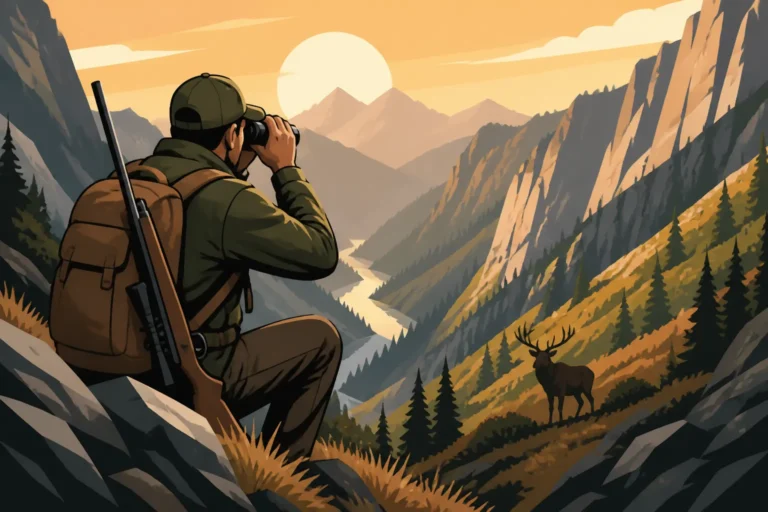
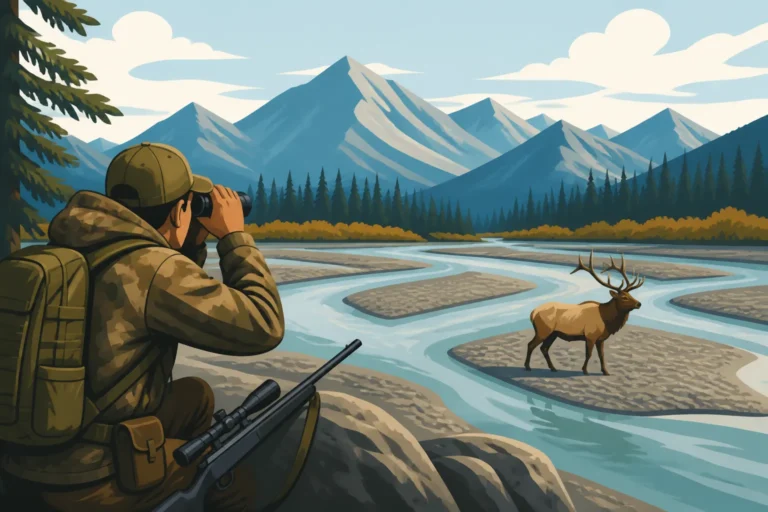
While the Kootenays have vast timber, there are also numerous open slopes, old burns, and clearings where spot-and-stalk is highly effective, particularly in the shoulder seasons or during mild weather. This involves finding a high vantage point before first light and systematically glassing the slopes below and across from you. Take your time, using quality binoculars and a spotting scope to pick apart every shadow, every cluster of trees. Elk often blend in incredibly well. Pay special attention to the edges of timber, avalanche chutes, and sparse stands of trees. Once an elk is spotted, the real challenge begins: planning an approach that uses terrain and wind to your advantage, closing the distance for a shot. This can often involve long, strenuous hikes and careful navigation through broken ground. It's a method that rewards patience and precise execution, mirroring strategies often used for Glassing an Interior Hillside for Mule Deer, though elk typically prefer slightly different terrain features.
Calling Strategies for Kootenay Bulls
Calling is perhaps the most iconic elk hunting strategy, and it can be incredibly effective in the Kootenays, especially during the September and early October rut. Cow calls and calf mews are great for locating elk and can sometimes draw in curious cows or even a bull looking for a stray. Bugling is the most aggressive call and is used to challenge other bulls or simulate a bull trying to gather his cows. The key to successful calling is reading the situation. Sometimes, a soft, subtle series of cow calls is all it takes to bring a bull in. Other times, a full-on screaming bugle followed by raking a small tree can ignite a response. Always consider the wind direction and terrain when setting up to call, ensuring the elk won't wind you before you get a shot opportunity. Remember, not every bull will charge in; some will circle downwind, and others will just answer from a distance. Learning to interpret their responses is critical, much like understanding the nuances of Calling Moose in the Rut, though the sounds and urgency are distinctly different.
Still-Hunting Through Timber and Thickets
When elk are not actively bugling, or when you're hunting dense timber where spotting them is nearly impossible, still-hunting becomes your primary tactic. This involves moving incredibly slowly and deliberately through the woods, pausing frequently to scan your surroundings. The goal is to move so quietly and observe so intently that you spot the elk before it spots you. Focus on looking for horizontal lines that don't belong in a vertical forest, the flick of an ear, the shine of an antler, or a patch of hide. Use the wind to your advantage, always moving into it or across it to avoid scenting elk. Pay attention to fresh tracks, disturbed leaves, or snapped twigs. Still-hunting is an exercise in extreme patience and stealth. In the thick Kootenay timber, a mere 50 yards can take you an hour or more to cover. It's often most productive in transition areas, near bedding sites, or along routes elk might use to move from feed to cover.
Key Gear and Preparation for Kootenay Elk Hunts
Hunting elk in the Kootenays demands reliable gear and thorough physical preparation. The terrain is demanding, and the weather can be unpredictable, often changing dramatically within a single day.
Optics and Scouting Tools
High-quality optics are non-negotiable for Kootenay elk hunting. A good pair of 10x or 12x binoculars will be your primary scouting tool, helping you pick apart distant hillsides and timber fringes. Supplement this with a spotting scope, ideally 60-80x power, for confirming antlers or identifying distant movement. Tripods are essential for steady glassing, especially for long periods. Digital mapping tools, like the GoHunt app or others, are invaluable for understanding the terrain, identifying potential elk habitat, marking sign, and navigating. They can help you scout a British Columbia Management Unit Online, understand elevation changes, and locate water sources and dense cover from home. Don't forget a rangefinder; knowing precise distances is critical for ethical shot placement in varied mountain terrain.
Clothing and Footwear for Varied Conditions
The Kootenays can throw everything at you: warm autumn days, biting winds, heavy rain, and even early season snow. A layering system is paramount. Start with a moisture-wicking base layer, add insulating mid-layers (fleece or down), and top it off with waterproof and windproof outerwear. Brands like Sitka, Kuiu, or First Lite offer excellent systems tailored for mountain hunting. Footwear is equally critical; invest in high-quality, broken-in waterproof hiking boots with excellent ankle support. You'll be covering many miles over uneven, steep, and often wet ground. Bring extra socks, preferably merino wool, to keep your feet dry and blister-free. Gaiters are also a lifesaver for keeping moisture, debris, and snow out of your boots, especially when you're Hunting in British Columbia's Coastal Rain or navigating through wet underbrush.
Rifle, Ammunition, and Archery Considerations
For rifle hunters, a flat-shooting cartridge capable of delivering sufficient energy at extended ranges is ideal for elk. Common choices include .300 Win Mag, 7mm Rem Mag, .30-06 Springfield, or .338 Win Mag. Practice shooting from various field positions – prone, kneeling, and off a pack – as a bench rest shot is rarely an option in the mountains. Use premium bullets designed for large game, as they offer better penetration and expansion. For archery hunters, a reliable bow with sufficient draw weight (meeting Bow Draw Weight Rules in British Columbia) and accurate broadheads is key. Practice extensively at varying distances and angles, including steep uphill and downhill shots. Regardless of your weapon, ethical shot placement is paramount, and familiarity with your equipment under stressful conditions is non-negotiable. Always carry enough ammunition or arrows for your hunt, plus a few extras for practice or unforeseen circumstances.
Navigating Regulations and Access in the Kootenays
Hunting in British Columbia, particularly for big game like elk, involves navigating specific regulations and understanding access rules. The Kootenay region, like all of BC, has its own nuances you need to be aware of.
Understanding LEH and General Open Seasons
Many prime elk hunting opportunities in the Kootenays fall under the Limited Entry Hunting (LEH) system, which requires hunters to apply and be drawn for a specific tag in a particular Management Unit (MU) during a defined season. These hunts are designed to manage harvest pressure and maintain healthy populations, often offering better success rates for those who draw. However, there are also General Open Season (GOS) opportunities for elk in some Kootenay MUs, particularly for spike or antlerless elk, or in certain areas with higher populations. It's absolutely crucial to consult the current British Columbia's Two-Year Regulations Synopsis before planning your hunt. This document outlines season dates, bag limits, antler restrictions (like the British Columbia's Four-Point Antler Restriction if applicable), and specific rules for each MU. Missing a detail can turn a great hunt into a legal nightmare.
Accessing Public Lands and Forest Service Roads
A significant portion of the Kootenays, like much of British Columbia, consists of Crown land, which is generally open to public hunting. Access is often via an extensive network of Forest Service Roads (FSRs). However, many of these roads can be rough, require 4×4 vehicles, or become deactivated and gated beyond a certain point. It's common to park at a gate and hike in, sometimes for many miles, to reach less pressured areas. Understanding these access points and potential closures (due to logging, wildfire, or seasonal restrictions) is vital. Utilize online mapping resources, check local forest district websites, and consult with local forestry offices if possible. Knowing how to effectively use the British Columbia's Forest Service Road Network is key to reaching prime hunting areas. Keep in mind that while much of BC is public land, respecting private land boundaries, which can sometimes be intermingled, is always a must.
Important Safety and Ethical Considerations
Hunting in the Kootenay backcountry comes with inherent risks. Bear safety is paramount, as both black bears and grizzlies are present throughout the region. Carry bear spray and know how to use it, and consider carrying a firearm for bear defense if legally permitted and you are proficient. Always practice Bear Safety While Hunting in British Columbia. Emergency planning is non-negotiable; carry a satellite communication device (like a Garmin inReach or Zoleo), a comprehensive first-aid kit, and let someone know your detailed hunt plan, including your expected return time. Beyond safety, ethical considerations are vital. Only take shots you are confident will be lethal, track wounded animals diligently, and ensure you comply with all meat care regulations, especially Meat Care in British Columbia's Warm Early Seasons to prevent spoilage. Respect other hunters, non-hunters, and the land itself. British Columbia is a special place, and it's our responsibility to keep it that way.
| Kootenay Elk Hunting Tactics & Considerations | Early Season (Archery/Sept. Rifle) | Mid-Season (Oct. Rifle) | Late Season (Nov./Dec. Rifle) |
|---|---|---|---|
| Typical Elk Location | Higher elevation, alpine fringes | Mid-slopes, dense timber | Lower elevation, winter range |
| Primary Strategy | Spot-and-stalk, aggressive calling | Calling, still-hunting | Still-hunting, tracking |
| Key Sign to Look For | Wallows, fresh rubs, bugles | Rubs, fresh tracks, droppings | Heavy tracks in snow, bedding areas |
| Weather Challenges | Warm days, sudden cold snaps | Rain, snow at elevation | Deep snow, extreme cold, ice |
| Access Considerations | Open FSRs, higher trail access | Some FSRs closing | Lower FSRs, snowmobiles/snowshoe often required |
| Hunting Pressure | Moderate to High | High | Low to Moderate |
| Recommended Optics | 10-12x Binos, Spotting Scope | 10-12x Binos, Spotting Scope | 10x Binos, Thermal/Night Vision (for scouting) |
Disclaimer
The information provided in this guide is for general informational purposes only and does not constitute legal advice. Hunting regulations in British Columbia can change frequently. It is the responsibility of every hunter to consult the most current British Columbia Hunting and Trapping Regulations Synopsis and relevant local authorities before engaging in any hunting activities. Always prioritize safety, ethical hunting practices, and respect for wildlife and the environment.