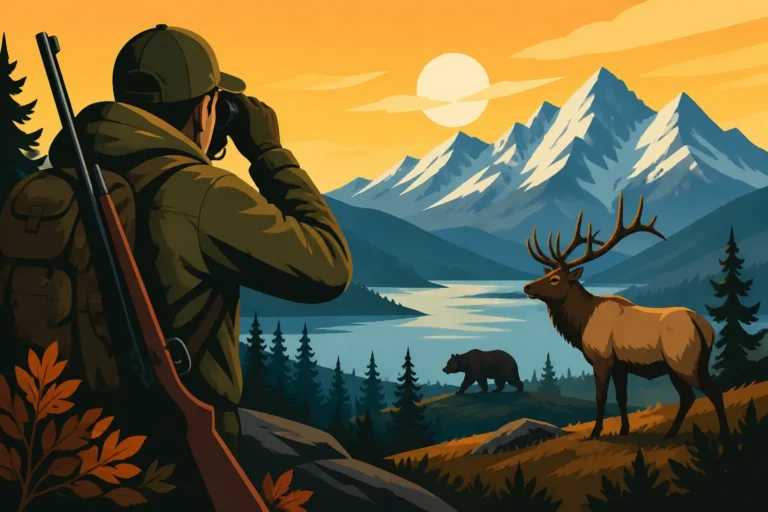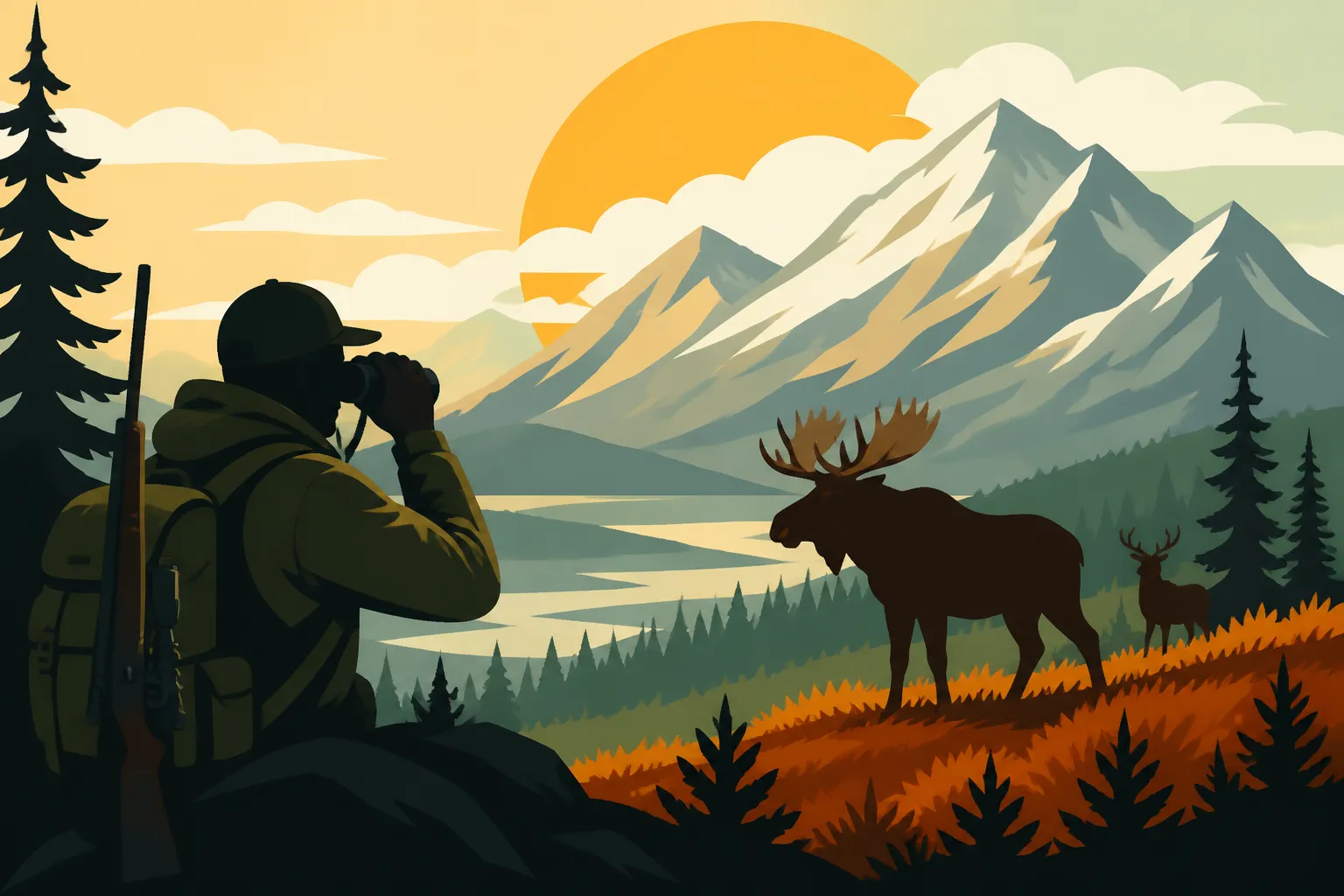
Hunting Around Dease Lake and Cassiar
Heading into the remote expanse of British Columbia's far north, particularly the Dease Lake and Cassiar regions, can feel like stepping into a different world entirely. Many hunters dream of wild, untouched landscapes, but the sheer isolation and vastness of this area present unique challenges that can overwhelm even seasoned outdoorsmen. This guide aims to demystify hunting around Dease Lake and Cassiar, offering practical insights and strategies to help you navigate this incredible, yet demanding, wilderness and turn your dreams of a northern hunt into a tangible, successful adventure.
Understanding the Dease Lake and Cassiar Region for Hunting
The Dease Lake and Cassiar regions, nestled in the vast northern reaches of British Columbia, represent a frontier for many hunters. This isn't your weekend warrior hunt down a familiar logging road; this is an expedition into some of the continent's most pristine and challenging wilderness. Understanding the fundamental nature of this area is the first step in planning a successful trip.
The Remote Allure and Challenges
There’s an undeniable pull to places like Dease Lake and Cassiar. The allure comes from the sheer scale of the landscape, the low population density, and the feeling that you are truly hunting in a wild, untamed place. Imagine glassing across an entire mountain range, knowing that human presence is minimal, and the game animals are truly wild and unpressured. This is the heart of what draws hunters to British Columbia's northern regions, offering a chance at genuinely free-ranging, mature animals that haven't seen countless human faces. It’s a place where big game still roam in numbers that are increasingly rare in more accessible areas.
However, this allure comes hand-in-hand with significant challenges. Accessibility is probably the biggest hurdle. Major roads are few and far between, and once you leave the main arteries like Highway 37, you're quickly on rough, unmaintained forest service roads or, more likely, completely off-road. The remoteness also means that help is a long way off. If your truck breaks down, if you get injured, or if you simply get lost, self-rescue is often your only immediate option. This isn't an area where you can rely on cell service; satellite communication is absolutely non-negotiable here. Furthermore, the weather can be incredibly unpredictable, changing from warm sunshine to freezing rain or snow in a matter of hours, even in early fall. The sheer distances involved in covering ground, whether on foot or by vehicle, demand robust planning, physical stamina, and a deep respect for the unforgiving environment.
Key Game Species
The Dease Lake and Cassiar regions are renowned for a diverse array of big game. For many, this is the Holy Grail for Stone's Sheep, a truly magnificent animal that thrives in the high, rugged peaks of the northern mountains. Pursuing Stone's Sheep often means undertaking a rigorous backpack hunt, ascending into the alpine where these elusive rams make their home. It's a hunt that tests both physical endurance and mental fortitude, but the reward of spotting a full-curl ram against a backdrop of glaciers and rock is unparalleled. You can learn more about these incredible animals in Stone's Sheep in Northern British Columbia and strategies in Hunting Stone's Sheep in the Far North.
Beyond sheep, Mountain Goats are another prime target in the Cassiar and Dease Lake mountains. These resilient creatures inhabit the steepest, most treacherous terrain, making their pursuit an arduous but deeply satisfying challenge. Their white coats against the dark rock provide excellent camouflage, and hunters often spend hours glassing sheer cliff faces to locate them. For those interested, British Columbia's Mountain Goat Numbers and Hunting Mountain Goat on British Columbia Rock provide more details.
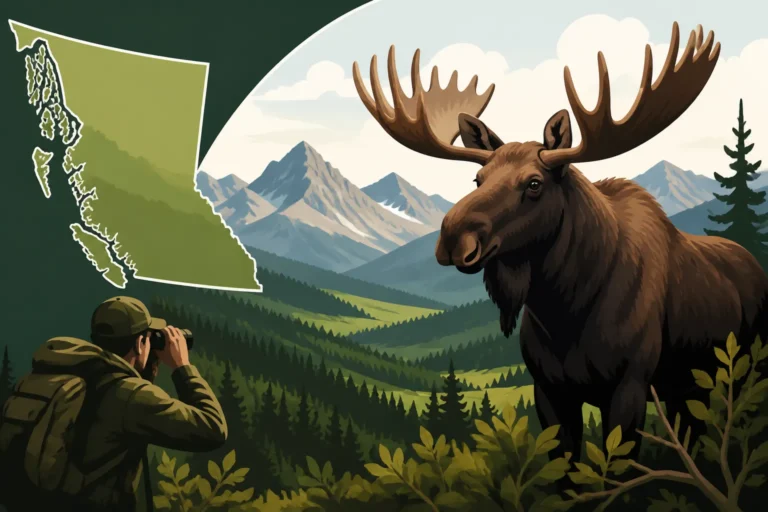
The vast forests and willow flats are home to healthy populations of Moose, particularly the larger Canada Moose. These areas offer excellent opportunities for hunters, especially during the rut when calling strategies can be highly effective. Finding a big bull moose in this expansive country can be a true testament to patience and woodsmanship. Understanding British Columbia's Moose Population Trend can give you an idea of the opportunities.
Additionally, Black Bears are abundant across the region, offering both spring and fall hunting opportunities. Their diverse color phases, from black to brown to cinnamon, add to their appeal. While not always the primary target for those traveling to the Cassiar, a black bear can certainly be a fantastic addition to any northern hunt. Caribou are also present, though hunting opportunities are often very limited and subject to specific regulations due to conservation efforts. Always double-check current regulations for caribou in any given year. Finally, Wolves are prolific predators in this ecosystem, and while challenging to hunt, they offer an exciting opportunity for dedicated predator hunters.
Terrain and Ecosystems
The Dease Lake and Cassiar regions boast an incredible diversity of terrain and ecosystems, each influencing how and where you'll hunt.
- Alpine and Subalpine: This is the realm of sheep and goats. Above timberline, you'll find expansive rockslides, scree slopes, and high mountain meadows. These areas offer vast vistas, but also expose you to extreme weather and challenging footing. Persistence with high-quality optics, often involving hours of glassing, is key here. The subalpine, with its stunted timber and open parkland, acts as a transition zone, often holding feeding animals moving between the high country and lower elevations. For more on high-country hunting, consider Hunting British Columbia's Alpine in September.
- Boreal Forest and Taiga: Descending from the mountains, the landscape transitions into dense boreal forest and taiga. This mix of spruce, pine, and fir, interspersed with muskeg and wetlands, is prime moose habitat. Navigating these areas often means still-hunting through thick timber, focusing on old burns, cutblocks, and river bottoms where moose concentrate. Game trails can be subtle, and tracking in soft ground or light snow can be very productive.
- River Valleys and Drainages: The region is crisscrossed by numerous rivers and drainages, such as the Stikine, Dease, and Iskut rivers. These riparian zones, with their lush vegetation, willow thickets, and open gravel bars, are critical corridors and feeding grounds for moose, bears, and occasionally deer. Accessing these areas often requires jet boats or extensive hiking, but they can be incredibly productive for observant hunters. For tips on river travel, see Jet Boat Access on British Columbia Rivers.
- Old Burns and Cutblocks: While much of the Cassiar is pristine, past wildfires and logging operations have created areas of regrowth that provide excellent forage and cover for ungulates. These "burns" and "cutblocks" can be magnets for moose and bears, especially a few years after the initial disturbance, as new browse grows in. Learning to read these regenerating landscapes is a vital skill.
The sheer scale of these landscapes means that scouting, whether in person or remotely, is crucial. You'll often find different species concentrated in specific habitat types, so understanding the lay of the land will significantly increase your odds.
Planning Your Hunt in Dease Lake and Cassiar
Successfully hunting the Dease Lake and Cassiar regions isn't just about marksmanship; it's heavily weighted towards meticulous planning and robust logistics. Neglecting any detail can quickly turn an adventure into a dangerous ordeal in such remote country.
Access and Logistics
Getting to Dease Lake itself usually means a long drive up Highway 37, often referred to as the Stewart-Cassiar Highway. This is a primarily two-lane highway, with long stretches between services. Make sure your vehicle is in top mechanical condition, carries spare tires, and has ample fuel capacity. Once you leave Highway 37, access shifts to a network of Forest Service Roads (FSRs) and old mining roads. These can range from relatively well-maintained gravel to deeply rutted, rocky tracks requiring high-clearance 4×4 vehicles, and sometimes even ATVs or UTVs to navigate. Be prepared for washouts, active logging, and sections that might be overgrown or deactivated entirely. Information on road conditions can be spotty, so local inquiry or recent trip reports are invaluable. Hunting British Columbia's Logging Road Network offers some good advice here.
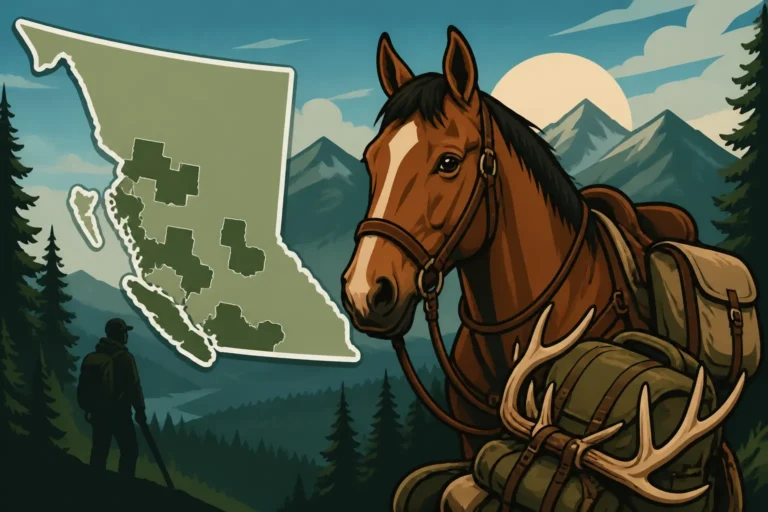
For truly remote areas, especially for sheep and goat hunts, flying into a spike camp via float plane or helicopter is often the only viable option. This significantly adds to the cost and complexity but opens up vast, unpressured territories. If you're considering this, thorough research into air charter services in places like Dease Lake, Smithers, or Terrace is essential. Flying Into a Remote British Columbia Camp delves into this.
Consider your camp setup. Will you be road-hunting from a truck camper or RV? Or will you be establishing a base camp and spiking out? Random camping on Crown land is generally permitted, but always practice Leave No Trace principles. For more on camping regulations, check out Camping Rules on British Columbia Crown Land. Water sources are generally plentiful, but purification is always necessary. Food planning for extended trips in remote areas is also critical, focusing on lightweight, high-calorie options.
Regulations and Season Specifics
British Columbia's hunting regulations are comprehensive and can be complex, especially in a region with diverse species and specific management objectives like Dease Lake and Cassiar. It is absolutely imperative to consult the current British Columbia Hunting and Trapping Regulations Synopsis before planning any hunt. This document, available online through the provincial government, outlines season dates, bag limits, compulsory inspection requirements, and specific regulations for each species in each Management Unit (MU).
Key things to pay close attention to include:
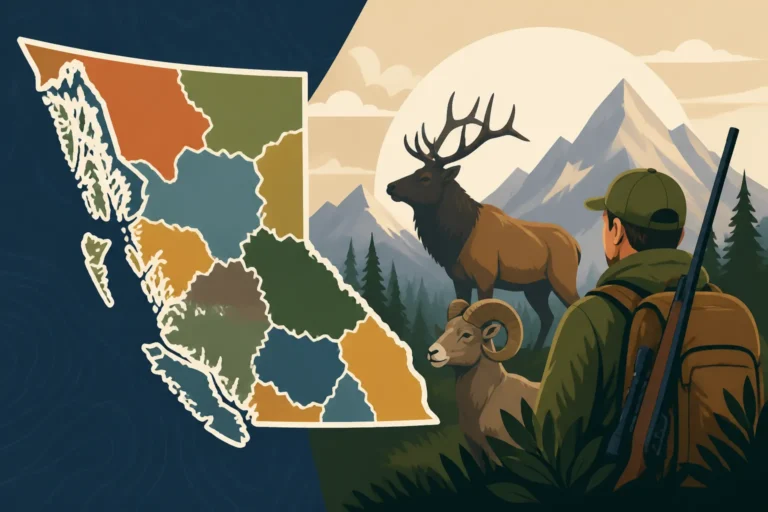
- Management Unit Boundaries: The Dease Lake and Cassiar region encompasses several MUs. Familiarize yourself with the specific boundaries of where you intend to hunt, as regulations can change dramatically from one MU to the next, sometimes even for the same species.
- Limited Entry Hunting (LEH) vs. General Open Seasons: Many popular species or specific areas might be under LEH, meaning you must apply for a draw tag well in advance and success is not guaranteed. Others are General Open Season (GOS), allowing you to purchase a tag over the counter. Stone's Sheep, for instance, are almost exclusively LEH, while moose and black bear often have GOS periods.
- Antler Restrictions and Sex-Specific Harvest: Pay close attention to rules regarding antler points for deer or elk (though elk are less common in Cassiar), and definitions of legal rams for sheep (e.g., full curl or 8 years old). For moose, some seasons are "Any Bull" while others are "Spike-Fork" or "5 Point or Greater," requiring careful field identification.
- Compulsory Inspection and Reporting: Many species, particularly sheep, goats, and moose, require compulsory inspection of the skull and hide by a provincial wildlife official within a specific timeframe after harvest. You'll also need to complete a compulsory harvest report. Failure to adhere to these rules can result in significant penalties. You can find general season dates in British Columbia Big Game Season Dates.
Don't assume regulations based on past years or other regions. Always verify the rules for your specific MU, species, and season.
Leveraging Technology for Scouting
In a region as vast and challenging as Dease Lake and Cassiar, technology becomes an invaluable partner in your planning and execution. Gone are the days of relying solely on paper maps, though they still have their place as backups.
Modern mapping applications are game-changers for remote British Columbia hunting. Tools like onX Hunt allow you to download offline maps, showing parcel boundaries, land ownership (crucial for distinguishing Crown land from private or First Nations land), topography, and various points of interest. This means you can mark potential hunting spots, escape routes, water sources, and even historical game sign, all before you ever leave home. When you're out of cell service, those downloaded maps become your lifeline. You can track your movements, mark kill sites, and navigate confidently through unfamiliar territory. For deep dives into mapping, Using onX for British Columbia Crown Land is a great resource.
Similarly, planning platforms like GoHunt provide an enormous amount of data for researching potential areas. While GoHunt might focus more on Western US draws, their comprehensive research tools, mapping overlays, and community forums can offer insights or methods applicable to any big game hunt, helping you strategize around topography, animal behavior, and season timing. Though it's geared towards US draws, the mindset of detailed planning and leveraging data for success is universal for serious hunters.
Beyond mapping, don't underestimate the power of satellite imagery. Spending hours scouring Google Earth or similar programs can reveal hidden basins, old logging roads, game trails, and potential access points that aren't apparent on standard topo maps. Look for areas with diverse habitat, south-facing slopes for early season green-up, or natural funnels between feeding and bedding areas. Cross-referencing satellite imagery with topographical maps will give you a multi-dimensional understanding of the landscape.
Finally, consider a reliable satellite communication device like a Garmin inReach or Zoleo. As mentioned earlier, cell service is virtually non-existent in much of this region. These devices allow you to send and receive text messages, share your location with loved ones, and, most critically, send an SOS in an emergency. Satellite Communication on a Remote Hunt is vital reading before any remote trip.
Hunting Strategies for Dease Lake and Cassiar
Hunting in the Dease Lake and Cassiar region demands adaptability and a solid understanding of both the terrain and animal behavior. The vastness means you can't simply stumble upon animals; you have to actively seek them out using well-thought-out strategies.
Spot-and-Stalk in Open Country
For species like Stone's Sheep, Mountain Goats, and even some mule deer (though less prevalent here), spot-and-stalk is the quintessential method in the expansive alpine and subalpine environments. This strategy relies heavily on patience and high-quality optics.
- Glassing is King: You'll spend far more time looking through binoculars or a spotting scope than actually walking. Find a high vantage point that allows you to see into multiple basins, avalanche chutes, and ridge lines. Set up comfortably, minimize movement, and systematically pick apart the landscape. Focus on contrasting colors, horizontal lines where none should be (an animal's back), or small movements. It's not about looking for an animal, but looking at every single rock, tree, and patch of snow until an animal reveals itself. Early mornings and late evenings are often the most productive, as animals are typically more active during these cooler periods. Read Glassing an Alpine Basin for Rams for more specific techniques.
- The Stalk: Once an animal is spotted and identified as legal, the real work begins. Plan your approach meticulously, using terrain features, timber, and shadows for cover. Wind direction is absolutely critical; always keep it in your face or quartering across to prevent your scent from reaching the animal. Be prepared for long, slow crawls over rocky, uneven terrain. Noise discipline is paramount. Many stalks are blown by rushing or misjudging the wind. Sometimes, a stalk can take hours, or even a full day, requiring you to bed down the animal and resume the approach at first light.
- Shot Placement and Retrieval: Given the often steep and unforgiving terrain, precise shot placement is vital. You want to anchor the animal quickly to prevent it from escaping into an inaccessible area. Be aware of the background and any potential ricochet hazards. Retrieval in this country is notoriously difficult. Plan your approach with the pack-out in mind. If you harvest an animal high on a mountain, anticipate a very demanding pack-out, often requiring multiple trips with heavy loads over dangerous ground. Getting Meat Out of Steep British Columbia Country and Packing Meat With a Frame Pack will be invaluable reading.
Bush Hunting and River Bottoms
While the high country gets a lot of attention, much of the Dease Lake and Cassiar region offers excellent hunting in the lower elevation bush and river bottoms, particularly for moose and black bears.
- Still-Hunting and Calling: In denser timber and willow flats, particularly along river systems or around beaver ponds, still-hunting becomes effective. Move slowly, taking one or two steps, then pausing for several minutes to observe and listen. Use your ears as much as your eyes; the rustle of leaves, a breaking twig, or the sound of an animal feeding can be the first clue. Moose, especially during the rut, respond well to calling. Cow calls, grunts, and even raking brush can draw a bull in, but patience is key. It's often a waiting game once a call is made. River bottoms can be extremely productive areas to focus on. Explore Hunting a British Columbia Lakeshore for Moose for more insights into these habitats.
- Tracking and Sign Reading: The softer ground in river valleys and the edges of muskeg can be excellent for tracking. Learn to identify fresh tracks, rubs, and beds. Moose leave distinct tracks and often browse heavily in willow and alder thickets. Bears leave scat, claw marks on trees, and turn over rocks or logs while foraging. Reading these signs can lead you directly to game, even in dense cover.
- Stand Hunting and Ambush Points: While less common than in agricultural zones, strategically placed stands or ground blinds can be effective in certain situations. Look for natural funnels, pinch points between clearings and dense cover, or areas with heavy game trails. Setting up near a known water source or a prime feeding area can also yield results. This requires thorough scouting to identify these key locations.
Backcountry Considerations
Hunting in the Dease Lake and Cassiar wilderness means being entirely self-sufficient. This isn't a place for shortcuts or relying on others to bail you out.
- Bear Safety: You are in prime grizzly and black bear country. Carry bear spray, know how to use it, and have it accessible at all times. Make noise when traveling through dense brush to avoid surprising bears. Store food securely away from your sleeping area, preferably in bear-resistant containers or hung from a tree. Be especially vigilant when field dressing an animal; bears are drawn to gut piles. Bear Safety While Hunting in British Columbia provides essential information.
- Emergency Planning: Develop a comprehensive emergency plan. Share your itinerary with someone reliable, including your planned route, check-in times, and emergency contact information. As mentioned, a satellite communication device is a must. Carry a well-stocked first-aid kit, emergency shelter, fire-starting materials, and extra food and water. Know basic wilderness first aid and how to deal with common injuries or illnesses. The advice in Emergency Planning in British Columbia's Backcountry is paramount.
- Navigation Skills: Beyond GPS devices, carry a physical map and compass and know how to use them. Batteries die, electronics fail, and screens crack. Relying solely on technology can leave you stranded. Practice your navigation skills before you go.
- Physical Fitness: These hunts are physically demanding. Be in the best shape possible. Strong legs, core strength, and cardiovascular endurance are crucial for negotiating steep terrain, carrying heavy packs, and enduring long days in the field. This applies whether you're climbing for sheep or packing out a moose through thick timber.
Hunting in the Dease Lake and Cassiar region is an experience unlike any other. It challenges you, rewards you, and leaves an indelible mark on your soul. With thorough planning, respect for the wilderness, and a commitment to safety, you can embark on a truly unforgettable British Columbia hunting adventure.
| Species | Primary Habitat | Key Hunting Strategy | Access Challenges |
|---|---|---|---|
| Stone's Sheep | High alpine, rocky peaks, remote basins | Spot-and-stalk, backpack hunt | Fly-in, long hikes beyond roads |
| Mountain Goat | Steep, rocky cliffs, subalpine ridges | Spot-and-stalk, arduous climb | Fly-in, very difficult terrain |
| Moose | River bottoms, willow flats, boreal forest, burns | Still-hunting, calling | ATV/UTV trails, jet boat, often remote FSRs |
| Black Bear | Forests, clearings, berry patches, river edges | Spot-and-stalk (open areas), still-hunting | Along FSRs, clearcuts, river systems |
| Wolf | All habitats, following prey | Calling, opportunistic, tracking | Highly adaptable, often requires specialized techniques |
Disclaimer
This article is for general informational purposes only and does not constitute professional advice. Laws, prices and regulations vary by location and change over time. Consult a qualified professional for guidance on your specific situation.