Hunting British Columbia’s Coast
Hunting the British Columbia coast can feel like stepping into another world entirely, far removed from the open country or vast northern forests many envision. It's a place of ancient rainforests, craggy islands, mist-shrouded inlets, and steep, rugged mountains that plunge directly into the Pacific. If you've ever dreamt of chasing blacktail deer through dense fog, or glassing a spring bear on a tidal flat while the rain lashes down, this guide is for you. We're going to dive deep into what makes coastal BC hunting such a unique, challenging, and incredibly rewarding experience, covering everything from the unique species you'll encounter to the specific gear and strategies you'll need to succeed in this wild, wet, and utterly breathtaking landscape.
Understanding the British Columbia Coast as a Hunting Region
The British Columbia coast is an incredible tapestry of marine and terrestrial environments, unlike almost any other hunting ground in North America. It's defined by its deep fjords, thousands of islands, and dense temperate rainforests, all under the constant influence of the Pacific Ocean. This isn't your grandfather's deer woods; it's a dynamic, ever-changing environment that demands a specific approach and a healthy respect for its power.
Geographic Boundaries and Key Zones
When we talk about hunting the BC Coast, we're really encompassing several distinct, yet interconnected, zones. From the Strait of Georgia up to the Alaskan Panhandle, it's a vast area. We've got Vancouver Island, a massive hunting destination in itself, with its own unique characteristics. Then there's the mainland coast, stretching from the Lower Mainland up past Bella Coola and Prince Rupert, carved by countless inlets and river systems. Further offshore lies Haida Gwaii, an archipelago with a rich ecological history, often referred to as the "Galapagos of the North," offering incredible Sitka blacktail hunting. Each of these areas shares the coastal climate but has its own nuances in terms of access, game density, and hunting pressure.
Imagine looking at a map and seeing the green blanket of forest meet the blue of the ocean with countless fingers of land reaching out. That's the BC Coast. Access can range from driving logging roads on Vancouver Island to needing a boat or floatplane to reach remote mainland inlets or Haida Gwaii. Understanding these distinct zones is your first step to planning a successful hunt, as a strategy for the south island might be entirely different from one for the central coast. Knowing whether you're targeting a Vancouver Island Blacktail in Second Growth or a Sitka Blacktail on Haida Gwaii dictates much of your planning.
Climate and Weather Patterns
Let's be blunt: if you don't like rain, the BC Coast might not be for you. This region is famous for its wet weather, with annual precipitation often measured in meters, not millimeters. This isn't just a minor inconvenience; it's a defining feature of hunting here. Expect persistent drizzle, heavy downpours, and frequent fog, especially from fall through spring. Temperatures are generally mild compared to the interior, with coastal winters rarely dipping into extreme cold, which is a blessing for longer seasons but adds to the humidity challenge.
The constant moisture shapes everything from the type of vegetation you'll push through to how game animals behave and how you need to care for your meat. Rain can obscure visibility, dampen scent trails, and make footing treacherous. Fog can roll in fast, disorienting hunters and limiting glassing opportunities, making navigation tools like onX Hunt absolutely essential for staying found and understanding the terrain. You'll quickly learn to appreciate even a few hours of clear sky.
General Topography and Habitat
The terrain along the BC Coast is relentlessly steep and rugged. Picture mountains rising directly from the ocean, heavily forested from sea level up to the alpine. The lower elevations are dominated by dense temperate rainforests – think massive old-growth cedars and hemlocks, incredibly thick underbrush like devil's club, salal, and huckleberry, and a deep, mossy forest floor. Above timberline, you'll find classic alpine country, with open rock, sparse vegetation, and sweeping views (on the rare clear day).
Coastal estuaries, river mouths, and beach fronts are critical habitats, especially for black bears and waterfowl, offering rich feeding grounds. The islands provide isolated ecosystems where deer populations can thrive with fewer predators. The mix of old growth, second growth, clearcuts (from past logging), and alpine bowls creates a diverse landscape, but one that is consistently challenging to traverse. This mosaic of habitat dictates where you'll find different species, from bears foraging along salmon streams to goats clinging to high, rocky ledges.
Primary Game Species on the Coast
British Columbia's coast is home to a fantastic array of game, each presenting its own unique challenge and reward. While some species overlap with interior regions, their coastal counterparts often exhibit different behaviours and thrive in this distinct environment.
Black-Tailed Deer: The Coastal Icon
The black-tailed deer is arguably the quintessential coastal game animal. On the mainland and Vancouver Island, you'll find the Columbian blacktail, while on Haida Gwaii, it's the Sitka blacktail. These deer are known for their small size relative to mule deer, their incredible ability to vanish in dense cover, and their often elusive nature. They are perfectly adapted to the rainforest environment, moving silently through thick brush and utilizing the abundance of forage found in second-growth clearcuts, old-growth edges, and even right down to the beach.
Hunting blacktail often means still-hunting through second-growth timber, patiently picking apart the dense cover, or focusing on old logging roads and cutblock edges at first and last light. The rut for blacktail usually peaks in November, offering some exciting opportunities to use calls like a fawn bleat. Success often hinges on your ability to move quietly, read subtle sign in the wet forest floor, and capitalize on fleeting glimpses. It's a hunt that demands patience and a keen eye. To truly understand these adaptable animals, diving into Black-Tailed Deer Hunting in British Columbia is a must.
Black Bears: Abundance and Opportunities
British Columbia's coast boasts a healthy and robust black bear population, renowned for producing some truly impressive animals. These bears thrive in the rich coastal ecosystem, taking advantage of salmon runs, berry patches, and succulent spring growth on estuaries and open slopes. Coastal black bears also come in a stunning array of color phases, from the more common black to cinnamon, chocolate, and even the rare and protected Kermode "Spirit Bear" found in specific regions.
Spring bear hunting on the coast is a popular pursuit, often involving glassing coastal estuaries and river deltas where bears emerge from hibernation to feed on new green growth. These areas concentrate bears, making for excellent spotting opportunities, often from a boat. Fall hunting, on the other hand, frequently focuses on berry-rich slopes and the banks of salmon-choked rivers, where bears gorge themselves in preparation for winter. Hunters need to be particularly diligent in judging a boar from a sow with cubs, especially in thick cover. Hunting Bears on a Coastal Estuary in May is a prime example of a classic coastal bear hunt.
Roosevelt Elk: Giants of the Rainforest
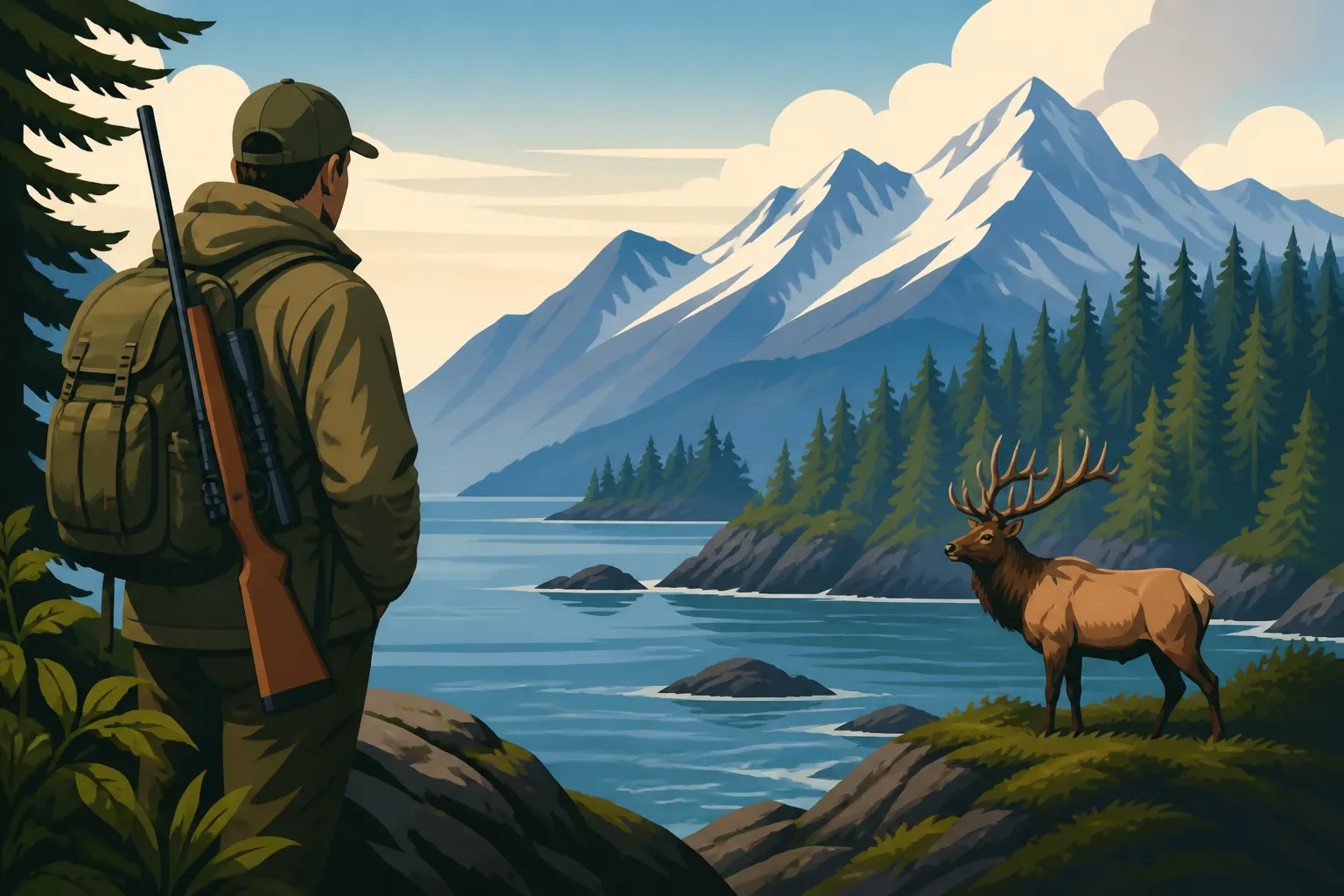
For those seeking a truly epic challenge, the Roosevelt elk of the British Columbia coast offer an unparalleled experience. These magnificent animals are the largest subspecies of elk in North America, with bulls growing to immense sizes. They inhabit the dense, old-growth rainforests of Vancouver Island and the mainland coast, thriving in the rugged terrain and abundant vegetation. Unlike the open country elk hunts of the Rockies, pursuing Roosevelt elk is an exercise in close-quarters bush hunting.
Roosevelt elk are typically managed through Limited Entry Hunting (LEH) draws due to their specific habitat requirements and population management goals. Drawing a coveted tag for a Roosevelt elk hunt requires careful research into odds and zones, a task where resources like GoHunt can be invaluable for analyzing historical draw data. Once you have a tag, the hunt itself is incredibly demanding. It involves traversing incredibly dense, steep terrain, often in persistent rain, tracking fresh sign, and using bugles and cow calls to locate and entice a bull. It's a physically grueling hunt, but the reward of hearing a bull bugle echo through the ancient rainforest is unforgettable.
Mountain Goats: High-Country Challenges
While many associate mountain goats with interior alpine ranges, British Columbia's Coast Range also holds significant populations of these incredible animals. These "ghosts of the mountains" inhabit the extreme high country, often above timberline, clinging to precarious rock faces and steep, snow-covered slopes. Hunting mountain goats on the coast means facing some of the most demanding physical conditions imaginable, combining the vertical challenges of mountain hunting with the persistent wetness and often unpredictable weather of the coast.
Access to goat country on the coast is often incredibly difficult, sometimes requiring floatplane access to remote alpine lakes or long, arduous backpack trips up steep valleys. Once in the high country, hunters must navigate treacherous terrain, frequently shrouded in fog, and contend with rapidly changing weather systems. Success requires peak physical conditioning, careful spotting with quality optics, and an unwavering commitment to safety. It's a true wilderness experience, testing a hunter's resolve against the elements and the vertical world. Understanding Hunting Mountain Goat on British Columbia Rock will give you a real appreciation for this kind of hunt.
Waterfowl and Upland Birds: Coastal Marsh and Forest Hunting
Beyond big game, the British Columbia coast offers fantastic opportunities for bird hunters. The estuaries, river deltas, and coastal marshes are vital staging and wintering grounds for a wide variety of waterfowl along the Pacific Flyway. From various duck species to Canada geese and snow geese, there's a rich diversity for the shotgunner.
Upland birds also find homes in the coastal forests. Ruffed grouse, blue grouse (now often referred to as dusky or sooty grouse), and spruce grouse can be found in different habitats, from alder bottoms to dense conifer stands and old logging clearings. These hunts can be a great way to combine a big game trip with some bird hunting or to simply enjoy a lighter, less strenuous outing. Often, it's a matter of walking logging roads or forest trails, flushing birds as you go. For waterfowl, a good boat and knowledge of tides are often essential for accessing prime hunting spots. Decoying Ducks on a Coastal Estuary can be an incredibly productive and exciting way to fill a limit.
| Species | Primary Habitat | Best Time to Hunt | Key Challenges |
|---|---|---|---|
| Black-Tailed Deer | Second growth, old-growth edges, clearcuts, dense bush | Fall (Nov rut) | Dense cover, elusive, small target area |
| Black Bear | Estuaries, berry patches, salmon streams, clearcuts | Spring (May-June), Fall (Sept-Oct) | Thick cover, judging size/sex, high density |
| Roosevelt Elk | Old-growth rainforest, steep valleys | Fall (Sept-Oct rut) | Extremely dense terrain, physical exertion, LEH |
| Mountain Goat | High alpine, rocky slopes, exposed ridges | Fall (Sept-Oct) | Extreme terrain, harsh weather, physical demands |
| Waterfowl | Estuaries, marshes, river deltas, agricultural fields | Fall/Winter (Oct-Jan) | Tides, weather, non-toxic shot rules |
| Upland Birds | Logging roads, forest edges, clearcuts | Fall (Sept-Nov) | Dense cover, quick shots, often solitary |
Unique Challenges of Coastal British Columbia Hunting
Hunting the British Columbia coast is not for the faint of heart. It presents a suite of unique challenges that test even the most experienced hunters. These aren't just minor inconveniences; they are fundamental aspects of planning and executing a successful coastal hunt.
Navigating Dense Terrain and Vegetation
Forget wide-open timber or sparse prairie. The coastal rainforests are incredibly dense, a tangled labyrinth of thick underbrush, downed trees, and moss-covered ground that can swallow a hunter whole. Old-growth stands, while majestic, often have such a thick canopy that light struggles to penetrate, creating a dark and often featureless environment. Second-growth areas, while providing excellent browse for deer, are typically a wall of brush, salal, and devil's club, making every step a battle.
Moving quietly through this type of vegetation is a monumental task, and seeing more than a few yards ahead is often impossible. This means your hunting style needs to adapt: still-hunting becomes less about long sightlines and more about feeling your way through, focusing on sound and subtle movement. Retrieving game, once down, can be an epic undertaking, especially if it runs into a thick blowdown. The sheer physical effort required to push through this terrain day after day can be exhausting, quickly wearing down unprepared hunters.
Weather's Impact on the Hunt
As touched on earlier, the weather on the BC Coast is a constant, often formidable, factor. Persistent rain isn't just uncomfortable; it saturates everything. Your gear, your clothes, the ground, and often your spirits will be perpetually damp. This means waterproofing is not optional; it's absolutely critical for comfort, safety, and morale. Hypothermia is a real concern if you get wet and the temperatures drop, even if they aren't freezing.
Beyond the rain, dense fog can roll in rapidly, especially in the mountains and along the inlets. This drastically reduces visibility, making spotting game impossible and navigating treacherous. Navigating Fog on a British Columbia Coast Hunt is a skill in itself. Winds can whip up quickly, turning calm waters into dangerous chop and making boat travel hazardous. Hunters need to be prepared for all four seasons in a single day and have the flexibility to adapt plans as the weather dictates.
Access by Water: Boats, Tides, and Inlets
For many coastal hunts, particularly for bears on estuaries or reaching remote islands and mainland inlets, a boat isn't just a convenience; it's the primary mode of transportation. This introduces a whole new set of considerations that river or lake hunters might not be familiar with. You're dealing with saltwater, powerful tides, and potentially open ocean conditions. Understanding marine charts, tide tables, and safe boating practices is paramount.
Running a jet boat up a tidal river or navigating an ocean skiff through choppy inlets requires experience and vigilance. You need to be aware of sandbars, submerged rocks, and rapidly changing water levels that can leave you high and dry. Launching and retrieving boats in remote areas can be challenging, and having a reliable vessel with adequate fuel and emergency supplies is non-negotiable. Many of the most productive hunting areas are simply inaccessible by road, making boat access a critical skill. Hunting From a Boat on the Coast offers specific insights into this type of pursuit.
Bear Encounters and Safety
With such healthy bear populations, encounters are a common occurrence on the BC Coast. While most are black bears, hunters venturing into the Great Bear Rainforest or certain northern mainland areas must be acutely aware of grizzly bears. Although grizzly hunting is closed in BC, understanding grizzly behaviour and knowing how to react in an encounter is crucial for your safety. Black bears, while less aggressive than grizzlies, can still pose a threat, especially sows with cubs or habituated animals.
Proper food storage, carrying bear spray, and knowing how to use it are non-negotiable. Hunting in dense cover means you might stumble upon a bear unexpectedly, so staying alert, making noise in thick brush, and being mentally prepared for a close encounter are key. When you do harvest an animal, especially in a remote area, be extra vigilant during field dressing and packing out meat, as the smell can attract bears. For comprehensive information on staying safe, check out Bear Safety While Hunting in British Columbia.
Effective Coastal Hunting Strategies
Success on the British Columbia coast requires a different playbook than hunting in the interior. The unique environment demands specific tactics to locate, approach, and harvest game. Adaptability and a willingness to embrace the elements are key.
Still-Hunting and Tracking in Wet Forests
Given the extreme density of coastal forests, traditional "spot-and-stalk" as practiced in open country is often impossible. Instead, still-hunting becomes the primary method for deer and sometimes elk. This involves moving incredibly slowly, taking one or two steps, then stopping for several minutes to listen, look, and scan for any sign of movement. The wet forest floor, while often noisy with dripping leaves, can sometimes provide soft footing, allowing for quieter movement than dry leaves.
Tracking is another critical skill. The damp ground can hold tracks well, and learning to interpret faint scrapes, broken twigs, and beds in the moss can lead you to game. It's not about following a highway of tracks, but rather piecing together subtle clues over long distances. The constant rain can wash away older tracks, but fresh sign remains clear. It demands patience, keen observation, and an intimate understanding of how animals move through specific types of coastal vegetation. This method truly epitomizes Still-Hunting Second Growth for Blacktail and testing your woodsmanship.
Glassing Estuaries and Beachfronts
For species like black bears and waterfowl, and sometimes even deer, coastal estuaries, river mouths, and open beachfronts are prime locations for glassing. These areas offer vital feeding opportunities, especially in spring for bears seeking new growth, or in fall for bears and waterfowl attracted to salmon runs and aquatic vegetation. Timing is everything here. Tides play a huge role; low tide exposes mudflats and seaweed beds where animals forage, while high tide pushes them towards the forest edge.
Using a good pair of binoculars or a spotting scope from a vantage point (often from a boat or a rise on shore) allows you to systematically scan these open areas. The challenge is often the weather – fog, rain, and glare off the water can make glassing difficult. However, when conditions are right, these can be incredibly productive spots. It’s a game of patience, waiting for an animal to step out into the open or for a flock of ducks to come in.
Calling Coastal Game
Calling can be an incredibly effective strategy on the coast, especially for blacktail deer during the rut and for Roosevelt elk. For blacktail, a fawn bleat or a subtle grunt can often pique the curiosity of a rutting buck, drawing him out of the thick timber. The dense vegetation limits long-range vision, so calls are more about getting an animal to move into a shooting lane or closer to your position.
For Roosevelt elk, bugling and cow calling during the September/October rut can be exhilarating. These animals are often vocal, and a well-placed bugle can elicit a response from a bull. However, the dense forest means the sound doesn't travel as far, and pinpointing a bull's location can still be challenging. You often have to close the distance quickly after a response, as the bull might not stay put for long. It's an intense, adrenaline-pumping hunt that rewards aggressive calling and strategic movement. Bugling to a Roosevelt Elk Bull in this environment is truly a unique experience.
Using Boats for Access and Spotting
As mentioned, boats are often indispensable on the BC Coast. Beyond simply getting to your hunting area, they can also be used as platforms for spotting, especially for bears on estuaries or waterfowl. Cruising quietly along a shoreline at first light or late in the evening can reveal animals feeding along the water's edge. This is particularly effective for spring bear hunting, where bears often stick to the open tidelines.
However, using a boat for spotting comes with strict regulations. You cannot shoot from a motorized vehicle or boat that is under power. You must be lawfully stopped, and often off the boat, before taking a shot. Always verify current regulations. Beyond hunting, a boat provides a warm, dry base camp, a place to process game away from bears, and a means to quickly cover vast distances of shoreline, greatly expanding your hunting opportunities. Just remember that safety is paramount, especially when Jet Boating a British Columbia River to Camp or navigating open water.
Essential Gear and Preparation for Coastal Hunts
Hunting the BC Coast isn't just about skill and strategy; it's also about having the right gear. The unique environmental conditions demand a specific kit to keep you safe, comfortable, and effective. Skimping on quality here is a recipe for a miserable trip.
Rain Gear and Layering Systems
This cannot be stressed enough: quality rain gear is your single most important investment for a coastal hunt. We're not talking about a drizzle-proof jacket; you need truly waterproof, breathable outer layers (jacket and pants) that can withstand hours, if not days, of steady rain. Look for Gore-Tex, eVent, or similar high-performance membranes, with fully taped seams and durable face fabrics. Your base layers and mid-layers should be synthetic or merino wool, as cotton will absorb moisture and lose all insulating properties when wet, leading to dangerous chilling.
A proper layering system allows you to adapt to changing temperatures and activity levels without getting soaked in sweat or chilled by the rain. You'll want a wicking base layer, an insulating mid-layer (fleece or puffy synthetic), and that bomb-proof outer shell. Bring multiple sets of base layers, because you will get wet, even with the best gear. Having dry clothes to change into at camp can make all the difference in your comfort and ability to continue the hunt.
Footwear and Navigation
Your feet will take a pounding in the coastal environment, and they'll be exposed to constant moisture. Invest in high-quality, waterproof hunting boots with excellent ankle support and aggressive traction for slippery rocks, moss, and mud. Leather boots with a Gore-Tex liner or durable synthetic boots are common choices. Consider gaiters to keep water, mud, and debris out of your boots and to protect your pants from snagging on brush.
Navigation is paramount, especially with frequent fog and dense, disorienting terrain. A reliable GPS unit or a smartphone with a robust hunting app like onX Hunt is essential. Download offline maps of your hunting area, as cell service will be non-existent in many remote coastal areas. Always carry a physical map and compass as a backup, and know how to use them. Mark key waypoints like your vehicle, boat, or camp, and frequently check your position, particularly when moving through featureless dense timber or when fog rolls in. Reading a British Columbia management unit map is a skill worth practicing before you go.
Meat Care in Humid Conditions
The mild, humid conditions of the BC Coast present unique challenges for meat care, especially in early season hunts. Unlike dry, cold interior environments where meat can hang for days, spoilage is a much higher risk here. As soon as an animal is down, rapid field dressing is critical to allow the carcass to cool. Skinning the animal quickly will also aid in cooling and prevent bacterial growth.
You'll need sturdy game bags to protect the meat from flies and debris. If you're near a boat or camp, hanging the quarters in a breezy, shaded spot (if available) can help, but continuous cooling is often necessary. This might mean using coolers with ice, especially for boat-based hunts, or planning for a quick pack-out to a processor if temperatures are warm. Neglecting proper meat care can quickly ruin your hard-earned trophy. Consult Meat Care in British Columbia's Warm Early Seasons for more detailed advice on this crucial topic.
Communication and Safety Equipment
Remote coastal hunting means you'll often be far from help. Reliable communication and safety equipment are non-negotiable. A satellite messenger or satellite phone is highly recommended for emergency contact beyond cell service. These devices allow you to send texts or make calls even in the most remote areas, vital for contacting loved ones or calling for help if something goes wrong.
Beyond communication, a comprehensive first-aid kit, fire-starting supplies, a headlamp with extra batteries, an emergency shelter (like a bivy sack or tarp), and a signaling device (whistle, mirror, flares for boaters) should always be in your pack. Bear spray is essential, and if you're carrying a firearm, ensure you know how to safely handle it in thick brush. Always leave a detailed trip plan with someone responsible, including your route, expected return time, and emergency contacts. Emergency Planning in British Columbia's Backcountry is something every coastal hunter should take seriously.
Regulations and Permits Specific to British Columbia's Coast
Hunting anywhere in British Columbia requires a thorough understanding of the regulations, but the coast often has its own nuances, particularly regarding specific species, management units, and access. It’s critical to review the current British Columbia Hunting and Trapping Regulations Synopsis before every hunt.
Management Units and Regional Specifics
British Columbia is divided into nine hunting regions, which are further broken down into specific Management Units (MUs). The coast falls primarily within Region 1 (Vancouver Island), Region 2 (Lower Mainland), and Region 6 (Skeena) and Region 7A and 7B (Omineca and Peace, which also touch the north coast). Each of these regions and MUs can have unique season dates, bag limits, and specific rules for certain species. For instance, specific MUs on Vancouver Island might have different blacktail seasons than those on the mainland coast.
It's absolutely vital to know which Management Unit you are in at all times and to be intimately familiar with the regulations specific to that MU. Geographic features like rivers, roads, or mountain ranges often delineate MU boundaries, which can be tricky to discern in dense coastal terrain. Using a GPS with MU overlays, such as those found on onX Hunt, can prevent accidental violations. Familiarize yourself with British Columbia's Management Units and Regions to ensure you're hunting legally.
Limited Entry Hunts
Many of the most sought-after coastal species, particularly Roosevelt elk and mountain goats, are managed through British Columbia's Limited Entry Hunting (LEH) system. This means that to hunt these species in specific areas, you must apply for a draw and be successful in obtaining an authorization. LEH applications are typically submitted online, and deadlines are firm, usually in the spring.
The LEH system helps manage pressure on specific populations and allows for targeted harvest goals. Researching draw odds, understanding priority points, and selecting the right MUs for your desired species are all part of the LEH process. Websites like GoHunt often provide valuable data and analysis for LEH draws, helping hunters make informed decisions about where to apply. Even for general open seasons, certain species or antler regulations (like a four-point antler restriction for mule deer, which can sometimes overlap with blacktail areas) can be in effect.
Mandatory Reporting and Species ID
British Columbia has compulsory reporting requirements for many species, including all big game. This means that after you harvest an animal, you are legally required to report it to the provincial government within a specified timeframe (typically 30 days, though moose and some other species have immediate or very short deadlines). Failure to report a harvest is a serious offense.
For some species, like moose, compulsory inspection of the skull and antlers may also be required, usually at specific inspection stations. On the coast, accurately identifying blacktail deer and correctly determining the sex of a black bear are important. Misidentification can lead to violations, especially if you harvest a female bear when only males are permitted, or if you exceed antler restrictions. Carefully review the identification requirements in the synopsis.
Non-Resident Rules and Guide Requirements
If you're a non-resident of British Columbia, the rules for hunting big game are significantly different. Non-residents must be accompanied by a licensed guide outfitter, or a British Columbia resident holding a Permit to Accompany. This requirement is a foundational aspect of non-resident hunting in the province. Without one of these, you cannot hunt big game.
There are specific requirements for obtaining a Permit to Accompany, including limitations on the number of non-residents a resident can accompany, and rules regarding direct supervision. Guide outfitters, on the other hand, operate within specific guiding territories and offer comprehensive hunting packages. It's crucial for non-residents to understand these rules well in advance of planning a trip. Information on Rules for Non-Residents Hunting British Columbia is readily available and absolutely essential reading.
Respecting the Environment and Local Communities
Hunting on the British Columbia coast isn't just about pursuing game; it's about being a responsible steward of a truly special place and a respectful visitor to its diverse communities. The coast is a sensitive ecosystem, and many areas are deeply significant to local Indigenous peoples.
Leave No Trace Principles in Rainforest Ecosystems
The coastal rainforest is a lush, vibrant, but also fragile environment. Practicing Leave No Trace principles is more than just good manners; it's essential for preserving these unique habitats. This means packing out everything you pack in, including all garbage and waste. Avoid cutting live trees for camp, and use existing trails or minimize your impact when pushing through brush.
When camping, select durable surfaces and properly manage human waste. Fires, if permitted, should be kept small and completely extinguished. Be mindful of scent, as the humidity can hold odors, attracting wildlife to your camp. By leaving no trace, you ensure that these pristine coastal areas remain wild and beautiful for future generations of hunters and outdoor enthusiasts.
Understanding First Nations' Territories and Rights
British Columbia is unceded Indigenous territory, and many coastal areas are traditional territories of various First Nations. It's important for hunters to be aware of and respect the inherent rights of Indigenous peoples, including their constitutionally protected hunting and fishing rights. While general open seasons and regulations apply to licensed hunters, there may be specific areas or situations where First Nations' traditional activities take precedence.
Before hunting in a new area, especially in remote regions, it's a good practice to research the local First Nations and understand any specific concerns or protocols for that territory. While you might not need explicit permission to hunt on Crown land (which is the majority of BC), engaging respectfully and being aware of cultural sensitivities is part of ethical hunting in British Columbia.
Responsible Hunting Near Coastal Communities
Many coastal communities in British Columbia are small, isolated, and often share their borders with wild areas. Responsible hunting means being a good neighbour. This includes following all regulations regarding shooting distances from dwellings, roads, and parks. Always ensure you have a safe backdrop for your shot and are aware of your surroundings, especially if hunting near populated areas or popular recreational spots.
Parking considerately, minimizing noise, and interacting respectfully with locals are all part of being a responsible hunter. Remember that public perception of hunting is shaped by the actions of individuals. By demonstrating ethical behaviour, respect for the land, and consideration for local residents, you contribute positively to the image of hunting in British Columbia.
Disclaimer
This article is for general informational purposes only and does not constitute professional advice. Laws, prices and regulations vary by location and change over time. Consult a qualified professional for guidance on your specific situation.