Hunting an Avalanche Path in Spring
Spring hunting in British Columbia can be a real exercise in patience, especially when you're trying to locate game in vast, often rugged terrain where animals are just emerging from winter dormancy or moving through transition zones. It's easy to get frustrated by dense, leafless timber that hides everything, or by areas that still hold too much snow. But one of the most consistently productive, yet often overlooked, habitats for spring game—especially bears, and sometimes even early deer or elk—is the avalanche path. This guide will walk you through why these scars on the mountainside are prime hunting grounds in the spring and how to approach them safely and effectively.
Why Avalanche Paths Are Spring Hunting Hotbeds
Avalanche paths might look like chaotic stretches of broken timber and rock, but for a hunter in British Columbia's spring, they are often ecological magnets. They offer unique conditions that make them incredibly attractive to game animals that are hungry, on the move, and seeking the first signs of green growth after a long winter. Don't let their rugged appearance deter you; these areas are often bustling with life.
Early Green-Up and Nutrient Rich Forage
One of the primary reasons avalanche paths are so productive in the spring is their incredible capacity for early green-up. When a slope avalanches, it scours away the heavy timber and often churns the soil, exposing mineral-rich ground to the sun. Because these paths are typically open, direct sunlight hits the ground much sooner than in the surrounding forest, melting snow faster and warming the soil quicker. This means that tender, new shoots of vegetation—lush grasses, clovers, and forbs—can emerge weeks before the surrounding timbered areas even begin to bud.
Imagine patches of vibrant green emerging amidst the lingering patches of snow and the grey, dormant forest floor. For an animal like a black bear, just emerging from a long hibernation and desperately needing to replenish its energy stores, these early greens are a critical food source. They're packed with easily digestible nutrients, a welcome change from the scarcity of winter. You'll often find bears grazing almost like cattle on these rich new growth areas, especially on south-facing aspects of the paths. Deer, too, especially mule deer, will seek out these initial green-ups, taking advantage of the concentrated forage before moving on to higher, more diverse summer ranges.
Natural Corridors and Travel Routes
Beyond the buffet of early spring greens, avalanche paths also serve as natural highways and travel corridors for wildlife. These pathways cut through otherwise impenetrable tracts of dense timber, providing clear, relatively open routes for animals to move between different habitat types. Think of a thick stand of lodgepole pine or coastal hemlock; it's slow, noisy going for both hunter and hunted. An avalanche path, however, offers a much easier passage.
For a bear, these paths can be crucial arteries for traversing elevation, moving from lower denning sites or riparian areas to higher elevation berry patches as the season progresses. Deer and elk might use them as migratory routes, travelling between winter range and emerging spring feeding grounds, or even just as shortcuts between bedding areas and water sources. If you're observing an area from a distance, watching an avalanche path can often reveal movement that would be invisible in the surrounding forest. Animals aren't just feeding in these paths; they're often travelling through them, making them excellent places to intercept game. Looking at maps with topographical features can help identify these natural corridors, and tools like onX Hunt are incredibly valuable for this kind of digital scouting.
Diverse Habitat Edges
An avalanche path isn't just an open strip; it's a dynamic zone of transition, creating extensive "edge" habitat. An edge is where two different habitat types meet, and these interfaces are almost always biological hotspots because they offer the best of both worlds. On one side of the path, you have the dense, sheltering cover of the mature forest—perfect for bedding, security, and escape. On the other, you have the open, sun-drenched path providing abundant forage and good visibility.
This combination is irresistible to many game species. A black bear might be actively foraging on the open path, but with a swift move, it can disappear into the thick timber at the edge if it senses danger or needs to bed down for a midday nap. Deer and elk will browse along these edges, taking advantage of the varied vegetation that thrives where sun and shade meet, while always being within a short sprint of concealment. These edges also often accumulate fallen timber and rock, creating natural cover and bedding sites within the path itself. When you're scouting, pay particular attention to these transitional zones, as animals often spend their time just inside the timber line, peeking out or stepping into the open to feed.
Identifying Productive Avalanche Paths for Spring Hunting
Not all avalanche paths are created equal, and knowing how to pick the most promising ones is a crucial skill for successful spring hunting in British Columbia. It's a combination of armchair scouting and getting your boots on the ground, always with an eye for safety.
Reading the Terrain with Maps and Satellite Imagery
Before you even step foot in the woods, spend some serious time with good maps and satellite imagery. Avalanche paths show up as distinct, often long and narrow, scars on steep slopes. They appear as lighter green or brown streaks cutting through darker timber on satellite views, and on topographic maps, you'll see contour lines indicating a sudden change in slope or a drainage that channels slide activity.
When you're doing your digital scouting, focus on several key factors. First, look for paths with a south-facing aspect. These slopes get the most direct sunlight, leading to that crucial early snowmelt and green-up. Next, identify paths that are in proximity to water sources, such as creeks or small ponds, or those that connect to larger drainage systems. Animals need water, and these features can act as additional travel corridors. Also, consider the overall elevation. Early in the spring, lower elevation paths will melt out first, becoming productive sooner. As the season progresses, you can shift your focus to higher ones. Tools like onX Hunt and GoHunt are invaluable for this, allowing you to layer different map types, mark potential spots, and even check historical satellite imagery for changes in vegetation or slide activity. Knowing how to interpret these digital landscapes is a cornerstone of Scouting a British Columbia Management Unit Online.
Ground-Truthing and Scouting Safely
Digital scouting is a great start, but nothing beats getting your boots on the ground to confirm your suspicions. However, spring scouting in avalanche paths comes with inherent risks. The snowpack can still be unstable, especially after fresh snowfalls or during warm, sunny periods. Always be aware of avalanche danger, particularly if you're venturing into steep terrain with lingering snow. Check local avalanche forecasts and carry appropriate safety gear if conditions warrant.
Once you're safely in the area, look for direct evidence of game use. This means searching for tracks in lingering snow patches or soft soil, fresh droppings (bear scat will be particularly distinctive, often full of grass in the spring), and rubbed trees where bears have scratched or marked their territory. Pay attention to browsed vegetation—nipped-off shoots or broken branches can indicate deer or elk activity. Look for areas where the new growth is particularly lush and abundant. Often, you'll find game using the benches or slight breaks in the slope within the path itself, or just inside the timber line. This type of detailed observation, much like Reading Blacktail Sign in Wet Ground, is critical for understanding recent animal activity.
Understanding Aspect and Elevation
As mentioned, aspect and elevation are perhaps the two most critical factors determining when an avalanche path becomes productive for spring hunting. They dictate snowmelt, vegetation growth, and ultimately, where the game will be at any given time.
A south-facing avalanche path, receiving direct and prolonged sunlight, will shed its snowpack and green up significantly earlier than a north-facing slope, which remains colder and shadier for longer. It's not uncommon to see a stark difference, with a south-facing path being snow-free and covered in vibrant green while a north-facing path directly across the valley is still blanketed in deep snow. This means your hunting strategy should follow the sun. Early in the spring, typically April and early May, focus your efforts on those lower elevation, south-facing paths. As May progresses into June and the snowline recedes, higher elevation paths with similar aspects will become active. By understanding this progression, you can effectively follow the emerging green-up and the game that’s drawn to it, rather than wasting time in areas that are still locked in winter's grip.
Strategies for Hunting Avalanche Paths in Spring
Hunting avalanche paths effectively requires a specific set of strategies, blending patient observation with careful stalking. The open nature of these areas can be both an advantage and a disadvantage, offering long sightlines but also less cover for the hunter.
Spot-and-Stalk Techniques
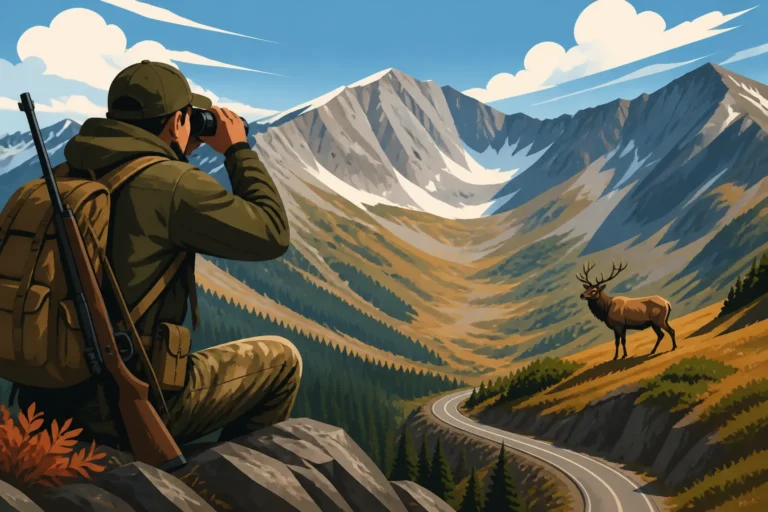
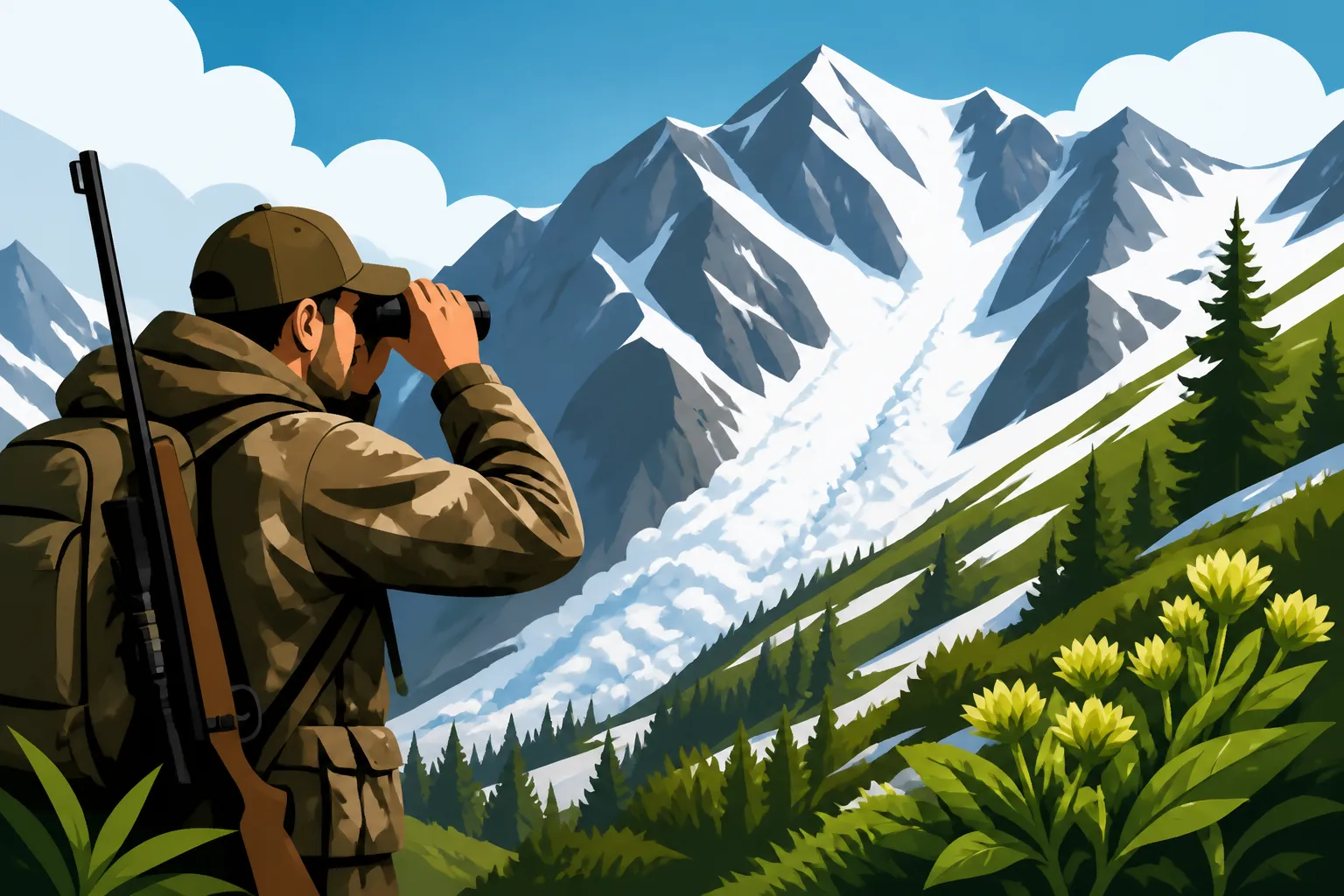
The spot-and-stalk method is king when hunting avalanche paths. These open corridors, especially wide ones, are perfectly suited for glassing from a distance. You want to find a vantage point, often across the valley or from an opposing ridge, where you can safely and thoroughly scan the entire path without disturbing any potential game.
Good quality optics are non-negotiable here. A reliable pair of binoculars (10x or 12x) and a spotting scope are your most important tools. Set up early in the morning, or in the late afternoon, and systematically pick apart the entire avalanche path, section by section. Look for any movement, any subtle colour contrast that looks out of place, or even just the shine of an animal's hide in the sun. Bears, with their dark coats, can often appear as a "blob" or a dark shadow against the emerging green or lingering snow. Be patient; animals often move slowly, browsing for long periods. You'll want to practice techniques like Glassing Logging Roads for Spring Bears or Glassing an Interior Hillside for Mule Deer to become proficient at spotting game in open country.
Approaching and Stalking with Caution
Once you've spotted an animal, the real challenge begins: the stalk. Avalanche paths, by their nature, often offer limited cover, so a successful approach requires meticulous planning and execution. The wind direction is paramount; always approach with the wind in your face or quartering towards you to prevent your scent from reaching the animal.
Use any available terrain features for concealment: depressions in the path, large boulders, clusters of surviving timber, or the thick alders and brush that often grow along the edges. Move slowly, deliberately, and be prepared to stop and freeze if the animal looks up. Sound travels far in open areas, so be mindful of breaking branches or scuffing rocks. Also, remember that avalanche paths can be unstable. Be aware of loose rock, debris, and steep sections that could lead to a fall. Sometimes, the best approach might involve dropping into the timber alongside the path, moving slowly through the denser cover, and only emerging when you're within shooting range or need to re-evaluate your position.
Considering the Species and Their Behaviour
Different game species will behave differently in an avalanche path, and understanding these nuances will greatly increase your success. While bears are the primary target for many spring hunters in British Columbia, you might also encounter deer or elk.
Black bears in the spring are typically focused almost entirely on foraging. They're trying to gain back the weight lost during hibernation, so they'll often be seen grazing on new greens, digging for roots, or tearing apart old stumps for grubs. They can be incredibly engrossed in their feeding, which can work to your advantage for a stalk, but they also have excellent noses. Bears are often most active during the cooler parts of the day—early morning and late afternoon—but it's not uncommon to see them out and about throughout the midday sunning themselves, especially on those warm, south-facing slopes. Referencing resources like When British Columbia Bears Leave the Den can give you a better understanding of their spring patterns. Deer and elk might be more transient, using the paths as travel corridors or for quick feeding bouts before retreating to thicker cover for bedding. Their patterns might be less predictable, but their presence is a good indicator of abundant forage.
Here’s a quick overview of common species activity in these unique habitats:
| Species | Primary Activity in Avalanche Paths (Spring) | Best Time of Day | Key Signs to Look For |
|---|---|---|---|
| Black Bear | Grazing on new greens, digging, sunning | Early morning, late afternoon, midday sunning | Scat (grassy), rubbed trees, diggings, tracks |
| Mule Deer | Browsing on new growth, travelling | Early morning, late afternoon | Tracks, browsed vegetation, fresh droppings |
| Elk | Browsing, travelling, early bugling (rare) | Early morning, late afternoon | Tracks, large droppings, browsed saplings |
Understanding these behaviours, and knowing what to look for, helps you maximize your time in these productive areas. You're not just looking for an animal, but specific signs that indicate recent and consistent activity, much like Hunting Fall Bears on British Columbia Berry Slopes where food sources dictate their presence.
Essential Gear and Safety Considerations
Hunting avalanche paths in British Columbia's spring is exhilarating, but it demands careful preparation, especially regarding gear and safety. The wild backcountry can be unforgiving, and being prepared is not just smart—it's essential for survival.
Navigation and Communication Tools
The remote nature of many avalanche paths means you'll often be far from cell service. Reliable navigation and communication tools are absolutely critical. Don't rely solely on your phone. Always carry a physical map and compass, and know how to use them. A robust GPS unit, or a reliable app like onX Hunt on a fully charged device, is invaluable for marking your position, potential game sightings, and safe routes. Before you leave, download offline maps for your hunting area.
Beyond navigation, a satellite messenger or a satellite phone is a non-negotiable piece of safety gear. Devices like a Garmin inReach or a Zoleo allow you to send and receive messages, track your location, and, most importantly, send an SOS in an emergency, even when miles from the nearest cell tower. This ability to communicate, even if it's just to check in with loved ones, provides immense peace of mind and can be a lifesaver. Being prepared with proper communication is paramount, as detailed in Satellite Communication on a Remote Hunt.
Personal Safety and Bear Awareness
Spring hunting in British Columbia, especially in areas with good forage like avalanche paths, means you'll likely be sharing the landscape with bears. Both black bears and grizzlies inhabit many of these regions. While confrontations are rare, being prepared for an encounter is crucial.
Always carry bear spray, know how to access it quickly, and understand how to use it effectively. Practice deploying it from your holster. While firearms are an option for bear defence, bear spray is often recommended as a first line of defence and deterrent for close-range encounters. Make noise as you travel, especially in thick brush or around blind corners, to avoid surprising an animal. If you do encounter a bear, especially a grizzly, know the difference between defensive and predatory behaviour and how to react appropriately. This is not just theoretical knowledge; it's vital information you need readily available, as highlighted in guides like Bear Safety While Hunting in British Columbia and What to Do If You See a Grizzly.
Avalanche Risk Assessment
This cannot be stressed enough: avalanche paths are, by definition, areas prone to avalanches. In the spring, while the danger often lessens with warmer temperatures, it doesn't disappear entirely. The snowpack can still be highly unstable, particularly after new snowfall, during rapid warming trends, or if significant rain has fallen on the snow.
Before venturing into or near an avalanche path, especially early in the spring, check the current avalanche forecast for the region. Look for obvious signs of instability: recent avalanche debris, cracking in the snow, "whumphing" sounds indicating collapsing layers, or rollerballs and wet slides as the snow warms. Avoid steep slopes, especially those that have recently received new snow or are exposed to intense sun. If you're unsure about the conditions, it's always best to err on the side of caution and choose a different area, or delay your hunt. The potential for serious injury or death from an avalanche is a very real hazard that must be taken seriously. Your trophy is never worth your life.
Disclaimer
This article is for general informational purposes only and does not constitute professional advice. Laws, prices and regulations vary by location and change over time. Consult a qualified professional for guidance on your specific situation.