Snowshoe Hare and Small Game Numbers
For many hunters in British Columbia, the focus is often on the big game – the majestic moose, the elusive sheep, or a heavy-antlered bull elk. But there's a whole world of small game out there, and understanding their populations, especially the iconic snowshoe hare, can be a real head-scratcher. It’s tough to find clear, detailed information when these animals don't always get the spotlight. This guide is here to shed some light on snowshoe hare numbers and other small game populations across BC, helping you understand their cycles, habitats, and how to find them.
The Elusive Snowshoe Hare: Cycles and Habitat
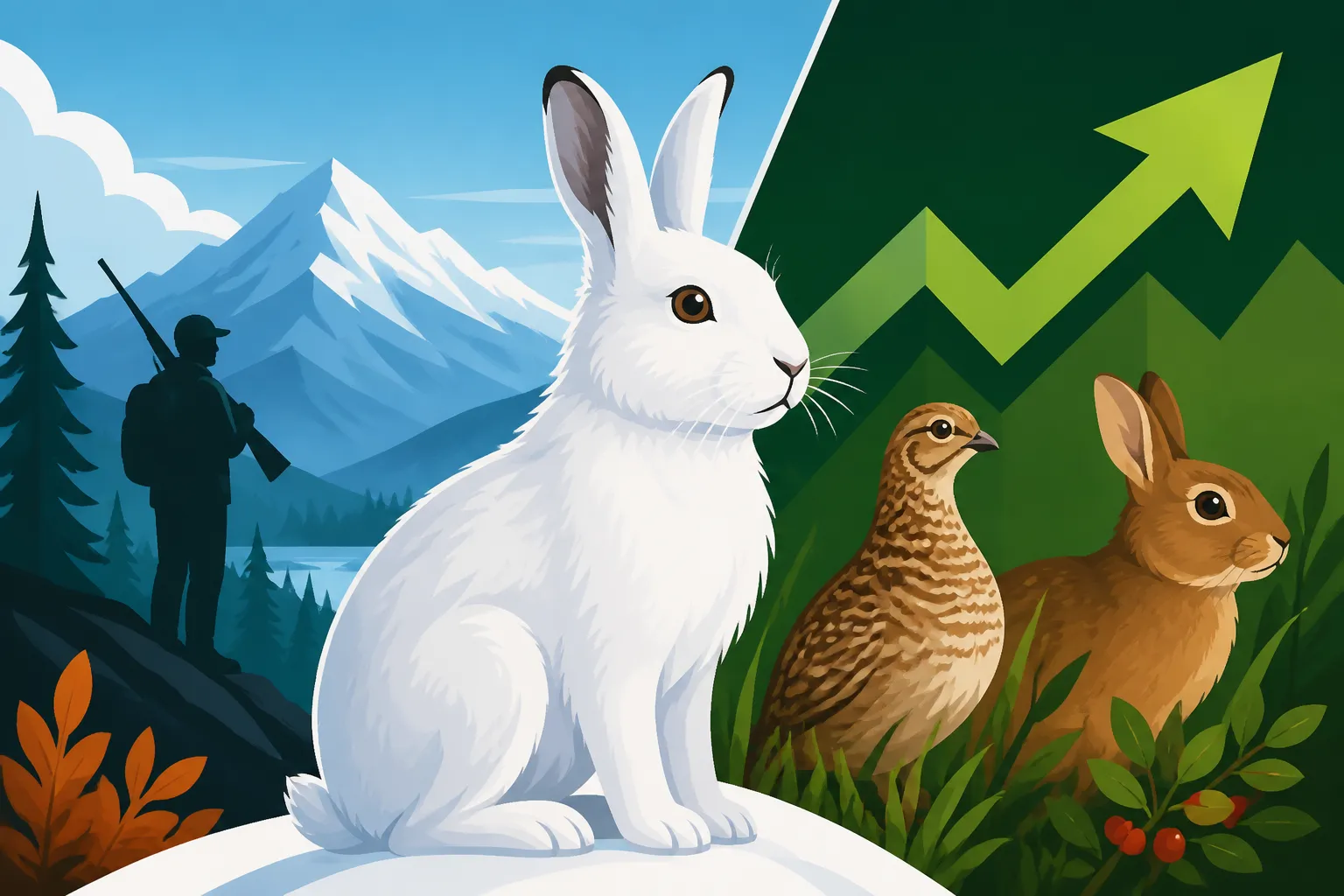
The snowshoe hare (also known as the varying hare due to its seasonal coat change) is a fascinating creature and a cornerstone of many northern ecosystems. Their populations don't just stay stable; they fluctuate dramatically in a roughly 10-year cycle, which can make predicting their abundance a real challenge for hunters.
Understanding the 10-Year Population Cycle
If you've spent any time hunting or even just recreating in the BC bush, you've probably noticed that some years you see hares everywhere, and other years, they seem almost non-existent. This isn't your imagination; it's the classic predator-prey cycle playing out. The snowshoe hare has a well-documented approximately 10-year boom-and-bust cycle, where their numbers can swing from incredibly abundant to extremely scarce.
When hare numbers are high, they reproduce rapidly, and you might spot dozens of them in a single outing. This abundance provides a crucial food source for a host of predators, particularly Canada lynx, but also coyotes, wolves, and various raptors. As the hare population peaks, so do the predator populations, which then begins to put immense pressure on the hares. Eventually, this predation, combined with other factors like disease and food scarcity at high densities, causes the hare numbers to crash. The predators then face a food shortage, leading to a decline in their numbers, which eventually allows the hare population to start its slow climb back up, beginning the cycle anew. Knowing where the current cycle stands in your hunting area can significantly impact your small game success. Tools like GoHunt's mapping features, while primarily focused on big game, can help you identify areas with suitable habitat where hares might be more prevalent, regardless of their cycle phase.
Preferred Habitats and Locating Hares
Snowshoe hares are creatures of dense cover. They thrive in young, regenerating forests, often found in clearcuts, around the edges of thick timber, and in areas with a lot of underbrush. Think of places where young conifers like lodgepole pine or spruce are growing thick, providing both food and escape cover from predators. They also love alder bottoms and willow thickets, especially near water sources.
When you're out scouting for other game, keep an eye out for their distinctive tracks – a large hind foot print often landing ahead of the smaller front prints, creating a "Y" shape. In winter, their large, furry feet act like natural snowshoes, allowing them to move easily over deep snow, hence their name. Looking for fresh droppings or clipped browse (small branches with neat, angled cuts) can also tell you if hares are active in an area. During the low point of their cycle, you might have to put in a lot more effort and cover more ground to find them, focusing intensely on these prime habitat areas. If you're interested in Hunting a Second-Growth Timber Block or Hunting a Recent Cutblock in Its Third Year, you're likely in prime hare country.
Other Small Game Species: A Rich Diversity
While snowshoe hares get a lot of attention due to their cyclical nature, British Columbia offers a fantastic array of other small game species that provide excellent hunting opportunities and often more stable populations.
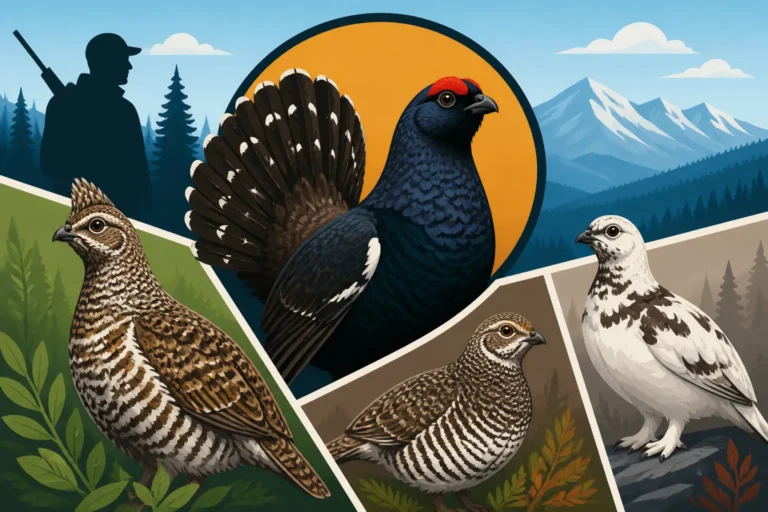
Grouse Species: Ruffed, Spruce, and Blue
British Columbia is home to several species of grouse, each with its own preferred habitat and characteristics, offering diverse hunting experiences.
- Ruffed Grouse: Often called "partridge" by many, these birds are widespread across BC, particularly in deciduous and mixed forests. They prefer areas with aspen, birch, alder, and willow, especially along creek bottoms and old logging roads. You'll often hear the distinctive drumming sound of the male Ruffed Grouse in the spring. They are generally abundant and offer consistent hunting year after year. Hunters often find them by Hunting Ruffed Grouse in an Alder Bottom.
- Spruce Grouse: True to their name, Spruce Grouse are found in conifer forests, particularly spruce and fir stands. They are often less wary than Ruffed Grouse, sometimes earning them the nickname "fool hens." They tend to walk rather than fly, making them a great target for those still-hunting through thick timber. Their populations are generally stable, though locally influenced by conifer health.
- Blue Grouse (Dusky and Sooty): These are larger grouse, with the Dusky Grouse found in the interior mountains and the Sooty Grouse along the coast. They often inhabit open conifer forests, clearcuts, and particularly in the fall, migrate to higher elevations. In late summer and early fall, you can often find them along the edges of logging roads, making Walking Up Blue Grouse on a Logging Road a popular hunting method. Their populations are generally healthy, though specific local conditions can vary. You can learn more about British Columbia's Grouse Species in detail.
Ptarmigan and Squirrels: Alpine and Forest Dwellers
Beyond grouse, other small game species contribute to BC's rich tapestry of hunting opportunities.
- Ptarmigan: For those willing to venture into the high country, British Columbia boasts three species of ptarmigan: Willow, Rock, and White-tailed. These hardy birds are true alpine dwellers, often found above timberline in rocky terrain, alpine meadows, and willow thickets. Like the snowshoe hare, they change their plumage seasonally, turning pure white in winter for camouflage. Hunting ptarmigan often involves strenuous hiking but offers a unique and rewarding experience in stunning landscapes. Their populations are relatively stable, tied to the health of the alpine ecosystem. Further information can be found in British Columbia's Ptarmigan Species.
- Red Squirrels: While not as commonly targeted for food, red squirrels are abundant across most of BC's forested regions. They are an important part of the ecosystem and can provide a fun, fast-paced challenge for new hunters or those looking to hone their marksmanship with a rimfire rifle or small-bore shotgun. They feed primarily on conifer seeds and mushrooms, often found around mature conifer stands.
Small Game Species Overview
Here's a quick look at the small game we've discussed, their typical habitats, and general population trends:
| Species | Primary Habitat | General Population Trend | Hunting Difficulty (Relative) |
|---|---|---|---|
| Snowshoe Hare | Dense young forests, clearcuts, willow thickets | 10-year boom-and-bust cycles | Moderate, depends on cycle |
| Ruffed Grouse | Mixed deciduous/conifer forests, creek bottoms | Stable, locally abundant | Easy to Moderate |
| Spruce Grouse | Dense conifer forests | Stable | Easy |
| Blue Grouse | Open conifer forests, alpine in fall | Stable | Easy to Moderate |
| Ptarmigan | Alpine meadows, rocky slopes, above timberline | Stable, localized | Difficult (access) |
| Red Squirrel | Mature conifer forests | Stable, very abundant | Easy |
Remember, while these are general trends, local conditions can always impact populations. Always check the current British Columbia Game Bird Seasons for specific regulations.
Factors Influencing Small Game Populations
Understanding the factors that influence small game numbers is key to appreciating their dynamics and improving your hunting success. It’s not just about seasons and regulations; it’s about ecology.
Predator-Prey Dynamics and Environmental Stressors
The most significant factor for many small game species, especially snowshoe hares, is the balance of predator-prey dynamics. As discussed, the hare cycle directly impacts lynx and other predator populations. When prey animals are plentiful, predators thrive, eventually leading to a decline in the prey.
Beyond direct predation, environmental stressors play a huge role. Harsh winters with deep, prolonged snow can make foraging difficult and increase energy demands, leading to higher mortality rates for hares and grouse. Droughts in the interior can reduce water sources and food availability, impacting bird populations. Disease outbreaks, while less commonly reported for small game than for big game, can also have localized impacts, particularly in dense populations. Hunters should always be aware of unusual animal behaviour or signs of illness.
Habitat changes are another massive factor. While logging can initially create prime habitat for hares and grouse in the form of clearcuts and regenerating forests, mature old-growth forests offer different values, such as thermal cover and unique food sources. Understanding how various land management practices, including What Wildfire Has Done to British Columbia Game or the impact of extensive beetle-kill, modify habitats is crucial. For example, a severe wildfire might initially devastate populations, but the subsequent regrowth often creates fantastic new habitat in a few years.
Human Impact and Management
Compared to big game, human hunting pressure on small game in British Columbia is generally less of a driving factor in overall population numbers, thanks to typically liberal bag limits and open seasons. However, localized heavy pressure near easily accessible areas can temporarily reduce local numbers. The vastness of BC’s hunting grounds usually ensures that populations rebound quickly.
Management efforts mostly focus on habitat preservation and, for game birds, setting appropriate season lengths and bag limits to ensure sustainable harvest. The province does not typically engage in extensive stocking programs for wild small game, relying instead on the natural resilience and reproductive capacity of these species. Programs like GoHunt provide valuable tools for hunters to research specific management units and understand broad habitat types, which can indirectly inform you about potential small game abundance.
Finding and Hunting Small Game in British Columbia
So, you’re ready to lace up your boots and explore the incredible small game opportunities BC has to offer. Here's how to approach it.
Scouting and Identifying Key Habitats
Successful small game hunting, much like big game, starts with good scouting. You don't always need trail cameras or elaborate glassing setups, but you do need to understand where these animals want to be.
For snowshoe hares, focus on areas of dense, young conifers, especially where they intersect with older timber or thick brush. Look for fresh tracks in snow or soft earth, clipped vegetation (hares browse on twigs), and droppings. Old logging roads that are regenerating with thick alder or young fir are often hotspots. When thinking about Hunting British Columbia's Logging Road Network, remember that small game will often be found right on the edges, or in the dense cover just off the road.
For grouse, Ruffed and Spruce grouse will be found in various forest types. Ruffed grouse love aspen groves, alder bottoms, and the edges of clearings. Spruce grouse prefer the denser, darker conifer stands. Blue grouse can be found in more open timber and clearcuts, and as fall progresses, they often head higher up the mountainsides. Listen for their calls, and keep an eye on the ground and in low branches.
For ptarmigan, your scouting needs to go vertical. Head into the alpine zones, above the tree line. Look for rocky outcrops, sparse vegetation, and areas where there's still snow in shaded pockets. Often, the best way to find them is to simply put in the miles and cover ground in suitable habitat.
Using online resources or mapping applications to identify suitable habitat types before you even leave home can save you a lot of legwork. Check for areas with high densities of young forest growth, riparian zones (creeks and rivers), and access to alpine areas if ptarmigan are your target. This kind of advance planning is where digital mapping platforms shine, even for small game.
Seasonality and Hunting Methods
Small game seasons in British Columbia are typically quite long, often extending from early September through to March or even longer for some species like coyotes. This offers a generous window to get out and enjoy the woods. Bag limits are often liberal, especially for snowshoe hares and grouse, reflecting their robust populations. Always consult the official regulations synopsis before heading out for the most up-to-date information on British Columbia Game Bird Seasons and other species.
Hunting methods are relatively straightforward:
- Walk-up/Still-hunting: This is perhaps the most common and effective method for grouse and hares. Slowly walk through prime habitat, pausing often to listen and look. Many grouse will hold tight, flushing only when you're almost on top of them. Hares will often bolt from thick cover.
- Dog Hunting: A good bird dog can be invaluable for flushing grouse and retrieving downed birds, especially in thick cover. For hares, beagles or other rabbit dogs can be used to flush them from cover and keep them moving, presenting a shot.
- Snow Tracking: In winter, fresh snow provides excellent opportunities to track snowshoe hares. Follow their tracks until you jump them from their day bed. This is a very active and rewarding way to hunt.
- Calling: While less common for the species discussed here, some hunters use distress calls for coyotes, which can sometimes bring in other small predators if that's your target. Calling Predators in British Columbia can be a very effective technique.
Remember to prioritize safety, especially when hunting in dense cover. Be aware of other hunters, always identify your target clearly, and understand your backdrop. While British Columbia doesn’t mandate blaze orange for all small game hunting, wearing it is always a good safety practice, especially during peak big game seasons.
Disclaimer
This article is for general informational purposes only and does not constitute professional advice. Laws, prices and regulations vary by location and change over time. Consult a qualified professional for guidance on your specific situation.