British Columbia’s Grouse Species
There's nothing quite like the sudden explosion of a grouse from underfoot, sending your heart racing and instantly changing a quiet walk in the woods into an exhilarating hunting moment. For many hunters across British Columbia, the pursuit of these often-underestimated game birds offers accessible opportunities and a unique challenge. This guide dives deep into the fascinating world of British Columbia's grouse species, helping you understand their habits, preferred habitats, and how to effectively pursue them in our beautiful province.
The Diverse World of British Columbia Grouse
Grouse hunting in British Columbia is a tradition steeped in connection to the land, offering a break from the intensity of big game pursuits. While often seen as a side quest by those focused on deer or moose, the pursuit of grouse provides its own rich rewards: crisp fall air, diverse landscapes, and the chance to hone quick reflexes. British Columbia is home to several distinct grouse species, each with its own characteristics and preferred environments, making it a truly diverse hunting experience.
Understanding the Grouse Family in BC
The grouse family in British Columbia is quite varied, encompassing everything from the forest-dwelling ruffed and spruce grouse to the high-alpine ptarmigan. These birds are stout, ground-dwelling, and generally well-camouflaged, making them a challenge to spot before they flush. They are masters of blending into their surroundings, whether it's the dappled light of an alder thicket or the rocky slopes above the treeline. Their diets often consist of berries, buds, leaves, and insects, shifting with the seasons and available forage.
What many new hunters don't realize is that "grouse" isn't just one type of bird. Knowing the differences between them – their calls, their flight patterns, and especially their preferred hangouts – can make all the difference in filling your vest. It's not just about walking through the woods; it's about walking smart.
Why Grouse Hunting is a Unique BC Experience
Grouse hunting in British Columbia offers something for every type of hunter, whether you prefer a casual stroll with a shotgun or a challenging climb into the alpine. It's an activity that often overlaps with other big game seasons, allowing hunters to combine pursuits. Imagine taking a break from looking for elk sign to put a few ruffed grouse in your vest for dinner – it's a fantastic way to maximize your time in the field. Plus, the sheer variety of habitats you can explore while grouse hunting, from coastal rainforest edges to interior grasslands and remote mountain peaks, is simply unparalleled.
For many, grouse hunting is a gateway into more extensive hunting adventures, teaching valuable lessons in stealth, observation, and understanding game bird behavior without the pressure of a multi-day big game hunt. It's also an excellent way to introduce new hunters, especially youth, to the sport, as the action can be frequent and the rewards tangible, making for exciting days afield.
Meet British Columbia's Grouse Species
British Columbia boasts an impressive lineup of grouse species, each adapted to distinct ecological niches. Identifying them in the field can be tricky, but understanding their individual traits is key to finding success.
Ruffed Grouse: The Drumming King of the Forest
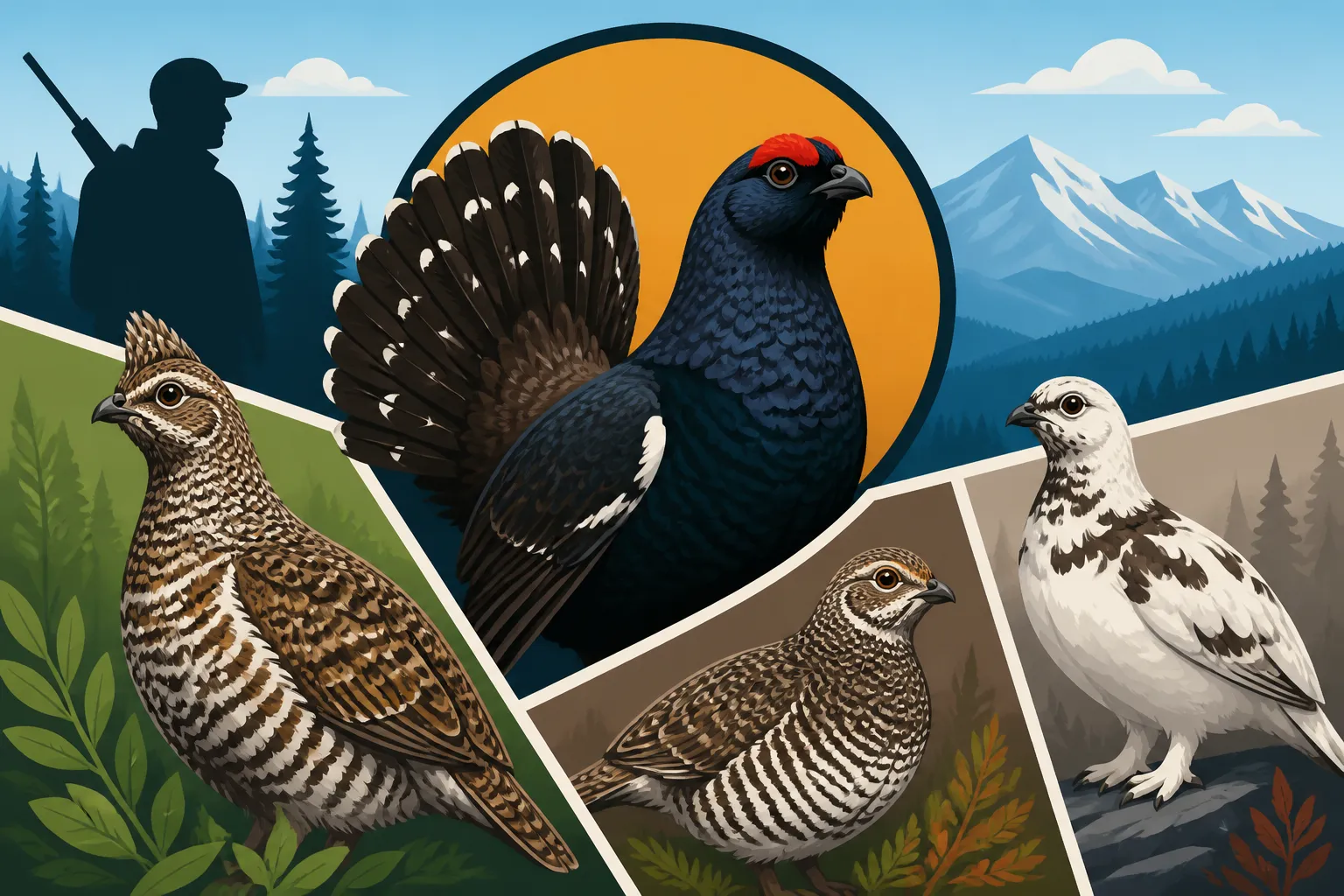
Ah, the ruffed grouse – often called the "partridge" by many old-timers, and truly the king of the British Columbia forest floor for many upland hunters. These birds are characterized by their fan-shaped tail with a dark band and the distinctive "ruffs" on their neck, which they flare during their drumming display. Their plumage is a beautiful mosaic of browns, greys, and blacks, providing perfect camouflage in the underbrush. You'll often hear their drumming – a low, hollow thumping sound created by the male beating its wings rapidly – long before you see one, especially in spring.
Hunting ruffed grouse is all about walking those prime transition zones. Think along the edges of old logging roads, new growth clearcuts, or creek bottoms lined with alders and aspens. They love areas with a mix of dense cover for hiding and open patches for feeding on berries, buds, and insects. They're notorious for holding tight and flushing explosively, often putting a tree between themselves and you in a flash. If you're looking for an exciting challenge on foot, then Hunting Ruffed Grouse in an Alder Bottom is where you'll want to be.
Spruce Grouse: The Fool Hen of the Conifers
The spruce grouse, affectionately (or sometimes derisively) known as the "fool hen," earned its moniker for its remarkable lack of fear. Unlike the ruffed grouse, which erupts with a heart-stopping flush, the spruce grouse often simply walks away or even stands still, relying on its camouflage to avoid detection. They are slightly smaller than ruffed grouse, with predominantly dark, mottled plumage, often with rusty patches, and males have a distinctive red comb above their eyes during breeding season.
True to their name, spruce grouse are almost exclusively found in coniferous forests. Look for them in dense stands of spruce, fir, and pine, especially where there's good ground cover of moss, ferns, and blueberry bushes. They feed heavily on conifer needles, particularly spruce, which gives their meat a slightly resinous flavour some find unique. Because they often hold so tight, they can be surprisingly hard to spot even when you know they're there. Many hunters walking British Columbia's logging roads have nearly stepped on a spruce grouse without even realizing it. Learning to distinguish them from other species is important, and understanding Telling a Blue Grouse From a Spruce Grouse can save you some confusion.
Blue Grouse and Dusky Grouse: The Mountain Residents
What we traditionally called "blue grouse" in British Columbia are now often referred to as dusky grouse and Sooty grouse, distinct species with similar habits. For simplicity in hunting circles, many still refer to them collectively or individually by their "blue" moniker. These are the largest of our forest grouse, with robust bodies and a generally slate-grey or bluish-grey plumage. Males have inflatable neck sacs that they display during courtship, accompanied by a deep hooting call. They're tough birds, perfectly adapted to their mountainous domains.
Dusky grouse are typically found in the drier, interior mountain ranges, favouring open coniferous forests and transitioning into more open, rocky slopes at higher elevations as the season progresses. Sooty grouse, on the other hand, are more common in the wetter, coastal mountains. Both species exhibit a fascinating "vertical migration," starting their seasons at lower elevations and gradually moving upwards into the subalpine and alpine as summer progresses, feeding on berries, insects, and conifer needles. Finding these birds often means putting some elevation behind you, walking steep slopes and through mature timber. It's a rewarding hunt for sure, especially if you're Walking Up Blue Grouse on a Logging Road in the early season, or tracking them up high as Where Blue Grouse Move in Fall becomes a key factor.
Sharp-tailed Grouse: The Prairie Dancers
While not as widespread as our other grouse species, the sharp-tailed grouse offers a different kind of hunting experience, largely restricted to the more open grassland and sagebrush ecosystems of the interior, particularly in regions like the Cariboo and Peace River country. These birds are distinctive with their sharp, pointed tail feathers (hence the name) and their overall lighter, mottled brown and white plumage, giving them a sandy appearance. They're famous for their elaborate courtship dances performed by males on communal "leks" in the spring.
Hunting sharp-tailed grouse often involves covering open ground, typically with a good bird dog that can range widely. They will hold for a dog but are known to flush wild if approached carelessly. Their diet consists largely of seeds, berries, and insects found in these open environments. Finding them requires knowledge of specific pockets of suitable habitat, as their range is more limited and fragmented compared to other grouse.
Ptarmigan: The High-Country Chameleon
For the adventurous hunter willing to climb, the ptarmigan offers an incredible high-alpine experience. British Columbia is home to British Columbia's Three Ptarmigan Species: White-tailed, Rock, and Willow Ptarmigan. What makes them truly unique is their seasonal plumage change, turning completely white in winter to blend with the snow, and mottled brown/grey in summer to match the rocky tundra. They are smaller than other grouse, with feathered feet that act like snowshoes, adapted perfectly to their cold, high-altitude environments.
White-tailed ptarmigan are probably the most commonly encountered of the three, found in the highest, most desolate alpine areas year-round. Rock and Willow ptarmigan have more specific, often northern, ranges. Hunting Ptarmigan in British Columbia's Alpine is a physically demanding pursuit, requiring good physical conditioning and proper gear for unpredictable mountain weather. You'll find them above the treeline, often near rock slides, heather patches, and willow thickets, feeding on buds, leaves, and berries. Their camouflage is incredible, making them very difficult to spot even when they're right in front of you. A good pair of binoculars and a patient approach are essential.
Here’s a quick overview of our common grouse species:
| Species | Key Identification | Primary Habitat | Hunting Style | Notes |
|---|---|---|---|---|
| Ruffed Grouse | Fan-shaped tail with dark band, neck ruffs | Mixed deciduous/conifer forests, alder bottoms, edges | Walk-up, often near roads/trails; explosive flush | "Drumming" sound, excellent table fare |
| Spruce Grouse | Dark, mottled plumage; red comb (males) | Dense coniferous forests, spruce/pine stands | Walk-up, very tame ("fool hen"); slow, direct flight | Feeds on conifer needles, can taste resinous |
| Dusky/Sooty Grouse | Large, slate-grey body; hooting call (males) | Open conifer forests, mountain slopes, subalpine | Hike-in, often in higher elevations; vertical migration | Earlier in season lower, later higher; good eating |
| Sharp-tailed Grouse | Pointed tail feathers, mottled brown/white plumage | Open grasslands, sagebrush, prairie fringes | Wide-ranging dog work; often flush in coveys | Localized populations, distinctive dancing display |
| Ptarmigan | Small, feathered feet; seasonal white winter plumage | Alpine tundra, above treeline, rocky slopes | Strenuous hike-in, high elevation; excellent camouflage | Challenging physically, remote; White-tailed most common |
Grouse Habitat and Behavior Across British Columbia
Understanding where each grouse species thrives and how they behave within those environments is the cornerstone of successful hunting. It's not just about knowing what you're looking for, but where that particular bird wants to be at a given time of year.
Where to Find Ruffed Grouse: Alder Bottoms and Aspen Stands
Ruffed grouse are creatures of edge habitat, and they thrive in areas where young deciduous trees mix with conifer cover. In British Columbia, this often means creek bottoms, old logging clearcuts that are regenerating, or areas where aspen and birch stands meet thicker spruce or fir. They absolutely love alder thickets, especially in the early fall when the leaves are still on the trees, providing perfect cover.
When you're out looking for ruffed grouse, pay close attention to areas that have a diverse mix of food sources. They'll be feeding on the berries of dogwood, hawthorn, and highbush cranberry, as well as the buds of aspen and birch. They need thick cover to hide from predators like hawks and coyotes, but also prefer areas where they can quickly access more open ground to feed. A prime spot might be a bend in a creek that has an alder-choked bottom, bordered by some mature timber on one side and a younger, brushy cutblock on the other. It's these transition zones that offer everything a ruffie needs.
Scouting for Spruce Grouse in Dense Timber
Spruce grouse are far more particular about their habitat than ruffed grouse. As their name suggests, they are almost exclusively found in coniferous forests. Think dense, dark stands of spruce, lodgepole pine, and balsam fir. They prefer mature forests with a relatively open understory of moss, lichen, and low-growing shrubs like blueberry. You're less likely to find them out in the open, preferring the deep shadows of the timber.
When scouting for spruce grouse, look for areas with a high density of mature conifers. Active logging roads that cut through these types of forests can be productive, as the birds might be feeding on the edges, but they'll quickly duck back into the trees. They feed predominantly on the needles of conifers, especially spruce, and you might even find their distinctive cylindrical droppings, often resembling small pine needles, beneath dense trees. Their behaviour is different too; they rarely flush far, often flying a short distance to a branch where they'll sit tight, relying on their camouflage. This makes them challenging to spot even when you know they're nearby.
Locating Blue and Dusky Grouse on Mountain Slopes
Dusky and Sooty grouse (our "blue grouse") are truly birds of the mountains, but their location can shift dramatically throughout the hunting season due to their vertical migration. In the early season, typically September, you'll find them at lower to mid-elevations, often in open Douglas fir or Ponderosa pine forests, especially on south-facing slopes. These areas warm up quickly and offer a good supply of early berries and insects.
As the fall progresses and the weather cools, these birds start their slow climb, moving higher and higher into the subalpine and even alpine fringes. They'll follow the melting snowline and ripening berries, seeking out areas with huckleberry, kinnikinnick, and other high-country forage. By late October, you might find them just below the treeline, or even in scattered timber within the alpine, where they'll feed on conifer needles. Hunting them often involves significant elevation gain, exploring ridgelines, steep draws, and broken timber. Understanding this migration is key, and resources like GoHunt can be incredibly helpful for examining topographical maps to identify these elevation changes and potential travel corridors. Look for the distinct "dusting bowls" – shallow depressions where grouse have been dusting themselves – in dry soil, often near a good vantage point.
Finding Sharp-tailed Grouse in Grasslands and Sagebrush
Sharp-tailed grouse require very specific habitat, making them a more localized hunt in British Columbia. They are primarily found in the province's interior grasslands and dry sagebrush flats, interspersed with scattered patches of aspen or willow. Think rolling hills covered in native grasses, often near agricultural fields that provide additional food sources like waste grain.
When targeting sharp-tailed grouse, focus your efforts on large tracts of unbroken grassland. They'll feed on seeds, berries, and insects, and often gravitate towards the edges of fields or areas with thicker brush for cover. Unlike ruffed or spruce grouse, sharp-tails are often found in coveys, so if you flush one, there are likely more nearby. They tend to flush in a burst, flying a good distance before re-settling. This often calls for a more open-country hunting approach, frequently utilizing bird dogs to cover ground and pin down coveys.
Tracking Ptarmigan Above the Treeline
Ptarmigan hunting is perhaps the most physically demanding but also one of the most uniquely rewarding grouse hunts in British Columbia. These birds live exclusively in the alpine and subalpine zones, well above the treeline. Their habitat is characterized by rocky slopes, tundra, alpine meadows, and patches of stunted willow and heather.
To find ptarmigan, you'll need to hike into high elevations, often covering significant vertical gain. Look for them in areas with a mosaic of rocky scree, low-growing vegetation, and snow patches. They feed on alpine berries, buds of willow and birch, and various high-country plants. Their camouflage is so superb that they are incredibly difficult to spot until they move or flush. You might walk right past a covey without knowing it. Patience and careful glassing of rocky slopes and willow thickets are essential. They typically hold tight, often flushing individually or in small groups with a quick, low flight over the broken terrain, blending in almost immediately upon landing. Learning how to move through this demanding terrain is crucial for success, and advice on Hunting Mountain Goat on British Columbia Rock can even offer some transferable insights for these high-country pursuits.
Effective Strategies for Grouse Hunting
Grouse hunting is far from a one-size-fits-all endeavour. The species you're after and the terrain you're in will heavily influence your approach. From quiet still-hunting to working with a trained bird dog, there are many ways to fill your game vest.
Walking Up Grouse: The Classic Approach
The "walk-up" is perhaps the most common and accessible method for hunting grouse, especially for ruffed and spruce grouse found along logging roads and trails. This simply involves slowly walking through prime habitat, keeping your eyes and ears open for any sign of movement or sound. The key here is slow. Many new hunters walk too quickly, giving the birds plenty of time to flush out of range or slip away unnoticed.
Think of it as a methodical grid search. Pause frequently, listen, and scan the underbrush. Grouse often hold incredibly tight, especially spruce grouse, meaning you might have to nearly step on them before they flush. If you're walking an old Hunting British Columbia's Logging Road Network, keep an eye on both sides of the road, particularly in areas where the forest transitions from dense to open. Wear comfortable, durable footwear suitable for uneven terrain. When a bird flushes, remember your gun safety, quickly mount your shotgun, and follow through. It takes practice, but the thrill of that sudden flush is what keeps us coming back.
Using a Dog for Upland Birds
For many, grouse hunting truly shines when accompanied by a well-trained bird dog. Whether you prefer a pointing dog that locks up on scent, or a flushing dog that works close and sends birds into the air, a good canine companion can dramatically increase your success and enjoyment. Dogs use their superior sense of smell to locate birds that a human hunter would simply walk past, allowing for more consistent flushes and better shot opportunities.
Breeds like English Setters, German Shorthaired Pointers, Brittanys, and various spaniels are popular choices for upland work in British Columbia. A dog can cover far more ground effectively, especially in dense cover where grouse love to hide. They also help immensely with retrieving downed birds, preventing lost game in thick brush. Training is paramount; a dog that hunts too far out or isn't steady to flush and shot can do more harm than good. If you're considering a canine partner, there's a lot to learn about Using a Bird Dog in British Columbia Timber to maximize your team's effectiveness.
Gear Considerations for British Columbia Grouse Hunts
While grouse hunting doesn't require the specialized gear of a sheep hunt, having the right equipment makes a big difference.
- Firearm: A lightweight shotgun is ideal. A 12-gauge or 20-gauge pump or semi-automatic with an improved cylinder or modified choke is versatile enough for most situations. For a more traditional experience, a break-action over/under or side-by-side can be a joy to carry. Shot sizes typically range from 6 to 8, depending on the species and range. Remember to be aware of
British Columbia's Legal Firearms and Bowsrules. - Ammunition: Carry enough shells for the day, but don't overpack. Twenty to thirty shells is usually ample for a good day out.
- Vest/Pouch: An upland hunting vest or belt pouch with a large game bag is essential for carrying birds comfortably and keeping your hands free.
- Footwear: Waterproof, comfortable hiking boots are a must. You'll be covering varied terrain, from damp creek beds to rocky slopes.
- Clothing: Layers are key. Depending on the season, British Columbia weather can change rapidly. Blaze orange, while not always mandatory for grouse, is highly recommended for safety, especially if you're hunting during big game seasons. Always check British Columbia Blaze Orange and Safety Rules before heading out.
- Navigation: A GPS device or a reliable hunting app like
GoHunton your phone is invaluable for navigating unfamiliar territory, especially in areas with many old logging roads or trails. This helps you keep track of your location, identify property boundaries, and mark productive spots. - Essentials: Water, snacks, a small first-aid kit, and a knife are always good to have. If you're in bear country, bear spray should be readily accessible.
Stealth and Observation Techniques
Grouse hunting is often a game of stealth and observation. For ruffed and spruce grouse, moving slowly and pausing often allows you to detect birds that are holding tight. Listen for the rustling of leaves, subtle wingbeats, or even the soft clucking sounds grouse sometimes make. When a bird flushes, try to mark where it lands, as they often don't fly too far, especially spruce grouse.
For blue/dusky grouse and ptarmigan in more open, mountainous terrain, glassing is your best friend. Use binoculars to scan ahead, particularly around cover edges, berry patches, and rocky outcrops. Look for anything that seems out of place – a slightly different colour or shape against the natural background. Their camouflage is incredible, so sometimes you'll only spot them when they move. Approaching these birds carefully, often by taking advantage of terrain features for cover, can get you within range before they detect you. Patience and keen eyesight are often more important than speed.
Regulations and Conservation for Grouse Hunters
Understanding the rules and regulations for grouse hunting in British Columbia is not just about legality; it's about responsible stewardship of our wildlife resources. These rules ensure sustainable hunting opportunities for everyone.
General Open Seasons and Bag Limits
British Columbia's grouse seasons are generally quite generous, often running from early September through to late fall or early winter. However, season dates and bag limits can vary by region and species, so it is absolutely critical to consult the most current British Columbia's Two-Year Regulations Synopsis before heading out. You don't want to accidentally find yourself in a closed season or exceed the daily bag limit. For example, British Columbia Grouse Season and Limits will outline the specific dates and limits for Ruffed, Spruce, Blue/Dusky, and Ptarmigan grouse in your chosen Management Unit (MU).
Daily bag limits refer to the maximum number of birds you can harvest in a single day, while possession limits dictate the total number of birds you can have in your possession, including those at home, in camp, or in your vehicle. These limits are designed to prevent overharvesting and ensure healthy populations. Always be sure to count your birds carefully.
Permissible Firearms and Ammunition
When hunting grouse in British Columbia, shotguns are the primary tool, and there are specific rules regarding their use. Generally, shotguns are limited to a maximum capacity of three shells – one in the chamber and two in the magazine. This is a common safety and conservation regulation across Canada. While specific shot sizes aren't always regulated for grouse, it's customary to use smaller shot (like 6, 7.5, or 8) which is effective on these birds without being overkill.
While rifles and rimfires can be legal for small game in some areas, a shotgun is usually the most practical and ethical choice for grouse, given their flight patterns and the dense cover they often inhabit. Always be mindful of British Columbia Shooting Hours, which typically run from one hour before sunrise to one hour after sunset. Shooting outside these hours is strictly prohibited.
Respecting Private Land and Access Rules
A significant portion of British Columbia is Crown land (public land), which is generally open to hunting. However, there are also vast areas of private land, particularly in settled regions and agricultural zones. It is a hunter's responsibility to know land ownership and British Columbia Trespass and Private Land Law. Always assume land is private unless you can confirm it is public.
If you wish to hunt on private land, you must obtain permission from the landowner beforehand. This includes agricultural fields, private forests, and even old homesteads. Never enter private property without explicit consent. Using mapping tools like GoHunt that overlay property boundaries with satellite imagery can be incredibly helpful for identifying private land and ensuring you stay on public ground, or know exactly who to contact for permission. Being a respectful and ethical hunter includes respecting land ownership, which helps maintain a positive image for all hunters.
The Importance of Ethical Hunting and Habitat Preservation
Ethical hunting goes beyond just following the rules; it's about ensuring a quick, clean kill, making every effort to retrieve downed game, and respecting the wildlife and the environment. Wasting game meat is illegal and unethical. Take only what you need and what you can utilize.
Conservation plays a vital role in sustaining British Columbia's grouse populations. Habitat loss due to development, logging practices, and other human activities can impact grouse numbers. Supporting conservation organizations and being mindful of your impact while in the field helps ensure these birds thrive for future generations. This includes minimizing disturbance, packing out all trash, and being careful with campfires. By being a responsible steward of the land and its resources, we contribute to the long-term health of British Columbia's diverse ecosystems and the fantastic hunting opportunities they provide.
Disclaimer
This article is for general informational purposes only and does not constitute professional advice. Laws, prices and regulations vary by location and change over time. Consult a qualified professional for guidance on your specific situation.