Why the Pacific Flyway Matters Here
For waterfowl hunters in British Columbia, the concept of the Pacific Flyway might seem like a distant, academic term, but it's actually the very pulse of our hunting season. Understanding this intricate aerial highway for migratory birds isn't just about knowing where birds might be; it's about unlocking the secrets of timing, species diversity, and finding those prime hunting spots that make all the difference between an empty stringer and a truly memorable day in the marsh.
What Exactly Is the Pacific Flyway?
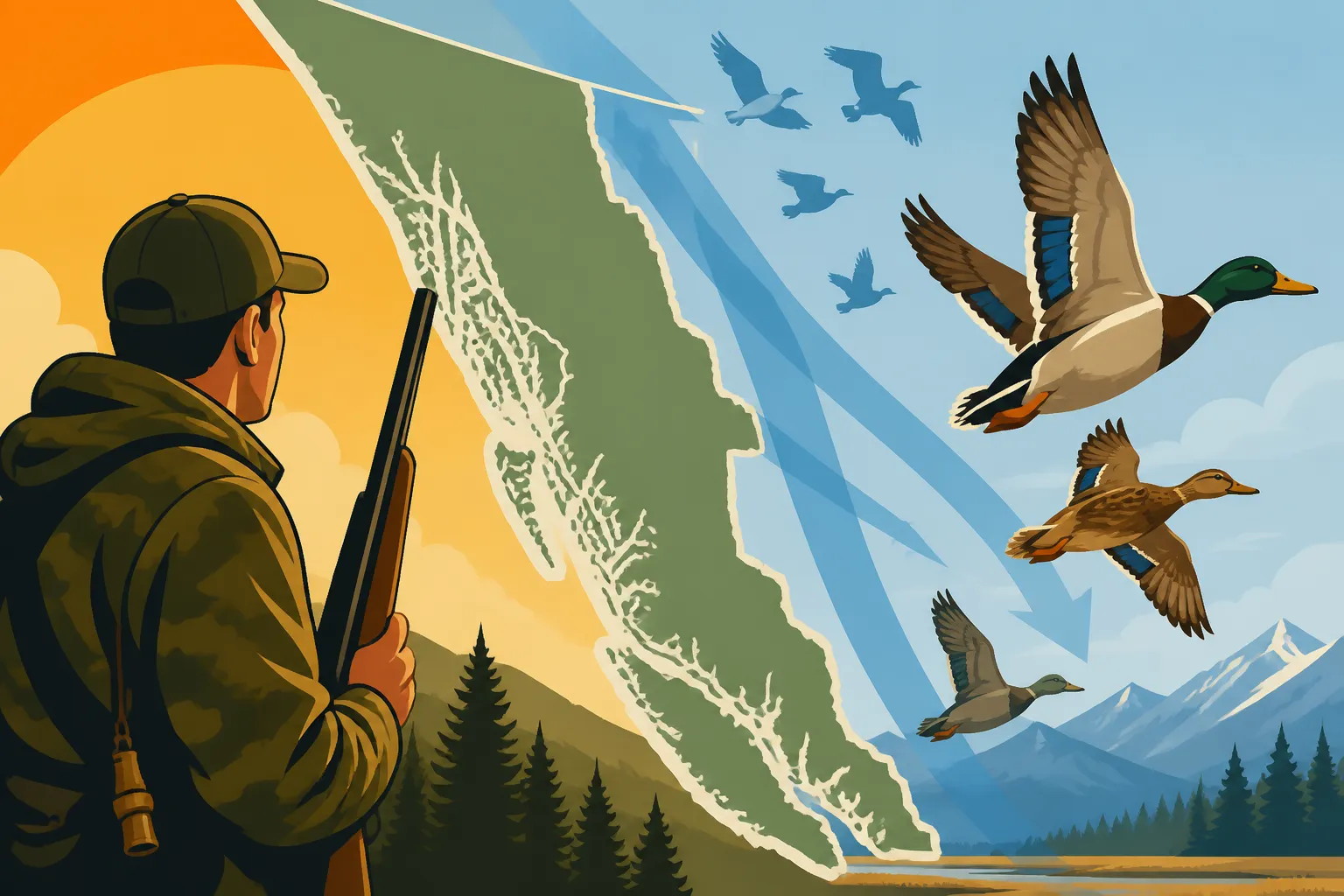
When we talk about the Pacific Flyway, we're not just drawing a line on a map; we're referring to a vast, invisible superhighway that stretches from the Arctic breeding grounds of Canada and Alaska, down the entire western coast of North America, all the way to wintering grounds in Mexico and South America. It's an incredible natural phenomenon, a well-trodden aerial route that millions upon millions of ducks, geese, swans, and other migratory birds have followed for millennia.
A Corridor of Life and Movement
Think of the Pacific Flyway as a living, breathing corridor, pulsing with avian life. It’s a crucial pathway, defined by a chain of wetlands, lakes, rivers, and coastal estuaries that provide essential resting, feeding, and breeding habitats for these birds. Without this network of critical stopovers, these epic migrations simply couldn't happen. As hunters, this means that the health and accessibility of these habitats directly impact the birds we pursue.
For instance, consider a flock of pintails that spent their summer raising broods in the vast deltas of Alaska. As the days shorten and temperatures drop, an innate biological clock tells them it's time to move south. They don't just randomly wander; they follow this established flyway, stopping at various points along the way to refuel and rest. British Columbia, with its diverse geography, plays a monumental role as a pit stop, a sanctuary, and even a wintering ground for a significant portion of these birds. Knowing this helps us understand not just if birds will be here, but when and why. It’s a constant dance with the seasons and the birds’ ancient instincts.
The Sheer Scale of Migration
The numbers involved in the Pacific Flyway migration are truly staggering. Imagine looking up on a crisp fall day and seeing wave after wave of waterfowl filling the sky – thousands upon thousands of ducks, geese, and swans all moving with a singular purpose. This isn't just a handful of local birds; these are travelers from distant lands, bringing with them a genetic imperative to follow the sun and the food sources. Waterfowl and Upland Hunting in British Columbia really comes alive when you consider this larger context.
From the common mallard to the majestic trumpeter swan, the flyway acts as a funnel, concentrating these birds into predictable patterns and areas as they navigate their journey. This concentration is precisely what makes certain regions of British Columbia so incredibly productive for hunters. Without this natural funnel, birds would be far more dispersed, and hunting opportunities would be significantly diminished. It's a testament to the enduring power of nature and the vital role that intact ecosystems play in supporting such immense biodiversity.
Why British Columbia is a Cornerstone of the Pacific Flyway
British Columbia isn't just a place on the Pacific Flyway; it's a vital, central piece of the puzzle. Our province's unique and varied geography, from the vast coastal estuaries to the myriad interior lakes and marshes, creates an unparalleled tapestry of habitats that are absolutely essential for countless species of migratory waterfowl.
Geographic Diversity: A Waterfowl Paradise
Let's break down why BC is so special. Along our extensive coastline, you have massive estuarine environments like the Fraser River Delta, which acts as one of the most critical staging and wintering areas for waterfowl on the entire Pacific Flyway. Imagine millions of ducks and geese descending upon these nutrient-rich mudflats, feasting on seeds, tubers, and invertebrates to fuel their long journeys. This is where Field Hunting Snow Geese in the Fraser Delta becomes a reality for many hunters.
Further inland, the province transforms into a mosaic of river systems, large lakes, and smaller, often shallow, marshes. Places like the Okanagan and Cariboo regions boast networks of wetlands that become critical resting and feeding spots for birds migrating through the interior. These diverse habitats cater to a wide array of species, from diving ducks that prefer deeper waters to dabblers that thrive in shallower, vegetated areas. Each unique geographic feature plays a specific role, contributing to BC's overall importance on the flyway.
Critical Habitat for Diverse Species
Because of this incredible diversity, British Columbia hosts an astonishing array of waterfowl species. You'll find everything from hardy dabblers like mallards, pintails, and wigeon, to robust diving ducks such as canvasbacks, scaup, and goldeneyes. And let's not forget the geese – Canada geese, snow geese, and various Brant species making their appearances, along with the magnificent trumpeter swans. Each species has its own preferred habitat, and BC offers it all.
This isn't just a matter of having "some" ducks. For many species, British Columbia represents the last significant feeding grounds before they commit to oceanic flights further south, or it serves as their final wintering destination. The Fraser Delta, for example, is a globally recognized Important Bird Area, not just locally. It’s this ecological significance that underscores why British Columbia isn't merely a stop-off, but a critical anchor point in the migratory lifecycle of so many birds. Hunters who understand this deeper connection to conservation appreciate their role in supporting these habitats.
How the Pacific Flyway Directly Impacts Your British Columbia Waterfowl Hunt
Understanding the Pacific Flyway isn't just for ornithologists; it's absolutely crucial for us as hunters. It dictates the ebb and flow of our season, the species we're likely to encounter, and even the strategies we employ.
Timing Your Hunts for Peak Migration
The most immediate impact of the flyway is on timing. If you simply head out whenever you have a free weekend, you might catch some resident birds, but you could easily miss the spectacular waves of migratory birds. The flyway provides a predictable, albeit sometimes variable, schedule for when certain species arrive and depart. For example, some of the earliest migrants, like pintails and wigeon, might show up in late summer or early fall, while other species, especially certain diving ducks, might peak later in the season as colder weather pushes them south.
Knowing the typical migration patterns can dramatically improve your success. Imagine planning a trip specifically to coincide with the arrival of a major push of snow geese, rather than just hoping they're around. Tools like GoHunt or other online mapping resources can sometimes help you identify access points to larger wetland systems, even if their primary focus isn't waterfowl. But understanding the flyway's rhythm, which you can often glean from local wildlife reports, historical data, or talking to seasoned hunters, is far more valuable than blindly showing up. You'll hear veterans talk about how "the ducks are really in now" or "we're still waiting for the big push," and they're talking about the flyway.
Species Variety and Bag Opportunities
Another fantastic benefit of BC's position on the Pacific Flyway is the sheer variety of waterfowl you can encounter. Unlike regions that might only see a few dominant species, British Columbia offers a smorgasbord for the dedicated duck and goose hunter. One day you might be calling in mallards over an interior slough, and the next you could be watching sea ducks brave the coastal chop. This diversity means more opportunities and a richer hunting experience.
This wide array of species also means you need to be versatile in your hunting techniques. What works for Decoying Ducks on a Coastal Estuary might be entirely different from Jump-Shooting a Slough in the Interior. You might need different calls, different decoy spreads, or even different gauge shotguns to effectively pursue the various birds present. Understanding the flyway's role helps you anticipate these changes and adapt your gear and methods accordingly, truly becoming a more complete waterfowl hunter.
Scouting Smarter, Not Harder
Scouting is fundamental to successful waterfowl hunting, and the Pacific Flyway gives you a framework for more intelligent scouting. Instead of randomly checking small ponds, you can focus your efforts on known flyway corridors and major staging areas. This means looking at larger river systems, significant estuaries, and expansive marshlands first, because these are the places birds are genetically programmed to use.
Consider a large interior lake system. During certain periods, it might be teeming with birds. But if you know that the bulk of those birds are transient migrants just passing through, you also know that your window of opportunity might be limited. Conversely, if you identify a wetland that acts as a consistent wintering ground, your efforts can shift to understanding how birds use that specific spot day-to-day. You can also leverage public land maps, which you might access through a platform like GoHunt, to identify promising marsh or river access points that fall within these crucial migratory pathways. Knowledge of the flyway helps you identify the macro hotspots, then zoom in to find the micro spots that produce birds.
Maximizing Your Opportunities on the Pacific Flyway in British Columbia
So, how do we, as hunters, actually leverage this knowledge of the Pacific Flyway to our advantage? It’s about more than just knowing it exists; it's about strategic planning, adaptation, and an ongoing education about the birds themselves.
Understanding Localized Flyway Nuances
While the Pacific Flyway is a broad concept, it’s crucial to remember that it has countless local branches and specific nuances within British Columbia. Birds don't just follow one single, narrow line. They fan out, utilize specific river valleys, coastal inlets, and mountain passes depending on weather, food availability, and hunting pressure. For example, the routes birds take to Hunting British Columbia's Interior Marshes might be slightly different than those heading to the larger lakes of the Cariboo.
This means that while the general north-south flow is consistent, the exact timing and concentration points can vary significantly from one British Columbia region to another. A hunter focusing on the coast needs to understand the tidal influences and estuarine feeding habits, which are vastly different from an interior hunter dealing with frozen marsh edges. Building a deep understanding of your specific hunting area, and how it fits into the larger flyway, is key. This local knowledge, combined with an understanding of the overall flyway, creates a powerful predictive tool.
Adapting to Weather and Environmental Factors
The Pacific Flyway is dynamic, not static. Weather patterns, especially severe storms or prolonged cold snaps, can drastically alter migration schedules and force birds to seek refuge or food in unexpected places. A sudden cold front in the North can push birds south much earlier than anticipated, leading to an influx of new birds in British Columbia. Conversely, mild weather might delay their arrival.
Environmental factors like drought, wildfires, or even major agricultural changes can also impact the flyway's effectiveness. If a traditional staging area dries up due to drought, birds will be forced to find alternative wetlands. Hunters who stay informed about these conditions, perhaps by consulting online resources or local reports like those you might find on GoHunt's forums (even if it's general hunting intel), are better equipped to adapt. This might mean shifting your hunting location, changing your decoy spread, or even simply being prepared for different species than you initially targeted. Being flexible and observant is paramount.
Conservation and the Future of the Flyway
Finally, understanding the Pacific Flyway reinforces our responsibility as conservationists. The health of this entire migratory system depends on the conservation of crucial habitats along its entire length. In British Columbia, this means protecting and enhancing our wetlands, coastal estuaries, and river systems that these birds rely on. Every duck stamp purchased, every conservation effort supported, directly contributes to the future of these incredible migrations and, by extension, the future of our hunting heritage. The Federal Migratory Game Bird Permit is a tangible way we all contribute.
As hunters, we are often the first line of defence for these wild places. By being informed, advocating for habitat preservation, and adhering to ethical hunting practices, we ensure that future generations will also have the privilege of witnessing and participating in the marvel that is the Pacific Flyway.
Here's a quick look at some key migratory species and their typical presence in British Columbia:
| Species Group | Typical Arrival/Presence in BC | Preferred BC Habitat Examples | Key Flyway Behavior |
|---|---|---|---|
| Dabbling Ducks | Early Fall (Sept/Oct) through Winter | Interior marshes, shallow lakes, coastal estuaries, flooded fields | Often feed in shallow water by tipping up; strong local movements in addition to long-distance migration. |
| Diving Ducks | Mid-Fall (Oct/Nov) through Winter | Deeper lakes, large rivers, coastal inlets, marine waters | Dive to forage; often concentrate in larger bodies of water; some species are primarily coastal winter residents. |
| Geese | Early Fall (Sept/Oct) through Winter/Early Spring | Agricultural fields, large wetlands, coastal grasslands, river deltas | Travel in large flocks; often feed in open areas; different species have distinct vocalizations and flight patterns. |
| Swans | Late Fall (Nov) through Winter/Early Spring | Large open water bodies, flooded fields, undisturbed shallow wetlands | Majestic and highly visible; often require specific undisturbed wintering grounds; protected in many areas. |
| Sea Ducks | Mid-Fall (Oct) through Winter | Coastal marine environments, rocky shores, protected bays | Strictly coastal dwellers; specialized diets of shellfish and crustaceans; often hunted from boats or shoreline blinds. |
The Pacific Flyway isn't just a concept; it's the very foundation of waterfowl hunting in British Columbia. Understanding its mechanics, its impact on timing and species, and our role in its conservation, elevates our hunting experience from a simple outing to a deeply connected engagement with the natural world.
Disclaimer
This article is for general informational purposes only and does not constitute professional advice. Laws, prices and regulations vary by location and change over time. Consult a qualified professional for guidance on your specific situation.