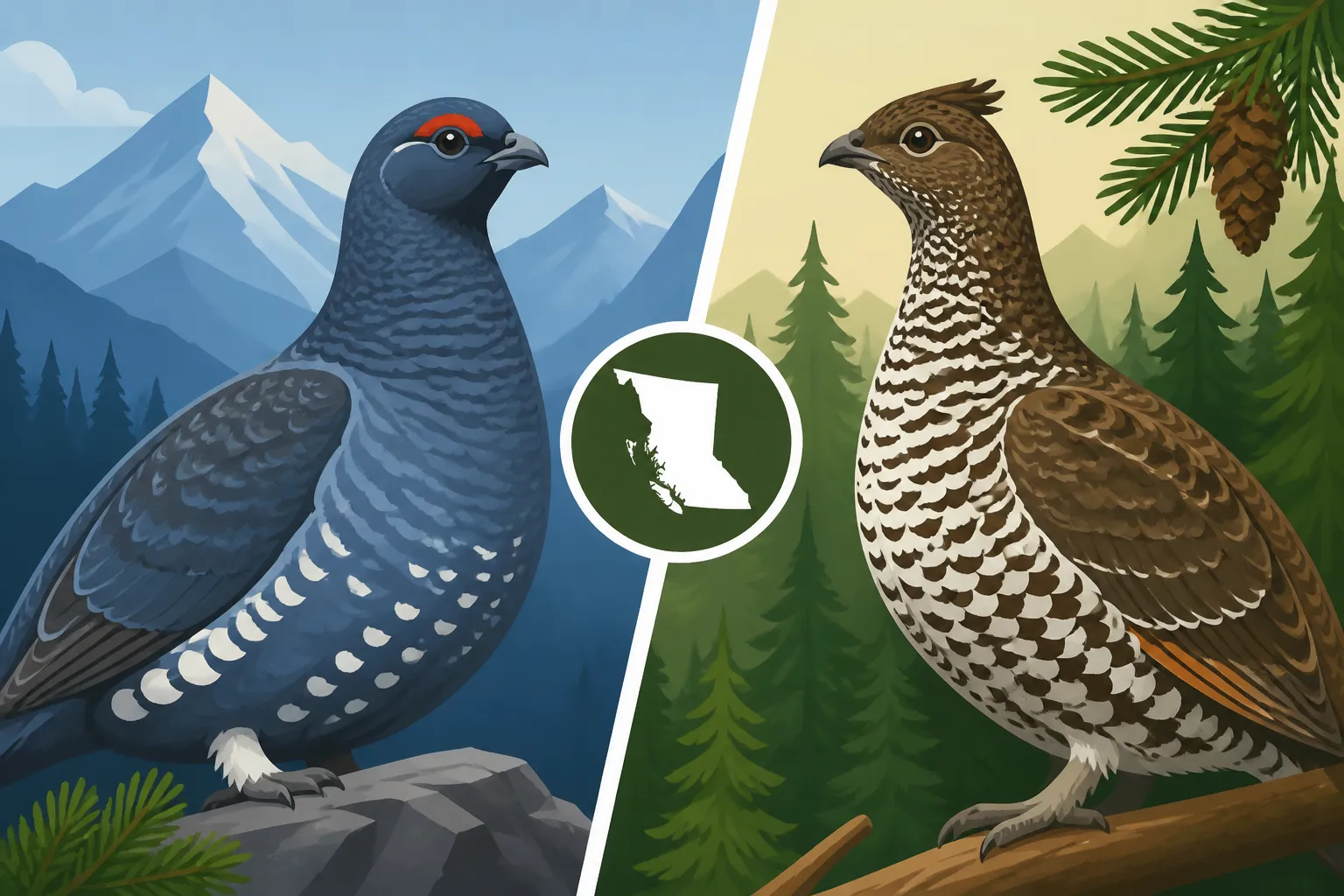
Telling a Blue Grouse From a Spruce Grouse
Few things are as frustrating for a new upland bird hunter in British Columbia as trying to tell the difference between two seemingly similar species when they flush, especially the ever-present blue grouse and the often-elusive spruce grouse. It's a common dilemma – you hear a burst of wings, catch a glimpse of brown and grey, and then wonder, "Was that a blue or a spruce?" This guide is here to clear up that confusion, helping you identify these wonderful game birds accurately so you can hunt responsibly and confidently in our diverse landscapes.
The Distinctive Features of a Blue Grouse (Dusky Grouse)
When you're out in British Columbia's uplands, a "blue grouse" is actually what's officially known as a Dusky Grouse. They're magnificent birds, and once you get an eye for them, their features become quite distinct from their spruce-dwelling cousins. Understanding their look and where they prefer to hang out is your first big step in identification.
Plumage and Size
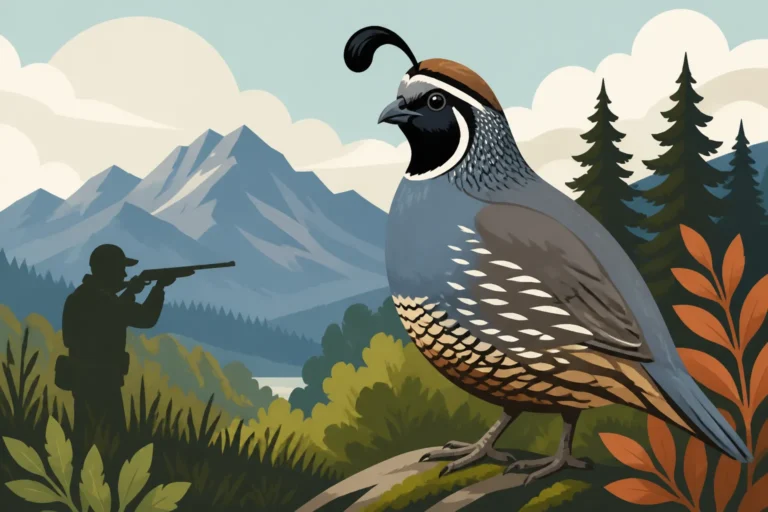
The blue grouse lives up to its name, at least in the males. They are generally larger birds than spruce grouse, with a robust body and a strong, upright posture. Males sport a predominantly slate-grey or bluish-grey plumage, especially on their back, chest, and tail. This 'bluish' hue can vary, sometimes appearing darker, hence the "Dusky" part of their name. You'll often notice a prominent yellow or orange comb above their eyes, which becomes more vibrant during breeding season, and a distinct white patch on the sides of their neck, used in their courtship displays.
Females tend to be a bit more mottled and brown, providing excellent camouflage against the forest floor and undergrowth. However, they still retain that general greyish undertone compared to the richer browns and rufous tones of a female spruce grouse. One of the most defining features for both sexes of blue grouse, which is crucial for in-the-field identification, is their tail. It’s typically long, broad, and fan-shaped, with a distinctive light grey or bluish-grey band at the very end. This tail band is often quite visible when they flush or perch.
Their size is another key indicator. Blue grouse are considerably larger than spruce grouse, often weighing between one and three pounds. This gives them a more substantial appearance, especially in flight. When one flushes, it feels like a bigger bird, with a powerful wingbeat that carries them quickly through the timber.
Habitat and Behavior
If you want to find a blue grouse, you generally need to climb a bit. These birds are creatures of higher elevations, preferring open conifer forests, subalpine meadows, and clearcuts that are starting to grow back with small trees and shrubs. You'll often find them along the edges of timber, where the forest meets open country, allowing them to feed on berries, seeds, and conifer needles, and then duck into cover. Areas with Douglas fir, pine, and spruce stands, especially those with good ground cover, are prime blue grouse territory. You might be hiking along an old logging road in the mid-elevation mountains, thinking about Hunting a British Columbia Logging Road Network, and suddenly one of these birds will burst out of the roadside brush.
Their behavior is also quite telling. Blue grouse are well-known for their "hooting" call, especially the males during the spring and early summer breeding season. It's a deep, resonant series of hoots that carries well through the mountain air. When flushed, they typically take to the air with a powerful burst, often flying upwards into the branches of a nearby tree. They might perch there, sometimes allowing you a second look, or fly off over a ridge. Their tendency to fly and perch rather than just run or stay low is a key behavioral difference from spruce grouse. They also undertake seasonal migrations, moving to higher elevations in the summer and then gradually descending to lower, snow-free areas or more sheltered timber in the fall and winter, which can affect where you find them during different hunting seasons. Remember to keep an eye out in areas like Hunting a Subalpine Basin at First Light or even higher up.
Unmistakable Marks of a Spruce Grouse (Franklin's Grouse)
The spruce grouse, sometimes referred to as "fool hen" due to its trusting nature, is a bird of a different feather and a different forest. For hunters, correctly identifying this species is crucial because their seasons and bag limits can sometimes differ, and we want to ensure we're always hunting ethically and within the rules.
Plumage and Size
Spruce grouse are smaller and have a more compact, rounded body than blue grouse. Their overall colouration is much darker, typically a rich, mottled brown, grey, and black, which blends seamlessly with the shadowy undergrowth of dense coniferous forests. This camouflage is so effective that they can be incredibly difficult to spot, even when you know they're there. They look less "blue" or "grey" and much more "earthy" in their tones.
The males are quite striking and perhaps the easiest to identify. They feature a distinct black chest and throat, often speckled with white, and prominent bright red combs (fleshy patches) above their eyes, especially visible during display. Their back and wings are heavily barred with brown and black. The female spruce grouse is more uniformly mottled brown and black, making her even harder to pick out in the dim light of the forest. However, even the females retain that dense, barred pattern that is different from the generally smoother plumage of a female blue grouse.
A critical identifying feature for a spruce grouse is its tail. Unlike the blue grouse's fan-shaped tail with a grey terminal band, the spruce grouse typically has a dark, squared-off tail that lacks a distinct grey band. In some subspecies, particularly the Franklin's grouse (which is common across much of BC's Interior), the tail feathers are uniformly dark or have a rusty-red band closer to the body of the feather, rather than at the very tip. This solid, dark tail, often held somewhat erect, is a dead giveaway once you've trained your eye to spot it.
Habitat and Behavior
Spruce grouse are true denizens of the deep woods. You'll find them almost exclusively in dense, mature coniferous forests, particularly those dominated by spruce, fir, and pine trees. They love thick underbrush and wet, boggy areas within these forests. Think dark, damp, mossy ground with plenty of fallen logs and low-hanging branches—the kind of place where you might expect to see a Marten and Fisher in British Columbia Forests. If you're hunting in a thick patch of evergreens, especially where the canopy is dense and the light doesn't penetrate well, you're in prime spruce grouse habitat.
Their behaviour is notoriously different from blue grouse. Spruce grouse are famous for their lack of wariness, often allowing hunters to approach incredibly close—sometimes within mere feet—before they even consider flushing. This "foolish" behaviour is thought to be a survival adaptation; their excellent camouflage makes them rely on blending in and holding still rather than flying away at the first sign of danger. When they do eventually flush, it's often a much less explosive affair than a blue grouse. They might just fly a short distance to a low branch or simply walk away slowly on the ground. Males also have a distinctive wing-drumming display, a deep thrumming sound made with their wings during courtship, but they rarely make vocal calls like the blue grouse's hoot. If you're walking through a dense Hunting an Interior Douglas Fir Bench and a bird almost lets you step on it before quietly fluttering off, it's almost certainly a spruce grouse.
Key Distinctions in the Field: A Hunter's Quick Guide
Being able to quickly distinguish between a blue grouse and a spruce grouse in the field is a skill that comes with practice, but knowing what to look for makes all the difference. When you're out there, every second counts, so a rapid assessment of habitat, visual cues, and behavior is paramount.
Location, Location, Location
Before you even see a feather, your current surroundings are often the most reliable predictor of which grouse species you're likely to encounter. This is where a good scouting tool like GoHunt can really shine, helping you understand the topography and forest types of your planned hunting area. Are you climbing a steep, open mountain slope with scattered timber and subalpine meadows, perhaps a zone like Hunting British Columbia's Alpine in September? If so, your chances of running into a blue grouse (Dusky Grouse) are far higher. They prefer those transitional zones between dense timber and open areas, often found at higher elevations.
Conversely, if you're deep within a dense, dark stand of spruce and fir trees, perhaps near a bog or a thick river bottom, you're squarely in spruce grouse territory. These birds shy away from open areas and prefer the cover and dampness of dense coniferous growth. Knowing your habitat beforehand can prime your eyes and mind to look for the right characteristics. For example, knowing you're in prime Hunting an Interior Douglas Fir Bench will have you looking for the heavily barred, darker birds, while traversing higher ground for Hunting a Subalpine Basin at First Light puts you in blue grouse country.
Visual Cues and Sound
Once you spot a bird, or hear one, pay attention to these rapid fire identification points. The overall impression is key: is it generally grey/blue and larger, or darker, mottled brown and smaller? The tail is a particularly good feature if you can get a glimpse. A fanned tail with a distinct grey band at the end points to a blue grouse, while a dark, squared-off tail, often with uniform dark or rusty-red outer feathers, suggests a spruce grouse. The male's plumage offers strong clues too: the blue grouse male has those white neck patches and prominent yellow/orange combs, while the spruce grouse male has a black chest with white spots and bright red combs.
Consider the sound they make. If you hear a series of deep hoots echoing through the forest, especially in spring or early summer, that's almost certainly a male blue grouse. Spruce grouse, on the other hand, are generally silent birds vocally, though males will perform a distinctive wing-drumming display.
Here's a quick comparison table to help differentiate:
| Feature | Blue Grouse (Dusky Grouse) | Spruce Grouse (Franklin's Grouse) |
|---|---|---|
| Size | Larger, robust body (1-3 lbs) | Smaller, compact, rounded body (0.75-1.5 lbs) |
| Overall Color | Predominantly slate-grey/bluish-grey (males), mottled brown/grey (females) | Darker, rich mottled brown/black/grey |
| Male Markings | Prominent yellow/orange combs, distinct white neck patches | Bright red combs, black chest with white spotting |
| Tail | Long, fan-shaped, distinct grey band at the tip | Dark, squared-off, no grey band (often uniform dark or rusty) |
| Habitat | Open conifer forests, subalpine, clearcuts, higher elevations | Dense coniferous forests, spruce bogs, thick timber, low elevation |
| Vocalizations | Males make deep "hooting" calls | Generally silent, males perform wing-drumming display |
| Behavior | Flushes powerfully, often flies to perch in trees | Often "foolish," allows close approach, flies short distances or walks away |
Behavior and Flush
How the bird reacts to your presence can seal the deal. A blue grouse will typically explode from cover with powerful wingbeats, often flying uphill or into a tree where it might perch, offering a momentary second look. This strong, decisive flush is characteristic. Their flight is direct and strong, meant to carry them away from danger quickly.
The spruce grouse, by contrast, is known for its incredible stillness. They will often let you walk right past them, relying on their exceptional camouflage. If they do flush, it's often a much shorter, lower flight to another patch of dense cover, or they might simply walk away quietly into the thicket. This 'foolish' or less wary behavior is a hallmark of the spruce grouse. If a bird flushes with a loud commotion and gains altitude quickly, think blue grouse. If it's a quiet flutter into the undergrowth after you've almost tripped over it, it's very likely a spruce grouse. Understanding these typical responses can save you from an identification headache.
Why Accurate Identification Matters for BC Hunters
Hunting in British Columbia is a privilege that comes with the responsibility of knowing your game and adhering to the regulations. Misidentification isn't just a minor mistake; it can lead to serious consequences and detract from the ethical enjoyment of the hunt.
Regulations and Bag Limits
One of the most immediate and practical reasons to correctly identify your grouse species is the regulatory framework. While both blue grouse and spruce grouse are popular game birds in British Columbia, their specific seasons, bag limits, and possession limits can vary. For example, some management units might have different daily bag limits for blue grouse compared to spruce grouse, or their seasons might open or close at slightly different times. Imagine heading out for a day of Hunting British Columbia's Grouse Season only to realize you’ve misidentified your quarry and potentially overharvested a species with a tighter limit.
It's absolutely essential to consult the most current British Columbia hunting regulations synopsis before you head afield. This document, often updated every two years, contains all the critical information regarding British Columbia Game Bird Seasons and limits by region and management unit. A simple error in identification could result in exceeding a bag limit, which is a serious infraction. You don't want to find yourself in a situation where you're asking What Happens If You Report Late because of confusion over species. Always double-check your target against the regulations for your specific hunting area.
Conservation and Ethical Hunting
Beyond the legalities, accurate identification plays a vital role in conservation and ethical hunting practices. As responsible hunters, we are stewards of the wildlife resource, and that means making informed decisions in the field. Every species, even common ones, has ecological factors that influence its population health. Knowing the difference between a blue grouse and a spruce grouse helps ensure that you are selectively harvesting within sustainable parameters set by wildlife managers.
Sometimes, in dense cover or during a quick flush, positive identification can be tough. In such instances, exercising patience and restraint is the mark of an ethical hunter. If you're not 100% sure what you're looking at, it's always better to let the bird go. It's about respecting the animal and the resource. Furthermore, knowing the habitat preferences of each species, as we've discussed, can help you focus your efforts and minimize the chance of misidentification. A tool like GoHunt can be incredibly helpful for scouting and understanding the specific habitat types you'll encounter, helping you anticipate which grouse species you're more likely to run into, thus aiding in ethical target selection.
Understanding the subtle differences in their plumage, their preferred environment—whether it's Hunting a British Columbia Cutblock Edge or deeper timber—and their typical reactions when flushed will make you a more confident and effective upland hunter. It's all part of becoming a truly knowledgeable outdoors person in British Columbia.
Disclaimer
This article is for general informational purposes only and does not constitute professional advice. Laws, prices and regulations vary by location and change over time. Consult a qualified professional for guidance on your specific situation.