What Salmon Runs Do to Bear Behaviour
For anyone spending time in British Columbia's wilderness, especially hunters and outdoor enthusiasts, understanding how salmon runs drastically alter bear behavior isn't just helpful—it's absolutely crucial for both success and safety. The annual return of salmon triggers a profound, seasonal shift in bears, impacting everything from their foraging habits to their territoriality. This comprehensive guide will dive deep into these changes, offering insights to help you navigate BC's salmon country with greater awareness.
The Magnetic Pull: Why Salmon Are Irresistible to BC Bears
When the Pacific salmon begin their epic journey upstream to spawn, a primal siren song echoes through the forests of British Columbia. For bears, this isn't just another food source; it's a critical lifeline, an annual feast that dictates their very survival through the long winter ahead.
The Biological Imperative: Why Salmon Are So Critical
Imagine a four-course meal that appears in your backyard every year, packed with all the nutrition you need to survive for months without eating. That's essentially what a salmon run is for a bear. These fish, whether it's sockeye, pink, coho, or chum, are incredibly rich in fat and protein. This isn't just good nutrition; it's essential for a bear to accumulate enough fat reserves to sustain itself through hibernation. A bear that hasn't packed on sufficient weight from a successful salmon season is a bear at a severe disadvantage when winter descends.
Consider a large grizzly bear in the late summer. It's been foraging on berries, roots, and perhaps the occasional ungulate calf, but nothing quite delivers the caloric punch of a salmon. Each fish caught and consumed contributes directly to the thick layer of fat that will fuel its metabolic processes during denning. This biological imperative is so strong that bears will travel significant distances, abandoning other food sources that might otherwise be plentiful, simply to be where the salmon are. This intense focus makes understanding their movements vital, especially when you consider British Columbia's Coastal Black Bears who rely heavily on these coastal migrations.
Geographic Concentration: Where Bears and Salmon Intersect
The very nature of a salmon run means that these fish concentrate in specific, often predictable, locations. Bears know this intimately. River mouths, shallow spawning beds, constrictions in streams, and waterfall pools become prime bear real estate. These are the natural traps where salmon congregate, making them easier targets for hungry bears. You'll find bears along major salmon-bearing rivers, but also in smaller, less obvious creeks and estuaries where fish gather before pushing further upstream.
Coastal estuaries, where rivers meet the ocean, are particularly important. Here, the salmon stage before their final push, and the abundant food sources like sedges and berries can supplement the bears' diet even before the main salmon run truly begins. As the fish move inland, so do the bears, following the scent and sight of the spawning activity. For hunters, this means that while bears might be widespread at other times of the year, during the salmon run, they will be heavily concentrated along these waterways. Understanding how to locate Hunting a British Columbia River Estuary or identifying these crucial choke points can be the key to both finding bears and staying safe. Many hunters use resources like GoHunt to pore over maps and historical data, seeking out these specific intersections of water and wildlife.
Dramatic Shifts: How Salmon Runs Alter Bear Behaviour
The presence of abundant salmon doesn't just change where bears are; it fundamentally alters how they behave. Hunters need to be acutely aware of these behavioural shifts, as a salmon-fueled bear can be a very different animal than one encountered at other times of the year.
Shifting Foraging Patterns and Daily Routines
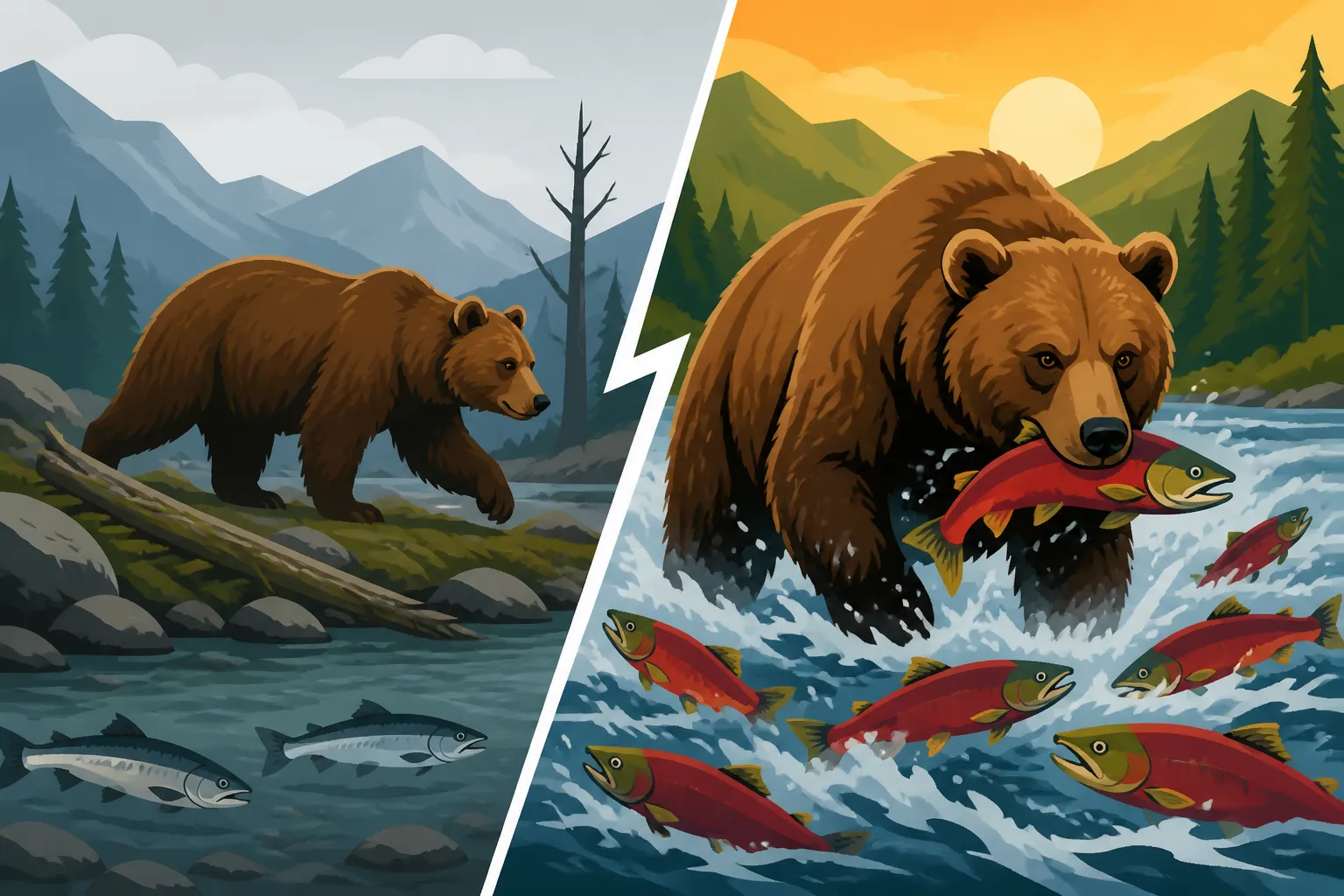
During a salmon run, a bear's world narrows significantly. Its singular focus becomes catching and consuming salmon. This means they will often abandon other food sources that were previously important. Berries, roots, and even carrion might be completely ignored if a steady supply of salmon is available. This intense specialization affects their daily routines as well. Bears become less nocturnal, often fishing actively throughout the day, especially in prime spawning areas where competition is high. They are opportunistic, grabbing any fish they can, sometimes even ignoring smaller, less fatty species in favour of the larger, more calorically dense ones.
This hyper-focus on salmon can also make them seem less wary of humans. While bears are generally shy and avoid human contact, a bear engrossed in fishing might tolerate a closer approach than usual, or simply not notice you until you are quite close. This isn't because they're friendly; it's because their attention is completely monopolized by the critical task of feeding. A good example might be a sow with cubs, usually incredibly protective. During a salmon run, she still needs to feed her cubs and herself, and she might take risks or seem less concerned about human presence if it means securing vital calories. Knowing What Bears Eat on a Coastal Estuary can give you an edge in predicting their exact location and behaviour patterns.
Increased Bear Density and Interaction
One of the most significant changes is the sheer density of bears that can converge on a productive salmon stream. It's not uncommon to see multiple bears, sometimes a dozen or more, sharing a relatively small stretch of river. This increased concentration naturally leads to more interactions between bears, and these interactions can range from tolerant coexistence to aggressive displays of dominance. Larger, more dominant boars will often control the best fishing spots, forcing smaller bears, sows with cubs, or younger animals to less productive areas or to fish at less opportune times.
This competition can escalate, leading to growls, mock charges, and even physical altercations. For hunters, this means stepping into an environment where the baseline level of bear stress and potential aggression is higher than usual. The chances of encountering multiple bears at once, or stumbling into a tense interaction, increase dramatically. It's not just about one bear; it's about navigating a dynamic social landscape where many powerful predators are intensely focused on a shared, valuable resource. This is where understanding Bear Safety While Hunting in British Columbia truly comes into play, as proactive measures are paramount. When researching areas, a tool like GoHunt might highlight historical hotspots for bear activity, giving you an idea of potential density.
Hunter's Lens: Navigating Salmon Country During the Run
For hunters, the salmon run presents a unique set of circumstances. It can offer unparalleled opportunities to find and harvest bears, but it also comes with amplified risks and specific ethical considerations.
Enhanced Opportunity for Ethical Harvest (and Increased Risk)
The predictability of bears congregating along salmon streams can be a significant advantage for hunters. Bears become more visible and their movements more localized. This can make scouting and stalking more efficient. For instance, if you know Hunting a Salmon Stream for Bears is a viable strategy, you can focus your efforts on those specific areas, rather than blindly covering vast tracts of timber. A bear that is actively fishing is often less aware of its surroundings, potentially allowing for a more deliberate approach and a better shot opportunity. Moreover, bears are often at their heaviest during the salmon run, carrying substantial fat reserves, which can make for a more substantial hide and more meat. Knowing What a Coastal Black Bear Weighs after a summer of feasting on salmon can truly highlight the impact of this food source.
However, this increased opportunity comes with increased risk. You're entering the bears' cafeteria, and they are acutely focused on eating. Ethical shot placement becomes even more critical. A bear that is charging or running due to a poor shot is a dangerous prospect, especially in dense brush or near water. Furthermore, the sheer number of bears means you must be constantly aware of your surroundings, not just for the bear you're targeting, but for others nearby that might react to a shot or come to investigate. It's a high-reward, high-risk scenario that demands meticulous planning, excellent fieldcraft, and an unwavering commitment to safety protocols, as outlined in Grizzly Safety on a British Columbia Hunt.
Planning Your Hunt Around Salmon Cycles
Successful bear hunting during a salmon run hinges on precise timing and location. The salmon run is not a static event; it's a dynamic migration that varies in timing and intensity depending on the specific river system, salmon species, and even annual environmental factors. To maximize your chances, you'll need to research local salmon run schedules. While I can't provide live data, you should look for historical patterns for the river systems you intend to hunt. Different species of salmon run at different times, from late summer through fall, meaning you might have multiple opportunities depending on your target area.
Once you've identified the timing, focus on specific areas of concentration: river bends, log jams, shallow riffles where fish are forced to navigate obstacles, and tributary mouths. These are the natural bottlenecks where bears stake their claims. For example, if you're Hunting Bears on a Coastal Estuary in May, you'll be looking for early runs, or bears feeding on other spring growth, knowing the big salmon push might be later. Beyond just finding bears, consider the prevailing weather conditions, especially Hunting British Columbia's Coastal Rain, which can affect both salmon migration and bear activity. Consulting tools like GoHunt can help you overlay historical bear data with topographical maps, identifying likely spots where fish and bears will converge. This kind of diligent pre-hunt research is invaluable for a safe and effective hunt.
Safety First: Coexisting with Salmon-Focused Bears
Operating in areas with active salmon runs means being acutely aware of increased bear activity and potential for close encounters. Safety isn't an afterthought; it's the primary consideration for anyone venturing into these rich ecosystems.
Practical Safety Measures for Salmon Country
When you step into salmon country, you're stepping into the heart of a bear's world. This means taking extra precautions beyond what you might normally consider for a typical backcountry trip. Always carry bear spray, know how to access it instantly, and be familiar with how to use it effectively. Make noise as you travel, especially through dense vegetation or around blind corners. Talking, singing, or using a bear bell (though I personally find sustained vocalization more effective) helps alert bears to your presence, giving them time to move off. Travelling in groups is another excellent deterrent; a larger, noisier presence is less likely to be surprised by a bear, and a bear is less likely to challenge a group.
Proper food storage is non-negotiable. Even if you're just out for a day hunt, ensure any snacks or attractants are double-bagged and stored securely. If camping, use bear-resistant containers, hang food from trees, or use electric fences around your camp. Never cook or eat where you sleep. Dispose of all waste properly. Remember, bears are incredibly intelligent and have an exceptional sense of smell. Any deviation from strict bear-aware protocols could lead to an unwanted encounter. Taking the advice from articles like What to Do If You See a Grizzly seriously is essential, as the same principles apply to black bears during salmon runs.
Understanding Bear Body Language
Knowing how to interpret bear behaviour is a critical safety skill, especially when bears are intensely focused on a food source like salmon. A bear that is aware of you but continues to fish, occasionally glancing your way, is generally indicating tolerance. They're telling you they know you're there, but you're not currently perceived as a threat or a competitor. In these situations, giving the bear ample space and slowly backing away while talking in a calm voice is usually the best course of action.
However, recognize the warning signs. A bear that stops fishing, stands up, or swats the ground might be testing your intentions. If a bear yawns, clicks its teeth, or vocalizes with huffs and growls, it's a clear signal of stress or agitation. Head down, ears back, and direct eye contact are also aggressive postures. If a bear lunges or makes a short charge, it's often a bluff charge, a way of testing your resolve. The key is to remain calm, avoid eye contact (which can be seen as a challenge), continue to talk in a low voice, and slowly retreat. Never run, as this can trigger a chase response. Knowing when a bear is simply focused versus when it's feeling threatened can be the difference between a peaceful encounter and a dangerous one. Remember, these bears are fueled by the critical need to fatten up for winter, making their drive to protect their food source incredibly strong.
| Behaviour Trait | Typical Bear Behaviour (Non-Salmon Run) | Salmon Run Bear Behaviour |
|---|---|---|
| Primary Food Focus | Berries, roots, grubs, carrion, some ungulates | Salmon, almost exclusively |
| Activity Pattern | Often crepuscular/nocturnal, shy | More active throughout daylight, opportunistic |
| Waryness of Humans | High; generally avoids contact | Lower; more tolerant if engrossed in fishing |
| Concentration | Dispersed, solitary | Highly concentrated along waterways, multiple bears |
| Inter-Bear Interaction | Low, territorial | Higher, competition for fishing spots, potential aggression |
| Travel Patterns | Wide-ranging for diverse food sources | Restricted to salmon-bearing waterways |
| Energy Levels | Consistent | High-intensity feeding, driven by urgency |
Disclaimer
This article is for general informational purposes only and does not constitute professional advice. Laws, prices and regulations vary by location and change over time. Consult a qualified professional for guidance on your specific situation.