What Wildfire Did to Moose Habitat
British Columbia's landscapes are breathtaking, but they're also dynamic, constantly reshaped by natural forces. Among these, wildfire stands as one of the most powerful. If you've spent any time hunting in our province, you've likely seen the aftermath of a major fire, and if you're like me, you've probably wondered, "What now for the animals?" This is especially true for our beloved moose, a species intrinsically tied to specific forest types and forage. It's a real frustration to see prime moose country go up in smoke and then struggle to understand if, and how, these majestic animals will return. This guide is here to unravel the complex story of how wildfire reshapes moose habitat in British Columbia, moving beyond the initial devastation to explore the surprising long-term impacts and how you can adapt your hunting strategies.
The Immediate Devastation: More Than Just Burned Trees
When a wildfire tears through a forest, the immediate impact can feel utterly catastrophic. It’s not just a few scorched trees; it’s an entire ecosystem reeling from an intense, rapid transformation. For moose, whose survival relies heavily on specific vegetation and cover, these initial stages are incredibly challenging, often leading to displacement and even direct mortality. It’s a harsh reality that can be disheartening for any hunter who cherishes these animals and their wild homes.
Direct Impact on Moose and Immediate Habitat Loss
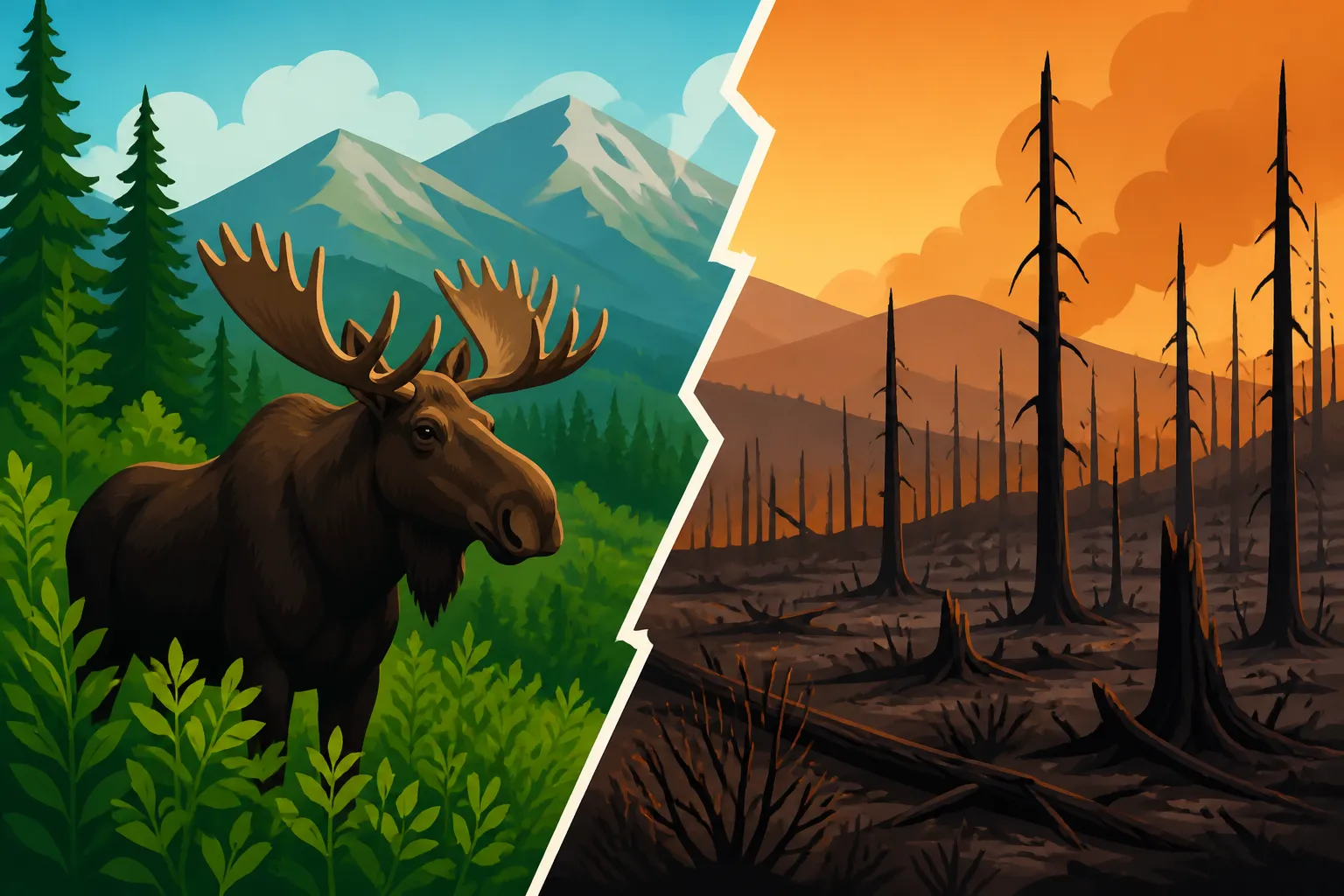
In the immediate aftermath of a severe wildfire, the landscape often resembles a moonscape. Prime moose habitat, characterized by dense willow bottoms, aspen stands, and thick conifers offering thermal cover, can be instantly vaporized or reduced to charcoal. Moose, despite their large size, can be surprisingly vulnerable to fast-moving crown fires. While some might outrun the blaze, direct mortality from smoke inhalation, burns, or being trapped by rapidly advancing flames is a tragic reality. Imagine the chaos, the roaring fire, and the sheer panic as these animals try to navigate an inferno.
Even for those that survive the initial fire, the sudden loss of forage is immense. All the nutritious deciduous browse they rely on – the tender shoots of willow, birch, and aspen – are gone. The critical thermal cover provided by mature conifers, essential for moose to regulate their body temperature during scorching summers and brutal winters, is also obliterated. They are left exposed, hungry, and often traumatized. This forces moose to abandon their traditional home ranges, pushing them into unfamiliar or already occupied territories, which can lead to increased stress, competition with other animals, and further vulnerability to predators. It’s a struggle for survival in a newly barren world.
Scorched Earth and Water Sources
Beyond the vegetation, fire fundamentally alters the very ground moose walk on and the water they drink. Intense fires can bake the soil, sometimes creating a water-repellent layer that prevents normal water infiltration. When the rains eventually come, instead of soaking in, water often runs off quickly, leading to increased erosion and sediment washing into streams and rivers. This can have a cascading effect on riparian zones – those crucial areas along water bodies that moose frequent for forage and refuge.
Water sources themselves can be heavily impacted. Streams and shallow lakes, once pristine, might become choked with ash, sediment, and debris. The pH levels can change, and the water quality can degrade significantly, making it less palatable or even dangerous for wildlife. Moose are particularly dependent on clean water sources, not just for drinking but also for aquatic vegetation, which forms an important part of their diet. A severely burned landscape might see these essential waterholes become murky, stagnant, or completely filled in, adding another layer of challenge to an already desperate situation for displaced animals. The disruption to these vital elements can persist long after the flames have died down, making recovery a slow and arduous process.
The Phoenix from the Ashes: Habitat Regeneration Over Time
While the immediate aftermath of a wildfire is undeniably grim, nature has a remarkable capacity for renewal. What might look like total devastation can, over time, become a vibrant new habitat. For British Columbia moose, this often means a shift in the landscape, creating new opportunities that, surprisingly, can lead to healthier, more productive areas in the long run, even if it doesn't look like "traditional" moose country for a while. It's a testament to the resilience of our wild places, offering a glimmer of hope to those of us who hunt and cherish the game here.
Early Successional Growth and Browse Opportunity
The most significant long-term benefit of wildfire for moose habitat is the explosion of early successional vegetation. Once the immediate shock passes, the sun-drenched, nutrient-rich soil left behind becomes a perfect nursery for pioneering plant species. Within a few years, burned areas often witness a vigorous resurgence of moose favourites like willow, aspen, birch, and fireweed. These plants grow rapidly and produce abundant, highly palatable new shoots that are packed with nutrients. This fresh browse is like an all-you-can-eat buffet for moose, often far more abundant and nutritious than the browse found in mature, dense forests.
I've seen it firsthand: a burn that looked completely barren just a few years prior can transform into a thicket of young, tender growth. This period, roughly 2 to 20 years post-fire, can be incredibly productive for moose. They'll move into these areas to capitalize on the new food sources, often thriving and showing excellent body condition. The trick, as hunters, is learning to identify these zones and understanding the growth cycle. It's not about finding the old timber, but embracing the new, vigorous growth. This transition is a key reason why understanding moose ecology is vital, and why tools that help you visualize these changes, like satellite imagery or mapping applications, are so useful. Many hunters rely on mapping tools like GoHunt to overlay fire perimeter maps with their hunting units and see how the vegetation changes over time, helping them identify these regenerating hotspots.
The Role of Scarred Timber for Cover and Shelter
While the dense canopy cover of old-growth forests is lost, the scarred timber and remaining structure in a burn area still play a crucial, albeit different, role for moose. Standing dead trees, known as "snags," provide some vertical structure and can create microclimates that offer a degree of thermal regulation. More importantly, the immense amount of downed timber can offer physical cover. Moose will often bed down amidst a tangle of burnt logs, finding protection from the elements and a sense of security from predators. This kind of cover might not be traditional, but it's effective.
Furthermore, these burned areas often develop a mosaic pattern, with pockets of unburned or less severely burned timber interspersed within the broader burn. These "islands" of surviving forest become incredibly important. They offer crucial thermal cover, especially during extreme weather, and can serve as safe havens or travel corridors within the larger, more open burn. Understanding how moose utilize this mix of new growth and remnant cover is key to successfully Hunting a Burned Slope Two Years On. It's about recognizing that "cover" isn't always green and leafy; sometimes, it's a tangled mess of grey and black.
Changes in Predator Dynamics and Competition
Wildfires don't just affect moose; they reshape the entire ecosystem, which naturally influences predator-prey relationships and competition among herbivores. In the immediate post-fire period, the open landscape can sometimes give predators, like wolves and bears, an advantage due to increased visibility. However, as the browse regenerates and moose populations potentially increase, the dynamic can shift. Healthy, well-fed moose are often more resilient to predation.
Conversely, the changes brought by fire can also alter the distribution of other ungulates. Elk and deer, which often thrive on similar early successional forage, might also move into the newly productive burn areas. This can lead to increased competition for food resources. For instance, if Rocky Mountain Elk Numbers in the Kootenays increase in a given area, they might compete directly with moose for specific browse species. However, British Columbia's vast and diverse landscapes often allow for some segregation, with different species preferring slightly different aspects or elevations. Hunters need to be aware of these shifting populations and how a burn might concentrate multiple game species, making scouting even more important. This is where tools like GoHunt really shine, allowing you to cross-reference known ungulate ranges with recent burn perimeters.
Navigating the New Landscape: Hunting Post-Fire Zones
Hunting in a landscape transformed by wildfire presents both unique challenges and exciting opportunities. It's a completely different ballgame than still-hunting mature timber, requiring a fresh perspective and a willingness to adapt. For those willing to put in the effort, these post-fire zones can be incredibly rewarding, offering a glimpse into the raw power of nature's cycles and the resilience of British Columbia's game animals.
Identifying Productive Burn Areas
The key to hunting post-fire moose country lies in identifying the burn areas that are actually productive, rather than just vast stretches of dead trees. Not all burns are created equal. You’re looking for areas that have had enough time for vigorous new growth to establish, typically two to five years post-fire, sometimes even longer depending on the intensity and elevation. These are the sweet spots where the new browse is abundant. Look for areas with a mix of deciduous species like willow, aspen, and birch coming back strong. Satellite imagery and historical fire maps are invaluable resources for this initial scouting.
When you're boots on the ground, pay attention to the species regenerating. Moose are particular eaters, and while they'll sample many things, they gravitate towards certain high-nutrient browse. Knowing what they eat – the young shoots of willow, birch, aspen, dogwood, and even some aquatic plants – will help you pinpoint the best feeding zones. Often, these areas will still have standing dead timber or a significant amount of downed wood, providing the crucial cover that moose need between feeding bouts. To truly understand the changes, tools like GoHunt can be invaluable for identifying mature timber blocks alongside areas showing vigorous new growth, helping you predict where moose might be feeding and bedding.
Challenges of Access and Safety
While the promise of new forage is enticing, accessing and hunting in burn areas comes with significant safety considerations. The terrain itself can be drastically altered. Ash pits can be deep and unstable, posing a serious risk of falls and burns (even long after the fire is out, if ground fuels smolder). Standing dead trees, or "snags," are incredibly dangerous. They can fall without warning, especially in windy conditions or after heavy rain. Always be vigilant for falling timber and plan your routes accordingly.
Access roads might also be closed, washed out, or severely damaged. Many areas that were previously accessible by vehicle become walk-in only, meaning you'll need to be prepared for longer hikes and be self-sufficient. This ties into the broader need for Emergency Planning in British Columbia's Backcountry, as help can be a long way off. Always inform someone of your route and expected return, carry essential survival gear, and consider travelling with a partner. Furthermore, the lack of traditional shade means these areas can be incredibly hot in the summer and exposed to wind and snow in the winter, requiring careful attention to clothing and hydration. It’s a trade-off: potentially great hunting, but with increased risks.
Understanding Moose Behaviour in Burned Areas
Moose in burned areas often exhibit slightly different behaviours than those in unburned, dense forest. They might become more crepuscular, feeding heavily at dawn and dusk, and then bedding down in the cover of downed timber or adjacent unburned patches during the day. Because the landscape is more open, they might be more wary, relying on their keen sense of smell and hearing to detect danger. Patience and slow, deliberate movement are even more critical here.
You might find moose feeding in the most unlikely spots, often areas that were completely devastated but are now seeing vigorous regrowth. They might also still gravitate towards water sources, especially if aquatic vegetation is present or if cooler temperatures are found near a lake or river. Understanding these nuanced shifts in behaviour is crucial. For instance, while Hunting a British Columbia Lakeshore for Moose might still be productive, you might find them venturing further into the regenerating upland burns than before. Their survival instincts drive them to maximize feeding opportunities while minimizing exposure, so observe the wind, the sun, and the topography to anticipate their movements.
Long-Term Outlook and Conservation Efforts
Wildfire is a natural, cyclical event in British Columbia, and understanding its long-term effects on moose habitat helps us appreciate the resilience of these ecosystems. It’s not just about immediate recovery; it’s about the ongoing evolution of the landscape and how we, as hunters and conservationists, fit into that picture. The future of moose in BC is intertwined with how these dynamic forces play out over decades, not just years.
The Evolving Habitat Mosaic
A healthy forest isn't a static entity; it's a dynamic mosaic of different ages, structures, and species. Wildfires, particularly varied intensity burns, contribute to this mosaic by creating patches of early successional growth alongside unburned or lightly burned areas. This diversity is incredibly beneficial for a wide range of wildlife, including moose. While a stand of mature conifers might provide crucial winter thermal cover, a nearby burn regenerating with willow and aspen provides essential summer and fall browse.
Over decades, these burns will slowly transition through different stages. The initial explosion of browse will eventually mature and become less productive, giving way to new conifer growth. However, this process takes time, and new fires will inevitably reshape other parts of the landscape. The goal of ecosystem management isn't to prevent all fires, but to manage their intensity and frequency to maintain this healthy, diverse mosaic. This ensures that throughout a region, there's always a mix of habitat types available to support robust populations of animals like moose. It’s a testament to the long game that nature plays, and our role is to understand and support that natural process. This also means understanding How Wildfire Changes Game Range Here and preparing for those shifts.
Human Impact and Management in Post-Fire Zones
While nature does much of the work, human management and conservation efforts can play a vital role in enhancing post-fire recovery for moose habitat. This includes strategic logging in some areas to create new browse opportunities or to reduce fuel loads for future fires, always done with an eye towards wildlife benefits. Reforestation efforts might focus on species that benefit moose, while road deactivation can reduce human disturbance in regenerating areas. As hunters, we have a role to play too, not just in ethical harvesting but in being eyes and ears on the ground.
Reporting observations of moose populations in burned areas, noting their health and distribution, can provide valuable data to wildlife biologists. Participating in organizations that advocate for sound wildlife management and habitat conservation directly contributes to the long-term health of our moose herds. Understanding the rules around British Columbia's Compulsory Reporting Rules for harvested animals helps contribute to these essential data sets. Ultimately, the future of moose habitat in British Columbia, especially in the face of ongoing wildfires, relies on a blend of natural processes and informed, responsible human stewardship. It’s a shared responsibility, and every hunter can be part of the solution.
| Stage of Post-Fire Habitat Recovery | Timeframe (Approx.) | Moose Habitat Impact | Hunting Considerations |
|---|---|---|---|
| Immediate Aftermath | 0 – 1 year | Negative: Severe loss of all forage and thermal cover. Increased exposure to predators. Water sources contaminated or altered. High risk of direct mortality or significant displacement. | Avoid: Very dangerous terrain, minimal forage, likely no moose. |
| Early Regeneration | 2 – 5 years | Positive: First flush of early successional browse (willow, aspen, birch) begins to emerge. Some thermal cover from unburned pockets or downed timber. Water sources may stabilize but remain vulnerable to erosion. Prime feeding opportunities. | High Potential: Focus on areas with robust new growth. Be aware of snags and difficult access. Moose will be feeding heavily. |
| Peak Browse Production | 5 – 20 years | Very Positive: Abundant, diverse, and highly nutritious browse. Excellent feeding areas. Good mix of regenerating growth and residual cover. Moose populations can thrive, showing excellent health. | Excellent Potential: Prime areas for finding moose. Focus on thickets of regenerating browse and edge habitats with remaining mature timber. |
| Maturing Burn | 20+ years | Mixed: Browse begins to mature and lignify (become woody), reducing palatability. Conifers start to re-establish, providing future thermal cover but reducing sunlight for browse. Becomes less of a primary feeding area, more of a transition zone or future winter range. | Decreasing Potential: Moose will still use these areas, but often in transition. Look for younger pockets of growth or adjacent mature forests. |
Disclaimer
This article is for general informational purposes only and does not constitute professional advice. Laws, prices and regulations vary by location and change over time. Consult a qualified professional for guidance on your specific situation.