Where British Columbia’s Grizzlies Are Densest
Navigating the vast wilderness of British Columbia is an incredible privilege, but it also comes with the responsibility of understanding the incredible wildlife we share it with. Many hunters, even those targeting other species, find themselves wondering where British Columbia's grizzly populations are most concentrated, not just out of curiosity, but for safety and ethical backcountry travel. This guide aims to shed light on those regions where grizzlies are densest, helping you plan your adventures with informed awareness and respect for these apex predators.
Understanding Grizzly Distribution in British Columbia
Grizzly bears are iconic inhabitants of British Columbia's wild landscapes, powerful symbols of its pristine wilderness. Their distribution isn't uniform across the province; it's a complex tapestry woven by habitat availability, food sources, and historical human interaction. While you can encounter a grizzly almost anywhere outside of major urban centres, there are definite hotbeds where their numbers are significantly higher. Understanding these patterns is key, not just for bear hunters (though grizzly hunting has been closed in BC since 2017), but for anyone venturing into the backcountry.
Historical Context and Current Status of Grizzlies
Historically, grizzly bears roamed much of North America, including nearly all of British Columbia. Over centuries, human settlement, habitat fragmentation, and hunting pressure significantly reduced their numbers and pushed them into more remote, less accessible areas. In British Columbia, management strategies evolved over time, eventually leading to the province-wide ban on grizzly hunting. This decision reflected a growing public concern for their conservation and a desire to ensure their long-term viability. Today, the focus is on monitoring populations, protecting critical habitat, and managing human-bear conflicts, particularly as human recreation in the backcountry continues to grow. British Columbia's Grizzly Population Estimate numbers show a resilient, though sometimes localized, population that is adapting to a changing landscape. The closure of the hunt, detailed further in British Columbia's Grizzly Bear Closure, fundamentally shifted how we interact with these animals, placing greater emphasis on coexistence and avoidance.
Why Knowing Grizzly Density Matters to Backcountry Users
For any hunter or outdoor enthusiast, understanding where grizzlies are densest is paramount for a few critical reasons. First and foremost, it's about safety. Entering an area with high grizzly concentrations means elevating your situational awareness, carrying appropriate deterrents like bear spray, and knowing how to react in an encounter. It's about preparedness, not fear. Secondly, it speaks to responsible wilderness stewardship. Knowing where these animals thrive allows us to be more conscious of our impact, minimizing disturbances to their feeding areas, dens, and travel corridors. Lastly, for hunters, it influences strategy for other species. Hunting elk or moose in prime grizzly habitat, especially during the rut or in areas with salmon runs, means considering how bears might be using the same resources. It's about being a respectful guest in their home, and tools like GoHunt can be invaluable for cross-referencing game species habitat with known bear ranges, helping you visualize potential overlaps.
Regions of Highest Grizzly Concentration
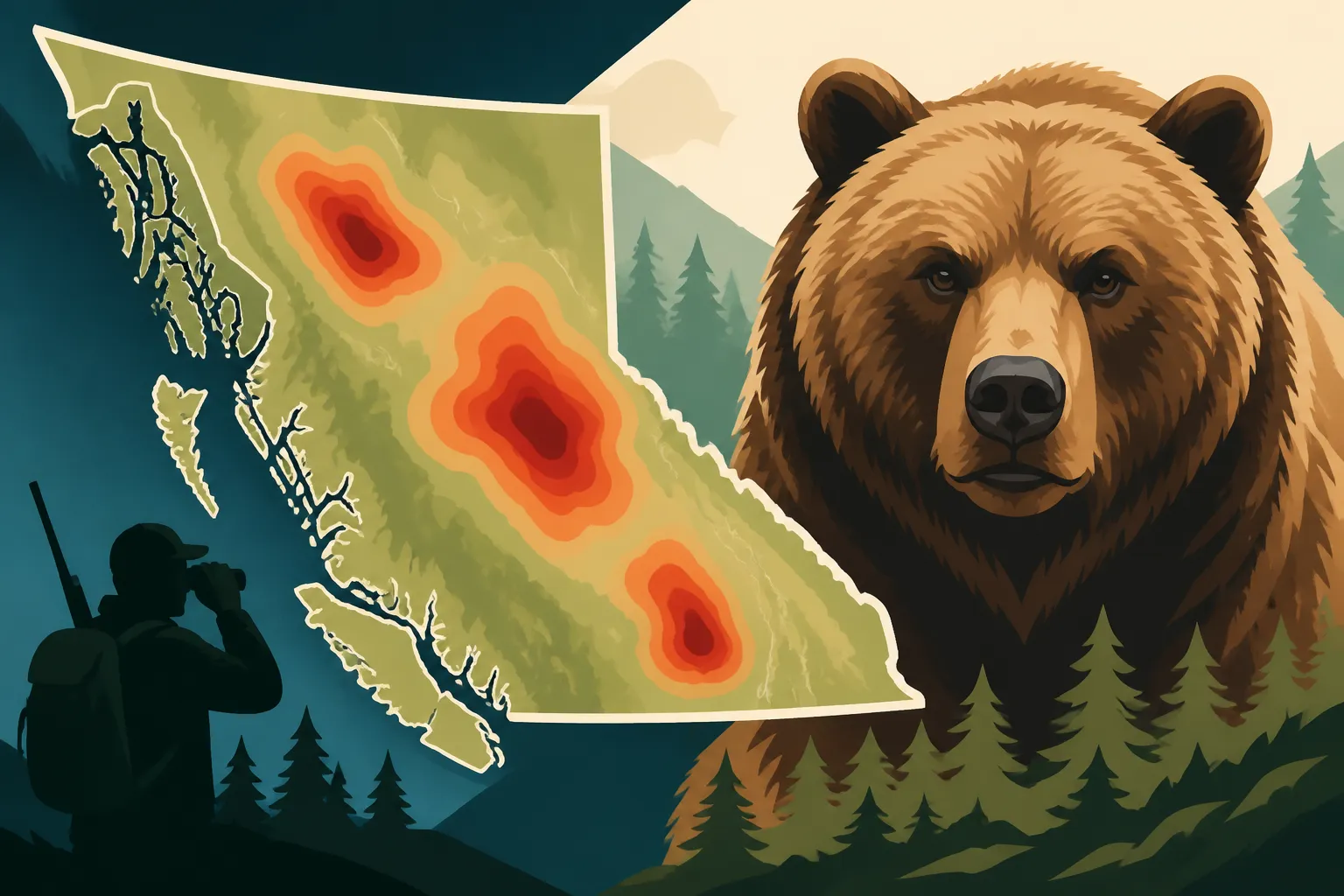
British Columbia is roughly divided into population units for grizzly bears, with some showing significantly higher densities than others. These areas often share common characteristics: vast wilderness, abundant food sources, and relatively low human impact. While grizzlies are broadly distributed, certain regions stand out as true strongholds.
Coastal Bear Havens
When we talk about high grizzly density, the coastal regions, particularly the Great Bear Rainforest and the adjacent mainland inlets, immediately come to mind. These areas offer an incredibly rich ecosystem that supports robust bear populations. The sheer abundance of salmon, which return to spawn in the countless rivers and streams, provides a seasonal protein and fat bounty that is unmatched. This cyclical feast allows grizzlies to pack on significant weight for hibernation, leading to healthier, more productive populations. The rugged, often inaccessible terrain, characterized by dense old-growth forests, remote estuaries, and expansive river systems, also provides ample cover and minimal human disturbance.
Consider the inlets off the Central Coast, or the river systems that drain into Knight Inlet or Bute Inlet. During the fall salmon run, these areas can be absolutely teeming with grizzlies. You’ll find them congregated along the riverbanks, diligently fishing, often tolerating other bears in close proximity due to the sheer bounty. What Salmon Runs Do to Bear Behaviour is a fantastic read to truly understand this phenomenon. When planning an adventure in these regions, be it for Hunting British Columbia's Coastal Blacktail or simply exploring, understanding this seasonal concentration is vital. Hunters exploring these coastal zones for other species, perhaps camping near a salmon stream, need to be hyper-vigilant. Having your bear spray readily accessible and knowing how to use it are non-negotiable.
Interior Mountain Strongholds
Moving inland, particularly into the rugged mountain ranges, we find other significant grizzly populations. The vast, often roadless expanses of the Northern Rockies and parts of the Cariboo and Kootenay regions provide excellent habitat. Here, the diet shifts from salmon to a more diverse array of vegetation, berries, and ungulates. Alpine meadows, especially in late summer and fall, become crucial feeding grounds where grizzlies feast on huckleberries, blueberries, and other high-energy forage. These higher elevations also offer expansive areas with few roads, allowing bears to range widely without constant human interference.
Areas like the Flathead Drainage in the Kootenays, the remote reaches of the Rocky Mountain Trench, and the vast wilderness surrounding the Muskwa-Kechika Management Area are prime examples. While you won't find the same salmon concentrations as on the coast, these regions offer a buffet of other crucial food sources. How Avalanche Chutes Feed Bears provides a fascinating insight into how these specific geographical features offer early spring forage, attracting bears as soon as they emerge from their dens. Scouting these areas, perhaps using tools like GoHunt to identify specific berry patches or traditional movement corridors, can offer a glimpse into where these bears might be active. For hunters pursuing Elk Hunting in British Columbia's Kootenay Valleys or other big game, these same rich habitats often attract both hunter and hunted, making awareness critical.
Northern Wilderness and Boreal Forests
Far to the north, British Columbia's vast northern wilderness, stretching towards the Yukon border, also holds significant grizzly populations. This immense, often remote landscape is characterized by boreal forests, extensive river systems, and subalpine tundra. Here, human density is extremely low, and grizzlies can live largely undisturbed over vast territories. The Skeena and Omineca regions, particularly their more remote management units, are known for robust bear populations.
While the sheer numbers might not always be as concentrated as along a salmon-choked coastal river, the distribution is broad and consistent across these massive wilderness areas. Bears in the north often rely on moose calves in the spring, a variety of berries in the summer, and carrion or smaller mammals throughout the year. The density of grizzlies here speaks more to the intactness of the ecosystem rather than a single super-abundant food source. This means encounters, while possibly less frequent in any one specific spot than on a salmon stream, can happen almost anywhere you venture off the beaten path. For those engaging in Hunting Stone's Sheep in Northern British Columbia or Moose Hunting British Columbia's Interior, these remote northern reaches are undeniably grizzly country.
Here's a simplified overview of British Columbia's grizzly bear distribution by region type:
| Region Type | Primary Food Sources | Key Characteristics | General Grizzly Density |
|---|---|---|---|
| Coastal Rainforests | Salmon, berries, intertidal zone plants, ungulates | Dense forests, numerous salmon streams, rugged inlets, high rainfall | Very High, especially during salmon runs |
| Interior Mountains | Berries, roots, grasses, ungulates (elk, deer, moose) | High elevation, alpine meadows, large tracts of roadless wilderness, diverse flora | High in specific mountain ranges and wilderness areas |
| Northern Boreal/Alpine | Berries, ungulates, roots, small mammals, carrion | Vast, remote wilderness, low human density, extensive forests and river systems | Consistent across large areas, varying locally with food |
| Agricultural/Valley | Crops, livestock, carrion, berries, human attractants | Near human settlement, fragmented habitat, increasing human-bear conflict potential | Low to Moderate, often transient or conflict-driven |
Factors Influencing Grizzly Density
Grizzly bear density isn't a random occurrence; it's a direct reflection of a complex interplay of environmental factors. These factors dictate where bears can find enough food, safety, and space to thrive. Understanding them helps us predict where these magnificent animals are most likely to be encountered.
Food Sources and Their Seasonal Availability
The single most critical factor influencing grizzly density is the availability of high-calorie food sources. Grizzlies are opportunistic omnivores, and their diet changes drastically with the seasons. In coastal regions, the anadromous salmon runs are king. A river bursting with spawning salmon provides an energy boost that directly correlates with higher bear densities, healthier individuals, and increased reproductive success. This is why areas like the Great Bear Rainforest are so crucial; the bears can put on immense amounts of fat, vital for surviving long winters.
Inland, berries are paramount. Huckleberries, blueberries, and saskatoons provide crucial sugars and fats in late summer and fall. You'll often find grizzlies actively foraging in old burns or subalpine meadows where these berries thrive. Hunting Fall Bears on British Columbia Berry Slopes gives excellent insight into this behaviour, though it typically refers to black bears, the principles of food concentration apply equally to grizzlies. Beyond vegetation, grizzlies also prey on ungulates, especially calves in the spring, and are not above scavenging carrion. A severe winter can mean more winter kill of deer or moose, providing a welcome protein source for emerging grizzlies. The more diverse and abundant these food sources are, the higher the bear density an area can support.
Habitat Connectivity and Wilderness
Grizzly bears need space – lots of it. A single male grizzly's home range can span hundreds, even thousands, of square kilometres. Therefore, continuous, unbroken tracts of wilderness are essential for high-density populations. Areas with extensive habitat connectivity, meaning bears can move freely between different foraging areas, denning sites, and mating grounds without encountering significant human barriers, tend to support more grizzlies.
Road networks, human development, and even heavily used recreational trails can fragment habitat, creating psychological or physical barriers for bears. This is why remote, roadless wilderness areas, often only accessible by foot, horse, or float plane, are so vital for grizzlies. These are the places where bears can truly be bears, with minimal disturbance. When you're Backpacking Into British Columbia Sheep Country or exploring other truly wild areas, you are venturing into prime grizzly territory, where the sheer vastness of the landscape allows their populations to flourish. Using mapping resources, perhaps through GoHunt, to identify contiguous blocks of wilderness before you go can give you a real edge in understanding potential grizzly hotspots.
Human Presence and Mitigation
The inverse relationship between human presence and grizzly density is stark. Areas with high human populations, frequent recreational use, or significant industrial activity tend to have lower grizzly numbers. Bears are generally shy and will avoid humans when possible. Chronic disturbance can lead to displacement, pushing bears into marginal habitats or increasing the likelihood of human-bear conflicts, which rarely end well for the bear.
British Columbia has made strides in managing these interactions, implementing programs for bear-aware communities and promoting responsible backcountry practices. However, as more people venture into wild spaces, the challenge grows. Understanding that our presence impacts these animals is crucial. Bear Safety While Hunting in British Columbia is not just about personal protection; it's about being a respectful user of the land. Our actions – from securing food at camp to making noise on trails – directly influence how grizzlies perceive and react to human encroachment. Learning about What Happens If You Report Late for other species or What Information a Harvest Report Needs might seem unrelated, but they all contribute to a holistic understanding of how human activity is managed in these shared landscapes.
Safety and Awareness in Grizzly Country
Given that we share British Columbia's wilderness with grizzlies, especially in high-density areas, preparedness and awareness are non-negotiable. It's not about being afraid, but about being informed and respectful. Every time you step into the backcountry, you're entering their home.
Identifying Grizzly Sign and Behaviour
Before you even see a grizzly, you can often detect their presence through various signs. Keep an eye out for tracks – grizzlies have larger, broader paws than black bears, and their claw marks are usually visible well ahead of their toes because their claws are much longer and less curved. Scat can also tell a story, often containing berries, vegetation, or hair, depending on their diet. Look for overturned rocks, dug-up ground where they've foraged for roots or rodents, and claw marks on trees. Bear trails, often well-worn paths through dense brush, are another clear indicator.
Understanding grizzly behaviour is equally important. They are generally solitary animals, though you might see a sow with cubs or multiple bears on a rich food source like a salmon stream. Most grizzlies want nothing to do with humans and will avoid confrontation if given the chance. However, a surprised bear, a bear protecting a kill, or a sow with cubs can be extremely defensive. Learning the difference between curious, threatened, and predatory behaviour is critical. A bear standing on its hind legs is usually trying to get a better look or smell, not necessarily preparing to charge. Huffed breaths, stomping feet, and laid-back ears are clear warning signs of agitation.
Encounter Preparedness
If you're heading into high-density grizzly country, carrying bear spray is essential. It should be readily accessible, not buried deep in your pack. Make sure you know how to use it effectively – practice drawing it and aiming. Grizzly Safety on a British Columbia Hunt covers this in detail, but the key is immediate access and confidence in its deployment. In addition to bear spray, making noise as you travel can help prevent surprise encounters, especially in dense vegetation or when visibility is poor. Calling out "Hey bear!" every so often is more effective than just jingling bells.
When setting up camp, choose an open area away from dense cover and potential bear travel corridors like game trails or riverbanks. Store all food, scented items, and cooking gear away from your sleeping area, ideally in bear-resistant containers, hung from a tree, or in a vehicle. Cooking away from your tent is also a wise practice. These simple steps significantly reduce the chances of a curious bear wandering into your camp.
Minimizing Conflicts and Responsible Practices
Ultimately, minimizing human-grizzly conflicts is about responsible backcountry practices. This includes proper waste management – pack out everything you pack in, and never leave food scraps or garbage behind. If you harvest an animal, especially a large one like a moose or elk, be prepared to process and pack out the meat efficiently. The smell of a gut pile can attract bears from a significant distance, and defending a kill from a grizzly is a dangerous proposition. Having a plan for Quartering a Moose in Grizzly Country or Getting Meat Out of Steep British Columbia Country efficiently is a critical part of hunting in bear-dense areas.
Being aware of seasonal changes is also important. Spring is when bears emerge from dens, often hungry and irritable. Fall is when they are hyperphagic, meaning they are eating almost constantly to fatten up for winter, making them less tolerant of disturbances to prime food sources. Using mapping applications from services like GoHunt to understand terrain, identify potential berry patches or salmon streams, and route your travel to avoid likely bear concentrations can be an excellent proactive step. By understanding where British Columbia's grizzlies are densest and adopting these practices, we can continue to enjoy the province's incredible wilderness safely and respectfully.
Disclaimer
This article is for general informational purposes only and does not constitute professional advice. Laws, prices and regulations vary by location and change over time. Consult a qualified professional for guidance on your specific situation.