Getting Meat Out of Steep British Columbia Country
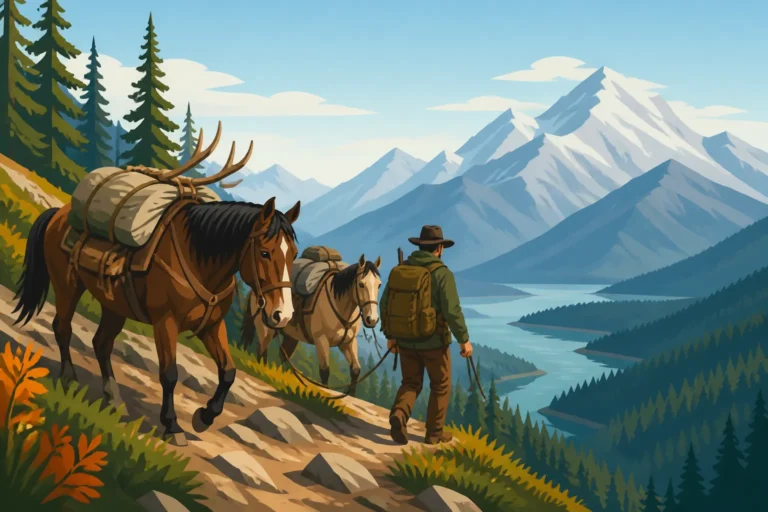
You've just dropped a beautiful animal in the vast, rugged expanses of British Columbia. That feeling of elation, the culmination of countless hours of scouting, preparation, and patient hunting, is truly unmatched. But then, as the adrenaline starts to fade, reality sets in: your hard-earned prize is lying in a steep, remote basin, deep in an avalanche chute, or perched precariously on a rock slide. Now the real work begins, and let's be honest, getting that meat out of steep BC country can feel like a hunt all its own, often more physically demanding than the stalk itself. This guide is here to walk you through the daunting task of successful meat extraction from the challenging British Columbia backcountry.
The Unforgiving Reality of British Columbia's Vertical Terrain
British Columbia is a land of incredible beauty, but also one of unparalleled ruggedness. Hunters here often find themselves in situations where a successful harvest means navigating incredibly steep slopes, dense timber, treacherous rock slides, and unpredictable weather. This isn't your flat prairie hunt; the elevation changes can be dramatic, the footing uncertain, and every step with a heavy load is a monumental effort.
Understanding the Specific Difficulties
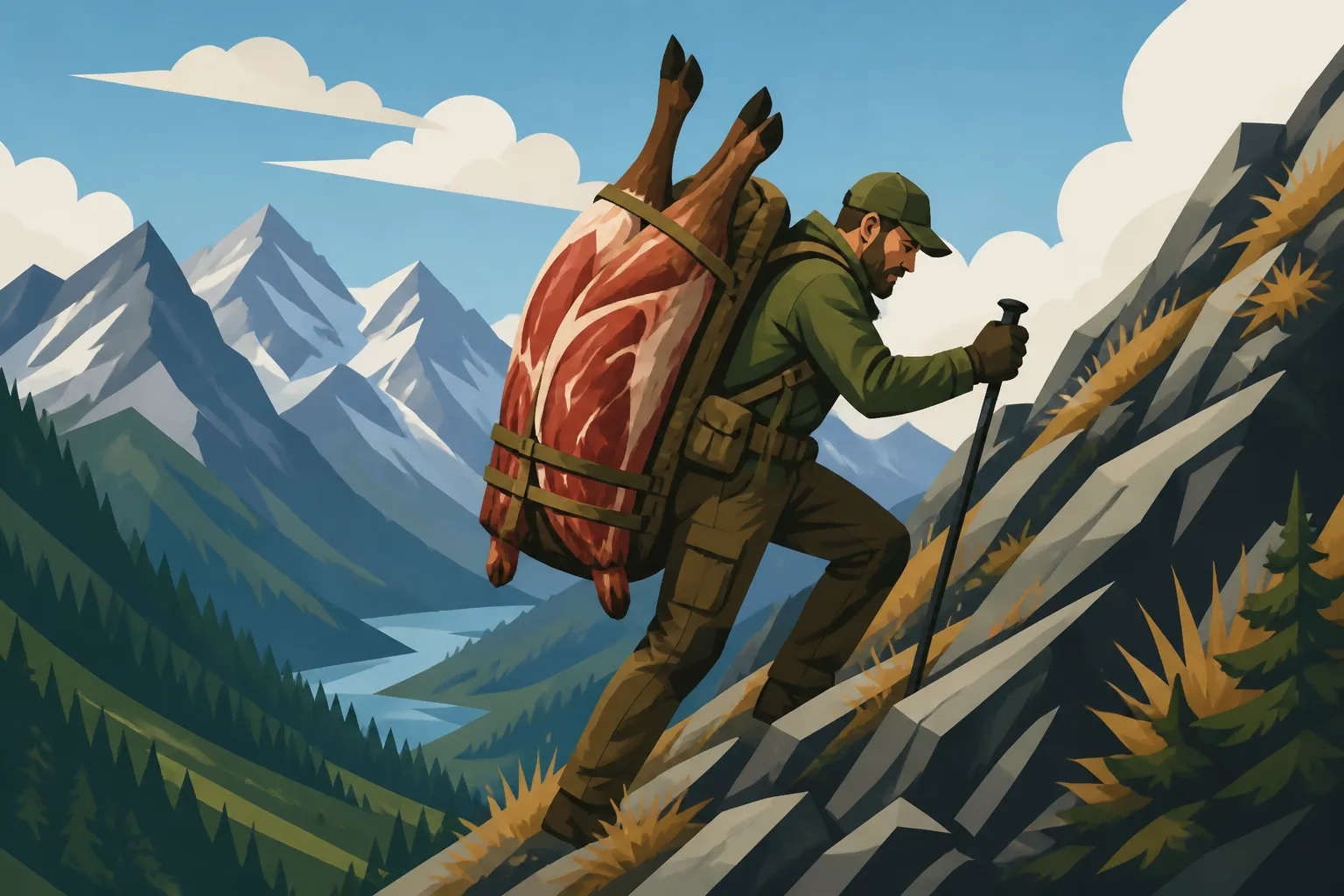
The steepness of the terrain in places like the Coast Range or the northern Rockies isn't just about going uphill; it's about coming downhill with a load, which can be even harder on your knees, ankles, and overall balance. Imagine trying to carry 80-100 pounds of boned-out moose meat down a 45-degree slope covered in loose scree. Every step is a calculated risk. The ground shifts, rocks tumble, and a simple slip can turn into a serious injury. This demanding landscape is a significant factor in how hunters approach Why Goat Hunting Is the Hardest Pack Out or even something as common as deer in high country.
Beyond the sheer grade, you're dealing with a mix of vegetation and ground conditions. Old-growth timber areas might have fallen logs and thick underbrush, making a straight path impossible. Alpine basins, while open, can present boulder fields that are brutal to traverse. And then there’s the weather; a sunny morning can turn into a torrential downpour or an unexpected snowfall, making already difficult terrain slick and dangerous in minutes. The challenges are real, and recognizing them is the first step in overcoming them.
The Impact on Hunter and Meat Care
This arduous extraction process has direct implications for both your physical well-being and the quality of the meat. A long, strenuous pack out in warm weather means the meat is exposed for longer, increasing the risk of spoilage if not properly managed. You need to be thinking about Meat Care in British Columbia's Warm Early Seasons from the moment the animal is down. The sheer physical toll can also lead to mistakes, fatigue, and even injuries if you're not prepared.
Many hunters underestimate the physical exertion required, ending up exhausted, dehydrated, and possibly in a dangerous situation. It’s not uncommon for hunters to have to leave meat overnight, returning the next day, which adds another layer of risk and time pressure. This isn't just about toughing it out; it's about smart, efficient, and safe strategies to ensure both you and your prize make it back to the truck or camp.
Strategic Planning: Preparing for the Pack Out Before the Shot
The truth is, getting meat out of steep BC country starts long before you pull the trigger. It begins with meticulous planning, scouting, and honest self-assessment. A successful extraction isn't an afterthought; it's an integral part of the hunt plan.
Pre-Scouting and Route Selection
When you're Scouting a British Columbia Management Unit Online, you should always be looking at terrain features with an eye toward extraction. Utilize satellite imagery and topographic maps to identify potential game trails, old logging roads, or even more gentle drainages that could serve as a less arduous route out. Look for natural benches, saddles, or areas where the slope lessens, even if it means a longer path.
Tools like GoHunt, with its detailed mapping layers, can be invaluable here. Before you even leave home, use it to mark potential retrieval corridors, emergency bailout routes, and even possible spike camp locations if an overnight stay becomes necessary. Having these options mentally mapped out, or better yet, marked on your GPS or phone app, can save critical time and energy when you're under pressure after a kill. Consider the elevation profile from your potential hunting grounds back to your vehicle or camp. Is there a river you can float down? A deactivated logging road you can walk out on? These details are crucial.
Choosing Between Bone-In and Boneless
This is one of the most critical decisions, and it often depends on the species, distance, weather, and legal requirements. For deer, it's often practical to debone, significantly reducing weight. For larger animals like moose or elk, especially if you're alone or far from the road, deboning is almost a necessity.
- Bone-in: Carrying bone-in quarters is heavier, but it keeps the meat cleaner and cooler longer, and it usually satisfies legal requirements for proof of sex or species (like a portion of the rib cage attached). However, the awkward shapes and extra weight can make traversing steep, brushy terrain a nightmare. You might use this method if you're relatively close to your vehicle and have a straight, manageable path.
- Boneless: Removing the meat from the bone drastically reduces weight and makes packing easier, as you can fit meat into game bags more efficiently. This is almost always the preferred method for longer, steeper pack outs. However, you must be careful to meet British Columbia's game regulations regarding Evidence of Sex Requirements. Typically, this means bringing out a specific part of the animal, like the head or a quarter with distinguishing features, depending on the species and regulation. Always double-check the current regulations synopsis.
Here’s a quick comparison to help you weigh your options:
| Feature | Bone-In Quarters | Boneless Meat Bags |
|---|---|---|
| Weight | Significantly heavier due to bone and hide | Lighter, as bone is removed |
| Volume/Shape | Awkward, bulky, difficult to pack evenly | More compact, fits better into frame packs |
| Meat Cooling | Stays cooler longer, especially with hide on | Cools faster, but susceptible to warming if packed too tightly |
| Legal Proof | Often satisfies proof of sex/species | Requires specific parts (e.g., head, antler) to satisfy regulations |
| Effort/Terrain | Very difficult in steep, brushy, or technical terrain | Easier to carry, better balance on challenging terrain |
| Hygiene | Generally cleaner as meat is less exposed | Requires careful bagging to prevent contamination |
Physical Conditioning and Teamwork
Let's be blunt: if you're not in good physical shape, BC's steep country will chew you up and spit you out. Training year-round, focusing on leg strength, core stability, and cardio, is non-negotiable for serious backcountry hunters. Hiking with a weighted pack, doing squats, lunges, and step-ups will pay dividends when you're 5 miles from the truck with 100 pounds on your back.
Equally important, especially for larger game, is teamwork. Hunting with a partner or a group significantly eases the burden. You can share loads, take turns carrying the heaviest pack, and provide mutual support in tricky spots. Before the hunt, discuss roles and responsibilities for the pack out. Who's good at butchering? Who's the strongest packer? Who's the navigator? A well-coordinated team is far more efficient and safer than a lone hunter battling the mountain alone. This is particularly true when you're far from any road, needing to consider Getting a Moose Out on a British Columbia River or other remote extraction methods.
Essential Gear and Techniques for a Successful Meat Extraction
Once the animal is down, your gear and technique become paramount. Having the right tools and knowing how to use them effectively can transform a grueling ordeal into a manageable challenge.
Specialized Packing Systems
Forget your daypack; you need a serious frame pack built for heavy loads. These packs are designed to transfer weight efficiently to your hips, taking pressure off your shoulders. Brands like Mystery Ranch, Kifaru, and Stone Glacier are popular among backcountry hunters for their robust external frames and comfortable suspension systems. Look for a pack with a strong load shelf that can securely hold quarters or deboned meat in game bags.
When loading your pack, distribute the weight as evenly as possible and keep the heaviest items close to your back and slightly above your hips. This helps maintain your center of gravity and reduces sway, which is critical when navigating uneven ground. For larger animals, sometimes the best approach is to make multiple trips, even if it means caching meat securely in game bags to deter scavengers. This is often far safer than trying to carry an unsafe amount of weight in one go. Learning about Packing Meat With a Frame Pack can make all the difference.
The Right Cutting Tools and Game Bags
A sharp, reliable knife is your best friend when field dressing and deboning. Consider a replaceable blade knife for efficiency and sharpness, or a fixed blade that holds an edge well. Always carry a sharpener or spare blades. Bring sturdy game bags – not canvas sacks, but breathable, lightweight game bags that protect the meat from flies and dirt while allowing it to cool. Synthetic game bags are often preferred as they are lighter and dry faster than traditional cotton. Having several sizes is ideal, from smaller bags for backstraps and tenderloins to larger ones for quarters.
In steep country, clean butchering is even more critical. You want to get the meat off the bone and into bags quickly and cleanly to promote cooling and minimize contamination. Once bagged, the meat can be strategically hung in the shade, if possible, allowing air circulation to help with the cooling process, a vital step to prevent spoilage, especially if you're forced to leave it overnight.
Utilizing Nature's Aids and Mechanical Advantages
Sometimes, the terrain itself can offer advantages. If you're on a slope, gravity can be your friend. For smaller animals like deer, you might be able to slide the animal a short distance down a relatively clear, steep slope to a more accessible spot. For larger animals, you could create a makeshift sled with a tarp or a heavy-duty game bag to drag portions downhill over snow or slick vegetation, if conditions allow.
For longer, less steep but still challenging distances, a sturdy game cart or even a wheelbarrow can be a game-changer once you hit more forgiving ground or an old road. However, these are often impractical in true steep, rough BC backcountry. In some very remote or extremely rugged areas, some hunters will consider calling in a helicopter for a sling load, though this is a very expensive option usually reserved for truly exceptional circumstances or for those with deep pockets on a guided hunt. For the average resident hunter, it's about brute force and smart planning.
Prioritizing Safety in Challenging Terrain
The thrill of the hunt can often overshadow the inherent dangers of the backcountry, especially when you're tired and carrying a heavy load. In British Columbia's steep country, safety isn't just a recommendation; it's a necessity.
Navigation and Communication
Getting lost is a serious risk, particularly when visibility drops, or you're pushing through unfamiliar terrain in the dark. Always carry a reliable GPS device or a smartphone with offline mapping capabilities (like the GoHunt app or Gaia GPS) and spare battery packs. Know how to use a compass and a physical map as a backup. Mark your kill site and your vehicle's location on your map before you start packing out.
Cell service is often non-existent in remote BC areas. A satellite communication device like an InReach or a Zoleo is not a luxury; it's an essential piece of safety gear for Emergency Planning in British Columbia's Backcountry. These devices allow you to send SOS messages, communicate with loved ones, and provide your location even when you're miles from the nearest cell tower. A simple twisted ankle or hypothermia can become life-threatening without the ability to call for help.
Wildlife Encounters and Terrain Hazards
Harvesting an animal means there's fresh blood and scent in the area, which can attract predators. British Columbia is home to a healthy population of grizzlies and black bears, as well as wolves. Always be alert, especially when returning to a cached animal or navigating through dense brush. Carry bear spray on your hip, readily accessible, and know how to use it. A firearm is also a wise precaution if you are comfortable and legally permitted to carry one for defense. Understanding Bear Safety While Hunting in British Columbia is critical for every hunter.
The terrain itself presents numerous hazards:
- Loose Rock and Scree: Step carefully, test your footing, and avoid kicking rocks down on companions below.
- Steep Cliffs and Drop-offs: Never traverse an unknown cliff band, especially in low light. When in doubt, go around, even if it's longer.
- Fallen Logs and Blowdowns: Step over, not on, wet or rotten logs. They can be slippery or give way.
- Water Crossings: Be wary of swift currents. If a crossing looks too dangerous, find another route or wait for water levels to drop.
Proper Footwear and Trekking Poles
Your footwear is absolutely crucial. Invest in high-quality, waterproof, sturdy hiking boots with excellent ankle support and aggressive tread. Blisters or a rolled ankle can quickly end your hunt and turn a pack out into a rescue mission. Make sure your boots are broken in long before your hunt.
Trekking poles are incredibly underrated for steep country. They provide two extra points of contact, enhancing your balance significantly, especially when carrying a heavy load. They also reduce strain on your knees, particularly on descents. On steep ascents, they help you push off, saving energy. Don't leave home without them when tackling British Columbia's vertical landscape.
Remember, the goal is not just to get the meat out, but to get yourself out safely. No animal is worth a serious injury or worse. Make smart decisions, trust your instincts, and prioritize your well-being above all else.
Disclaimer
The information provided in this guide is for general informational purposes only and does not constitute professional advice. Hunting regulations in British Columbia can change, and it is the responsibility of each hunter to consult the most current British Columbia Hunting and Trapping Synopsis and all applicable federal and provincial laws before heading afield. Always prioritize safety, ethical hunting practices, and respect for wildlife and the environment.