What a British Columbia Bull Moose Weighs
There's nothing quite like the sight of a massive bull moose emerging from a willow thicket or silhouetted against a ridge line in British Columbia. For hunters, that immediate awe often gives way to a practical, albeit exciting, question: "Just how big is that thing?" Estimating the live weight of such a colossal animal in the field is incredibly difficult, and the sheer scale of a British Columbia bull moose can be truly mind-boggling. This guide will dive deep into the fascinating reality of moose weights in our province, breaking down the factors that contribute to their impressive size and the logistical considerations once you've successfully harvested one.
The Astonishing Scale of British Columbia Bull Moose
Moose are the largest members of the deer family, and the ones found roaming the vast wilderness of British Columbia are no exception. They are truly magnificent animals, built for the challenging landscapes and often deep snow of our northern and interior regions. When you're standing next to a mature bull, the sheer bulk of bone and muscle is overwhelming, and it's easy to see why they command so much respect.
Average Weights and Their Variations
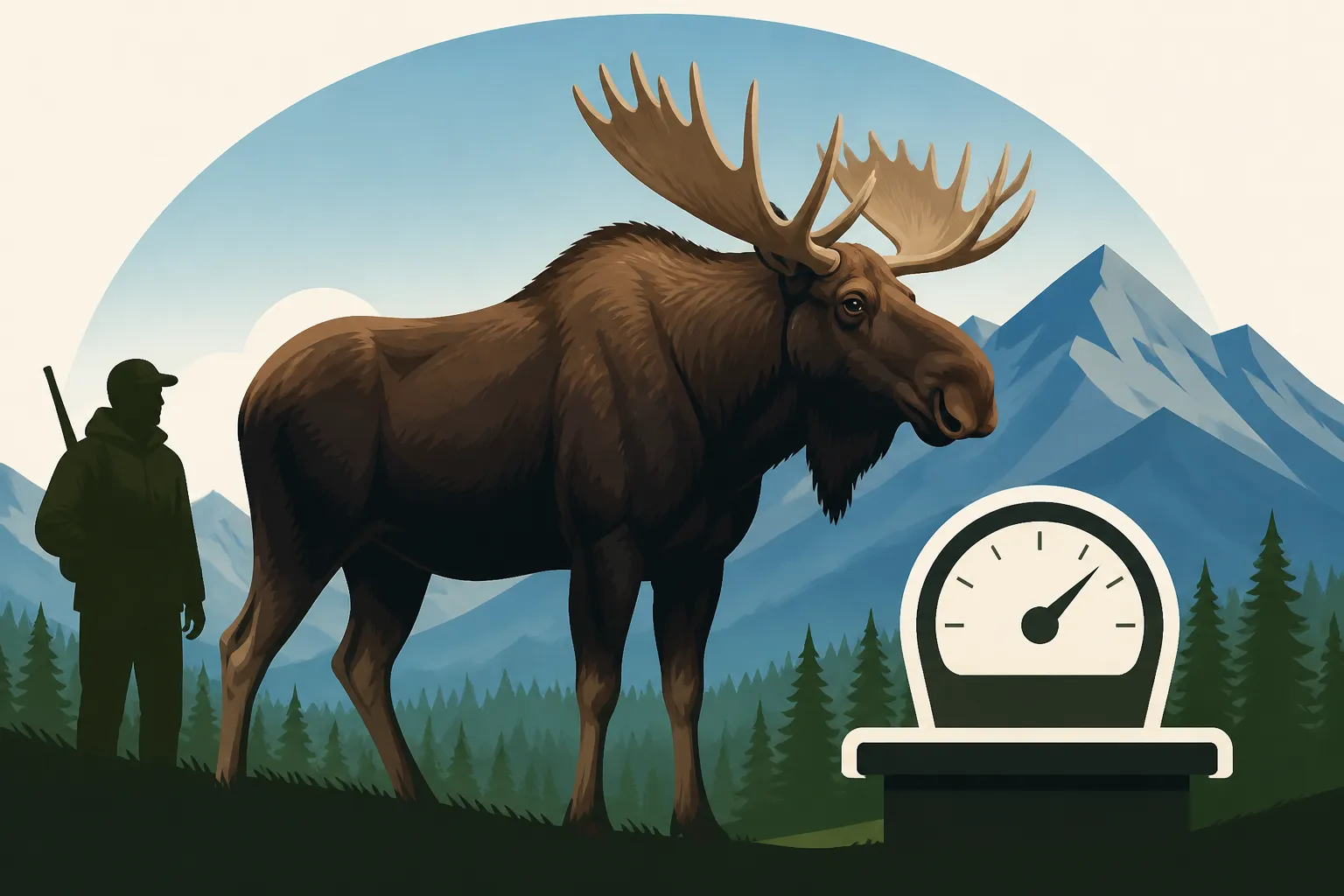
When we talk about an "average" bull moose in British Columbia, it's important to remember that this can be a pretty broad spectrum. Generally speaking, a mature bull moose in BC will tip the scales somewhere between 800 to 1,200 pounds (approximately 360 to 545 kg) live weight. However, it's not uncommon to encounter bulls that push well beyond this, sometimes reaching upwards of 1,400 to 1,600 pounds (635 to 725 kg) or even more in prime habitat with good genetics.
These averages can vary significantly depending on where you are in the province. Bulls from the northern reaches, like those found in the Omineca or Peace regions, often tend to be larger and heavier than those in the more southern interior areas. This difference can be attributed to factors like forage quality, growing seasons, and population densities. Hunters often dream of connecting with one of these truly enormous northern bulls, the kind that make your knees tremble.
For hunters, understanding these weight ranges goes beyond just bragging rights. It directly impacts your hunt plan, especially when it comes to the monumental task of Packing Out of British Columbia's Steep Country. Knowing that you might be dealing with upwards of half a ton of animal helps you prepare with the right gear, a solid plan, and perhaps a few extra hands. It also informs your expectations for the amount of usable meat you'll take home, which, for many, is the primary motivation for hunting such an incredible animal.
Factors Influencing a Bull's Size
The size and weight of a British Columbia bull moose aren't just random; they're a complex interplay of several crucial environmental and biological factors. Understanding these can help you anticipate where you might find larger animals and appreciate the effort that goes into their growth.
Age: Like most big game animals, moose hit their prime in terms of body weight and antler development between 6 to 10 years of age. A young bull, say 2 or 3 years old, will be considerably smaller than a fully mature animal. Once they get past 10 or 12, their body weight might start to decline slightly as resources are increasingly diverted to antler growth, or their teeth begin to wear, making feeding less efficient. A really old bull, while perhaps still impressive, might actually be lighter than one in its physical prime.
Genetics and Subspecies: While British Columbia primarily hosts the Shiras moose subspecies (sometimes referred to as Northwestern moose in our region), there can be genetic variations even within this group that lead to differences in overall body size. The robust genetic lineage of moose in certain regions contributes to consistently larger animals, generation after generation. This is why hunters often target specific areas known for producing bigger bulls, doing their research with tools like GoHunt to understand historical harvest data and habitat.
Nutrition and Habitat Quality: This is arguably the most significant factor. Moose are browsers, meaning they primarily feed on the leaves, twigs, and bark of trees and shrubs. Areas with abundant, high-quality forage, especially willows, aspen, and aquatic vegetation, will produce larger, healthier animals. Think about the rich, regenerating growth found in a recent burn or a clearcut edge. Habitats that have seen recent wildfires, for example, can become incredibly productive moose country for several years following the event, providing a bounty of palatable new growth. This is why you often find big bulls Hunting Moose on a Cutblock Edge or in areas recovering from natural disturbances.
Season and Time of Year: A bull moose's weight can fluctuate throughout the year. During the summer months, they are gorging on nutrient-rich vegetation, rapidly putting on weight and building fat reserves. By the time the When British Columbia's Moose Rut Peaks rolls around in late September and October, bulls are at their heaviest, loaded with fat. However, the rut is also incredibly taxing. Bulls expend massive amounts of energy fighting, breeding, and not eating much. By late fall or early winter, after the rut, a bull can easily lose hundreds of pounds. This is a crucial consideration for late-season hunters; a bull taken in November might be considerably lighter than one taken in September.
Estimating Weight in the Field: A Hunter's Challenge
One of the biggest struggles for any hunter is trying to accurately judge the size of an animal in its natural environment. With moose, this challenge is amplified by their sheer scale, often vast distances, and the optical illusions created by dense timber or open country. It’s rarely as simple as it looks in a photograph.
Visual Cues and Common Misconceptions
When you're trying to size up a bull moose, you're looking for several key indicators of body mass. A truly large bull will have a deep chest, almost appearing to drag the ground between its forelegs. Its shoulders will be heavy and blocky, and during the rut, its neck will be visibly thickened and swollen, a sign of muscle mass built for fighting. The body itself will look solid and long, not just tall. Antler size, while impressive, doesn't always directly correlate with body weight; a younger bull with a wide but thin rack might still be much smaller in body than an older, heavier bull with less impressive antlers.
It's easy to be fooled by the "moose illusion." The vastness of British Columbia's landscapes can make animals appear smaller than they are, especially when viewed from a distance or across a wide valley. Conversely, seeing a moose up close in dense timber can make it seem even more colossal, leading to overestimation. This is why experienced hunters stress the importance of comparing the animal's body to known objects, if possible, or looking for specific anatomical features rather than just a general impression. Using high-quality optics is paramount to discerning these details, whether you are Glassing an Interior Hillside for Mule Deer or a willow flat for moose.
For many, the real challenge begins after the shot. What looked like a manageable animal through the scope suddenly transforms into an immovable mountain of muscle and bone once you're standing over it. This is why planning for the pack out is just as critical as the hunt itself. Apps like GoHunt can be invaluable not just for pre-scouting habitat, but also for understanding the topography and potential extraction routes, which directly ties into how you’ll handle a large animal.
Practical Considerations for Meat and Logistics
Once a British Columbia bull moose is down, the immediate concern shifts from estimating live weight to managing the actual weight that needs to be moved and processed. This is where the true scale of the animal hits home.
Field Dressing Weight vs. Live Weight: A commonly cited rule of thumb is that the dressed weight (eviscerated, with guts removed) of a moose is roughly 70-75% of its live weight. So, a 1,000-pound live weight bull might yield 700-750 pounds dressed. This is still an enormous amount of weight to handle, especially if you're deep in the backcountry. Beyond dressing, many hunters quarter their moose in the field to make it manageable for transport. This means separating the animal into four major quarters, backstraps, tenderloins, neck meat, rib meat, and sometimes the brisket. Each quarter alone can weigh well over 100 pounds, requiring significant effort to lift and carry.
The Sheer Amount of Meat: From that 700-750 pounds of dressed weight, you can realistically expect to get around 400-500 pounds of usable, boneless meat. This is enough to fill a large freezer and feed a family for a year or more. It’s a substantial return for your effort and speaks volumes about the value of a moose harvest. This abundance of protein is a core reason many hunters pursue moose, and it underscores the ethical responsibility to handle the meat properly to prevent spoilage. Proper Meat Care in British Columbia's Warm Early Seasons is absolutely vital.
Packing Out Challenges: Getting a moose out of the backcountry is an epic undertaking. Whether you're miles from the nearest road, traversing steep mountainsides, or trying to manage it from a boat on a river, the logistics are immense. Hunters often utilize pack frames, game bags, and sometimes even horses for Horseback Hunting British Columbia's Backcountry. For those hunting along major river systems, float hunting or using a jet boat for Jet Boat Access on British Columbia Rivers can be a game-changer for extraction. Even if you're lucky enough to be able to access the animal with a truck on a forest service road, simply loading the massive quarters can be a back-breaking task.
Beyond the Scale: What a Moose Harvest Truly Means
While the immense weight of a British Columbia bull moose is a tangible measure, the true value and significance of a successful moose hunt extend far beyond the numbers on a scale. It encompasses the sustenance it provides, the ethical responsibilities it demands, and the profound experience it represents.
Meat Yield and Processing
The promise of a full freezer is a powerful motivator for many British Columbia hunters, and a moose delivers on that promise like few other animals. The sheer volume of high-quality, organic protein is unparalleled. Imagine hundreds of pounds of roasts, steaks, ground meat, and stew cuts, providing nourishing meals for months to come. This incredible yield also translates into significant savings on grocery bills, making the effort of a moose hunt an economic as well as a subsistence benefit.
Many hunters choose to process their moose themselves, turning the animal into a true farm-to-table experience. This requires specialized tools, a clean workspace, and a good understanding of butchery. For those who prefer professional help, there are butchers and meat processors throughout the province who specialize in wild game. These services, while an added cost, can save a tremendous amount of time and ensure the meat is handled and packaged expertly. Always plan this out in advance, especially if you're in a remote area, as not all small towns will have a dedicated wild game processor.
When you're dealing with such a large quantity of meat, it's also important to think about storage. A dedicated deep freezer is almost a necessity. Considerations for Quartering a Moose in Grizzly Country are not just about safety, but also about expediency to get the meat cooled and protected from scavengers as quickly as possible. The goal is to get that meat cooled down rapidly to preserve its quality, which can be a real challenge with a huge carcass in warmer early season conditions.
The Ethical Harvest and Respect for the Animal
Taking a British Columbia bull moose is a serious undertaking that comes with a profound ethical responsibility. The animal's size, its powerful presence in the ecosystem, and the sheer amount of sustenance it provides demand utmost respect. This respect is demonstrated through a clean, ethical kill, and meticulous care of the meat and hide post-harvest. Wasting game meat is not only frowned upon but illegal, emphasizing the importance of proper planning and execution for removal and storage.
The physical exertion involved in handling a moose, from field dressing to the arduous pack out, creates a deep connection to the animal and the landscape. It's a humbling experience that reinforces the hunter's role in the food chain and the immense generosity of nature. This is also why having a robust emergency plan, especially when Hunting Moose Off a British Columbia Forest Road in remote areas, is crucial. Unexpected challenges can arise quickly when dealing with an animal of this size in rugged terrain.
Finally, every moose harvested in British Columbia requires mandatory reporting. This critical step provides valuable data to wildlife biologists, helping them monitor populations and set future hunting regulations. When you fill your moose tag, you have a set amount of time to submit a harvest report, detailing where and when the animal was taken. This is part of the accountability that comes with participating in British Columbia's hunting heritage and contributes to the sustainable management of this incredible resource. Understanding the rules for Mandatory Reporting for Moose Licences is crucial for all hunters in the province.
| Category | Average Bull Moose (Live Weight) | Large Bull Moose (Live Weight) | Average Dressed Weight (approx. 70-75% live) | Usable Boneless Meat Yield (approx. 40-50% live) |
|---|---|---|---|---|
| Weight Range | 800 – 1,200 lbs | 1,200 – 1,600+ lbs | 560 – 900 lbs | 320 – 800 lbs |
| Single Quarter | 100 – 150 lbs | 150 – 200+ lbs | N/A (component of dressed weight) | N/A |
| Factors Affecting | Age, genetics, habitat, season | Optimal conditions, prime age | Proper field dressing, minimal waste | Skillful butchery, trim preferences |
Remember, these are approximations. The actual weight will vary significantly based on the individual animal, its age, health, and the specific region it comes from. The important takeaway is that even an "average" bull moose is a truly enormous animal, requiring considerable effort and respect once harvested.
Disclaimer
This article is for general informational purposes only and does not constitute professional advice. Laws, prices and regulations vary by location and change over time. Consult a qualified professional for guidance on your specific situation.