What Information a Harvest Report Needs
Alright, let's talk about something that often feels like a chore after the excitement of a successful hunt: the harvest report. It’s easy to get caught up in the relief and satisfaction of a filled tag, only to realize you’re not entirely sure what information you need to record for the provincial reporting system. This can lead to frustration, scrambling for details, or even submitting an incomplete report, which can have real consequences. This guide is here to walk you through exactly what information a British Columbia hunter needs for a successful harvest report, ensuring you meet your obligations and contribute positively to wildlife management.
Why Harvest Reporting Matters Beyond Just Compliance
You might think of a harvest report as just another piece of paperwork, a box to check off after a successful hunt. But in British Columbia, it's so much more than that. It's a critical tool for wildlife management and plays a huge role in ensuring the long-term health of our game populations. Failing to report, or submitting inaccurate information, can throw a wrench into carefully planned conservation strategies.
Contributing to Wildlife Management
Every piece of data you submit on your harvest report goes into a much larger provincial database. Wildlife biologists and managers use this data to understand population trends, harvest rates, and the overall health of specific game species within different management units. For instance, if hunters consistently report a high number of younger animals or a sudden drop in mature bucks in a particular area, it signals a need for closer examination. This information directly influences decisions about future seasons, bag limits, and specific regulations like British Columbia's Four-Point Antler Restriction which are put in place to manage herd demographics. Without accurate, comprehensive reporting from hunters, these professionals are essentially flying blind. You are a direct contributor to the future of hunting in this province every time you file a report.
Ensuring Fair Chase and Accountability
Harvest reporting also plays a role in upholding the principles of fair chase and hunter accountability. By documenting details of your hunt – where, when, what, and how – you're providing transparency that reinforces ethical hunting practices. It helps prevent over-harvesting, supports enforcement efforts against poaching, and ensures that everyone is playing by the same rules. Think about it: if there were no reporting requirements, it would be much harder to track illegal activities or ensure that hunters are staying within their prescribed limits. This system helps maintain public trust in hunting as a sustainable and well-managed activity, which is vital for its continued existence. It's not just about what you took, but also about demonstrating that you took it legally and ethically.
The Essential Information Every Hunter Needs to Record
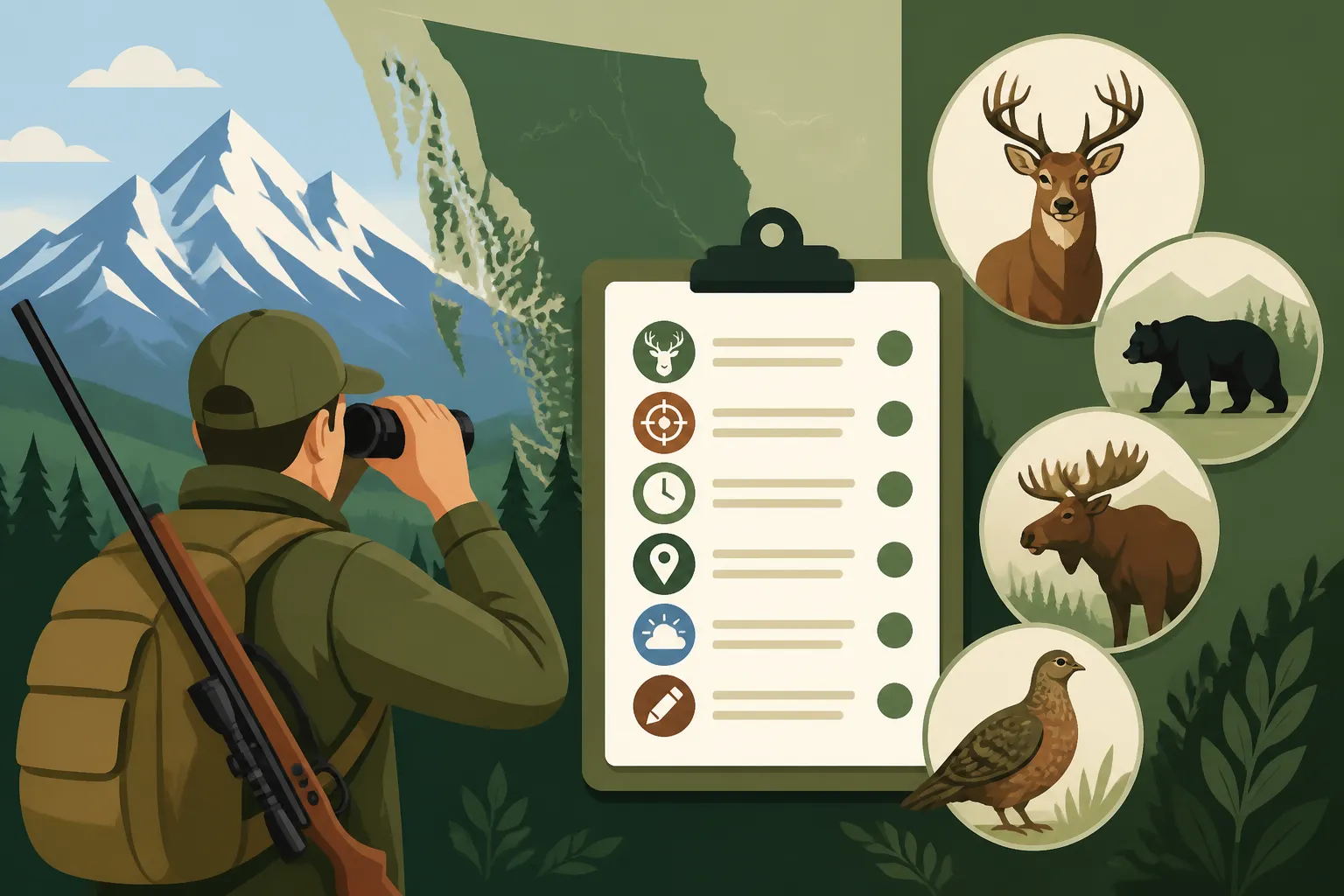
When that moment of success arrives, it's easy for details to blur in the excitement. This is why having a mental checklist, or even better, a physical one, is crucial. You’ll need more than just the species you harvested. Here’s a breakdown of the critical information you absolutely must gather in the field.
Personal and Licence Details
First and foremost, the system needs to know who you are. This might seem obvious, but ensuring your personal information is accurate and linked to your current hunting credentials is the starting point.
- Your Full Name and Contact Information: This ensures the report is properly attributed to you.
- Your British Columbia FWID (Fish, Wildlife, and Identity) Number: This unique identifier links all your hunting activities, licences, and tags to your profile. If you're unsure about this, revisiting Getting a British Columbia FWID is a good idea.
- Your Valid British Columbia Hunting Licence Number: You can't hunt without one, and its number is essential for the report. Remember to check When British Columbia Licences Expire to ensure you're always up-to-date.
- Species Licence and Tag Number: For each species you harvest (e.g., deer, elk, moose), you'll have a specific species licence with a unique tag number. You must record the number of the tag you actually applied to the animal.
Harvest Specifics: Date, Time, Location
These details provide the temporal and spatial context for your harvest, proving it occurred within legal seasons and areas.
- Date of Kill: The exact day you harvested the animal. This is crucial for verifying that the harvest occurred within the legal British Columbia Big Game Season Dates for that species and management unit.
- Time of Kill: While not always mandatory for every report, knowing the approximate time can be useful for your own records and can be requested in certain situations. It also ensures you were hunting within British Columbia Shooting Hours.
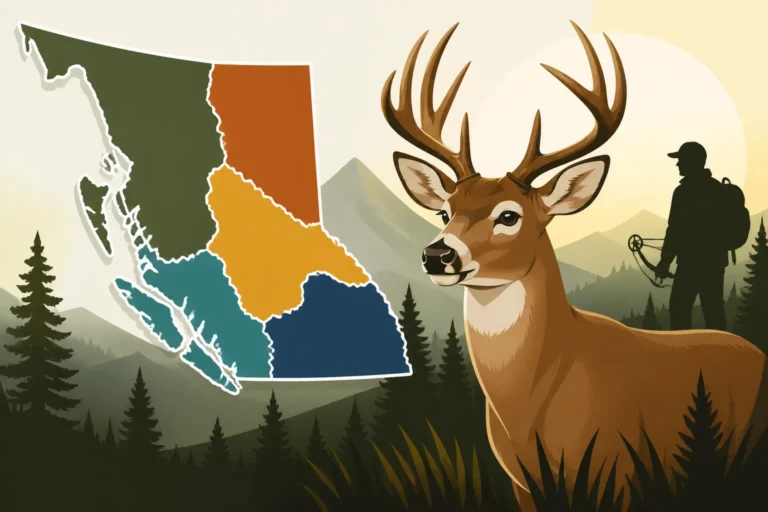
- Management Unit (MU): This is one of the most vital pieces of information. British Columbia is divided into hundreds of numbered management units. You must know the specific MU where you harvested the animal. Accurately identifying the correct MU is paramount, as regulations and season dates can vary significantly from one unit to the next. You can often clarify this by
Reading a British Columbia MU Map. - Specific Location of Kill (Latitude/Longitude or Detailed Description): Many reporting systems now ask for more precise location data than just the MU. A GPS coordinate (latitude and longitude) is ideal. If you don't have GPS, a detailed description, noting landmarks, nearby roads, or prominent geographical features, can be accepted. For planning, tools like GoHunt can be invaluable for pinpointing your location in the field and marking it instantly.
Animal Details: Species, Sex, Age, Antler Configuration
This information provides critical biological data for wildlife managers.
- Species Harvested: Clearly state the species (e.g., Mule Deer, Moose, Black Bear).
- Sex of Animal: Was it a male (buck, bull, boar) or a female (doe, cow, sow)? This is often a key regulatory point.
- Estimated Age (if applicable): For some species, knowing if it was a fawn, calf, yearling, or mature adult can be useful for population models. This is typically an estimate based on physical characteristics.
- Antler Configuration (for antlered game): This is extremely important, especially for species with antler restrictions like British Columbia's Four-Point Antler Restriction for mule deer or specific moose regulations. You’ll need to report the number of points on each antler (e.g., 3×4, 5×5). Ensure you understand how to correctly count points according to BC regulations (a point must be at least one inch long).
Weapon Used and Hunting Method
These details help understand hunting pressure and methods across the province.
- Type of Weapon: Did you use a rifle, shotgun, muzzleloader, or bow? This can influence data on hunter success rates for different weapon types.
- Hunting Method: How did you achieve the harvest? Examples include still-hunting, stand hunting, spot-and-stalk, or calling. This helps wildlife managers understand hunting effort and effectiveness in different areas.
Navigating the British Columbia Harvest Reporting System
Once you've gathered all your information, it's time to submit your report. British Columbia has a streamlined online system, but knowing the process and deadlines is key.
Online Reporting Through the BC Hunting Portal
The primary method for submitting your harvest report is through the BC Hunting Online Service. This portal is designed to be user-friendly, but you'll need your FWID and password to log in.
- Log In: Access the BC Hunting Online Service portal.
- Navigate to Reporting: Find the "Harvest Reporting" or similar section.
- Select Your Species: Choose the species you harvested from your available tags.
- Input Data: Carefully enter all the essential information you recorded in the field. This is where having your notes or a precise GoHunt entry makes the process smooth and accurate. Double-check all numbers, dates, and locations.
- Review and Submit: Before finalizing, review every detail. An incorrect MU or antler count can lead to issues.
Remember, this system is generally available 24/7, so you can submit your report from anywhere with internet access. However, timely submission is non-negotiable.
Understanding the Mandatory Reporting Deadlines
British Columbia has strict deadlines for harvest reporting. Missing these deadlines can result in fines or other penalties, including losing eligibility for future hunts.
- Thirty-Day Reporting Deadline: For most big game species, you are required to submit your harvest report within 30 days of the date of kill, or by the end of the season for that specific tag, whichever comes first. This means if you harvest an animal on September 15th, you generally have until October 15th to report it. Missing The Thirty Day Reporting Deadline is a common mistake that can be easily avoided with good record-keeping.
- Mandatory Reporting for Moose Licences: Moose hunters have particularly stringent reporting requirements, often needing to submit reports even if they don't harvest an animal. If you held a moose tag, you are generally obligated to report on its status. This is crucial for precise population management, especially given past concerns about Why Moose Numbers Fell in the Interior.
- Consequences of Late or Incomplete Reports: It's not just about the principle; there are actual consequences. What Happens If You Report Late can range from administrative fees to being ineligible for future Limited Entry Hunting draws. It's simply not worth the risk.
Using Tools Like GoHunt for Pre-Trip Planning and Recording
In today's digital age, hunters have access to incredible tools that can simplify harvest reporting and improve overall hunting success. GoHunt, for example, offers mapping and data features that are perfect for this.
- Pre-Trip Planning: Before you even leave home, you can use GoHunt to scout potential hunting areas, identify British Columbia's Management Units and Regions, and understand the specific regulations for those zones. You can mark waypoints for potential camp spots or areas of interest.
- In-Field Data Capture: When you’re out hunting, especially in remote areas where cell service is spotty, GoHunt allows you to drop pins and record crucial details directly onto your map. This means you can instantly log the exact GPS coordinates, date, and even attach notes about the animal's characteristics or the weapon used, right at the site of the harvest. This immediate record-keeping eliminates the need to remember every detail later when you're tired and heading home.
- Streamlined Reporting Preparation: By having all this information meticulously organized in GoHunt, when it comes time to file your official harvest report on the BC Hunting Portal, you'll have everything at your fingertips. No more guessing, no more trying to recall details from memory. This accuracy is invaluable.
Common Pitfalls and How to Avoid Them
Even experienced hunters can sometimes trip up when it comes to harvest reporting. Being aware of the most common mistakes can help you avoid them.
Forgetting Critical Details in the Field
The biggest hurdle for many hunters is accurately remembering all the required information after the fact. The excitement, the adrenaline, and the physical exertion of packing out an animal can make even simple details fuzzy.
- Solution: Develop a routine. Carry a small waterproof notebook and pen, or use a reliable app like GoHunt, to record information as soon as the animal is harvested and tagged. Take photos of the animal and its surroundings, which can serve as visual aids for recalling specific features or location details. Don't rely on memory alone, especially for precise measurements or antler counts. For instance, knowing What Information a Harvest Report Needs immediately after tagging ensures you capture everything accurately.
Misidentifying Management Units
British Columbia's management units can sometimes have complex boundaries, especially where they meet other units or follow natural features. A slight miscalculation can put you in the wrong MU, invalidating your report.
- Solution: Thoroughly study your hunting area maps before you go. Utilize digital mapping tools that clearly show MU boundaries. Services like GoHunt are excellent for this, allowing you to confirm your exact location relative to MU lines. Cross-reference with the official BC hunting regulations synopsis and Scouting a British Columbia Management Unit Online. If you're near a boundary, always verify your exact position with a GPS device.
Submitting Late or Incomplete Reports
Life happens, and sometimes hunters forget to submit their reports within The Thirty Day Reporting Deadline, or they rush and leave out crucial data. Both can lead to issues.
- Solution: Set reminders on your phone or calendar for your reporting deadlines. Make it a priority to submit your report as soon as possible after returning from your hunt, ideally within a few days, when all the details are still fresh. Before hitting "submit" on the BC Hunting Portal, take a moment to meticulously review every single field to ensure accuracy and completeness. Remember What Happens If You Report Late and let that be a strong motivator to get it done right and on time.
By understanding what's required, being prepared with the right tools, and taking the time to accurately document your harvest, you're not just fulfilling a legal obligation; you're actively participating in the vital conservation efforts that keep British Columbia's hunting heritage alive and thriving.
Disclaimer
The information provided in this guide is for general informational purposes only and does not constitute legal advice. Hunting regulations in British Columbia can change, and it is the individual hunter's responsibility to consult the most current British Columbia Hunting and Trapping Regulations Synopsis and applicable provincial and federal laws before hunting. Always verify specific rules and deadlines with official government sources.