Hunting Roosevelt Elk in British Columbia Old Growth
Hunting Roosevelt elk in the dense, often relentless old-growth forests of British Columbia's coast is an entirely different beast than chasing elk in wide-open Western landscapes. Many hunters, accustomed to glassing distant hillsides, find themselves utterly overwhelmed by the thick canopy, impenetrable undergrowth, and constant dampness. This guide will delve deep into the unique challenges and rewarding strategies for successfully pursuing these majestic animals in their ancient, moss-draped domains.
Understanding Roosevelt Elk in British Columbia's Old Growth
Roosevelt elk are truly creatures of the rainforest, adapted to the wet, rugged terrain of coastal British Columbia. Their lives revolve around the towering trees, deep canyons, and lush understory that define old-growth ecosystems. Understanding their habits and the specific characteristics of this unique habitat is the first step toward a successful hunt.
Habitat Characteristics and Elk Behavior
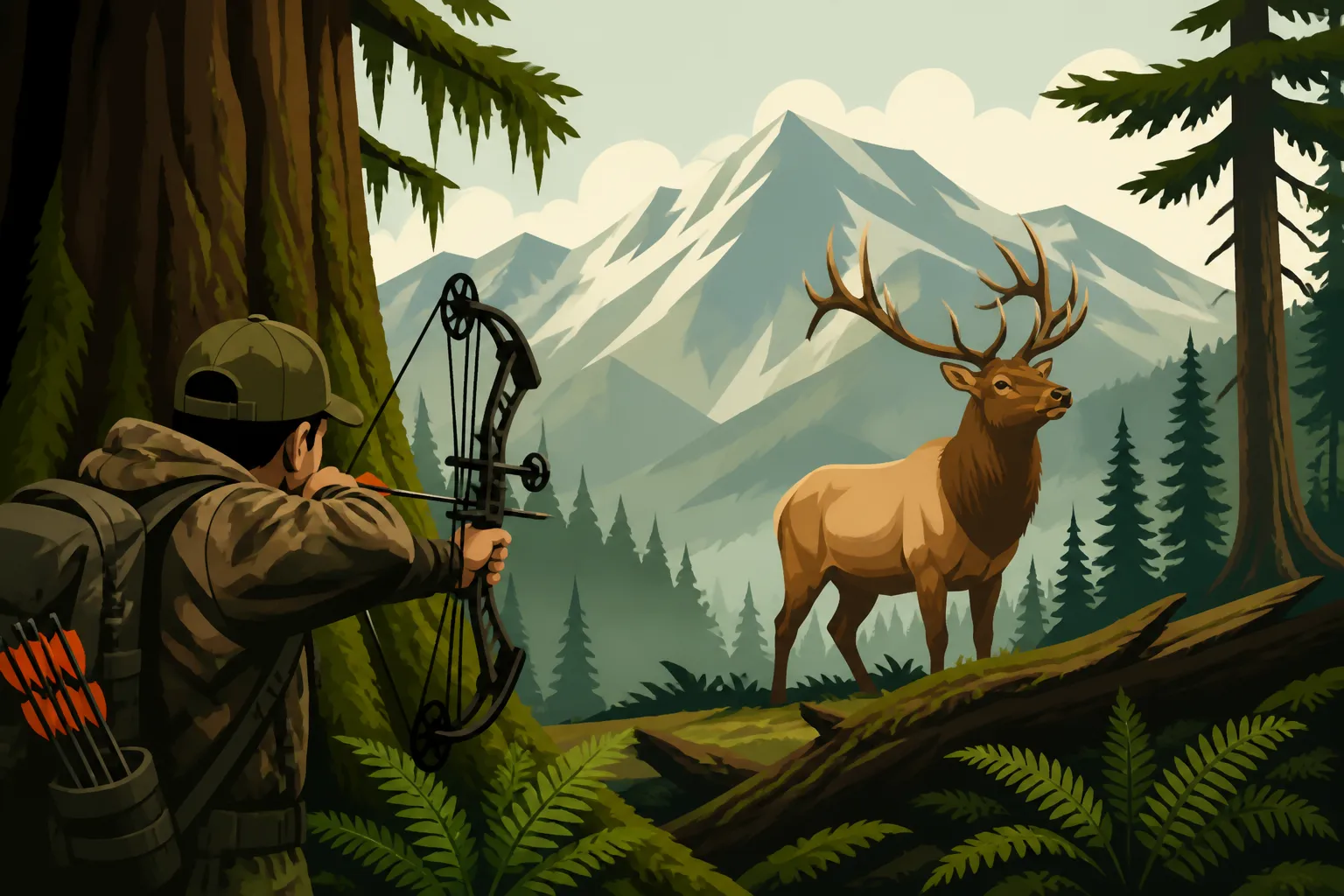
British Columbia's old-growth forests, particularly on Vancouver Island and the mainland coast, are characterized by colossal trees like Western Red Cedar, Sitka Spruce, and Douglas Fir that have stood for centuries. The canopy is often so thick it creates a perpetual twilight on the forest floor, leading to a unique understory of ferns, mosses, salal, and devil's club. Roosevelt elk thrive in this environment because it offers unparalleled security and abundant forage. They'll utilize the dense cover for bedding, especially during the day, and move into more open areas like recent cutblocks, natural meadows, or estuaries to feed, often under the cover of darkness or in low light conditions.
Unlike their Rocky Mountain cousins who might travel vast distances across open plains, Roosevelt elk in old growth tend to have smaller home ranges. They stick to familiar drainages and systems of interconnected cover, making their movements predictable once you understand the local topography. They're also incredibly sensitive to human presence, relying on their keen senses of smell and hearing, which are amplified in the quiet, damp forest. You won't find them standing out in the open for long; they are masters of blending into the shadows and slipping away unnoticed. This intimate connection to their environment makes Hunting Roosevelt Elk in British Columbia Old Growth a truly immersive experience.
Unique Challenges of Old-Growth Hunting
The sheer density of old-growth forests presents a multitude of challenges for hunters. Visibility is severely limited, often to mere dozens of yards, making traditional glassing tactics largely ineffective. Sound carries differently too; the thick trees and moss absorb much of it, but also make it incredibly difficult to pinpoint the origin of a bugle or a crash in the timber. Navigating the terrain itself is a workout. You'll contend with blowdowns, slippery moss-covered rocks, deep ravines, and the ever-present likelihood of getting soaked to the bone.
The weather is another major factor. Coastal British Columbia is famous for its rain, and you should expect it, often in torrents. This continuous moisture creates boggy ground, makes footing treacherous, and dampens scents, both good and bad. It also means your gear needs to be top-tier for waterproofing and durability. Forget crisp, clear mornings; you'll likely be hunting in a misty, dripping world where every step needs to be carefully placed. The thick vegetation can also make packing out an elk an almost Herculean task, often requiring multiple trips or specialized equipment.
Scouting and Locating Roosevelt Elk in Coastal Forests
Finding Roosevelt elk in the vastness of BC's coastal old growth requires a meticulous approach. You can't just drive logging roads and expect to see them. It demands dedication to scouting, understanding their subtle signs, and effectively utilizing modern tools.
Interpreting Elk Sign in a Wet Environment
In the damp environment of British Columbia's old growth, elk sign can be both abundant and fleeting. Fresh tracks in the soft, mossy ground or mud are gold. Look for the distinct, large hoofprints, paying attention to depth and clarity to gauge freshness. Wallows, where elk roll in mud or damp earth, are another key indicator of active areas. These can be particularly telling during the rut when bulls are asserting dominance. Keep an eye out for rubs on small trees or saplings, where bulls have scraped their antlers. These will often be low to the ground and show fresh bark damage.
Scat, or droppings, is always a good indicator. Fresh piles will be moist and shiny, contrasting with older, dry, or moss-covered droppings. The composition of the scat can even tell you what they've been eating. Look for areas where vegetation has been browsed, especially salal, huckleberry, and young conifers. These feeding areas might not look like much to the untrained eye, but a keen hunter will spot the tell-tale nipped branches and broken vegetation. It's often subtle, but consistent sign over a small area points to a core usage zone. You might even find where they've bedded down, leaving flattened areas in the undergrowth or impressions in the moss.
Utilizing Maps and Technology for Pre-Season Planning
Before you even step foot in the woods, spend significant time poring over maps. Topographic maps, satellite imagery, and even dedicated hunting apps like those offered by GoHunt are invaluable. Look for subtle terrain features that might concentrate elk: benches along steep hillsides, saddles between ridges, old growth stands adjacent to younger clearcuts, and areas near water sources like creeks or swamps. Identify natural travel corridors, such as old game trails, dry creek beds, or natural openings in the dense timber.
Satellite imagery can reveal hidden meadows or small clearings within the old growth that aren't obvious from the ground. These are often prime feeding or staging areas. Pay attention to changes in forest density and elevation. Elk often prefer areas with a mix of cover and forage, so look for interfaces where old growth transitions into younger timber or brushy areas. Mark potential bedding sites, water sources, and known escape routes. This armchair scouting allows you to develop a strategic plan and focus your efforts on high-probability areas, rather than wandering aimlessly. Learning to read these maps for details like where Hunting British Columbia's Coastal Rain impacts access is crucial.
Effective Hunting Techniques for Old-Growth Roosevelt Elk
Once you've done your homework and found promising sign, it's time to adapt your hunting techniques to the unique environment of coastal old growth. This isn't a long-range shooting game; it's a close-quarters chess match where stealth, patience, and knowing when to make the right call are paramount.
Calling Strategies in Dense Timber
Calling Roosevelt elk in thick timber requires a nuanced approach. The dense forest absorbs sound quickly, so aggressive, loud bugles often don't travel far and can alert elk to your exact location without drawing them in. Instead, focus on softer, more subtle calls. Cow mews and chirps can be incredibly effective, especially if you're trying to locate a bull or bring curious cows closer. A soft bugle, mimicking a satellite bull, can sometimes elicit a response without challenging a dominant bull directly.
When you do call, don't just stand there. Call, then move slowly and deliberately, listening intently. Try to move to a slightly different position before your next series of calls, making the sound appear to move naturally. Pay close attention to wind direction, as elk will almost always try to circle downwind to get your scent. If you get a response, be patient. Elk in old growth can take a long time to commit, often using the dense cover to approach silently. They might come in close without making a sound, so always be ready for a shot. For a deeper dive into calling techniques, check out Bugling to a Roosevelt Elk Bull.
Mastering the Art of Still-Hunting
Still-hunting is perhaps the most effective method for pursuing Roosevelt elk in old growth. It's a slow, methodical process that demands extreme patience and acute awareness. Think of it as walking like a predator. Take one step, pause, listen, look, and then take another. Your eyes should constantly scan the shadows, looking for any horizontal lines, contrasting colors, or subtle movements that betray an elk's presence. Focus on small details: the twitch of an ear, the shine of an antler, the dark mass of a body against the green and brown forest.
The key is to move incredibly slowly, often taking minutes to cover just a few yards. Use the wind to your advantage, always trying to keep it in your face or quartering. Pay attention to the sounds of the forest – the rustle of leaves, the snap of a twig, the drip of water. If you hear something, freeze and let your ears work. Many times, you'll hear an elk before you see it. This is where high-quality, quiet rain gear becomes essential. Every rustle or swish of clothing can give you away. Focusing on specific areas where you've found sign, like a specific Hunting an Old Growth Edge, will increase your odds.
Ambush Tactics and Terrain Utilization
Ambush hunting involves setting up in a location you know elk frequent and waiting for them to appear. This often works best around active wallows, feeding areas, or well-used travel corridors between bedding and feeding grounds. Identify pinch points – areas where the terrain naturally funnels elk into a narrow path. This could be a saddle, a narrow bench, or a gap in dense blowdowns. Get there early, before first light, and position yourself downwind with good cover and clear shooting lanes.
Understanding how elk use the terrain in relation to wind and sun is crucial. On cold, wet days, they might seek thermal cover on south-facing slopes. During hotter periods, they'll often bed on north-facing slopes or in dense, shaded ravines. Pay attention to subtle elevation changes. Elk often follow the path of least resistance, especially when traveling or escaping. Using the high ground for observation, or positioning yourself above a known elk trail, can give you an advantage, allowing you to intercept them as they move. Remember, patience is your best friend when employing ambush tactics.
Essential Gear and Preparation for Coastal Old Growth Hunting
Hunting Roosevelt elk in British Columbia's old growth is physically demanding and often takes place in unforgiving conditions. Having the right gear isn't just about comfort; it's about safety and success. Don't skimp on quality, especially when it comes to your clothing, footwear, and navigation tools.
Clothing Systems for Wet and Rugged Conditions
Your clothing system is paramount. You need layers that are warm, breathable, and above all, waterproof. Start with a good moisture-wicking base layer to draw sweat away from your body. Mid-layers should provide insulation, such as fleece or synthetic puff jackets. Your outer shell must be completely waterproof and durable, designed to withstand constant rubbing against wet brush and tree bark. Look for Gore-Tex or similar high-performance membranes. Quiet fabrics are also essential for stealth. Brands like Sitka Gear or Kuiu offer excellent options for these conditions.
Don't forget waterproof gloves and a wide-brimmed hat or waterproof ball cap to keep rain off your face. Extra dry socks are a luxury you'll be thankful for at the end of a long, wet day. Given the dynamic weather, be prepared to shed or add layers quickly to regulate your body temperature. This will prevent you from overheating during strenuous climbs and chilling down during periods of inactivity.
| Gear Category | Essential Item | Key Features for Old Growth |
|---|---|---|
| Outerwear | Waterproof Rain Jacket & Pants | Gore-Tex/eVent, quiet fabric, durable, full-zip legs |
| Mid-Layers | Fleece Jacket, Insulated Vest | Warmth without bulk, quick-drying |
| Base Layers | Merino Wool or Synthetic Tops & Bottoms | Moisture-wicking, odor-resistant |
| Footwear | Waterproof Hiking Boots | Stiff sole, ankle support, aggressive tread, Gore-Tex liner |
| Headwear | Waterproof Hat, Beanie | Wide brim for rain, insulation for warmth |
| Gloves | Waterproof, Dexterous Gloves | Grip, warmth, ability to operate firearm/bow |
| Navigation | GPS Device / Phone with mapping app (GoHunt) | Waterproof, long battery life, pre-loaded maps |
| Optics | Binoculars (8x-10x), Rangefinder | Waterproof, good low-light performance |
| Safety | First-Aid Kit, Bear Spray, Satellite Messenger | Comprehensive, accessible, reliable communication |
| Pack | Durable Day Pack / Frame Pack | Waterproof cover, comfortable, capable of hauling meat |
Footwear and Navigation in Steep, Slippery Terrain
Your boots are arguably the most important piece of gear. They need to be absolutely waterproof, provide excellent ankle support for uneven ground, and have an aggressive sole for traction on slick moss, mud, and wet roots. Expect to be climbing, descending, and traversing steep, broken terrain. Leather boots treated with waterproof membranes, or synthetic boots with Gore-Tex liners, are ideal. Break them in well before your hunt to avoid blisters. Gaiters are also a wise investment to keep water, mud, and debris out of your boots.
Navigation is non-negotiable. A reliable GPS device or a smartphone with a robust mapping app like those from GoHunt, pre-loaded with offline maps, is critical. Always carry a physical map and compass as a backup, and know how to use them. The thick canopy can sometimes interfere with GPS signals, and batteries die. Mark your vehicle, camp, and any significant landmarks or elk sign as you go. It's incredibly easy to get turned around in the featureless green tunnel of old growth, especially in the fog or rain. Ensuring you have Emergency Planning in British Columbia's Backcountry is essential.
Packing Out and Meat Care Considerations
The reality of harvesting a Roosevelt elk in old growth is that the hardest part often begins after the shot. These animals are large, and the terrain is unforgiving. A sturdy frame pack designed for hauling heavy loads is essential. You'll need game bags to keep the meat clean and cool, and a good sharp knife and saw for field dressing and quartering. Consider taking a pack saw or even a small battery-powered reciprocating saw to make quick work of sternum and pelvis.
Due to the coastal climate, especially in early season, keeping meat cool can be a challenge. If temperatures are mild, you'll need to work quickly to quarter the animal and get the meat off the bone and into game bags. Hanging it in a shady, airy spot can help, but you might need to make multiple trips to retrieve the meat. Consider your extraction plan well in advance. Sometimes, small game carts can be useful on gentler old logging roads, but in true old growth, a strong back and a good frame pack are your primary tools. This often involves techniques for Getting Meat Out of Steep British Columbia Country.
Disclaimer
Hunting in British Columbia carries inherent risks. Always consult the most current British Columbia Hunting Regulations Synopsis before planning any hunt. This guide is for informational purposes only and does not supersede official regulations or endorse unsafe practices. Ensure you have all required licenses, tags, and permits, and adhere to all ethical hunting guidelines and safety protocols.