Hunting a Burned Slope Two Years On
Finding a promising hunting spot often feels like searching for a needle in a colossal haystack, and when you stumble upon a landscape ravaged by wildfire, your first thought might be that it's a lost cause. But hold on a minute! That charred, desolate appearance can actually be a vibrant, regenerating ecosystem just two years post-fire, drawing in game animals you might not expect. This guide is all about understanding these dynamic changes and equipping you with the know-how to successfully hunt a burned slope in British Columbia, turning what seems like devastation into a prime hunting opportunity.
The Rebirth of a Burn: Habitat Changes After Two Years
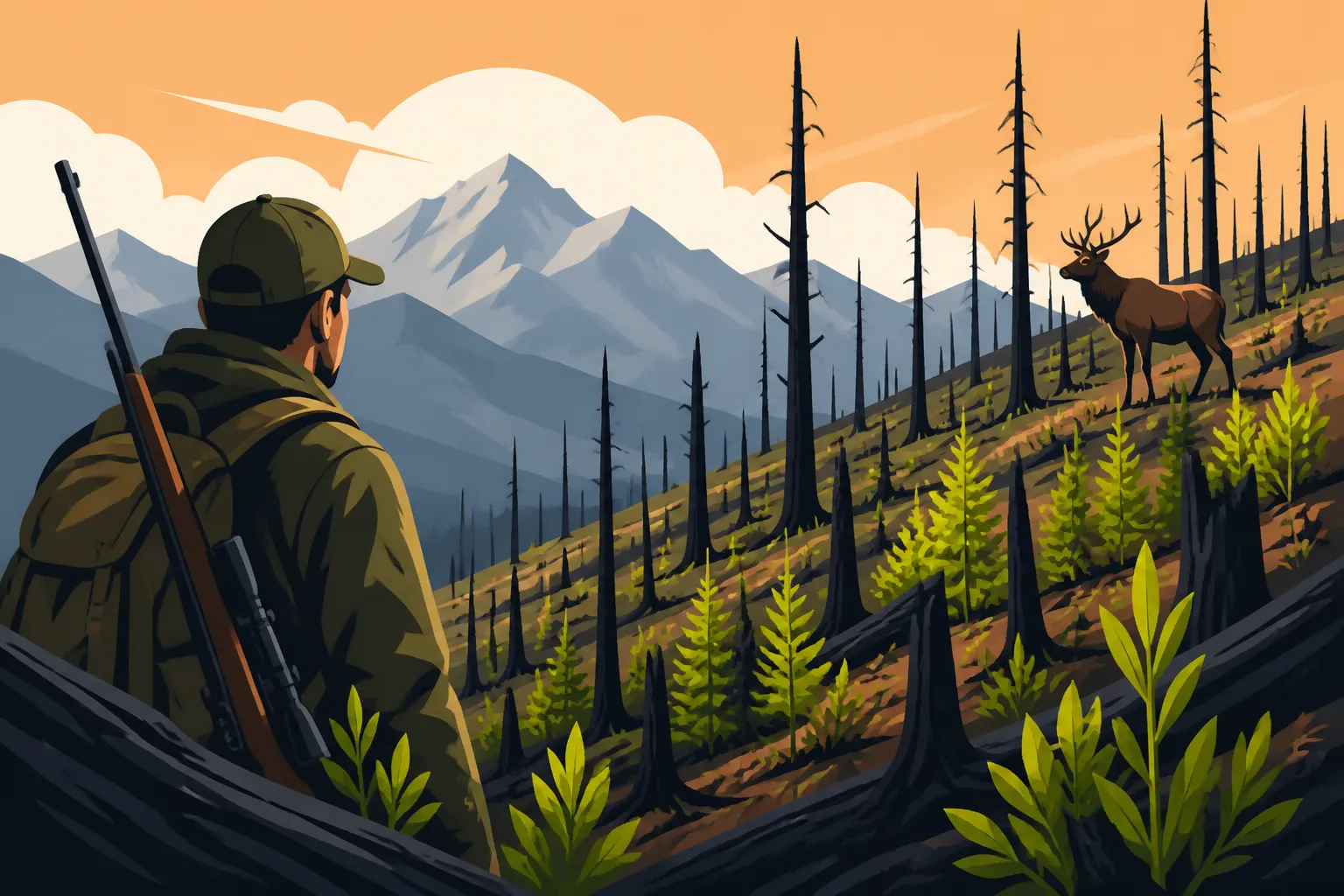
It’s easy to look at a recently burned forest and see only destruction. However, nature has an incredible way of regenerating, and a two-year-old burn is a fascinating snapshot of this process. The landscape might still bear the scars of the fire, with countless snags pointing skyward, but beneath them, a transformation is well underway. Understanding these ecological shifts is the first step to figuring out where the game will be.
Initial Ecological Response and Early Successional Growth
When a wildfire sweeps through, it does more than just burn trees. It clears out dense underbrush, opens up the canopy, and perhaps most importantly for wildlife, it releases a flood of nutrients back into the soil. Imagine the forest floor, once shaded and stifled, now basking in sunlight. This sudden influx of light and nutrients kickstarts a vigorous growth cycle.
In the first year after a fire, you’ll see an explosion of annual grasses and herbaceous plants. These fast-growing species quickly colonize the exposed soil, providing immediate forage for deer and other grazers. By the second year, this early successional growth has really taken hold. You’ll notice more perennial forbs, young shrubs, and the tiny sprouts of deciduous trees like willow, aspen, and birch starting to emerge. This isn't dense, mature forest cover, but rather a buffet of tender, highly palatable browse that’s packed with nutrients. For species like moose and deer, this fresh, accessible vegetation is incredibly attractive. Think of it as a natural clearcut, but often with even richer soil conditions thanks to the ash.
How Wildlife Adapts to the New Landscape
Game animals aren't just passively waiting for the forest to grow back; they actively adapt to and exploit these newly created habitats. Their survival instincts drive them to areas where food is abundant and accessible, and burned areas, particularly around the two-year mark, offer just that.
- Deer: Both mule deer and black-tailed deer in British Columbia are highly attracted to the tender new growth in burned areas. The opened canopy provides ample sunlight for preferred browse species like fireweed, huckleberry, and various shrubs to flourish. While the lack of immediate thermal cover can be a concern for deer, they often utilize the edges of the burn, where it transitions into unburned timber, for security. They might feed heavily within the burn during low-light hours and then retreat to the safety of the adjacent standing timber or thickets of regenerating shrubs as the day progresses. The improved visibility in a burn also makes Glassing an Interior Hillside for Mule Deer() much more effective, allowing you to spot deer from a distance.
- Moose: These large browsers thrive on young, regenerating deciduous growth. Two years post-fire, the burgeoning willow and aspen shoots, along with other broadleaf shrubs, are exactly what a moose needs. You'll often find moose concentrating in wetter areas within a burn, such as creek bottoms, marshy depressions, or areas where water collects, as these spots tend to have the lushest regrowth of their preferred forage. How Moose Use a Burn Three Years On() gives a good indication of this pattern, and two years is right on the cusp of these areas becoming prime moose habitat.
- Bears: Both black bears and grizzlies (where they exist, though grizzly hunting is closed in BC) are opportunistic feeders, and burned areas can be a goldmine for them. Two years on, berry-producing plants like huckleberries, saskatoons, and even certain types of wild raspberries will begin to recover and produce fruit, especially on sun-drenched slopes. Bears will also frequent these areas for the grasses and forbs, and sometimes even for insects or small mammals attracted to the recovering habitat. Edges of burns, where they meet dense timber or riparian zones, are particularly attractive, offering both food and escape cover.
Strategizing Your Hunt in a Two-Year Burn
Hunting a burned slope isn't like hunting mature timber or a pristine alpine basin. It requires a different approach, one that leverages the unique characteristics of the post-fire environment. You need to think about sightlines, obstacles, and where animals will feel safe enough to feed.
Deer Hunting: Capitalizing on New Browse and Visibility
When you’re hunting deer in a two-year-old burn, your strategy should revolve around two key factors: abundant food and improved visibility. The open nature of a burn, while initially jarring, can be your biggest asset for spotting animals.
Spot and stalk becomes an incredibly effective tactic here. Instead of trying to pick out a deer through dense trees, you’re often looking for movement or the distinct shape of an animal against a backdrop of charred timber and new green growth. Using a good set of binoculars or a spotting scope is non-negotiable. Spend significant time glassing open slopes, especially in the early morning and late evening. Deer will often feed out into the open, then retreat to pockets of unburned timber, draws, or dense shrub patches for bedding during the day. Focus on these transition zones, where the burn meets standing timber, as deer use these edges for security cover while still accessing the rich forage.
Understanding deer movement patterns is crucial. While a burn offers food, it often lacks the dense cover deer prefer for bedding down, especially during the middle of the day. They might use islands of surviving trees within the burn, or more commonly, the unburned forest fringe. Identifying natural funnels created by deadfall or terrain features can also lead you to success. A valuable resource for pre-season planning is GoHunt, which often provides detailed mapping overlays, including historical fire data. This lets you pinpoint burn boundaries and even see the degree of burn severity, which can help predict regeneration. If you’re targeting deer specifically, learning Hunting Mule Deer on a British Columbia Burn() will provide more species-specific tactics.
Moose and Bear: Foraging Hotspots and Cover
For moose and bears, the strategy shifts slightly from deer, focusing more on specific foraging hotspots and the availability of some form of cover.
- Moose: As mentioned, moose are drawn to regenerating willows and aspens. In a two-year burn, these will be fairly short but still highly palatable. Concentrate your efforts in the wetter, lower-lying sections of the burn—drainages, seeps, and old beaver ponds that might have been impacted by the fire. These areas tend to recover faster and support the succulent, leafy vegetation moose crave. Look for tracks in the ash and mud, and fresh browsing sign. Even in a burn, moose will seek out small pockets of cover, so don't overlook thicker patches of unburned timber or dense shrub regrowth within the burn itself. If you're near accessible roads, Hunting Moose Off a British Columbia Forest Road() can be effective, using the road system to access the edges of these prime burn areas.
- Black Bears: Two years on, black bears will be following the emerging food sources. In late spring and early summer, they'll be feasting on tender grasses and forbs. As summer progresses into fall, they'll shift their attention to berry patches. Hunting Fall Bears on British Columbia Berry Slopes() often involves finding these regenerating areas. Again, the edges of burns are key, as they offer the dual benefit of food from the burn and security from the unburned forest. Glassing is your best friend here, as bears often spend extended periods feeding in open areas before retreating. Pay close attention to south-facing slopes, which tend to receive more sun and, consequently, often have earlier and more vigorous plant growth.
Utilizing Burn Features for Advantage
The unique features of a burned landscape, while sometimes challenging, can also be used to your advantage during a hunt.
- Deadfall: The ground in a burn is often littered with fallen timber. This can be a pain to navigate, but it also creates natural funnels. Animals will often stick to paths of least resistance, which might be game trails winding around or through less dense deadfall. Identifying these routes can help you anticipate movement.
- Snags: The standing dead trees, or snags, are iconic features of a burn. While unstable, they can offer elevated positions for you to glass from, provided you can find a stable one. They also serve as reference points in an otherwise featureless landscape.
- Drainages and Riparian Zones: These areas are often less severely burned due to higher moisture content and can act as green oases. Water attracts game, and the vegetation here might be more mature or recover faster, providing both food and cover in an otherwise open environment. Always check these draws and creek beds for fresh sign.
Navigating the Challenges: Safety and Logistics
Hunting in a burned area isn't without its unique hazards. The environment is constantly changing, and what was stable one day might be a hazard the next. Being prepared for these challenges is paramount for a safe and successful trip.
Unstable Terrain and Hidden Hazards
The ground surface in a two-year-old burn can be incredibly deceptive and dangerous. The most common hazards include:
- Ash Pits: These are hidden pockets of deep, fine ash, often where a stump or root system burned out underground. You can step into them and sink up to your knee or even waist, potentially causing falls or injuries. They can also retain heat for a long time.
- Falling Snags: The standing dead trees are unstable. Wind, rain, or even just gravity can cause them to fall without warning. Always be aware of your surroundings, especially on windy days.
- Loose Soil and Erosion: Fire destroys vegetation that holds soil in place. Slopes can become incredibly loose and prone to erosion, especially after rain, making footing treacherous. Travel slowly and deliberately.
- Road Access: Forest Service Roads (FSRs) in burned areas are often compromised. Bridges might be washed out, culverts plugged, or the roadbed severely eroded. Furthermore, salvage logging operations might have reactivated roads, meaning you could encounter heavy industrial traffic. Always check local road conditions and closures before heading out. Finding Open Forest Roads in British Columbia() can be crucial for access.
Good quality, sturdy hiking boots with excellent ankle support are essential. Gaiters can help keep the fine ash and debris out of your boots, improving comfort and preventing blisters. Prioritize situational awareness, especially when moving through dense deadfall or near standing snags.
Water Sources and Camp Considerations
Water is a critical consideration in burned areas. The ash can contaminate natural water sources, making them undrinkable without proper filtration.
- Water Contamination: Creeks and springs within a burn can carry ash and charcoal particles, affecting taste and potentially containing harmful substances. Always assume water from a burned area is contaminated and filter or treat all drinking water, even if it looks clear. Carrying ample water or a high-quality filter is a must.
- Camping: Finding a safe and comfortable camping spot can be tricky. Avoid camping directly under snags. Look for areas with minimal deadfall and stable ground. The fine ash can also get everywhere, so having a good tent and ground tarp is important. Be extra vigilant about Bear Safety While Hunting in British Columbia() if the burn area has concentrated food sources or if other food sources are scarce due to the fire. Bears, while adapting, can become more unpredictable in changed environments. Always hang food and practice proper food storage.
Scouting and Digital Tools for Burned Areas
Effective hunting in burned areas starts long before you set foot in the field. Digital scouting tools are invaluable here.
Use online mapping platforms and satellite imagery to identify the extent and severity of the burn. Many services, including GoHunt, provide historical fire overlays that show when and where fires occurred. This allows you to differentiate between a one-year-old burn and a twenty-year-old one, which is vital for understanding regeneration stages. Look for:
- Burn Boundaries: Where the burn meets unburned timber – these are critical transition zones.
- Drainages and Green Patches: Areas that might have been less severely impacted or have recovered faster.
- Road Access: Identify potential entry and exit points, and be prepared for deactivations or washouts.
- Topography: Understanding the slope and aspect can tell you where the sun hits longest, often leading to better browse growth.
- Satellite Imagery: Compare recent satellite images with older ones to literally see the green-up over time. This can confirm if a two-year-old burn is indeed regenerating well.
Pre-scouting in person, if possible, is ideal. Even a short day trip can reveal significant information about access, hazards, and early signs of game presence. Always remember to check Emergency Planning in British Columbia's Backcountry() guidelines and have a robust plan in place, as cell service is often non-existent in remote burn areas.
Preparing for Success on a Burned Slope
Hunting a burned slope isn't just about strategy; it's also about having the right gear and knowing how to handle the logistical challenges, especially when it comes to the payload.
Gear and Clothing for Ash and Debris
The specific environment of a burned slope demands certain considerations for your gear.
- Durable Boots and Gaiters: As mentioned, sturdy boots with good ankle support are crucial for navigating uneven, ash-laden ground and deadfall. Gaiters are your best friend for keeping fine ash, charcoal, and small debris out of your boots, preventing discomfort and potential blisters. Make sure your boots are waterproof, as many burns retain moisture in depressions, and dew can quickly make everything damp.
- Layered Clothing: Temperatures can fluctuate dramatically in open, burned areas. Days can feel hotter due to direct sun exposure, while nights can be colder without the insulating canopy. Layered clothing allows you to adapt to these changes, keeping you comfortable. Opt for durable fabrics that can withstand snags and abrasive ash.
- Optics: With the increased visibility in many burn areas, quality binoculars (10x or 12x) and a spotting scope are indispensable. You'll be doing a lot of glassing, covering vast amounts of terrain to spot animals from a distance. A tripod for your spotting scope will greatly reduce fatigue and improve stability, allowing you to pick out subtle movements or shapes.
- Navigation: GPS devices, satellite messengers like inReach, and traditional maps and compasses are absolutely vital. The lack of familiar landmarks in a burn can make navigation disorienting, even for experienced hunters. Having redundant navigation tools is a smart safety measure.
Game Retrieval and Meat Care in Challenging Conditions
Successfully taking an animal in a burn is only half the battle. Getting it out and caring for the meat presents its own set of difficulties.
- Difficult Pack Out: The combination of uneven ground, loose soil, and extensive deadfall makes packing out an animal incredibly arduous. The weight of the meat, coupled with tricky footing, significantly slows progress and increases the risk of injury. Plan your route carefully, potentially even before you shoot, to identify the path of least resistance. Consider the unique challenges of Getting Meat Out of Steep British Columbia Country(), as many burns occur on mountainsides. A sturdy frame pack is non-negotiable for meat retrieval in these conditions.
- Meat Care: Burned areas can be exposed to more direct sunlight, leading to higher ground temperatures. This means Meat Care in British Columbia's Warm Early Seasons() protocols are even more important. Get the hide off the animal as quickly as possible, quarter it, and get the meat cooled down. If possible, hang it in the shade of surviving trees or use game bags that promote airflow. The ash and dust in the air can also contaminate meat, so proper wrapping and protection are essential.
| Species | Primary Forage in Burn (2 Years On) | Preferred Cover/Security | Key Hunting Strategy | Challenges |
|---|---|---|---|---|
| Mule Deer | Young shrubs, grasses, forbs (fireweed) | Unburned timber edges, draws | Spot and stalk from a distance, focus on transition zones, glassing large areas | Lack of thermal cover, open exposure, difficult packing |
| Moose | Willow, aspen, birch regeneration | Wet areas, remaining timber | Focus on drainages, low-lying areas, look for fresh browse and tracks | Navigating boggy/wet ground, thick new growth, large pack |
| Black Bear | Berries, grasses, forbs, some carrion | Timber edges, dense brush | Glassing south-facing slopes, berry patches, and riparian zones; stalking to approach | Difficult to judge size, unpredictable movement, thick ash |
Disclaimer
Hunting is a challenging and rewarding pursuit that requires respect for wildlife, adherence to regulations, and a commitment to safety. The information provided in this guide is for general informational purposes only and should not replace proper training, local knowledge, or professional guidance. Always consult the most current British Columbia Hunting and Trapping Synopsis for regulations, season dates, and specific management unit rules. Hunting in burned areas presents unique risks; prioritize personal safety, carry appropriate gear, and inform others of your hunt plan.