How Blacktail Use Second Growth
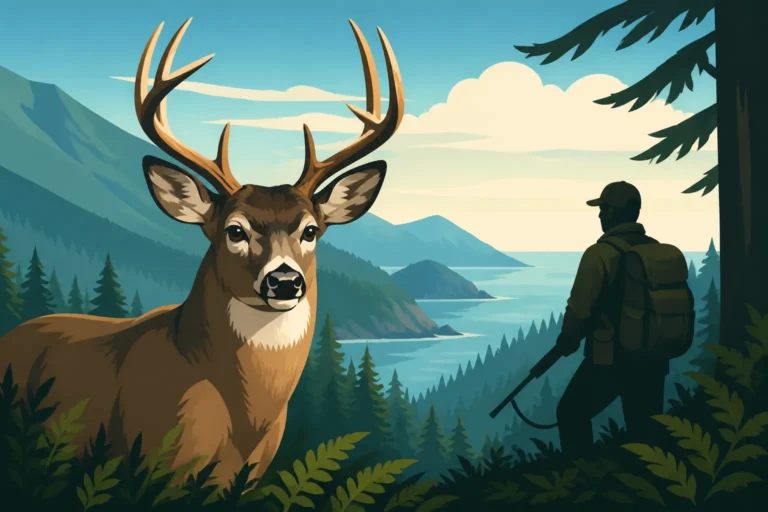
For many of us who hunt the coastal forests of British Columbia, finding blacktail deer can feel like searching for a ghost in a green, impenetrable wall. These elusive deer have a knack for disappearing into the dense landscape, and often, that disappearing act happens right in the midst of what we call "second growth." This guide is all about peeling back the layers of these regenerating forests to reveal how blacktail deer utilize them, helping you understand their patterns and, hopefully, put venison in your freezer.
Understanding Second Growth as Blacktail Habitat
When you're out hunting blacktail, you're inevitably going to encounter second growth. It's simply a fact of life in British Columbia's logging-dominated landscapes. But what exactly is second growth, and why does it hold such a magnetic appeal for these clever coastal deer?
The Life Cycle of a Second-Growth Forest
Second growth essentially refers to forests that have regrown after a significant disturbance, most commonly clearcut logging or large-scale wildfires. It's a dynamic environment, constantly evolving through distinct stages, each offering different advantages and challenges for deer and hunters alike.
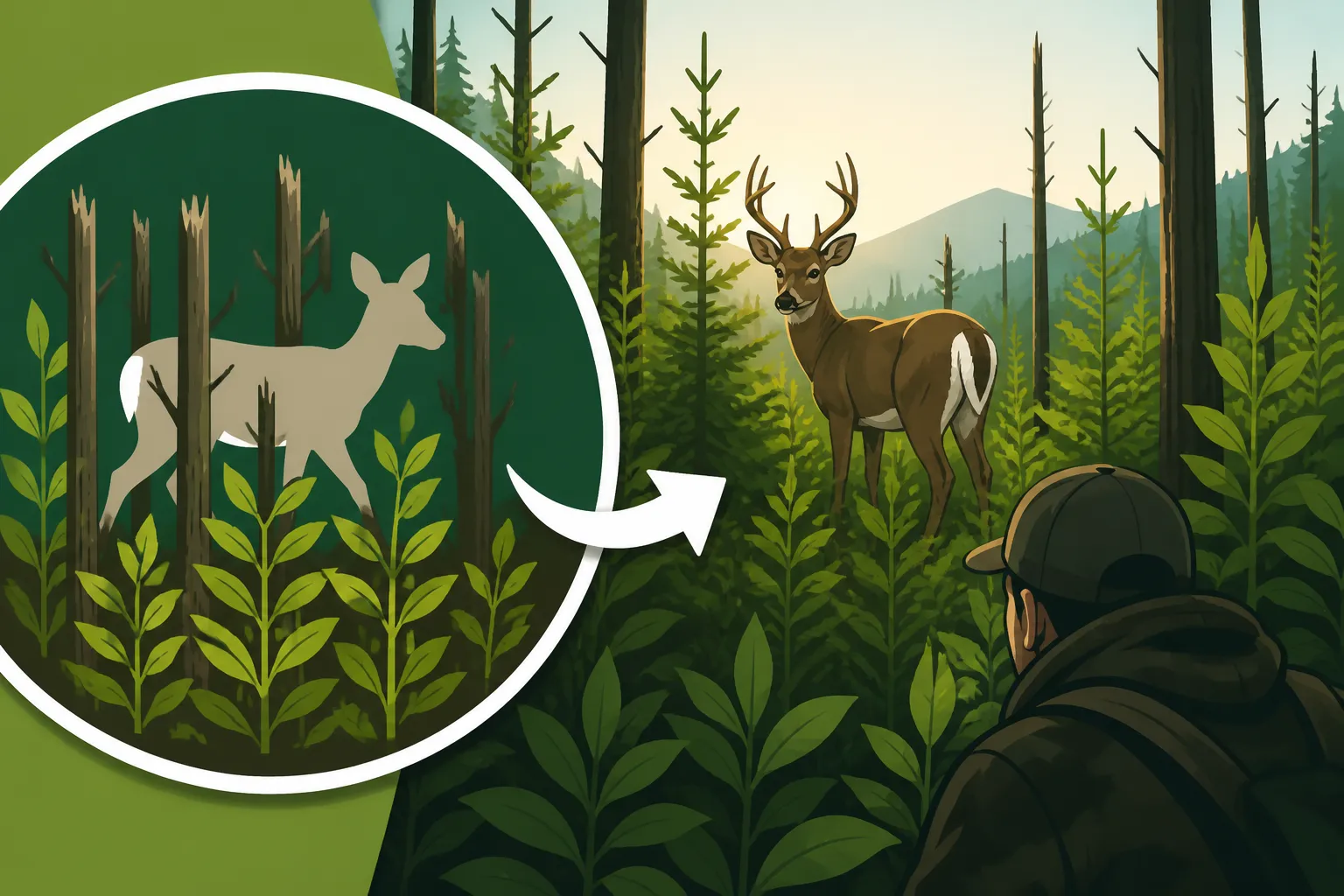
Initially, after a clearcut, the ground is exposed to sunlight, leading to an explosion of forbs, grasses, and deciduous shrubs. This early regeneration stage is a buffet for deer, providing an abundance of highly nutritious browse. You'll often see deer sign here, especially in the first few years after logging, as they feast on the easily accessible food.
As the years pass, the planted conifers (or naturally regenerating trees) begin to grow taller and closer together. This transitions the area into a sapling or pole stage. The canopy starts to close, reducing the amount of sunlight reaching the forest floor. This dense, young timber creates incredible cover, but it also gradually chokes out the understory browse that was so plentiful in the earlier stages. This is when hunters often complain about impenetrable "dog hair" stands – thick, dark, and seemingly devoid of deer, yet the deer are in there.
Eventually, if left undisturbed, the forest matures, leading to larger trees and a more open understory again, or natural processes like windthrow or disease create small openings. Understanding these stages is critical because a blacktail's use of a second-growth stand changes dramatically depending on how old and dense it is. A deer won't use a five-year-old clearcut the same way it uses a thirty-year-old one.
Why Blacktail Are Drawn to Second Growth
Despite its sometimes impenetrable nature, second growth is a blacktail paradise, offering a combination of benefits that are hard to resist. It's not just one thing; it's a whole package deal for these adaptable creatures.
First and foremost is the incredible cover. Those dense stands of young trees, often intertwined with salal, huckleberry, and other brush, provide excellent hiding spots from predators like wolves and cougars, as well as humans. Blacktail are masters of concealment, and they'll often bed down in the thickest parts of second growth, just a few yards off a logging road, completely out of sight. This security makes them feel safe, allowing them to rest and digest in peace.
Secondly, second growth, particularly in its earlier and mid-stages, can be a fantastic food source. While the interior of a dense pole stand might be barren, the edges, openings, and areas with mixed deciduous growth offer a diverse menu. New growth on conifers, a variety of shrubs, and herbaceous plants provide essential nutrients. Blacktail are browsers, constantly nibbling on a wide range of vegetation, and second growth provides this opportunistic feeding. If you're looking to understand more about specific areas, online tools like GoHunt can provide satellite imagery that helps identify different forest stages and potential food sources. For a deeper dive into these elusive deer, you might find our guide on Black-Tailed Deer Hunting in British Columbia insightful.
Finally, the mosaic nature of second growth—its combination of dense cover and accessible browse—creates a secure and efficient living space. Deer don't have to travel far to find food or shelter. They can move quietly through the thickets, emerge briefly to feed, and then melt back into the shadows. This minimizes their exposure to threats and conserves energy, making it an ideal habitat, especially during harsh weather or the intensity of the rut. To understand the broader picture of chasing these deer, check out our piece on Hunting British Columbia's Coastal Blacktail.
Deciphering Blacktail Movement and Behaviour in Second Growth
Understanding why blacktail use second growth is only half the battle; the real trick is figuring out how they use it. This means learning to read the subtle clues they leave behind and predicting their movements within this complex environment.
Reading the Sign: Trails, Rubs, and Beds
The dense nature of second growth often makes seeing blacktail difficult, so becoming a master at reading sign is paramount. It's like being a detective, piecing together the story of their daily lives from the clues on the forest floor.
Distinct trails are your first major indicator. In dense brush, blacktail will create well-worn paths, often appearing as tunnels through the undergrowth. These aren't always big, obvious game trails; sometimes they're subtle depressions where vegetation has been pushed aside. Look for these leading from bedding areas to feeding zones, or along contours that offer easier travel. They'll also use these trails to access water sources or transition between different forest types.
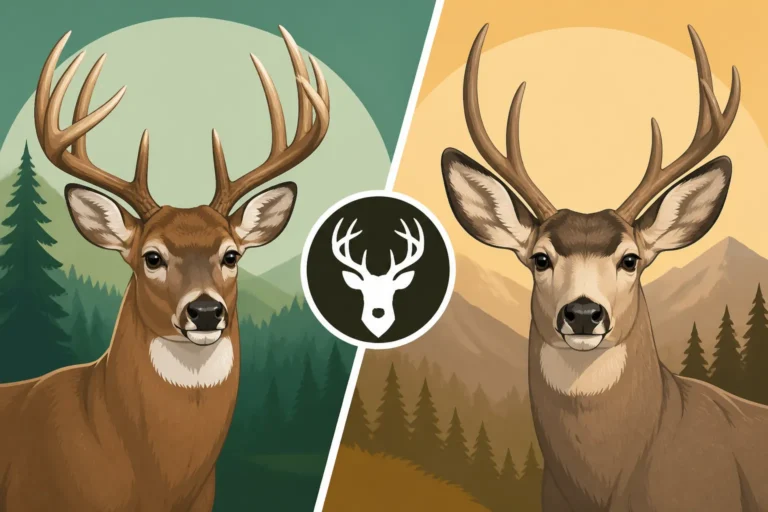
During the rut, rubs become a crucial piece of the puzzle. While mule deer often rub larger trees, blacktail bucks in second growth will often rub small saplings or even sturdy shrubs. Look for areas where the bark has been scraped or frayed, especially along those distinct trails. These indicate a buck asserting his presence, and if you find fresh rubs, you know a buck has been active recently in that particular thicket. Knowing when to look for this sign is key; consider reading up on When the Blacktail Rut Peaks.
Finding a blacktail bed is perhaps the ultimate sign you're in the right place. These deer are masters of finding concealed spots. Their beds are typically scraped-out depressions in the duff, often tucked under dense branches, amidst fallen logs, or within impenetrable patches of salal. They'll choose spots that offer maximum visibility downhill or downwind, allowing them to detect danger while remaining hidden. If you find a fresh bed, take note of the wind direction and surrounding cover – it teaches you exactly what kind of security cover that deer prefers.
Edge Habitat and Transitions
Blacktail are creatures of the edge. While they use the dense interior of second growth for security, they frequently move along the interfaces where different habitat types meet. These transition zones are often high-traffic corridors for blacktail, offering a blend of cover and feeding opportunities.
Think about where a dense, young second-growth block meets an older clearcut with more open ground, or where it borders a mature stand of timber. These ecotones are prime locations. Deer will often stage in the thick second growth, waiting for dusk to move into the more open areas to feed. Conversely, they'll retreat back into the dense cover at first light. Logging roads, creek bottoms, and even old skid trails can create these linear edge habitats, serving as natural highways for deer movement.
Understanding these transitions means anticipating where a deer might cross from one type of cover to another. For example, a blacktail might feed on new growth along the edge of a recently logged unit, then slip back into a 15-year-old dense stand as the sun rises. Identifying these pinch points, funnels, and natural clearings where two different habitat types converge is critical for setting up an ambush. Our article on Hunting a British Columbia Island Clearcut Edge provides more detailed insights into specific edge scenarios, and you might also find value in exploring Hunting an Old Growth Edge for similar dynamics.
Seasonal Use of Second Growth
The way blacktail utilize second growth isn't static; it shifts throughout the year, driven by factors like food availability, weather, and the breeding cycle. Adapting your approach to these seasonal changes will significantly increase your success.
In spring, as new growth emerges, blacktail often frequent the younger, more open second-growth areas where fresh browse is abundant. They'll seek out south-facing slopes that warm up faster and green up earlier. By summer, as temperatures rise, they'll gravitate towards the denser parts of second growth for shade and thermal regulation, staying cool and hidden. The abundant cover also helps protect fawns from predators.
As fall arrives and hunting seasons open, blacktail become increasingly active, especially during the rut. Bucks will be cruising through dense second-growth thickets, following doe trails and scent checking for receptive females. This is a time when still-hunting slowly through these areas can be incredibly effective. The dense cover means you might not see them from far, but you could surprise a buck at close range. If the weather turns wet and cold, which it often does on the coast, dense second growth also offers valuable thermal protection. To learn more about navigating these conditions, check out Hunting British Columbia's Coastal Rain.
In winter, especially during periods of heavy snow, blacktail might move to lower elevations or areas with better access to winter forage. However, even then, the densest second-growth stands can provide crucial thermal cover, shielding them from wind and deep snow. They'll often seek out mature timber adjacent to younger second growth, creating a complex pattern of movement.
Hunting Strategies for Second-Growth Blacktail
Hunting blacktail in second growth is a unique challenge. It demands patience, stealth, and an intimate understanding of the terrain. Forget wide-open Western glassing; this is close-quarters, gritty hunting.
Still-Hunting the Thickets
Still-hunting is perhaps the most effective method for blacktail in dense second growth, especially during the early and late hours of the day. It's a game of inches, not yards, and requires an incredible amount of discipline and focus.
The core principle is simple: move slowly, take one or two steps, then stop and observe. Use your binoculars not just for distant hillsides, but for picking apart the shadows and brush right in front of you. Look for horizontal lines (a deer's back) in a vertical world, sudden breaks in uniform patterns, or the flick of an ear. Every ten steps, stop for a minute or two and scan meticulously. Pay attention to changes in terrain – a subtle dip, a small rise, a cluster of blown-down trees – as these are natural travel corridors or bedding areas within the thick stuff.
Always hunt into the wind, or with a crosswind, to prevent your scent from spooking deer ahead of you. The dense cover can mask your sound, but it won't hide your smell. Patience is your most valuable tool; you're not trying to cover ground quickly, but rather to methodically pick apart the habitat. Many a blacktail hunter has walked past deer bedded just feet away because they moved too fast. Our article on Still-Hunting Second Growth for Blacktail offers even more in-depth techniques for this challenging but rewarding method.
Stand Hunting and Ambush Points
While still-hunting is excellent for covering ground, sometimes the most effective strategy is to let the deer come to you. Stand hunting, or setting up an ambush point, can be highly productive, especially during the rut or in areas with predictable deer movement patterns.
The key is identifying those critical funnels, pinch points, and travel corridors that deer use repeatedly. These might be narrow strips of timber between clearcuts, saddles over small ridges, or trails leading from dense bedding areas to known feeding grounds. Look for fresh sign—tracks, rubs, droppings—to confirm deer activity. Tools like GoHunt's mapping features can be incredibly helpful here, allowing you to scout potential ambush spots from home by studying satellite imagery and topographic maps to pinpoint terrain features that naturally funnel deer.
Consider the time of day and the prevailing wind. You want to set up downwind of where you expect deer to approach. Mornings are great for catching deer moving back into cover from feeding areas, while evenings are ideal for intercepting them as they head out. A portable tree stand can get you above the dense undergrowth, improving your visibility and allowing your scent to dissipate above the deer's nose. If a tree stand isn't practical, find natural elevated positions or thick cover that allows you to break up your outline and remain hidden.
Calling Strategies in Dense Cover
Calling can be a powerful tool for blacktail, especially during the peak of the rut, when bucks are actively seeking does. The dense nature of second growth can work both for and against you when calling.
Fawn bleats are often effective throughout the season. A soft, pleading bleat can pique the curiosity of a doe, and a buck following that doe might come in to investigate. Grunts, particularly a tending grunt, can also work during the rut to challenge a buck or make him believe another deer is already with a doe. Rattling, mimicking two bucks fighting, can draw in aggressive bucks, but it's often more effective in slightly more open areas where the sound carries further. In thick second growth, you need to be ready for an immediate, close-range response.
The challenge with calling in dense cover is that the sound doesn't carry as far, and deer might approach silently and quickly. You need to be ready for a shot as soon as you call. Position yourself with good cover behind you and an open shooting lane (as much as you can get in second growth) in front. If you get a response, be patient. The deer might circle downwind to scent-check before revealing itself. Don't overcall; a few soft bleats or grunts can often be more effective than continuous, loud sequences. For more specific techniques on vocalizing, delve into Calling a Blacktail Buck With a Fawn Bleat.
Post-Shot Considerations in Second Growth
The moment of truth arrives, and you've made a good shot. Now comes the often-challenging task of recovery in second growth. This is where preparation and discipline are absolutely crucial.
First, mark your shot location meticulously. Pick out multiple landmarks – a unique tree, a rock, a broken branch – from where you shot. Drop a piece of flagging tape if you have it. The dense cover can make even a short track feel like an impossible maze. If you have a GPS, mark the shot site immediately.
Second, resist the urge to immediately charge in. Give the deer time, especially if it's not a clear heart/lung shot. A deer might lie down quickly if undisturbed but could run much further if pushed. Wait 30 minutes to an hour, or even longer for a marginal hit. This patience can make all the difference in recovery.
Tracking in dense second growth is tough. Blood trails can be sparse on wet leaves or quickly absorbed by thick moss. Slow down. Look for disturbed vegetation, overturned leaves, broken branches, and subtle smears of blood. Get on your hands and knees if you have to. If you lose the trail, go back to the last confirmed sign and systematically search in a grid pattern. Recovering a deer from this kind of terrain is incredibly rewarding, but it's physically demanding. To prepare for the challenges of getting your animal out, consider reading Getting Meat Out of Steep British Columbia Country.
Navigating the Challenges and Maximizing Success
Hunting blacktail in British Columbia's second growth is not for the faint of heart. It demands physical stamina, mental fortitude, and a willingness to embrace the unique challenges this environment presents.
Physical Demands and Gear
The reality of hunting second growth is that it's often steep, wet, and incredibly dense. This isn't a casual stroll in the park; it's a demanding workout that requires the right gear and a good level of physical fitness.
Waterproof gear is non-negotiable. British Columbia's coastal climate means rain is often a factor, and pushing through wet brush will soak you to the bone if you're not prepared. Invest in good quality rain pants and a jacket that breathes well. Sturdy, waterproof boots with excellent ankle support and aggressive tread are also essential for navigating uneven, slippery terrain.
Navigation is another critical consideration. While cell service might be spotty, a reliable GPS unit or a smartphone with downloaded offline maps (like those offered by GoHunt, which show property boundaries, topo lines, and forest roads) is invaluable. A compass and paper map should always be a backup. A good quality pack, capable of carrying essentials and potentially a load of meat, is also a must. The more you explore these areas, the more you appreciate the sheer vastness and the need for preparedness.
Understanding Access and Regulations
Before you even step foot into a patch of second growth, you need to understand where you can legally hunt and how to access it. British Columbia has a complex mix of Crown land, private timber lands, and varying regulations that can make access a headache.
Much of British Columbia's second growth is on Crown land, which is generally open to public hunting. However, vast tracts are also managed by private timber companies, especially on Vancouver Island and the South Coast. These companies often have locked gates, seasonal closures, or require permits for access. It's crucial to check with the land manager or local authorities before you go.
Always consult the most current British Columbia Hunting and Trapping Synopsis for specific Management Unit (MU) regulations. Seasons, bag limits, and antler restrictions can vary dramatically even between adjacent MUs. Online resources and mapping tools can help you identify British Columbia's Management Units and Regions and where they lie in relation to potential hunting areas. Additionally, understanding the network of Finding Open Forest Roads in British Columbia will get you into the general vicinity, but be prepared for deactivated roads and walking beyond gates.
Persistence and Adaptability
Ultimately, hunting blacktail in second growth is a testament to a hunter's persistence and adaptability. These deer are not easy targets, and the environment itself often feels like it's conspiring against you.
You'll have days where you cover miles of thick brush, soaked to the bone, without seeing a single track. You'll hear deer move through the thickets just out of sight, or catch a fleeting glimpse that vanishes before you can react. These are the realities of second-growth blacktail hunting.
The successful hunter is the one who embraces these challenges, learns from every outing, and remains patient. It's about slowly building your knowledge of specific areas, understanding deer patterns, and refining your techniques. Every patch of second growth is unique, with its own character and its own secrets. The more time you spend in it, the better you'll become at unlocking those secrets and finding success in one of British Columbia's most challenging yet rewarding hunting pursuits.
Disclaimer
This article is for general informational purposes only and does not constitute professional advice. Laws, prices and regulations vary by location and change over time. Consult a qualified professional for guidance on your specific situation.