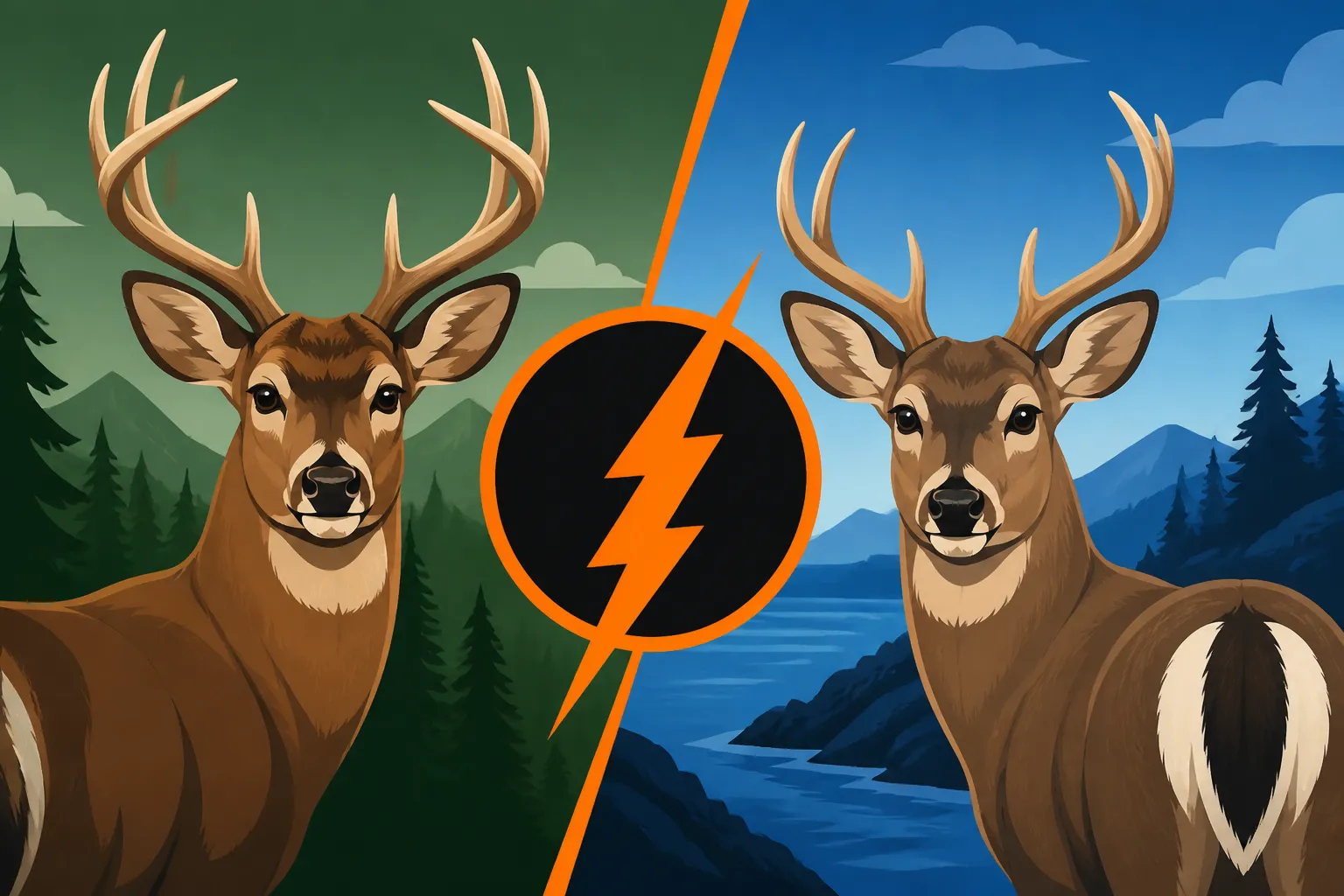
Columbian Blacktail Versus Sitka Blacktail
It can be incredibly confusing, even for seasoned hunters in British Columbia, to keep track of the nuances between the various deer subspecies we have roaming our vast landscapes. Specifically, the differences between Columbian Blacktail and Sitka Blacktail often lead to head-scratching moments in the field or when poring over regulations. This comprehensive guide will deep dive into these distinct deer, helping you understand their unique characteristics, preferred habitats, and what these differences mean for your hunting strategy here in BC.
Unraveling the Blacktail Enigma: Columbian vs. Sitka
For many, a blacktail is a blacktail, and that’s the end of it. But when you start looking closely, especially across the diverse ecosystems of British Columbia, you realize there’s a fascinating story of adaptation and distinction between the Columbian Blacktail and its more elusive cousin, the Sitka Blacktail. These aren't just minor variations; they represent different ways deer have evolved to thrive in their specific environments, and understanding these differences can fundamentally change how you approach your hunt.
Geographic Distribution and Habitat Preferences
The first and most striking difference between these two subspecies lies in where they call home. Columbian Blacktail ( Odocoileus hemionus columbianus ) are the blacktail deer most commonly associated with the coastal mainland and Vancouver Island. Their range stretches along the Pacific Coast from northern California right up into British Columbia, and they are prolific throughout the coastal mountains and forests. You'll find them in the dense second-growth timber, along logging roads, and in the edges of old-growth stands. They are masters of navigating the thick underbrush, often staying hidden despite their numbers. Think of lush, wet forests, clearcuts that are several years old, and rugged, steep terrain near the ocean – that's prime Columbian Blacktail country. If you're out Hunting Vancouver Island Blacktail in Second Growth or anywhere along the southern BC coast, it's almost certainly a Columbian Blacktail you're after.
Sitka Blacktail ( Odocoileus hemionus sitkensis ), on the other hand, are much more geographically restricted within British Columbia. While they share the general "blacktail" moniker, their stronghold here is primarily the Haida Gwaii archipelago. This isolation has led to some fascinating adaptations and distinct characteristics. They are truly creatures of the coastal rainforest, thriving in areas with high rainfall and temperate climates. Their preferred habitat often includes muskegs, old-growth timber, and shoreline fringes where browse is abundant. They are less common on the mainland of BC, with their main populations found further north in Alaska, but Haida Gwaii offers a unique opportunity to encounter these specialized deer within our provincial borders. The rugged, remote nature of these islands means that hunting them often involves boat access and navigating incredibly dense, wet environments.
Physical Characteristics and Distinguishing Features
At a glance, both deer share the deep grey to reddish-brown coat, the distinctive black on their tail (which is typically all black on top with a white underside), and the smaller frame compared to their mule deer cousins. However, closer inspection reveals the subtle yet significant distinctions. Columbian Blacktail generally tend to be larger in body size than Sitka Blacktail. An adult Columbian buck on Vancouver Island might easily push 150-200 pounds live weight, especially after a good summer of feeding. Their antlers, while highly variable, often show a more typical mule deer-like bifurcation, meaning the main beam forks and then each fork divides again.
Sitka Blacktail, by contrast, are noticeably smaller in body size. A large Sitka buck might only weigh 100-140 pounds, a significant difference that helps them navigate the incredibly dense undergrowth of their island homes. Their antlers are also typically smaller and can sometimes appear more compact or "stubbier" compared to their Columbian relatives. While they still show bifurcation, the overall mass and spread tend to be less, often reflecting the lower nutritional value or harsher conditions of their unique environment. Their coats can also appear slightly darker or richer in colour, which might be an adaptation to absorb more warmth in their perpetually damp habitat.
Understanding Subspecies Classification
It's important to grasp that both Columbian and Sitka Blacktail are considered subspecies of the mule deer (Odocoileus hemionus). This means they are distinct populations that share a common ancestor with other mule deer (like the Rocky Mountain Mule Deer or Desert Mule Deer) but have evolved unique characteristics due to geographic isolation and environmental pressures. The "blacktail" distinction itself often refers to their tail morphology and coastal habitat preferences, which differentiate them from the interior-dwelling mule deer.
The classification emphasizes that while they are related, their distinct genetic pathways and adaptations have led to observable differences in size, behaviour, and habitat use. For hunters, this isn't just academic; it directly influences where you hunt, what you expect to see, and even how you process your game. Knowing you're after a specific subspecies means you can tailor your gear and tactics to the very specific challenges that animal and its habitat present. Understanding this biological reality is the first step in becoming a more effective and respectful hunter of British Columbia's diverse deer populations.
The Columbian Blacktail: Master of the Coastal Forests
If you've spent any time hunting the west side of the Cascades, the Vancouver Island backcountry, or the slopes overlooking the Strait of Georgia, you've likely encountered the resilient Columbian Blacktail. These deer are the unsung heroes of BC's coastal hunting scene, thriving in environments that are often dismissed as too wet, too thick, or too challenging by those unfamiliar with their ways. They are a tenacious species, and hunting them successfully demands patience, an understanding of their habits, and a willingness to embrace the often-unforgiving coastal weather.
Range and Typical Habitat in British Columbia
Columbian Blacktail are widespread throughout the British Columbia mainland's coastal regions and almost all of Vancouver Island. You'll find them from the US border northwards, hugging the Pacific Ocean, often as far inland as the Coast Mountains allow before transitioning to more mule deer-dominated zones. Their preferred habitat is characterized by dense coniferous forests, particularly areas with second and third-growth timber. Clear-cuts from a few years prior, now choked with salal, huckleberry, and small conifers, are absolute magnets for these deer. They provide both abundant browse and incredible cover, allowing blacktail to disappear within mere feet of a hunter.
They are also fond of the edges where different habitats meet—the interface between thick timber and open areas, or along riparian zones. These deer are incredibly adept at navigating steep, rugged terrain, moving silently through wet underbrush. On Vancouver Island, in particular, hunters will often find them in areas with active logging, where the constant disturbance creates new browse and cover opportunities. A great resource like GoHunt can help you overlay logging maps with public land to pinpoint these prime areas. Understanding their reliance on new growth and dense cover is key to locating concentrations of these deer.
Behavioral Patterns and Diet
Columbian Blacktail are notoriously secretive animals. Unlike their mule deer cousins who might openly feed in alpine meadows, blacktail prefer to remain hidden, utilizing the dense vegetation to their advantage. They are most active during the low light periods of dawn and dusk, though they can be seen moving throughout the day, especially during the rut or under overcast skies. Their diet is varied, consisting primarily of browse such as salal, huckleberry, salmonberry, and various ferns. They are also known to browse on young conifer shoots and lichens, especially in leaner times. The abundance of these food sources in coastal ecosystems helps to support healthy populations.
During the rut, typically peaking in late October and November on the mainland and often extending later on Vancouver Island, bucks become more active and less cautious, making them slightly more vulnerable. However, even then, they are masters of using the terrain and cover to their advantage. Still-hunting, slow methodical movements through dense cover, or stand hunting near natural funnels or known travel corridors are often the most productive methods for these wary deer. Learning to read blacktail sign in wet ground is paramount, as fresh tracks and droppings can often be the only indication of their presence.
Hunting Considerations for Columbian Blacktail
Hunting Columbian Blacktail demands specific tactics and a lot of grit. The terrain is often steep, wet, and incredibly thick, making long-range glassing difficult. Instead, hunters often rely on close-quarters stalking, ambushing, or pushing through areas with multiple hunters. Patience is key, as is the ability to move quietly through noisy terrain. Rain gear is non-negotiable, as you'll almost certainly encounter wet weather, especially during the fall seasons. Durable, waterproof boots with good traction are also essential for navigating the slick moss, mud, and fallen timber.
It’s also crucial to be intimately familiar with the specific regulations for your management unit. British Columbia's four-point antler restriction rules often apply to mule deer and blacktail in many areas, meaning bucks must have at least four points on one side, not including the eye guard, to be legal. Always check the current British Columbia's Two-Year Regulations Synopsis before heading out. Furthermore, due to the dense cover, shot opportunities can be fleeting and at close range, requiring quick reflexes and accurate shooting. Don't underestimate the physical demands of packing out a deer from steep, wet, and often remote coastal terrain.
The Sitka Blacktail: Island Dweller and Rainforest Specialist
Venturing to hunt Sitka Blacktail in British Columbia is a commitment to a truly unique and challenging experience. These deer, particularly those found on Haida Gwaii, embody resilience and adaptation, thriving in an environment that might seem inhospitable to other deer species. Their distinct characteristics and specialized habitat preferences make them a fascinating target for hunters seeking a truly wild adventure.
Range and Unique Island Ecosystems
Within British Columbia, the Sitka Blacktail's primary range is the remote and mystical archipelago of Haida Gwaii, formerly known as the Queen Charlotte Islands. This chain of islands, situated off the northern BC coast, provides a distinct and relatively isolated ecosystem that has allowed the Sitka subspecies to flourish. These islands are characterized by ancient, temperate rainforests, dramatic coastlines, and a prevalence of muskegs—boggy, open areas dominated by sphagnum moss and stunted trees. The mild, wet climate here is a constant, with heavy rainfall and frequent fog.
While there might be isolated pockets or genetic mixing zones on the far northern BC mainland coast, Haida Gwaii remains the true bastion for pure Sitka Blacktail in British Columbia. Their populations here are robust, largely due to the absence of many mainland predators (historically, grizzly bears were not present) and abundant food sources adapted to their environment. Accessing these areas often requires significant logistical planning, frequently involving float planes or boat travel to reach remote inlets and bays, making it an experience that truly connects you with the wilderness.
Adaptations to Coastal Rainforests
The Sitka Blacktail's smaller stature is perhaps its most significant adaptation to the dense, wet, and often food-scarce environment of the coastal rainforest. Being smaller allows them to navigate the incredibly thick undergrowth and move more efficiently through dense timber and muskegs. This compact size also means they have a lower metabolic demand, which can be advantageous in an environment where high-quality browse might be patchier than in other deer ranges. Their dense, dark coats offer excellent camouflage in the shadows of the old-growth forest and provide insulation against the constant dampness.
Their diet is equally specialized, consisting of various mosses, lichens, ferns, and the shoots of coastal shrubs and trees. They are incredibly opportunistic foragers, making the most of whatever food sources are available in their unique habitat. You’ll often find them grazing along the beaches at low tide, nibbling on kelp and other marine vegetation – a behaviour less commonly observed in Columbian Blacktail. This ability to utilize diverse food sources, including those from the intertidal zone, underscores their deep adaptation to their specific island homes. This unique aspect is a key part of Hunting Blacktail in British Columbia's Coastal Rain.
Hunting Sitka Blacktail on Haida Gwaii and Beyond
Hunting Sitka Blacktail on Haida Gwaii presents a completely different set of challenges and rewards compared to mainland blacktail hunting. The rugged, remote nature of the islands means that self-sufficient backcountry skills are paramount. While there are some logging roads on larger islands like Graham Island and Moresby Island, many prime areas are only accessible by boat or float plane, often requiring spike camps in incredibly damp conditions. The thick rainforest can make visibility extremely limited, sometimes only a few yards, demanding intense still-hunting or methodical tracking.
Given the unique ecosystem and the presence of abundant black bears (including the distinct Haida Gwaii black bear subspecies), bear safety while hunting in British Columbia is always a concern. While grizzlies are not present, vigilance is still important. Utilizing mapping tools like GoHunt or other topographic resources before your trip is essential for understanding the lay of the land, identifying potential access points, and scouting satellite imagery for likely deer concentrations such as clear-cut edges or muskeg openings. The thrill of hunting a species so intimately tied to such a wild, remote landscape is truly unparalleled, making a Sitka Blacktail hunt a bucket-list experience for many dedicated deer hunters.
Key Differences: A Side-by-Side Comparison
While both deer carry the "blacktail" designation and are subspecies of mule deer, their evolutionary paths have diverged enough to create distinct animals. Recognizing these differences isn't just about identification; it's about appreciating the incredible biodiversity within British Columbia's game species and becoming a more informed hunter. Let's lay out the critical distinctions.
Size, Antler Structure, and Coat Variation
The most readily apparent difference is often body size. Columbian Blacktail, being more widely distributed and often having access to richer, more varied forage over a larger geographical area, typically grow larger. Adult bucks can be quite robust, with weights often exceeding 150 pounds and occasionally reaching over 200 pounds in prime conditions. Their antlers tend to be larger, with thicker bases and more substantial mass, often displaying the classic mule deer bifurcation cleanly.
Sitka Blacktail, constrained by their island ecosystems and the unique challenges of dense rainforests, are considerably smaller. A mature Sitka buck is usually in the 100-140 pound range, an adaptation that allows for greater maneuverability in dense cover. Their antlers are consequently smaller, often more compact and less massive, though still retaining the characteristic forked configuration. The coats of both can vary with season and individual, but some observers note Sitka Blacktail can have a slightly darker, denser coat, perhaps as an adaptation to the persistent dampness of their rainforest homes. This size difference is key, and understanding What a Coastal Blacktail Weighs helps set expectations.
Habitat Niche and Dietary Habits
The habitats these deer occupy are another primary differentiator. Columbian Blacktail thrive across a broad spectrum of coastal mainland and Vancouver Island environments, from logged-over lowlands to subalpine fringes. They are comfortable in both dense regenerating clear-cuts and more open, mature timber, always utilizing cover. Their diet is diverse, including a wide array of woody browse, forbs, and grasses. They are generally adaptable to various forest management practices, often benefitting from the new growth created by logging.
Sitka Blacktail are specialists of the temperate rainforest and island ecosystems, particularly Haida Gwaii. They are incredibly tied to the mossy, wet, and densely vegetated landscapes, often frequenting muskegs and coastal fringes. Their diet includes more unique items like various mosses, lichens, and even kelp from the intertidal zone, reflecting the specific botanical offerings of their isolated homes. Their strong connection to this specific ecological niche is a testament to their evolutionary journey. For a deeper dive, check out Why Haida Gwaii Holds So Many Deer.
Genetic Distinctions and Conservation Status
Genetically, while both fall under the mule deer species, there are distinct markers that separate the Columbian and Sitka subspecies. These genetic differences are the scientific basis for their classification and underscore their unique evolutionary paths. The isolation of Haida Gwaii has played a significant role in maintaining the genetic purity of the Sitka Blacktail there.
From a conservation standpoint, both populations are generally healthy and robust within British Columbia. Columbian Blacktail populations are managed through various seasons and regulations, including antler point restrictions in many areas. Sitka Blacktail on Haida Gwaii are also managed carefully, considering their unique island status and the desire to maintain a healthy population within that specific ecosystem. Both provide excellent hunting opportunities for residents.
Here's a quick comparison table:
| Feature | Columbian Blacktail (Odocoileus hemionus columbianus) | Sitka Blacktail (Odocoileus hemionus sitkensis) |
|---|---|---|
| Primary Range in BC | Coastal mainland, Vancouver Island | Haida Gwaii (Queen Charlotte Islands) |
| Typical Adult Weight | 150-200+ lbs (bucks) | 100-140 lbs (bucks) |
| Antler Size | Larger, more massive, typical mule deer bifurcation | Smaller, more compact, often less mass |
| Coat Colour | Greyish-brown to reddish-brown, varies seasonally | Often darker, denser coat |
| Primary Habitat | Dense second-growth timber, clear-cuts, coastal forests | Temperate rainforests, muskegs, coastal fringes |
| Dietary Habits | Broad variety of woody browse, forbs, some grasses | Mosses, lichens, ferns, kelp, rainforest browse |
| Adaptations | Generalist, thrives in diverse coastal forest settings | Smaller size for dense cover, specialized diet |
| Hunting Access | Extensive logging road networks, boat access on coast | Often boat or float plane, limited road access |
Why Understanding the Differences Matters to Hunters
Beyond the academic interest, knowing the distinction between Columbian and Sitka Blacktail deer has practical implications for every hunter setting foot in British Columbia's diverse landscapes. It’s not just about what animal you’re looking at, but how you plan your trip, what gear you bring, and ultimately, your success and enjoyment in the field.
Impact on Scouting and Hunting Strategies
The habitat preferences alone dictate vastly different scouting and hunting approaches. If you're targeting Columbian Blacktail, you'll likely spend hours on logging roads, looking for fresh sign in clear-cuts, or patiently still-hunting through thick, regenerating timber. You might focus on areas that have undergone recent logging, understanding that How Blacktail Use Second Growth is key to finding them. Your scouting might involve more vehicle-based exploration, followed by foot travel into promising blocks. Utilizing mapping applications like GoHunt to analyze forest cover, clear-cut ages, and road networks would be incredibly beneficial.
For Sitka Blacktail, especially on Haida Gwaii, scouting often starts with studying nautical charts and topographic maps for remote inlets and muskegs accessible by boat. Your hunting strategy will likely involve extensive boat travel, followed by arduous pushes through extremely dense rainforest or across open, boggy muskegs. This demands a much higher level of physical endurance, self-sufficiency, and navigation skills without reliance on extensive road networks. Understanding these habitat distinctions is crucial for effective pre-season planning.
Navigating Regulations and Antler Restrictions
While both are subspecies of mule deer, regional regulations and antler restrictions can sometimes have specific nuances. It's imperative to consult the current British Columbia's Two-Year Regulations Synopsis for the specific Management Unit (MU) you plan to hunt. While many areas have a general four-point antler restriction for blacktail (referencing points on one side, not including the brow tines), there can be variations. For example, some regions might have "any buck" seasons, while others are strictly four-point or better.
Knowing the typical size and antler development of each subspecies can also influence your decision-making in the field. A smaller-bodied Sitka buck might still be a mature animal, but its antlers might not be as impressive in size as a comparable age Columbian buck. This knowledge helps you make ethical and legal decisions, ensuring you're only harvesting legal animals as per the regulations of that specific region. It's a fundamental part of responsible hunting to ensure you understand and comply with these rules.
Enhancing Your Overall Hunting Experience
Ultimately, understanding the differences between Columbian and Sitka Blacktail deer enriches your entire hunting experience. It transforms a generic "deer hunt" into a targeted pursuit of a specific animal, deeply connected to its unique environment. This deeper knowledge allows for more informed decision-making, better preparation, and a greater appreciation for the animals you pursue. You'll pack the right gear for the right terrain, set realistic expectations for animal size and behaviour, and develop a hunting strategy tailored to the specific challenges and opportunities presented by either the dense coastal mainland forests or the remote rainforests of Haida Gwaii.
Whether you're Black-Tailed Deer Hunting in British Columbia on Vancouver Island or embarking on a remote adventure to Haida Gwaii, this specialized knowledge helps you truly connect with the landscape and its inhabitants. It deepens your respect for these adaptable deer and makes every successful hunt, regardless of the size of the animal, a testament to your understanding and effort in their incredible world.
Disclaimer
Please remember that hunting regulations in British Columbia can change. Always consult the most current British Columbia Hunting and Trapping Synopsis, available from the provincial government, before planning any hunting trip. This guide is for informational purposes only and should not replace official regulatory documents.