Best British Columbia Ground for Moose
One of the biggest hurdles for any hunter looking to chase moose in British Columbia is simply figuring out where to even start. This isn't like hunting smaller game in a backyard woodlot; BC is an immense province, and finding moose in its vast landscapes can feel like searching for a needle in a haystack. Many hunters get discouraged, spending valuable time in areas that simply don't hold the numbers or the kind of habitat moose need to thrive. This guide aims to cut through that frustration, helping you identify the most promising ground for moose across British Columbia, from understanding their core needs to pinpointing specific regions and habitat types.
Understanding Moose Habitat Preferences in British Columbia
Moose are truly magnificent creatures, but they're also quite particular about where they choose to live. They're not just found anywhere; there's a science to their habitat selection, driven by a few core needs: readily available food, water, and secure cover. If you can understand these fundamental requirements, you're already light-years ahead in your scouting efforts.
Key Environmental Factors
Moose are browsers, meaning they prefer to munch on the twigs, leaves, and buds of woody plants rather than grazing on grasses. Their diet is incredibly specific, with a strong preference for young deciduous growth. Think about areas where willow, red-osier dogwood, aspen, and balsam poplar thrive. These plants are like gourmet meals for a moose, providing essential nutrients, especially in the winter months when other food sources are scarce. A hunter often forgets that what an animal eats dictates where it spends most of its time, and moose are no exception.
Water is another non-negotiable. Moose are often found near wetlands, lakes, rivers, and slow-moving creeks. Not only do these provide drinking water, but they also offer crucial aquatic vegetation like pond lilies and horsetails, which are rich in minerals and a favorite summertime treat. These watery havens also serve as excellent escape cover from predators and relief from biting insects during warmer months. During the heat of summer, it's not uncommon to see a moose submerged up to its neck in a beaver pond, just chilling out.
Finally, cover is paramount. Moose need dense forest cover for security, especially when bedding down or escaping hunting pressure. Mature timber stands, thick regenerating clearcuts, or dense willow thickets along river systems all provide that essential sense of safety. They also utilize these areas for thermal regulation, seeking shade in the summer and protection from deep snow and cold winds in the winter. It’s a delicate balance; they need dense cover, but it has to be interspersed with their preferred food sources.
Regional Differences in Habitat
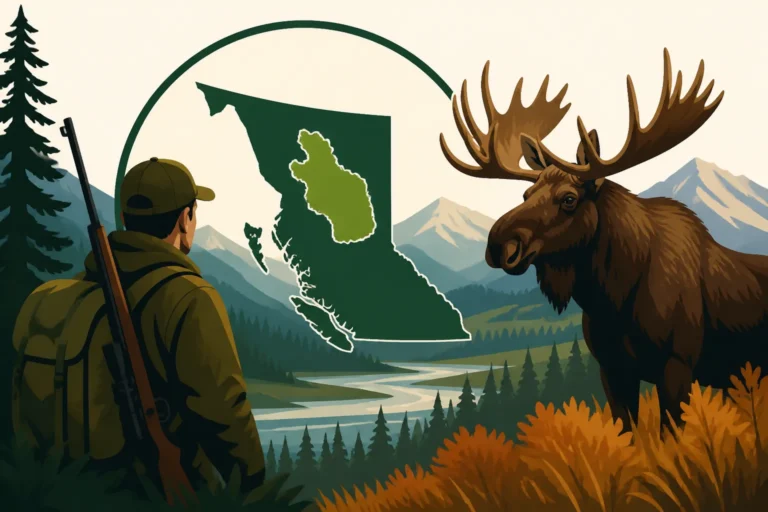
British Columbia's sheer size means that what constitutes "good moose ground" can look quite different depending on the region you're in. The province's diverse geography, from coastal rainforests to arid interior plateaus and vast northern forests, all influence the local moose populations and their preferred haunts. You'll find that moose in the central and northern parts of the province, for example, tend to be more robust, partly due to the extensive and relatively undisturbed habitat. If you want to understand more about the wider population trends, check out British Columbia's Moose Population Trend.
In the sprawling northern forests and the expansive Interior Plateau, you'll encounter vast tracts of mixed timber, interspersed with numerous lakes, wetlands, and river systems. These areas are historically strongholds for moose. Here, logging activity, while sometimes a contentious topic, can actually create excellent moose habitat by promoting that younger, brushy regrowth moose love to browse. A fresh clearcut, after a few years, becomes a moose buffet.
Contrast that with some of the more southerly or even slightly more developed areas, where suitable habitat might be more fragmented. In the Peace River region, for instance, you have a mix of agricultural land and dense boreal forest. Here, moose often utilize the forest edges and river drainages adjacent to farms, finding both browse and escape cover. Understanding these regional nuances is key; a strategy that works in the remote Omineca might not be effective in the Cariboo.
Identifying Productive Moose Country on Maps and Satellite Imagery
Before you even tie your boots, the best moose hunts often begin at home with a good set of maps and some digital scouting tools. Modern technology has truly revolutionized how we approach finding game, allowing us to virtually "walk" through potential areas from the comfort of our living rooms.
Leveraging Topographic Maps for Moose Sign
Topographic maps are your old-school, tried-and-true allies in the search for moose. They show you elevation changes, water features, and vegetation patterns — all crucial clues. When you're poring over a topo map, you're looking for what I like to call "moose magnets."
Start by identifying low-lying areas, especially creek bottoms, river oxbows, and marshy sections. These are prime spots for aquatic vegetation and dense willow growth. Look for numerous small lakes or beaver ponds; where you find beaver, you often find moose, as beaver activity creates ideal wetland habitat and promotes willow growth. You can learn more about Hunting Moose Around a Beaver Pond if you want to dive deeper into this specific strategy.
Contour lines are another invaluable tool. Gentle slopes leading to benches or plateaus can indicate good bedding areas or travel corridors between feeding and bedding sites. Moose don't usually hang out on steep, exposed rock faces unless they're navigating to another area. They prefer more gradual terrain where browsing is easier and movement is less strenuous. Look for drainages that funnel down to larger water bodies; these often serve as natural highways for moose.
Satellite Imagery and Digital Tools
This is where technology really shines. Tools like onX Hunt and GoHunt, or even publicly available satellite imagery, allow you to visualize the landscape with incredible detail. You can zoom in and identify specific habitat features that would be invisible on a traditional topo map.
When using satellite imagery, look for distinct visual cues:
- Dense green patches along water bodies: These are often willow and alder thickets, indicating prime browse. Glassing a Willow Flat for Moose can give you an idea of what you're looking for.
- Recent clearcuts or burns: Look for areas that show new, lighter green growth. These spots, typically 2-15 years post-harvest or post-fire, are incredible for moose as they provide an abundance of young deciduous plants. It's fascinating how What Wildfire Did to Moose Habitat can completely reshape an area for moose.
- Edge habitat: The transition zones between different vegetation types, like where dense forest meets an open marsh or a young clearcut, are often highly productive. Moose use these edges for feeding and then duck back into thicker cover for security.
- Deactivated logging roads: These are often visible as faint lines or cleared paths through the forest. While you might not be able to drive them, they can provide fantastic walking access deep into prime habitat, leading to untouched areas. You might find more insight in Hunting Moose Off a British Columbia Forest Road.
These digital tools also allow you to mark waypoints, measure distances, and track your movements, making your on-the-ground scouting much more efficient. Don't be afraid to spend hours studying these maps; it's an investment that pays off when you're finally in the field. To maximize your efficiency, you can also consider Scouting a British Columbia Management Unit.
On-the-Ground Scouting for Prime Moose Territory
No amount of digital scouting can replace boots on the ground. Once you've identified promising areas on maps, it's time to hit the bush and confirm your suspicions. This is where you connect with the land, smell the forest, and truly understand what the moose are doing.
Reading the Landscape for Moose Activity
When you're out scouting, you're essentially playing detective, looking for clues the moose have left behind. These clues tell a story about where they're feeding, bedding, and travelling.
- Tracks: Look for large, cloven hoofprints, often accompanied by distinct dewclaw marks. Fresh tracks in soft ground, mud, or snow are a clear indicator of recent activity. Pay attention to the direction of travel and if they're moving with purpose or just meandering while feeding.
- Rubs and Scrapes: Especially as autumn approaches and the rut gets closer, bull moose will rub their antlers on small trees and bushes, stripping the bark. These rubs are territorial markers and tell you there's a bull in the area. Often, they'll also create "rut pits" or "wallows" where they urinate and roll, signaling their presence to cows. These are incredibly exciting finds and a huge indicator you're in the right spot for Calling Moose in the Rut.
- Browsed Vegetation: Moose leave very distinct browsing marks. Unlike deer, which tend to nip off twigs cleanly, moose rip and tear vegetation, leaving frayed ends. Look for browsed willow, aspen, or birch saplings, especially those with shoots broken off above shoulder height. The height of the browse can give you an idea of the size of the moose that made it.
- Beds: Moose beds are typically large, flattened oval areas in dense cover, often with some droppings nearby. Finding a fresh bed indicates a moose was just there, resting.
- Droppings (Scat): Moose droppings are usually firm, dark pellets, often resembling large, elongated marbles. The freshness and quantity of scat can tell you how recently and how heavily an area has been used. Soft, clumped scat indicates a very recent presence.
Concentrate your efforts on areas where you find fresh sign. Old sign means moose were there, but not necessarily that they are there now. You want to be where the moose are active right now, not just where they’ve been in the past. If you're Hunting a Moose Off a British Columbia Forest Road, remember to walk in a bit and look for these signs away from easy access.
Best Times to Scout and What to Look For
Scouting isn't a one-and-done deal; different seasons offer different insights.
- Spring and Early Summer: This is an excellent time to identify prime feeding areas before the vegetation gets too thick. Moose will be gorging on new growth, especially in willow bottoms and aquatic zones. Look for heavy browsing pressure and focus on areas near water where they'll seek refuge from insects and heat. This is also a good time to map out potential access routes before hunting season.
- Late Summer/Early Fall: As the rut approaches, moose behavior changes significantly. Bulls become more active, moving more widely and leaving more visible sign like rubs and wallows. This is a critical time to scout for those rut-specific indicators. Look for areas with fresh rubs and scrapes, particularly in thicker stands where bulls might be staging. Understanding What a British Columbia Bull Moose Weighs might encourage you to look for the bigger rubs left by mature animals.
- Winter: If conditions allow, scouting in winter after a fresh snowfall can be incredibly revealing. Moose tracks are highly visible, allowing you to easily follow their travel patterns, identify their preferred winter range, and see where they're finding browse under the snow. This can give you an invaluable understanding of their seasonal movements, although winter access can be challenging in many areas.
Always think about moose movement patterns throughout the day and the season. They'll typically feed heavily during dawn and dusk, then bed down in thick cover during the day. During the rut, these patterns might become more erratic as bulls search for cows. By understanding these habits, you can better predict where and when to find them. Remember, moose are creatures of habit, and often return to productive areas year after year.
British Columbia's Best Regional Moose Hotspots
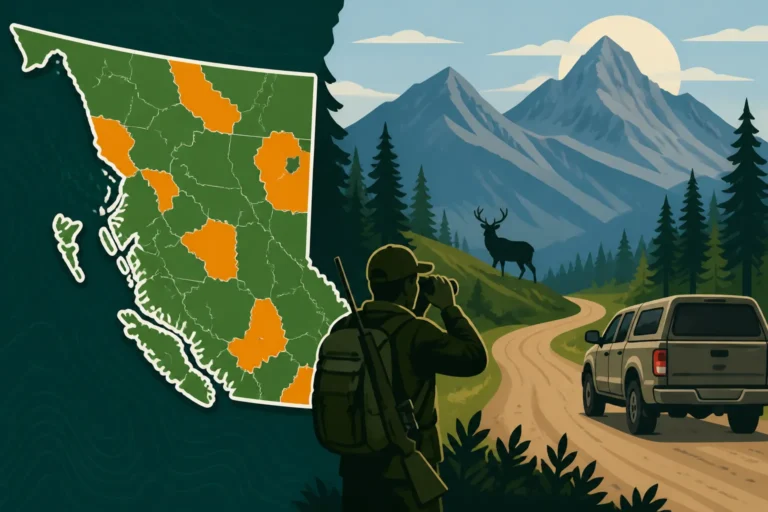
While moose are found throughout much of British Columbia, certain regions consistently stand out as prime hunting grounds due to a combination of vast habitat, lower human population density, and healthy moose populations. It's in these larger, wilder landscapes that you'll find the best opportunities. For a broader overview, take a look at Moose in British Columbia's Interior and North.
The Cariboo-Chilcotin and Omineca Regions
These central and north-central regions have historically been, and continue to be, some of British Columbia's most renowned moose country. The sheer scale of the landscape here is what truly sets it apart.
The Cariboo-Chilcotin is characterized by extensive forests, interspersed with lakes, rivers, and wetlands. While some areas have seen declines in moose populations due to factors like pine beetle kill and increased predation, there are still many productive pockets. Look for moose in the vast timber blocks, particularly in the regenerating clearcuts and along the numerous river and creek systems. The plateau country offers a mix of higher elevation summer ranges and lower elevation wintering areas, with moose often migrating between them as snow depths dictate. Access can be good via the extensive network of forest service roads, but getting off the main lines and into the untouched areas is key. Consider exploring Hunting a Cariboo Cattle Range or Hunting a British Columbia Lakeshore for Moose in this area.
Further north, the Omineca region, stretching towards Prince George and beyond, is often considered the heart of British Columbia's moose country. Here, the landscape is even more rugged and remote, with vast tracts of boreal forest, countless lakes, and large river drainages like the Parsnip and the Fraser. The moose here benefit from less human pressure and extensive, high-quality habitat. Logging has again played a significant role, creating a mosaic of mature timber and brushy regrowth. Focus on the extensive willow flats, the edges of clearcuts (especially those several years old), and the numerous boggy areas and lake chains. Access here can be more challenging, often requiring longer drives on rough roads, jet boats, or even float planes to reach truly remote areas. But the reward can be substantial. Hunting a Lake Chain in the Omineca or Hunting a Willow Flat in Moose Country could be very productive here.
The Peace River and Northern Regions
As you push further north and east into British Columbia, particularly into the Peace River region, the landscape transitions. You'll find a mix of agricultural lands and vast boreal forest, offering a unique set of opportunities for moose hunters.
The Peace region's moose often utilize the interface between settled agricultural areas and the dense forests. River valleys like the Peace and its tributaries, as well as the numerous creek systems that crisscross the area, provide crucial travel corridors and excellent browsing. Look for moose along the edges of agricultural fields where they feed in the evening and retreat into the timber during the day. The region also boasts enormous tracts of unroaded wilderness, particularly in the northern reaches, that hold healthy moose populations for those willing to venture deep. It's a land of contrasts, offering both relatively accessible hunting and truly remote wilderness experiences. Hunting a Peace Country Grain Field is a specific approach that can be very effective in this region.
Beyond the Peace, the far Northern Regions of British Columbia, including the Skeena and even parts of the Yukon boundary, hold some of the province's wildest and most remote moose hunting. This is truly big country, characterized by vast wilderness, towering mountain ranges, and expansive river systems. Moose here face significant predator pressure, but they also have immense tracts of untouched habitat. Hunts in these regions often involve fly-in camps, horseback expeditions, or extensive jet boat travel. While the moose densities might not be as high as in some parts of the Omineca, the potential for encountering truly large, unpressured bulls is very real. Access is a primary challenge, but for the adventurous hunter, these remote northern reaches offer an unparalleled wilderness experience. Understanding British Columbia's larger British Columbia's Management Units and Regions is important for planning here, as regulations can vary significantly.
| Region | Primary Habitat Types | Access Considerations | Key Features for Moose |
|---|---|---|---|
| Cariboo-Chilcotin | Mixed forest, numerous lakes, regenerating clearcuts, river systems | Extensive FSR network, some remote areas | Browse-rich clearcuts, lake shores, willow bottoms |
| Omineca | Boreal forest, vast wetlands, large river drainages, lake chains | Rough FSRs, jet boat, float plane for remote access | Extensive willow flats, large clearcut blocks, boggy areas |
| Peace River | Agricultural edges, boreal forest, river valleys, creek systems | Mix of paved/gravel roads, some remote forest access | Forest-farm interface, riverine browse, large timber blocks |
| Northern Regions | Vast wilderness, mountain valleys, major river systems | Highly remote; fly-in, horseback, jet boat often required | Untouched browse, low pressure, large old growth for cover |
Disclaimer
This article is for general informational purposes only and does not constitute professional advice. Laws, prices and regulations vary by location and change over time. Consult a qualified professional for guidance on your specific situation.