Hunting a Coastal Inlet From a Boat
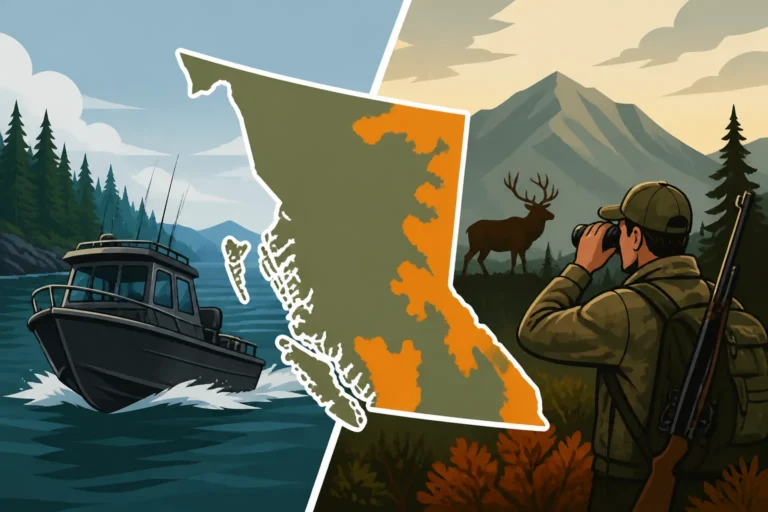
The British Columbia coastline, with its labyrinth of inlets, estuaries, and dense forests plunging straight into the ocean, presents a hunting experience unlike any other. It’s a place where the rhythm of the tides dictates your day, and your vessel is as crucial as your rifle or bow. Many hunters dream of accessing these remote, roadless areas, but the reality of marine navigation, ever-changing weather, and unique wildlife patterns can feel overwhelming. This guide will walk you through everything you need to know about successfully and safely hunting a coastal inlet from a boat in British Columbia, transforming that dream into a tangible, rewarding adventure.
The Unique Challenges and Rewards of Coastal Inlet Hunting
Hunting British Columbia's coastal inlets by boat is an experience defined by raw nature. You’re not just battling the elements; you're becoming intimately familiar with a marine environment that impacts every aspect of your hunt, from access to game behavior. The rewards, however, are unparalleled: pristine, untouched wilderness, often with minimal human pressure, and the chance to pursue game in truly spectacular settings.
Navigating the Tides and Weather
The very first thing you learn when hunting coastal British Columbia is that the ocean sets the schedule. Tides aren't just a minor inconvenience; they are powerful forces that can expose vast mudflats, create treacherous currents, or completely block access to prime hunting spots. You need to understand tide tables for your specific area, knowing when the high and low tides occur and, crucially, the tidal exchange – how much the water level will rise or fall. A difference of several meters is common in some inlets, meaning a small creek mouth might be easily entered at high tide but become a dry, impassable obstacle just a few hours later. Strong tidal currents can also make anchoring difficult and even dangerous in narrow channels.
Beyond the tides, coastal weather is famously unpredictable and can change rapidly. A calm, sunny morning can quickly give way to driving rain, high winds, and dense fog, sometimes within minutes. Being caught unprepared for a significant weather shift can be perilous. Rain, often horizontal, can soak even "waterproof" gear, chill you to the bone, and make glassing incredibly difficult. Fog can roll in thick enough to completely obscure visibility, making navigation by sight impossible and increasing the risk of getting lost or running aground. Always check marine forecasts before and during your trip, and be prepared to take shelter or head for safety at a moment's notice. Having reliable navigation, like a GPS plotter (perhaps even with offline maps from onX Hunt on a portable device), is non-negotiable, especially when the visibility drops to zero. Navigating Fog on a British Columbia Coast Hunt is a crucial skill to develop.
Understanding Coastal Wildlife Behavior
The game animals in British Columbia's coastal inlets have adapted their lives to this unique environment, and understanding their patterns is key to success. Black bears, for instance, are abundant along the coast and are often the primary target. They gravitate towards estuaries and tidal flats, especially in spring and early summer, to feed on protein-rich sedge grasses that green up early. Later in the fall, they'll often be found near salmon-bearing streams. These bears are comfortable in the interface between land and sea, frequently observed foraging right at the water's edge. Their diet and movement are intrinsically linked to the changing seasons and available food sources in these specific habitats. What Bears Eat on a Coastal Estuary offers a deeper dive into their feeding habits.
Black-tailed deer are another common species, particularly the Columbian blacktail on the mainland and Vancouver Island. They thrive in the dense, regenerating forests that typically line these inlets, as well as on rocky outcrops and along the fringe of old-growth timber. Unlike inland deer, coastal blacktails are incredibly elusive, often moving through thick underbrush and using the broken terrain to their advantage. They might also be found browsing on specific vegetation exposed at low tide or retreating to higher ground as the tide comes in. Knowing their preferences for different types of cover and food sources at various tidal stages will give you a significant edge. Occasional sightings of wolves or cougars are also possible, as these predators follow their prey into these rich coastal zones.
Essential Gear and Preparation for a Boat Hunt
Embarking on a boat hunt along British Columbia's coast requires meticulous preparation, extending far beyond your standard hunting pack. Your vessel becomes your home, your transportation, and your primary tool for navigating this unique environment. Every piece of gear, from your boat to your binoculars, needs to be up to the task of withstanding the harsh marine conditions.
Your Vessel: More Than Just Transport
Choosing and outfitting the right boat is paramount. For accessing smaller inlets and shallow estuaries, a sturdy aluminum boat (often called a "tinny" in BC) in the 14-20 foot range, powered by a reliable outboard motor, is a popular choice. These boats are relatively easy to launch and retrieve, handle well in choppy conditions, and can be maneuvered into shallower waters. If you're planning longer trips or anticipate rougher seas, a larger, more stable vessel with a cabin might be more appropriate, offering shelter and storage. Redundancy is key: always carry an auxiliary (kicker) motor, sufficient fuel in separate tanks, and basic repair tools. Your main motor failing in a remote inlet is more than an inconvenience; it can be a life-threatening situation.
Safety equipment is non-negotiable. Beyond the legally required items like personal flotation devices (PFDs) for everyone on board, a sound-signaling device, and a bailer, you absolutely must have marine-specific safety gear. This includes a VHF radio for communication with other vessels and coast guard, flares or other visual distress signals, a substantial anchor with ample chain and rode for various bottom types (rocky, muddy), and an emergency kit with first aid supplies, extra food, water, and warm clothing. Given the often remote nature of these areas, consider a satellite messenger or phone for emergencies, as cell service is often non-existent. Satellite Communication on a Remote Hunt can be a lifesaver. Ensure your navigation lights are working perfectly, especially if you plan on being out before dawn or after dusk.
Clothing, Optics, and Safety Equipment
Coastal British Columbia is synonymous with rain and dampness, so your clothing system needs to be robust. Layering is critical: a base layer to wick moisture, an insulating mid-layer for warmth (even in summer, coastal evenings can be cool), and a truly waterproof and windproof outer shell. "Water-resistant" won't cut it. Look for high-quality rain gear designed for marine or extreme outdoor use. Good waterproof boots are also essential, as you'll be stepping out onto wet shorelines, slippery rocks, and possibly mucky tidal flats. Consider knee-high rubber boots for wading through shallow water during shore excursions.
Optics are your best friend on a boat hunt. Quality binoculars (10×42 or 10×50 are excellent general-purpose choices) are essential for scanning distant shorelines, identifying game, and discerning details in challenging light or misty conditions. A spotting scope on a sturdy tripod can extend your reach even further, allowing you to thoroughly check out potential game animals without having to move the boat. Don't forget a rangefinder, critical for accurate shot placement across water or varied terrain. For safety beyond the boat itself, carrying bear spray is highly recommended, especially when venturing ashore in prime bear habitat. A good knife, headlamp, and a small backpack for shore excursions complete your personal gear list. Bear Safety While Hunting in British Columbia is a constant consideration in these areas.
Strategies for Success on a Coastal Inlet
Hunting a coastal inlet demands a unique set of strategies that blend marine navigation with traditional hunting skills. It’s a dynamic environment where success often hinges on patience, keen observation, and the ability to adapt to changing conditions and animal movements.
Spotting and Stalking the Shores
The boat serves as your ultimate mobile glassing platform. Position yourself to drift or slowly motor along shorelines, using your binoculars and spotting scope to meticulously scan for game. Pay close attention to estuaries, old clearcuts, rock slides, and the edges of dense timber where animals might emerge to feed or sun themselves. Early mornings and late evenings, as the light is low, are often the most productive times, but coastal game can be active throughout the day, especially in overcast or rainy conditions. Consider using the changing tides to your advantage: as the tide recedes, new feeding areas are exposed, often drawing bears to the sedge flats. Conversely, as the tide rises, animals might be pushed up onto higher ground or into more confined areas, making them easier to spot.
Once you spot an animal, the real challenge begins. A quiet approach is paramount. Can you anchor your boat out of sight and then use a smaller, quieter vessel like a kayak or canoe, or even row a dinghy, to get closer to shore without spooking the game? If you're going to stalk on foot, evaluate the terrain carefully. Coastal areas can be incredibly rugged, with steep, slippery slopes, dense underbrush, and hidden obstacles. Always consider the wind direction and use the natural contours of the land and vegetation to conceal your approach. Be mindful of potential quicksand-like mudflats in estuaries. Your stalk might involve a combination of land and water travel, making it a truly multi-dimensional hunting experience.
Ethical Considerations and Game Recovery
Ethical hunting demands a clean, humane kill, and on the coast, this means being acutely aware of your shot placement and the potential for a difficult recovery. Shooting across water can be tricky due to mirage and the lack of a clear backstop. Ensure you have a solid rest and are confident in your shot before pulling the trigger. The dense coastal brush can make tracking a challenge, even with a well-placed shot. If an animal runs into the thick timber, you might have to spend hours, or even days, on a difficult retrieve. This is where planning and teamwork are essential.
Game recovery in a coastal environment presents its own set of hurdles. If you harvest an animal near the shoreline, you'll need a way to get it back to the boat, potentially over uneven ground or through shallow water. Consider having a game cart or heavy-duty sled, or even just strong bags for quartering the animal. Keeping meat cool in British Columbia's often mild coastal temperatures can be a challenge. Meat Care in British Columbia's Warm Early Seasons provides excellent advice. Packing out of steep, wet country is never easy, and you might need specialized gear to assist with this. Packing Out of British Columbia's Steep Country offers helpful strategies. Always ensure you have the means to handle and transport your game ethically and efficiently, respecting the animal and the meat.
Planning Your Trip and Respecting the Landscape
A successful and responsible boat hunt on a British Columbia coastal inlet starts long before you even launch your vessel. Thorough planning, understanding the regulations, and committing to Leave No Trace principles are crucial for a rewarding experience and for preserving these incredible wild places for future generations.
Researching Management Units and Access
Before you even think about dropping anchor, you need to understand the specific hunting regulations for the area you intend to explore. British Columbia is divided into various Management Units (MUs) and Regions, each with its own specific rules, season dates, bag limits, and antler restrictions. What might be legal in one inlet could be completely prohibited in another just a few miles away. The provincial government publishes a comprehensive regulations synopsis, but online resources can also be incredibly helpful. Websites like GoHunt or specialized BC hunting forums can provide community insights into current regulations and general area knowledge, though always double-check with official sources.
Mapping tools are indispensable for planning your access and understanding the terrain. onX Hunt is a powerful resource that allows you to overlay private and Crown land boundaries, making it clear where you can legally hunt and access. It also provides detailed topographic maps and satellite imagery, crucial for identifying potential launch points, anchoring spots, and prime hunting areas like estuaries or old logging cuts that might be accessible from the water. While many coastal inlets are roadless, some may have old British Columbia's Logging Road Network nearby, providing access points to the very upper reaches of an inlet or to specific launch sites. Always scout these thoroughly, as many are deactivated or in poor condition.
Minimizing Your Impact and Ensuring Safety
Hunting in remote coastal areas carries inherent risks, and a comprehensive emergency plan is not just smart; it's essential. Share your float plan with someone reliable back home, including your intended route, timelines, and check-in schedule. Pack a dedicated emergency kit for both your boat and for shore excursions. This should include extra communication devices, fire-starting materials, shelter, and a robust first-aid kit. Understanding basic marine first aid and boat repair can make all the difference if something goes wrong miles from civilization. Emergency Planning in British Columbia's Backcountry is something every hunter should take seriously.
Finally, always practice Leave No Trace principles. This means packing out everything you pack in, including all garbage and waste. Be mindful of noise, especially when approaching sensitive wildlife areas or other camps. Respect any other users of the area, whether they are other hunters, fishers, or recreational boaters. Coastal ecosystems are fragile, and minimizing your impact ensures that these stunning, productive hunting grounds remain pristine. Remember, you're a guest in these wild spaces, and your actions reflect on the entire hunting community. A responsible hunter leaves no trace, only tracks, and memories of an incredible coastal adventure.
Disclaimer
This article is for general informational purposes only and does not constitute professional advice. Laws, prices and regulations vary by location and change over time. Consult a qualified professional for guidance on your specific situation.